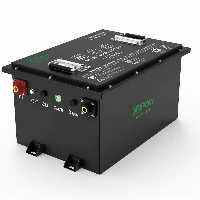
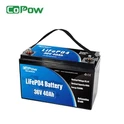
Whether it's the moment you wake up your engine in the morning or the silent power source keeping your RV running deep in the wilderness, the 12V Battery remains the most indispensable energy heart behind the scenes of modern life.
With the rapid leap in energy technology in 2026, these seemingly heavy boxes have evolved from simple chemical storage devices into "smart power cells" that integrate intelligent monitoring, rapid charging, and ultra-long lifespans. Facing a market filled with everything from traditional lead-acid and AGM to the high-performance lithium options, which one is truly the "marathon champion" for your needs?
This article will dive deep into the various specifications of 12V batteries-from total cost of ownership to safety and maintenance-helping you lock in the perfect choice from a sea of options.

What Is a 12V Battery?
A 12V battery (12-volt battery) is one of the most common energy storage devices in daily life, with its core definition being that it provides a nominal voltage of 12 volts. Although we call it "12V," its actual voltage in a fully charged state is usually slightly higher, typically between 12.6V and 12.8V. The most widespread application for this type of battery is in cars, motorcycles, and various small-scale power systems, where it stores energy through internal chemical reactions and outputs direct current (DC) to electrical equipment via positive and negative terminals when needed.
In terms of structure and principle, the most classic 12V battery is the lead-acid battery, which consists of six cells connected in series, with each cell producing approximately 2.1V to collectively maintain the overall output. With technological advancements, modern 12V batteries now also include various types such as lithium batteries and deep-cycle batteries.

What Are the Main 12V Battery Types?
After learning about the basic definition of a 12V battery, you'll find that while they may look similar on the outside, their internal chemical construction determines their different uses. Currently, the main types of 12V batteries on the market can be categorized into these three major groups:
1. Lead-Acid Batteries
This is the most traditional and common type. It can be further subdivided into the following:
- Flooded/Wet Cell: Often referred to as "wet batteries," these are the most affordable. However, they may require periodic maintenance with distilled water and must be kept upright to prevent acid leaks.
- Sealed Lead-Acid (SLA/VRLA): These are maintenance-free and spill-proof. The most common is the AGM battery (Absorbent Glass Mat), which charges faster and has high vibration resistance, making it ideal for modern vehicles with start-stop systems.
- Gel Cell: These use a silica-based gel electrolyte. They are highly stable and exceptionally resistant to deep discharge, often used in solar systems or off-grid power storage.
2. Lithium Batteries
The most popular type today is the Lithium Iron Phosphate (LiFePO4) battery. While the initial purchase cost is much higher than lead-acid, the advantages are significant:
- Extremely Lightweight: Usually only about one-third the weight of a lead-acid battery.
- Longer Lifespan: While lead-acid batteries might last 300–500 cycles, LiFePO4 batteries can reach 3,000–5,000 cycles.
- Deep Discharge: Lithium batteries can be discharged nearly completely without damage, whereas lead-acid batteries are typically recommended not to exceed a 50% depth of discharge.
.
3. Deep Cycle Batteries
This is more of a functional classification than a chemical one. Unlike automotive starter batteries (which release a large burst of current but cannot be deeply discharged), deep cycle batteries are designed to provide steady power over a long period.
- Applications: Usually made of AGM or Lithium, these are widely used for powering lights and appliances in RVs, golf carts, and marine vessels.
How Long Do Different 12V Battery Types Last?
When talking about the lifespan of a 12V battery, we need to look at it from two dimensions: Calendar Life (the time the battery naturally ages even when not in use) and Cycle Life (the number of charge and discharge cycles the battery can handle).
1. Standard Flooded Lead-Acid Batteries
- Calendar Life: Typically between 3 to 5 years.
- Cycle Life: Approximately 200 – 500 cycles.
- Note: These batteries are quite fragile; if they are frequently depleted (deep discharge), their lifespan will shorten very quickly. In automotive starting applications, they can last longer if well-maintained (kept fully charged), but if used frequently as a power source, they might fail within 1–2 years.
2. AGM Batteries (Absorbent Glass Mat)
- Calendar Life: Typically 4 to 7 years.
- Cycle Life: Approximately 400 – 800 cycles.
- Advantage: Thanks to the absorbent glass mat technology, they are more durable than standard lead-acid batteries, have better vibration resistance, and a lower self-discharge rate. When used in cars with start-stop systems, their lifespan is usually twice as long as a standard battery.
3. Lithium Iron Phosphate Batteries (LiFePO4)
- Calendar Life: Easily exceeds 10 years.
- Cycle Life: An impressive 3,000 – 5,000+ cycles.
- Core Competitiveness: Lithium is the current "king of lifespan." Even if you fully charge and discharge it every single day, it can last for over 10 years. Furthermore, it supports deep discharge (using 80%–90% of its capacity) with almost no damage to its overall life.
| Battery Type | Expected Lifespan (Years) | Cycle Count (at 50% Depth of Discharge) |
| Standard Flooded | 3 – 5 Years | 200 – 500 Cycles |
| AGM Battery | 4 – 7 Years | 400 – 800 Cycles |
| Gel Battery | 5 – 10 Years | 500 – 1,000 Cycles |
| Lithium (LiFePO4) | 10+ Years | 3,000 – 5,000+ Cycles |
Cost Comparison of 12V Battery Types
When choosing a 12V battery, "price" is usually the most concerning factor. However, in 2026, looking only at the "purchase price" can be misleading, as there is a vast difference between the Upfront Cost and the Total Cost of Ownership (TCO).
1. Initial Purchase Price Comparison (Estimated 2026 Market Rates)
In terms of the immediate out-of-pocket expense, the ranking is as follows:
- Standard Flooded Lead-Acid: The cheapest, approximately $60 – $120. Best for extremely limited budgets or very rare usage (e.g., emergency backup).
- AGM Battery: Mid-range, approximately $150 – $280. Better performance than standard lead-acid, suitable for most modern automotive starting needs.
- LiFePO4: The most expensive, approximately $250 – $600 (premium brands may cost more). Although prices have dropped significantly over the years, they remain 3–5 times the price of lead-acid.
2. "Value for Money" Depth Comparison (10-Year Lifecycle)
If we look at a 10-year horizon to see the total cost for the same amount of energy provided:
| Cost Dimension | Standard Flooded | AGM Battery | Lithium (LiFePO4) |
| Initial Unit Price | Low ($80) | Medium ($200) | High ($400) |
| Usable Capacity | Only 50% (Actual 50Ah) | Approx. 50-60% | 90-100% (Actual 100Ah) |
| Replacements (10 Yrs) | 3 – 4 times | 2 – 3 times | 0 times (1 lasts 10 years) |
| Total 10-Year Spend | Approx. $320+ | Approx. $500+ | Approx. $400 (Buy once) |
| Cost per Cycle | Highest | High | Lowest (Extremely cost-effective) |
12V Battery Types Comparison Chart
| Core Metric | Flooded Lead-Acid | AGM (Sealed) | Gel Battery | Lithium (LiFePO4) |
| Primary Use | Starter for older cars, cheap backup | Modern cars, Start-Stop systems, UPS | Solar storage, deep cycle apps | RVs, off-grid storage, outdoor power |
| Upfront Cost (100Ah) | Lowest (Approx. $60-$120) | Medium (Approx. $150-$280) | Mid-High (Approx. $200-$350) | Highest (Approx. $250-$600) |
| Lifespan (Years) | 3 - 5 Years | 4 - 7 Years | 5 - 10 Years | 10+ Years |
| Cycle Life (50% DoD) | 200 - 500 Cycles | 400 - 800 Cycles | 500 - 1,000 Cycles | 3,000 - 5,000+ Cycles |
| Recommended DoD | 50% (Fragile if deep) | 50% | 50% - 60% | 80% - 100% |
| Weight (Same Cap) | Heaviest (~25-30kg) | Heavy (~25-30kg) | Heavy (~28-32kg) | Light (~10-12kg) |
| Charging Speed | Slow (8-12 hours) | Faster | Slow (Needs specific V) | Rapid (1-3 hours) |
| Maintenance | Periodic checks/Refill | Maintenance-Free | Maintenance-Free | Smart (Built-in BMS) |
| Safety/Stability | Needs venting (Gas) | Sealed & Safe | Sealed & Safe | Very High (With BMS) |
| Best Value | Short-term / Low freq | Car starter replacement | Stable, stationary storage | Long-term / High freq use |
Deep Cycle vs Starting 12V Batteries
While these two might look almost identical on the outside, the internal construction and operating principles of a starting battery and a deep cycle battery are actually quite different. Essentially, a starting battery is designed to deliver a massive burst of current in a very short time to crank an engine, whereas a deep cycle battery is built to provide steady power over a long period.
This difference comes down to the thickness of their internal plates: starting batteries use thinner, more numerous plates to allow for that instant surge, while deep cycle batteries have thicker, sturdier plates that can handle the wear and tear of being repeatedly drained and recharged.
1. Starting (Cranking) Battery
The goal of this battery is to deliver a massive burst of current in a very short amount of time (usually just a few seconds) to turn over an engine's starter motor.
- Internal Structure: It features many thin, closely packed lead plates. This increases the surface area, allowing for a sudden "explosion" of chemical reaction to provide high Cold Cranking Amps (CCA).
- Usage Pattern: Once the engine starts, the alternator immediately begins recharging it. It spends the vast majority of its life in a "fully charged" state.
- Weakness: It is not durable for long-term power. If you use it to power electronics while the engine is off (like a stereo or fridge), discharging it below 50% will damage the plates and drastically shorten its life.
2. Deep Cycle Battery
This battery is designed to provide steady, consistent power over a long period, making it ideal for running appliances.
- Internal Structure: It uses much thicker, solid lead plates. This robust construction can withstand the chemical stress of repeated discharging and recharging without breaking down.
- Usage Pattern: It is built to be cycled. You can draw it down to 20% capacity or even lower (especially with Lithium versions) and then charge it back up repeatedly.
- Weakness: It cannot provide the extremely high instantaneous current required for starting. If you try to use it to start a large V8 engine, it may struggle or fail to provide enough "oomph."
3. Core Differences Comparison
| Feature | Starting Battery | Deep Cycle Battery |
| Primary Task | Instant engine ignition | Consistent power for appliances |
| Current Output | Massive burst (High CCA) | Low, steady current |
| Depth of Discharge | Shallow (Ideally <10%) | Deep (50% – 80%+) |
| Typical Scenario | Cars, motorcycles, powerboats | RV house power, solar, trolling motors |
| Plate Structure | Many, thin, sponge-like | Fewer, thick, solid |
4. What is a "Dual Purpose" Battery?
You will also find "Dual Purpose" batteries on the market that attempt to balance both worlds. While they can handle both starting and cycling, they are generally a "jack of all trades, master of none." They don't have the raw cranking power of a pure starting battery, nor the longevity of a pure deep cycle battery. These are typically used in small boats where there is only space for one battery.
Best 12V Battery Types for Different Applications
1. Automotive Starting (Standard Gas/Diesel Vehicles)
For the vast majority of daily drivers, reliability and instantaneous cranking current are key.
- Best Choice: AGM Battery
- Why: While slightly more expensive than standard flooded batteries, they last twice as long and better handle the increasing number of electronics in modern cars (e.g., dashcams, seat heaters).
- Alternative: If you have a car older than 15 years and are on a tight budget, a Flooded Lead-Acid battery will suffice.
2. RVs, Camping, and Off-Grid Living
These scenarios require long-term power delivery and are highly sensitive to weight and space.
- Best Choice: Lithium Iron Phosphate (LiFePO4)
- Why: This is the current "gold standard." It weighs only 1/3 as much as lead-acid, but you can safely discharge it to about 10% without shortening its lifespan. Though the upfront cost is higher, it is actually the most economical choice over a 10-year period.
3. Marine Environments
The marine environment is full of vibrations and often involves both engine starting and house (living) power needs.
- Best Choice: Gel Battery or Dedicated Marine AGM
- Why: Gel batteries are extremely vibration-resistant, and even if the casing cracks, they won't leak acid into the ocean.
- Note: Large yachts usually feature a split system: an AGM bank for starting and a Lithium bank for house power.
4. Solar Energy Storage Systems
These are typically installed in fixed locations where weight isn't an issue, but cycle life and stability are paramount.
- Best Choice: Deep Cycle LiFePO4 or Gel Battery
- Why: Lithium has the highest round-trip efficiency (approx. 98%), meaning almost all the energy harvested from your panels is stored. If you live in an extremely cold region without heating facilities, Gel batteries offer more stable performance in low temperatures.
5. Backup Power and UPS (Uninterruptible Power Supply)
These batteries spend most of their time in a "float" state, rarely being used but needing to work perfectly during an outage.
- Best Choice: AGM Battery
- Why: They have a long lifespan in float applications and don't require water maintenance like flooded batteries. Compared to Lithium, the cost of keeping them on standby is much lower.
| Application | Recommended Type | Core Focus |
| Daily Commuter Car | AGM | Reliability, Maintenance-free |
| Full-time RV / Camping | LiFePO4 (Lithium) | Weight, Cycle life, Fast charging |
| Trolling Motors (Fishing) | Deep Cycle AGM / Lithium | Deep discharge, Waterproof seal |
| Home Solar Backup | LiFePO4 | Long-term ROI, Energy density |
| Golf Carts | Lithium or Flooded DC | Torque/Power, Durability |
Safety and Maintenance Differences Between 12V Battery Types
Different types of 12V batteries really do vary when it comes to how much maintenance they need and how safe they are to use. Understanding these differences isn't just about making the battery last longer; it's more about keeping things safe during daily use.
For example, some batteries require you to check the electrolyte levels regularly, while others are completely maintenance-free. Also, different materials react differently to overcharging or high temperatures. Choosing the right battery for your specific environment can definitely save you a lot of trouble down the road.
1. Differences in Maintenance Requirements
| Battery Type | Maintenance Level | Specific Maintenance Tasks |
| Flooded Lead-Acid | High | Must regularly check electrolyte levels and add distilled water; need to clean acidic corrosion from terminals. |
| AGM / Gel Battery | Very Low | "Maintenance-free" design; no water needed. Only requires periodic checks for tight connections and clean surfaces. |
| Lithium (LiFePO4) | Near Zero | Internal BMS (Battery Management System) automatically balances cells. Just maintain 50%-80% charge for long-term storage. |
2. Safety Comparison
Lead-Acid Batteries (Flooded/AGM/Gel)
- Gas Emissions: During charging (especially overcharging), lead-acid batteries release hydrogen gas. Flooded batteries must be placed in well-ventilated areas to avoid explosion risks. AGM and Gel batteries are sealed, but can still vent through safety valves during extreme malfunctions.
- Acid Leaks: If a flooded battery tips over, highly corrosive sulfuric acid can leak out, damaging equipment or causing skin burns. AGM and Gel batteries pose no leakage risk.
- Physical Hazards: Lead-acid batteries are extremely heavy; care must be taken to avoid back injuries during transport. A damaged casing can lead to chemical spills.
Lithium Iron Phosphate
- Thermal Runaway Protection: LiFePO4 is the safest type of lithium battery-unlike the lithium-ion batteries in phones, they are not prone to catching fire or exploding. Even if punctured, they typically only release smoke.
- BMS Protection: This is the core of lithium safety. The built-in BMS automatically cuts the circuit if voltage is too high/low, current is too high, or temperatures are abnormal.
- Eco-Friendly: They do not contain heavy metals like lead or mercury, making them less harmful to the environment.
3. Environmental and Temperature Safety Limits
- Low-Temperature Charging Risk: Lithium batteries must not be charged below 0°C, as this causes permanent internal damage (unless you buy a model with a built-in heater). Lead-acid batteries lose performance in the cold but can still be charged.
- High-Temperature Storage: Lead-acid battery life degrades rapidly in heat-life expectancy is typically halved for every 10°C increase over 40°C. Lithium is more heat-tolerant, but extreme heat will still trigger a BMS safety shutdown.
Why More Users Are Switching from Lead Acid to Lithium 12V Batteries?
To be honest, people are willing to pay a bit more for lithium batteries these days because they're just so much more convenient and reliable. Even though the price tag is definitely higher than lead-acid at first, you feel the benefits as soon as you start using one. The most obvious difference is the weight; for the same amount of power, a lithium battery feels light enough to be a toy, which is a total lifesaver for RVers or anyone putting together an outdoor power setup.
Another frustrating thing about lead-acid is that even if it says you have 100Ah, you really have to recharge it once you've used half the capacity, or you'll ruin the battery. With lithium, you can use every last bit of power without worry, so one battery basically does the work of two. When you look at the long-term cost, lead-acid batteries need replacing every few years, which is a hassle and a workout just to move them.
A lithium battery, on the other hand, can sit there for ten years and you barely have to think about it. Between the faster charging, no risk of acid leaks, and not having to top off water like the old-school versions, that "set it and forget it" experience is why everyone is making the switch.
Future Trends in 12V Battery Technology
By 2026, 12V battery technology is becoming much smarter, safer, and more environmentally friendly. While lithium iron phosphate batteries are currently the mainstream choice, the technology keeps advancing. Most batteries now come equipped with intelligent management systems that let you check power levels on your phone and can even run self-diagnostics to balance the internal cells.
Solid-state technology is also starting to enter this space, meaning future batteries won't use flammable liquid electrolytes, making them more energy-dense and physically safer. For cold climates in high-latitude regions, batteries with built-in nanoscale self-heating are becoming more common, solving the old problem of lithium batteries charging slowly in winter.
Regarding materials, sodium-ion batteries have emerged as a more cost-effective and eco-friendly option; they perform well in low temperatures and might eventually replace lead-acid batteries in the entry-level market. A 12V battery is no longer just a heavy storage box, but a lighter, more durable, and self-aware smart energy center.
Final Thoughts: Choosing the Right 12V Battery Type
Rather than simply picking out a 12V Battery, you are actually matching your lifestyle with the most reliable "energy partner." In 2026, a battery is no longer just a heavy, passive block hidden under the hood; it has evolved into a smart terminal that connects to your phone, "breathes" through self-diagnostics, and even keeps itself warm in freezing temperatures.
From the "regular check-ups" of the lead-acid era to the "seamless experience" of the lithium age, this shift is essentially technology making room for human freedom-releasing you from the burdens of heavy maintenance and range anxiety. As you close this guide and decide which chemical reaction will power your next journey, you have officially transitioned from a simple consumer to a savvy energy manager. May this small power hub become the quietest yet most powerful support as you explore the world.
Still have questions about choosing the right 12V battery? Contact the Copow expert team for a tailored energy solution that perfectly fits your needs.