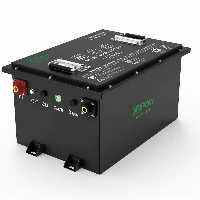
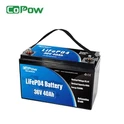
For golf cart owners, battery maintenance is often the most tedious part of ownership-constantly topping off water, cleaning corrosion on terminals, and dealing with the heavy weight of lead-acid batteries.
Maintaining a golf cart battery takes time and effort, and poor upkeep can affect both performance and safety. That's why a no-maintenance golf cart battery upgrade is the preferred choice for many owners. With the rapid advancement of lithium battery technology, upgrading your golf cart's power system has become a practical and popular solution.
This guide covers everything you need to know about lithium battery upgrades, including the benefits, selection tips, installation process, charging best practices, and top brands. Say goodbye to water refills and corrosion, and enjoy a more efficient, hassle-free driving experience.

Why Upgrade Your Golf Cart to a Lithium Battery?
Lithium batteries differ fundamentally from traditional lead-acid batteries, offering several advantages that directly address common pain points for golf cart users:
Maintenance-Free Operation: Lithium batteries, especially LiFePO₄, need no water refills or equalization charging. Terminals stay clean without corrosive acid buildup, saving you from tedious battery service and terminal corrosion repair.
Longer Lifespan and More Cycles: High-quality lithium batteries can handle 2,000 to 5,000 charge cycles and last 8 to 12 years. In comparison, lead-acid batteries typically last 3 to 5 years and provide 300 to 500 charge cycles, meaning lithium batteries reduce long-term replacement frequency and overall cost.
Lighter Weight and More Power: Lithium batteries weigh only 25 to 33 percent of lead-acid batteries. Upgrading a 48V golf cart can reduce weight by over 300 pounds, improving handling, acceleration, and uphill performance even when fully loaded.
Faster Charging: Lithium batteries support constant current–constant voltage fast charging, reaching full charge in 2 to 4 hours. Lead-acid batteries, in contrast, require 8 to 12 hours to fully charge, making lithium batteries ideal for commercial operations or users who need quick turnaround.
Stable Performance: Lithium batteries maintain consistent voltage throughout discharge, ensuring smooth performance even as the battery drains. LiFePO₄ batteries operate reliably in temperatures ranging from minus 20 degrees Celsius to 60 degrees Celsius, making them suitable for a wide range of climates and outdoor conditions.
Environmentally Friendly and Safe: Lithium batteries contain no lead, mercury, or other harmful substances, reducing environmental impact. Combined with a Battery Management System, LiFePO₄ batteries offer excellent thermal stability and protection against overcharge, overdischarge, short circuits, and other potential risks.
Choosing the Right Lithium Battery: Voltage, Capacity, and Type
Proper battery selection is crucial to a successful upgrade. Your lithium battery must match the original specifications of your golf cart and meet your driving requirements.
Voltage Matching
Golf carts typically use 36V, 48V, or 72V systems, and the battery voltage must match the system:
36V Systems: Typically composed of 12 LiFePO₄ cells in series, each with a nominal voltage of 3.2V, totaling 38.4V.
48V Systems: The most common configuration uses 16 LiFePO₄ cells in series, totaling 51.2V. Integrated 48V battery packs, such as a 48V 105Ah battery, simplify installation and require no separate cell assembly.
72V Systems: These are reserved for high-performance golf carts. It is critical to ensure the battery is compatible with the controller and motor to avoid electrical damage.
Voltage mismatches can damage the controller or prevent the cart from starting. For example, a 48V lead-acid battery reaches about 58.8V when fully charged, while a 48V LiFePO₄ battery reaches approximately 58.4V, which is generally compatible with most controllers.
Capacity Selection
Battery capacity, measured in ampere-hours (Ah), determines the vehicle's range and should match your driving needs:
Casual Use: For daily trips of 10 to 20 miles, a 100–120Ah battery can provide 40 to 60 miles per charge.
Commercial Use: For daily trips of 30 to 50 miles, such as at golf courses, resorts, or shuttle services, a 150–200Ah battery can provide 60 to 80 miles per charge.
You can estimate the range using the formula:
Range (miles) = [Battery Capacity (Ah) × Voltage (V) ÷ Vehicle Energy Consumption (Wh/mile)] × 0.017
For example, a 48V 105Ah battery with energy consumption of 200Wh per mile achieves an approximate range of 42.8 miles. Real-world performance is slightly lower due to efficiency losses of around 5–10 percent.
Battery Type
LiFePO4 batteries are the most suitable for golf carts due to their excellent thermal stability, long cycle life, and consistent voltage per cell of 3.2V nominal and 3.65V fully charged. These characteristics make them highly compatible with golf cart controllers.
Avoid generic or unbranded cells without a Battery Management System, as they lack essential safety features and pose a risk of fire, short circuits, or equipment damage.
Essential Accessories for a Smooth Lithium Battery Installation
Charger: Always use a LiFePO4-compatible smart charger with the correct voltage and constant current–constant voltage mode. Using a lead-acid charger can damage lithium batteries.
Connectors and Cables: Use industrial-grade connectors such as Anderson SB50 or SB350, and pure copper wiring sized for maximum current capacity. For higher current loads, upgrade 8AWG cables to 6AWG and ensure busbars match the current rating.
Protection Devices: Include a main circuit breaker, fuses, and separate protections for charging and auxiliary circuits to prevent short circuits or overloads.
Mounting and Vibration Protection: Install custom brackets and rubber pads to secure the battery, prevent movement, and reduce vibration. Avoid direct contact between the battery and metal components to prevent damage.
Battery Monitoring: Replace outdated lead-acid meters with lithium-specific SOC meters or Bluetooth-enabled smart displays to monitor battery status in real-time.
Enclosures: For outdoor or wet environments, choose IP65-rated or higher enclosures with proper sealing and drainage to prevent water or dust intrusion.
How to Install a Lithium Battery in Your Golf Cart?
Follow safety protocols carefully, and consider professional installation if unsure:
Preparation: Disconnect the golf cart's main power and turn off all switches. Prepare tools such as wrenches, screwdrivers, a multimeter, baking soda solution for cleaning, cloths, and insulation tape. Clean the battery compartment of any residual acid and rust.
Remove Old Lead-Acid Batteries: Disconnect the negative terminal first, followed by the positive terminal. Remove battery brackets and carefully lift out each battery. Inspect old wiring and replace if worn or damaged.
Install Lithium Battery Pack: Place the lithium battery into the compartment, use brackets and padding to secure it, and connect the terminals following the principle of positive to positive and negative to negative. Ensure parallel connections use equal-length cables for balanced current distribution.
Install Accessories: Connect the charger, install battery monitoring meters, and check that all protection devices are installed correctly.
Testing: Measure the battery voltage with a multimeter to confirm nominal values. Power on the cart and conduct a short test drive to ensure smooth acceleration, braking, and that no wires overheat. Confirm the charger operates normally.
Charging Your Golf Cart Lithium Battery: Tips and Best Practices
Always use a LiFePO₄-compatible charger with the correct voltage and current. Never use lead-acid chargers, as they can overcharge and damage the battery.
Charge following a proper sequence: power off the cart, connect the charger to the cart, then to mains power. Disconnect mains first after charging, then unplug from the cart to prevent reverse discharge.
Charge in a controlled environment between 0°C and 45°C. Avoid extreme temperatures above 45°C or below 0°C, which can degrade battery life. Ensure proper ventilation and avoid direct sunlight or rain.
Lithium batteries can be charged partially without affecting lifespan. Avoid deep discharges below 10 percent, and for long-term storage, maintain 50–60 percent charge and top up every three months.
Regularly inspect charger cables, connectors, and BMS functions. Replace or troubleshoot if issues arise.
Understanding BMS and Battery Monitoring for Lithium Upgrades
The Battery Management System is the "brain" of a lithium battery:
Protection: Monitors voltage, current, and temperature. Automatically cuts off power in case of overcharge, overdischarge, short circuits, overcurrent, or overheating.
Balancing: Active BMS ensures uniform cell voltage, extending battery life. Passive balancing is less effective.
Communication: High-end BMS systems support CAN bus or Bluetooth, allowing real-time monitoring of SOC, cell voltage, temperature, and cycle counts.
Pre-Charge: Limits inrush current to protect the controller and motor during startup.
Always use batteries with integrated BMS, regularly monitor data, and respond promptly to alerts or anomalies.
Common Lithium Golf Cart Battery Installation Challenges and Solutions
Insufficient Wiring: Upgrade cables to handle higher current loads and prevent overheating.
Incompatible Charging Ports: Replace with ports compatible with lithium chargers or use adapters.
Inaccurate SOC Display: Replace meters or calibrate the controller software for lithium voltage curves.
Controller Compatibility: Older carts may need controller programming or replacement. Most newer carts work with lithium batteries without modifications.
Battery Movement: Use custom brackets and vibration pads to stabilize batteries.
Charger Won't Start: Check voltage compatibility and BMS status, and reset the system if necessary.
Lower Than Expected Range: Check tire pressure, vehicle load, and battery capacity versus usage requirements.
Maintenance-Free Lithium Batteries: Say Goodbye to Water and Corrosion
No Water Required: Lithium batteries are sealed, and the electrolyte does not evaporate, eliminating the need for refills.
No Corrosion: Charging does not release gas or acid mist, keeping terminals and compartments clean.
No Equalization Needed: The BMS automatically balances cells, preventing manual intervention.
Minimal Routine Maintenance: Periodically check connections, clean the battery compartment, and inspect the enclosure every three to six months.
Performance Improvements After Switching to Lithium golf cart Batteries
Range Increase: Lithium batteries provide 2–3 times the energy density of lead-acid batteries, allowing a 48V 105Ah battery to deliver 60–70 miles per charge compared to 30–40 miles for lead-acid.
Improved Acceleration and Hill Performance: Reduced weight decreases power loss, improving start-up acceleration and maintaining consistent power on inclines.
Better Handling: Lower vehicle weight enhances steering, braking, and overall stability, especially in environments requiring frequent turns.
Faster Charging: Fully charging in 2–4 hours compared to 8–12 hours for lead-acid, improving operational efficiency.
Cold Weather Performance: LiFePO₄ batteries maintain over 80 percent capacity at minus 20°C, unlike lead-acid batteries that lose significant capacity in low temperatures.
Top Lithium Battery Brands and Cost Considerations for Golf Carts
Trojan OnePack 48V 105Ah: Range 60 miles, fast charging in 2.5 hours, Bluetooth monitoring, comprehensive safety features, 8-year warranty.
Dakota Lithium 48V 96Ah: Excellent cold-weather performance, weighs one-quarter of lead-acid, includes 8A charger, 11-year warranty.
BSLBATT 48V 105Ah: 5,000 cycles, 2-hour fast charge, LCD touchscreen, operates from -20°C to 60°C, 5-year warranty.
Relion 48V 30Ah: Expandable up to 300Ah, UL certified, intelligent heat dissipation, 5-year warranty.
Eco Battery 48V 100Ah: Cost-effective, compatible with most golf cart brands, integrated active BMS, 3-year warranty.
Although lithium battery upgrades cost 3–4 times more initially than lead-acid, long-term benefits outweigh the investment. Lithium batteries last 8–12 years, require zero maintenance, and offer higher charging efficiency, reducing overall lifetime costs.
Conclusion
Upgrading your golf cart to lithium batteries is a long-term investment that eliminates tedious lead-acid maintenance while delivering better range, faster charging, and enhanced performance.
By selecting the correct voltage and capacity, using LiFePO4 batteries with a reliable BMS, installing proper accessories, and following correct charging practices, your golf cart will provide a safe, efficient, and worry-free experience for both personal and commercial use.
As lithium technology becomes more affordable and continues to improve, now is the ideal time to upgrade. Choosing trusted brands and following this guide ensures your golf cart operates at peak performance without the hassle of water refills or corrosion cleaning.
FAQ
What Is the Typical Power Consumption of a 48V Lithium Golf Cart (Wh per Mile / kWh per Mile)?
The typical energy consumption of a 48V lithium-ion battery-powered golf cart is approximately 50–120 Wh per mile; actual energy consumption is affected by the vehicle's weight, speed, terrain, number of passengers, and driving habits.