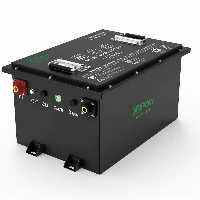
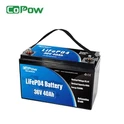
There are two main types of 36V forklift batteries: 36V lithium forklift batteries and 36V lead-acid forklift batteries. The term "lithium forklift battery" refers to lithium iron phosphate forklift batteries. So, how long do they last? Please read on:
Service Life of 36V Lithium Forklift Batteries: 36V lithium forklift batteries using LiFePO4 technology have a service life of 8 to 10 years and a cycle life of 3,000 to 6,000 cycles.
Battery Life of 36V Lithium Forklift Batteries: After a single full charge, a 36V lithium forklift battery can provide continuous power for approximately 4–8 hours to 36V reach trucks, 36V electric counterbalanced forklifts, and 36V electric stackers. Examples include the Toyota 8FBCU20 and the Hyster J1.8XNT.
Service Life of 36V Lead-Acid Forklift Batteries: The service life of 36V lead-acid forklift batteries is 3 to 5 years, with a cycle life of only 1,200 to 1,500 cycles; in practice, they may not even reach this service life.
Battery Life of a 36V Lead-Acid Forklift Battery: When fully charged, it can power a 36V electric forklift for approximately 4 to 6 hours, though the runtime may be shorter because the power output of a lead-acid battery gradually decreases as the charge level drops.
The above provides a brief overview of the service life and range of 36V forklift batteries. If you'd like more detailed information, please continue reading below.

How Long Does A 36V Forklift Battery Last Under Different Usage Conditions?
We categorize actual usage into three levels: light, moderate, and heavy. Only by accurately reflecting users' actual usage habits can we obtain more precise data. Now, let's take a look:
Light-duty applications: less than 4 hours of operation per day
In low-intensity applications such as small warehouses and parts storage areas, forklifts operate for relatively short periods each day and handle a limited volume of material handling tasks; consequently, the battery does not undergo frequent deep-discharge cycles.
In most cases, the battery will only discharge to approximately 30% to 60% of its capacity (i.e. the State of Charge (SOC) drops from 100% to between 40% and 70%) before being recharged. This shallow-cycle usage effectively slows down the ageing of the battery cells, thereby having a minimal impact on the battery's overall service life.
Under proper usage and maintenance conditions, forklift batteries typically achieve close to their theoretical design life: 36V lithium iron phosphate forklift batteries can operate reliably for 8 to 10 years, whilst 36V lead-acid forklift batteries can last for 4 to 5 years, which is broadly in line with the service life ranges specified by battery manufacturers.
| Application Scenario | Typical Size | Usage Characteristics |
|---|---|---|
| Small Warehouse | Approximately 500–3,000 m². Not considered a large-scale logistics center. | Used for low-volume storage and material handling. Forklifts typically operate 1–3 hours per day, handling around 20–80 pallets per day. Common in retail stocking warehouses, electronic component warehouses, hardware warehouses, and raw material storage areas for small manufacturers. |
| Parts Storage Area | Approximately 200–1,500 m². | Mainly used for storing automotive parts, mechanical components, electronic components, and other small-to-medium-sized goods. Typical loads are relatively light, with each handling operation usually involving 300–1,500 kg. Forklifts are mainly used for shelf loading/unloading and short-distance movement, rather than continuous transportation. |
| Maintenance Workshop | Approximately 100–1,000 m². | Forklifts are not the primary production equipment but serve as auxiliary handling tools. They are used for moving engines, motors, molds, equipment parts, and other heavy components. Daily operating time is usually only 0.5–2 hours, with intermittent usage. |
| Light Logistics Center | Approximately 1,000–5,000 m². Not comparable to large distribution centers. | Handles a limited volume of goods. Forklifts typically operate 2–5 hours per day, with short travel distances (usually within tens of meters). These facilities do not require 24/7 continuous forklift operation. |
Moderate usage scenario: 6–8 hours of operation per day
This is the typical operating environment for most warehousing, logistics and manufacturing enterprises, where a single shift's worth of handling tasks is completed each day. Under these conditions, the battery undergoes one charge-discharge cycle per day, which constitutes slightly more frequent use; consequently, the service life of lithium-ion forklift batteries is 6–8 years, whilst that of lead-acid batteries is 3–5 years. This is consistent with the actual service life reported by many users.
| Application Scenario | Typical Facility Size | Operating Conditions |
|---|---|---|
| Medium-Sized Warehouse | Approximately 3,000–10,000㎡ | These warehouses have stable goods flow and require forklifts for pallet handling, rack storage/retrieval, and truck loading/unloading. Forklifts typically operate 6–8 hours per day, handling around 100–300 pallets per day. |
| Internal Logistics Area of Manufacturing Plants | Approximately 5,000–20,000㎡ factory space | Forklifts are mainly used for raw material feeding, semi-finished product transfer, and finished goods storage in industries such as automotive parts, machinery manufacturing, and electronics. Daily operation is usually one work shift (within 8 hours), with typical transport distances ranging from tens to several hundred meters. |
| Medium-Sized Logistics Distribution Center | Approximately 5,000–15,000㎡ | These facilities mainly handle regional distribution rather than 24/7 high-intensity sorting operations like large e-commerce fulfillment centers. Forklifts perform scheduled loading, unloading, and internal material transfer tasks every day. |
High-intensity usage scenarios: more than 8 hours of operation per day
Under high-intensity operating conditions, the battery is subjected to greater cycling stress, and the rate of ageing accelerates. Under such conditions, a 36V lithium-ion forklift battery can last for 5–7 years, whilst the service life of a 36V lead-acid forklift battery may be reduced to 2–3 years.
| Application Scenario | Typical Facility Size | Operating Conditions |
|---|---|---|
| Large Logistics Centers | Approximately 10,000–50,000㎡+ | Includes third-party logistics warehouses, e-commerce fulfillment centers, and retail distribution centers. Forklifts are essential for high-volume pallet handling, truck loading/unloading, and internal transportation. They typically operate 8–16 hours per day, with some facilities running two or three shifts. A single forklift may handle 300–800 pallets per day, with daily travel distances reaching tens of kilometers. |
| Large Manufacturing Plants | 20,000㎡+ factory area | Common in industries such as automotive manufacturing, machinery production, and home appliance manufacturing. Forklifts are continuously used for raw material delivery, production line feeding, semi-finished product transfer, and finished goods storage. Daily operating hours are usually 8–12 hours, and may exceed 16 hours during peak production periods. |
| High-Throughput Warehouses & Cold Storage Facilities | Large-scale storage environments with frequent material flow | These facilities rely heavily on forklifts due to frequent start-stop operations, acceleration/deceleration cycles, and heavy-load handling. Typical equipment includes 2–3 ton electric forklifts, reach trucks, and electric stackers. |
How Long Can Different Capacity 36V Forklift Batteries Run On A Full Charge?
The previous section addressed how many years a battery can last, while this section focuses on how long a battery can operate, which is closely related to its capacity. Below is a reference table showing the operating times for 36V forklift batteries of different types and capacities:
| Battery Type | Battery Capacity | Energy Capacity | Approximate Runtime On A Full Charge |
|---|---|---|---|
| 36V Lead-Acid Forklift Battery | 100Ah | 3.6 kWh | About 2–3 hours |
| 36V Lead-Acid Forklift Battery | 200Ah | 7.2 kWh | About 4–5 hours |
| 36V Lead-Acid Forklift Battery | 300Ah | 10.8 kWh | About 5–7 hours |
| 36V Lead-Acid Forklift Battery | 400Ah | 14.4 kWh | About 6–8 hours |
| 36V Lithium Forklift Battery | 100Ah | 3.6 kWh | About 3–4 hours |
| 36V Lithium Forklift Battery | 200Ah | 7.2 kWh | About 5–6 hours |
| 36V Lithium Forklift Battery | 300Ah | 10.8 kWh | About 7–8 hours |
| 36V Lithium Forklift Battery | 400Ah | 14.4 kWh | About 9–10 hours |
| 36V Lithium Forklift Battery | 500Ah | 18.0 kWh | About 10–12 hours |
When Should You Replace An Old 36V Forklift Battery?
We cannot definitively determine whether a forklift battery is damaged or needs to be replaced. Here, we can only provide you with some indicative signs. If you notice any of the following issues with your forklift battery but it is still barely functional, please contact us directly. We will assign a professional forklift battery R&D engineer to objectively assess the situation and provide replacement recommendations, so you won't have to struggle to figure it out on your own.
Regarding questions such as whether to replace the battery, whether it can be replaced, what type to replace it with, and how to replace it, we can provide you with a comprehensive solution.
1. Battery life has decreased significantly and can no longer meet work requirements.
A decline in battery life is the most direct indicator of whether a 36V forklift battery needs to be replaced. For example, a new 36V lithium-ion battery can operate continuously for 6–8 hours when fully charged, but after prolonged use, its battery life will decrease significantly, and it will only run for 2–3 hours on a full charge. Even if it is fully charged every day, it will not be able to last through an entire work shift.
2. An increase in the number of charging cycles affects the forklift's operational efficiency.
If a forklift used to only need to be charged once a day to complete its work, it now needs to be charged twice a day or even more.
3. Frequent Technical Issues with Batteries
For example, lead-acid batteries may experience problems such as excessive electrolyte consumption, plate sulfation, bulging, leakage, and cell voltage imbalance; while lithium-ion batteries may experience frequent battery management system protection events, decreased cell consistency, abnormal string voltages, abnormal charging and discharging, and communication failures.
4. The repair costs are close to the price of a new battery.
If an old battery requires frequent repairs and the repair costs keep rising, you should reevaluate whether it's worth continuing to use it.
Where To Buy A Reliable And Long-Lasting 36V Forklift Battery?
Some websites list forklift batteries at fixed prices that may seem cheap at first glance, but they may not be suitable for our needs. This is because there are many different brands and models of forklifts, and their communication protocols and battery management system controllers all require compatibility adjustments.
Otherwise, new batteries can easily lead to tricky problems, such as the forklift's control system failing to recognize the battery's BMS or the battery being incompatible with the original charger's communication protocol.
Furthermore, a forklift battery is less a battery and more of a system. It consists of many specialized components, so when problems arise, they may go beyond simple issues like the battery suddenly losing power or failing to charge-they may involve highly technical complications.
This is especially true for lithium-ion forklift batteries. Without technical support from a professional lithium forklift battery manufacturer, you may find it impossible to locate someone to resolve the issue when problems occur, or even if you do, the problem may not be properly resolved.
CoPow is a trusted partner. We have accumulated 16 years of extensive experience in the field of forklift battery manufacturing and operate our own lithium-ion forklift battery production facility.
Not only do we have mature manufacturing processes, but we also offer unique customization capabilities-including battery size and structure, voltage and capacity, BMS parameters, CAN/RS485 communication protocols, forklift control system adaptation, charger compatibility, low-temperature heating solution design, and the customization and optimization of protection ratings-to create stable and reliable forklift batteries for our customers. This is our strength.
If you are interested in our products, please feel free to contact us at any time. Our customer service team will respond to your message within 24 hours.