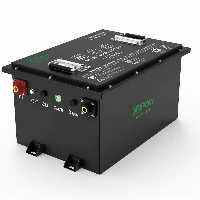
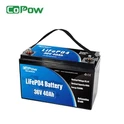
We use lithium batteries almost every moment of every day. But do you truly understand the mysteries inside these "power cubes"? Why are some batteries hard-shelled and cylindrical, while others resemble soft aluminum foil pillows? Why doesn't your new smartphone require a 12-hour "activation" like in the old days?
This article will take you on a deep dive into the chemical DNA of lithium-ion (Li-ion) and lithium polymer (Li-Po) batteries, unveiling the core differences in their energy density, safety performance, and application scenarios. Whether you're a tech enthusiast, a DIY hobbyist, or just an everyday user who wants to extend your phone battery life a bit longer, this comprehensive comparison guide will clear up your knowledge blind spots and help you precisely choose the most suitable "power partner."

What Is a Lithium-Ion Battery?
Think of a lithium-ion (Li-ion) battery as a rechargeable "energy locker." It's the powerhouse behind almost everything in your modern life, from the phone in your pocket to the electric vehicle (EV) in your driveway.
Unlike disposable alkaline batteries, Li-ion batteries are designed to be cycled-charged and discharged-hundreds or even thousands of times by moving lithium ions back and forth between two electrodes.
What Is a Lithium Polymer Battery?
A Lithium Polymer (LiPo) battery is a high-performance, 'soft-pack' version of the lithium-ion battery. If you have ever played with drones or RC cars, or if you have ever taken apart an ultra-thin laptop, that 'silver little pillow' looking battery you saw is exactly what it is.
Key Differences Between Lithium Polymer and Lithium-Ion Batteries
Now that you understand lithium-ion batteries (Li-ion), let's take a look at their "close sibling" - the lithium polymer battery (Li-Po).
Although their names are very similar and their core chemical principles are essentially the same, there are significant differences in their packaging form, safety performance, and application scenarios.
1. Core Technical Difference (Electrolyte)
This is the most fundamental distinction between the two.
- Lithium-Ion (Li-ion): Uses a liquid organic solvent as the electrolyte. Because liquids must be contained to prevent leakage, these batteries are typically encased in rigid steel or aluminum cans.
- Lithium Polymer (Li-Po): Uses a gel-like or solid polymer electrolyte. This eliminates the need for a heavy metal shell; they are usually packaged in flexible aluminum plastic laminated films (pouch cells).
2. Shape and Design Flexibility
- Li-ion: Generally restricted to fixed shapes, most commonly cylindrical (like the ubiquitous 18650 cells) or rectangular hard cases. They are like "standard bricks"-the device must be designed to fit the battery.
- Li-Po: Offers extreme form-factor flexibility. They can be made incredibly thin, curved, or shaped into irregular footprints. This is why smartphones, ultrabooks, and smartwatches almost exclusively use Li-Po.
3. Energy Density and Weight
- Li-ion: Boasts very high energy density, often storing more power per unit of volume. While the casing adds weight, they remain the top choice for high-capacity needs like electric vehicles and power banks.
- Li-Po: The energy density is slightly lower than high-performance Li-ion, but because they lack a heavy metal shell, they are much lighter. In weight-sensitive fields like drones and RC aircraft, Li-Po is the undisputed king.
4. Safety Comparison
- Safety Note: Any lithium battery can be hazardous if mishandled (overcharging, high heat, or physical damage).
- Li-ion: Operates under higher internal pressure. In the event of thermal runaway, the rigid metal casing can lead to a sudden pressure buildup and a violent explosion. Consequently, they require sophisticated protection circuits.
- Li-Po: The gel electrolyte is less prone to leaking. When they fail, they usually "swell" or bloat first. While they can still catch fire, the soft packaging makes a violent explosion less likely compared to a sealed metal canister.
5. Lifespan and Cost
| Feature | Lithium-Ion (Li-ion) | Lithium Polymer (Li-Po) |
| Manufacturing Cost | Lower (Mature, mass-production friendly) | Higher (More complex process) |
| Cycle Life | Longer | Slightly Shorter |
| Self-discharge Rate | Extremely Low | Low |
Advantages and Disadvantages of Lithium Polymer Batteries
Advantages
1. Extreme Design Flexibility (Any Shape)
This is Li-Po's "killer feature." Because it doesn't require a metal casing, manufacturers can mold it into almost any shape: ultra-thin (like a credit card), curved (to fit a smartwatch chassis), or irregular shapes to fill every nook and cranny of a device.
Application: This is why your phone, tablet, and MacBook can be so incredibly thin.
2. Lightweight (Weight Advantage)
By ditching the heavy steel or aluminum cans used in traditional Li-ion cells and using a simple laminate foil pouch instead, Li-Po batteries are roughly 20% lighter than their Li-ion counterparts with the same capacity.
Application: Weight-sensitive devices like racing drones and RC planes almost exclusively use Li-Po.
3. High Discharge Rates (The "Punch")
Li-Po batteries can release their energy very quickly (high "C-rating").
Application: When a drone needs a sudden burst of power to accelerate or a power tool needs high torque, Li-Po provides that instant "kick" of current.
4. Relative Safety (No "Pipe Bomb" Effect)
When a Li-Po battery fails due to overcharging or heat, the soft foil pouch allows the battery to swell (gas buildup) and eventually vent or catch fire. While still dangerous, it rarely results in a violent explosion like a pressurized metal-cased Li-ion battery might.
Disadvantages
1. Lower Energy Density
Even though they are lighter, the polymer electrolyte means they actually store 10%-15% less energy per unit of volume compared to highly optimized industrial Li-ion cells (like the 18650).
2. Higher Manufacturing Cost
The manufacturing process is more complex, and because many Li-Po batteries are custom-shaped for specific devices, they lack the "economy of scale" that makes standard Li-ion cylinders so cheap.
Fact: This is why cheap power banks are often thick and heavy (Li-ion), while premium ones are thin and flat (Li-Po).
3. Physical Fragility (Sensitive to Punctures)
The aluminum foil packaging offers zero protection. A Li-Po battery is easily punctured or crushed by sharp objects or impact. If the internal layers are pierced and exposed to oxygen, it will ignite almost instantly.
4. Shorter Cycle Life
Compared to the extremely mature chemistry of industrial Li-ion cells, Li-Po batteries generally have a slightly shorter lifespan (fewer charge/discharge cycles) and are more prone to chemical degradation over time.
5. Strict Storage Requirements
Li-Po batteries are "divas" when not in use. If you store them fully charged or fully empty for more than a month, they will likely swell and die. They must be kept at a specific "storage voltage" (typically 3.85V per cell).
Advantages and Disadvantages of Lithium-Ion Batteries
Advantages
1. High Energy Density
This is the core strength of Li-ion batteries. Within the same volume, they can store significantly more energy compared to other types of rechargeable batteries, such as Nickel-Metal Hydride (NiMH) or Lead-Acid batteries.
Application: This is why Electric Vehicles (EVs) can achieve ranges of hundreds of miles/kilometers.
2. High Cost-Effectiveness
Because Li-ion batteries-especially cylindrical cells like the 18650-have achieved large-scale automated production, the cost per unit of energy is much lower than that of Lithium Polymer (Li-Po) batteries.
3. Longer Cycle Life
Industrial-grade Li-ion batteries are typically very durable. With proper maintenance, they can endure 500 to 1,000 or even more full charge/discharge cycles with relatively slow performance degradation.
4. Low Self-Discharge Rate
If you leave a fully charged Li-ion battery in a drawer, it might still retain over 95% of its charge after a month. In contrast, older NiMH batteries might lose nearly half their charge in the same timeframe.
5. Low Maintenance
They do not suffer from the "memory effect," meaning you don't need to completely discharge them before recharging, unlike older battery technologies.
Disadvantages
1. Fixed Shape & Weight
Because they contain a liquid electrolyte, they must be encased in a rigid metal shell to prevent leakage. This results in a fixed shape (usually cylindrical or rectangular) and prevents them from being made ultra-thin or in irregular shapes like Li-Po batteries.
2. Safety Risk: Thermal Runaway
This is the most significant concern. If the battery short-circuits internally, suffers a violent impact, or has poor heat dissipation, internal pressure can rise rapidly. Because the outer shell is rigid metal, a failure can lead to a violent explosion or fire, acting like a "miniature bomb."
3. Temperature Sensitivity
- High Temperatures: Accelerate internal chemical degradation and can even trigger fires.
- Low Temperatures: Increase internal resistance, causing the battery capacity to "shrink" instantly (this is why phones die faster during winter in cold climates).
4. Requires Complex Protection Circuits
Every Li-ion battery pack must be equipped with a Battery Management System. Without it, the battery is highly susceptible to catching fire due to overcharging or becoming completely unrecoverable due to over-discharging.
Choosing the Right Battery for Your Application
Selecting between Lithium-Ion (Li-ion) and Lithium Polymer (Li-Po) isn't about which is "better" overall, but which one fits the specific constraints of your project.
1. Choose Lithium-Ion (Li-ion) if...
Your priorities are: Runtime, Budget, and Durability.
- Long-Range EVs & E-Bikes: Because Li-ion has a higher energy density and a longer cycle life, it is the standard for vehicles that need to last 5–10 years.
- Power Tools: Drills and saws require ruggedness. The hard metal casing of Li-ion cells (like 18650s) protects them from vibration and impact.
- Flashlights & Power Banks: These applications usually have enough space for cylindrical cells, making the lower cost of Li-ion the deciding factor.
- Stationary Energy Storage: For solar backup systems, weight is less important than the "cost per kilowatt-hour." Li-ion wins here.
2. Choose Lithium Polymer (Li-Po) if...
Your priorities are: Form Factor, Weight, and Peak Power.
- Drones & RC Vehicles: Every gram counts in flight. Li-Po offers the best power-to-weight ratio and can deliver the massive "burst" of current needed for takeoff and maneuvers.
- Wearables & Smartphones: If you are designing a sleek device where the battery must fit into a 3mm gap or a curved casing, Li-Po is the only choice.
- Portable Medical Devices: For equipment carried by doctors or patients, the weight reduction and thin profile of Li-Po are well worth the extra cost.
| If your constraint is... | Recommended Battery | Why? |
| Lowest Cost | Li-ion | Massive economies of scale make them cheaper. |
| Lightest Weight | Li-Po | No heavy metal casing; uses light aluminum foil. |
| Tight/Odd Spaces | Li-Po | Can be manufactured in almost any shape or size. |
| Rugged Environments | Li-ion | The metal shell handles physical abuse much better. |
| Highest Current (Burst) | Li-Po | Lower internal resistance allows for higher C-ratings. |
| Longevity (Years) | Li-ion | Generally more stable over hundreds of charge cycles. |
Common Myths and Misconceptions
When it comes to lithium batteries, there are many outdated "rules of thumb" that still circulate. Here are the most common myths and the actual science behind them:
1. Myth: You must charge a new phone for 12 hours to "activate" it.
- The Truth: Not at all necessary. "Activation" was a requirement for old Nickel-Cadmium (NiCd) batteries. Lithium batteries are already activated during the manufacturing process. You can use and charge them immediately out of the box; in fact, overcharging for extended periods can unnecessarily stress the circuitry.
2. Myth: You must run the battery to 0% before charging to avoid the "Memory Effect."
- The Truth: This is actually harmful. Lithium batteries do not have a memory effect. On the contrary, they hate "deep discharges." If you frequently let your battery hit 0% and shut down, it significantly shortens its lifespan. It is best to start charging when you have about 20% battery remaining.
3. Myth: Charging your phone overnight will make it explode.
- The Truth: Generally no, but there's a better way. Modern electronics have a Battery Management System that automatically cuts off the high current once full. However, keeping a battery at 100% for long periods creates "chemical stress" that accelerates aging. If your device supports it, using features like "Optimized Battery Charging" (which caps charging at 80% until needed) is the best practice.
4. Myth: Using your phone while charging damages the battery.
- The Truth: The enemy is "Heat," not the usage itself. If you are just browsing the web while charging, it has little impact. However, if you are playing high-performance games while fast-charging, the phone will generate intense heat. High temperatures are the #1 killer of battery health.
5. Myth: Putting batteries in the fridge makes them last longer.
- The Truth: Never do this! While cold temperatures can slow down self-discharge, the moisture and condensation inside a fridge can easily cause short circuits or corrosion. Storing them in a cool, dry place (around 20°C / 68°F) is the correct approach.
Conclusion
Lithium-Ion and Lithium Polymer batteries each excel in their own domains, and understanding their distinct characteristics is the key to making informed power choices. Li-ion batteries dominate applications where cost, longevity, and raw energy capacity matter most-think electric vehicles, power tools, and stationary storage.
Meanwhile, Li-Po batteries reign supreme in scenarios demanding ultra-light weight, custom shapes, and high discharge rates-such as drones, smartphones, and wearables. Neither technology is universally "better"; the optimal choice always depends on your specific priorities: budget, space constraints, weight limits, and performance requirements.