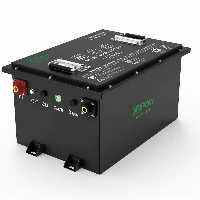
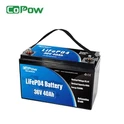
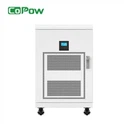
There are two main types of forklift batteries: lead-acid batteries and lithium-ion batteries.
Among these, lead-acid batteries typically refer to the traditional, widely used flooded lead-acid forklift batteries, while lithium-ion batteries generally refer to lithium iron phosphate (LiFePO4) forklift batteries, which represent the primary direction for the future transition from lead-acid to lithium-ion batteries. These two types are currently the most common forklift batteries on the market and hold the highest market share.
In addition, there are some less common battery types, such as gel batteries, AGM batteries, pure lead-acid thin-plate batteries, ternary lithium batteries, and lithium titanate batteries, which are used only under special circumstances.

Lead-Acid vs Lithium-Ion Forklift Batteries
Next, we'll take you through a detailed look at lead-acid and lithium-ion forklift batteries to help you clearly understand the differences between them.
Upfront Cost
- Lead-acid batteries: Compared to lithium-ion batteries, lead-acid batteries are less expensive. Take a 48V, 420–560 Ah forklift battery as an example; its price typically ranges from $4,000 to $8,000.
- Lithium-ion Batteries: On the other hand, lithium-ion batteries are more expensive than lead-acid batteries. Taking a 48V, 525–630Ah battery as an example, the price of a lithium-ion battery ranges from approximately $7,000 to $12,000.
Daily Maintenance
- Lead-acid batteries: When it comes to lead-acid batteries, most people have probably found that maintaining them is quite a hassle: not only do you have to top off the distilled water and electrolyte, but you also need to pay special attention to equalization charging. If you cut corners even slightly, the battery's performance and lifespan will decline rapidly. Furthermore, electrolyte is a corrosive liquid that not only corrodes the battery terminals but can also cause harm to humans.
- Lithium-ion Batteries: Lithium forklift batteries refer to lithium iron phosphate batteries. Although they do not require maintenance like lead-acid batteries do, it is still best to periodically check the battery cables, charging equipment, communication systems, and the operational status of the battery management system. It never hurts to be cautious.
Charging Time
- Lead-acid batteries:It takes 8–10 hours to fully charge the battery, and after it is fully charged, it requires an additional 6–8 hours to cool down before it can be used again. Therefore, many warehouses operating on a two- or three-shift schedule need to keep spare batteries on hand for rotation.
- Lithium-ion Batteries:It takes only 1–3 hours to charge the battery to 80%–100% capacity. Once charging is complete, there is no need to let it cool down; it can be used immediately.
Opportunity Charging
- Lead-acid batteries:It is best to use lead-acid batteries from 100% charge until the charge level is very low before recharging them; therefore, they are not suitable for "trickle charging." Frequent charging can cause sulfation in lead-acid batteries.
- Lithium-ion Batteries:Lithium iron phosphate forklift batteries are ideal for trickle charging. Whether during lunch breaks, shift changes, or between loading and unloading, you can recharge the battery at any time without accelerating battery degradation. However, we still recommend following the "20/80" charge-discharge principle to extend the battery's service life.
Lifespan
- Lead-acid batteries:The service life of a lead-acid forklift battery is approximately 3–5 years, or 1,000–1,500 charge-discharge cycles. However, many warehouse operators report that after 2–3 years of use, lead-acid batteries experience a significant decline in performance, with frequent issues such as reduced runtime, longer charging times, accelerated voltage drop, and diminished lifting power. Therefore, you may need to replace the battery once every four years or so.
- Lithium-ion Batteries:Lithium iron phosphate forklift batteries are much more durable, with a service life of 8 to 10 years, corresponding to more than 3,000 to 6,000 charge-discharge cycles. The higher the quality of the battery cells, the longer the service life. More importantly, their performance does not decline significantly even after many years of use.
Usable Capacity
- Lead-acid batteries: Battery capacity is divided into rated capacity and actual usable capacity. For example, a lead-acid battery with a rated capacity of 425 Ah has an actual usable capacity of approximately 50% to 80%. If this range is exceeded, the battery's service life will be rapidly reduced.
- Lithium-ion Batteries: This is a very durable battery. For a 425 Ah lithium iron phosphate forklift battery, the actual usable capacity ranges from 90% to 100%, meaning it can essentially be fully utilized. However, we recommend that you follow the "20/80" rule for lithium-ion batteries during actual use to further extend the battery's service life.
Battery Weight
- Lead-acid batteries: Lead-acid batteries have a relatively low energy density, so they are quite heavy. While this allows them to serve as part of a vehicle's ballast, it also makes transporting and replacing the batteries more difficult. Take a typical 48V 600Ah forklift battery as an example: such a battery weighs between 800 and 1,000 kilograms, which is comparable to the weight of a small passenger car.
- Lithium-ion Batteries: Lithium-ion batteries have a higher energy density than lead-acid batteries; they can store more energy in the same volume and are therefore lighter than lead-acid batteries. Typically, lithium-ion batteries are 30% to 70% lighter than lead-acid batteries, which makes transportation and battery replacement more convenient. Additionally, there is no need to worry about weight balance, as counterweight modules can be added separately. Taking a 48V 600Ah lithium-ion forklift battery as an example, a 48V 600Ah lithium iron phosphate battery weighs approximately 300 to 500 kilograms.
Cold Storage Performance
- Lead-acid batteries: At low temperatures, lead-acid forklift batteries experience a noticeable decline in capacity and a reduction in power.
- Lithium-ion Batteries: Similarly, lithium iron phosphate batteries are also affected by low temperatures, though not to the same extent as lead-acid batteries. In addition, you can use the lithium-ion battery's built-in self-heating system to warm up the battery before charging it.
Safety
- Lead-acid batteries: Although lead-acid battery technology is relatively mature, these batteries still produce hydrogen and oxygen during charging. If ventilation is inadequate, there is a risk of explosion. In addition, the electrolyte is a strong acid; if it leaks, it will not only corrode the battery and the forklift but may also cause harm to people.
- Lithium-ion Batteries: Lithium iron phosphate is currently recognized as the safest lithium-ion battery chemistry. It offers excellent thermal stability and poses virtually no risk of fire or explosion. In addition, lithium-ion batteries are equipped with a smart battery management system that monitors voltage, current, temperature, and state of charge in real time, and provides protection against overcharging, over-discharging, short circuits, and overheating to ensure safe use. Therefore, you can use them with confidence.
Environmental Impact
- Lead-acid batteries: Lead-acid batteries contain large amounts of lead and sulfuric acid and are classified as potential pollutants; if handled improperly during production, use, or recycling, they can contaminate soil, water sources, and the ecological environment. However, a relatively mature recycling system is already in place for lead-acid batteries, with a recycling rate of over 95%.
- Lithium-ion Batteries: Lithium iron phosphate batteries do not contain heavy metals such as lead, cadmium, or mercury, nor do they pose a risk of acid leakage, making them more environmentally friendly. However, the global lithium-ion battery recycling system is still being refined.
Charging Infrastructure
- Lead-acid batteries: If you choose lead-acid forklift batteries, you'll generally need to purchase an extra one as a spare, which requires dedicated storage space. Managers of large logistics centers may also need to install ventilation systems and acid-resistant protective facilities.
- Lithium-ion Batteries: Of course, lithium-ion forklifts also require a dedicated charging area, but it doesn't need to be as complex as that for lead-acid batteries; the specifics will depend on individual needs.
Fleet Management Integration
- Lead-acid batteries:Compared to other types of batteries, lead-acid batteries lack smart communication and data monitoring capabilities. As a result, managers typically need to rely on manual record-keeping to track battery usage and charging status. While this approach is acceptable for individual users, manual record-keeping significantly reduces management efficiency when dealing with multiple forklift battery systems.
- Lithium-ion Batteries: Lithium-ion forklift batteries are typically equipped with a battery management system. This system supports communication protocols such as CAN, RS485, 4G, and Wi-Fi, and can monitor SOC, voltage, current, and temperature in real time, as well as provide fault alerts and charge/discharge logs. It can also be integrated with fleet management systems, thereby significantly improving management efficiency.
Warranty Coverage
- Lead-acid batteries: The standard warranty period for lead-acid forklift batteries is typically 1 to 3 years. Since battery performance is significantly affected by usage habits, maintenance practices, and charging methods, many warranty terms specify requirements regarding the battery's depth of discharge, water-top-up maintenance, and charging records.
- Lithium-ion Batteries: The warranty period for lithium iron phosphate forklift batteries is 5 to 10 years. Reputable forklift battery manufacturers provide a capacity retention guarantee and use a battery management system to record the battery's operational data, making warranty determinations more transparent and traceable.
What Voltage Batteries Do Forklifts Use?
Common battery voltages for forklifts include 24V, 36V, 48V, 72V, and 80V. Different voltages correspond to different types of forklifts and levels of operational intensity.
The higher the voltage, the greater the power output of the forklift, making it more suitable for handling heavy loads and prolonged continuous operation.
24V batteries are primarily used in light-duty warehouse equipment such as electric pallet trucks and walkie stackers. Since these devices have lower load capacities and are subject to less intense use, their power requirements are relatively limited. A 24V system is sufficient to meet their daily operational needs.
36V batteries are typically used in small- to medium-sized warehouse forklifts, narrow-aisle forklifts, and some reach trucks. Compared to 24V systems, they provide higher power output and greater operational efficiency, making them suitable for medium-intensity warehouse handling scenarios.
48V is currently the most common voltage for forklift batteries and is widely used in counterbalanced electric forklifts. For electric forklifts ranging from 1.5 to 5 metric tons, the 48V system strikes a balance between power, range, and cost, making it the top choice for warehouses, logistics centers, and manufacturing plants.
72V Forklift Batteries
72V batteries are primarily used in electric forklifts with higher load capacities. They provide higher motor power and faster hydraulic system response times, making them suitable for frequent loading and unloading, heavy-duty material handling, and high-intensity operating environments.
80V batteries are typically used in heavy-duty electric forklifts, high-capacity counterbalanced forklifts, and multi-shift continuous operation scenarios. They provide greater torque, faster lifting speeds, and higher operational efficiency. As a result, 80V batteries are commonly found in ports, docks, logistics parks, and other large-scale industrial settings.

How Do I Know What Battery Is in My Forklift?
The easiest way to determine the type of battery used in a forklift is to check the forklift's nameplate, battery number, and battery dimensions. With these three pieces of information, you can generally determine the battery's voltage, capacity, and specifications.
1. Check the Forklift Nameplate
The nameplate on the forklift indicates the battery voltage and minimum battery weight requirements, such as 24V, 36V, 48V, or 80V. By checking the nameplate, you can quickly confirm the required battery voltage rating for the forklift and avoid installing batteries with the wrong voltage or insufficient weight.
2. Check the battery number
Most lead-acid forklift batteries have a number similar to "18-85-17" engraved on the steel battery case or at the battery connections. The first number represents the number of battery cells. Each cell has a voltage of 2V; therefore, 18 cells correspond to a 36V battery, and 24 cells correspond to a 48V battery.
3. Check the battery model and serial number
The battery model and serial number are marked on the battery casing or nameplate. This information helps you confirm the battery's specific capacity, manufacturer, and production date, and serves as the most accurate reference when searching for a replacement battery.
4. Measure the Battery Compartment Dimensions
If the battery label is damaged or illegible, you can measure the length, width, and height of the battery compartment. Forklift batteries are typically designed to fit the battery compartment precisely, so knowing the compartment's dimensions is crucial when purchasing a replacement battery-especially when upgrading from a lead-acid battery to a lithium-ion battery.
5. Check the Battery Label Information
If the battery label is intact, you can directly see the battery's voltage, capacity, and type, such as "48V 600Ah Lead-Acid Battery" or "51.2V 315Ah LiFePO4 Battery."
6. Look Up Information Based on the Forklift Model
If you cannot obtain any information from the battery, note the forklift brand and model-such as Toyota, Linde, Crown, or Hyster. Using the forklift model, a professional forklift battery manufacturer can look up the original equipment battery specifications to determine the appropriate battery type and capacity.
Can You Replace a Lead-Acid Forklift Battery with Lithium?
For most electric forklifts, converting from lead-acid batteries to lithium-ion batteries is possible as long as the voltage matches, the dimensions are appropriate, and the control systems are compatible.
However, this is not simply a matter of removing the old batteries and installing new ones. During the replacement process, close attention must be paid to the following key factors:
1. Voltage Must Match
The rated voltage of the new lithium-ion battery must match that of the original lead-acid battery. For example, if using a 24V lithium-ion battery, it must replace a 24V lead-acid battery.
Additionally, you must verify that the forklift controller can recognize the lithium-ion battery's operating voltage range. For newer models of forklifts from brands such as Toyota, Crown, Jungheinrich, Linde, and Hyster, specialized matching of the CAN communication protocol may be required.
At the same time, parameters such as battery capacity, SOC display, low-voltage protection, and current limiting must also be adjusted accordingly.
2. Maintain the Forklift's Center of Gravity
Lead-acid batteries are heavy enough to serve as counterweights during charging. However, when using lithium-ion batteries, additional counterweights may need to be added or removed to maintain the forklift's center of gravity.
3. The charger must be replaced
Lead-acid battery chargers cannot be used with lithium-ion batteries. LiFePO4 forklift batteries require a dedicated LiFePO4 charger. Of course, the charging protection function of the Battery Management System will actively intervene to prevent incorrect charging practices.
4. Battery Compartment Dimensions
Whether using lead-acid or lithium-ion batteries, you must confirm the battery compartment dimensions, cable outlet locations, mounting structures, and connector interfaces in advance.
If you are unsure whether commercially available forklift batteries will fit, you can choose CoPow's custom-made lithium-ion batteries, which are seamlessly compatible, to avoid many complications.
5. Updating the Forklift Data Nameplate
When replacing a forklift battery, the forklift's nameplate must also be replaced with a new one. Keep the old nameplate and affix the new one to the vehicle body to avoid confusion.
What are the advantages of switching to lithium-ion batteries?
Compared to lead-acid batteries, lithium-ion batteries offer the following advantages:
| Comparison Item | Lead-Acid Battery | Lithium Battery (LiFePO4) |
|---|---|---|
| Cycle Life | 1,000–1,500 cycles | 4,000–6,000 cycles |
| Charging Time | 8–10 hours | 1–3 hours |
| Maintenance Requirements | Requires regular watering and equalization charging | Maintenance-free |
| Usable Capacity | Approximately 50%–60% | Over 90% |
| Power Delivery | Voltage drops noticeably as the battery discharges | Stable power output throughout the discharge cycle |
| Opportunity Charging | Not recommended | Supports opportunity charging and partial charging anytime |
Case Study: Conversion of a Toyota 8HBW23 Electric Pallet Truck from Lead-Acid to Lithium-Ion Batteries

User Background
An American warehouse equipment user is operating a Toyota 8HBW23 electric pallet truck.
Due to infrequent use, the equipment is often parked in a storage area of the warehouse, and there is no permanent charging outlet nearby. As a result, the original lead-acid battery remained in a low-charge state for an extended period, eventually leading to severe sulfation.
To prevent similar issues from recurring, the user decided to upgrade from lead-acid batteries to LiFePO4 batteries and asked other users in the Reddit community if they had any experience with similar conversions.

Expert Opinion - CoPow
This user's vehicle model is eligible for a lithium-ion battery upgrade, but there are a few issues to be aware of:
1.adjust the charger settings.
This involves not only modifying individual parameters, but also switching the charging logic-which was originally designed for lead-acid batteries-to a charging mode suitable for LiFePO4 lithium batteries.
Lead-acid batteries and lithium batteries are charged in completely different ways. The charging process for lead-acid batteries includes stages such as fast charging, absorption charging, float charging, and equalization charging; lithium batteries, on the other hand, use a constant-current, constant-voltage (CC-CV) charging method, and charging should stop immediately once the battery is fully charged, without the need for prolonged float charging.
If a lead-acid charging curve continues to be used to charge lithium batteries, it will frequently trigger the battery management system's charging protection mechanism, resulting in abnormal battery level readings.
Therefore, during the conversion process, professionals typically switch the charger's battery type setting to "Lithium" or " LiFePO4" mode, disable the float charge and equalization functions, and reconfigure the charging parameters based on the new battery's capacity and charging voltage.
For example, if the original vehicle used a 24V 210Ah lead-acid battery, after replacing it with a 25.6V 200Ah lithium battery, the charger's cut-off voltage, current limit, and capacity parameters all need to be recalibrated.
2. Adjust the battery parameters in the vehicle controller.
For devices such as the Toyota 8HBW23, in addition to the charger itself, it is sometimes necessary to simultaneously adjust the battery parameters in the vehicle's controller.
In a Reddit discussion, another Toyota technician mentioned that the "Battery Type" and related battery management parameters need to be modified because the voltage curve of a lithium-ion battery is smoother than that of a lead-acid battery.
3. Please check the minimum battery weight specified on the equipment nameplate.
As we mentioned earlier, forklift batteries are not only a power source but also part of the vehicle's counterweight.
Lithium-ion batteries are typically 30% to 50% lighter than lead-acid batteries, and replacing them directly could affect the vehicle's center of gravity and rated load capacity.
Although Toyota service technicians have pointed out that the Toyota 8HBW23 is a walkie electric pallet truck-and unlike counterbalanced forklifts, does not rely heavily on the battery as its primary counterweight-the impact of changes in battery weight is relatively limited.
However, before proceeding with any modifications, we still recommend that you verify the manufacturer's specified minimum battery weight requirements.
4.Sleep Mode in Lithium-Ion Batteries
Many lithium-ion batteries are equipped with a battery management system. To reduce standby power consumption, the battery automatically enters a sleep mode when not in use for an extended period.
Here's a real-life example: An operator parked the vehicle after work on Friday, but when he returned on Monday, he found that the vehicle would not start. He mistakenly assumed the battery was damaged or that the system had failed.
In reality, the battery had simply entered sleep mode. All he needed to do was hold down the battery switch for a few seconds to wake up the BMS and restore normal operation.
Many people may worry that leaving a lithium-ion battery uncharged for a long time will cause sulfation, just like with lead-acid batteries. We can clearly assure you that this will not happen. Sleep mode is specifically designed to protect the battery.
Unlike lead-acid batteries, LiFePO4 batteries will not suffer from sulfation or permanent capacity loss due to a lack of timely charging, even if left idle for weeks or even months.
Therefore, you don't need to worry about returning a month later to find that the battery has been damaged.
In fact, converting a lead-acid battery to a lithium-ion forklift battery is a technical process.
If you don't know much about batteries, we recommend that you consult a professional forklift battery supplier, as you'll not only face product quality issues but will also need one-on-one professional guidance for the subsequent installation and maintenance. CoPow can provide you with end-to-end service.
Conclusion
Although a large number of forklift owners still use lead-acid batteries, lithium-ion forklift batteries will eventually replace them and become the mainstream choice for the next generation of forklift power systems.
This does not mean that lead-acid batteries are unsuitable; if your budget is tight and usage frequency is low, lead-acid batteries can still meet your needs. Lithium-ion forklift batteries, on the other hand, eliminate many cumbersome maintenance procedures and offer a longer service life. The specific choice of battery should be based on your business circumstances.
CoPow is an experienced forklift battery manufacturer. If you cannot find a suitable battery on the market, please send us your requirements. CoPow will provide you with a one-on-one, customized forklift lithium-ion battery solution based on your forklift model, voltage, capacity, dimensions, CAN communication protocol, and specific operational conditions. We wish you all the best.
FAQs About Forklift Battery Types
Are forklift batteries AC or DC?
Forklift batteries are always direct current (DC) batteries. Regardless of whether the forklift uses a DC motor or an AC motor, the battery outputs direct current. AC forklifts use an onboard controller or inverter to convert the battery's direct current into alternating current, which then powers the motor.
What battery does a Toyota forklift use?
Toyota forklifts primarily use lead-acid and lithium-ion batteries, with voltage ranges including 24V, 36V, 48V, 72V, and 80V. The specific voltage depends on the forklift model, load capacity, and application.
Can all forklifts use lithium batteries?
Not all forklifts can use lithium-ion batteries directly. Only electric forklifts that meet the requirements for voltage, size, weight, control systems, and communication protocols can safely switch from lead-acid batteries to lithium-ion batteries. Internal combustion forklifts, however, cannot use lithium-ion batteries directly.