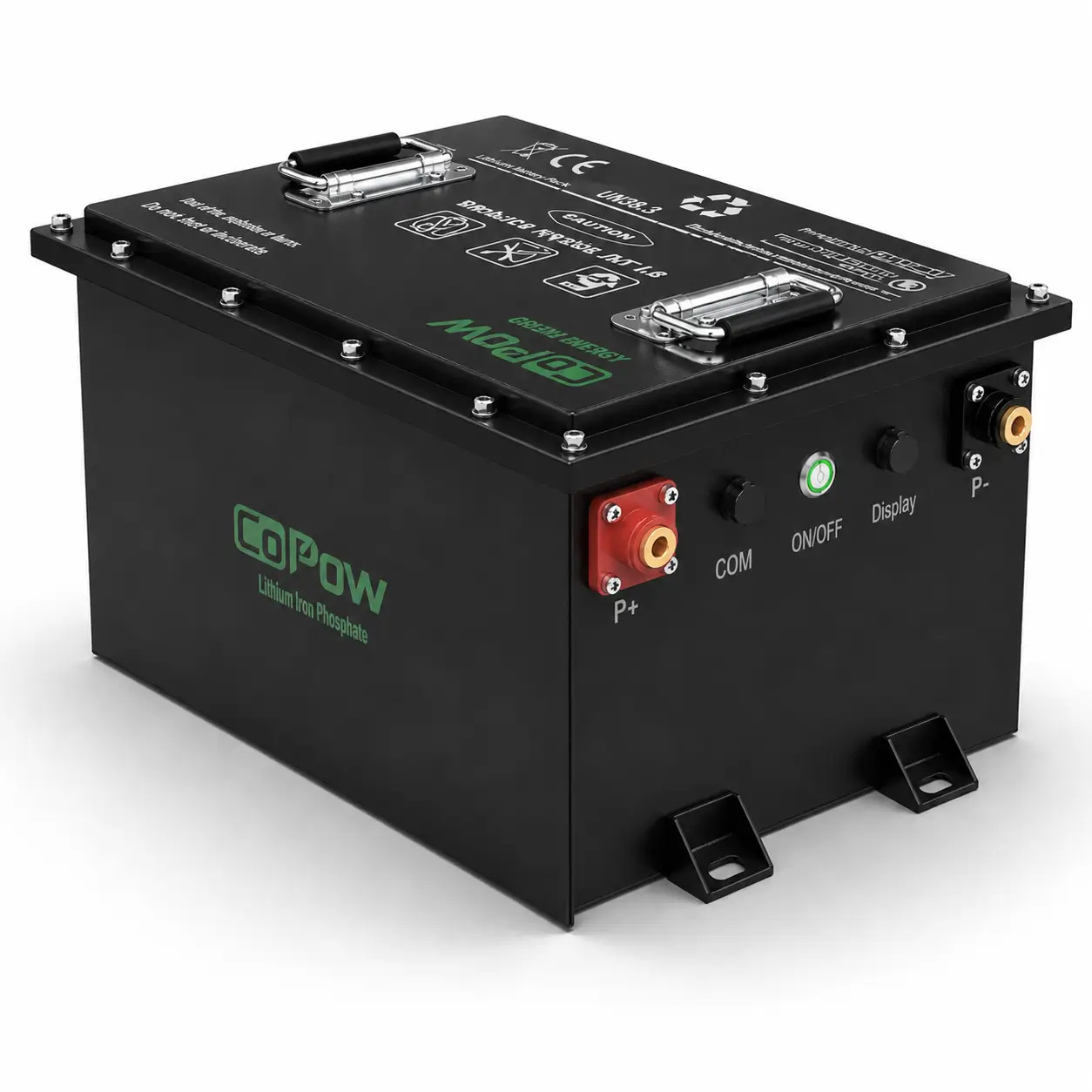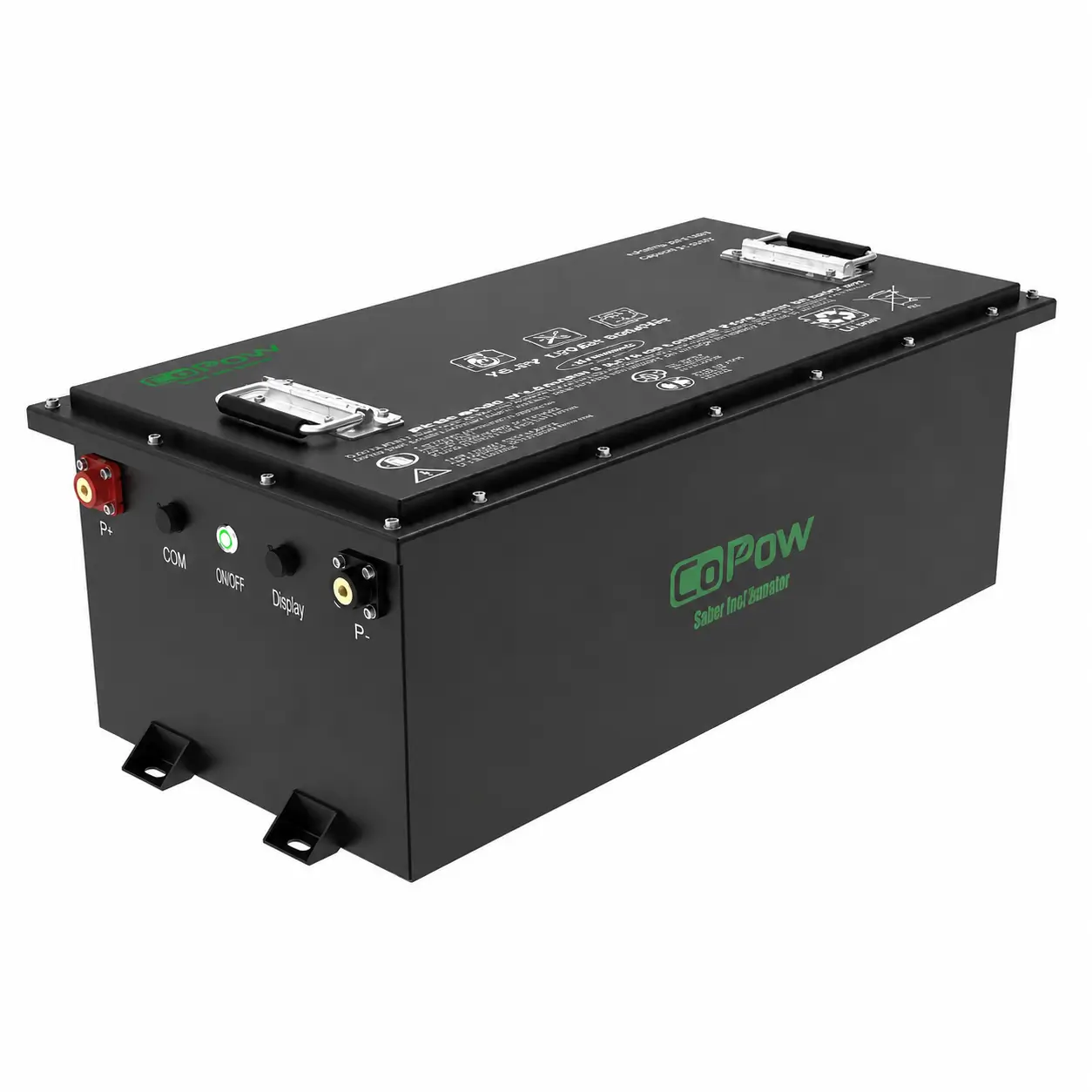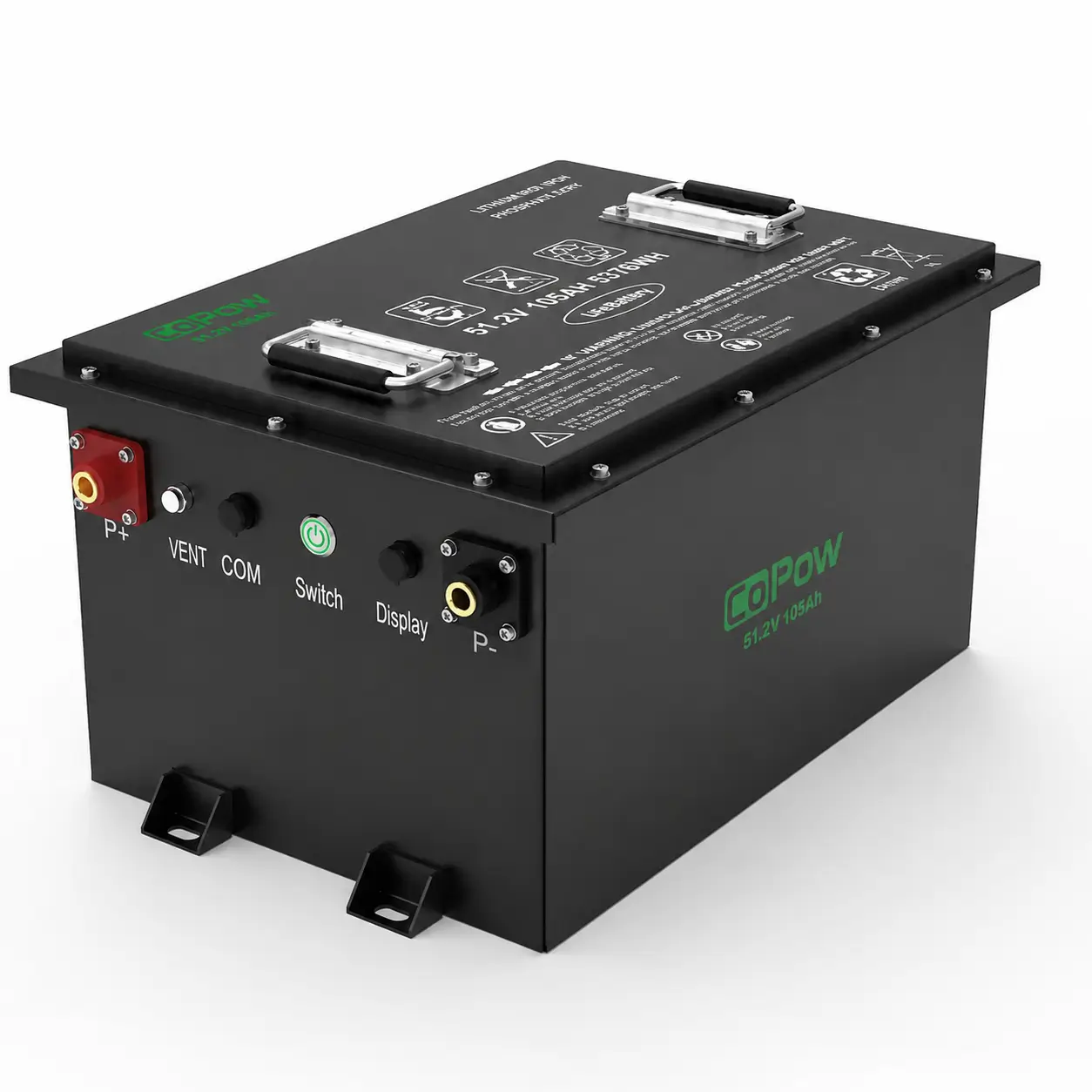
The CoPow 48V 67Ah lithium-ion golf cart battery is a lightweight option that delivers a premium experience!
With a range of 25–40 miles (40–65 kilometers), the 48V 67Ah battery meets your daily needs while offering greater affordability. For small golf cart dealers, this is undoubtedly the ideal entry-level lithium-ion battery upgrade solution, helping you easily enter the market; for resort, hotel, and community operators, it effectively reduces operating costs.
Compatible Models:
| Brand | Typical Models | Applications |
|---|---|---|
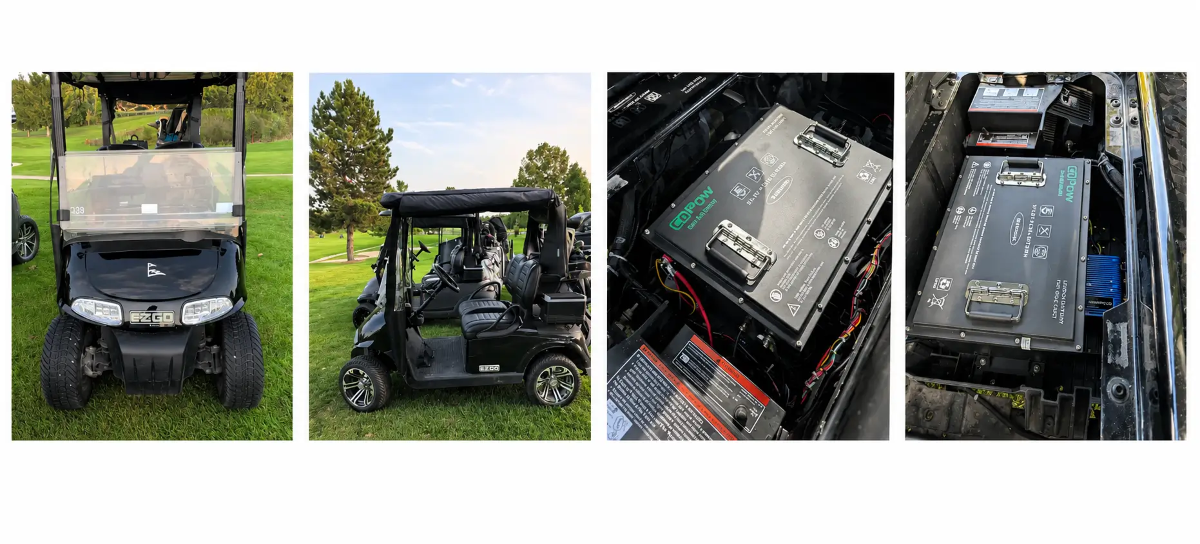
| E-Z-GO | RXV 48V, TXT 48V, Freedom Series | Golf courses, neighborhood transportation, private use |
| Club Car | DS 48V, Precedent, Tempo, Onward, Carryall | Golf carts, personal vehicles, utility & transport vehicles |
| Yamaha | Drive / Drive2, G29, selected G Series 48V models | Golf carts, recreational vehicles, neighborhood transportation |
| ICON EV | i20, i40, i60 and other 48V models | Low-Speed Vehicles (LSV) |
| Evolution | 48V Series models | Golf carts and community electric vehicles |
| Other 48V Models | Utility Carts, Neighborhood Electric Vehicles (NEV), Personal Electric Vehicles | Multi-purpose low-speed electric vehicles |
Product Specification: 51.2V 67Ah Lithium Battery (16S LiFePO4)
| No. | Item | General Parameter |
|---|---|---|
| 1 | Rated Capacity | 67Ah |
| 2 | Nominal Voltage | 51.2V (16S) |
| 3 | Standard Charge Voltage | 58.4V |
| 4 | Charging Method | CC-CV |
| 5 | Charge Current | Normal: 20AMax: 50A |
| 6 | Cut-off Voltage | 40V |
| 7 | Continuous Discharge Current | 67A (1C) |
| 8 | Max. Continuous Discharge Current | 180A (BMS) |
| 9 | Peak Discharge Current | 300A @ 10S / 500A @ 2S (BMS) |
| 10 | Communication | RS232 / RS485 / Bluetooth / CAN |
| 11 | Display Screen | Optional |
| 12 | Charger | 15A–50A Optional |
| 13 | Total Weight | Approx. 30 kg |
| 14 | Internal Resistance (Max. at 1000Hz) | ≤30 mΩ |
| 15 | Operating Temperature | Charging: 0~50℃Discharging: -20~60℃ |
| 16 | Storage Environment | Temperature: 10~45℃Humidity: ≤75%RH |
| 17 | Cycle Life | ≥3500 cycles @ 1C, 80% DOD≥6000 cycles @ 0.2C, 80% DOD |
| 18 | Self-Discharge Rate | ≤3% / Month |
| 19 | Protection Level | IP67 |
| 20 | Battery Dimension | Length (L): 385 ± 2 mmWidth (W): 341 ± 2 mmHeight (H): 248 ± 2 mm |
What Components Make Up the CoPow 48V 67Ah Lithium Golf Cart Battery?
1. LiFePO4 Cells from Leading Brands
We use LiFePO4 cells from CATL, EVE Energy, and BYD. If you have budget constraints, we can also provide cells from second-tier brands.
2. Intelligent Battery Management System
We use battery management systems from leading brands, and we can also provide our in-house developed versions, which can be customized based on your specific operating conditions.
3. Battery Enclosures and Components
Battery enclosures, screws, handles, terminals, mounting brackets, and trays are available in a variety of materials to ensure a robust and durable battery.
4. Wiring Harnesses
We provide resilient cables capable of efficiently transmitting current, featuring professionally designed copper busbars and neatly routed wiring by skilled technicians.
Discover more components and features.


The complete lithium-ion battery conversion kit for golf carts is now ready!
The kit includes a battery mounting bracket, an LCD display, a professional charger, and a DC converter. Not only that, but as a professional manufacturer of lithium-ion batteries for golf carts, we also offer a wide variety of accessories, including the latest models.

Battery appearance structure and size

Electrical Performance and Test Conditions
| No. | Project | Standard | Testing Method |
|---|---|---|---|
| 1 | Rated Capacity | 60Ah | After standard charging, discharge the battery at 0.5C current until reaching the cut-off voltage. The test is repeated for three cycles. If the capacity meets the standard requirement in any one cycle, the battery is considered qualified. (The same applies below.) |
| 2 | Charge Retention Ability at Normal Temperature | Remaining capacity ≥ 97% of rated capacity | After standard charging, store the battery at 25℃ ± 5℃ for 1 month. After storage, discharge the battery at 0.2C constant current until reaching the cut-off voltage, then measure the remaining capacity. |
| 3 | Cycle Life | ≥6000 cycles @ 0.2C, 80% DOD | After standard charging, discharge the battery at 0.2C current until reaching the cut-off voltage, rest for 1 hour, and repeat this cycle for 6000 cycles. |
| 4 | Initial Internal Resistance | ≤30mΩ | Tested at 50% SOC using a 1kHz AC internal resistance tester. |
| 5 | Discharge Temperature Characteristics @0.2C | -20℃ (6h): ≥70%0℃ (6h): ≥90%25℃ (4h): ≥100%55℃ (4h): ≥97% | Capacity retention at specified temperature / Capacity at 25℃Discharge the battery under different temperature conditions at 0.2C current and compare the discharge capacity with the capacity at 25℃. |
Golf Cart Batteries That Earn the Trust of Our Customers
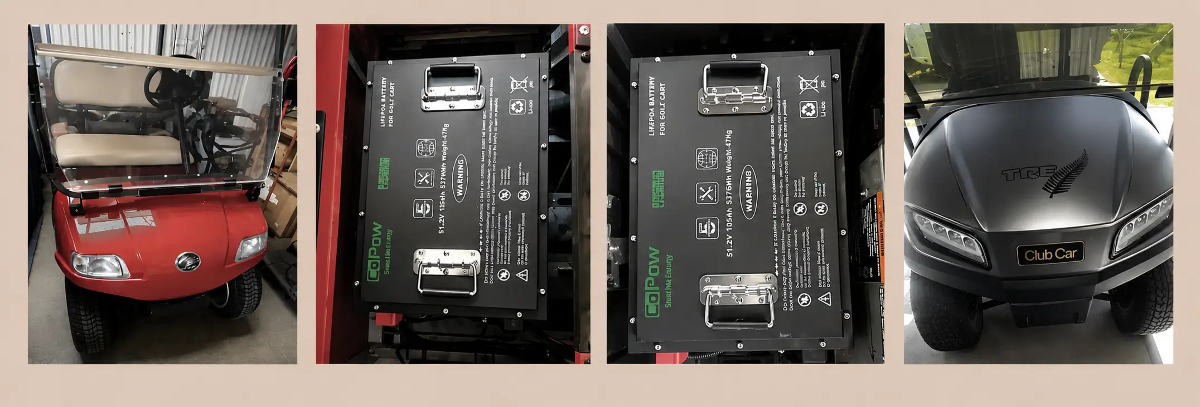
Market Access, Transportation Safety, and Product Quality


Storage and Transportation
1. Based on the characteristics of the battery, proper environmental conditions shall be maintained during the storage and transportation of the LiFePO₄ battery pack to maximize battery performance protection.
2. During storage and transportation, the LiFePO4 battery pack shall be properly protected and maintained at approximately 30%–50% SOC. The battery pack must be protected against short circuits, liquid ingress, or immersion in liquids (such as water, oil, etc.).
3. If the battery will not be used for an extended period, it should be stored in a dry, clean, and well-ventilated warehouse at a temperature range of 0℃ to 45℃.
4. During loading, unloading, and handling, the battery pack shall be handled with care. Dropping, overturning, rolling, and heavy stacking are strictly prohibited.
Warnings and Precautions for Battery Use
In order to prevent the battery leaking, getting hot and exploding, please pay attention to preventingmeasureasfollowing:
Warning!
- Never immerse the battery in seawater or water. When not in use, store the battery in a cool, dry, and well-ventilated environment.
- Never reverse the positive (+) and negative (-) terminals of the battery.
- Never connect the positive and negative terminals of the battery directly with metal objects, as this may cause a short circuit.
- Never transport or store the battery together with metal objects, such as hairpins, necklaces, or other conductive materials.
- Never strike, throw, crush, or step on the battery.
- Never directly weld the battery or puncture it with nails or other sharp tools.
Notice!
- Never use or store the battery in high-temperature environments. Otherwise, it may cause battery overheating, fire, malfunction, or reduced service life. The recommended temperature range for long-term storage is 0–45℃.
- Never dispose of the battery in fire or heating equipment to avoid fire, explosion, and environmental pollution. Discarded batteries should be returned to the supplier or handled by an authorized battery recycling facility.
- Never use the battery in areas with strong static electricity or strong magnetic fields, as this may damage the battery protection system and create potential safety hazards.
- If the battery leaks and electrolyte enters the eyes, do not rub the eyes. Immediately rinse the eyes with clean water and seek medical attention. Otherwise, eye injury may occur.
- If the battery emits an unusual odor, becomes hot, changes color, deforms, or shows any abnormal condition during use, storage, or charging, immediately remove the battery from the device or charger and stop using it.
- Never connect the positive and negative terminals of the battery directly to a power outlet. Always use a dedicated charger designed for lithium-ion batteries.
- Before installation, check the battery voltage and connectors. The battery can only be used after confirming that all conditions are normal.
- Before charging, carefully check the insulation condition, physical damage, and aging status of all cables. No wires should have any damage or aging. The battery pack voltage must be ≥40V for normal operation. If the voltage is below 40V, the battery pack is considered abnormal and must be labeled accordingly. Contact our Customer Service Department and do not charge the battery until it has been inspected and repaired by qualified personnel.
- The battery should be stored at approximately 50% SOC. If the battery has not been used for six months, it should be recharged once.
- If the battery terminals are dirty, clean them with a dry cloth before use. Otherwise, poor contact or operational failure may occur.
- If multiple battery packs are connected in parallel, ensure that all battery packs have the same SOC level and that the voltage difference between packs is within 50mV.
FAQ
Does CoPow offer OEM customization for 48V 67Ah golf cart batteries?
Yes. CoPow has the R&D and manufacturing capabilities for lithium-ion battery packs and can provide OEM/ODM customization based on customer needs, including customization of battery capacity, enclosure size design, terminal position adjustment, BMS solution customization, communication protocol matching, logo printing, and packaging design.
Can a 48V 67Ah lithium-ion battery be used in a commercial golf cart fleet?
Yes. Our lithium-ion batteries for golf carts are suitable for golf course vehicles, resort shuttle buses, community patrol vehicles, and other low-speed electric vehicles.
What certifications does the CoPow 48V 67Ah battery have?
CoPow lithium-ion battery products come with the certifications and test reports required for international markets, including CE, UN 38.3, MSDS, RoHS, IEC 62619, and more. We can also provide certification support tailored to the requirements of different countries and markets.
What is the minimum order quantity (MOQ) for CoPow 48V 67Ah batteries?
CoPow supports flexible partnership models. You can choose to purchase samples for testing, or place orders for small or large quantities.
How long is CoPow's warranty?
The standard warranty period for the CoPow 48V 67Ah Lithium Golf Cart Battery is 5 years. For dealers, OEM customers, and commercial fleets, we can discuss longer-term warranty partnership options.
What is the lead time for bulk orders?
Delivery times depend on the order quantity and customization requirements: sample orders take 2 to 4 weeks, while bulk orders take 4 to 8 weeks.
Does CoPow provide technical support for golf cart battery replacement?
Yes, CoPow's engineering team can provide lead-acid battery replacement solution design, voltage and capacity matching, BMS parameter configuration, installation guidance, communication debugging, and after-sales service to help customers quickly complete the upgrade from lead-acid batteries to lithium-ion batteries.
Why Do Dealers Choose CoPow as Their 48V Golf Cart Battery Supplier?
CoPow's strengths include factory-direct pricing, a stable supply chain of Grade A battery cells, professional lithium-ion battery pack manufacturing capabilities, OEM/ODM customization capabilities, a comprehensive quality control system, global export experience, and reliable, long-term technical support. It's safe to say that CoPow is committed to helping global dealers establish competitive lithium-ion golf cart battery product lines.
Hot Tags: 48V 67Ah Lithium Golf Cart Battery, 24v 150ah Battery, 48v 105ah Lithium Battery, 48v lithium ion battery pack for golf cart, club car lithium battery, floor cleaning machine battery, lifepo4 36v 150ah