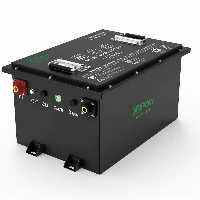
In the electric forklift industry, battery weight has always been a key concern for users.
When selecting forklift batteries, many people tend to focus more on voltage, capacity, and runtime, while overlooking the fact that battery weight also directly affects the forklift's stability, load-carrying capacity, operational efficiency, and safety.
Especially as lead-acid batteries are gradually being replaced by LiFePO4 lithium batteries, an increasing number of users are beginning to recognize that the weight of a forklift battery is not merely a simple parameter, but is closely related to the vehicle's weight distribution design, center of gravity balance, and actual operating conditions.
This article will focus on the weight of forklift batteries, providing a detailed overview of the weight ranges for different types of forklift batteries, the primary factors affecting battery weight, and key considerations when replacing heavy lead-acid batteries with lithium batteries.
The aim is to help readers gain a more comprehensive understanding of the practical application logic of forklift battery systems.

What Is the Average Weight of a Forklift Battery?
Overall, forklift batteries typically weigh between 1,000 and 4,000 pounds (about 450 to 1,800 kg), depending on the battery chemistry, capacity, and forklift type.
Lead-acid forklift batteries are significantly heavier because they contain large lead plates and a liquid electrolyte. Most lead-acid forklift batteries weigh between 1,000 and 4,000 pounds.
Lithium-ion forklift batteries are much lighter. For the same usable capacity, they are generally 30% to 60% lighter than comparable lead-acid batteries. In most cases, lithium forklift batteries weigh between 500 and 2,500 pounds.
Battery weight also varies by forklift application. Small electric pallet jacks may use batteries weighing only a few hundred pounds, while narrow-aisle forklifts and reach trucks commonly use batteries weighing between 1,000 and 2,500 pounds.
By comparison, rider counterbalance forklifts require much heavier batteries - often in the 2,000 to 3,500 pound range - because the battery also serves as part of the forklift's counterweight during lifting operations.
How Much Does a 24V Forklift Battery Weigh?
A 24V forklift battery typically weighs between 230 and 1,360 kilograms (about 500 to 3,000 pounds), depending on the battery chemistry, capacity, and forklift application.
A 24V lead-acid battery used in a small electric pallet truck or walkie stacker may weigh just a few hundred kilograms, while high-capacity 24V batteries designed for heavy-duty warehouse equipment can weigh more than one ton.
By comparison, a 24V 210Ah lithium-ion battery system usually weighs only 150 to 300 kilograms. This lighter weight is one of the main reasons many warehousing and logistics companies are switching to lithium batteries.
In addition to reducing overall vehicle weight, lithium-ion batteries can also improve energy efficiency, handling performance, and operating time.
| Battery Capacity | Common Applications | Lead-Acid Battery Weight | Lithium-Ion Battery Weight |
|---|---|---|---|
| 24V 100Ah | Electric pallet jacks | 180–350 kg (400–770 lbs) | 40–90 kg (90–200 lbs) |
| 24V 150Ah | Pallet trucks, small stackers | 250–450 kg (550–990 lbs) | 60–120 kg (130–265 lbs) |
| 24V 200Ah | Electric stackers | 350–650 kg (770–1,430 lbs) | 90–180 kg (200–400 lbs) |
| 24V 210Ah | Warehouse stackers | 400–700 kg (880–1,540 lbs) | 100–190 kg (220–420 lbs) |
| 24V 240Ah | AGVs, stackers | 450–800 kg (990–1,760 lbs) | 110–210 kg (240–460 lbs) |
| 24V 280Ah | Reach trucks | 550–950 kg (1,210–2,090 lbs) | 130–240 kg (285–530 lbs) |
| 24V 300Ah | Reach forklifts | 600–1,000 kg (1,320–2,200 lbs) | 140–260 kg (310–570 lbs) |
| 24V 350Ah | Medium warehouse forklifts | 700–1,200 kg (1,540–2,640 lbs) | 160–300 kg (350–660 lbs) |
| 24V 400Ah | Industrial forklifts | 850–1,400 kg (1,870–3,080 lbs) | 180–340 kg (400–750 lbs) |
| 24V 420Ah | Heavy-duty warehouse forklifts | 900–1,500 kg (1,980–3,300 lbs) | 190–360 kg (420–790 lbs) |
| 24V 450Ah | Counterbalance forklifts | 1,000–1,650 kg (2,200–3,640 lbs) | 210–390 kg (460–860 lbs) |
| 24V 500Ah | Heavy industrial forklifts | 1,100–1,800 kg (2,420–3,970 lbs) | 230–430 kg (510–950 lbs) |
| 24V 560Ah | Large industrial forklifts | 1,300–2,100 kg (2,860–4,630 lbs) | 260–500 kg (570–1,100 lbs) |
| 24V 600Ah | Heavy-load forklifts | 1,400–2,300 kg (3,080–5,070 lbs) | 280–540 kg (620–1,190 lbs) |
| 24V 700Ah | Large-capacity forklifts | 1,700–2,600 kg (3,740–5,730 lbs) | 320–620 kg (700–1,370 lbs) |
| 24V 800Ah | High-capacity traction forklifts | 2,000–3,000 kg (4,400–6,600 lbs) | 380–720 kg (840–1,590 lbs) |
How Much Does a 36V Forklift Battery Weigh?
A set of 36V forklift batteries weighs approximately 500 to 1,800 kilograms.
| 36V Forklift Battery Specification | Common Forklift Application | Lead-Acid Battery Weight (kg) | Lithium Battery Weight (kg) | Notes |
|---|---|---|---|---|
| 36V 210Ah | Electric pallet truck / small stacker | 500–700 | 180–320 | Common for small warehouse equipment |
| 36V 240Ah | Walkie stacker | 600–800 | 220–360 | Suitable for light-duty handling |
| 36V 280Ah | Small reach truck | 700–950 | 260–420 | Common in warehouse logistics |
| 36V 300Ah | Reach forklift | 800–1000 | 280–450 | Mainstream medium-small capacity |
| 36V 360Ah | Medium reach truck | 900–1200 | 350–550 | Often used for longer shifts |
| 36V 400Ah | Counterbalance forklift | 1000–1300 | 400–650 | Common industrial configuration |
| 36V 450Ah | Medium-large forklift | 1100–1450 | 450–720 | Designed for heavier workloads |
| 36V 500Ah | Heavy-duty warehouse forklift | 1200–1600 | 500–800 | Higher runtime requirements |
| 36V 560Ah | Large reach truck | 1350–1750 | 580–900 | High-frequency operation |
| 36V 600Ah | Large industrial forklift | 1500–1900 | 650–980 | Lithium version approaches 1 ton |
| 36V 700Ah | Heavy counterbalance forklift | 1700–2200 | 800–1200 | Multi-shift applications |
| 36V 800Ah | Large industrial forklift | 1900–2500 | 950–1400 | Port and heavy industry use |
| 36V 900Ah | Extra-large forklift | 2200–2800 | 1100–1600 | Requires high counterweight |
| 36V 1000Ah | Heavy industrial forklift | 2500–3200 | 1300–1800 | Ultra-long runtime |
| 36V 1200Ah | Specialized heavy forklift | 3000–3800 | 1600–2200 | Some systems exceed 3 tons |
How Much Does a 48V Forklift Battery Weigh?
48V forklift batteries are heavier than 24V and 36V batteries because 48V systems are typically used in medium- and heavy-duty forklifts, counterbalanced forklifts, reach trucks, and heavy-duty industrial material handling equipment.
A set of 48V forklift batteries weighs approximately 800 to 3,500 kilograms.
| 48V Forklift Battery Specification | Common Forklift Application | Lead-Acid Battery Weight (kg) | Lithium Battery Weight (kg) | Notes |
|---|---|---|---|---|
| 48V 210Ah | Electric pallet truck / light stacker | 700–950 | 220–380 | Small warehouse applications |
| 48V 240Ah | Walkie stacker | 800–1100 | 260–420 | Light-duty material handling |
| 48V 280Ah | Small reach truck | 900–1200 | 320–500 | Common in compact warehouses |
| 48V 300Ah | Reach forklift | 1000–1350 | 350–550 | Mainstream medium-small capacity |
| 48V 360Ah | Medium reach truck | 1200–1600 | 420–700 | Longer operating hours |
| 48V 400Ah | Counterbalance forklift | 1400–1900 | 500–850 | Common industrial configuration |
| 48V 450Ah | Medium-large forklift | 1550–2100 | 580–950 | Heavy-duty warehouse work |
| 48V 500Ah | Industrial forklift | 1700–2300 | 650–1050 | Extended runtime applications |
| 48V 560Ah | Large reach truck | 1850–2500 | 750–1150 | High-frequency operation |
| 48V 600Ah | Heavy-duty forklift | 2000–2700 | 850–1300 | Common in factories and logistics |
| 48V 700Ah | Large counterbalance forklift | 2300–3000 | 1000–1450 | Multi-shift operation |
| 48V 800Ah | Heavy industrial forklift | 2500–3300 | 1150–1650 | Port and manufacturing industry |
| 48V 900Ah | Extra-large forklift | 2800–3600 | 1300–1850 | High counterweight demand |
| 48V 1000Ah | Heavy industrial equipment | 3000–4000 | 1450–2100 | Ultra-long runtime |
| 48V 1200Ah | Specialized heavy forklift | 3500–4500 | 1800–2600 | Some systems exceed 4 tons |
How Much Does a 72V Forklift Battery Weigh?
72V forklift batteries are commonly used in large electric forklifts and heavy-duty material handling equipment. They are typically found in high-capacity counterbalance forklifts, large reach trucks, port logistics vehicles, and container handling equipment.
Compared with 24V, 36V, and 48V systems, 72V forklift batteries deliver significantly higher power output and larger energy capacity. As a result, they are substantially heavier.
In most cases, a 72V forklift battery weighs between 1,500 and 5,000 kilograms (about 3,300 to 11,000 pounds). Some batteries used in large port equipment and container handlers can even exceed 6,000 kilograms.
| 72V Forklift Battery Specification | Common Forklift Application | Lead-Acid Battery Weight (kg) | Lithium Battery Weight (kg) | Notes |
|---|---|---|---|---|
| 72V 210Ah | Small industrial forklift | 1400–1800 | 450–750 | Entry-level 72V systems |
| 72V 240Ah | Walkie rider / stacker | 1500–2000 | 500–820 | Light industrial applications |
| 72V 280Ah | Small reach truck | 1700–2300 | 600–950 | Common warehouse logistics |
| 72V 300Ah | Reach forklift | 1800–2500 | 650–1050 | Medium-duty industrial use |
| 72V 360Ah | Medium reach truck | 2100–2900 | 800–1250 | Longer operating shifts |
| 72V 400Ah | Counterbalance forklift | 2300–3200 | 900–1450 | Common heavy-duty configuration |
| 72V 450Ah | Large industrial forklift | 2500–3500 | 1000–1600 | Higher runtime demand |
| 72V 500Ah | Heavy-duty forklift | 2800–3900 | 1150–1800 | Factory and logistics operations |
| 72V 560Ah | Large counterbalance forklift | 3100–4300 | 1300–2000 | Multi-shift industrial use |
| 72V 600Ah | Port / manufacturing forklift | 3400–4700 | 1450–2200 | High-power operation |
| 72V 700Ah | Heavy industrial equipment | 3800–5200 | 1650–2500 | Large lifting capacity |
| 72V 800Ah | Port handling equipment | 4200–5800 | 1850–2800 | Continuous-duty applications |
| 72V 900Ah | Large container forklift | 4600–6300 | 2100–3100 | Extremely high counterweight demand |
| 72V 1000Ah | Heavy port machinery | 5000–7000 | 2300–3500 | Ultra-long runtime systems |
| 72V 1200Ah | Specialized industrial forklift | 5800–8000 | 2800–4200 | Some systems exceed 8 tons |
How to Calculate Forklift Battery Weight for Your Application?
The most basic way to estimate forklift battery weight is to look at the battery voltage, capacity, and chemistry.
Battery energy is commonly calculated using the following formula:
E=V×Ah
For example, a 48V 500Ah forklift battery provides approximately 24kWh of energy. In general, higher-capacity batteries require more cells, copper busbars, structural materials, and internal components, which increases overall battery weight.
Battery chemistry also plays a major role in total weight. Lead-acid batteries are significantly heavier because they contain large lead plates and liquid electrolyte. Lithium-ion batteries have a higher energy density and a more compact internal structure, making them around 30% to 60% lighter than comparable lead-acid batteries with the same capacity.
Always Follow the Forklift Manufacturer's Recommended Battery Weight
When selecting a forklift battery, the forklift manufacturer's recommended battery weight should always be treated as the primary reference.
Forklift manufacturers already account for battery weight when designing vehicle balance, lifting stability, and counterweight distribution.
Every forklift model includes specifications for battery voltage, battery compartment dimensions, minimum battery weight, and allowable battery weight range. These requirements are critical for safe operation.
For example, if a forklift originally used a 48V lead-acid battery weighing 900 kg, replacing it with a 48V lithium battery weighing only 450 kg may reduce rear counterweight stability, even if the voltage and capacity are sufficient.
In these cases, additional counterweights, heavier steel enclosures, or structural modifications may be required.
Calculate Battery Capacity Based on Real Working Conditions
Battery capacity should match the actual operating environment.
Forklifts used for light-duty warehouse work, short travel distances, and single-shift operations usually do not require oversized battery capacity. However, applications involving continuous operation, heavy lifting, cold storage, outdoor terrain, ramps, or multi-shift usage typically require larger battery systems.
Capacity requirements can be estimated based on operating current and runtime. For example, if a forklift operates at an average current of 80A for 6 hours per day, the estimated capacity requirement would be:
80A×6h=480Ah
In real-world applications, additional capacity should be reserved to account for peak current demand, cold-weather performance loss, battery aging, and reduced efficiency over time. In most cases, adding a capacity margin of around 20% is recommended, making a 550Ah or 600Ah battery a more practical choice.
Convert Battery Capacity Into an Estimated Weight Range
After determining the required capacity, the next step is estimating the expected battery weight.
A typical 48V 500Ah lead-acid forklift battery usually weighs around 500 to 700 kilograms, while a LiFePO4 battery with the same specifications generally weighs between 200 and 350 kilograms.
Actual battery weight also depends on several additional factors, including:
- Cell type
- Steel or aluminum enclosure design
- IP protection rating
- Battery management system
- Heating systems
- Fire suppression systems
- Communication modules
- Cable and harness configuration
For larger systems such as 80V 775Ah or 80V 1000Ah forklift batteries, lead-acid systems may weigh between 1,200 and 1,700 kilograms, while lithium-ion systems often weigh around 700 to 1,050 kilograms.
Use a Step-by-Step Method to Determine Final Battery Weight
The most practical way to estimate forklift battery weight is to combine forklift specifications, energy requirements, battery chemistry, and structural considerations.
Step 1: Confirm Forklift Specifications
Confirm the forklift model, original battery voltage, battery compartment dimensions, and minimum battery weight requirements.
Step 2: Calculate Required Battery Capacity
Estimate the required capacity based on operating hours, lifting frequency, load weight, and charging conditions.
Step 3: Estimate Battery Weight
Estimate the expected battery weight according to the selected battery chemistry and system design.
Step 4: Verify Weight Compatibility
Verify that the estimated battery weight remains within the forklift manufacturer's approved range.
If the lithium battery system is too light, additional counterweights or a reinforced enclosure may be required. Lifting equipment, battery replacement systems, and transport equipment should also be checked to ensure they can safely support the battery weight.
The best forklift battery is not simply the lightest option, but the one that properly balances safety, operating performance, runtime requirements, and vehicle stability.
This is especially important when replacing lead-acid batteries with lithium-ion systems. Although lithium batteries are lighter, charge faster, and require less maintenance, they must still meet the forklift manufacturer's minimum counterweight requirements to ensure safe operation.
What Factors Affect Forklift Battery Weight?
Several factors affect the weight of a forklift battery, including battery chemistry, voltage, capacity, forklift design, counterweight requirements, enclosure materials, and operating conditions.
Next, let's take a closer look at the main factors that influence forklift battery weight.
Battery Chemistry
Lead-acid forklift batteries are significantly heavier because they contain large lead plates and liquid electrolyte. Since lead has a very high density, lead-acid batteries are naturally much heavier.
By comparison, LiFePO4 lithium batteries have a higher energy density and do not require thick, heavy lead plates, allowing the overall battery system to be much lighter.
attery Voltage
Different voltage systems - such as 24V, 36V, 48V, 72V, and 80V - require different numbers of cells connected in series, which directly affects total battery size and energy capacity.
In general, higher-voltage forklift batteries are larger and heavier.
Battery Capacity
Higher-capacity batteries require more cells, larger active material volume, and stronger internal structures, all of which increase battery weight.
For example, a 48V 105Ah lithium battery may weigh only several dozen to just over one hundred kilograms, while a 48V 600Ah industrial forklift lithium battery can weigh several hundred kilograms.
Forklift Structural Design
In many counterbalance forklifts, the battery is not only the power source but also part of the vehicle's counterweight system.
This is especially important in heavy-duty forklifts, where battery weight directly affects the forklift's center of gravity, lifting stability, and load balance. As a result, forklift manufacturers usually specify a minimum battery weight requirement.
Operating Conditions
Forklifts operating under continuous or high-intensity conditions generally require larger battery capacity and longer runtime.
Applications such as two-shift or three-shift warehouse operations, port logistics, cold storage, and heavy material handling usually require heavier battery systems.
Battery Enclosure Materials
Steel enclosures are the most common because they provide high structural strength, strong impact resistance, and additional counterweight support. However, steel housings also increase total battery weight.
Some high-end lithium forklift batteries use aluminum alloy enclosures to reduce weight, although this also increases manufacturing cost.
In coastal, high-humidity, or corrosive operating environments, stainless steel enclosures may be used for improved corrosion resistance, which further increases battery weight.
Protection Rating
Forklift batteries with higher protection ratings require thicker sealing structures, improved waterproofing, stronger shock resistance, and more complex manufacturing processes.
As a result, industrial forklift batteries rated IP65 or IP67 are usually heavier than standard battery systems.
Additional Features
Additional functions such as smart BMS, CAN communication, RS485, Bluetooth, GPS, remote monitoring, LCD displays, low-temperature heating systems, and fire suppression systems improve battery intelligence and operational safety, but they also add weight.
Low-temperature self-heating systems in particular require extra heating films, insulation materials, and control modules, which can noticeably increase overall battery weight.
Cell Type and Structural Design
Industrial forklift lithium batteries commonly use LiFePO4 prismatic cells because of their long cycle life and high safety performance. However, this design is generally heavier than some higher-energy-density battery solutions.
To improve durability and operational safety, many forklift batteries also include anti-vibration structures, reinforced frames, insulated protection layers, and fire-resistant components, all of which further increase overall battery weight.
How Battery Weight Impacts Forklift Stability and Load Capacity?
For many electric forklifts, the battery is not only part of the power system but also a critical structural component of the vehicle.
In electric counterbalance forklifts, battery weight can directly affect whether the forklift can safely lift its rated load capacity.
When a forklift lifts a load, the front of the vehicle generates forward tipping force. To maintain stability, the rear of the forklift must provide enough counterweight to balance the load.
Because the battery is usually installed near the rear of the chassis, it naturally functions as part of the forklift's counterweight system.
Within the manufacturer's approved range, a heavier battery generally improves forklift stability.
A heavier battery helps lower the forklift's center of gravity and improves rear counterbalance performance. During heavy lifting operations, this additional weight helps the forklift remain stable and reduces the risk of forward tipping.
This becomes especially important during high-level stacking, heavy-load handling, and sharp turning operations.
If rear counterweight is insufficient, the forklift may experience rear-wheel lift, unstable steering, or even forward tipping while lifting cargo.
This is one reason why traditional lead-acid forklift batteries have remained widely used for many years despite their heavy weight.
Lead-acid batteries contain large lead plates and liquid electrolyte, making them naturally heavy - and that weight helps meet the forklift's counterweight requirements.
By comparison, LiFePO4 lithium batteries are much lighter because of their higher energy density.
For the same usable capacity, lithium batteries are often 30% to 60% lighter than comparable lead-acid systems. While this reduces energy consumption, lowers ground pressure, and improves efficiency, it can also create stability challenges.
Most forklifts are originally designed around the weight of traditional lead-acid batteries. If a much lighter lithium battery is installed, the forklift's center of gravity may shift forward, which can affect stability and rated lifting capacity.
To solve this problem, many lithium forklift battery systems include additional counterweight compensation.
Common solutions include thicker steel enclosures, built-in steel counterweight plates, bottom-mounted ballast blocks, and optimized structural layouts.
This allows the forklift to maintain proper balance while still benefiting from the higher efficiency and faster charging performance of lithium batteries.
Battery weight also affects lateral stability.
If the battery is too light or the center of gravity is not properly positioned, the risk of tipping increases during high-speed turns, ramp operation, or uneven ground conditions.
This is especially important in large warehouses, logistics centers, and port operations where forklifts frequently carry heavy loads at higher operating speeds.
Battery weight can also affect the forklift's actual load capacity.
Many people assume that rated lifting capacity depends only on hydraulic power. In reality, lifting stability also depends heavily on the forklift's overall weight distribution and counterbalance design.
If the battery is too light, the forklift may still have enough power to lift the load, but its safe operating capacity may need to be reduced to prevent tipping.
For this reason, forklift manufacturers usually specify an approved battery weight range in their technical documentation. Using batteries outside this range may affect the forklift's rated load capacity and operational safety.
However, heavier batteries are not always better.
If battery weight exceeds the forklift's design limits, it can create additional problems such as:
- Higher tire load
- Increased ground pressure
- Greater steering system stress
- Higher energy consumption
- Longer braking distance
- Reduced chassis and bearing lifespan
For this reason, forklift manufacturers specify a recommended battery weight range rather than simply using the heaviest battery possible.
Can a Lithium Forklift Battery Replace a Heavy Lead-Acid Battery?
There is no question that lithium-ion batteries can replace lead-acid batteries in many forklift applications. In fact, more warehousing, logistics, manufacturing, and port operations are gradually switching from traditional lead-acid systems to LiFePO4 battery systems.
From a power and energy supply standpoint, lithium batteries are fully capable of replacing lead-acid batteries.
Lithium-ion batteries have a higher energy density, which means they are smaller and lighter at the same capacity. They also provide a more stable voltage output and avoid the significant voltage drop commonly seen in lead-acid batteries under heavy loads.
As a result, lithium-powered forklifts usually deliver more stable performance during acceleration, ramp climbing, and heavy-load operation.
Lithium batteries also support much faster charging. Many systems can complete opportunity charging or fast charging within 1 to 2 hours, while lead-acid batteries often require longer charging and cooling cycles.
In terms of maintenance, lithium-ion batteries offer major advantages as well. Lead-acid batteries require regular watering, equalization charging, and electrolyte maintenance, while lithium batteries are essentially maintenance-free and do not suffer from acid leakage, sulfation, or corrosion problems.
However, the real challenge is not power capability - it is whether the lithium battery can meet the forklift's original counterweight requirements.
Many counterbalance forklifts were originally designed around the heavier weight of traditional lead-acid batteries.
If a lithium battery is significantly lighter, the forklift's center of gravity and lifting stability may be affected unless additional counterweight compensation is added.
conclusion
As more companies transition from lead-acid batteries to lithium-ion systems, battery weight has become an increasingly important consideration.
However, in real-world forklift applications, lighter does not always mean better.
This is especially true for counterbalance forklifts, heavy-duty industrial forklifts, and high-reach warehouse equipment, where the battery also functions as part of the vehicle's counterweight system.
If the manufacturer's minimum battery weight and center-of-gravity requirements are ignored, a lighter lithium battery may negatively affect forklift stability and operational safety - even if it offers advantages such as higher efficiency, faster charging, and lower maintenance costs.
For this reason, forklift battery selection should not be based only on voltage, capacity, or price.
The following factors should also be considered:
- Forklift model
- Manufacturer-recommended battery weight
- Actual operating conditions
- Required runtime
- Load capacity
- Operating environment
- Battery chemistry
- Counterweight requirements
- Safety standards
If you still have questions about forklift battery weight or lithium battery replacement, feel free to contact CoPow's technical team. We typically respond within 24 hours.
FAQs
Are lithium forklift batteries lighter than lead-acid batteries?
Yes, lithium-ion batteries are 30% to 60% lighter than lead-acid batteries. This is because lead-acid batteries contain a large amount of lead plates and electrolyte, whereas lithium-ion batteries have a higher energy density and a more compact design.
Do heavier forklift batteries last longer?
Not necessarily. The durability of a forklift battery does not depend entirely on its weight, but rather on the battery's chemistry, cell quality, number of charge cycles, operating conditions, and maintenance practices.
How to Safely Remove, Transport, and Install a Forklift Battery?
First, turn off the forklift's power and disconnect the battery terminals. Then, remove the battery using specialized lifting equipment or a battery-swapping system; never pull directly on the cables.
During transport, the battery must be secured to prevent tipping, impact, or short circuits. Before installation, verify that the battery's voltage, dimensions, weight, and connectors meet the forklift's specifications. Only reconnect the power after ensuring the battery is securely installed.