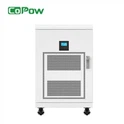
With the rising cost of electricity for commercial and industrial users, coupled with the growing need for photovoltaic integration, peak-valley tariff management and backup power supply, C&I (Commercial & Industrial) energy storage systems are now being widely adopted in factories, commercial buildings, industrial estates and data centres.
Battery cells, battery systems, PCS, BMS, EMS, thermal management, fire protection systems, grid-connected and off-grid capabilities, relevant certifications, warranties and post-installation technical support all directly impact the practical application of an energy storage project as a whole. Consequently, identifying a suitable C&I energy storage system manufacturer has become a crucial aspect of the procurement and system integration process.
So, which C&I energy storage system manufacturers are worth watching in 2026?
This article compiles a list of manufacturers currently active in the commercial and industrial energy storage market, including CATL, Sungrow, Tesla Energy, Huawei Digital Power, BYD Energy Storage, Hithium, EVE Energy, Fluence, AlphaESS and CoPow. It provides an overview from multiple perspectives of interest to users, to help readers quickly understand the unique strengths of each manufacturer.

CoPow – A Cost-Effective C&I Energy Storage System Manufacturer and Integrator from China
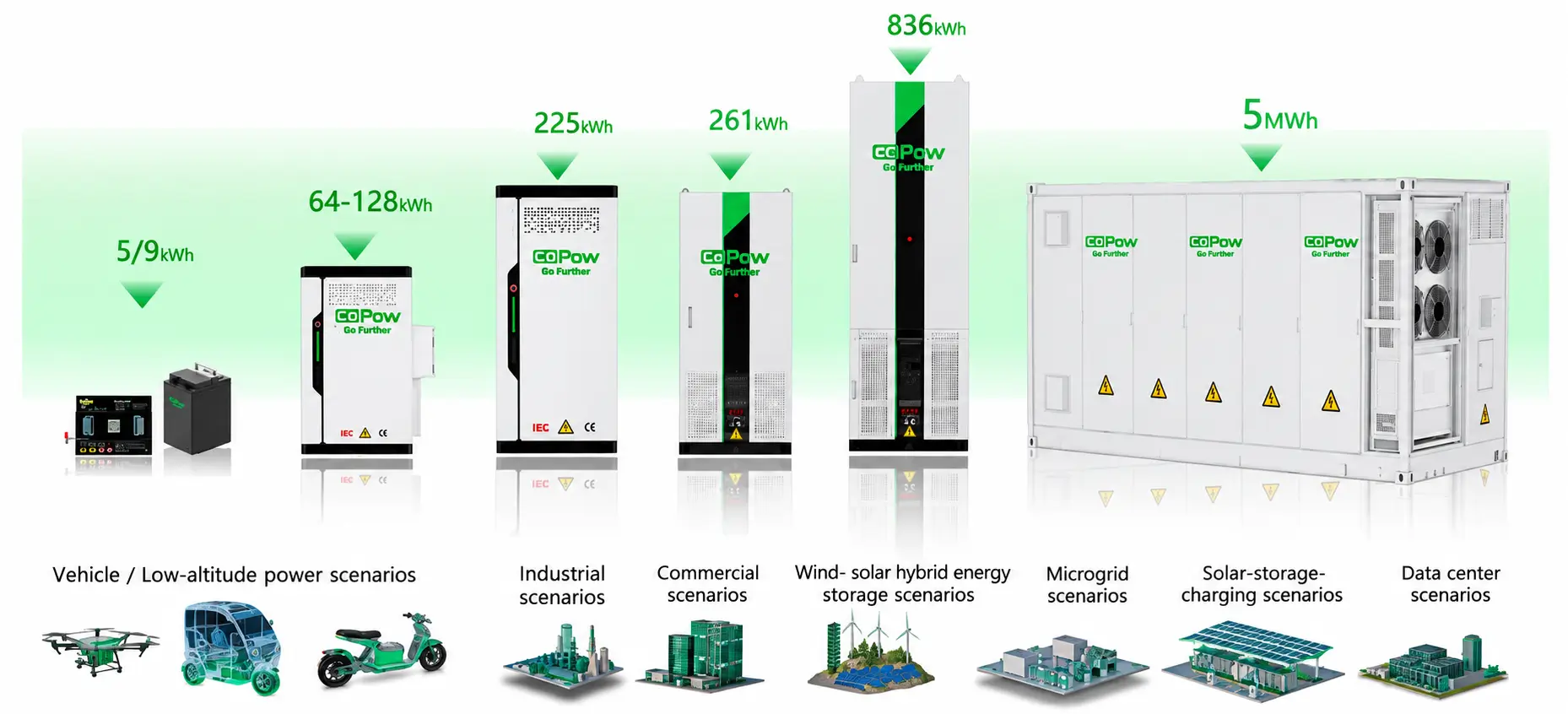
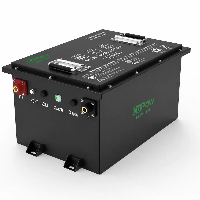
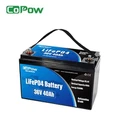
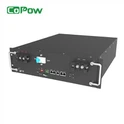
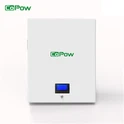
Founded in 2011 and headquartered in Shenzhen, China, CoPow is a Shenzhen-based manufacturer of commercial and industrial energy storage systems and a battery system integrator.
CoPow can provide solutions tailored to project requirements, including battery systems, PCS, BMS, EMS, thermal management, fire protection, electrical protection and communication systems, and offers commercial and industrial energy storage systems ranging from tens of kWh to the MWh scale.
In the fields of battery pack and system integration, CoPow possesses extensive manufacturing experience. In addition to energy storage systems, the company has long specialised in developing batteries for forklift trucks, AGVs/AMRs, marine vessels and other industrial vehicles.
This has enabled CoPow to accumulate a wealth of practical experience in the structural design of high-capacity battery systems, high-voltage electrical design, BMS, CAN/RS485 communication, thermal management and adaptation to complex operating conditions, all of which is applied to its commercial and industrial energy storage systems.
With regard to cell selection, CoPow matches different cell platforms-such as CATL, EVE, BYD, Gotion, CALB and REPT-based on the project's cycle life, charge/discharge rates, temperature conditions, system voltage, space constraints and budget.
Currently, CoPow's commercial and industrial energy storage projects primarily utilise LiFePO4 batteries, whilst the company is also developing sodium-ion battery energy storage systems to meet the demands of low-temperature and other specialised application scenarios.
The advantage of this approach lies in the ability to tailor system configurations to project requirements. For instance, when a client requires an energy storage system of 500 kW/1 MWh, 1 MW/2 MWh or larger, CoPow can first verify the load curve, grid-connection voltage, photovoltaic system, charge/discharge strategies and installation environment, before determining the number of battery cabinets, PCS power rating, DC voltage platform, EMS control logic and other auxiliary systems.
Throughout the project delivery process, CoPow also provides technical support to clients covering solution validation, system configuration, manufacturing, factory testing, transportation, and installation and commissioning. For export projects, CoPow will confirm the relevant transport documents, test reports and certification requirements based on the target market and specific system configuration.

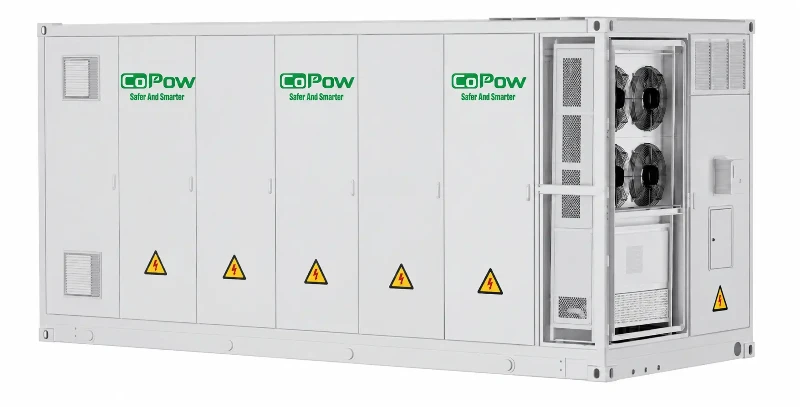
Energy Storage System Specifications: All-in-one and modular C&I ESS; indoor, outdoor cabinet, and containerized configurations; AC 380V / 400V / 480V; 50/60Hz.
Power and Capacity Range: 50kW / 100kW / 125kW / 250kW+ PCS options; 100kWh to MWh-level capacity, with multi-cabinet parallel expansion.
System Integration Capabilities: Battery + BMS + PCS + EMS + thermal management + fire protection + communication integration; supports PV, grid and diesel-generator hybrid systems.
Certifications: IEC 62619, GB/T 36276 and UN38.3; CE, IEC 63056, UL 1973 / UL 9540 / UL 9540A and other certifications can be configured according to project and market requirements.
Battery Technology: Mainly LiFePO4, using Grade-A cells from CATL, EVE, BYD, Gotion and other major cell manufacturers; sodium-ion solutions are also under development for specific applications.
PCS Configuration: 50–250kW+ configurable PCS; supports on-grid/off-grid operation, AC 380/400/480V, PV integration and STS options.
BMS / EMS: Intelligent BMS with cell-level monitoring, protection and balancing; optional EMS with remote monitoring, charge/discharge management and system control.
Thermal Management: Air-cooled HVAC or liquid-cooling solutions available according to system capacity, power and operating environment.
Project Delivery Capabilities: OEM/ODM support from system design and cell selection to PACK manufacturing, PCS/EMS integration, FAT, shipping and technical support; suitable for customized overseas C&I ESS projects.
CATL
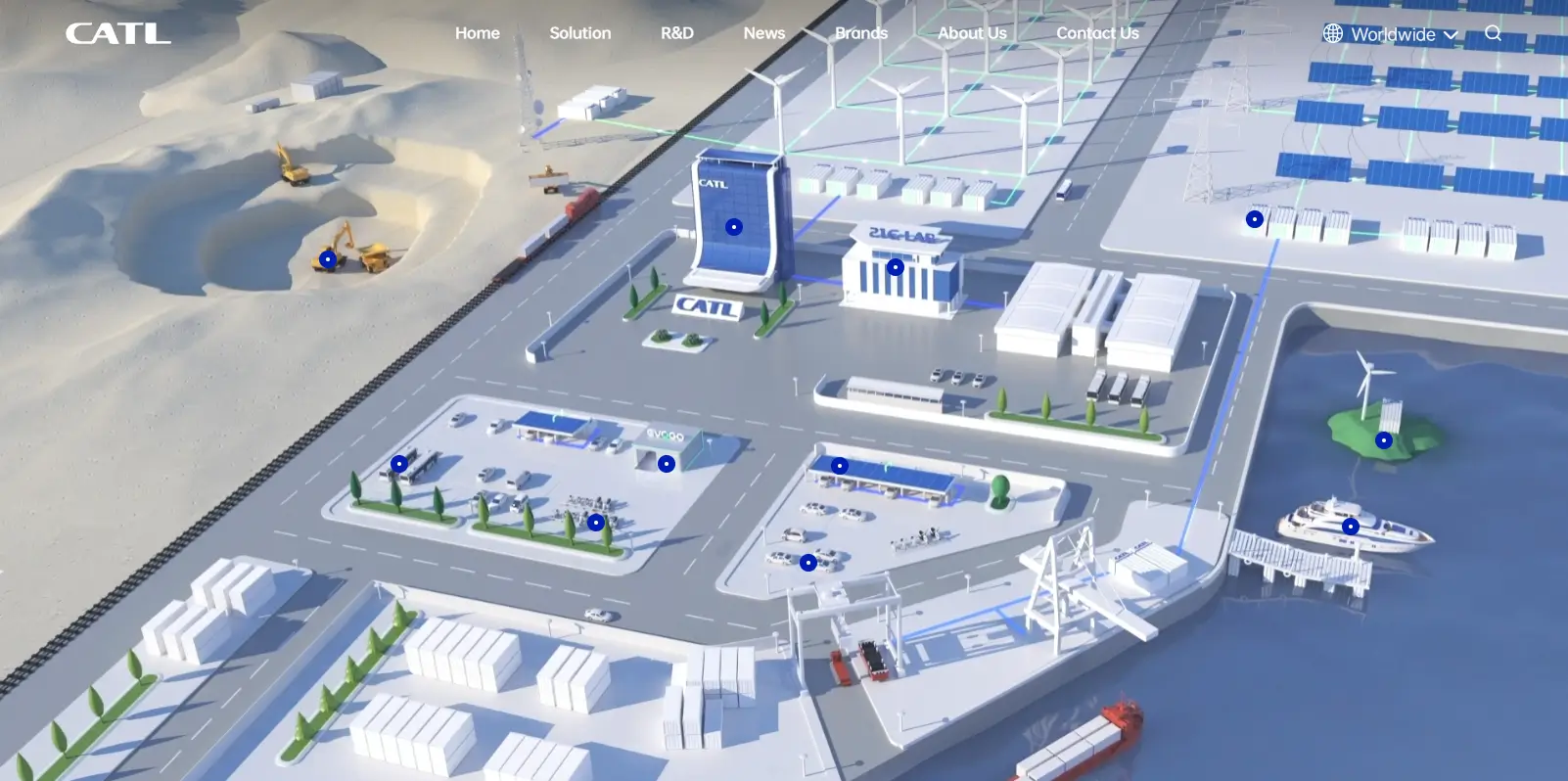
Contemporary Amperex Technology Co., Ltd. (CATL), established in 2011 and headquartered in Ningde, Fujian Province, is a leading global supplier of new energy batteries and energy storage systems.
CATL's business not only covers power batteries for new energy vehicles, but also extends to energy storage batteries, battery management systems, energy storage system integration and battery recycling. In 2025, the company's turnover reached approximately 423.7 billion yuan, with lithium-ion battery sales totalling 661 GWh, of which energy storage battery sales accounted for approximately 121 GWh, representing a year-on-year increase of 29.13 per cent. According to data from SNE Research, CATL ranked first in global energy storage battery shipments in 2025 for the fifth consecutive year.
CATL's energy storage business now encompasses battery cells, packs/racks, BMS, liquid cooling systems, containerised energy storage systems, intelligent energy storage management, and the design and optimisation of complete stations. CATL officially categorises energy storage applications into generation-side and consumption-side applications.
The consumption-side category explicitly covers application scenarios such as large-scale industrial and commercial facilities, UPS systems, backup power for telecommunications, photovoltaic-storage-charging systems, and off-grid systems. Consequently, CATL's products are suitable for both large-scale grid-side projects and commercial and industrial energy storage projects.
CATL officially categorises energy storage applications into generation-side and consumption-side. The consumption-side specifically covers application scenarios such as large-scale industrial and commercial facilities, UPS systems, telecommunications backup power, photovoltaic-storage-charging systems and off-grid systems. Consequently, CATL's products are suitable for both large-scale grid-side projects and commercial and industrial energy storage projects.

CATL's core technology for commercial and industrial energy storage is LiFePO4 energy storage cell technology. The company possesses vertically integrated capabilities ranging from cell R&D and manufacturing to pack and system design, and has demonstrated strong technical integration capabilities in terms of cell consistency, cycle life, BMS compatibility, thermal management and system safety.
The company's most representative energy storage products include EnerOne, EnerC, EnerD, TENER, TENER FLEX and TENER Stack. According to the prospectus, the company lists TENER, EnerOne, EnerC, EnerD, UniC and PU100 as its flagship ESS products, designed to meet the diverse customer demands for rack-mounted, modular and large-scale containerised energy storage solutions.
The most well-known of these is the TENER energy storage system. The standard TENER utilises a 20-foot container design, with a single-system capacity of 6.25 MWh, and employs LFP energy storage cells with an energy density of approximately 430 Wh/L. CATL states that, through technologies such as biomimetic SEI and self-assembling electrolytes, this product achieves 'zero degradation' in capacity and power output over the first five years.
Compared with previous solutions, the energy density per unit area has increased by approximately 30 per cent, whilst the overall footprint has been reduced by approximately 20 per cent.
In 2025, CATL further launched the TENER Stack, with a maximum internal capacity of 9 MWh per unit, supporting both centralised PCS and string-based PCS architectures. The system can be configured for large-scale industrial and commercial parks, data centres, and grid-side projects depending on the AC-side architecture.
CATL has now also begun applying sodium-ion batteries to energy storage systems. In June 2026, the company launched the TENER Sodium sodium-ion energy storage system, stating that the product had entered the commercialisation phase. Cumulative shipments are expected to reach 1 GWh by the end of 2026, with global deliveries commencing in June 2027.
Sungrow Power Supply
Sungrow Power Supply is a major Chinese manufacturer of new energy power equipment. Founded in 1997 and headquartered in Hefei, Anhui, the company was established by Cao Renxian and listed on the Shenzhen Stock Exchange in 2011.
The company initially began with photovoltaic inverters; its business has now expanded to include photovoltaic inverters, energy storage systems, key components for new energy vehicles, charging equipment, hydrogen energy and new energy power stations, with products sold in over 170 countries and regions worldwide.
Sungrow possesses strong capabilities in PCS (power conversion systems), inverters, power electronics, system control and energy storage system integration. Its commercial and industrial energy storage products constitute a near-complete AC-side ESS, integrating batteries, BMS, PCS, liquid cooling systems, fire safety systems, control systems and cloud-based energy management systems to form standardised products that can be deployed according to the requirements of different projects.

Sungrow's Commercial and Industrial Energy Storage Products
Currently, Sungrow's core product line for commercial and industrial energy storage is the PowerStack series. The official product range includes models such as the 125 kW/257 kWh ST255CS-2H, the 125 kW/514 kWh ST510CS-4H, the 110 kW/229 kWh ST225CS-2H and the 110 kW/458 kWh ST455CS-4H. This product range caters to both energy storage requirements of approximately 2 hours and those of approximately 4 hours.
Among these, the PowerStack 200CS ST225CS-2H model is a typical example, with a rated AC output power of 110 kW, a battery capacity of 229 kWh, a rated AC voltage of 400 V, and an official system RTE of 90 per cent. This product utilises 3.2 V/280 Ah lithium iron phosphate battery cells, with a system configuration of 256S1P; the battery operating voltage ranges from approximately 691.2 to 934.4 V, and the unit's protection rating meets the IP55 standard.
Should customers require a longer energy storage duration, the ST455CS-4H model is available. This model retains a rated power of 110 kW, but the battery capacity is increased to 458 kWh, enabling a 4-hour system.
Battery Technology and Thermal Management
Current mainstream commercial and industrial energy storage products, such as the Sungrow PowerStack, utilise lithium iron phosphate (LFP) technology; for example, the ST225CS-2H explicitly employs 280Ah LFP cells.
In terms of thermal management, one of the key focuses is liquid cooling. PowerStack utilises liquid cooling technology to regulate cell temperatures; official data indicates that the temperature difference between cells can be maintained at ≤2.5°C. This solution helps to minimise temperature variations between cells in different locations, thereby improving consistency during long-term operation.
Sungrow also refers to this as "AI bionic thermal balance" and states that the associated design can reduce system heat loss throughout the day.
PCS
Sungrow is itself a leading global manufacturer of large-scale inverters and power electronics equipment; its PCS units do not rely on external suppliers for system assembly. Within the PowerStack, the PCS is highly integrated with the battery system. Taking the ST225CS-2H as an example, the PCS achieves a maximum efficiency of 98.5 per cent, supports grid-connected operation, and even enables on-grid, off-grid and automatic switching.
BMS/EMS and Digital Management
When PowerStack is paired with Sungrow's iSolarCloud platform, users can remotely monitor their energy storage systems via a web browser or app. Features include viewing real-time operating status, receiving alerts, troubleshooting faults and performing remote updates.
Safety Design
PowerStack employs a three-tier overcurrent protection system comprising PACK, RACK and PCS, and is equipped with a three-tier fire safety design. Through cell health monitoring, it is able to identify potential thermal runaway risks at an early stage.
Tesla Energy
Tesla Energy is Tesla's energy division; it is not a company separate from Tesla.
Its business primarily covers solar power generation, residential energy storage and large-scale battery storage systems. For commercial and industrial energy storage and large-scale storage projects, Tesla's core product is the Megapack. Tesla also offers the Powerwall, although this is primarily aimed at residential and small-scale commercial applications.
In its 2025 annual report, Tesla explicitly defined the Megapack as an energy storage solution for commercial, industrial, utility and power generation customers.
Tesla Energy adopts an approach based on highly standardised, vertically integrated large-scale energy storage systems, combining battery modules, bidirectional inverters, thermal management systems, control systems and energy management software within the Megapack platform. The product undergoes a high degree of pre-integration at the factory before being shipped to the project site, thereby reducing the complexity of on-site engineering and installation.
Tesla officially describes the Megapack as an integrated product comprising battery modules, inverters and a thermal management system. Tesla Energy's Megapack has moved beyond the scope of standard commercial and industrial energy storage cabinets, which typically range from tens to hundreds of kWh, and is now geared more towards large-scale commercial and industrial (C&I) projects, data centres, microgrids, grid-connected applications and utility-scale energy storage projects.
Typical applications listed by Tesla include commercial and industrial settings, data centres and microgrids.
Among Tesla's currently publicly available Megapack configurations, a single unit can be configured for an energy storage duration of approximately 2 or 4 hours.
| Item | 2-Hour Version | 4-Hour Version |
|---|---|---|
| Rated Power per Unit | 1,927 kW | 979 kW |
| Energy Storage Capacity per Unit | 3,854 kWh | 3,916 kWh |
| Round-Trip Efficiency | 92.0% | 93.7% |
| AC Interface | 480V AC, Three-Phase | 480V AC, Three-Phase |
| IP Rating | IP66 | IP66 |
| Key Certifications | UL 1973 / UL 9540 / UL 9540A / UL 1741 | UL 1973 / UL 9540 / UL 9540A / UL 1741 |
These figures are taken from Tesla's current official Megapack online configuration page. This means that a project with a capacity of 10 MW/40 MWh, 50 MW/200 MWh or even several hundred MWh can be created by connecting multiple Megapacks in parallel. In its annual report, Tesla stated that multiple Megapack units can be combined to form energy storage projects with a capacity of one GWh or even greater.

Tesla's system integration capabilities
The Megapack is shipped highly integrated, comprising battery modules, power conversion equipment, a thermal management system and a control system. Project developers are not required, as with traditional energy storage projects, to procure battery cabinets, PCS units and certain control equipment separately, followed by extensive on-site integration work. Tesla regards this approach as a key advantage in reducing EPC complexity and accelerating deployment.
PCS/Inverter
The Tesla Megapack utilises an integrated bidirectional inverter architecture, with the PCS already incorporated within the system.
BMS/EMS/Software Capabilities
Tesla not only provides battery management systems, but has also established its own software ecosystem for energy control and trading optimisation. Its energy storage software includes Autobidder, which is used for real-time energy control and optimisation of Megapacks, and Powerhub, which is used for the management of distributed energy resources, including the Powerwall.
Megapack's software is capable of monitoring, controlling and optimising the system, with its functions covering the entire process from design and commissioning through to long-term operational management. Tesla states that its software and hardware are vertically integrated, enabling continuous improvement of system functionality via OTA updates.
Thermal Management
Megapack features an integrated thermal management system. For energy storage systems at the MW/MWh scale, this architecture enables Tesla to carry out more system-level integration and validation during the manufacturing stage, including battery temperature control, PCS operation and coordination between system controls.
Safety and Certification
The main certifications and standards officially disclosed by Tesla for its current Megapack product range include: UL 1973, UL 9540, UL 9540A, UL 1741 and IEC 62619. In addition, this product range meets the IP66 protection rating.
For large-scale energy storage projects in North America, the UL 9540 and UL 9540A standards are crucial in terms of system safety certification and thermal runaway propagation testing. Tesla's product range is clearly designed to meet the requirements of large-scale and utility-scale projects.
Manufacturing capacity
Tesla has further developed the Megapack from a project-based product into a mass-produced industrial product.
Tesla's Megafactory in Lathrop, California, has an official planned capacity of approximately 10,000 Megapacks per year, or 40 GWh.
Meanwhile, Tesla has established another Gigafactory in Shanghai, China. According to Tesla's current official data, the combined manufacturing capacity of the two Gigafactories in Lathrop and Shanghai reaches approximately 80 GWh per annum, equivalent to around 20,000 systems per year.
Tesla is continuing to expand; the company has disclosed that production of Megapack 3 and Megablock will commence at the Houston Megafactory in 2026, with the facility's planned manufacturing capacity for Megapack 3 reaching up to approximately 50 GWh per annum.
Megapack 3 and Megablock
Tesla's next-generation large-scale energy storage products are now shifting towards the 'Megapack 3 + Megablock' configuration.
Tesla launched the Megablock in 2025, describing it as a pre-engineered medium-voltage energy storage system.
A single Megablock integrates four Megapack 3 units, further consolidating hardware, software and services on the medium-voltage side. It is designed to reduce the complexity of project engineering, shorten grid connection and deployment times, and thereby further reduce the on-site EPC workload.
Huawei Digital Power
Huawei Digital Power is a business division of Huawei that specialises in digital energy and power electronics technologies. In June 2021, Huawei Digital Power Technology Co., Ltd. was formally established. However, its digital energy-related operations can be traced back to earlier product lines such as network power, photovoltaic inverters and power supplies.
Huawei Digital Power is a comprehensive energy solutions provider offering photovoltaic inverters, PCS, energy storage systems, EMS/smart management, charging infrastructure and data centre energy solutions.
Huawei Digital Power's strength lies in its ability to integrate battery energy storage, photovoltaic and charging systems by leveraging its long-standing expertise in power electronics, inverters, PCS, BMS, digital control, cloud platforms, AI and system integration.
Huawei primarily operates this business under the FusionSolar product portfolio, which currently covers residential energy storage, commercial and industrial energy storage, and large-scale utility-scale energy storage. In 2026, Huawei upgraded its ESS solution brand from LUNA to LUTERRA and launched the next-generation Smart String Grid-Forming ESS Platform, further strengthening its position in the grid-forming energy storage sector.
Huawei Digital Energy's Commercial and Industrial Energy Storage Products
Huawei's most representative product in the commercial and industrial energy storage sector at present is the LUNA2000 Smart String ESS series.
Earlier products included the LUNA2000-200KWH, which is primarily designed for commercial buildings, industrial estates, factories, solar-storage projects and microgrids, and can be integrated with Huawei's photovoltaic inverters and cloud-based energy management systems to form a complete C&I Solar+Storage Solution.
In recent years, Huawei has further launched the LUNA2000-215 series, a notable example of which is the LUNA2000-215-2S10.
This is a commercial and industrial energy storage system with a capacity of approximately 215 kWh, and is currently a key product in Huawei's overseas C&I energy storage market. It employs a Smart Hybrid Cooling architecture, achieving a system cycle efficiency of up to approximately 91.3 per cent, and is equipped with active fire suppression, smoke extraction and multi-layered Electrical safety protection functions.
In 2025, Huawei further categorised its C&I product range into Lite, Pro and Max to cater for projects of varying scales, from small-scale commercial projects to large-scale industrial energy storage projects; at the same time, it integrated PV, ESS and chargers into a unified solution.
In 2026, Huawei also officially launched the LUNA2000-241KWH-2S1 series in the Bangladeshi market, further expanding the capacity of its C&I products to approximately 241 kWh.

Huawei Digital Energy's Core Technology Strategy
Huawei's energy storage solution emphasises Smart String ESS (Smart String Energy Storage).
Traditional large-scale energy storage systems are typically composed of a large number of battery cells, battery packs (PACKs) and battery clusters. If there are differences in State of Charge (SOC), varying degrees of ageing or faults between different battery clusters, this will affect the available capacity and operational efficiency of the entire system.
Huawei has applied the experience it has accumulated in the field of PV string inverters to energy storage systems.
Put simply: Cell → Pack → Battery String → PCS → EMS/Cloud
Huawei's architecture is designed to enable finer-grained control and management.
This architecture focuses on minimising the impact of inconsistencies between different battery modules, enabling the system to perform more precise charge and discharge management, fault isolation and SOC management for individual battery cells.
For example, in its new-generation ESS platform, Huawei continues to emphasise SOC accuracy, calibration, balancing, and SOC control under grid-forming operating conditions. In January 2026, Huawei's LUNA2000-(4472-5015) and LUNA2000-(107-241) series products passed the relevant SOC performance certification from TÜV Rheinland.
Another key focus for Huawei is grid-forming energy storage.
Grid-forming energy storage can help maintain grid voltage, frequency and system stability, and is particularly important in scenarios such as weak grids, systems with a high proportion of solar and wind power, and off-grid microgrids.
The grid-forming functions publicly outlined by Huawei include inertia support, short-circuit current support and black start capability. The next-generation LUTERRA Smart String Grid-Forming ESS Platform, launched in 2026, further elevates grid-forming capabilities to a power-station-level control standard and incorporates new designs such as a 1,000 Vac smart string architecture.
Safety Design
In the LUNA2000-215 series, Huawei has introduced the 'Cell-to-Consumption' safety architecture, whereby safety design is not limited to individual cells or the battery pack, but encompasses the battery, the PCS, the electrical system and, ultimately, the load side.
For example, the LUNA2000-215-2S10 is equipped with active fire suppression, active smoke extraction and multi-layered electrical safety measures, and has passed the relevant UL 9540A safety certifications and tests for the SCG Roofing project in Thailand.
For large-scale energy storage systems, Huawei has also conducted extreme combustion tests on the Smart String Grid-Forming ESS and undertaken work related to a full life-cycle safety assessment system.
Thermal Management
In recent years, one of the most notable technological developments in Huawei C&I ESS has been the shift from traditional, single-mode air cooling or liquid cooling towards Smart Hybrid Cooling.
For example, the LUNA2000-215 series employs this design.
The underlying principle is to select an appropriate thermal management strategy based on the battery's operating status, load and temperature conditions, thereby striking a balance between energy consumption, temperature consistency and battery lifespan.
This is particularly important for commercial and industrial energy storage, as C&I projects may undergo one or two charge-discharge cycles per day, and the long-term accumulation of temperature variations within the batteries can affect the system's actual usable capacity and lifespan.
BMS, EMS and Smart O&M
Huawei Digital Power possesses a wealth of technical expertise in ICT, cloud computing, power electronics and AI. Its energy storage system is not a standalone battery cabinet, but rather an integrated solution capable of managing energy in conjunction with SmartLogger, FusionSolar and related cloud-based management platforms.
The system enables the unified management of photovoltaic power generation, energy storage status, loads, charging and discharging strategies, and system operational status.
Huawei is further integrating AI into new energy systems; the energy solutions it publicly demonstrated in 2026 have explicitly identified 'Grid Forming + AI' as a key strategic direction.
BYD Energy Storage
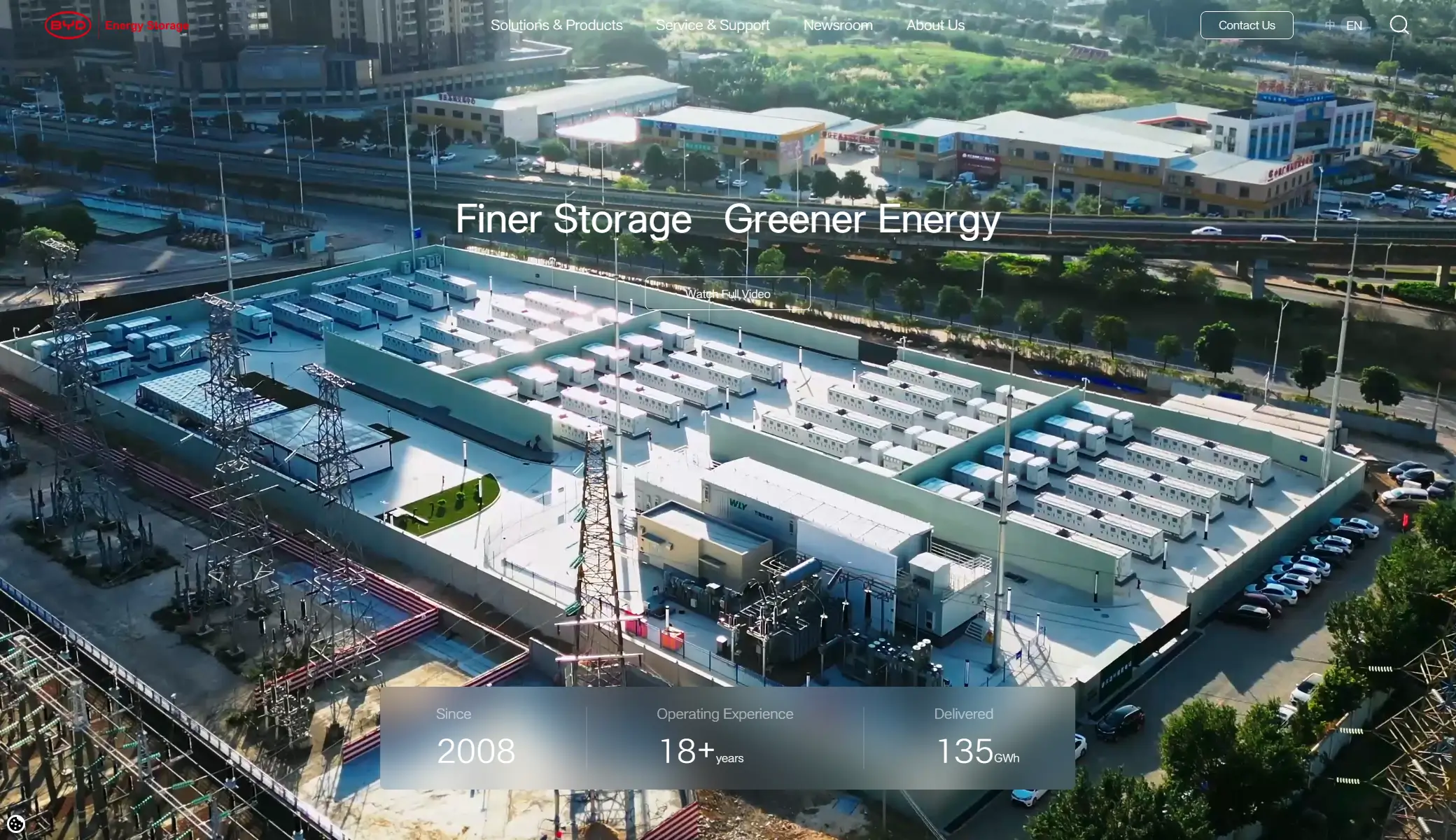
BYD Energy Storage is the energy storage business division of BYD, with operations spanning generation-side and grid-side energy storage, commercial and industrial energy storage, residential energy storage, integrated energy solutions, network energy, and other emerging application areas.
Founded in 1994 and headquartered in Shenzhen, BYD operates in sectors including automotive, electronics, new energy and rail transport. Among these, Shenzhen BYD Lithium Battery Co., Ltd., established in 1998, is a wholly-owned subsidiary of BYD Co., Ltd. and is responsible for the battery business. According to official BYD documentation, its energy storage business has established a comprehensive system encompassing research and development, manufacturing, sales and service.
In fact, BYD entered the electrochemical energy storage market at a very early stage. According to project documentation published by BYD in 2025, its energy storage business had by then accumulated approximately 17 years of experience, with cumulative deliveries of BESS equipment exceeding 75 GWh, covering more than 350 energy storage projects across over 110 countries and regions worldwide.
Since then, the scale of BYD's energy storage business has expanded significantly. In its 2025 sustainability report published in 2026, BYD disclosed that, by the end of 2025, cumulative shipments of energy storage systems had exceeded 135 GWh, and stated that its energy storage system shipments ranked first globally in 2025.
BYD's energy storage solutions currently cover key markets including large-scale generation-side and grid-side storage, commercial and industrial (C&I) storage, residential storage, as well as applications such as microgrids, UPS systems, data centres and telecommunications power supply.
BYD officially positions its commercial and industrial energy storage solutions to prevent sudden power cuts, increase the self-consumption rate of photovoltaic (PV) power, facilitate peak-valley tariff arbitrage, and enable participation in local demand-side response programmes.

BYD's Core Technology Strategy for Energy Storage
BYD's core technology strategy for energy storage currently centres on LFP.
One of the most representative system technologies in this regard is CTS (Cell-to-System).
BYD aims to reduce intermediate structural components through a higher degree of system integration, enabling battery cells to be integrated more directly into the energy storage system, thereby increasing energy density per unit of space.
In the MC Cube-T, BYD has explicitly adopted a new generation of lithium iron phosphate energy storage batteries alongside CTS integration technology, utilising a 1,500 V DC system architecture and an intelligent liquid cooling system.
Today, the focus of competition is no longer on battery price, but rather on the energy density, footprint, thermal management, safety design, transport and installation, and life-cycle costs of the entire system.
The MC Cube series is BYD's most iconic energy storage product.
A key feature of this series is the use of the 'Blade Battery' concept in the design of the energy storage system; BYD refers to this as a highly integrated BESS, and it has passed the relevant UL 9540A tests.
The MC Cube-T, launched subsequently, incorporates a new generation of LFP energy storage cells and the CTS structure.
BYD not only manufactures batteries but is also active in the fields of EMS and microgrid control.
BYD's official integrated energy product portfolio explicitly includes energy storage EMS solutions for commercial and industrial applications and generation-grid applications, as well as the DiCS-MGS microgrid control system for microgrid management.
The EMS is responsible for formulating system operation strategies, including functions such as peak-valley arbitrage, photovoltaic integration, load management, SOC control and grid interaction.
This has enabled BYD to make the transition from a battery equipment supplier to a provider of comprehensive energy storage solutions.
Hithium Energy Storage
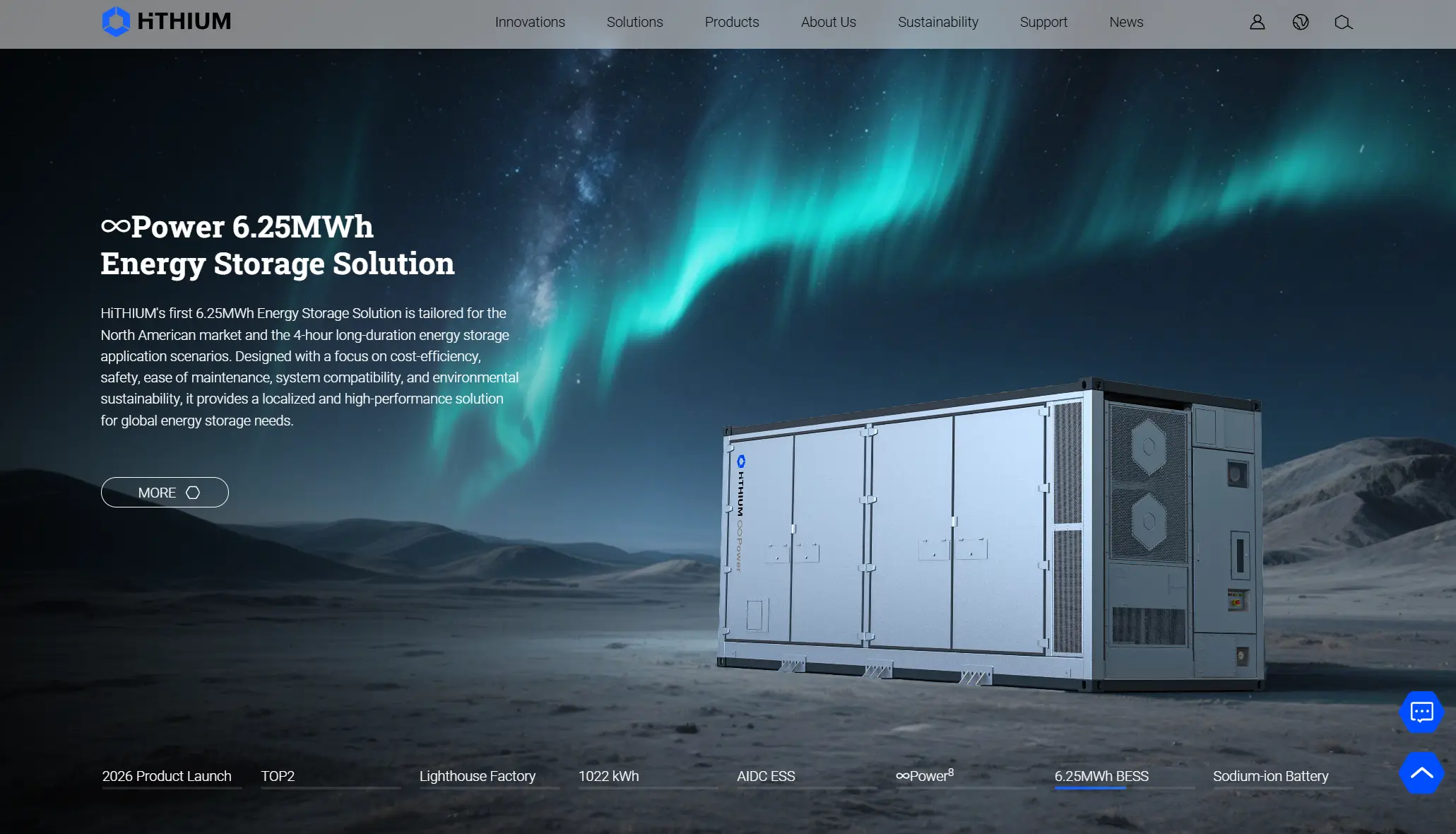
HiTHIUM Energy Storage is a Chinese new energy company specialising in energy storage batteries and systems. Headquartered in Xiamen, Fujian Province, the company was established in 2019.
Since its inception, HiTHIUM has focused on energy storage-specific battery cells, energy storage battery modules and BESS systems. Its current product range covers large-scale grid-side energy storage, commercial and industrial energy storage, and residential energy storage.
The company states that its products and solutions have been sold to more than 40 countries and regions worldwide.
HiTHIUM initially focused on energy storage battery cells, before expanding into battery cabinets, liquid cooling systems, battery management systems and complete energy storage solutions.
What does the company primarily do in the commercial and industrial energy storage sector?
HiTHIUM's commercial and industrial energy storage solutions are primarily deployed in factories, industrial estates, commercial complexes, data centres and other high-power-consumption environments.
Typical applications include peak-valley arbitrage, peak shaving and valley filling, demand response, self-consumption of photovoltaic power, microgrid energy storage, capacity expansion support when transformer capacity is insufficient, and backup power supply during power cuts.
In terms of system architecture, HiTHIUM is currently moving decisively towards highly integrated, liquid-cooled energy storage cabinets. The company officially emphasises a modular design, systematically integrating functions such as batteries, battery management systems, thermal management, fire protection and, in some products, power conversion systems and energy management systems.
This approach is particularly well-suited to commercial and industrial projects ranging from hundreds of kilowatt-hours (kWh) to the megawatt-hour (MWh) scale.

HiTHIUM's current main C&I products
Representative products include the ∞Block 261kWh, the ∞Block 418kWh and the next-generation ∞Power 1022kWh, launched in 2026. Of these, the first two models utilise 314Ah LFP cells specifically designed for energy storage, whilst the new 1022kWh model has begun to utilise HiTHIUM's independently developed 1175Ah ultra-high-capacity energy storage cells.
| Product | Energy Storage Capacity | Battery Cell | Cooling Method | Primary Application |
|---|---|---|---|---|
| ∞Block 261kWh | 261 kWh | 314Ah LFP | Liquid Cooling | Small & Medium C&I |
| ∞Block 418kWh | 418 kWh | 314Ah LFP | Liquid Cooling | Factories / Commercial Buildings / Industrial Parks |
| ∞Power 1022kWh | 1,022 kWh | 1175Ah LFP | Liquid Cooling | Large-Capacity, Long-Duration C&I |
Specifically, the ∞Block 418kWh unit measures approximately 1,350 × 1,300 × 2,350 mm, with a weight of no more than 3.7 tonnes per unit; the ∞Block 261kWh unit measures approximately 1,350 × 1,000 × 2,350 mm. Both products utilise liquid cooling technology.
The ∞Power 1022kWh is currently a product worthy of attention.
At The Smarter E Europe in June 2026, HiTHIUM launched its new-generation ∞Power 1022kWh commercial and industrial energy storage cabinet for the global market, with a single-cabinet capacity of approximately 1.022 MWh.
This product utilises ∞Cell 1175Ah LFP battery cells. Each cabinet occupies a floor area of approximately 3.4 m² and employs a 1,000 V DC system, making it compatible with grid systems operating at 400 V AC and above.
HiTHIUM states that, compared with traditional low-capacity cell solutions, the use of high-capacity 1175Ah cells reduces the number of cells required by the system by approximately 70 per cent, thereby reducing the number of series and parallel connection points and simplifying the internal structure of the system.
System Integration Capabilities
HiTHIUM's C&I system employs a modular design, emphasising integration between the battery system, BMS, PCS, EMS, thermal management and fire suppression systems. The official C&I solution places particular emphasis on liquid cooling, which improves system operational consistency and energy throughput over the entire lifecycle by controlling temperature differentials between individual battery cells.
In terms of communication, HiTHIUM's current C&I cabinet supports CAN, RS485 and Ethernet, facilitating integration with EMS, PCS, microgrid control systems and the customer's energy management platform.
EVE Energy
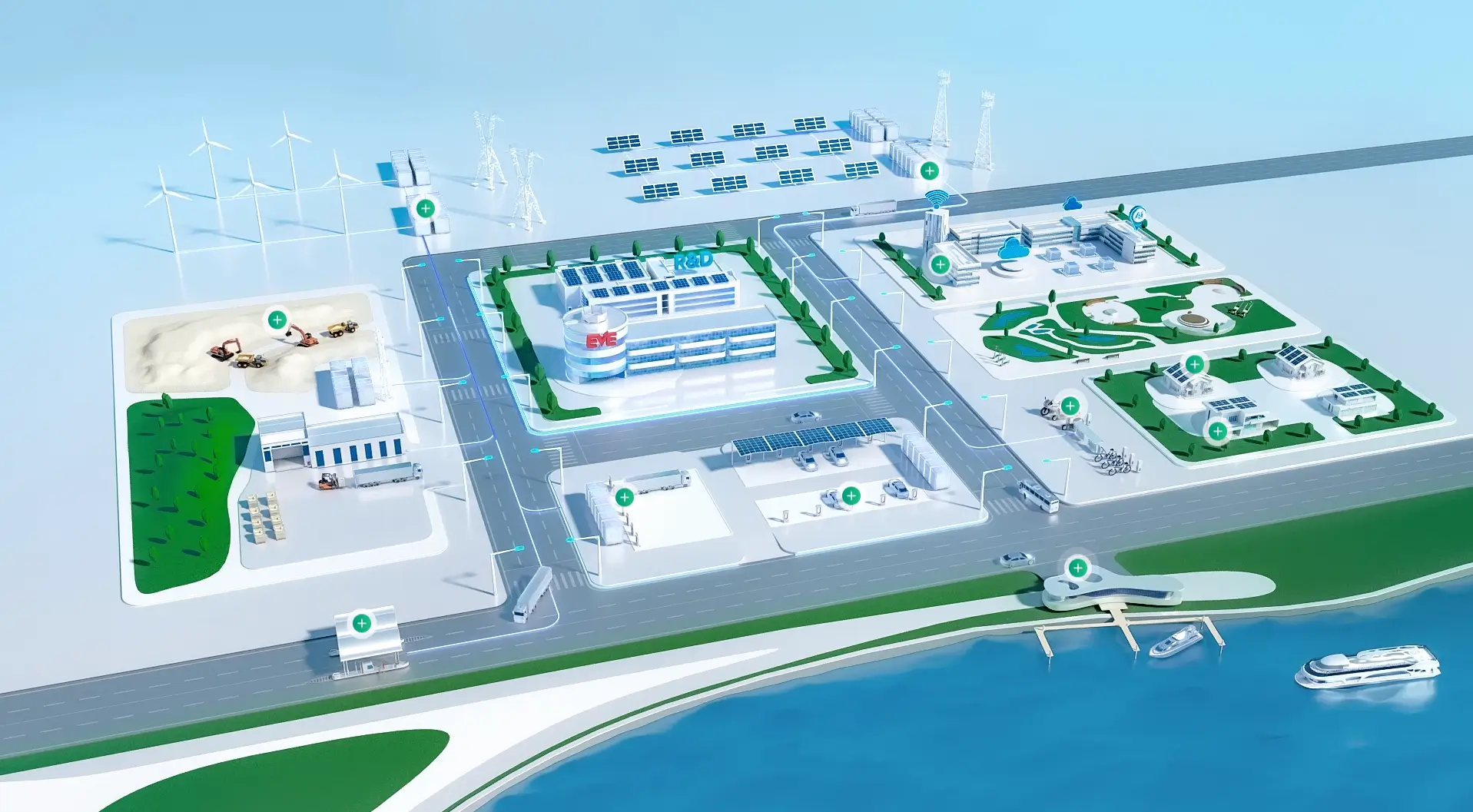
EVE Energy is a major Chinese lithium-ion battery manufacturer. Founded in 2001 and headquartered in Huizhou, Guangdong, the company was listed on the ChiNext board of the Shenzhen Stock Exchange in 2009. Its business encompasses consumer batteries, power batteries, energy storage batteries and energy storage systems.
Currently, EVE has established a relatively comprehensive product portfolio, encompassing a variety of product formats such as DC cabinets, integrated cabinets and split-type modular energy storage cabinets. These are suitable for a range of applications, including industrial and commercial parks, factories, commercial buildings, data centres, solar-storage-charging systems, distributed PV with energy storage, substation-level energy storage, virtual power plants and ancillary services.
The company officially summarises its commercial and industrial energy storage strategy as 'high safety, high flexibility and high energy efficiency', whilst emphasising the standardised and modular design of its products.
Commercial and Industrial Energy Storage Products
EVE was among the first to launch single-cabinet commercial and industrial energy storage products with capacities of 215 kWh, 261 kWh and 344 kWh. This product range primarily utilises EVE's proprietary LF280K and MB31 lithium iron phosphate energy storage cells. The officially stated effective cycle life is 8,000 cycles, with a system efficiency of approximately 94 per cent. The products are primarily targeted at factories, industrial estates, commercial buildings, residential communities, distributed energy storage, and solar-storage-charging projects.
Of particular note is the 261 kWh Outdoor All-in-One Cabinet, which utilises liquid cooling technology to highly integrate the battery, BMS, thermal management and related electrical systems, making it suitable for commercial and industrial energy storage applications on the consumer side. According to information released by EVE in 2025, this product utilises the company's proprietary high-efficiency energy storage cells, with a cycle life exceeding 8,000 cycles and a system efficiency exceeding 94 per cent.
For larger-capacity commercial and industrial projects, EVE has launched the 836kWh Mr.Brick split-type modular energy storage cabinet. Compared to single-unit integrated cabinets, Mr.Brick employs a split-type modular architecture, making it better suited to overseas transport and larger-scale C&I projects.
EVE states that this design increases energy density per unit area by approximately 65 per cent and reduces the footprint by approximately 37 per cent. Furthermore, the product incorporates designs such as thermal-electrical separation and liquid-electrical separation to enhance safety isolation.
Expanding from commercial and industrial energy storage to large-scale energy storage
In addition to its C&I energy storage cabinets, EVE has also launched a large-scale energy storage system product-'Mr. Giant'.
'Mr. Giant' initially utilised '628Ah Mr. Big' cells to construct a 5MWh-class liquid-cooled energy storage system; EVE announced that the system's energy efficiency reached approximately 95.5 per cent. On 31 January 2026, a 400 MWh energy storage power station utilising 628 Ah battery cells was officially connected to the grid. The project comprised 80 sets of 5 MWh "Mr. Giant" DC energy storage systems, as well as 40 sets of integrated converter and step-up modules.
By April 2026, EVE had launched a 6.9MWh energy storage system, which continued to utilise a standard 20-foot container architecture. EVE stated that the system's energy density had increased by approximately 10 per cent compared to the previous generation, whilst its footprint had been reduced by approximately 6 per cent.
Manufacturing and Delivery Capabilities
Another notable feature of EVE in the energy storage sector is the scale of its manufacturing operations.
The super energy storage factory, scheduled to commence operations in 2024, is planned to have a capacity of 60 GWh. Each production line at the factory will have a capacity exceeding 15 GWh, with a maximum production rate of 1.5 battery cells per second on average, enabling large-scale production of battery cells, battery packs and energy storage systems.
Fluence Energy
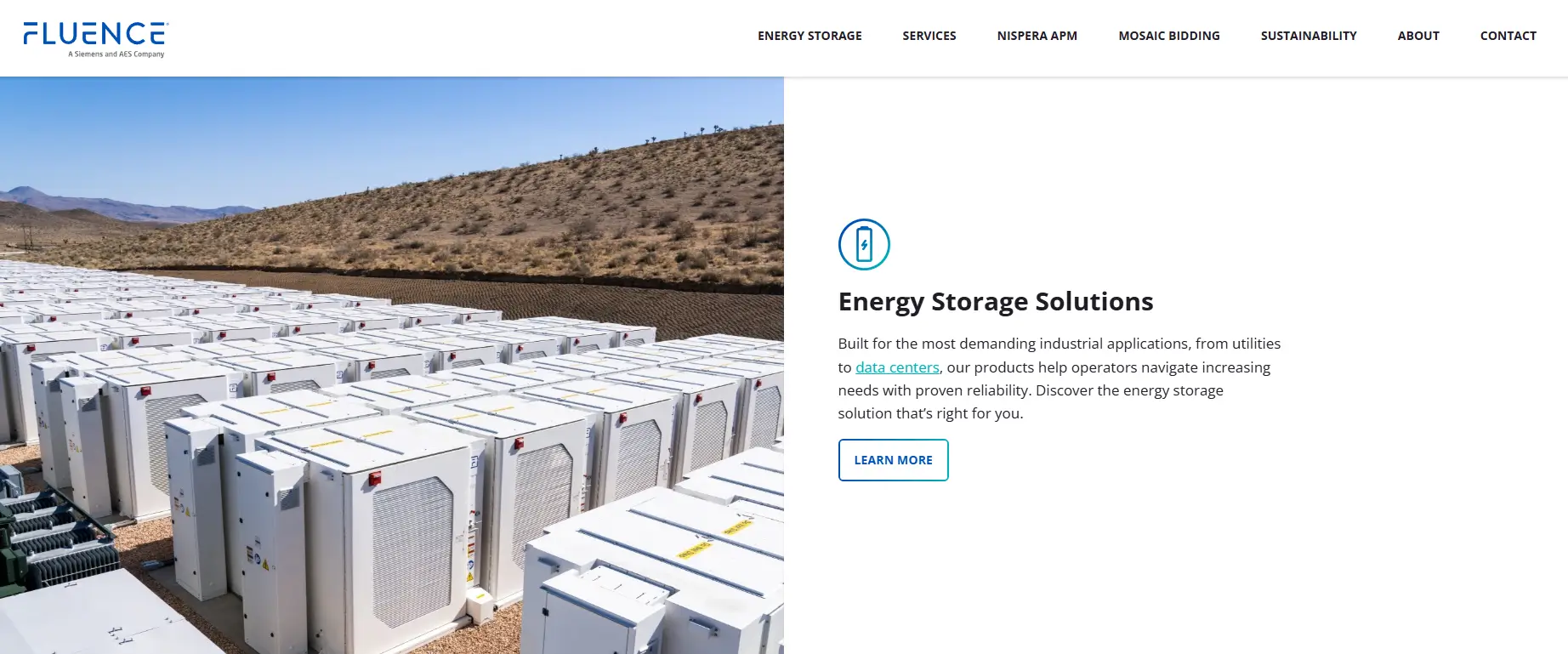
Fluence Energy is a globally recognised battery energy storage system integrator, providing comprehensive solutions centred on BESS system integration, project delivery, control software, operations and maintenance services, and energy storage asset optimisation.
The company was founded in 2018 as a joint venture between Siemens and AES. Headquartered in Arlington, Virginia, USA, it is currently listed on the Nasdaq under the ticker symbol FLNC.
Fluence's strengths stem from the extensive experience of Siemens and AES in power systems, energy projects and energy storage. The company places emphasis on standardised energy storage platforms, system control, engineering design, project deployment and subsequent software optimisation.
As at 30 June 2026, data published on Fluence's official website indicated that the company had approximately 80 GWh of energy storage projects, more than 850 energy storage projects, a presence in over 80 markets, and approximately 86 GW of AI-optimised renewable energy and energy storage assets.
Looking solely at deployed capacity, according to the FY2025 financial report, as at 30 September 2025, Fluence had deployed approximately 6.8 GW/17.8 GWh of energy storage, had a contract backlog of approximately 9.1 GW, and a project pipeline totalling approximately 35.7 GW/122 GWh.
In recent years, Fluence's product portfolio has gradually evolved from a single energy storage container into a standardised platform. Its current key products include Smartstack, Gridstack Pro and Gridstack; in addition, its historical product portfolio also comprises Edgestack, Sunstack and Ultrastack, which are designed for different application scenarios.
Smartstack™
Smartstack is Fluence's current flagship next-generation high-density energy storage platform, designed to address issues relating to footprint, installation speed, modular scalability and system intelligence in large-scale projects.
In 2026, Fluence launched the Smartstack 10 MWh, further increasing the capacity per system on the basis of the existing 7.5 MWh platform; the officially published core site energy density for the 10 MWh version is approximately 680 MWh/acre (168 kWh/m²).
Gridstack Pro™
Gridstack Pro is a quintessential Fluence large-scale liquid-cooled BESS platform, emphasising high energy density, modular design, rapid deployment and application in large-scale projects.
The main configurations currently publicly available include:
| Product | Energy Capacity | Form Factor | Main Application |
|---|---|---|---|
| Gridstack Pro 5000 Series | 4.9–5.6 MWh | 20-ft enclosure | Large C&I / Utility BESS |
| Gridstack Pro 2000 Series | Approx. 2.4 MWh | 40-ft container | Large C&I / Grid Storage |
The Gridstack Pro 5000 series can achieve approximately 4.9–5.6 MWh in a 20-foot container, whilst the 2000 series achieves approximately 2.4 MWh per 40-foot container.
Gridstack Pro utilises a unified platform architecture that can accommodate different battery systems. Fluence emphasises its battery packs, battery modules and Fluence BMS to reduce reliance on a single cell supplier.
Typical applications supported by this product include: frequency regulation, capacity/peak power, transmission and distribution reinforcement, microgrids, off-grid operation and renewable energy grid integration.
Gridstack™
Gridstack can be understood as Fluence's mature, large-scale, standardised energy storage platform, primarily aimed at utility companies, independent power producers, power developers and large-scale energy projects.
It supports energy storage systems with durations of 1 hour, 2 hours and over 4 hours, and is configured for both the UL and IEC markets.
Its main areas of application include peak shaving and valley filling, grid frequency regulation, renewable energy integration, transmission and distribution capacity enhancement, and grid ancillary services.
Does Fluence offer any genuine commercial and industrial energy storage products?
Yes. In its early days, Fluence launched Edgestack™ for the C&I market; this is a plug-and-play commercial and industrial energy storage system, primarily suited to projects of 500 kW and above.
This product integrates batteries, racks, inverters, safety systems, cooling systems and software control systems. It is primarily used to reduce businesses' peak loads and lower electricity bills, and enables the centralised management of energy storage systems across multiple factories or commercial premises.
AlphaESS
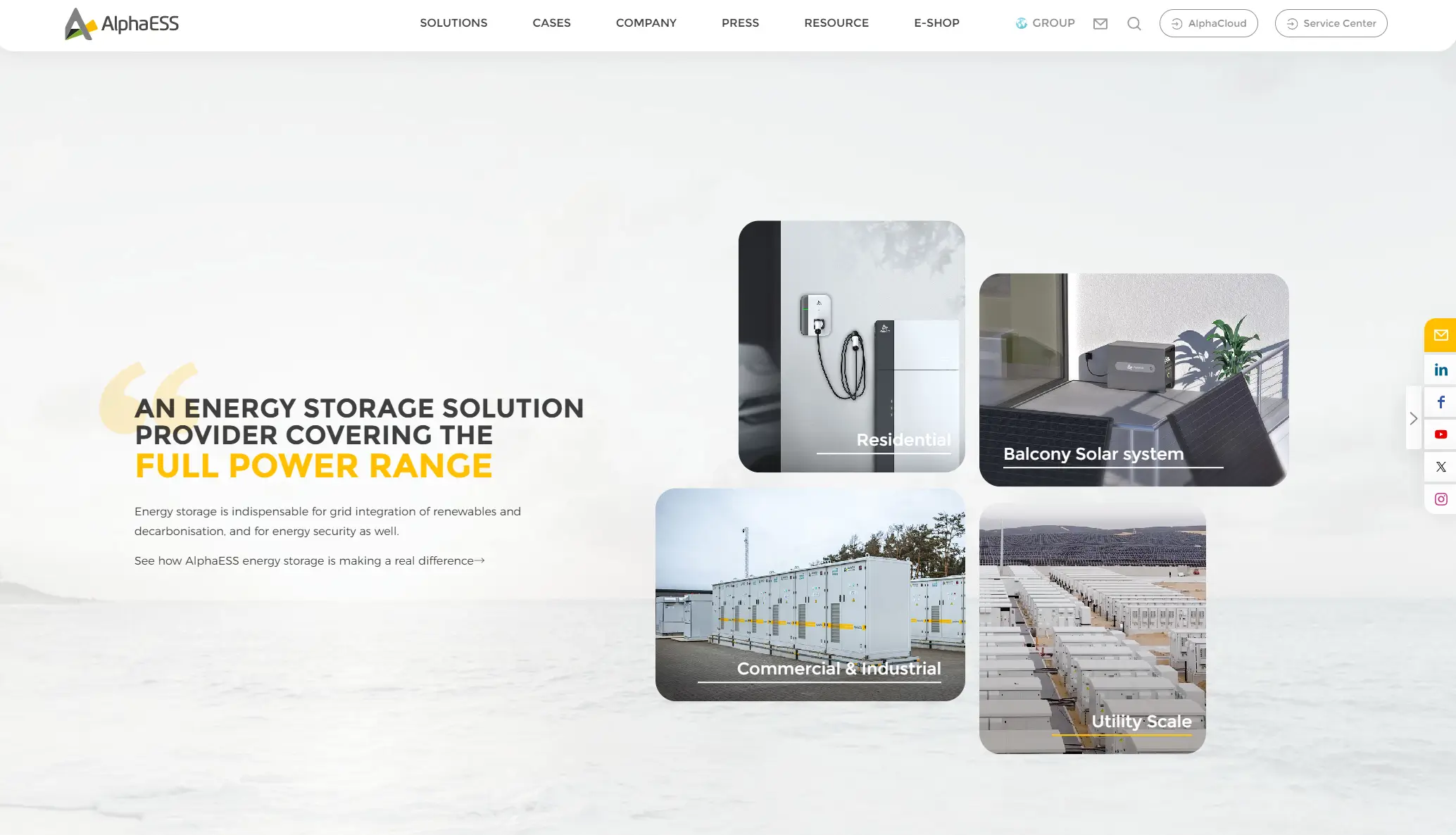
AlphaESS is a Chinese company specialising in energy storage systems (ESS) and smart energy management solutions, established in 2012.
AlphaESS has now established a comprehensive STORION product range. The company's official C&I solutions range from 30 kW to over 30 MW and can be scaled up to the MWh level according to project requirements.
These solutions are primarily used in areas such as peak shaving and valley filling in industrial facilities, arbitrage between peak and off-peak electricity tariffs, on-site consumption of self-generated photovoltaic power, backup power supplies, diesel engine fuel savings, microgrids and off-grid power supply.
Its core expertise lies in integrating battery systems, PCS, BMS, EMS, STS, PV, diesel generators and the grid into a comprehensive energy system.
Furthermore, AlphaESS offers its proprietary AlphaCloud platform, which supports real-time monitoring, remote management, OTA updates and energy dispatching functions, whilst being compatible with various communication protocols including API, Modbus TCP and 4G.
AlphaESS offers a comprehensive product range; for example, the StaX-M30/M50 series is primarily designed for smaller commercial and industrial projects, with a power output of approximately 29.9–50 kW and a capacity of up to 72.3–216.9 kWh.
The STORION-H30/H50-G3 offers hybrid inverters with power ratings of 30 kW and 50 kW, with configurable capacities of 72.3/144.6 kWh and 120.5/241 kWh respectively. Furthermore, the battery, PCS, DC/DC converter, STS and EMS can all be integrated into the system.
Other products include the STORION-LC-TB125 and the Aster TB250/TB500. The TB125 has a power output of 125 kW and a capacity of 261.2 kWh, whilst the Aster series offers power outputs ranging from 250 to 500 kW and capacities from 705 to 1,410 kWh, making it particularly suitable for factories, industrial estates and large-scale commercial energy storage projects.
What Should You Look for When Choosing a C&I Energy Storage System Manufacturer?
Is this manufacturer capable of designing a system that meets the project's requirements and ensuring that the system operates securely, compliantly and reliably? We will assess this based on the following criteria:
1. Can the manufacturer size the system for your specific application?
The primary consideration should not be the manufacturer's maximum output capacity, but rather whether they are able to select a system tailored to the actual load and operational requirements. Commercial and industrial energy storage systems may be used for peak shaving and valley filling, self-consumption of solar power, demand response, backup power, microgrids or storage for charging stations; different application scenarios require different power ratings, capacities and charge/discharge strategies.
When procuring a system, you should provide the manufacturer with the load curve, peak power, number of daily charge/discharge cycles, target backup duration, PV capacity, grid connection conditions and future expansion requirements. Suppliers with system integration capabilities should be able to use this information to determine appropriate configurations in terms of kW, kWh, PCS power and charging rates such as 0.5C and 0.25C.
The US Department of Energy's 'BESS Procurement Checklist' similarly emphasises the need to clarify application requirements, technical specifications and grid connection conditions at an early stage of project development.

2. What are the battery types and chemical compositions used?
It is necessary to confirm the cell brand, model, Ah capacity, cycle life test conditions, rate capability, operating temperature, and the cell consistency management approach. For current mainstream C&I projects, it is also important to ascertain whether the manufacturer uses traceable A-grade cells, and whether system validation is carried out anew in the event of a cell change.
At the same time, it is necessary to confirm under what conditions-including temperature, depth of discharge (DOD), state of charge (SOC) range, charge/discharge rate, and end-of-life (EOL) capacity-the data was obtained.

3. Does the manufacturer possess genuine system integration capabilities?
A complete system comprises the battery pack, battery management system (BMS), power conversion system (PCS), energy management system (EMS), thermal management, fire protection, power distribution, communications and grid-connection control.
When procuring, it is necessary to confirm whether the supplier merely provides a battery cabinet or is capable of integrating the battery, BMS, PCS, EMS, thermal management, fire protection and power distribution. It is necessary to check whether the Battery Management System, PCS and EMS have already undergone communication testing and joint commissioning to avoid having to resolve compatibility issues on site.
UL 9540 also conducts assessments from the perspective of a complete ESS, covering charging and discharging, protection, control, inter-device communication and other system-level safety issues.
4. Does the system comply with the required safety standards?
Certification requirements must be assessed based on the country or region where the project is located.
For example, for projects in the United States, particular attention should be paid to UL 9540, UL 1973, UL 1741, IEEE 1547, as well as the locally adopted NFPA 855, IFC and electrical code requirements; whereas for other markets, standards such as IEC 62619,
IEC 62933, IEC 62477, IEC 61000 and CE, amongst others.
It is important to distinguish between UL 9540 and UL 9540A: UL 9540 addresses the overall safety of energy storage systems and equipment; UL 9540A is a test method for assessing the fire propagation behaviour of battery energy storage systems in the event of thermal runaway, and is referenced in codes such as NFPA 855.
It is advisable for the purchaser to request that the supplier provide actual certificates and test reports, and to verify the specific cell types, battery packs, battery racks, enclosures and system configurations mentioned in the reports.

5. How should thermal runaway and fire risks be managed?
For C&I energy storage systems with capacities ranging from several hundred kWh to several MWh, fire safety should be assessed separately.
In addition to confirming the presence of a fire suppression system, an assessment should also be carried out of cell-level temperature monitoring, pack/rack-level protection, smoke and flammable gas detection, pressure relief/ventilation design, thermal runaway propagation control, and fire suppression interlock logic. For large-scale projects, consideration must also be given to the spacing between cabinets, the installation location and the requirements of the local fire authority (AHJ).
The UL 9540A test assesses risks such as thermal runaway propagation, heat release, gas release, re-ignition and deflagration at the cell, module, pack and installation levels.
6. Is the thermal management system suitable for this location?
Thermal management directly affects the temperature difference across the battery cells, their cycle life and the system's available power.
When procuring the system, it is necessary to assess whether natural cooling, air cooling or liquid cooling is appropriate based on the local ambient temperature, and to verify the system's performance under high-temperature, low-temperature and continuous high-load operating conditions.
For liquid-cooling systems, further consideration should be given to pack/rack temperature differential control, cooling circuit design, coolant leak detection and the maintenance requirements for HVAC or chillers.
In projects located in the Middle East, South-East Asia, extremely cold regions or areas with significant diurnal temperature variations, one must not rely solely on the product's rated operating temperature range; it is also necessary to confirm whether power derating will occur under extreme temperatures.
7. What are the capabilities of the BMS and EMS?
The BMS and EMS determine whether the energy storage system can actually operate in accordance with the project requirements.
The BMS should be capable of SOC/SOH management, cell voltage and temperature monitoring, balancing, overcharge and over-discharge protection, overcurrent and short-circuit protection, and fault logging; the EMS, meanwhile, is responsible for PCS scheduling, peak-valley arbitrage, peak shaving, PV coordination, load management and remote monitoring.
If the project requires integration with existing PV inverters, SCADA systems, microgrid controllers or third-party EMS systems, it is also necessary to confirm in advance the availability of communication protocols such as CAN, RS485, Modbus TCP/IP and Ethernet, as well as the capability to provide open interfaces.

8. What is the PCS configuration provided by the manufacturer?
Many purchasers focus too much on battery capacity and overlook the PCS.
It is necessary to confirm the PCS's rated power, maximum efficiency, AC voltage, frequency, grid connection method, power factor, harmonics, overload capacity and grid-following/grid-forming capabilities; and to clarify whether the PCS is centralised or modular, and whether a fault in a single PCS would cause the entire system to shut down.
For overseas projects, it is also necessary to confirm whether the PCS complies with local grid regulations and grid connection requirements. The fact that a battery system operates normally does not necessarily mean that the entire BESS will be granted a grid connection licence. The UL 9540 standard itself also addresses system-level issues such as inverters, control equipment and grid interaction.
9. What Performance Is Actually Guaranteed?
It is necessary to confirm the specific details of the manufacturer's warranty, including usable system capacity, capacity retention rate, cycle life, energy throughput, round-trip efficiency, system availability, and the warranty periods for various components such as the PCS, battery and EMS.
Furthermore, it is necessary to clarify the conditions under which these guarantees apply, such as permissible DOD, SOC, ambient temperature, charge/discharge rates, annual cycle count and cumulative energy throughput.
If a contract merely states '10-year warranty' without specifying the remaining capacity or cumulative energy throughput in the 10th year, the actual value of that warranty may be very limited.
10. Is the manufacturer able to provide project-level customisation services?
C&I projects are rarely identical, so it is necessary to assess whether the manufacturer possesses genuine OEM/ODM and engineering customisation capabilities.
For example, different projects may require systems rated at 100 kWh, 215 kWh, 261 kWh, 372 kWh, 418 kWh, 500 kWh or at the MWh level; at the same time, there may be 400 V, 480 V, 690 V or medium-voltage connections; furthermore, there may be different requirements for PCS, transformers, fire safety, communications and cabinet dimensions.
It is therefore necessary to confirm whether the manufacturer can provide SLDs, system layouts, electrical designs, communications architectures, equipment selection and any necessary structural modifications.

11. Does the manufacturer have experience with C&I projects?
Whilst the scale and production capacity of a factory are certainly important, actual project experience is even more crucial.
The manufacturer should be asked to provide case studies that are comparable to the target project in terms of capacity, application scenarios and environmental conditions, such as peak-shaving and load-filling in industrial plants, commercial buildings, solar-storage-charging systems, industrial estates, microgrids or off-grid projects.
Key considerations include whether the facility is genuinely operational, how long it has been in operation, what configuration is used, and whether the manufacturer is responsible for supplying battery cabinets or for the integration of the entire BESS system.
12. Is the manufacturer capable of handling grid connection and grid integration?
The delivery of energy storage equipment does not signify the completion of the project.
A reputable C&I energy storage supplier should be able to provide FAT, SAT, on-site or remote commissioning, PCS/BMS/EMS integration testing, communication testing, protection parameter configuration and grid connection support. The NFPA 855 standard also specifically addresses the commissioning, operation and maintenance of ESS systems.
For overseas projects, the parties responsible for on-site installation, commissioning and coordination with the EPC contractor or grid operator should also be clearly defined in advance.
13. What does after-sales and O&M support include?
As C&I energy storage systems are expected to operate for 10 years or even longer, it is essential to verify the manufacturer's after-sales service capabilities prior to procurement.
You should ascertain whether the supplier provides 24/7 remote monitoring, fault diagnosis, software updates, spare parts supply, on-site technical support and regular maintenance services, with clearly defined response times, and confirm the procedure for handling faults in critical components (such as PCS modules, BMS, HVAC, fire control units or battery modules), as well as whether these can be replaced individually.
Furthermore, it is necessary to clarify whether, in the event of equipment downtime, the supplier is directly responsible, or whether the customer must contact the PCS, EMS, battery cell and fire protection suppliers separately.

14. Is the manufacturer financially and operationally stable?
C&I energy storage is not a one-off purchase; a system requires the supplier to provide software, spare parts and warranty services on an ongoing basis for around 10 years.
Therefore, in addition to assessing the supplier's technical capabilities, one should also examine its length of operation, manufacturing capabilities, production capacity, key partners, long-term supply capacity and overseas service capabilities, whilst confirming whether core components are sourced from third parties and whether these will remain available in the future.
For large-scale projects, a supplier's ability to consistently honour long-term warranties and performance guarantees is often more important than an initial quotation that is a few percentage points cheaper.
15. Compare total life-cycle costs, not just the initial price
Price is the last consideration, and the comparison should focus on total life-cycle costs rather than simply comparing $/kWh.
Two systems both rated at 500 kWh may differ significantly in terms of available capacity, depth of discharge (DOD), cycle life, efficiency, auxiliary power consumption, capacity degradation, maintenance costs and warranty coverage.
Therefore, a more reasonable approach to comparison is to take into account the equipment price, installation, commissioning, operation and maintenance, auxiliary power consumption, capacity degradation, replacement costs and expected service life. A system with a lower quoted price but which degrades rapidly, has low efficiency or is difficult to service may, in fact, incur higher long-term costs.

We welcome you to submit your project requirements. You may refer to the following information:
- Project Application: Factory, commercial building, industrial park, solar-plus-storage project, EV charging station, microgrid, etc. Please specify the main purpose, such as peak shaving, demand charge reduction, solar self-consumption, or backup power.
- Required Power and Capacity: Target system power (kW/MW) and energy capacity (kWh/MWh). If you are unsure, you can provide your electricity consumption data for system sizing.
- Load Information: Average load, maximum load, peak power, and daily or monthly load profile if available.
- Charging and Discharging Requirements: Expected cycles per day, charging/discharging periods, and required backup duration.
- Solar PV Information: If the system will be integrated with solar PV, please provide the existing or planned PV capacity, inverter power, and basic system parameters.
- Grid Parameters: Local AC voltage, frequency, three-phase configuration, and grid-connected or off-grid requirements.
- Installation Conditions: Indoor or outdoor installation, available installation space, ambient temperature, altitude, and any special environmental requirements.
- System Configuration: Please specify whether PCS, EMS, transformer, switchgear, fire protection, liquid cooling, or other equipment is required.
- Communication and Monitoring: Remote monitoring requirements and required communication protocols, such as Modbus TCP/IP, RS485, CAN, or integration with a third-party EMS/SCADA system.
- Certification Requirements: Required CE, IEC, UL, or other local grid, electrical, and fire safety certifications or standards.
- Project Location: Country and city/region of the project, which helps determine grid standards, certification requirements, and shipping conditions.
- Project Schedule: Estimated order quantity, required delivery date, installation schedule, and current project stage.
- Other Special Requirements: Preferred cell or PCS brands, enclosure dimensions, IP rating, noise limits, appearance, or other OEM/ODM requirements.

Conclusion
By 2026, the commercial and industrial energy storage market will feature a variety of supplier strategies.
CATL, BYD and EVE Energy have relatively comprehensive industrial portfolios in battery cells and energy storage systems; Sungrow and Huawei Digital Power possess extensive expertise in PCS, power electronics and system integration; Tesla Energy and Fluence focus more on large-scale, standardised BESS, as well as software and project-level system integration; HiTHIUM and AlphaESS, meanwhile, are continuing to expand their range of modular energy storage products for commercial and industrial applications.
CoPow primarily targets projects requiring flexible configuration and OEM/ODM services, providing customised C&I energy storage system solutions tailored to clients' requirements regarding capacity, PCS, BMS/EMS, thermal management, fire safety, communications and certification.
If you are planning a commercial and industrial energy storage project, please feel free to contact CoPow. Please provide us with details of the project's power, capacity, load, grid parameters and installation conditions, and we will assist you in assessing your requirements and provide you with a suitable commercial and industrial energy storage system solution.