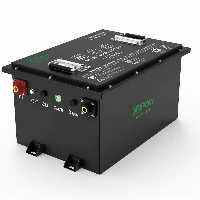
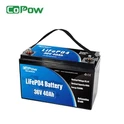
Guten Tag! There are many forklift battery manufacturers based in Germany, such as HOPPECKE Batterien, Triathlon Batterien, KION Battery Systems, and BAE Batterien. Since they all have their own production capabilities, it's much more convenient for us when it comes time to replace batteries.
However, if you're looking to replace the batteries in your electric forklifts or distribute forklift batteries, you might want to consider broadening your search-for example, by importing from Chinese lithium-ion battery manufacturers that offer good value for money. Alright, let's get right to the point and take a look at the available brands.

Top Forklift Battery Manufacturers: Brand History and Key Advantages
| Brand | Founded Year | Key Advantages |
|---|---|---|
| CoPow Battery (China) | 2011 | Focused on lithium battery system integration; offers 24V/36V/48V/72V/80V forklift batteries with strong OEM/ODM capability, flexible customization, and competitive pricing |
| HOPPECKE Batterien (Germany) | 1927 | One of Germany's oldest industrial battery manufacturers; strong experience in lead-acid batteries, forklift power systems, energy storage, and industrial applications |
| Triathlon Batterien (Germany) | 1991 | Specialized in industrial traction batteries; provides both lead-acid and lithium solutions for forklifts and warehouse equipment with a strong European service network |
| KION Battery Systems (Germany) | 2017 | Backed by KION Group; focuses on lithium-ion battery solutions for forklifts with strong integration capability with Linde and STILL equipment |
| BAE Batterien (Germany) | 1899 | Long-established German battery manufacturer with extensive experience in industrial batteries, especially traction batteries and backup power systems |
* Now that you've learned about the manufacturers mentioned above, why not take a moment to get to know CoPow and see why we can be another option to consider when choosing a forklift battery supplier?
CoPow - Chinese Lithium Forklift Battery Manufacturers Serving the German Market

CoPow is a lithium forklift battery manufacturer that specializes in lithium iron phosphate (LiFePO₄) battery technology. Founded in 2011, the company is headquartered in Shenzhen, China-the country's most important lithium-ion battery industrial cluster and a region with a highly concentrated global new energy battery supply chain.
Leveraging the mature lithium-ion battery industrial cluster in the Pearl River Delta, we are able to fully utilize the complete supply chain resources, ranging from battery cells and BMS to structural components and electronic components.
After a decade of development, "Made in China" has long since evolved from simple processing and assembly to "Created in China" and "Smart Manufacturing in China." CoPow has kept pace with the times, not only pioneering innovation but also accumulating a vast number of real-world installation cases.
Today, we are capable of producing lithium-ion forklift batteries that rival those of established European and American manufacturers. Our batteries utilize high-quality lithium iron phosphate (LFP) cells, are equipped with practical and stable battery management systems, and feature mature communication protocol compatibility, enabling precise matching for different forklift models.
Do you have customization needs?
CoPow has a distinct edge over other manufacturers when it comes to customizing forklift batteries!
We have a comprehensive and experienced team of lithium-ion battery engineers who can not only provide practical customization solutions and in-depth technical support based on your specific needs, but-more importantly-our engineers are deeply involved in every stage of forklift battery production.
From design and material selection to assembly and testing, they scrutinize every step, ensuring no detail that could affect product quality is overlooked.
We may be based in China, but our commitment to rigor, attention to detail, and product quality is no different from the principles upheld by "Made in Germany."

HOPPECKE Batterien

HOPPECKE Batterien was founded in 1927 and is headquartered in Brilon-Hoppecke, North Rhine-Westphalia, Germany. It remains under the ownership of the Zoellner family, now in its fourth generation.
The company is positioned as Europe's largest privately-owned industrial battery manufacturer and is also a prominent player among German industrial battery companies.
The company currently employs more than 2,000 people, operates 12 production sites and 22 international subsidiaries, has an annual production capacity of approximately 2.5 GWh, serves over 10,000 customers, and conducts business in about 150 countries. Its production network extends beyond Germany to include facilities for batteries and related products in Brilon-Hoppecke, Brilon-Bremecketal, and Zwickau in Germany, as well as in Poland and China.
Returning to the topic of German forklift battery manufacturers, HOPPECKE offers a wide range of forklift battery types, including lead-acid, lithium-ion, and FNC® nickel-fiber technology batteries.
It is worth noting that despite the increasing maturity of lithium-ion battery technology, HOPPECKE remains committed to continuous investment in the lead-acid battery sector and has not abandoned lead-acid batteries in the face of the rise of lithium-ion technology.
For example, the "trak | uplift" series remains a key product line, featuring improved charge/discharge performance and cycle life through the use of activated carbon and optimized separators. For customers who still require lead-acid batteries, HOPPECKE offers an alternative solution.
Furthermore, if you're concerned about the disposal of end-of-life lead-acid batteries, HOPPECKE operates its own metal smelter in Germany, where it recycles used lead-acid batteries.
In summary, if you're looking to replace your forklift batteries with peace of mind-without having to navigate complicated import procedures or scramble to find support when issues arise-HOPPECKE Batterien is an ideal choice.
Triathlon Batterien

Triathlon Batterien is an industrial battery and charging technology company headquartered in Fürth, Germany. Its core business is heavily focused on the industrial vehicle and internal logistics sectors, covering equipment such as forklifts, pallet trucks, and mobile elevating work platforms.
The company has its own production capabilities, with its main manufacturing sites in Germany located in Glauchau and Freiberg; Glauchau, in particular, houses a state-of-the-art traction battery production facility.
Currently, the group employs between 1,000 and 1,200 people. A development of interest to buyers is that Triathlon has merged with the Sunlight Group.
In 2022, the Greek industrial battery giant Sunlight Group announced further integration with Triathlon; in subsequent official documents, Triathlon has been explicitly described as part of Sunlight Group Energy Storage Systems.
For buyers, this is far more significant than the company's founding date, as Sunlight itself has over 30 years of experience manufacturing lead-acid and lithium-ion batteries and possesses production and assembly capabilities in Greece, Italy, and the United States.
The combination of the two companies enables Triathlon to access a broader range of products, technologies, and manufacturing resources. Triathlon officials also explicitly stated at the time that this partnership would help expand its product solutions, production capacity, and technological synergies.
KION Battery Systems

KION Battery Systems (KBS) was founded in 2019 as a joint venture between the KION Group and the BMZ Group, with each party initially holding a 50% stake. Its production facility is located in Karlstein am Main, Germany, and officially began production in 2020.
The combination of these two shareholders is particularly interesting: KION brings expertise in forklift and industrial vehicle applications, while BMZ contributes lithium-ion battery technology and manufacturing expertise.
KION itself is a major global material handling group, with brands such as Linde Material Handling, STILL, Fenwick, and Baoli under its umbrella.
KBS operates a production facility of approximately 4,000 square meters in Karlstein am Main, with an initial production capacity exceeding 12,000 units per year.
With the launch of a second production line, officials stated in 2022 that production capacity could reach up to approximately 30,000 units per year.
KBS initially focused on producing 48V and 80V batteries for electric counterbalanced forklifts, later expanding to include 24V batteries for warehouse vehicles.
KBS not only manufactures new batteries but, according to KION's 2025 annual report, has also served as the KION Group's central unit for refurbishing lithium-ion batteries from leased vehicles since 2023. The refurbishment process includes disassembly, inspection, replacement of defective modules, functional testing, and reuse.
BAE Batterien

BAE Batterien is a long-established industrial battery manufacturer based in Berlin, Germany, with a history dating back to 1899; the name "BAE" was adopted in 1958. Interestingly, its location in Berlin-Schöneweide was once a major hub for Germany's electrical industry, and production facilities for VARTA Accumulatoren-GmbH were established at the current factory site as early as 1904.
Following the company's privatization in 1993, BAE Batterien was officially established and began expanding its product line to include batteries for industrial vehicles.
The company's forklift batteries primarily utilize lead-acid battery technology, and BAE officially positions itself as a medium-sized enterprise with 120 years of experience in manufacturing industrial lead-acid batteries. Currently, the company employs approximately 180 people.
The company does not focus exclusively on the production and manufacturing of forklift batteries; rather, it concentrates more on providing backup power for data centers, hospitals, telecommunications, and power facilities, as well as battery products for the railway and renewable energy sectors.
BAE Batterien has gone further in the field of lead-acid batteries than many other manufacturers and continues to extensively use and develop various lead-acid battery technologies, such as VLA, VRLA-GEL, OPzS, OPzV, OGi, and OGiV.
We consider BAE to be a relatively conservative forklift battery manufacturer, with an R&D approach that differs entirely from that of Chinese lithium iron phosphate (LFP) forklift battery producers. Manufacturers using lithium-ion battery technology pursue smarter, more user-friendly, and more convenient forklift batteries, while BAE has staked its future on lead-acid batteries, continuously delving into this field, deeply optimizing plate structures, and striving for greater stability.
However, we cannot definitively conclude here whether lead-acid batteries have reached their upper limit or whether, no matter how much progress is made, they cannot escape their inherent characteristics. Nevertheless, the current trend clearly shows that lead-acid forklift batteries are being replaced by lithium-ion batteries on a large scale.
When Is Choosing a German Local Forklift Battery Manufacturer the Better Choice?
From a subjective perspective, as Germans, we certainly have a sense of national identity. Based on this uniquely German national sentiment, it's the right choice to opt for products "Made in Germany" and support domestic companies!
From an objective standpoint, purchasing German forklift batteries offers the following advantages:
1. Communication is more direct, and it's easier to reach someone when problems arise.
Communicating directly with a forklift battery manufacturer based in Germany eliminates time zone issues, and with shared language and cultural background, communication is completely stress-free.
If a battery unexpectedly fails, the manufacturer can send someone directly to the site to inspect and repair it. HOPPECKE operates its own Service Competence Center in Germany, offering a full range of after-sales services for forklift batteries, including troubleshooting, on-site repairs, replacement of parts, maintenance, and cleaning.
2. You don't have to handle the complex import process yourself.
Importing forklift batteries from overseas not only requires you to be very familiar with import and export procedures but also involves navigating some rather complex processes, such as the international transport of hazardous materials, import customs clearance, customs duties, overseas logistics coordination, and domestic transportation upon arrival at the port.
More importantly, shipping costs are a significant expense. Forklift batteries are very heavy, weighing several hundred kilograms or even over a metric ton; the heavier they are, the more expensive shipping becomes. Purchasing directly from local manufacturers, however, avoids these high shipping costs.
3. After-sales maintenance is significantly more convenient
Forklift batteries are a very complex system, and users will inevitably encounter issues they cannot resolve on their own during operation. Although foreign manufacturers offer remote support services, can such problems truly be resolved remotely? We simply don't know.
Rather than pinning our hopes on such uncertain remote diagnostics, we'd be better off choosing a local German manufacturer. Although batteries purchased from local manufacturers may still fail during use, we can immediately receive on-site technical support directly from the manufacturer. They will send someone right away to communicate and resolve the issue, which is far more reliable than overseas technical support.
That said, what we're describing here might be a bit idealistic. You'll need to evaluate for yourself just how effective the technical support provided by local German companies actually is.
4. Better Suited for Businesses That Are Extremely Sensitive to Downtime
Imagine a highly efficient warehouse: if a simple forklift battery were to disrupt subsequent material handling operations, leading to shipping delays, how many euros in losses would that result in? The cost could even exceed the price of the battery itself!
Localized service ensures that technicians are dispatched promptly to resolve battery issues on-site, saving you the hassle of contacting overseas manufacturers via email and going through a series of diagnostic procedures-all without any guarantee that the problem will be fixed. If replacement parts are needed, you'd have to go through the entire import and export process all over again.
5. German Local Regulations and Compliance Make Things Easier
The EU Battery Regulation (EU) 2023/1542 and Germany's corresponding Battery Act (BattDG) set forth clear requirements regarding battery producer registration, extended producer responsibility (EPR), and the recycling and disposal of used batteries.
Producers placing batteries on the German market for the first time must complete the required producer registration and fulfill their responsibilities-such as the recycling of waste batteries-either independently or through relevant organizations.
Therefore, for German buyers, one of the greatest advantages of choosing a local manufacturer that has already established a comprehensive system in Germany for sales, compliance registration, after-sales service, and waste battery recycling is peace of mind.
Suppliers have already established mature mechanisms for handling many tasks related to EPR, recycling, and ongoing compliance, so there are relatively few additional matters that buyers need to coordinate or confirm.
Of course, this does not mean that overseas battery manufacturers cannot meet German regulations; overseas suppliers can still enter the German market.
The key is that, prior to procurement, buyers must verify whether overseas suppliers have established a comprehensive German compliance system-for example, whether they have completed producer registration, fulfilled their EPR obligations, made appropriate arrangements for used battery recycling, and prepared the necessary compliance documentation for their products.
If overseas suppliers have properly addressed these aspects, selecting them as suppliers can still ensure compliance and reliability.
6. More Convenient Recycling of Used Batteries
Germany has clear regulatory requirements regarding the recycling, disposal, and producer responsibility for industrial used batteries. For industrial batteries with long service lives, such as forklift batteries, it is important to consider not only how to purchase them but also how they will be replaced and recycled in the future.
If a supplier has already established a comprehensive local service and recycling system, it can provide:
New Battery → Installation → Maintenance → Replacement → Recycling
From the procurement and installation of new batteries to routine maintenance, replacement, and the recycling of used batteries, the entire process can be handled by a single service system.
For purchasers, this means less coordination with multiple suppliers, simpler compliance management, and easier implementation of full-lifecycle management for forklift batteries.
7. For German-brand forklifts, the original equipment manufacturer's (OEM) battery system offers greater advantages.
For German industrial vehicle brands such as Linde and STILL, if you are purchasing a new OEM vehicle or have high requirements for compatibility between the battery and the vehicle, the OEM battery system-or local suppliers with deep partnerships with the vehicle manufacturer-typically offers greater advantages.
This is because the compatibility of forklift batteries requires not only consideration of basic requirements such as dimensions, voltage, and power supply, but may also involve CAN communication, BMS data exchange, charging strategies, fault diagnosis, and coordination with the vehicle's control system.
In these areas, battery suppliers that participate in vehicle development or have long-term partnerships with forklift manufacturers are often better positioned to minimize the risks associated with subsequent adaptation and debugging.
Why Can Chinese Forklift Battery Manufacturers Like CoPow Compete with German Brands?
Earlier, we discussed the advantages of choosing German forklift battery manufacturers: comprehensive local service, convenient communication, rapid after-sales support, and more mature compliance and recycling systems.
Given that German suppliers already possess such clear advantages, why do many German dealers, warehouse operators, and fleet managers still choose to import forklift batteries from countries like China, where the lithium-ion battery industry is well-developed?
The reason is actually quite simple: when purchasing forklift batteries, localized service is just one factor to consider; price, lithium-ion battery technology, product selection, customization capabilities, delivery capacity, and long-term operating costs are equally important.
China boasts a mature and comprehensive lithium-ion battery industry chain, which enables some Chinese forklift battery manufacturers to offer consumers unique value-distinct from that of local German manufacturers-in terms of cost, product customization, and the lithium-ion battery supply chain.
Therefore, the real question is not "which is better: Made in Germany or Made in China?" but rather: Under what circumstances would choosing a mature Chinese forklift battery manufacturer actually better meet the purchaser's needs?
1. More Competitive Procurement Prices
Price is the most obvious advantage for German buyers when selecting Chinese forklift battery manufacturers.
China has a very comprehensive lithium-ion battery industry chain. From battery cells, battery management systems, sheet metal enclosures, wiring harnesses, and connectors to chargers, displays, and final battery assembly, most of these processes can be completed within a mature domestic supply chain.
This industrial cluster advantage effectively reduces costs associated with raw material procurement, component sourcing, and manufacturing.
For end users purchasing only one or two batteries, this price difference may not be sufficient to offset the communication, transportation, and after-sales service costs associated with imports; however, for German distributors, warehouse operators, and fleet management companies purchasing dozens or even hundreds of batteries at a time, the cumulative cost difference per battery becomes significant.

2. Backed by a Mature and Comprehensive Lithium-Ion Battery Supply Chain
China is currently one of the countries with the most comprehensive lithium-ion battery supply chains in the world, home to major battery cell manufacturers such as CATL, BYD, EVE, Gotion, and CALB.
For forklift battery manufacturers, this means access to a wider range of battery cells, battery management systems, chargers, and other supporting components, allowing them to select the most suitable solutions based on a project's budget, capacity, cycle life, and operational intensity.
For buyers, this means they are not limited to a handful of fixed configurations but can choose the most appropriate battery solution based on their specific usage scenarios.

3. Greater Flexibility in Customizing Forklift Batteries
Not all forklifts can directly accommodate standard-sized lithium-ion batteries.
This is particularly true for older forklifts, specialized industrial vehicles, cold storage forklifts, and forklifts of different brands and model years, as their battery compartment sizes, counterweights, connectors, and even communication protocols may vary.
This is precisely where Chinese forklift battery manufacturers hold a competitive advantage.
Manufacturers can redesign batteries based on parameters such as the dimensions of the original battery compartment, battery weight, voltage, capacity, connectors, CAN communication protocols, chargers, and operating temperatures, ensuring the batteries are truly compatible with customers' existing forklifts-rather than forcing customers to adapt to a specific standard battery.
For German dealers that carry multiple forklift brands, this customization capability is particularly important.

4. A wider range of voltage, capacity, and configuration options is available.
Even for forklifts with the same voltage, battery capacity requirements can vary significantly.
For example, among 48V forklifts, some applications require only 200Ah or 300Ah, while multi-shift warehouses require 400Ah, 500Ah, or even higher capacities.
Determining the appropriate battery capacity requires a comprehensive evaluation of factors such as daily operating hours, load capacity, charging time, battery compartment space, and whether trickle charging is supported.
Compared to manufacturers that offer only fixed specifications, those providing a wider range of capacity and configuration options allow buyers to select batteries based on actual operating conditions, rather than simply purchasing a model that "fits."

5. Better Suited for OEM and ODM Projects
The procurement needs of German forklift dealers, battery distributors, and rental companies differ from those of ordinary end users.
They may wish to carry their own brand, so they require customization of logos, enclosures, displays, connectors, labels, packaging, and product manuals. Some customers even want to develop a dedicated line of lithium-ion forklift batteries tailored to their specific markets.
Chinese battery manufacturers have long been involved in global OEM and ODM supply chains, giving them a high degree of flexibility in such projects.

6. Better Suited for Multi-Brand Forklift Fleets
In reality, large warehouses rarely use forklifts from just one brand.
A single fleet may include different brands such as Linde, STILL, Jungheinrich, Toyota, Hyster, Yale, Hangcha, and HELI, and may even contain vehicles of different model years and models.
If all batteries were to rely entirely on the original equipment manufacturer's systems, not only would procurement costs likely be higher, but battery management across different models would also become more complex.
In contrast, professional third-party forklift battery manufacturers can tailor the battery enclosure size, weight, connectors, communication protocols, and charging solutions to specific models, thereby enabling compatibility with forklifts from different brands on a unified lithium-ion battery technology platform.

7. When purchasing in bulk, the cost advantages are further amplified.
If you're simply replacing the battery in a single forklift, it may be more convenient to purchase directly from a local supplier in Germany.
However, when the purchase quantity increases from 1 to 20, 50, or even 100 units, the situation changes completely.
In this case, price differences of several hundred or even thousands of euros per battery will ultimately add up to a significant procurement cost.
At the same time, large-volume orders can help spread out international logistics costs through methods such as full-container shipments and centralized procurement.
Therefore, for German forklift dealers, large warehouses, rental fleets, and battery importers, the economic benefits of purchasing directly from Chinese manufacturers will become increasingly significant as purchase volumes rise.
8. Easier Access to Rapidly Evolving Lithium-Ion Battery Technology
The Chinese lithium-ion battery market is highly competitive, which has driven continuous innovation in technologies such as battery cells, battery management systems, chargers, thermal management, and remote monitoring.
Today's forklift lithium-ion batteries are no longer just simple battery packs.
Features such as CAN communication, RS485, Bluetooth, LCD displays, low-temperature heating, GPS, remote data monitoring, and cloud-based management can all be progressively integrated into forklift battery systems according to project requirements.

9. A lower total cost of ownership may be more important than the country of manufacture.
When purchasing forklift batteries, one should not focus solely on the purchase price.
What truly needs to be considered is the total cost of ownership over the entire lifecycle, which includes the battery's purchase price, cycle life, maintenance costs, charging efficiency, energy consumption, downtime, and future replacement frequency.
If a Chinese-made lithium-ion battery meets the required standards for safety, cycle life, vehicle compatibility, and reliability while offering a lower purchase cost, it may still provide significant economic advantages in the long run-even when international shipping and import costs are factored in.
10. What really matters is comparing manufacturers, not "Made in China" versus "Made in Germany."
This is the most important point in the entire discussion.
Today's forklift battery market can no longer be simply understood as "Made in Germany equals high quality, and Made in China equals low price."
There are also significant differences among Chinese forklift battery manufacturers.
What truly warrants comparison is: what brands and grades of battery cells the manufacturer uses; whether they have their own team of lithium-ion battery engineers; whether their BMS is mature; whether their production and testing processes are well-established; whether they can adapt to the CAN communication protocol; whether they hold international certifications; whether they have actual export experience; whether they can provide customization services; and whether they are truly capable of resolving after-sales service issues when they arise.
Therefore, the ability of Chinese forklift battery manufacturers like CoPow to compete in the German market is not merely due to lower prices compared to German manufacturers.
More importantly, they can leverage China's mature lithium-ion battery supply chain to offer an alternative in terms of procurement costs, product customization, specification options, technology integration, and bulk supply capabilities.
conclusion
We understand that Germany also has forklift battery manufacturers, offering a variety of technologies to choose from, such as lead-acid batteries and lithium-ion batteries. HOPPECKE Batterien, Triathlon Batterien, KION Battery Systems, and BAE Batterien dominate the German forklift battery market.
These brands boast the core advantage of being "Made in Germany," with products that are meticulously crafted, precise, high-quality, reliable, and easy to use.
However, if you'd like to try or need the latest, cutting-edge lithium forklift batteries, Chinese manufacturers like CoPow can provide them. Our supply chain includes top-tier Chinese cell brands such as CATL, BYD, and EVE Energy.
By choosing CoPow, you'll not only receive forklift batteries that are essentially on par with those made in Germany but also gain early access to the latest lithium-ion battery technology, enabling smarter, more convenient, and more cost-effective management.
Whether you're looking to customize a forklift battery that perfectly matches your model or interested in becoming a CoPow distributor in Germany, we warmly welcome your inquiry.
Feel free to share your requirements with us-our forklift battery R&D engineers will respond to your message within 24 hours to provide professional advice and insights.