With the comprehensive upgrade of aviation safety standards in 2026, the Transportation Security Administration (TSA), in conjunction with the Federal Aviation Administration (FAA), has released the latest shipping guidelines for lithium-ion batteries.
Due to the rising frequency of cabin fires caused by battery thermal runaway in recent years, the new regulations impose stricter requirements on battery placement, capacity limits, and packaging methods.
If you plan to travel in 2026, understanding the following rules will ensure your electronic devices are not confiscated and help you avoid substantial fines.
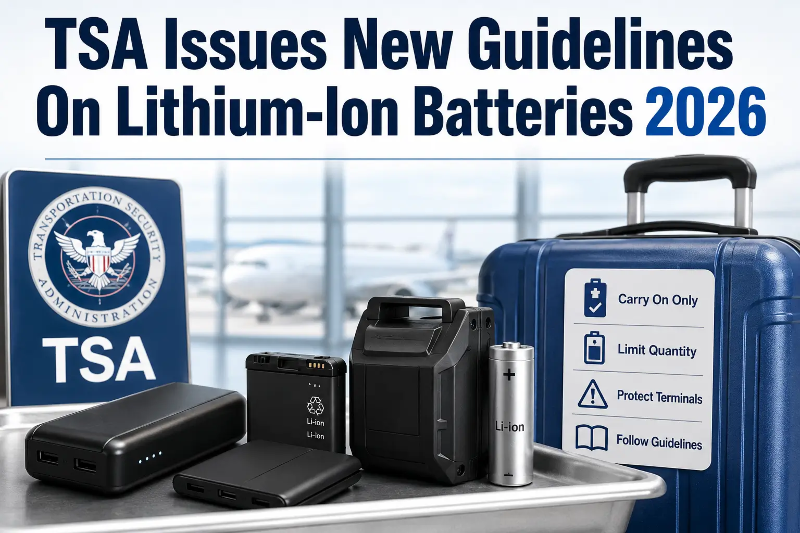
What Are the New TSA Lithium-Ion Battery Rules?
The core of the 2026 regulations lies in "Enhanced Visibility and Rapid Response." TSA's enforcement focus has shifted beyond simply banning backup batteries in checked luggage to standardizing how cabin crews manage battery risks in-flight.
The Latest TSA & FAA Requirements Include:
1. No Spare Lithium Batteries In Checked Baggage
Almost all spare lithium-ion batteries, power banks, and portable chargers are prohibited in checked luggage and must remain in the cabin.
2. Mandatory Battery Removal During Gate Check
If a carry-on bag is gate-checked, passengers must remove all spare batteries and power banks before the bag enters the cargo hold.
3. Smart Luggage Restrictions
Smart luggage must contain removable lithium batteries. Non-removable battery systems may result in the luggage being denied boarding.
4. Short-Circuit Protection Required
Spare battery terminals must be protected using original packaging, terminal covers, or tape over exposed contacts.
5. Damaged Or Swollen Batteries Prohibited
Batteries showing signs of swelling, overheating, leakage, or physical damage are not allowed onboard due to elevated fire risks.
6. In-Flight Visibility Rules Becoming Stricter
Some airlines now prohibit storing power banks in overhead bins or using seat power outlets to charge them during flight.
The FAA states that lithium battery fires are significantly easier for cabin crews to detect and manage inside the passenger cabin than in the cargo hold. As lithium battery incidents continue to rise globally, airlines and regulators are tightening enforcement accordingly.
Source:
Flying with Batteries in 2026 – What the New Global Power Bank Rules Mean for Filmmakers
What Devices Are Affected?
The scope of the 2026 guidelines covers a wider range of modern rechargeable devices than ever before:
- Personal Electronics: Smartphones, laptops, tablets, cameras, wireless earbuds, gaming devices, smartwatches, and Bluetooth accessories.
- Backup Power Devices: Power banks, portable chargers, battery-integrated phone cases, and portable power stations.
- Personal Care Devices: Cordless hair curlers, electric toothbrushes, electric razors, and rechargeable grooming tools.
- Mobility & Recreation Products: Drones, e-cigarettes (vapes), hoverboards, electric scooters, and certain e-bike batteries.
- Professional Equipment: Camera battery packs, filmmaking equipment batteries, portable lighting systems, and rechargeable power tools.
- Medical Devices: Portable oxygen concentrators (POCs), glucose monitors, CPAP backup batteries, and other medically necessary lithium-powered equipment.
- Smart Travel Products: Smart luggage, Bluetooth trackers, GPS travel accessories, and heated travel gear powered by lithium batteries.
Source:
Airline Passengers and Batteries
Carry-On vs Checked Baggage Rules
The boundaries regarding where to pack your tech have become even sharper in 2026:
| Category | Carry-On Baggage | Checked Baggage |
| Spare Lithium Batteries / Power Banks | Allowed (Mandatory) | Prohibited |
| Batteries Installed in Devices | Allowed | Allowed (Must be fully powered off and protected from accidental activation) |
| E-cigarettes / Vaporizers | Allowed | Prohibited |
| Cordless Hair Curlers | Allowed | Prohibited |
Crucial Note: If you are asked to "Gate Check" your carry-on bag at the boarding gate, you must remove all power banks and spare batteries and bring them into the cabin with you.
Watt-Hour Limits Explained
The TSA continues to strictly enforce capacity limits based on Watt-hours (Wh). If you are unsure of your battery's capacity, you can calculate it using the formula:

- Under 100Wh: No airline approval required. Most phones, laptops, and power banks fall into this category (typically under 27,000mAh).
- 101Wh - 160Wh: Must receive prior airline approval. Limited to 2 per person. Common in professional photography gear or high-performance laptops.
- Over 160Wh: Strictly Prohibited (except for medical devices like wheelchairs, which require special reporting and may have limits extended up to 300Wh).
When Do the New Rules Take Effect?
Most of the updated TSA and FAA lithium battery restrictions are already in effect and are being increasingly enforced throughout 2026.
At the same time, many airports across the United States continue deploying advanced CT (Computed Tomography) security scanners, which provide significantly improved detection capabilities for batteries, electronics, and improperly packed hazardous items. These systems make it much more difficult for non-compliant lithium batteries or power banks to pass through airport security unnoticed.
In addition to TSA screening upgrades, many airlines have also introduced stricter internal policies regarding power banks, spare batteries, and in-flight charging throughout 2026.
What Happens If You Violate the Guidelines?
The consequences of violating the 2026 lithium battery rules are far more severe than in the past:
Confiscation Of Non-Compliant Batteries: Prohibited batteries, power banks, or improperly packed devices may be confiscated during security screening and may not be returned.
Civil Penalties And Fines: TSA and FAA may issue substantial civil penalties for hazardous materials violations, particularly for undeclared or improperly transported lithium batteries.
Additional Security Screening: Passengers who repeatedly violate battery transportation rules may face increased screening procedures or travel restrictions.
Trusted Traveler Program Consequences: Serious violations could affect participation in programs such as TSA PreCheck or Global Entry.
Potential Criminal Liability: In extreme cases involving intentional misconduct, concealment, or incidents that endanger aircraft safety, federal authorities may pursue criminal investigation or prosecution.
The FAA continues to warn that lithium battery fires can escalate rapidly inside aircraft cargo compartments, which is why enforcement has become increasingly strict in recent years.