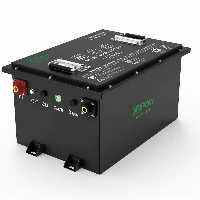
Balancing a LiFePO4 battery pack is all about ensuring each series-connected cell maintains the same voltage. Because of slight variations in manufacturing and usage, cells naturally drift apart over time. If left unbalanced, the pack's capacity will drop, and its overall lifespan will be shortened.

1. Top Balancing (Most Recommended)
This is the best practice for new battery packs before assembly or during major maintenance. The goal is to align all cells at their fully charged state (3.65V).
Steps:
- Individual Charging: Use a dedicated LiFePO4 charger to fully charge each cell individually.
- Parallel Connection: Connect all cells in parallel (positive to positive, negative to negative).
- Constant Voltage Charging: Use a bench power supply set to 3.65V. Set the current to about 0.1C (10% of the battery's rated capacity).
- Completion: Once the current drops near 0A (typically <1A), let the cells sit in parallel for 12–24 hours to let the voltages stabilize.
2. Automatic Balancing via BMS
Most users rely on a Battery Management System for day-to-day maintenance.
Passive Balancing: When a cell hits a threshold (e.g., 3.45V) and is higher than others, the BMS bleeds off excess energy through a resistor as heat.
- Note: Cheap and common, but the balance current is tiny (30–100mA), making it slow for large packs.
Active Balancing: The BMS uses circuitry to transfer energy from high-voltage cells to low-voltage cells.
- Note: Highly efficient and much faster; ideal for high-capacity packs or older cells with higher drift.

3. Using an External Active Equalizer
If your BMS's balancing capability is too weak (i.e., you notice large voltage gaps during high-current charging), you can add a dedicated active balancer.
- Inductive/Capacitive Balancing: These provide 1A to 5A of balance current, significantly higher than a standard BMS.
- Caution: It is often better to choose a balancer with a switch or one that only triggers at high voltages to avoid over-discharging cells during long storage.
4. Key Parameter Settings
To allow your system enough time to balance, your charging settings should be optimized:
| Parameter | Recommended Value | Description |
| Cell Cut-off | 3.65V | The standard "full" voltage for LiFePO4 |
| Absorption/Bulk Voltage | 14.2V - 14.4V | For a 12V (4S) pack; gives the BMS "room" to balance |
| Balance Start Voltage | 3.40V - 3.45V | Start balancing where the voltage curve begins to steepen |
| Allowed Deviation | 0.01V - 0.03V | The ideal precision range for a healthy pack |
Pro-Tips & Troubleshooting
- The "Flat Curve" Illusion: LiFePO4 has a very flat voltage curve. Between 20% and 80% charge, cells often look perfectly balanced (around 3.2V). Differences only become visible when nearly full (>3.45V) or nearly empty (<3.0V).
- When is the gap too big? A static deviation of >0.05V is a red flag. If it exceeds 0.1V, a manual top balance is usually required.
- Safety First: Never set your charging source above 3.65V per cell, as this can cause permanent chemical damage.
FAQ
How to Balance LiFePO4 Batteries in Series?
When lithium iron phosphate batteries are connected in series, achieving balance primarily relies on cell matching, BMS management, and periodic calibration.
First, before assembling the battery pack, select cells from the same brand and batch with consistent capacity and internal resistance, and adjust their voltages to be as uniform as possible before connecting them in series. Second, it is essential to use a BMS with a balancing function, which automatically dissipates or transfers energy from cells with higher voltages during the charging process.
how to balance lithium batteries in parallel?
Balancing lithium-ion batteries connected in parallel is relatively straightforward, as their voltages will naturally equalize once connected. However, proper procedures must be followed. Before paralleling, the voltage of each battery should be closely matched, with a difference no greater than 0.05–0.1 V; otherwise, a large inrush current may occur.
For best results, use batteries from the same brand, with the same capacity and production batch, to ensure consistent internal resistance. When wiring the batteries, use cables of equal length and specifications to promote even current distribution. It is also recommended to use a Battery Management System with protection features to guard against overcharge, over-discharge, and overcurrent.
After connecting the batteries in parallel, perform a full charge cycle to help synchronize them. During operation, avoid mixing new and old batteries or combining batteries with significantly different capacities, as this can lead to uneven loading and accelerated aging of certain cells.