Theoretically, a 72V battery can indeed be used in a 48V golf cart. However, as we mentioned in our previous article, "Can a 48V Battery Be Used in a 36V Golf Cart?", you must first ensure voltage compatibility.
Not only does the golf cart battery need to be 72V, but components such as the controller, motor, charger, contactor, and DC converter must also be replaced with 72V versions. Otherwise, the battery management system's overvoltage protection will be triggered frequently, potentially burning out the 48V controller.
This raises a problem: the cost of replacing the battery is nearly equivalent to buying a new vehicle, which is completely unnecessary. It would be better to purchase a higher-quality 48V lithium-ion golf cart battery.

What Happens If You Put a 72V Battery on a 48V Golf Cart?
As we mentioned at the beginning of this article, using a 72V battery in a 48V golf cart requires voltage matching. However, in practice, we've found that some users simply install the battery directly into a 48V golf cart without upgrading the entire system, continuing to use the original 48V platform.
What problems does this cause? Let's explore this together.
1. The controller may be damaged.
The electronic components in a 48V controller-such as MOSFETs and capacitors-are designed for a 48V system and have a limited voltage tolerance range.
However, a fully charged 72V lithium iron phosphate battery can reach a voltage of 87.6V, far exceeding the rated input range of a 48V controller. This excessively high voltage will directly cause damage to the controller's internal electronic components.
2. Motor Damage.
Higher voltage allows the motor to achieve higher RPM and power, which means the motor is operating under excessive load; however, this approach has more drawbacks than benefits.
Long-term use of a 72V battery to power a 48V motor will cause the motor's RPM to exceed its design range, increase operating current, raise motor temperature, and accelerate the aging of the winding insulation, ultimately leading to motor damage.
3. Incompatible Charging System
A 48V charger can only provide a charging voltage suitable for 48V batteries and cannot meet the charging requirements of a 72V battery. Therefore, even when connected to a power source, the battery will not charge fully.
4. Failure of the DC-DC Converter and Electrical Equipment
Low-voltage equipment on golf carts, such as lights, gauges, and horns, is powered by a DC-DC converter. If a 48V DC-DC converter is connected directly to a 72V battery, the input voltage will far exceed its design range, which will not only damage the converter but may also affect other equipment.
5. Contactors and wiring cannot withstand high voltages
Small components such as contactors and fuses may also be affected by high-voltage surges.
Why Do Golf Cart Owners Want to Upgrade from 48V to 72V?
Although 48V golf cart batteries can meet most everyday needs, some owners still prefer to upgrade to 72V batteries. This is because 72V batteries offer more power, longer range, and better load-carrying capacity. In addition, some DIY enthusiasts enjoy modifying their own golf carts.
A heavily modified golf cart is typically equipped with larger off-road tires, flashy lighting, and a sound system; the original battery may not be able to meet these demands, so some owners consider using a 72V golf cart battery to boost power.
However, as a professional lithium golf cart battery manufacturer, we recommend that you customize a high-performance 48V lithium-ion golf cart battery tailored to your specific needs. Not only does it deliver the same power as a 72V battery, but it also eliminates the need for complex voltage adaptation, saving you time, effort, and money.

What Needs to Be Upgraded When Converting a 48V Golf Cart to 72V?
If you're serious about upgrading a 48V golf cart to a 72V battery system, we've got the necessary parts right here. We've already listed everything you'll need.
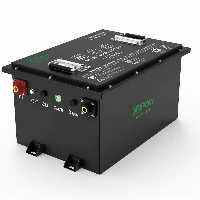
1. 72V Golf Cart Battery Pack
Compared to lead-acid batteries, we recommend using a 72V lithium-ion golf cart battery pack. This way, you won't need to assemble the cells yourself, as we've already properly assembled them into a lithium-ion battery pack at our factory.
2. 72V Controller
The controller is a core component that must be replaced during the upgrade; it is responsible for regulating the current and power delivered from the battery to the motor.
The electronic components (such as MOSFETs and capacitors) in the original 48V controller were designed for a 48V system and cannot withstand the high voltage input from a 72V battery over the long term. Therefore, replacing it with a 72V controller allows the 72V battery's power advantages to be fully realized.
3. Motor (depending on usage requirements)
When upgrading to a 72V system, the motor must also be evaluated. The original 48V motor can only withstand 72V for a short period of time; it will quickly become damaged and will be unable to take full advantage of the powerful performance offered by a 72V battery.
4. 72V Charger
Whenever you replace a battery, you'll need to replace the charger as well-and 72V batteries are no exception. If you've chosen a CoPow 72V golf cart battery, we've already provided a dedicated charger for you.
5. DC-DC Converter
Low-voltage equipment on golf carts-such as lights, gauges, horns, and audio systems-requires a DC-DC converter to convert high voltage to a 12V power supply. Never use the 72V battery directly to power these low-voltage devices. We have this accessory ready for you.
6. Contactors, Fuses, and Wiring
It never hurts to replace them all with 72V models.
7. Instrumentation, BMS Communication, and Smart Features
Today's lithium-ion golf cart batteries typically require a smart battery management system to more effectively protect and manage the battery. These BMS units are usually built into the battery itself. In addition, the BMS allows you to customize protection thresholds based on your needs and develop specific features tailored to your usage scenarios, depending on your selection. If you need to customize the BMS communication protocol, protection parameters, or protection functions, please feel free to contact CoPow.

Conclusion
We've already provided a clear answer regarding whether a 72V battery can be used in a 48V golf cart and explained the pros and cons to you. Although it is possible to make the swap, we recommend considering other alternatives from both a cost and technical perspective.
In summary, we advise against doing this and instead recommend choosing a more suitable 48V lithium-ion battery.
CoPow offers 48V batteries designed to match the power requirements of 72V golf carts, allowing for a quick installation without the need to spend a significant amount of money upgrading the entire system. Feel free to contact us-our team will respond to your message within 24 hours.