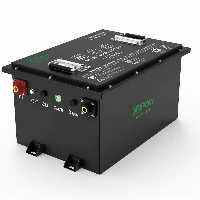
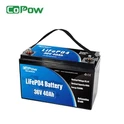
Lithium-ion batteries for golf carts are said to last more than 8 years under normal use, but some users have noticed that after 2–3 years, the batteries appear rusty, with the screws and battery handles showing severe rust-so much so that they seem as if they might crumble at the slightest touch. Does this pose a safety risk?
In theory, lithium-ion batteries can indeed function normally for more than 8 years. If signs of rust appear, it is generally because the metal components' protection rating does not meet standards.
For example, when using batteries in humid environments, special attention should be paid to their waterproof rating-everything from the casing to the screws must be thoroughly considered; otherwise, the situation shown in the image below may occur.
Next, we will explain in detail how to select the right materials for golf cart batteries to effectively prevent rust.

What Parts Of A Lithium Golf Cart Battery Usually Rust?
Rusting in lithium-ion golf cart batteries typically occurs only on the exterior; the internal battery cells, battery management system, and circuitry are generally not susceptible to rust. This is because lithium iron phosphate batteries do not contain acidic liquids and do not emit acidic gases that could corrode internal metal components.
The primary cause of battery rust is the low waterproof rating of external metal components, such as screws and battery handles, which are prone to rusting in humid environments.
Generally speaking, the following components are more prone to rust:
1. Battery Handle Assembly
The battery handle is designed to make it easier for users to carry the battery; it is typically located on the top or side of the battery.

What is it made of?
Carbon Steel - Most common
When handling golf cart batteries, you typically need to grip the battery's handles with both hands. The materials used for these handles, ranked from lowest to highest quality, are carbon steel, stainless steel, and aluminum alloy.
Standard batteries usually feature handles made of carbon steel. Because carbon steel contains iron, when iron comes into contact with oxygen and water, an oxidation reaction occurs, producing iron oxide-the reddish-brown rust we commonly see.
Stainless Steel - Commonly Used in High-End Batteries
We typically refer to this type of stainless steel as 304 or 316. Stainless steel contains chromium (Cr), which forms an extremely thin protective layer of chromium oxide on the metal's surface, effectively preventing further corrosion.
Among these, 304 stainless steel is the top choice for many customers because it offers better value for money.
Although this material isn't perfect, it provides sufficient rust protection. Of course, it can still rust-though only in the form of minor rust spots-and it fully meets the requirement for a battery service life of over 8 years.
If you'd like to customize a battery handle made from this material, CoPow can meet your needs. Our batteries are virtually rust-free.
Aluminum Alloy
Some customers, in pursuit of lighter weight, optimize the overall battery design to the utmost, including using aluminum alloy for the handle. This material is both rust-resistant and lightweight.
How Can You Prevent Rust at a Low Cost?
In addition to selecting 304 rust-resistant handles or materials with a higher rust resistance rating, we also optimize the placement of the handles. Battery handles can be designed to be recessed or external, which helps prevent water accumulation. Both approaches have their pros and cons, and the specific choice depends on your needs.


2. Mounting Screws
As we can see, there are screws securing the casing of a golf cart's lithium-ion battery, allowing the screws to be unscrewed directly for inspection should any internal components malfunction. Therefore, when we say that the lithium-ion battery features a sealed design, we do not mean that the battery is completely sealed; rather, it is secured with screws and can be disassembled if necessary.

What is it made of?
Carbon Steel Screws
Many of the metal components in golf cart batteries are made of this type of carbon steel screw, which offers limited rust resistance. But why do so many manufacturers still choose it? Not only does it further reduce costs, but it also allows for more advanced corrosion-resistant treatments to be applied to the screws. Carbon steel screws that have undergone these treatments can effectively prevent rust.
Stainless Steel Screws
Screws are available in two grades: 304 stainless steel and 316 stainless steel. The difference between the two is that 316 stainless steel contains added molybdenum compared to 304, giving it greater resistance to corrosion caused by chloride ions. If you are located near the coast, at a dock, or in a humid area, the battery typically requires 316 stainless steel screws.
Galvanized Screws
Galvanized screws are actually made of carbon steel, but they have a protective layer of zinc on their surface.
The zinc layer isolates the steel from contact with air and moisture. At the same time, because zinc is more reactive than iron, it corrodes first, thereby protecting the steel underneath. This method of protection is known as "sacrificial anode protection."
Common types include white zinc, blue-white zinc, and colored zinc, with colored zinc typically offering better corrosion resistance than standard white zinc.
The advantages of galvanized screws are their low cost and high strength; however, if exposed to damp or salt-fog environments for extended periods, the underlying steel will eventually begin to rust once the zinc coating is depleted.
Nickel-Plated Screws
Nickel-plated screws are screws with a layer of nickel coating on their metal surface. Compared to standard galvanized screws, nickel-plated screws offer better rust resistance and have a smoother, more attractive appearance.
In lithium-ion battery applications, nickel-plated screws are commonly used for structural fastening inside the battery, for BMS installation, and near electrical connections; however, if the nickel coating is scratched and the underlying metal is exposed, rust may still occur.
Dacromet-Coated Screws
Dacromet is an advanced corrosion-resistant coating technology composed of zinc, aluminum, and inorganic coatings, and is superior to galvanized and nickel-plated screws.
CoPow offers customizable, rust-resistant lithium-ion batteries for golf carts, with a wide variety of high-protection screws to choose from.

Common Types of Mounting Screws Used in Lithium Battery Packs
| Screw Type | Key Features | Suitable Applications |
|---|---|---|
| Carbon Steel Screws | High strength and low cost, but require surface treatment to improve corrosion resistance | Standard battery packs and cost-sensitive applications |
| Zinc Plated Screws | Coated with a zinc layer for basic corrosion protection and affordability | General outdoor applications |
| 304 Stainless Steel Screws | Good corrosion resistance and widely used for outdoor equipment | Golf carts, RVs, and outdoor lithium battery packs |
| 316 Stainless Steel Screws | Superior resistance to salt spray and chloride corrosion | Marine environments, coastal areas, and high-humidity conditions |
| Nickel Plated Screws | Smooth surface finish with good oxidation resistance | Internal battery structures and electronic components |
| Dacromet Coated Screws | Excellent corrosion resistance and better salt spray performance than standard zinc plating | High-demand industrial and outdoor applications |
3. Battery Mounting Brackets And Tray
Battery mounting brackets are used to secure the battery to the golf cart's frame. They are typically located at the bottom of the battery or near the vehicle's chassis, making them more susceptible to mud and water splashed up by the tires while the vehicle is in motion. If the brackets are made of ordinary steel and have not been treated to prevent rust, they are also prone to rusting.


What types does he have to choose from?
Carbon Steel Brackets
Initially, carbon steel was the primary material used, but the surface can also be treated to enhance its properties, such as through powder coating, electrophoretic coating, and the well-known galvanizing process.
Galvanized Steel Brackets
Galvanized steel brackets feature a protective layer of zinc applied to the surface of carbon steel, which acts as a sacrificial anode to protect the underlying steel.
Stainless Steel Brackets
There are still two options: 304 stainless steel and 316 stainless steel. We've already discussed the differences between them. We've also mentioned the advantages, so here we'll briefly touch on the disadvantages: the cost is slightly higher because they are more difficult to machine than ordinary steel.
Aluminum Alloy Brackets
If you're looking for a lightweight solution, we can build that for you as well. However, since aluminum alloy is generally less strong than steel, the structural thickness must be increased for battery packs that carry heavier loads.
Powder-Coated Steel Brackets
This is a very common design found in many outdoor lithium-ion battery packs today. Essentially, these are still steel brackets, but their surfaces are coated with a layer of powder coating, which forms a protective layer. This coating is more wear-resistant and has stronger adhesion, so it will not peel off easily even if subjected to severe impacts.
4. Battery case and its chamferred edges
Finally, the material of the battery casing is also very important. Although most golf cart battery manufacturers use casings with a certain level of protection, to be on the safe side, we'd like to explain what materials casings are typically made of and what types are available. Please continue reading.

What Materials And Custom Options Are Available For Lithium Golf Cart Battery Enclosures?
Plastic/ABS Enclosure
Some golf cart batteries come with plastic enclosures. Although these enclosures do not rust and are lighter, we do not recommend them. This is because, compared to rust, plastic enclosures are more prone to damage from impacts, and they also have a lower battery capacity.
Aluminum Alloy Housing
This is the standard configuration for lithium-ion golf cart batteries. Aluminum alloy is characterized by its light weight, high mechanical strength, and excellent heat dissipation properties.
Compared to ordinary steel, aluminum alloy does not develop red rust, making it more suitable for golf carts installed outdoors over the long term.
Lithium batteries generate a certain amount of heat during operation, and the aluminum alloy's excellent thermal conductivity helps transfer heat from the battery's interior to the exterior, thereby improving the battery's operational stability.
However, aluminum alloy is not without its drawbacks; it can oxidize when exposed to moisture. Therefore, manufacturers such as CoPow also subject the aluminum alloy to anodizing, powder coating, or electrophoretic coating to further enhance the battery's corrosion resistance.
Steel Enclosure
Steel enclosures are certainly sturdier than those made of other materials, but they are simply too heavy for golf carts, and steel is also prone to rust.
Although an anti-corrosion coating can be applied, this protective layer will gradually wear off over time, which puts the manufacturer's rust-proofing process to the test. Typically, steel enclosures are used for industrial batteries, but they are rarely used in golf carts.
Aluminum Alloy Frame + Composite Cover
High-quality lithium-ion golf cart batteries combine aluminum alloy and composite materials. The battery casing is made of aluminum alloy, while the cover plate is made of plastic or composite material; this approach reduces the battery's weight while enhancing insulation and protection. We have implemented this combination in many of our custom golf cart battery projects, with remarkable results.
Overall, the areas that require special attention and effective rust prevention measures include the battery handle, screws, battery casing, and battery bracket, as these are all metal components that will inevitably rust after prolonged use-as shown in the images we previously shared, the rust damage is quite severe.
If you're looking to purchase a lithium-ion golf cart battery with a lifespan of over 8 years that won't rust, CoPow would be happy to assist you.
How To Choose The Right Battery Enclosure Material For A Lithium Golf Cart Battery?
| Application Environment / Requirements | Recommended Enclosure Material | Why Choose It? | Considerations |
|---|---|---|---|
| Normal golf courses, residential areas, and dry outdoor environments | Aluminum Alloy Enclosure | Lightweight, strong, excellent heat dissipation, and good corrosion resistance. It is one of the most common enclosure materials for lithium golf cart batteries. | Additional surface treatments such as anodizing or powder coating are recommended for long-term outdoor protection. |
| Coastal areas, high humidity, and salt spray environments | Aluminum Alloy + Anti-Corrosion Coating | Aluminum alloy provides better corrosion resistance than steel, while additional coatings improve protection against moisture and salt exposure. | The coating quality is critical. Any scratches or damage to the coating should be repaired to prevent localized corrosion. |
| Industrial areas, rough roads, and applications requiring higher mechanical protection | Steel Enclosure | Steel provides excellent mechanical strength and impact resistance, offering better protection against external forces. | Requires proper anti-corrosion treatment, such as powder coating, electrophoresis, or galvanizing, to prevent rust. |
| Applications where lightweight design is important | Aluminum Alloy Enclosure | Aluminum has a lower density than steel, reducing overall battery weight while maintaining sufficient structural strength. | The cost is usually higher compared with standard steel enclosures. |
| Small-capacity and low-power lithium battery applications | ABS / PC+ABS Plastic Enclosure | Lightweight, electrically insulated, cost-effective, and naturally resistant to rust. | Lower mechanical strength and heat dissipation performance compared with metal enclosures. |
| High-performance and customized battery packs | Aluminum Frame + Composite Cover | Combines the strength and heat dissipation of aluminum with the lightweight and insulation advantages of composite materials. | More complex design and higher manufacturing costs. |
| Extreme outdoor environments with long-term exposure to rain, mud, and salt | Aluminum Alloy + IP67/IP68 Sealed Enclosure Design | Provides excellent waterproof and dustproof protection when combined with corrosion-resistant materials and proper sealing structures. | Requires careful design of seals, connectors, vents, and enclosure joints. |
How To Repair Rusty Lithium Golf Cart Battery Parts?
First, you need to assess whether the rust is as severe as shown in the photos we provided. If there is only slight rust on a few screws and the handle, there is no need to replace these parts, let alone the entire lithium-ion golf cart battery pack.
However, if you notice that the anti-corrosion coating on the handle has peeled off, and there are signs of loosening or flaking, this indicates that the rust is quite severe. In this case, the handle could detach from the battery the next time you lift it, posing a risk of injury. Let's take a closer look at the specific situation.
1. Remove Surface Rust
You can start by using a wire brush or sandpaper to scrub the rusted areas, removing the rust and restoring the material to its original condition. Be sure to wipe the surface clean.
2. Apply Anti-Corrosion Protection
After thoroughly cleaning off the rust, you can apply a rust-preventive coating yourself-such as WD-40 Specialist Corrosion Inhibitor, CRC Heavy Duty Corrosion Inhibitor, or Boeshield T-9-which is a task you can complete on your own.
If you have the proper equipment or someone to assist you, you can also re-galvanize the rusted parts. It's important to note that if the rusted area is large, you can simply apply anti-rust paint to form a thick protective layer, giving the battery a fresh new look.
3. Replacing Severely Corroded Parts
If a part is severely rusted, the original protective coating has largely peeled off, and the screws have become loose, we recommend that you go directly to a repair shop to purchase 304 or 316 stainless steel parts (battery handle, mounting bracket, battery tray).
Generally, you can find the appropriate replacement parts at a professional repair shop. If you are unable to find them, you can also contact us directly, and we will provide the parts for you.
When Should You Replace A Rusty Lithium Golf Cart Battery?
Rust on the metal parts on the outside of a golf cart battery does not significantly affect the normal operation of the internal electrical components. Although we can repair it ourselves, there are some exceptions.
You can disassemble the battery to check the inside of the rusted areas for moisture or holes. If the rust has caused electrical leakage in certain areas, you should be cautious. It's up to you to decide whether the battery needs to be replaced.
Rather than worrying about rust after 2–3 years of use, it's better to choose a high-performance lithium-ion golf cart battery with rust-proofing features from the start.
Feel free to contact us-our team will respond to your message within 24 hours. Whether you're looking to customize a battery or find a high-performance golf cart battery, we can meet your needs.