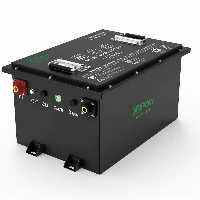
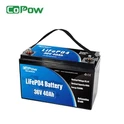
Say Goodbye to Watering and Corrosion: Switch Your Street-Legal Golf Cart to Lithium!
Have you ever avoided driving further because you worried about running out of power? Are you tired of crouching in the garage to add water to your batteries, constantly worrying about acid damaging the floor? With lithium technology becoming standard in 2026, these headaches are things of the past.
Today, we will take you into the world of lithium iron phosphate batteries, share real user stories, and provide a detailed 2026 upgrade checklist to bring your cart back to life.

Why Battery Choice Matters for Street Legal Golf Carts?
When a golf cart moves from the course to public streets, it's no longer just for fun-it becomes a real way to get around. That makes choosing the right battery critical, because driving on the road demands much more in terms of power, safety, and range than driving on a course. Street-legal carts often have to start at traffic lights, keep up with traffic, and carry extra safety equipment, so the battery needs to be powerful and stable. Picking the right battery doesn't just affect how it drives, it also determines how much you'll spend over time.
Lead-acid batteries are too heavy, require troublesome maintenance, and wear down the chassis and suspension faster. Plus, when the charge gets low, power drops off, and slowing down in traffic can be dangerous. Choosing lithium is really about reliability. You don't have to worry about adding water, the lighter weight makes handling more precise, and it ensures the cart stays agile and safe in complex street environments.
Advantages of Lithium Iron Phosphate Battery Technology
When driving on the street, range is the most practical consideration. Lithium iron phosphate batteries have high energy density, so a single charge goes much farther than regular batteries. Also, the discharge is very stable. Even when the battery is nearly empty, the speed won't drop, so you don't have to worry about losing power on the way home.
For daily use, charging speed is key. Lithium iron phosphate batteries support fast charging and can be full in a few hours, while traditional batteries need a whole night. You can top up whenever you have time, like during lunch, to get significant range without waiting too long.
Regarding weight, these batteries are much lighter than lead-acid ones of the same size, about one-third the weight. A lighter body means sharper steering, shorter braking distance, and less tire wear. Since you start and stop often on the street, a lighter cart is easier to drive and puts less strain on the chassis.
Maintenance is worry-free. Lead-acid batteries need regular checks, water refills, and corrosion cleaning, but lithium iron phosphate batteries are sealed and need nothing. There's no acid smell, and you don't have to worry about leaks damaging your garage floor. Once installed, you can forget about it.
In terms of lifespan, although they cost more upfront, they last much longer. They can handle 3000 to 5000 charge cycles, five to ten times that of lead-acid batteries. Basically, you won't need to replace the battery during the cart's life, so the cost per use is actually lower.
Safety-wise, this is currently the safest lithium battery type with good thermal stability and fewer issues. The built-in battery management system monitors voltage, current, and temperature in real time, offering overcharge protection and short circuit defense, ensuring stable performance in various weather and road conditions.
From an environmental perspective, these batteries don't contain harmful heavy metals like lead or cadmium, and their high efficiency reduces energy waste. Green travel is the trend now, and this technology is clean, efficient, and recyclable. Investing in it isn't just upgrading your vehicle, it's choosing a more sustainable way to get around.
Why Lithium Batteries Are Now the Standard for Street Legal Golf Carts?
Back in the day, golf carts stayed on closed courses where speeds were low, so lead-acid batteries worked fine. But now that these vehicles are on public roads for daily commuting, shopping, and shuttling passengers, the weaknesses of old battery tech really show, especially with performance drops and high maintenance costs. Lithium battery technology fixed these issues completely.
It not only provides stronger acceleration to handle complex city traffic but also greatly improves range thanks to its higher energy density, making LSVs actually practical for getting around town.
Looking at the market, lithium becoming the standard comes from users wanting more and technology improving. Modern users are no longer willing to deal with tedious maintenance like adding water, and nobody wants acid leaking and corroding their garage floors. The maintenance-free nature and extremely long cycle life of lithium batteries greatly reduce the overall cost of ownership.
Additionally, with the global emphasis on green energy and carbon reduction, this lighter, more environmentally friendly, and faster-charging solution naturally became the common choice for manufacturers and consumers. This shift is not just a hardware upgrade. It is the key technical foundation for the evolution of golf carts from course toys to legal street vehicles, marking that the micro electric vehicle industry has officially entered a new era of high efficiency and less waste.
Battery Management Systems in 2026 - Smarter & Safer
In 2026, the battery management system isn't just a safety switch hidden inside the battery pack anymore. It's more like the digital brain of a street-legal golf cart. These systems are much smarter now, using built-in algorithms to monitor every battery cell in real time and make sure they work evenly. The most useful part is that it shifts from reactive to proactive.
If a battery is about to fail, it sends a warning to your phone or dashboard beforehand, instead of you finding out when the cart breaks down on the road. This smart change not only lets the battery last several years longer but also makes the cart run more reliably on public roads.
Integration with Smart Fleet & IoT
Connectivity technology allows owners and operators to track the vehicle's exact location, real-time battery level, and overall health status anytime through a phone app or backend system.
For organizations managing community commuter fleets or rental businesses, IoT technology enables geofencing and remote locking, which greatly improves vehicle security and dispatch efficiency. What's even smarter is that vehicle data can be uploaded to the cloud for analysis. This helps users optimize charging habits and predict maintenance needs to avoid sudden breakdowns.
This seamless digital connection not only makes daily use as intuitive and convenient as using a smartphone, but also provides a complete automated management solution for low-speed travel in future smart communities.
Upgrade Checklist - When & How to Switch to Lithium in 2026
For many owners, 2026 is the perfect chance to switch from lead-acid to lithium batteries. Conversion technology is mature now, so this isn't just for tech experts anymore. Regular users can handle this upgrade easily. Before you begin, you need a clear checklist to confirm when to switch and how to do it safely.
When is it time to switch?
If your lead-acid batteries are over two years old and you notice they charge quickly but drain even faster, or if your cart struggles on hills it used to climb easily, it's time. If you are tired of the constant chore of topping off water or cleaning white acid corrosion off the terminals, switching to lithium in 2026 is the immediate solution to those headaches.
How to choose the right specs?
First, verify your cart's voltage-usually 48V-as the lithium pack must match this precisely. For capacity, a 60Ah to 105Ah battery is plenty for daily errands or school runs. If you have a long commute or live in a hilly area, aim for 105Ah or higher. In 2026, the industry standard has shifted toward "single-pack" large batteries, which are more reliable than wiring multiple small batteries in parallel.
What to watch for during installation?
Most modern kits are "Drop-in" ready, meaning they fit directly into your existing battery tray. The most critical step is using a lithium-specific charger; never reuse your old lead-acid charger as it will damage the new cells.
Keep in mind that your cart will suddenly be nearly 300 lbs lighter, making it feel much peppier and more responsive on the brakes. Finally, ensure your new setup includes a Bluetooth-enabled battery monitor so you can check your precise range on your phone-that is the standard for a modern driving experience.
Real User Reviews - 2026 Street Legal Golf Cart Lithium Performance
Most owners of street-legal golf carts share a common feeling: after switching to lithium batteries, the cart feels like a completely new vehicle. A user living in a Florida retirement community shared that with their old lead-acid batteries, every trip to the nearby supermarket with the family meant a slow struggle on the way back uphill, sometimes even worrying about running out of power.
Now with a 105Ah lithium iron phosphate battery, the acceleration is as quick as a small car, the battery gauge on the dashboard is very accurate, and they've gone five days without needing a charge.
Another mom who uses the cart to pick up her kids daily mentioned that what satisfies her most is the peace of mind. Before, she had to crouch in the garage every month to add water to the batteries, worrying about acid dripping on the expensive floor tiles.
Now, the lithium battery needs no attention at all. She just plugs in the fast charger and scrolls through her phone for a bit until it's full. Many tech-savvy users also praise the popular phone app connectivity in 2026. They can check the battery's health status in real time from their living room. This sense of digital control makes driving on public roads feel much more confident.
Master Your Data, Master Every Mile. Join tens of thousands of owners who have already upgraded to the COPOW Smart Lithium System. With our all-new 2026 mobile connectivity technology, your battery level, health status, and driving range are always right at your fingertips.