In the past, when people thought of batteries, they often associated them with the rapid degradation of smartphone batteries, the fire risks of electric vehicle batteries, or bulky, short-lived lead-acid batteries.
However, with the advent of the new energy era, a safer, more durable, and more efficient battery technology has emerged: lithium iron phosphate batteries.
This article provides a comprehensive overview of this battery technology, which is reshaping the energy landscape, covering its operating principles, internal structure, lifespan, and comparisons with other battery types.

What Is Lifepo4 Battery?
Lithium iron phosphate batteries (abbreviated as LiFePO4 or LFP) are a type of lithium-ion battery that uses lithium iron phosphate as the cathode material.
Batteries can be thought of as containers for electrical energy. Lithium iron phosphate batteries differ from other batteries in the chemical materials used inside them. Traditional lithium-ion batteries may use materials such as nickel and cobalt, whereas lithium iron phosphate batteries utilize iron, phosphorus, and lithium.
As a result, lithium iron phosphate batteries offer several significant advantages: higher safety (less prone to fire or explosion) and a longer service life (capable of supporting thousands or even tens of thousands of charge-discharge cycles).
Furthermore, since iron and phosphorus are abundant materials, LiFePO4 batteries are also more cost-effective. Currently, this new type of energy storage battery is widely used in electric vehicles, energy storage systems, RV batteries, solar energy storage systems, and electric forklifts.
However, LiFePO4 batteries do have one minor drawback: their energy density is slightly lower than that of other lithium-ion batteries. This means that, for the same volume, LiFePO4 batteries store less energy.
The Chemistry of LiFePO4 Batteries
Due to their material composition, lithium iron phosphate batteries combine safety and durability, making them the benchmark for high-quality lithium-ion batteries.
LiFePO₄ is the chemical formula for lithium iron phosphate, where Li stands for lithium, Fe stands for iron, and PO₄ stands for the phosphate group.
Lithium:In lithium iron phosphate batteries, lithium is the primary energy carrier. This metal is extremely lightweight and participates in electrochemical reactions during the battery's operation. Lithium moves between the positive and negative electrodes, enabling the battery to store and release energy.
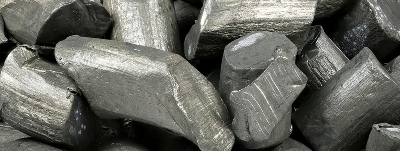
Iron Phosphate (FePO4): Lithium iron phosphate batteries use lithium iron phosphate as the cathode material. This compound offers excellent chemical stability and is non-toxic. Thanks to its exceptional stability, this material provides enhanced safety during charging, discharging, and under high-temperature conditions, effectively reducing the risk of failure and significantly extending the battery's service life.

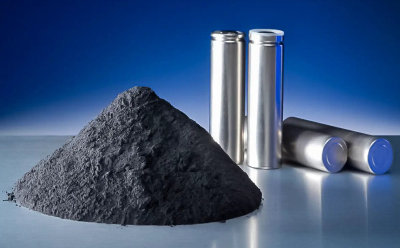
Graphite Anode: The anode of a lithium iron phosphate battery is made of graphite, which offers excellent conductivity and energy storage and discharge capabilities, thereby enabling a complete charge-discharge cycle.
Without graphite, lithium ions would lack a suitable carrier.
Lithium iron phosphate batteries are made from safe and environmentally friendly materials, offering higher efficiency and greater safety and durability compared to other lithium-ion batteries that may be toxic or unstable.
How Does a LiFePO4 Battery Work?
The working principle of lithium iron phosphate batteries can be simply explained as follows: lithium ions continuously move back and forth between the battery's positive and negative electrodes, allowing the battery to store energy during charging and release energy during discharging.
Specifically:
During charging, lithium ions in the battery migrate from the cathode (lithium iron phosphate) to the anode (graphite) and are stored there, similar to "depositing" electrical energy into the battery.
During the discharge process (for example, when you use the device), lithium ions flow from the negative electrode to the positive electrode. This movement generates an electric current that powers the device.
Imagine that a battery is like two houses, with a group of workers (lithium ions) shuttling back and forth between them. When charging, these workers travel from House A to House B; when discharging, they return from House B to House A.

how long do lifepo4 batteries last?
Under normal operating conditions, lithium iron phosphate batteries have a service life of approximately 8 to 10 years and a cycle life of approximately 2,000 to 5,000 cycles. This means that if the battery is charged and discharged once a day, its service life will be approximately 8 to 13 years; if the battery is used less frequently, its remaining service life will be extended accordingly.
related article: How Long Does a Lifepo4 Battery Last?
LiFePO4 Battery vs Li-ion Battery
I'm sure many people have this question: Aren't lithium iron phosphate batteries just lithium-ion batteries? Why bother comparing them specifically?
In fact, lithium iron phosphate batteries are just one type within the lithium-ion battery family. For example, when we hear "48V lithium-ion battery," although it usually refers to a 48V lithium iron phosphate battery, there are also a small number of other types of 48V lithium-ion batteries available on the market.
Before we begin, we need to understand which types of lithium-ion batteries are comparable to LiFePO4 batteries. Specifically, these include:
- Lithium cobalt oxide (LiCoO₂, LCO)
- Lithium manganese oxide (LiMn₂O₄, LMO)
- Nickel-cobalt-manganese ternary battery (NCM/NMC)
- Nickel-cobalt-aluminum ternary battery (NCA)
- Lithium titanate (Li₄Ti₅O₁₂, LTO)

LiFePo4 battery vs LiCoO2
Although lithium cobalt oxide batteries sound quite technical, they are actually one of the most common types of batteries in everyday life.
Devices such as smartphones and laptops use this type of battery, which is characterized by high energy density and light weight, allowing it to be manufactured in very compact sizes-capable of fitting inside a phone while storing a large amount of electrical energy within such a small volume.
In contrast, lithium iron phosphate batteries are clearly better suited for off-grid power systems, marine power supplies, golf carts, forklifts, RVs, solar power generation, and other renewable energy applications. This is because these scenarios demand higher thermal stability and longer battery life, necessitating larger battery sizes.
LiFePo4 battery vs LiMn2O4
Lithium iron phosphate offers greater durability and higher heat resistance, making it more suitable for long-term use. Although lithium manganese oxide (LiMn₂O₄) has good safety characteristics, its service life and heat resistance are inferior to those of lithium iron phosphate.
LiFePo4 battery vs NCM/NMC
If you are developing a sedan where lightweight design and driving range are the primary considerations, we recommend choosing a ternary lithium-ion battery; if you are developing a safe and reliable energy storage solution intended for long-term use (such as for RVs or residential solar systems), you should choose a lithium iron phosphate battery.
LiFePo4 battery vs NCA
NCA batteries prioritize lightweight design and high capacity, making them ideal for electric vehicles that require high performance and long driving range. However, these batteries are relatively expensive, have poor thermal stability, and a shorter service life.
In contrast, lithium iron phosphate (LiFePO4) batteries emphasize safety and durability, making them well-suited for applications that require extended battery life and enhanced safety.
LiFePo4 battery vs Li4Ti5O12
Lithium iron phosphate (LiFePO₄) batteries are an ideal choice due to their safety, durability, and cost-effectiveness. In contrast, lithium tetra-titanium pentoxide (Li₄Ti₅O₁₂) batteries not only deliver outstanding performance but also offer excellent safety and a long service life, while supporting fast charging and discharging. However, these batteries are larger, heavier, have lower energy density, and are more expensive.
LiFePO4 vs Lead Acid Batteries
The key differences between lithium iron phosphate (LiFePO₄) batteries and lead-acid batteries lie in efficiency, safety, and service life: LiFePO₄ batteries have lower internal resistance, resulting in minimal energy loss during charging and discharging; they can convert nearly all stored electrical energy into usable power (with conversion efficiency reaching 92% to 95%), whereas lead-acid batteries have a conversion efficiency of only 75% to 85%.
Furthermore, LiFePO₄ batteries support fast charging, can withstand deep discharges, and have an extremely long service life, capable of thousands of charge-discharge cycles; in contrast, lead-acid batteries charge slowly and typically can only be discharged to 50% of their capacity-exceeding this limit significantly shortens their service life, with cycle counts limited to only a few hundred.
Taking a battery capacity of 10 kWh as an example, a LiFePO₄ battery can effectively utilize 9.5 kWh, whereas a lead-acid battery provides only 8 kWh of usable capacity, wasting 2 kWh of electrical energy. In the long run, although lead-acid batteries have a lower initial cost, their lower efficiency and shorter lifespan result in higher overall operating costs.
Use Cases for Lithium Iron Phosphate Batteries
Although lithium iron phosphate batteries are not as ubiquitous in our daily lives as alkaline batteries, they still hold an important and influential position in the electric vehicle sector.
For example, the electric buses we frequently ride, Tesla electric vehicles, and electric motorcycles all use lithium iron phosphate batteries as their power source, demonstrating that these batteries are widely used in transportation, energy storage, industry, communications, outdoor activities, the military, and healthcare.
New Energy Vehicles
- Commercial Vehicles: Includes buses, long-distance coaches, logistics vehicles, and sanitation vehicles, which must meet high safety and long service life requirements.
- Passenger Vehicles: Mid-to-low-end family sedans (such as the standard-range models from BYD and Tesla), which strike a balance between cost and safety requirements.
- Low-Speed and Special-Purpose Vehicles: Includes electric golf carts, sightseeing vehicles, patrol vehicles, forklifts, automated guided vehicles (AGVs), and port machinery, suitable for frequent charge-discharge cycles and heavy-duty applications.
- Two-Wheelers: Electric bicycles and electric motorcycles, striking a balance between safety and lightweight design.

Energy Storage Systems
- Grid-side energy storage: Used for peak shaving and valley filling, as well as frequency and voltage regulation, to improve grid stability and enhance the grid integration capacity of renewable energy;
- Energy storage for renewable energy systems: Integrates solar or wind power generation systems with energy storage systems to smooth out power output, thereby addressing the intermittency of renewable energy.
- Commercial, Industrial, and Residential Energy Storage: Enables peak-to-off-peak arbitrage and provides backup power, thereby reducing electricity costs and ensuring the continuity of power supply.
- Data Center UPS: As an uninterruptible power supply, it ensures the continuous operation of IT equipment.
Industrial & Communication Backup Power Supplies
- Communication base stations: Ensures continuous operation of equipment during power outages; suitable for outdoor and high-temperature environments.
- Industrial equipment: Provides backup power and power supply for automated production lines, medical equipment, precision instruments, and other devices.
- Rail transit: Provides backup power for critical systems such as signaling systems and emergency lighting.
Outdoor & Portable Equipment
- Outdoor/Portable Energy Storage: Ideal for camping and emergency power supply, capable of withstanding extreme temperatures and vibrations in outdoor environments.
- Boats and RVs: Provides power for yachts and recreational vehicles, serving as both a primary and backup power source, with moisture-resistant and vibration-resistant properties.
- Power Tools: Suitable for power tools such as electric drills and saws, capable of meeting the demand for high-current discharge.
Special & Emerging Fields
- Military equipment: submarines, underwater robots, drones, individual soldier systems, etc., which demand extremely high standards of safety and reliability.
- Medical equipment: ventilators, portable ultrasound scanners, etc., which require a stable and safe power supply.
where to buy lifepo4 batteries?
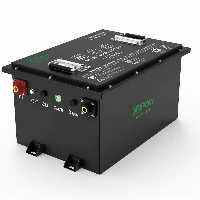
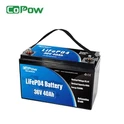
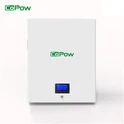
If you're looking for reliable lithium iron phosphate batteries, you've come to the right place. As a professional manufacturer, Copow specializes in providing a wide range of lithium iron phosphate solutions. Our product lineup includes batteries for golf carts, forklifts, and advanced energy storage systems. We invite you to explore our solutions!
About CoPow Battery
CoPow is a well-known lithium-ion battery brand under Shenzhen Huandu Technology Co., Ltd. With "safer and smarter" as its core value proposition, the brand serves markets including recreational vehicles, marine vessels, golf carts, and energy storage.
- Core Advantages: CoPow mainly uses Grade A lifepo4 battery cells from leading manufacturers such as CATL and EVE Energy, combined with its self-developed intelligent BMS. The BMS supports Bluetooth connectivity, allowing users to monitor key data such as voltage, current, and temperature in real time through a mobile app.

do lifepo4 batteries need a special charger?
LiFePO4 batteries must use dedicated chargers, otherwise the battery will be damaged. Here's why you cannot use a standard lead-acid charger:
Voltage Differences
The maximum fully charged voltage for each LiFePO4 cell is approximately 3.65V. For example, if a 48V battery pack consisting of 16 cells in series is used, the fully charged voltage would be approximately 3.65V × 16, which equals about 58.4V. If a lead-acid charger is used, the voltage may fluctuate; even an excess of just 0.1V can cause battery damage.
High-Voltage Pulses
Lead-acid battery chargers have a special feature: they generate high-voltage pulses while charging lead-acid batteries to break down sulfate crystals. This is because lead-acid batteries are prone to sulfation.
However, applying these pulses to LiFePO4 batteries is akin to striking precision electronic components with a hammer. This directly affects the battery cells, not only shortening their lifespan but also potentially triggering the battery management system's protective mechanisms.
Charging Logic
In terms of charging principles, lead-acid batteries use a float charging method, while lithium iron phosphate batteries use a constant current-constant voltage (CC-CV) method; the two are fundamentally different. If a lithium iron phosphate battery is left in float charging mode for an extended period, it will accelerate battery degradation.
Voltage Stability
One characteristic of lithium iron phosphate batteries is that their voltage remains very stable within the 20% to 80% charge range; once the charge level exceeds 80%, the voltage begins to fluctuate, so a charger capable of maintaining a stable voltage is required.
related article: Charging Lithium Battery With Lead Acid Charger: The Risks
can you connect lifepo4 batteries in parallel?
Lithium iron phosphate batteries can be connected in parallel or in series, but certain conditions must be met; otherwise, various problems may arise. If you are a DIY enthusiast, you need to be even more cautious.
Understanding Battery Parallel Connection
First, let's understand what it means to connect batteries in parallel. Connecting batteries in parallel means that the voltage remains the same, but the capacity increases, thereby increasing the output current. For example, when two 12V 100Ah LiFePo4 batteries are connected in parallel, the voltage remains 12V, but the capacity increases to 200Ah, providing more usable energy.
Voltage Matching Requirement
In practical use, the voltages of the two batteries must be the same. If the voltages of the two batteries differ-for example, if Battery A has a voltage of 13.4 V and Battery B has a voltage of 12.8 V-connecting them will damage Battery B, which has the lower voltage.
Equalization Current
There is a technical term called "equalizing current," which refers to the phenomenon where, if the voltage difference between two batteries is too great, one of them may burn out due to a sudden surge of current.
Therefore, when connecting batteries in parallel, you must use batteries of the same specifications and voltage, preferably from the same batch. Never mix new and old batteries.
Practical Challenges
In fact, connecting batteries in parallel is a highly complex task; even the slightest mistake can render the batteries unusable.
For LiFePO4 batteries, the built-in battery management system actively or passively balances the voltage of each cell, thereby effectively protecting them. It can be said that the BMS is indispensable in a battery parallel configuration.
related article: Parallel Batteries With Different Capacities: Safety Tips
how to equalize lifepo4 batteries?
Cell balancing for LiFePO4 batteries essentially involves synchronizing the state of charge (SOC) of all cells within a battery pack; the top-of-range balancing method is typically used.
Since the voltage curve of LiFePO4 cells is very flat within the mid-voltage range, the state of each cell can only be accurately assessed in the high-voltage region near full charge; therefore, balancing is usually performed at the end of the charging process.
For standard battery packs with a built-in BMS, simply maintaining the charger in low-current trickle charging mode is sufficient. The passive balancing circuit will discharge excess energy from high-voltage cells through resistors, allowing low-voltage cells to gradually catch up until all cells reach the same charge level.
For custom-assembled battery packs, the most thorough balancing method involves connecting all cells in parallel prior to initial assembly. Using a regulated DC power supply set to 3.65V, charge the pack in constant-voltage mode until the current approaches zero, ensuring that all cells reach a physically uniform fully charged state.
*In fact, there is no need for such a complicated process. CoPow lithium iron phosphate batteries are equipped with a built-in Battery Management System featuring active balancing capabilities, which intelligently and automatically balances each cell without requiring any additional steps.
related article: What is LiFePO4 Battery Management System?
are lifepo4 batteries deep cycle?
LiFePO4 batteries are typical deep-cycle batteries designed to withstand long-term deep charging and discharging, unlike traditional starter batteries, which can only provide short bursts of high power.
Compared to lead-acid deep-cycle batteries, which have a recommended depth of discharge of only 50%, LiFePO4 batteries support a depth of discharge of 80% or even 100% while still capable of thousands of charge-discharge cycles.
Thanks to their exceptional performance, LiFePO4 batteries have become the ideal choice for replacing traditional deep-cycle batteries in RVs, boats, golf carts, electric forklifts, and solar energy storage systems.
related article: What Is A Deep Cycle Battery?
can lifepo4 batteries freeze?
Lithium iron phosphate batteries may "freeze" in extremely cold environments, but this primarily refers to a cessation of electrochemical activity rather than physical freezing.
This is because the freezing point of their electrolyte is typically well below -60°C, so the battery itself will not expand or rupture due to freezing, as lead-acid batteries do. However, below 0°C, the electrolyte becomes viscous, causing the migration speed of lithium ions to slow dramatically, which manifests as increased internal resistance and reduced available capacity.
The most dangerous scenario is charging below 0°C, which can lead to severe lithium plating: lithium ions cannot intercalate into the anode but instead form metallic lithium crystals on its surface, resulting in permanent capacity loss and potentially causing internal short circuits.
Therefore, most high-quality batteries (such as CoPow) incorporate low-temperature charging protection into their Battery Management System (BMS) to ensure that charging is automatically halted before the battery temperature rises above freezing.
related article: Will Lithium Golf Cart Batteries Freeze?
can you mix different brands of lifepo4 batteries?
Generally, we do not recommend mixing LiFePO4 batteries from different brands, because even if their rated specifications are identical, batteries from different manufacturers may exhibit significant differences in cell chemistry, internal resistance characteristics, and the protection logic and thresholds of their battery management systems.
When used in series or parallel configurations, these performance differences can lead to severe imbalances in state of charge: current will flow preferentially to batteries with lower internal resistance, potentially causing them to overload; simultaneously, due to differences in BMS behavior, some batteries may trigger protective shutdown prematurely while others continue to operate.
In the long run, this not only shortens the overall service life of the battery pack but may also pose safety hazards due to abnormal current distribution.
To ensure system stability and safety, the best practice is to always use batteries of the same brand, from the same batch, and with identical specifications.
If you already have batteries from different brands and wish to learn how to mitigate the risks of mixed-use through standalone controllers or external balancers, our professional engineers are available to provide consultation services at any time.
How to Properly Maintain a LiFePO4 Battery?
Daily Maintenance Checklist for LiFePO4 Batteries
Charging Guidelines
- Use Dedicated Equipment: Be sure to use a charger specifically designed for LiFePO4 batteries. Never use a lead-acid battery charger with a "desulfation" or "repair" mode, as this may damage the battery.
- Avoid Deep Discharges: Do not wait until the battery is completely drained (0%) before recharging; it is recommended to start charging when the battery level drops to approximately 20%.
- Regular Calibration: While it is ideal to maintain the charge level between 20% and 80% during daily use, you should still perform a full 100% charge once every 1 to 2 months to help the battery management system balance the cell states and recalibrate the charge level display.
Environmental Control
- Never charge in cold temperatures: Do not charge in environments below 0°C (unless the battery has a built-in heating function), as this may cause permanent internal damage to the battery.
- Avoid high temperatures: The ideal operating and storage temperature range for the battery is 15°C to 35°C.
Long-Term Storage
- Partial Charge Storage: If the battery will be idle for more than a month, charge and discharge it to approximately 50% capacity.
- Physically Disconnect: Before storage, turn off the main switch or disconnect the cables to prevent parasitic loads from slowly draining the battery, which could lead to over-discharge.
- Periodic Inspection: Check the battery voltage every 3 to 6 months and recharge the battery as needed.
conclusion
LiFePO4 batteries represent one of the most advanced lithium-ion battery technologies available today, making them particularly well-suited for golf carts, marine propulsion, and energy storage systems. An increasing number of electric vehicle and professional equipment manufacturers are opting for LiFePO₄ batteries, and Copow Battery has earned widespread market recognition for its highly safe, long-lasting solutions.
Compared to other battery types, Copow LiFePO4 batteries offer a longer cycle life, higher energy efficiency, lower self-discharge rates, and superior safety. They provide users with peace of mind even under the most demanding operating conditions.
Copow Battery's products are widely used in electric golf carts, marine propulsion systems, industrial energy storage, and portable outdoor equipment, offering users reliable, low-maintenance, and eco-friendly energy solutions.
We invite you to choose Copow LFP batteries to provide your equipment with long-lasting, safe, and reliable power support, comprehensively enhancing performance across a wide range of applications.

Frequently Asked Questions
Is LiFePO4 better than lithium-ion?
LiFePO4 batteries are better in terms of safety, cycle life and cost-effectiveness, though they have lower energy density than some lithium-ion batteries like ternary lithium ones.
Can LiFePO4 replace lead-acid batteries directly?
LiFePO4 batteries can be directly replaced with lead-acid batteries in most scenarios if the voltage and mounting size are matched, and the charging parameters are adjusted properly.
What Is the Full Charge Voltage of a Lithium Iron Phosphate Battery?
The standard full charge voltage of a single lithium iron phosphate cell is typically 3.6V to 3.65V, while a common 12V battery pack (4 cells in series) is fully charged at 14.4V to 14.6V.
| Battery Type (Configuration) | Rated Voltage | Full Charge Voltage (100%) | Cutoff Voltage (0%) |
|---|---|---|---|
| Single Cell (1S) | 3.2V | 3.60V – 3.65V | 2.5V |
| 12V Battery Pack (4S) | 12.8V | 14.4V – 14.6V | 10.0V |
| 24V Battery Pack (8S) | 25.6V | 28.8V – 29.2V | 20.0V |
| 48V Battery Pack (16S) | 51.2V | 57.6V – 58.4V | 40.0V |
What Makes a High-Voltage LiFePO4 Battery Structurally Superior?
The structural superiority of high-voltage lithium iron phosphate batteries lies in their robust olivine crystal framework at the molecular level. The strong phosphorus-oxygen bonds within this structure ensure that, even under high temperatures, overcharging, or physical impact, the internal framework remains intact and does not collapse, unlike other lithium batteries that can release oxygen.
Because there is no oxygen to fuel combustion, these batteries fundamentally eliminate the risk of violent fires. Additionally, the high-voltage architecture allows the system to deliver the same power at lower currents, reducing heat loss in the wiring and significantly improving energy conversion efficiency.
What Are the Structural and Functional Advantages of High-Voltage LiFePO4 Batteries?
Structurally, high-voltage LiFePO4 batteries achieve elevated voltage output by connecting more cells in series; this design significantly reduces system current, allowing for thinner wiring and minimized internal resistive heat loss, which greatly improves overall energy efficiency and space utilization.
Functionally, it inherits the superior thermal stability of the olivine crystal structure, ensuring enhanced safety and a longer cycle life compared to NCM batteries, even under high-voltage cycling.