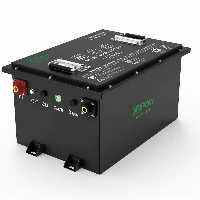
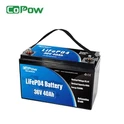
For professional anglers, choosing a top-tier Trolling Motor Battery is about more than just powering the motor; it's about purchasing the absolute freedom to stay on the water for "one extra hour."
If you are looking for a solution that allows your boat to run faster, draw less water, and charge with greater peace of mind, then this article will deeply analyze the 12 major reasons to upgrade to lithium, guiding you through this game-changing power revolution.

Longer Runtime Compared to Lead-Acid Batteries
When discussing the advantages of lithium batteries, the most immediate benefit is their significantly longer runtime compared to lead-acid batteries. This is primarily due to lithium's extremely high energy density and near-perfect discharge efficiency.
Lead-acid batteries are subject to Peukert's Law, which means that as you increase the trolling motor's throttle and draw higher currents, the battery's usable capacity shrinks dramatically-often delivering only 60% to 70% of its rated capacity.
In contrast, lithium batteries (such as LiFePO4) maintain an exceptionally stable voltage output. Whether you are cruising under a light load or sprinting at full power against strong currents, they provide consistent performance. You can safely use over 90% of their capacity, or even 100%, without damaging the battery.

Lightweight Design for Easier Handling
Lead-acid batteries are extremely cumbersome; a typical 100Ah lead-acid battery weighs around 30 kg (66 lbs). If multiple units are connected in series to achieve 24V or 36V, the load at the stern or inside the cabin becomes excessively heavy. In contrast, a lithium battery of the same specification weighs only about one-third as much.
This not only makes it significantly easier to lift onto the boat and perform daily maintenance, but also, more importantly, drastically reduces the vessel's total weight.
This weight reduction triggers a chain of benefits: the boat's draft becomes shallower, allowing you to access shallower, tighter waters to locate fish schools. Furthermore, the lighter hull reduces drag, increasing top speed and lowering power consumption for both the main engine and the trolling motor.

Faster Charging Speed
Lithium batteries' performance in charging efficiency has completely resolved anglers' "range anxiety." Unlike lead-acid batteries, which require a lengthy, inefficient multi-stage charging process (with the final absorption stage particularly slow), lithium batteries feature extremely low internal resistance, allowing them to withstand higher charging currents.
This enables fast charging with high current, meaning you can fully charge from empty in just 2 to 3 hours, whereas lead-acid batteries often take 8 to 12 hours or even longer.
This high conversion efficiency ensures that input electrical energy is stored in the battery with virtually no loss, unlike lead-acid batteries, which generate significant heat loss during charging. For anglers engaged in consecutive fishing sessions, rapid charging means you can "top up" during lunch breaks or while changing locations.
Alternatively, after a full day on the water, only a short rest period is needed to restore your gear to peak condition, greatly improving operational efficiency.

Longer Lifespan and More Charge Cycles
Lead-acid batteries have a cycle life of only 300 to 500 cycles. As time passes, their energy storage capacity degrades rapidly, often requiring replacement within 1 to 2 years. In contrast, high-quality LiFePO4 batteries offer a deep cycle life of 3,000 to 5,000 cycles or more. Even under daily high-intensity use, lithium batteries can reliably last up to 10 years, retaining over 80% of their rated capacity after thousands of charge-discharge cycles.

Consistent Power Output
One of the most appealing features of lithium batteries for anglers is their ability to deliver extremely stable voltage output throughout the entire discharge cycle. In contrast, the voltage of lead-acid batteries drops continuously as energy is consumed. This means that when you reach just 50% capacity, the power of your trolling motor noticeably diminishes, propeller speed slows down, and thrust is significantly compromised. Lithium batteries, however, boast a very flat discharge curve; whether the battery is at 100% or down to 20%, it consistently maintains a stable high-voltage output.
This sustained "full-power" performance ensures that your trolling motor maintains constant torque and speed during all-day operations. Whether you are setting out at dawn or wrapping up at dusk, you will experience the same responsive power, avoiding the awkward situation where the motor feels "sluggish" or weak as battery levels decline.

Low Maintenance Requirements
The convenience of lithium batteries in daily maintenance is a true blessing for boat owners. Featuring a fully sealed, maintenance-free design, they completely eliminate the tedious steps of regularly checking electrolyte levels and adding distilled water. They also reduce the risk of damage to battery compartments from acid leakage or the escape of corrosive gases. More importantly, lithium batteries suffer from no "memory effect" and do not experience the fatal sulfation that plagues lead-acid batteries when left undercharged for extended periods.
This means that during the off-season, you don't need to carefully perform maintenance charging every few weeks to prevent the battery from "starving to death," as is required with lead-acid batteries. With an extremely low self-discharge rate, lithium batteries lose negligible power even after months of storage, making them "ready to use right out of the box."

Environmentally Friendly Option
Choosing lithium batteries as the power source for trolling motors also helps protect the aquatic environments we rely on. Compared to lead-acid batteries, which contain large amounts of heavy metal lead and corrosive sulfuric acid, Lithium Iron Phosphate batteries are free of harmful heavy metals such as cadmium, lead, and mercury and are widely recognized as a green, eco-friendly energy solution.
Lead-acid batteries may release acidic gases during charging and discharging, and may even pose a risk of electrolyte leakage that can contaminate boat cabins and water sources. In contrast, lithium batteries feature a fully sealed structure and greater chemical stability, fundamentally eliminating the potential threat of acid leakage to aquatic ecosystems.

Better Performance in Cold Weather
When temperatures drop near freezing, the chemical reactions in lead-acid batteries become extremely sluggish, resulting in a sharp decline in available capacity. They often deliver only half or even less of their normal performance, leaving winter anglers frequently stranded with underpowered motors. In contrast, lithium batteries-especially LiFePO4 models-boast superior low-temperature discharge characteristics.
Even in frigid waters approaching zero degrees Celsius, they maintain extremely stable voltage output and high energy conversion efficiency, ensuring your trolling motor retains ample power whether you are breaking through ice or battling harsh winds.

Enhanced Safety Features
Lithium batteries are no longer the "tinderbox" hazards of public perception; innovations in safety performance have completely transformed the reputation of high-energy batteries. The core hero behind this is the built-in intelligent Battery Management System (BMS). Acting as an electronic brain that never sleeps, it monitors the battery's every action 24/7. The moment it detects excessive charging/discharging currents, over-voltage, or abnormal temperatures, the system instantly cuts off the circuit before any danger can materialize, nipping risks in the bud.
In contrast, lead-acid batteries generate flammable hydrogen gas during charging and pose a risk of acid leakage when tossed by waves, causing genuine anxiety for users. However, mainstream Lithium Iron Phosphate (LiFePO4) batteries are inherently stable at the material level and possess an extremely robust structure. Even in the event of severe impact or extreme heat, they will not undergo violent chemical reactions. This multi-layered protection, from the inside out, gives boat owners much greater peace of mind as they navigate the waters.
Space-Saving Compact Design
In the precious, space-constrained environment of a boat cabin, the compact design of lithium batteries opens up endless possibilities for optimizing fishing boat layouts. Thanks to their extremely high energy density, lithium batteries are approximately 40% to 50% smaller in volume than lead-acid batteries while providing the same or even greater capacity. This means you no longer need to sacrifice valuable storage compartments to accommodate massive battery banks, nor do you have to struggle to maneuver those cumbersome "iron blocks" through narrow access hatches.
This space liberation is particularly critical for small- to medium-sized bass boats or kayaks. The saved space can be utilized for additional livewell equipment, tackle boxes, or the installation of more advanced sonar systems. Furthermore, since lithium batteries do not require the extensive ventilation space needed for heat dissipation or strict vertical positioning to prevent acid leakage (as with lead-acid batteries), they offer far greater installation flexibility. They can be mounted in various locations within the hull and even installed horizontally or on their sides.
High Energy Density for Maximum Efficiency
Under the same size and weight, the energy storage capacity of lithium batteries is simply unmatched by other battery types. This is primarily due to their advanced internal chemical structure, which pushes energy output per unit weight to new heights. For boat cabins where space is limited and payload sensitivity is critical, every inch of space saved and every kilogram of weight reduced translates directly into more powerful thrust.
The advantage of this high energy density is immediately reflected in operational efficiency. Since lithium batteries deliver more stable current and suffer less heat loss due to lower internal resistance, motors run with less effort and greater efficiency.
Future-Proof Investment for Boats
As water environmental regulations become increasingly stringent, low-carbon and clean energy systems have become the standard in both the shipping and fishing industries, with lithium battery technology at the core of this trend. Choosing lithium batteries means your boat immediately aligns with mainstream technology; when it comes time to sell or trade in your vessel, a boat equipped with a lithium system will undoubtedly hold higher value and be easier to sell than one with outdated batteries.
This "get-it-right-the-first-time" choice saves you from the hassle of dealing with lead-acid battery aging, power loss, or frequent maintenance just a year or two down the road. Modern professional bass boats and fishing equipment are demanding higher capacity and faster charge-discharge rates. Lithium batteries offer excellent compatibility, allowing you to seamlessly upgrade to more advanced fish finders, automatic anchoring systems, or high-power motors in the future.
Conclusion: Is a Lithium Trolling Motor Battery Right for You?
After discussing these twelve major advantages, you might still wonder: Is lithium battery technology really suitable for everyone? In fact, if you only fish occasionally in calm, small ponds, a lead-acid battery might suffice.
However, if you aim to operate all day long in various complex water conditions, or if you desire a boat that responds more agilely and has a shallower draft, then lithium batteries are indeed the better choice.
This upgrade is not merely about swapping out a battery; it's about completely eliminating worries from your fishing experience, allowing you to focus more energy on locating fish and casting your line.