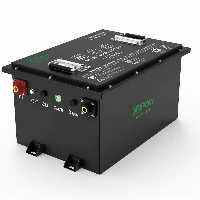
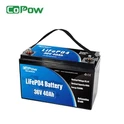
To maintain a competitive edge on the water, Lithium Trolling Motor Batteries have evolved from an "optional upgrade" to an "essential standard." They not only instantly shed hundreds of pounds from your vessel but also deliver sustained full-power thrust that lead-acid batteries simply cannot match, keeping you stable even in strong winds and rapid currents.
However, faced with an investment of thousands, many anglers still have lingering doubts: How should I configure batteries for a 24V motor? Will charging in sub-zero temperatures cause damage? Can I use a standard charger?
To help you avoid common purchasing pitfalls and maximize your return on investment, we have compiled this ultimate, expert-level FAQ guide. Whether your goal is to extend runtime or reduce weight for faster speeds, you will find the answers you need here.

How many batteries do I need for my electric trolling motor?
To determine how many batteries your trolling motor requires, the key factor is its rated voltage. This value is usually printed on the motor bracket or in the user manual. Currently, the most common motor specifications on the market are 12V, 24V, and 36V.
If your motor is 12V, a single 12V lithium battery will suffice. For a 24V motor, you have two options: either connect two 12V batteries in series to achieve the required voltage, or simply purchase a dedicated 24V integrated lithium battery. Similarly, a 36V motor can be powered by connecting three 12V batteries in series, or you can opt for a single 36V integrated lithium battery for convenience.
While connecting additional batteries in parallel can extend your boat's runtime, matching the voltage is absolutely critical. If the voltage does not match, the motor may either lack sufficient power to operate effectively or could be permanently damaged. This is one area where you cannot afford to cut corners or make mistakes.

What type of lithium battery should I use for my electric trolling motor?
For electric trolling motors, LiFePO4 batteries are the ideal choice. These batteries are practically tailor-made for water sports due to their superior safety, long cycle life, and stable discharge performance. Compared to lead-acid or ternary lithium (NMC) batteries, LiFePO4 batteries offer extremely high thermal stability, making them significantly safer even in rough conditions or extreme weather.
Their discharge curve is remarkably flat, meaning your motor can maintain strong thrust even when the battery charge drops below 20%. This stands in stark contrast to lead-acid batteries, which suffer from noticeable power loss as voltage declines. Additionally, LiFePO4 batteries are incredibly lightweight, weighing only about one-third as much as lead-acid batteries of equivalent capacity. This significantly reduces the vessel's load, enhancing both sailing speed and maneuverability.
Key Differences Between Lithium and Lead-Acid Trolling Motor Batteries in Performance and Maintenance
In the realm of trolling motors, Lithium Iron Phosphate batteries and traditional lead-acid or deep-cycle batteries are from different eras. The difference in their actual performance is vast.
LiFePO4 batteries offer overwhelming advantages across virtually every metric. Upgrading to lithium provides a truly transformative experience, delivering a level of performance that feels like a leap forward in technology.
1. Performance: A Battle of Thrust and Endurance
- Constant-Voltage Output: Lithium batteries exhibit a flat discharge curve. This means whether your battery is at 100% or 20%, your motor receives consistent voltage and maintains full thrust. In contrast, lead-acid voltage drops steadily as the battery drains, causing the motor to feel "sluggish" once the charge falls below half.
- Deep Discharge Capability (Usable Capacity): Lithium is a true marathon runner, supporting up to 100% Depth of Discharge (DoD) without damage. Lead-acid batteries are typically only recommended for 50% discharge to protect their lifespan. Consequently, a 100Ah lithium battery provides nearly double the actual runtime of a similarly rated lead-acid battery.
- Lightweight Advantage: Lithium batteries generally weigh only 1/3 as much as lead-acid batteries. Reducing weight is critical for boat performance-it increases top speed, improves hull balance, and significantly reduces fuel or power consumption.
2. Maintenance and Longevity: Convenience vs. Durability
- Cycle Life: This is where lithium offers the best long-term value. Lithium batteries typically last 3,000 to 5,000+ cycles, whereas premium lead-acid batteries often manage only 300 to 500. This means lithium can serve you for over 10 years, while lead-acid often requires replacement every 2 to 3 years.
- Zero Daily Maintenance: Lithium batteries feature a built-in BMS (Battery Management System) that automatically protects against overcharging, overdischarging, and short circuits. They require no water topping or inspections for acid leaks. Lead-acid batteries (especially flooded types) require regular watering and constant vigilance against acid corrosion on terminals or the hull.
- Self-Discharge Rate: Lithium is perfect for seasonal anglers. It has an extremely low self-discharge rate (approx. 1-2% per month). You can leave it over the winter and still have power in the spring; a lead-acid battery left unattended is often subject to sulfation and permanent damage.
| Feature | Lithium (LiFePO4) | Lead-Acid (Deep Cycle/AGM) |
| Weight | Ultra-light (~1/3) | Heavy |
| Usable Capacity | ~100% | ~50% |
| Voltage Stability | Consistent high output | Weakens as charge drops |
| Cycle Life | 3,000+ Cycles | 300-500 Cycles |
| Maintenance | Maintenance-free (BMS) | Requires checks/corrosion prevention |

What Type of Charger Should I Use for My Lithium Trolling Motor Batteries?
Charging a Lithium Iron Phosphate (LiFePO4) battery requires its dedicated charger; you must never substitute it with a lead-acid charger. The charging principles for these two battery types are fundamentally different. Lithium batteries require a strict Constant Current/Constant Voltage (CC/CV) charging profile, where charging must cease immediately once the target voltage is reached.
Lead-acid chargers often include features such as desulfation or equalization modes that use high-voltage pulses. These pulses can easily damage the Battery Management System inside a lithium battery and even pose serious safety hazards.
A reliable lithium charger should not only offer basic overcharge and short-circuit protection but also feature automatic temperature detection. This is critical because forcing a charge on a lithium battery below 0 °C (32°F) can cause irreversible damage. Additionally, the charging current must be appropriate; it is recommended to set the current between 20% and 50% of the battery's capacity. For example, a 100Ah battery should be paired with a 20A to 50A charger. This range ensures an optimal balance between charging speed and battery lifespan.
How Can I Extend the Lifespan of My Lithium Trolling Motor Batteries?
Although Lithium Iron Phosphate batteries are inherently rugged, paying attention to a few key details during daily use can easily ensure their service life exceeds 10 years.
1. Charging and Discharging Strategies
- Avoid "Extreme" Discharging: Although lithium batteries support 100% Depth of Discharge (DoD), habitually leaving a 10-20% reserve can significantly reduce stress on the cells and prolong their health.
- Never Charge in Freezing Temps: This is the "Achilles' heel" of lithium technology. Do not charge below 0°C (32°F), as this can cause lithium plating within the electrodes, leading to permanent damage. If you fish in cold climates, choose a battery with a "self-heating" feature or allow it to warm up indoors before plugging it in.
- Use a Dedicated Charger: Always use a charger specifically designed for LiFePO4. Non-specialized chargers may use a "desulfation mode" or incorrect voltage pulses that can damage the internal BMS.
2. Storage and Maintenance Tips
- Maintain a "Partial Charge" for Long-term Storage: If you plan to store your battery during the off-season, avoid storing it at 100% or 0% charge. The ideal state for long-term storage is between 40% and 60%. Storing at full capacity accelerates electrolyte aging, while storing it empty risks permanent failure due to natural self-discharge.
- Temperature and Humidity: Store your batteries in a cool, dry place. High heat (above 60°C/140°F) is a silent killer for lithium cells; avoid leaving them in direct sunlight or in a sweltering boat deck for extended periods.
- Terminal Care: While the internal cells are maintenance-free, the external terminals must be kept clean, dry, and tight. Loose connections create high resistance, which can generate enough heat to melt the casing or terminals.
3. The Role of the BMS
- Respect the BMS: The Battery Management System is the "brain" that balances individual cells. Never attempt to bypass the BMS, as it is your primary defense against overcurrent, overvoltage, and short circuits.
How to Choose the Right Lithium Trolling Motor Battery Capacity Based on Boat Size and Usage?
For small kayaks or aluminum boats under 12 feet, a 12V lithium battery with 50–60 Ah capacity is generally sufficient for a full day of fishing. However, for medium-sized bass boats or fiberglass vessels ranging from 14 to 18 feet, which are heavier and more susceptible to wind, it is recommended to start with a capacity of at least 100 Ah. This ensures adequate power reserves in complex water currents.
If you frequently operate in strong winds, rough waves, or rapid currents, or if your fishing trips typically exceed eight hours, opting for a high-capacity battery of 120 Ah or even 150 Ah would be more prudent. A simple estimation method is to consider that at maximum throttle, every 100 lbs of thrust consumes approximately 30–40 amps per hour. You can calculate your required capacity based on the throttle settings you typically use.
What Precautions Should Be Taken When Using Lithium Trolling Motor Batteries in Winter and Extreme Weather?
When using trolling motor batteries in winter or extreme weather, the most critical rule is to never charge lithium batteries below 0 °C (32°F). Forcing a charge at low temperatures causes lithium dendrites to form inside the cells. This not only permanently reduces battery capacity but can also lead to internal short circuits and safety hazards. If it is too cold outside, you must move the battery to a warm indoor environment before charging, or simply choose a lithium battery equipped with a built-in self-heating function.
Regarding discharge performance, while LiFePO4 batteries can still operate in cold conditions, their internal chemical activity decreases, and internal resistance increases. You may notice slightly reduced motor thrust or a faster drop in displayed voltage; these are normal physical phenomena that will resolve once temperatures rise. In cases of heavy rain or high humidity, even if your battery has a high waterproof rating, ensure the terminals remain dry to prevent water ingress, which could cause short circuits or corrosion.
If you plan to store the battery long-term during winter, charge it to approximately 50% capacity and disconnect all cables. Store it in a cool, dry place. Avoid leaving it fully charged or completely depleted in freezing conditions, as this can compromise the battery's internal structure and stability.
FAQ
How Long Do Trolling Motor Batteries Last?
A lead-acid battery used for a trolling motor typically lasts around 3 to 5 years. In comparison, a lithium iron phosphate (LiFePO₄) battery can last 5 to 10 years or even longer, with an expected cycle life of approximately 3,000 to 5,000 charge cycles.