With tightening global environmental policies and accelerated "zero-carbon transition" in maritime transportation, the electrification of marine power systems has become a core trend in the maritime industry's development.
As a key driver of this shift, Lithium Marine Battery Manufacturer in China leverages technological advantages to forge ahead - lithium iron phosphate marine batteries are gradually replacing traditional fuel power with their prominent strengths of safety, high efficiency and long service life, emerging as the preferred energy solution for various vessels including yachts, fishing boats and commercial ferries.
As a global hub for lithium battery R&D and production, China has fostered a number of internationally competitive marine lithium battery enterprises. Among them, CoPow has stood out in both domestic and international markets, backed by technological innovation, large-scale production capacity and full-chain service capabilities.
Focusing on "China's High-Quality Lithium Iron Phosphate Marine Battery Manufacturers in 2026", this article takes CoPow as the core case and comprehensively analyzes its competitiveness in the marine battery sector from multiple dimensions: brand strength, product series, core advantages, supply chain and production capacity, compliance certifications, and customized services.
Combined with industry trends, it also sorts out growth strategies, market opportunities and cooperation selection criteria for marine battery distributors, providing professional references for maritime industry practitioners, partners and end customers to help them seize development opportunities amid the wave of marine electrification.
Trusted Lithium Marine Battery Brands from China
copow

Company Introduction
CoPow Battery Technology is a core brand under Huandu Technology, specializing in the R&D and production of lithium iron phosphate (LiFePO₄) batteries. Its products are widely used in various fields, including electric golf carts, RVs, yachts, starter motors, forklifts, aerial work platforms, as well as residential and commercial energy storage.
Adhering to the development concept of "Safer, Smarter", CoPow has steadily grown into an important player in the international lithium battery market. The company's headquarters is located in Pingshan, Shenzhen, covering an area of over 32,000 square meters with a registered capital of 700 million US dollars. It currently has 5 PACK production lines, 4 assembly lines and more than 400 employees, boasting strong large-scale production capacity.
In terms of technological innovation, relying on the in-depth cooperation between Huandu Technology and multiple well-known universities and research institutions, CoPow continuously promotes the iteration of battery technology. Its R&D team consists of more than 30 professional engineers, focusing on five core fields: structural design, electronics, software, systems and manufacturing processes. The core members have an average of 16 to 20 years of experience in lithium battery development, providing solid support for product competitiveness.
Marine battery series
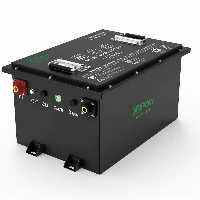
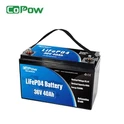
12V 100Ah LiFePO₄ Battery
Features a lightweight design suitable for small yachts and electric thrusters, delivering stable power output. It combines high safety and long cycle life, providing reliable energy for short-distance voyages.
12V 180Ah/200Ah Deep Cycle Battery
With high energy density, it meets the long-duration cruising needs of medium-sized yachts. Supports fast charging and discharging, and maintains stable performance in high-temperature environments, ensuring continuous power for long trips.
36V 60Ah Electric Thruster Battery
Specifically developed for electric thrusters, offering sustained high-efficiency power with low self-discharge. Equipped with a smart management system to monitor voltage, current, and temperature in real time, ensuring long-term stable operation.
12V 200Ah/300Ah Deep Cycle Battery
Suitable for large vessels, supporting parallel expansion to meet high-power demands. With an IP67 protection rating and shock-resistant structure, it ensures safety and reliability even in harsh marine conditions.
The core advantages of marine batteries
Ultra-Long Lifespan & Low Maintenance
Made with high-quality LiFePO₄ cells, supporting over 5,000 charge-discharge cycles and a lifespan exceeding 10 years, significantly reducing replacement frequency and maintenance costs.
High Energy Density & Lightweight Design
Smaller and lighter than conventional batteries of the same capacity, saving installation space and reducing equipment load, especially suitable for confined spaces such as boat cabins.
Smart BMS for Safe Operation
Equipped with an in-house developed Battery Management System (BMS) that monitors voltage, current, temperature, and State of Charge (SOC) in real time. Offers multiple protections including overcharge, over-discharge, and short circuit, ensuring safe and stable operation.
Fast Charging & Efficient Use
Supports up to 1C charging rate, with 100% charging efficiency and 96%-99% discharging efficiency, significantly reducing charging time and improving utilization.
Robust Environmental Adaptability
IP65-rated, corrosion-resistant, and salt-spray tested. Performs reliably in high/low temperatures, humidity, and harsh marine conditions, ensuring long-term stable operation.
Low Self-Discharge & Maintenance-Free
Self-discharge rate below 3%, eliminating the need for regular water addition or extra maintenance, saving time and operational costs.
Eco-Friendly & Sustainable
Made with environmentally safe materials, free of lead, mercury, and other harmful substances. Compliant with international environmental standards, ideal for marine applications.
Supply Chain Stability and Production Capacity
In terms of supply chain, CoPow has established long-term partnerships with top-tier companies such as CATL and EVE, selecting A-grade cells to ensure raw material quality.
The company also employs a diversified procurement strategy to reduce reliance on a single supplier. Coupled with strict quality control throughout the entire process-from raw material intake to finished product output-this approach effectively mitigates market fluctuations and quality risks, ensuring a consistently stable supply chain.
Regarding production capacity, CoPow's headquarters in Pingshan, Shenzhen spans over 32,000 square meters, featuring 5 PACK production lines and 4 assembly lines with a monthly capacity exceeding 15,000 units.
Leveraging an optimized production scheduling system, CoPow can flexibly adjust production pace according to market demand, not only fulfilling large-scale orders but also ensuring timely delivery and efficient order management.
Certifications and Compliance for Commercial Vessels
For its battery products in the commercial marine sector, CoPow has obtained multiple international authoritative certifications and strictly complies with industry standards, fully meeting the compliance requirements of commercial ships.
Its products have not only passed the core access standards in the maritime field, namely IEC 61982 (Secondary lithium-ion cells and batteries for electric road vehicles and industrial applications) and IEC 62133 (Safety requirements for secondary cells and batteries containing alkaline or other non-acid electrolytes) certifications.
Some products have also received ABS (American Bureau of Shipping) and DNV (Det Norske Veritas) certifications, complying with the relevant norms of the International Association of Classification Societies (IACS).
In addition, their marine lithium-ion battery products meet UN38.3 dangerous goods transportation safety standards, RoHS environmental certification and CE certification, which respectively ensure transportation safety, meet marine environmental protection requirements and facilitate EU market access.
The company has also obtained ISO 9001 quality management system certification, ensuring the stable quality and compliance of commercial marine batteries through full-process standardized management.
Shipping and Packaging Details
As a responsible Chinese marine lithium battery supplier, CoPow strictly adheres to international standards in transportation and packaging to ensure the safe and intact delivery of battery products.
Each battery is packaged with high-strength waterproof and shockproof materials, with built-in buffer structures and insulation protection inside, which can effectively resist collision, extrusion and humid environment during transportation.
Moreover, clear UN38.3 dangerous goods transportation marks and product information labels are affixed on the outer packaging.
In terms of transportation, CoPow cooperates with well-known global logistics service providers to offer multimodal transportation solutions such as sea and land transportation, covering major ports and regions worldwide.
All transportation processes comply with the International Maritime Organization (IMO) and national dangerous goods transportation regulations. Certainly, it also tracks logistics information throughout the process to ensure products are delivered to customers on time and safely.
On the other hand, CoPow provides customers with complete customs clearance documents, such as certification certificates, packing lists and customs declaration authorizations, to assist customers in completing the customs clearance process quickly.
Regarding delivery time, by optimizing production scheduling and inventory management, CoPow can ensure the delivery of regular orders within 30-45 days, and the cycle for urgent orders can be shortened through negotiation.
After-Sales Service
CoPow provides professional and efficient after-sales service to fully safeguard customers' user experience. It has a dedicated customer service team that supports multi-channel consultations, ensuring responses within 24 hours and complaint handling within 48 hours. Its products come with a one-year free warranty, with warranty periods ranging from 3 to 8 years, and special battery products offer lifelong paid maintenance.
A team of professional engineers also provides technical support such as remote diagnosis and on-site maintenance. Combined with a complete spare parts inventory, it can quickly replace parts and reduce equipment downtime. In addition, CoPow continuously optimizes processes through service records and customer follow-ups to provide high-quality service and ensure customers have a worry-free experience.
Contact Information
Email: admin@huanduytech.com
Phone: +86-755-89998295
Office Address: Chengtouxin Times Building, No. 2009 Pingshan Avenue, Pingshan Street, Pingshan District, Shenzhen, Guangdong, China
Factory Address: Wandajie Industrial Park, No. 1-12, Jinlong Avenue, Pingshan District, Shenzhen, Guangdong, China
Website: https://www.copowbattery.com/
Marine Battery Solutions for Yachts, Workboats, Fishing Vessels & Electric Ferries
1. Yacht Solutions: Quiet Experience and Flexible Adaptation
Focusing on yachts' core needs for space utilization, cruising range stability and sailing quality, CoPow provides multi-specification lightweight battery systems. Small leisure yachts can be equipped with 12V 100Ah LiFePO₄ batteries, which save cabin space with compact size and lightweight design. Combined with low self-discharge performance, they meet the power supply and equipment standby needs for short-distance cruising.
Medium and large luxury yachts can adopt the series-parallel combination of 12V 200Ah/300Ah deep-cycle batteries to match multiple loads such as air conditioning and entertainment systems. Meanwhile, relying on IP65 protection rating and anti-vibration structure, they can cope with the bumpy marine environment.
The built-in self-developed BMS (Battery Management System) monitors power and temperature in real time. Combined with the silent power output feature, it provides yachts with a noise-free and emission-free quiet sailing experience, meeting the needs of high-end leisure scenarios.
2. Workboat Solutions: Reliability, Durability and Efficient Adaptation
Targeting the characteristics of workboats (such as port tugs, cleaning boats and official boats) like high-frequency operations and complex working conditions, CoPow has launched battery solutions with high power density and strong environmental adaptability.
The core adopts 36V 60Ah starter batteries and large-capacity deep-cycle series, supporting 1C fast charging and 96%-99% discharge efficiency.
They can match 10-40kW propulsion systems to meet the needs of multi-condition switching such as frequent start-stop and variable-speed cruising.
The batteries have passed salt spray tests and feature anti-corrosion design. Combined with IP65 protection and closed heat dissipation system, they can operate stably in the humid and high-salt-spray port environment without regular maintenance, greatly reducing the risk of operation interruption and operation costs. At the same time, they are compatible with hybrid configurations and can work with diesel generators to achieve efficient energy distribution in long-term operation scenarios.
3. Fishing Boat Solutions: Low Noise, Environmental Protection and Cruising Range Guarantee
Meeting the low-interference, long-cruising-range and environmental protection requirements of fishing operations, CoPow provides power solutions with both silent performance and durability.
12V 180Ah/200Ah deep-cycle batteries are selected. Their high energy density can support the propulsion needs of medium and short-distance fishing. The low-noise power output can reduce disturbance to fish and improve fishing efficiency.
The batteries adopt LiFePO₄ chemistry, whose thermal stability is far superior to ternary lithium batteries (thermal runaway temperature is about 260℃). Combined with multiple protections against overcharge, over-discharge and short circuit, they greatly reduce safety risks in the closed environment of fishing cabins and are more in line with marine industry safety standards.
To meet the energy supplement needs of offshore operations, the system supports the combination of shore power fast charging and solar auxiliary charging. The self-discharge rate of less than 3% also meets the power storage needs during non-operation periods, adapting to the intermittent operation scenarios of fishing boats.
4. Electric Ferry Solutions: Large-Capacity Energy Storage and Safety Compliance
Facing the needs of passenger ferries for high passenger capacity and high-frequency operation, CoPow has built a modular large-capacity energy storage and power system. Multiple groups of batteries are connected in parallel to form an energy storage system of over 500kWh, which is compatible with 100kW propulsion systems. It supports ferries to operate stably at a speed of over 10 knots while meeting the power supply for centralized loads such as cabin lighting and air conditioning.
The system has passed ABS, DNV classification society certifications and IEC 61982 maritime standards. The battery packs adopt aluminum frame lightweight design, which can be flexibly arranged in the ship's cabins. Combined with a closed-loop temperature control system, the working temperature is stabilized at 18-28℃ to adapt to temperature fluctuations in different sea areas.
It supports the switching between shore power fast charging and battery swapping modes. Combined with the energy management system, it realizes optimized energy distribution during sailing and berthing. This not only meets the zero-emission requirements of ports but also reduces long-term operation costs through efficient energy utilization.
CoPow Custom OEM & ODM Solutions for Commercial Vessel Battery Systems
Customized Design Capability
CoPow's professional team can conduct customized design of battery systems according to the special needs of commercial ships, including adjusting parameters such as battery capacity, voltage, size and shape. It also provides optimization of special performances like waterproof, shockproof and anti-corrosion to meet the usage requirements of ships in complex marine environments.
Advanced R&D Technology
Most members of the R&D team come from well-known enterprises such as CATL and BYD, with an average of more than 20 years of experience in the lithium-ion battery energy storage field. They can use advanced technologies to develop efficient and safe marine battery solutions, such as adopting high-quality battery cells and self-developed intelligent battery management systems to ensure the stable operation and long service life of batteries.
Manufacturing Strength
Equipped with automated production lines and a complete production management system, CoPow strictly follows international standards for production. This ensures the consistency and stability of product quality, meeting the high-quality requirements for battery products in commercial ship projects.
Rich Project Experience
With project experience in more than 40 countries around the world, CoPow has completed over 500 customized solutions. Familiar with marine industry standards and regulations in different regions, it can provide customers with products that comply with local laws and regulations, facilitating the smooth implementation of commercial ship projects.
One-Stop Service Support
CoPow provides one-stop services from product design, production and manufacturing to after-sales maintenance. During the project implementation process, it can respond to customer needs in a timely manner, solve technical problems, and ensure the on-time delivery and smooth operation of the project.
Choosing the Right Lithium Marine Battery Manufacturer for Long-Term Partnership
1. Prioritize Verifying Core Product Adaptability
Focus on Marine Scene Characteristics: Prioritize manufacturers deeply engaged in the marine field. Their products must have high protection levels, vibration resistance, salt spray corrosion resistance, and the ability to adapt to harsh marine environments such as high temperatures and humidity.
Match Actual Usage Needs: Based on ship type, cruising range requirements, and power load, evaluate whether the manufacturer can provide customized battery solutions instead of only offering general-purpose products.
2. Conduct In-Depth Investigation into Technical and Production Strengths
R&D Capability: Focus on the experience of the manufacturer's R&D team, its cooperation with universities/research institutions, and its ability to independently develop BMS (Battery Management System), as these directly determine the safety and stability of the batteries.
Production and Quality Control: Confirm whether the manufacturer has large-scale production bases, automated production lines, and a full-process quality inspection system to avoid long-term supply disruptions caused by insufficient production capacity or quality control loopholes.
3. Strictly Check Compliance and Certification Qualifications
Maritime-Related Certifications: Must have internationally recognized maritime certifications, such as IEC 61982, IEC 62133, and classification society certifications, to ensure products meet the access standards of the marine industry.
General Safety and Environmental Certifications: Need to pass certifications such as UN38.3 and RoHS. Meanwhile, the enterprise must have ISO 9001 quality management system certification to ensure the compliance of cooperation.
4. Focus on Evaluating Long-Term Cooperation Guarantee Capability
Supply Chain and Delivery: Investigate whether the manufacturer has stable core battery cell suppliers, diversified procurement channels, and clear delivery commitments to avoid the risk of supply chain disruption.
After-Sales Service and Technical Support: Confirm whether it provides comprehensive after-sales guarantees, such as free warranty period, 24-hour response customer service team, remote/on-site technical support, and sufficient spare parts inventory, to reduce equipment downtime losses.
OEM/ODM Capability: If there are customization needs, evaluate the manufacturer's customization experience and whether it can provide one-stop services from design to after-sales to ensure the flexibility of cooperation.
Quality Control and Testing Processes Behind CoPow Marine Batteries
The quality control and testing process of CoPow marine batteries runs through the entire production cycle, ensuring product safety and reliability with strict standards.
Starting from the source, strict incoming inspection is conducted on raw materials such as battery cells and electrolytes. During production, real-time online monitoring and full inspection of key processes are carried out to ensure that each process meets the standards. Before delivery, finished products undergo sampling testing in accordance with standards, and all finished products are subject to high-precision aging tests to screen out marine battery products with unstable performance.
The testing covers electrical performance (voltage, capacity, high-low temperature and rate charging/discharging, etc.), safety performance (overvoltage, short-circuit protection, thermal runaway propagation test, etc.), and reliability (vibration, salt spray test, etc.), comprehensively verifying the adaptability of batteries in marine environments.
In addition, the products have obtained international certifications such as CE and UN38.3, and a full-process quality traceability system has been established. All data from raw materials to finished products can be traced through barcodes, providing multiple guarantees for the stable operation of marine batteries.
How CoPow Provides Support and Value to Distributors and Partners?
Product and Technical Empowerment
Provide cost-effective marine batteries, including free technical training and 24-hour support. It also supports OEM/ODM customization to meet regional needs.
Market Development Support
Provide unified promotional materials, support joint participation in exhibitions and advertising, assist in holding local events, build online channels, and drive terminal sales.
Operational Cost Optimization
Guarantee regular delivery within 30-45 days and provide customs clearance and logistics support. Launch bulk discounts, sales rebates and flexible return and exchange policies to reduce risks.
Long-Term Growth Synergy
Share industry trends and new product information, jointly develop high-potential markets, collect feedback to iterate solutions, and achieve win-win results.
Top Marketing Strategies to Help Marine Battery Distributors Grow
Product Differentiation
Highlight the core technical advantages of marine batteries, such as lithium iron phosphate (LiFePO₄) cells, high charge-discharge cycle times, high protection levels and anti-corrosion design. Prove product quality with specific technical data and authoritative certification documents to accurately meet customers' core needs for safety, durability and marine environment adaptability.
Provide customized services for battery capacity, voltage and size according to the specific needs of different customer scenarios (such as yachts, fishing boats and commercial ferries), fill the gaps in segmented markets and enhance product competitiveness.
Brand Building
Produce unified brand promotion materials, including product brochures, certification documents and demonstration kits, to ensure consistent brand image and reduce distributors' promotion costs.
Actively participate in offline activities such as international maritime exhibitions and industry forums. Contact potential customers face-to-face by setting up booths and conducting on-site product demonstrations to enhance the brand's industry reputation.
Build a professional official website online and operate social media platforms such as LinkedIn and YouTube. Regularly release content such as product information, technical analysis and successful cases to expand the brand's online influence.
Precise Market Penetration
First, segment the marine battery market into groups such as yacht owners, fishing boat operators and commercial shipping companies. Develop differentiated strategies based on the needs of different groups - for example, focus on promoting high-end and lightweight products to yacht customers, and emphasize cost-effectiveness and cruising range to fishing boat customers.
Carry out localized marketing in combination with the market demands and policy environments of different regions. For instance, hold regional product seminars and on-site practical demonstrations, and explain product advantages with local application cases to get closer to end customers and drive actual sales.
Digital Marketing Optimization
Layout e-commerce channels by opening stores on mainstream platforms such as Amazon and Alibaba. Optimize the content of product detail pages to improve search rankings and increase online product exposure and conversion.
Carry out content marketing by creating high-quality content such as marine battery technology popularization, daily maintenance tips and industry trend analysis. Distribute the content in the form of blogs, short videos and infographics through official websites, social media and customer emails to establish distributors' professional image and attract potential customers' attention.
Customer Relationship Management
Build a professional after-sales service system and provide 24-hour technical support, including free installation guidance, remote fault diagnosis and regular maintenance training. Respond to customer needs in a timely manner, solve usage problems and improve customer satisfaction and repurchase rate.
Establish a customer feedback mechanism to regularly collect customers' opinions on product performance and service experience. Optimize product selection and adjust service processes based on feedback to continuously improve customer experience.
Strategic Partnership
Cooperate with upstream enterprises such as ship manufacturers and engine producers to integrate marine batteries into their product supporting systems. Achieve complementary advantages through joint promotion and expand market coverage.
Link up with downstream institutions such as marine charging station operators and ship maintenance service providers to launch joint promotion activities or integrated solution packages.
Strategies for Pricing and Boosting Profits in the Marine Battery Market
Tiered Pricing: Balancing Competitiveness and Profit Margin
Develop a differentiated pricing system based on your own channel role and customer type. Wholesalers can adopt cost-plus basic pricing: fully calculate costs such as procurement from manufacturers, warehousing and logistics, and capital occupation, then add a reasonable gross profit of 15%-25% to form the wholesale price.
Retailers need to price based on end-customer profiles: for yacht customers pursuing performance, highlight the 8-10 year long service life and high protection advantages of LiFePO₄ batteries, and adopt value-oriented pricing with a 30%-50% premium over basic models.
Combined Sales: Tapping Single-Customer Profit Potential
Expand profit sources through the "main product + supporting services" combination strategy. You can launch bulk packages like "battery + charger + installation tools", with the package price 8%-10% lower than the total price of individual items. This not only increases the single purchase volume but also boosts the overall profit margin through high-margin accessories.
Retailers can design value-added packages for end customers, such as "lithium battery + 1-year regular maintenance + extended warranty to 5 years", which generates an additional 15%-20% service fee on top of the basic battery profit and enhances customer loyalty.
You can even create scenario-specific combinations, such as matching "lightweight battery + solar charging panel" sets for small yacht customers.
Cost Control: Reducing Costs and Increasing Efficiency from Supply Chain to Operations
Compress costs upstream by optimizing procurement and inventory. Establish long-term direct supply cooperation with core manufacturers to extend the payment term to 60-90 days, reducing capital turnover pressure. Lock in preferential procurement prices through annual purchase volume commitments, cutting costs by 10%-15% compared to scattered purchases.
Precision Promotion: Stimulating Sales While Ensuring Profit
Design promotional activities based on market cycles and customer needs. For seasonal promotions, launch "pre-order discounts" before the peak sailing seasons in spring and autumn-for example, a 10% discount on the total battery price with a 20% advance deposit to lock in orders in advance. During off-seasons, launch "trade-in" programs for inventory products, allowing old batteries to be discounted by 10%-20% to offset the cost of new ones, activating idle demand.
In customer-tiered promotions, offer an 85% discount on the first order for small maintenance shops cooperating for the first time, and provide annual rebates for long-term cooperative large shipping companies. You can also leverage policy dividends-for instance, converting new energy ship subsidies into "post-subsidy special prices", which is both compliant and enhances price attractiveness.
Channel Deepening: Building Differentiated Competitive Barriers
Wholesalers need to strengthen the advantages of "regional exclusivity" or "category exclusivity". Sign agreements with manufacturers to obtain exclusive distribution rights for a series of high-end batteries in specific regions, maintain pricing initiative through scarcity, and provide exclusive supply support to downstream retailers to bind cooperative relationships.
Retailers should focus on localized service capabilities-for example, setting up professional installation teams to provide one-stop services of "battery purchase + free installation + on-site debugging". Embed service costs into pricing to improve customer experience while avoiding pure price competition.
In terms of online-offline integration, wholesalers can build B2B ordering platforms and launch "free shipping for full-value online orders".
Retailers can post battery maintenance tutorials on short-video platforms to attract traffic, while offline stores provide experience and after-sales services, forming a profitable closed loop of "content customer acquisition + physical conversion".
Future Market and Business Opportunities in Marine Electrification
The future of marine electrification presents vast market potential and diverse commercial opportunities.
From a market scale perspective, driven by stringent environmental regulations from organizations such as the International Maritime Organization (IMO), the global marine electrification market is expected to grow rapidly.
By 2030, the market size is projected to reach $7.28 billion, with a compound annual growth rate (CAGR) of 18.5% from 2023 to 2030. The Asia-Pacific region shows particularly strong potential. Leveraging its large shipbuilding capacity and domestic lithium battery supply chain, China's market is expected to reach $2.5 billion by 2030, accounting for 31% of the global market.
The key drivers of this growth include three main factors
Strengthened environmental policies worldwide: For example, the IMO requires a 40% reduction in shipping carbon intensity by 2030 compared to 2008, and the EU's Fit for 55 plan mandates a 55% reduction in inland vessel emissions by 2030 compared to 2018.
Significant operating cost advantages of electric vessels: The ratio of electricity cost to fuel cost is roughly 1:3, resulting in 50–70% lower operating expenses.
Continuous advancement in battery technology: Lithium battery energy density has exceeded 200 Wh/kg, an 80% increase compared to five years ago, enabling electric vessels to achieve sailing ranges over 200 nautical miles.
In terms of commercial opportunities:
Core components: Demand for marine batteries and electric propulsion systems is surging.
Charging infrastructure: Global marine charging stations are expected to reach 18,000 units by 2030, with substantial opportunities in shore power facilities and dockside charging equipment.
Value-added services: Growing demand exists for electric vessel maintenance, after-sales services, and intelligent energy management systems.
New maritime tourism and transportation models: Electric yachts, electric ferries, and other emerging modes will create additional market opportunities.
Conclusion
In 2026, as global marine electrification accelerates, the marine battery market is experiencing explosive growth, with technology, compliance and service capabilities becoming the core barriers to corporate competition.
As a fast-growing Chinese marine lithium battery manufacturer, CoPow has built an end-to-end advantage from R&D, production to after-sales service based on its product concept of "Safer, Smarter". Its highly adaptable marine battery series, self-developed BMS system and strict quality control system meet the scenario needs of different ship types. The stable supply chain, large-scale production capacity and international authoritative certifications lay a solid foundation for global cooperation, while customized solutions and partner support systems further enable it to form differentiated advantages in market competition.
For the industry, marine electrification is not only a policy-driven transformation, but also an opportunity for technological iteration and business model innovation.
Whether it is manufacturers, distributors or end customers, only by choosing partners with core technologies, compliance capabilities and long-term cooperation guarantees can they achieve sustainable development in the market.
CoPow's practice shows that taking technology as the foundation, customers as the core and compliance as the bottom line is the key for marine lithium battery companies to base themselves locally and go global.
In the future, with the continuous upgrading of battery technology and the further expansion of maritime scenarios, Chinese marine battery brands like CoPow, which have both strength and service awareness, are expected to occupy a more important position in the global marine electrification market and inject strong impetus into the green transformation of the industry.
FAQ
What certifications should a reliable lithium marine battery have?
A trustworthy lithium marine battery must meet international maritime standards for safe vessel installation and operation, with key certifications including IEC 61982, IEC 62133 for safety and performance, UN38.3 for transportation compliance, and classification society approvals like ABS or DNV for commercial ships. RoHS and CE certifications ensure environmental friendliness and European market access, while manufacturers such as CoPow provide complete documentation to facilitate smooth customs clearance and project approval.
How long does a LiFePO₄ marine battery last on different boats?
Most LiFePO₄ marine batteries offer a 10+ year lifespan with over 5,000 charge cycles, suitable for various vessels. Yachts benefit from their lightweight, fast-charging and stable power for leisure cruising; fishing boats gain extended operating hours and minimized marine life disturbance thanks to high energy density and low-noise output; workboats maintain performance in harsh, high-frequency use via high-discharge and vibration-resistant designs; ferries rely on modular systems over 500kWh to support heavy loads and long daily operating cycles.
How to choose the right lithium marine battery manufacturer for long-term cooperation?
When selecting a long-term marine battery partner, focus on four core criteria: marine adaptability with IP65+ rating, salt-spray and vibration resistance, and stable performance in extreme temperatures; technical strength including independent BMS, experienced R&D team and automated production capacity; compliance and certifications covering IEC, UN38.3, ABS/DNV and ISO 9001; and after-sales & OEM/ODM support featuring customization options, 30–45 day fast delivery, 24/7 technical support and global project experience. Manufacturers like CoPow excel in all these areas, making them a reliable choice for distributors, shipbuilders and marine equipment integrators.