With the rapid development of electric transportation worldwide, lithium-ion batteries have become the preferred power source for golf carts, offering long lifespan, high efficiency, and reliable safety.
Among numerous lithium golf cart battery manufacturers, CoPow, a brand under Huanduy Technology, has emerged as a leading LiFePO₄ battery brand in China in 2026, thanks to its intelligent, safe, and high-performance energy storage solutions.
This article will provide an in-depth analysis of why CoPow has become the top choice for customers worldwide.

Premium Lithium Golf Cart Battery Manufacturer in China
Copow

Copow battery technology is a professional brand under Huanduy Technology, dedicated to the research and production of LiFePO4 batteries. Its products have a wide range of applications, including golf carts, RVs, yachts, electric propulsion systems, as well as residential and commercial energy storage solutions.
Upholding the brand philosophy of "Safer and Smarter," CoPow has established a significant presence in the global lithium battery market.
Company Overview
Huanduy Technology is headquartered in Pingshan, Shenzhen, covering an area of over 32,000 square meters, with a registered capital of 700 million USD. The company operates 5 PACK production lines and 4 assembly lines, and currently employs more than 200 staff.
In the field of research and development, Huanduy Technology maintains deep collaborations with multiple universities and research institutes to continuously drive battery technology innovation.
Its R&D team consists of over 30 engineers specializing in structure, electronics, software, systems, and manufacturing processes, with core members averaging 16–20 years of experience in lithium battery development.
Main Product Categories
Golf Cart Batteries
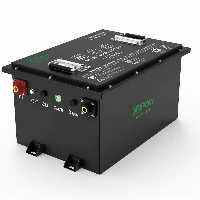
Golf cart batteries are available in popular specifications such as 48V 100Ah and 48V 105Ah, featuring high-performance LiFePO₄ cells. They offer up to 6,000 charge-discharge cycles and provide long-lasting, stable range.
These batteries are compatible with a wide variety of electric golf carts, fully meeting the daily power demands of golf course operations.

48V 105Ah Lithium Golf Cart Battery
Forklift Batteries
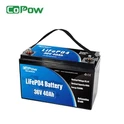
Forklift batteries come in multiple voltage options, including 24V, 36V, and 48V, precisely matching the power requirements of different-tonnage electric forklifts. They deliver high safety, long cycle life, and stable discharge performance, ensuring continuous operation and reducing downtime caused by power issues.
RV Batteries
RV batteries are primarily offered in 12V 100Ah and 12V 200Ah models, with support for parallel expansion. Designed specifically for RV applications, they provide reliable power for lighting, appliances, and onboard devices, enabling long off-grid usage and enhancing convenience during outdoor travel.
Marine Batteries
Marine batteries are available in 12V and 24V configurations to support different power requirements of marine equipment. Engineered with superior waterproofing and shock-resistant structures, they ensure stable power supply under harsh marine conditions, keeping yachts operating reliably.
Solar Energy Storage Batteries
Solar energy storage batteries come in 12V and 48V specifications, compatible with residential and small-to-medium commercial solar systems. They support both grid-tied and off-grid operation, efficiently storing solar energy and enabling users to manage their own energy, improving utilization of solar resources.
Electric Propulsion Batteries
Electric propulsion batteries are available in 12V, 24V, and 36V models, suitable for different power levels of electric propulsion systems. Designed with high energy density, they provide strong endurance and stable long-term power, ensuring reliable operation for watercraft during work or travel.
Floor Cleaning Equipment Batteries
Floor cleaning equipment batteries are custom-designed for scrubbers, sweepers, and polishers, delivering stable power output and high charge-discharge efficiency. They extend operating time per session, reduce frequent charging interruptions, and enhance overall cleaning productivity.
Key Advantages of CoPow LiFePO₄ Batteries
Exceptional Safety
Utilizing the LiFePO₄ chemistry combined with a high-precision Battery Management System (BMS), the batteries maintain stable operation even under high temperatures or extreme conditions, significantly reducing the risk of fire or explosion.
Ultra-Long Lifespan
With a cycle life exceeding 6,000 times, the batteries minimize the need for frequent replacements, effectively lowering long-term maintenance costs and reducing equipment downtime.
High-Efficiency Charge and Discharge
Supporting high-power output modes, the batteries can quickly recharge, making them ideal for devices with demanding power requirements such as golf carts and electric propulsion systems.
Wide Temperature Adaptability
Designed to operate stably across a -20°C to 60°C temperature range, the batteries perform reliably in both extremely cold and high-temperature environments, meeting the power needs of devices in diverse climates.
Flexible Modular Design
With a base unit capacity of 4.8kWh, up to 16 units can be combined for scalable energy storage. This flexible configuration meets both residential energy needs and industrial-scale storage applications.
High Energy Density and Lightweight Advantage
Providing higher energy storage within the same volume, the batteries are also lightweight, saving installation space and offering convenience for device handling and layout.
Intelligent Remote Management
Through a cloud-based platform, key parameters such as voltage, current, and temperature can be monitored in real-time. Remote diagnostics and maintenance are supported, allowing battery status to be managed without on-site supervision.
Environmentally Friendly and Low Maintenance
Free from lead, mercury, and other toxic heavy metals, the batteries comply with environmental standards. With low self-discharge and no memory effect, they require minimal maintenance, reducing long-term operational costs.
Company Scale and Production Capacity
CoPow demonstrates strong manufacturing capabilities, with a monthly production capacity of up to 50,000 battery units. The company is equipped with five PACK assembly lines and four automated packaging lines, ensuring a stable and efficient production rhythm.
Leveraging the advantages of automation, CoPow maintains a monthly output of 10MWh and can expand its annual capacity to 2GWh, fully meeting the large-scale demands of the global market.
In terms of quality control, every battery undergoes a comprehensive inspection process, including AI polarity detection, AI weld inspection, voltage testing, aging tests, and functional performance testing. These strict measures guarantee superior performance and safety from the production source.
Supported by a modular production management system and standardized operation processes, CoPow can deliver orders within 15 working days, efficiently responding to urgent global customer demands and significantly reducing lead times.
Global Market Presence and Certifications
Currently, CoPow's products are successfully exported to more than 40 countries and regions, including the United States, the United Kingdom, Germany, Australia, Canada, Colombia, and Kenya.
The batteries are widely used in golf carts, electric propulsion systems, RVs, yachts, residential energy storage systems, and commercial energy storage systems, continuously expanding their market coverage and application scenarios.
To ensure full compliance with international safety and quality standards, CoPow has obtained ISO system certification, and its products have successfully passed multiple international authoritative certifications, including TUV-CB, IEC62619, CE, FCC, EMC, and UN38.3.
These certifications reinforce CoPow's global competitiveness and provide solid support for its products' international reach.
Contact Information
Email: admin@huanduytech.com
Phone: +86-755-89998295
Office Address: Chengtouxin Times Building, No. 2009 Pingshan Avenue, Pingshan Street, Pingshan District, Shenzhen, Guangdong, China
Factory Address: Wandajie Industrial Park, No. 1-12, Jinlong Avenue, Pingshan District, Shenzhen, Guangdong, China
Website: https://www.copowbattery.com/
What Customization Services Does Copow Offer for Golf Cart Batteries?
1. Voltage and Capacity Customization
CoPow offers a wide range of system voltage customization options, covering popular configurations such as 36V, 48V, and 72V. Battery capacity can be flexibly customized according to the client's actual needs, with common options including 100Ah, 105Ah, 150Ah, and 200Ah.
For golf carts requiring extended driving range, the battery system can be expanded through modular parallel connection-supporting up to 16 battery modules for flexible configuration to meet various endurance requirements.
2. Size and Structural Customization
The battery housing, mounting brackets, and counterweight design can be precisely tailored to fit the actual compartment dimensions of the golf cart, ensuring a perfect installation.
Each battery adopts a vibration-resistant structure and IP67 waterproof sealing, maintaining stable operation even under outdoor, humid, or high-temperature conditions.
Additionally, the bottom-weighted and slide-in shell structure not only improves space utilization but also optimizes weight balance for enhanced safety.
3. BMS and Communication Protocol Customization
To adapt to different onboard control systems, CoPow provides customizable Battery Management System (BMS) communication protocols, supporting CAN, RS485, Bluetooth, and cloud monitoring platforms.
Through a mobile App or online dashboard, users can monitor key parameters such as voltage, current, temperature, and cycle count in real time. The system also supports remote alarms and maintenance reminders, helping users reduce operational and maintenance costs.
4. Appearance and Branding Customization (OEM / ODM)
CoPow offers professional OEM and ODM services, allowing clients to customize the battery case color, brand logo, label design, and packaging style.
From exterior aesthetics to functional details, CoPow provides a complete solution to help distributors and vehicle manufacturers establish a distinctive brand identity and strengthen market recognition.
5. Performance and Application Optimization
For various golf cart brands such as Club Car, EZGO, and Yamaha, CoPow provides precise battery matching and performance tuning to ensure perfect compatibility in output power, range, and control systems.
In addition, the discharge curve and energy efficiency can be optimized based on actual operating environments-such as flat courses, golf greens, hilly terrains, or resort applications-ensuring the battery delivers peak performance in every condition.
6. Testing and Certification Support
Each battery undergoes a strict production and inspection process before delivery, including AI weld inspection, polarity testing, aging, and functional verification, ensuring reliability from the source.
Depending on project requirements, CoPow can also provide TUV-CB, IEC62619, UN38.3, CE, RoHS, FCC, and EMC certifications to support both export compliance and local market approval.
7. After-Sales and Technical Support
CoPow maintains an efficient technical response system, promising to respond to customer requests within one hour, with 24/7 online support channels available.
Comprehensive services cover the entire product lifecycle-from selection and installation to daily maintenance.
Additionally, CoPow provides professional training and on-site technical support for distributors and partners, helping them quickly master installation and maintenance practices while improving overall service capabilities.
How Compatible Are CoPow LiFePO₄ Batteries with Electric Golf Cart Models?
CoPow LiFePO₄ batteries demonstrate outstanding compatibility, making them suitable for nearly all major brands and models of electric golf carts on the market.
They serve as an ideal replacement for traditional lead-acid batteries. Covering common voltage systems such as 36V, 48V, and 72V, these batteries can be installed without any vehicle modifications, enabling true plug-and-play replacement while significantly reducing upgrade costs and complexity.
Whether for well-known brands like EZ-GO, Club Car, or Yamaha, the batteries integrate seamlessly with the vehicle's power system, ensuring stable power output, long-lasting endurance, and smooth performance across various driving conditions.
To accommodate different power requirements and range expectations, CoPow offers multiple capacity options from 48V 105Ah to 48V 200Ah, with support for modular parallel expansion. This allows flexible energy configurations to meet diverse application and performance needs.
Additionally, each battery is built with an IP67-rated protective design, providing exceptional resistance to water, dust, and vibration. Even in humid, high-temperature, or rugged outdoor environments, the batteries maintain reliable operation and extended service life.
On the system side, they support multiple communication protocols - including CAN, RS485, and Bluetooth - ensuring smooth integration with various onboard control systems for real-time monitoring, intelligent diagnostics, and remote management.
Core Technologies Behind CoPow High-Quality Lithium-Ion Golf Cart Batteries
The outstanding performance of CoPow LiFePO4 batteries stems from multiple innovations and long-term technical accumulation in three core areas: material selection, intelligent management systems, and manufacturing processes.
1. Backed by Automotive-Grade Class A Cells
The core of the battery adopts high-quality LiFePO4 cells supplied by China golf cart lithium battery supplier such as EVE, CATL, and BYD, featuring key advantages including high cell consistency, strong chemical stability, and excellent thermal management performance.
Each cell undergoes multiple rounds of strict screening and performance testing to ensure stable performance and reliable safety guarantees even in scenarios such as high-power output and long-term cyclic use.
2. Self-Developed Intelligent BMS
Tailor-made for golf cart applications, the intelligent Battery Management System enables real-time monitoring of battery operating status and comprehensive protection against various risk scenarios, including overcharging, over-discharging, short circuits, overcurrent, and abnormal temperatures.
Equipped with an intelligent balancing function, the system dynamically adjusts the voltage of each cell to maintain consistency, fundamentally slowing down battery performance degradation and significantly extending overall service life. Some high-end models also support cloud connectivity, enabling remote parameter monitoring and maintenance alerts to reduce operational costs.
3. Cloud Interconnection & Intelligent Monitoring System
A two-way real-time "terminal-cloud" interconnection architecture is built, allowing users to check key operating data of the battery (such as voltage, current, temperature, and cycle count) at any time via a mobile App or backend management platform.
Meanwhile, the system supports remote alarm and maintenance early warning functions, promptly pushing abnormal information to help users identify potential issues in advance.
4. Modular Design & High Expandability
Adopting a modular structure, the battery's capacity and output power can be flexibly adjusted through series or parallel connection, supporting the combination of up to 16 battery units.
It not only meets the basic power supply needs of small-scale equipment but also adapts to the power requirements of high-power scenarios, offering extremely high application flexibility.
5. Excellent Protection & Efficient Thermal Management
Each battery pack has passed IP67 protection level certification, boasting excellent waterproof, dustproof, and shockproof performance. It can maintain stable operation even in complex outdoor environments such as humidity, high-temperature exposure, or rough terrain.
The battery is also equipped with a high-precision temperature sensing and efficient heat dissipation system inside, which can real-time monitor and dynamically regulate the cell temperature, effectively preventing performance degradation or safety risks caused by overheating.
6. Strict Production & Quality Control
A comprehensive production management system and full-process testing standards have been established. Standardized SOP management procedures are implemented throughout the entire process, from cell sorting and module assembly to PACK finished product testing.
The fully automated testing process covers AI polarity detection, AI solder joint detection, long-term aging testing, and multi-functional performance verification, ensuring that every battery leaving the factory undergoes comprehensive quality inspection.
The products have obtained multiple international authoritative certifications such as CE, UN38.3, IEC62619, and TUV-CB, with quality meeting the standards of mainstream global markets.
7. High Cycle Life & Deep Discharge Advantages
Relying on high-energy-density cells and optimized electrochemical design, the battery's cycle life can exceed 6,000 cycles. Even in harsh scenarios with high-frequency discharge and high-load operation, it can still maintain excellent performance stability.
This feature makes it not only suitable for golf carts but also an ideal power solution for yachts, commercial electric vehicles, and other equipment.
How to Choose the Right Lithium Golf Cart Battery Manufacturer?
I. Preliminary Screening of Qualifications and Experience: Eliminate Basic Cooperation Risks
1. Verification of Enterprise Qualifications
First, it is necessary to verify the electric golf cart battery supplier's business license, years of establishment, and relevant qualification certificates to avoid selecting shell companies or enterprises lacking industry experience.
2. Verification of Industry Reputation and Cases
In addition to requesting customer cases from the supplier, you should also proactively check real user reviews on industry forums, e-commerce platforms, and other channels, focusing on two core indicators: "battery life compliance rate" and "fault response speed".
II. In-depth Inspection of Core Technologies: Focus on Performance and Safety Assurance
1. Dual-core Evaluation of Battery Cells and BMS
Priority should be given to manufacturers that use first-tier brand lithium iron phosphate battery cells. You can request them to provide battery cell purchase certificates and factory inspection reports to eliminate the use of second-hand or defective battery cells. For the BMS (Battery Management System), focus on its continuous discharge current and protection logic:
For commercial golf course scenarios, it is recommended to select a BMS with a continuous discharge capacity of over 200A to ensure the golf cart does not trip when climbing slopes with a 20% gradient.
You can also request an on-site demonstration of the over-temperature protection response speed, with the standard being that the output is cut off within 3 seconds when the temperature exceeds 65°C.
2. Scenario-based Performance Testing
Considering the high-frequency shallow charging and discharging characteristics of golf carts, manufacturers should be required to provide data on the capacity retention rate of batteries after 1,000 cycles (high-quality products require ≥90%).
In addition, simulate the high-temperature environment of golf courses and conduct 10 consecutive discharge tests at 35°C to ensure the battery life attenuation difference is controlled within 5%.
The battery protection level is recommended to reach IP67. For humid or rainy areas, additional salt spray corrosion resistance test reports can be requested.
III. Production and Compliance Verification: Ensure Quality and Market Access
1. Full-process Quality Control Inspection
When visiting the golf cart battery factory, focus on the following key production links:
Battery Cell Sorting: Whether automated equipment is used (the consistency error of manual sorting can reach 15%).
Module Welding: Whether laser welding technology is adopted (service life can be increased by about 30% compared with traditional spot welding);
Finished Product Aging Test: Whether the test duration reaches more than 72 hours.
At the same time, request the Chinese golf cart battery exporter to provide third-party sampling test reports from the past 6 months, focusing on verifying cycle life and high/low temperature performance indicators.
2. Certification Coverage for Target Markets
Certification requirements for batteries vary by region, so confirmation should be made in advance:
- North American Market: UL 1973 certification and FCC certification are required;
- EU Market: Compliance with ECE R100 vehicle electromagnetic compatibility certification is mandatory;
- Global Transportation: UN38.3 certification is a mandatory requirement.
It should be noted that certificates must be within the validity period, and the certification scope must cover specific battery models to prevent suppliers from using so-called "general certificates" to deceive.
IV. Customization and Supply Capacity: Match Actual Operational Needs
1. Flexible Customization Solutions
The voltage and capacity should have certain flexibility, covering a voltage range of 36V–72V, and the capacity can be expanded from 80Ah to more than 200Ah. Module parallel connection should support "plug-and-play" without the need for re-programming.
For old models such as EZ-GO produced before 2010, manufacturers should be required to provide non-destructive adaptation solutions, including customized brackets and terminals, to avoid modifying the vehicle body structure.
2. Supply Chain Risk Resistance Capacity
Priority should be given to manufacturers with a monthly production capacity of no less than 10,000 sets; those with flexible production lines that can increase emergency production capacity by 30% are more ideal.
At the same time, confirm the inventory of key raw materials: the reserve of core components such as battery cells and BMS chips should be no less than 45 days, which can be verified by checking purchase invoices from the past 3 months.
V. Cost and Service Calculation: Balance Short-term Investment and Long-term Returns
1. Total Cost of Ownership (TCO) Analysis
Do not only focus on the purchase price; instead, comprehensively calculate the 5-year total cost. Take common specifications as an example:
- 48V 100Ah Lead-acid Battery: Approximately RMB 3,000 per unit, service life of about 2 years, 5-year total cost of approximately RMB 7,500.
- 48V 100Ah Lithium Iron Phosphate Battery: Approximately RMB 8,000 per unit, service life of up to 5 years, and electricity costs can be saved by about 40%, resulting in a lower total cost of ownership.
You can request manufacturers to provide a detailed TCO calculation table, specifying expenses such as cycle costs and maintenance costs.
2. After-sales Support System
Warranty policies should distinguish between commercial and household scenarios:
For commercial golf courses, it is recommended to strive for terms of "3-year full warranty + 2-year capacity guarantee" and confirm whether there is an authorized service center near the project location to ensure efficient after-sales response.
VI. Environmental Protection and Sustainability: Adapt to Future Industry Trends
1. Environmental Compliance and Recycling System
Request suppliers to provide RoHS environmental certification to ensure batteries do not contain heavy metals such as mercury and cadmium; at the same time, clarify the old battery recycling policy to ensure compliance with local environmental regulations and avoid subsequent environmental risks.
2. Energy Efficiency and Carbon Footprint Management
It is recommended to select lithium iron phosphate batteries with an energy density of ≥140Wh/kg, which can reduce the vehicle weight by about 30% for the same capacity and lower overall energy consumption. For golf courses with carbon neutrality needs, manufacturers can be requested to provide battery carbon footprint reports to support green operations.
VII. Pitfall Avoidance Guide: Three Common Traps and Countermeasures
| Trap Type | Identification Method | Countermeasure |
|---|---|---|
| False Cycle Life | Request third-party test reports on "1C charging/discharging for 1,000 cycles" | Clearly stipulate in the contract: "Full refund if capacity is less than 60% after 1,000 cycles" |
| Generic BMS Posed as Customized System | Ask specific questions such as "Is it compatible with the EZ-GO DCS control system?" | Conduct on-site tests of communication protocol compatibility by connecting to actual vehicles |
| Expired/Counterfeit Certifications | Verify the certificate number on the official website of the certification body (e.g., UL official website) | Prioritize products with certification covering product series rather than a single model |
Complete Guide to Importing Electric Golf Cart Batteries from China
I. Preparations: Qualifications and Supplier Selection
Own Qualifications: Prepare necessary documents required by the importing country (e.g., FDA registration for the US, EORI number for the EU) and confirm whether the enterprise has import-export rights.
Supplier Selection: Prioritize golf cart battery factories with UL1973/ECE R100 certifications and over 3 years of industry experience. Verify their monthly production capacity and inventory of core raw materials for at least 45 days.
II. Core Procurement: Contract and Testing
Key Contract Terms: Clearly specify battery specifications, quality assurance, and compensation agreements for cases where capacity is ≥80% after 1,000 cycles.
Pre-Testing: Request suppliers to provide third-party 1C charge-discharge test reports, and conduct sampling tests (10 discharge cycles at 35℃ high temperature).
III. Logistics and Packaging: Compliance and Damage Prevention
Freight Forwarder Selection: Choose freight forwarders with UN38.3 transportation qualification and over 5 years of battery logistics experience. Verify their destination port customs clearance cases.
Packaging Requirements: Must meet IP67 protection standards, with individual batteries in independent buffer packaging. Attach UN38.3 and dangerous goods labels to outer cartons.
IV. Customs Clearance and Certification: Complete Documents
Required Documents: Commercial invoice, packing list, UN38.3 transportation report, importing country certification, and RoHS environmental certification.
Customs Clearance Notes: Confirm import tariff rates with the freight forwarder in advance, and verify that certificate numbers are searchable on the official website of the certification body.
V. After-Sales and Sustainability: Risk Mitigation
After-Sales Support: Confirm that the supplier has an authorized service center near the importing country and agree on fault response time.
Environmental Recycling: Request the supplier to provide an old battery recycling plan to ensure compliance with the importing country's environmental regulations.
Latest Trends in Golf Cart Batteries for 2026
As of 2026, the golf cart battery industry is undergoing a significant transformation. Lithium iron phosphate (LiFePO₄) batteries are gradually replacing lead-acid batteries to become the mainstream choice in the market. Leveraging their advantages of high energy density, long cycle life, and low maintenance costs, these batteries can perfectly meet golf carts' requirements for driving range and performance.
Meanwhile, the scale of this market continues to expand, and product prices are becoming increasingly reasonable. During this phase, a large number of technological innovations and brand competitions have also emerged in the industry.
For example, the launch of new blade batteries has further enhanced the safety and reliability of products. Modern lithium batteries generally support communication protocols such as CAN, RS485, and Bluetooth, enabling intelligent monitoring and remote management functions while reducing the frequency of equipment maintenance and operational costs.
In addition, environmental protection and sustainable development have become key priorities in the industry. The application of lithium batteries can significantly reduce the emission of hazardous substances. Overall, golf cart batteries in 2026 are moving toward higher efficiency, greater safety, smarter functionality, and stronger environmental friendliness-this also marks that the industry has entered a stage of technological maturity and widespread application.
conclusion
In 2026, the golf cart battery industry has entered a transition period dominated by lithium iron phosphate batteries. As a core driver of industry transformation, China Lithium Golf Cart Battery Supplier plays an indispensable role-LiFePO₄ batteries are rapidly replacing lead-acid batteries with advantages of long service life, high energy density, and low maintenance. Combined with smart protocols and environmental requirements, this trend is propelling the industry toward maturity and widespread adoption.
CoPow, a Chinese lithium golf cart battery manufacturer under Huanduy Technology, stands out as a global high-quality choice. It leverages automotive-grade battery cells, self-developed BMS, full-scenario adaptability, and customization services, supplemented by large-scale production and international certifications. Its products are exported to over 40 countries worldwide.
For procurement and import, prioritize manufacturers based on qualifications, technology, supply chain stability, and Total Cost of Ownership (TCO). Prepare necessary compliance documents and select professional freight forwarders during the import process.
Demand for LiFePO₄ batteries will keep growing. Choosing brands with strong technology and quality services is key to improving efficiency and reducing costs. For CoPow's product catalog and procurement quotes, feel free to contact us anytime!
FAQ
Are CoPow LiFePO₄ golf cart batteries compatible with all major golf cart brands?
Yes. CoPow LiFePO₄ batteries are widely compatible, replacing traditional lead-acid batteries for major brands like EZ-GO, Club Car and Yamaha. Most models support direct drop-in installation with no vehicle modifications needed. We also offer customized brackets, terminals and BMS protocol adjustments to ensure perfect integration with older or special golf cart models.
How long do CoPow lithium golf cart batteries typically last?
CoPow batteries feature automotive-grade LiFePO₄ cells and an intelligent BMS, delivering over 6,000 charge cycles under standard conditions. For typical golf cart use, this means 8–10 years of service life - far longer than lead-acid batteries which usually last 2–3 years. Even after thousands of cycles, capacity retention remains high for consistent long-term performance.
What customization options can CoPow provide for golf cart battery buyers?
CoPow offers full customization, including voltage options of 36V, 48V and 72V, capacity ranging from 100Ah to 200Ah+, battery dimensions, housing design, weight distribution, BMS communication protocols like CAN, RS485 and Bluetooth, and branding elements such as color, logo and packaging. We also provide performance tuning for specific scenarios - including hilly golf courses, commercial fleets and extended-range carts - to ensure optimal efficiency and reliability.
related:
Top 4 Chinese Lithium Golf Cart Battery Manufacturers in 2026