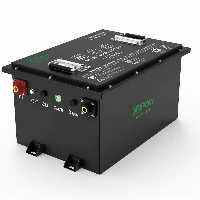
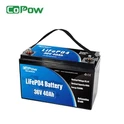
Are you planning to replace the failing lead-acid battery pack in your golf cart with a lithium-ion battery?
You may have some concerns, such as: Are the battery management system and controller compatible? What capacity (in amp-hours) battery management system should you purchase? Do all lithium-ion golf cart batteries on the market have the same battery management system configuration? Which is more important: the continuous discharge current or the peak discharge current?
These are issues that beginners often overlook, and this article will provide detailed answers to all of them.

What Does a BMS Do in a Golf Cart Lithium Battery?
The battery management system, also known as a battery protection board, provides comprehensive protection for lithium-ion batteries in golf carts, ensuring normal battery operation while maximizing battery lifespan. Its main functions include:
| Function | Purpose |
|---|---|
| Cell Voltage Monitoring | Monitors the status of each individual cell |
| Current Monitoring | Manages charging and discharging current |
| SOC Calculation | Displays the remaining battery capacity |
| SOH Evaluation | Determines battery health status |
| Overcharge Protection | Prevents excessive charging |
| Over-discharge Protection | Prevents deep discharge damage |
| Overcurrent Protection | Prevents damage caused by excessive current |
| Short Circuit Protection | Prevents electrical system failures |
| High Temperature Protection | Prevents overheating |
| Low Temperature Protection | Prevents charging damage under low temperatures |
| Cell Balancing | Maintains consistency between individual cells |
| MOS Control | Controls battery connection and disconnection |
| Pre-charge Management | Protects the motor controller |
| CAN / RS485 / Bluetooth Communication | Enables data communication between the battery and external devices |
| Fault Recording | Helps with troubleshooting and maintenance |
| Power Limitation | Optimizes power output and prevents overload |
| GPS / Remote Control | Enables intelligent battery management and remote monitoring |

Why Is BMS Current Rating Important for Golf Cart Lithium Batteries?
To understand why we pay such close attention to the current rating of the battery management system when purchasing lithium-ion batteries for golf carts, we first need to understand two key parameters and the problems that can arise if these parameters do not meet operational requirements.
What is the continuous discharge current of a BMS?
The continuous discharge current of a BMS refers to the maximum current that the BMS can stably allow the battery to continuously output over a long period of time under specified temperature and operating conditions. It represents the battery system's ability to provide power over the long term, rather than its short-term burst capacity.
For example, if the BMS of a lithium-ion battery for a golf cart is rated at a continuous discharge current of 200A, this means that under normal operating conditions, the BMS allows the battery to supply power to the golf cart at a current close to 200A for an extended period. The continuous discharge current is directly related to the battery's range. For example, when cruising at low speeds on flat roads, the motor may only require a current of 50A to 100A, placing minimal strain on the BMS at that time.
What happens if the continuous discharge current falls below the specified level?
If there are a few extra passengers in the cart or a few extra bags of luggage, the motor will need to continuously output greater torque. In this situation, the current is likely to reach 150A or even exceed 200A. If the discharge current exceeds the 200A limit set by the Battery Management System, the BMS will immediately trigger overcurrent protection, causing the golf cart to shut down. Someone unfamiliar with the situation might assume that the battery has suddenly failed.
What is the peak discharge current of a BMS?
The peak discharge current of a BMS refers to the maximum current that the BMS allows the battery to output over a short period of time, representing the battery system's instantaneous burst capacity. Where does this burst capacity come into play? Golf carts require higher currents to provide power during startup, acceleration, and when climbing hills.
What happens if the peak discharge current doesn't meet the standard?
It's simple-it's the same as with the continuous discharge current. Since the output current is insufficient to meet the high current requirements for actions such as acceleration, yet exceeds the peak current limit specified by the battery management system, it directly triggers the BMS's overcurrent protection feature.
In addition to the BMS's continuous discharge current and peak discharge current, when selecting a BMS for a golf cart lithium-ion battery, it is also important to focus on the following parameters, as they collectively determine the battery's overall performance.
| Parameter | Function | Impact on Golf Cart Lithium Batteries |
|---|---|---|
| Charging Current Rating | Determines the maximum charging current allowed by the BMS | Affects charging speed while preventing excessive charging current from causing overheating or battery damage |
| Overcurrent Protection Value | Defines the current threshold at which the BMS activates overcurrent protection | Prevents battery damage caused by motor faults, electrical failures, or excessive loads |
| Short Circuit Protection | Detects sudden abnormal current and quickly disconnects the battery output | Protects the battery pack, wiring, and vehicle electrical system |
| Cell Voltage Accuracy | Determines how accurately the BMS measures the voltage of each individual cell | Directly affects overcharge protection, over-discharge protection, and cell balancing performance |
| Cell Balancing Current | Adjusts voltage differences between individual cells | Improves long-term cell consistency and maximizes usable battery capacity |
| Temperature Monitoring Range | Monitors cell temperature and controls thermal protection functions | Prevents damage caused by high-temperature operation or low-temperature charging |
| Low Temperature Charging Protection | Prevents charging at low temperatures or activates battery heating systems | Protects LiFePO₄ cells from lithium plating damage below 0°C |
| High Temperature Protection Threshold | Reduces power output or shuts down the battery when temperature exceeds the limit | Prevents thermal damage during hot weather or heavy-load operation |
| MOSFET Current Capacity | Determines the maximum current that the BMS electronic switches can handle | Affects BMS reliability and long-term high-current discharge capability |
| Internal Resistance | Represents the electrical resistance inside the BMS | Affects voltage drop and heat generation during high-current operation |
| Response Time | Determines how quickly the BMS detects faults and activates protection | Improves protection effectiveness against short circuits, overcurrent, and abnormal conditions |
| Communication Protocol | Supports CAN, RS485, Bluetooth, and other data communication methods | Enables SOC display, vehicle communication, remote monitoring, and smart functions |
| SOC Accuracy | Determines the accuracy of remaining battery capacity calculation | Prevents incorrect battery level display and unexpected power loss |
| SOH Monitoring | Evaluates battery aging and health condition | Helps estimate battery lifespan and maintenance requirements |
| IP Protection Level | Defines the protection capability against water and dust | Improves reliability in outdoor, humid, and harsh environments |
| Operating Temperature Range | Defines the temperature range where the BMS can operate normally | Determines whether the battery can work reliably in cold or hot environments |
| Sleep Mode / Low Power Consumption | Reduces power consumption when the battery is stored or not in use | Prevents excessive discharge during long-term storage |
| Data Logging | Records fault events and operating data | Helps diagnose problems and improves after-sales service efficiency |

What Size BMS Do I Need for My Golf Cart Lithium Battery?
First, we need to distinguish between battery capacity and the BMS's discharge current capability. For example, consider two 48V 105Ah lithium-ion golf cart batteries: one uses a 100A BMS, while the other uses a 200A BMS. Theoretically, their driving ranges are similar, but under high-current discharge conditions, the 200A BMS will deliver more stable power performance.
This once again illustrates that when reviewing battery specifications, we must not overlook the BMS's continuous discharge current and peak discharge current.
Let's take a look at how to tell:
1. Selecting a BMS Based on Controller Current
The rated current of a golf cart controller is a key factor in determining the specifications of the BMS, as the controller regulates motor output and determines the maximum current the vehicle may require under extreme conditions.
If the vehicle uses a 100A controller, the BMS must have a continuous discharge capacity of at least 100A; if a 200A controller is used, we recommend selecting a BMS with a continuous discharge capacity of 150A to 200A; if the golf cart uses a high-performance 300A controller, an even higher continuous discharge current is required to power it.
In actual use, we typically only need a current of 200A, as the vehicle will not be constantly climbing hills or making sudden stops-this is not an off-road racer. Therefore, the current rarely spikes to 300A; only 72V golf carts may require a BMS with a higher continuous discharge current. In any case, you need to decide based on your own usage; we can only offer recommendations.
The following is a reference table of BMS models compatible with the controller:
| Controller Brand | Controller Model | Voltage | Controller Current Rating | Recommended BMS Continuous Discharge Current | Recommended BMS Peak Discharge Current |
|---|---|---|---|---|---|
| Navitas | TSX 600A AC Controller | 36V/48V/72V | 600A Peak | 200A-300A | 400A-600A |
| Navitas | TSX 400A AC Controller | 36V/48V | 400A Peak | 200A | 350A-400A |
| Navitas | TSX 300A AC Controller | 36V/48V | 300A Peak | 150A-200A | 300A |
| Navitas | 440A AC Controller | 48V | 440A Peak | 200A-250A | 400A+ |
| Alltrax | XCT400 Series | 36V/48V | 400A | 200A | 350A-400A |
| Alltrax | XCT500 Series | 36V/48V | 500A | 250A-300A | 500A |
| Alltrax | SR48300 | 48V | 300A | 150A-200A | 300A |
| Alltrax | SR48500 | 48V | 500A | 250A-300A | 500A |
| Curtis | 1204M-5305 | 36V/48V | 275A | 150A | 275A-300A |
| Curtis | 1204M-6403 | 36V/48V | 350A | 150A-200A | 350A |
| Curtis | 1236SE-5621 | 36V/48V | 400A | 200A | 400A |
| Curtis | 1238SE Series | 48V/72V | 450A-600A | 250A-300A | 500A+ |
| D&D Motor Systems | High Torque AC Controller | 48V | 400A+ | 200A-250A | 400A |
| Club Car OEM Controller | Excel Controller | 48V | ~250A | 150A | 250A-300A |
| EZGO OEM Controller | TXT 48V Controller | 48V | ~250A | 150A | 250A-300A |
| Yamaha OEM Controller | Drive2 / AC Controller | 48V | ~250A | 150A | 250A-300A |
Common Configurations
| Golf Cart Type | Typical Controller | Recommended BMS |
|---|---|---|
| Standard 36V Golf Cart | OEM 200A-275A Controller | 100A-150A Continuous BMS |
| Standard 48V Golf Cart | OEM Curtis / Club Car / EZGO Controller | 150A-200A Continuous BMS |
| Modified 48V Golf Cart | Navitas / Alltrax 300A-400A Controller | 200A-250A Continuous BMS |
| High Performance 48V Golf Cart | Navitas TSX 440A/600A | 250A-300A Continuous BMS |
| 72V Performance Golf Cart | 600A+ Controller | 300A+ Continuous BMS |
2. Calculating BMS Requirements Based on Motor Power
Motor power can be calculated using the following formula: Power (W) = Voltage (V) × Current (A). For example, for a 48V system equipped with a 3kW motor, the theoretical maximum current is approximately 3000W ÷ 48V ≈ 62.5A.
Taking into account losses during actual operation, the required current ranges from approximately 100A to 200A. You can first calculate the basic current requirement, then run the motor through a full cycle and record the peak current variations.
3. Select the BMS Current Based on the Operating Environment
If you'd rather avoid this hassle, you can base your decision on the topography of your area.
| Usage Environment | Vehicle Operating Conditions | Recommended Continuous Discharge Current of BMS |
|---|---|---|
| Flat golf courses, low-speed cruising, single passenger | Low load with stable current demand | 100A–150A |
| Normal golf courses, slight slopes, two passengers | Occasionally requires higher power output | Around 150A |
| Mountain golf courses, long-distance climbing | Long periods of high load operation requiring continuous high current | 150A–200A |
| Multiple passengers, cargo transportation | Increased vehicle weight requires higher acceleration and climbing current | Around 200A |
| High-temperature environments, frequent starts/stops, heavy loads | Higher thermal stress on the battery and requires additional current margin | 200A–250A |
4. Don't forget about the peak discharge current.
The continuous discharge current and the peak discharge current are usually proportional, but there may be exceptions.
5. Pay attention to the compatibility between the battery cells and the BMS.
A BMS with a higher discharge capacity does not necessarily mean better battery performance. For example, if a 105Ah LiFePO4 battery cell has a maximum allowable discharge current of only 200A, then even if the BMS has a higher discharge current, it will be ineffective because the cell's limit is fixed.
In fact, the BMS's discharge current is influenced by the cell rate, busbar size, wiring specifications, terminal design, MOSFET capacity, and thermal management design.
Professional lithium golf cart battery manufacturers do not blindly tout the discharge capabilities of their BMS, as these capabilities are inherently limited. If a manufacturer offers a BMS capable of delivering a current far exceeding the battery's capacity, they are undoubtedly a fraud.
Now, let's answer a question from a user:
"I'm planning to buy a lithium-ion battery pack on Amazon to replace my lead-acid battery pack, which is about to fail. Will a 200-amp Battery Management System be compatible with a 300-amp Alltrax controller? Or do I need to look for a 250-amp BMS? Also, are all the battery packs sold on Amazon the same?"
If possible, we still recommend that this user consider all factors comprehensively, rather than focusing solely on the controller. The current specified on the controller is the maximum output current, which is related to the peak current.
The continuous discharge current may not necessarily match the controller's rating exactly; you'll need to estimate it based on your typical current usage using the formula "Power (W) = Voltage (V) × Current (A)."
Are All Golf Cart Lithium Batteries with the Same BMS?
Of course not. Even among different brands, 48V 100Ah lithium-ion golf cart batteries may have different built-in battery management systems . Just because the BMS in a CoPow lithium-ion golf cart battery has a continuous discharge current of 200Ah doesn't mean other brands are exactly the same.
Brand A might opt for a BMS with a continuous discharge current of 100Ah to gain a price advantage, while Brand B, aiming to create a flagship product, might set the continuous discharge current to 250Ah-naturally commanding a higher price.
Another example: CoPow uses brand-new Grade A lithium iron phosphate cells from CATL and BYD. As a result, we can offer BMS units with higher continuous discharge currents and peak currents, since these cells have a continuous discharge rate of up to 2C and a peak discharge rate of 3–5C. Not only can a 200Ah BMS handle this discharge current with ease, but it can even handle 300Ah effortlessly, delivering even more powerful performance.

Choose CoPow Lithium Golf Cart Batteries with a Customized BMS Solution
CoPow is a professional of LiFePO4 golf cart battery manufacturer. We not only offer proven 36V, 48V, and 72V lithium-ion golf cart batteries but also provide development and in-depth customization based on customer needs. Take our 48V 105Ah golf cart battery as an example: it is equipped with a practical BMS, featuring a continuous discharge current of up to 250A and a peak discharge current of up to 600A, delivering powerful and stable performance.
If you have specific customization needs for the BMS-such as additional features, more flexible protection thresholds, or output parameters better suited to your requirements-our BMS hardware and software engineers will help bring your ideas to life.
Feel free to contact CoPow-your golf cart battery expert.