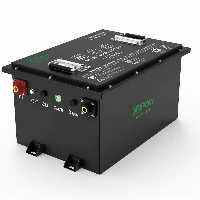
The runtime of a 180Ah battery depends on the power consumption of the connected device. The basic formula to calculate battery runtime is "Battery Energy (Wh) ÷ Device Power (W)".
For a 12V 180Ah battery, the total energy capacity is approximately 2160 Wh (12V × 180 Ah). If you connect a 100W appliance, it can theoretically run for about 21.6 hours.
* Runtime (hours) = (Battery Voltage × Battery Capacity) ÷ Device Power
Assume you are using a common 12V 180Ah battery to power a 100W light bulb:
- Total energy = 12V × 180Ah = 2160Wh (watt-hours)
- Theoretical runtime = 2160Wh ÷ 100W = 21.6 hours

Understanding Battery Capacity and Longevity
Although the figure "180Ah" sounds intuitive, implying it can supply 1A for 180 hours, in real-world use, it acts more as a theoretical upper limit than the actual usable capacity.
First, you must consider the battery's characteristics. For instance, to avoid significantly shortening its lifespan, lead-acid batteries typically allow only about 50% of their capacity to be used, whereas lithium batteries are more robust, often enabling you to utilize 80-90% of their capacity.
Beyond the battery's inherent limitations, if you need to convert DC power to household AC power, the inverter will consume an additional 10-20% of energy as loss, much like a tax. Furthermore, cold temperatures can reduce the battery's activity. Consequently, the actual usable energy will inevitably be significantly less than the rated capacity.
Therefore, when evaluating battery capacity, do not be misled by the total figure stated in the manual. Instead, focus on the effective capacity remaining after deducting all these losses.

What Affects the Lifespan of a 180Ah Battery?
The core factors affecting the lifespan of a 180Ah battery constitute a complex system driven by chemical reactions, usage habits, and physical environments.
Depth of Discharge (DoD) plays a decisive role; frequent deep discharging can drastically accelerate the shedding and degradation of internal materials. Especially for high-capacity batteries like the 180Ah model, long-term deep discharging causes an exponential reduction in cycle life.
Ambient temperature acts as a "silent killer." Excessively high temperatures accelerate internal chemical degradation, leading to permanent capacity loss, while extremely low temperatures increase internal resistance and reduce charging/discharging efficiency.
The scientific rigor of the charging regime is also crucial. Improper voltage settings, prolonged overcharging, or maintaining the battery in a chronic undercharged state (leading to sulfation) will cause the actual usable capacity of the rated 180Ah battery to shrink rapidly.
Discharge rate (C-rate) cannot be overlooked either. Sustained high-current output not only generates heat accumulation that damages the separator but also, due to the Peukert effect, results in the battery delivering total energy far below its theoretical value.

How Long Will a 180Ah Battery Last in Different Scenarios?
Assuming a standard 12V 180Ah battery system with a theoretical total energy of 2,160Wh:
In RV or camping scenarios, running a small 60W car refrigerator could theoretically last about 36 hours. However, accounting for inverter losses and battery protection mechanisms, the practical recommended usage time is typically between 24 and 30 hours.
In home backup power scenarios, simultaneously powering LED lights, a laptop, and a fan (total load approximately 200W) would generally allow the battery to sustain operation for 8 to 10 hours.
However, the situation changes dramatically when facing high-power appliances. For instance, connecting a 1,000W microwave or induction cooker reduces the theoretical runtime to just around 2 hours. Moreover, due to internal resistance heating caused by high-current discharge, the actual available duration often shrinks further to 1.5 hours or even less.
For lead-acid battery users, adherence to a 50% Depth of Discharge (DoD) limit is mandatory; therefore, the actual safe duration for all the above scenarios must be halved based on the theoretical values. In contrast, lithium battery users can expect performance much closer to the full theoretical calculations.
Consequently, evaluating how long a 180Ah battery will last requires a comprehensive assessment that combines "appliance power load, battery chemistry, and environmental losses" to set realistic expectations.
| Appliance / Scenario | Power (Watts) | Lithium Runtime (Approx. 1944Wh Usable) | Lead-Acid Runtime (Approx. 1080Wh Usable) | Notes |
| LED Lights (x5) | 50W | 38.8 Hours | 21.6 Hours | Long-term lighting |
| Car Refrigerator | 60W | 32.4 Hours | 18 Hours | Cycles on/off; actual may be longer |
| Laptop Computer | 100W | 19.4 Hours | 10.8 Hours | Standard office/study use |
| 42" LED TV | 150W | 12.9 Hours | 7.2 Hours | Includes inverter loss |
| Electric Fan | 70W | 27.7 Hours | 15.4 Hours | Medium speed setting |
| Microwave / Drill | 1000W | 1.9 Hours | 1.0 Hour | High current stresses Lead-Acid |
| CPAP Machine | 40W | 48.6 Hours | 27 Hours | Ideal for camping/overnight |

The Role of Discharge Rate in Battery Life
Discharge rate (C-rate) refers to the speed at which a battery is discharged: discharging at 18A corresponds to 0.1C, while discharging at 180A corresponds to 1C for a 180Ah battery.
High-rate discharge (i.e., high-current output) significantly shortens battery life because intense chemical reactions generate substantial internal heat, accelerating plate aging and potentially leading to electrolyte dry-out or separator damage.
The discharge rate also directly affects the realization of the "rated capacity," a phenomenon described by the well-known physical principle known as Peukert's Law. For lead-acid batteries, attempting to deplete the full 180Ah capacity within one hour (high rate) may yield only about 60% of the rated energy; conversely, a low discharge rate (such as the 20-hour rate) allows the battery to deliver performance much closer to its full 180Ah specification.
In contrast, lithium batteries are less sensitive to discharge rates, maintaining relatively stable capacity output across different power levels.
Therefore, to extend the service life of a 180Ah battery, it is advisable to avoid prolonged overload discharge and to match the battery type appropriately to the power requirements of your appliances.

Maximizing the Life of Your 180Ah Battery
To extend the service life of a 180Ah battery, the key lies in cultivating scientific usage habits.
The primary principle is to control the Depth of Discharge (DoD); do not wait until the battery is completely depleted before recharging. For lead-acid batteries, try to keep the charge level above 50%. Even with more durable lithium batteries, maintaining a reserve of around 20% can add several years to their lifespan.
Ambient temperature also has a significant impact. Ideally, keep the battery in a comfortable environment between 20°C and 25°C (68°F–77°F). Never leave the battery for extended periods in a scorching-hot trunk or in freezing outdoor conditions, as extreme heat or cold accelerates the aging of the internal chemicals.
Regarding charging, always use a compatible smart charger. Using improper chargers can easily lead to overcharging or undercharging; the former may cause thermal runaway, while the latter can result in sulfation damage to the plates.
Additionally, be diligent in performing regular maintenance: check terminals for looseness or corrosion (green buildup), as keeping connections clean reduces unnecessary heat and energy loss. For flooded lead-acid batteries that require maintenance, monitor the electrolyte levels regularly.
Finally, be gentle with power consumption. Avoid frequently activating high-power devices, as sudden current surges can cause direct, significant damage to the battery.
Conclusion
In summary, the actual lifespan of a 180Ah battery cannot be determined by theoretical formulas alone; it fundamentally depends on how you treat it. Although the total energy of 2,160Wh appears substantial, the battery chemistry (lithium vs. lead-acid) dictates how much of that energy is truly usable, while the load magnitude and ambient temperature determine the rate of consumption.
To achieve the best user experience, it is recommended to tailor your setup to your actual power needs. This involves ensuring you never exceed the battery's minimum Depth of Discharge (DoD) limits, providing an optimal temperature-controlled environment, and employing a matched charging solution. Only through such scientific management can this 180Ah battery deliver long-lasting endurance while maintaining a healthy cycle life.
FAQ
How many watts is a 180Ah battery?
The watt-hour capacity (total energy) of a 180Ah battery depends on its rated voltage. Taking a common 12V system as an example, its energy capacity is approximately 2,160Wh (watt-hours), calculated by multiplying the voltage by the ampere-hours.
How long does it take to charge a 180Ah battery?
Charging time depends on the charger's output current. It is calculated by dividing the battery capacity (180 Ah) by the charging current, accounting for approximately 20% energy loss. For example, using a 20A charger would take roughly 10.8 hours to fully charge the battery.
How many fans can run on A 180Ah battery?
Taking a standard 70W electric fan as an example, after accounting for inverter conversion losses, the remaining energy in a 12V 180Ah battery could theoretically power 28 fans simultaneously for one full hour, or allow a single fan to run continuously for approximately 28 hours.
What is the charging current for a 180Ah battery?
For a 180Ah battery, the charging current requires careful consideration. Generally, maintaining the current between 10% and 20% of the capacity is ideal, which translates to a range of 18A to 36A.
Charging within this interval not only ensures the speed is not excessively slow but also effectively prevents severe overheating caused by excessive current, which is highly beneficial for extending the battery's overall lifespan.
Which inverter is best for a 180Ah battery?
For a 180Ah battery, it is recommended to choose a pure sine wave inverter with a rated power between 1,000W and 2,000W. This not only efficiently powers most household appliances but also ensures a stable output waveform, preventing damage to sensitive electronic devices.
What Is the Difference Between a 150Ah and a 180Ah Battery?
A 180Ah battery pack has approximately 20% more energy storage capacity than a 150Ah battery pack.