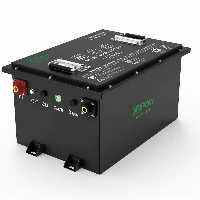
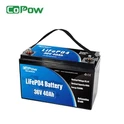
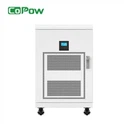
A 24V 100Ah battery has a theoretical energy capacity of approximately 2.4 kWh. In practical applications, this battery can power a 100W device for about 24 hours, a 500W device for about 4.8 hours, and a 1000W device for about 2.4 hours. The actual runtime of a device depends on its power consumption and the type of battery.
Let's take a look at an example:
You have a 24V 100Ah battery, which means it can store a total of 2400 watt-hours (Wh) of electricity (since 24 × 100 = 2400).
You want to power a 1000W device with it, but the inverter efficiency is only 94%, meaning 6% of the electricity is lost during conversion.
Additionally, you don't want to fully discharge the battery and plan to use only 80% of its capacity. Therefore, the effectively usable energy is 2400 × 0.94 × 0.8 ≈ 1805Wh. Using this energy to power the 1000W device, the runtime is 1805 ÷ 1000 ≈ 1.8 hours.
Simply put, under these conditions, this battery can only supply power for about 1 hour and 48 minutes.
Detailed calculation steps:
- Total battery energy: 24V × 100Ah = 2400Wh
- Accounting for inverter efficiency: 2400 × 0.94 = 2256Wh
- Considering 80% depth of discharge: 2256 × 0.8 = 1804.8 Wh
- Divided by load power: 1804.8 ÷ 1000 ≈ 1.8 hours
This is the calculation formula: Operating time = Load power ÷ Total battery energy × Inverter efficiency × Depth of discharge*
24v 100ah lithium battery backup time:
| Battery Type | Recommended Depth of Discharge (DoD) | Estimated Runtime With 1000W Load | Typical Charging Time |
|---|---|---|---|
| Lithium Iron Phosphate Battery | 80%–100% | 1.8–2.2 Hours | 1.5–3 Hours |
| AGM Battery | 50%–70% | 1.1–1.5 Hours | 6–10 Hours |
| Flooded Lead-Acid Battery | Around 50% | ~1.1 Hours | 8–12 Hours |
| Gel Battery | 50%–70% | 1.1–1.5 Hours | 6–10 Hours |
| Ternary Lithium Battery (NMC) | 80%–90% | 1.8–2.0 Hours | 1.5–3 Hours |

What Does a 24V 100Ah Battery Actually Mean?
24V is the voltage, akin to water pressure in a pipe that drives current flow; devices function like water wheels requiring sufficient pressure to operate properly.
24V indicates this battery's electrical pressure is 24 volts, capable of propelling current to the device. 100Ah is the capacity, akin to the volume of water in a pipe, determining how much electrical energy the battery can store. 100Ah means that if using a 1-amp current, the battery can sustain operation for 100 hours; if using a 10-amp current, it can sustain operation for 10 hours.
This introduces the concept of total energy. Its calculation is: Total battery energy = Voltage × Capacity. Therefore, 24V × 100Ah = 2400Wh, or 2.4 kilowatt-hours (kWh).
This means the battery can deliver 2.4 kilowatts of power for 1 hour, or 1.2 kilowatts for 2 hours, and so on.
Note that in practical use, the battery's output power will be slightly lower than the theoretical value due to energy loss.

How Long Does a 24V 100Ah Battery Last in Terms of Lifespan?
24V 100Ah batteries primarily come in three types: lead-acid batteries, gel batteries, and lithium iron phosphate batteries. Therefore, when discussing lifespan, we must consider the differences between these battery types.
A lead-acid battery typically lasts about 2 to 3 years and can handle 200 to 500 charge-discharge cycles.
If you use another type of lead-acid battery, namely a gel battery, its lifespan is slightly longer, lasting 3 to 5 years, with approximately 500 to 1000 charge-discharge cycles.
However, if you use a lithium iron phosphate battery, the situation is entirely different, as its lifespan is significantly longer. Under normal usage, it can last over 10 years and withstand 3,000 to 6,000 charge-discharge cycles or even more.
| Battery Type | Cycles (at 100% DoD) | Estimated Lifespan |
| Lead-Acid (SLA/AGM) | 200 - 500 cycles | 2 - 3 years |
| Gel Battery | 500 - 1,000 cycles | 3 - 5 years |
| Lithium (LiFePO4) | 3,000 - 6,000+ cycles | 10+ years |
Key Factors for 24V 100Ah Battery Runtime
1. Load Wattage
This is the most direct factor affecting runtime. The higher the power consumption (watts) of an appliance, the faster the battery will drain.
You can estimate the theoretical runtime using the formula: 2400 Wh ÷ Load Wattage. For example, a 100 W device could theoretically run for 24 hours.
2. Depth of Discharge (DoD)
To protect battery lifespan, batteries should not be fully discharged.
- Lead-Acid Batteries: Recommended usable capacity is about 50% (≈ 1.2 kWh).
- Lithium (LiFePO₄) Batteries: Can safely use 80%–90% of total capacity (≈ 1.9–2.1 kWh).
As a result, a lithium battery can deliver nearly twice the usable runtime of a lead-acid battery with the same rated capacity.
3. Inverter Efficiency
When powering AC appliances (110V / 220V), an inverter is required. During DC-to-AC conversion, energy is lost as heat.
Most inverters operate at 85%–90% efficiency, meaning 10%–15% of the stored energy is lost before reaching the appliance.
4. Discharge Rate (C-Rate)
Battery capacity ratings are usually based on low, steady discharge rates.
When powering high-load devices (such as electric stoves or heaters), internal resistance increases, generating heat and reducing the effective usable capacity-so the battery may deliver less than its nominal 100Ah.
5. Ambient Temperature
Battery chemical reactions slow down in cold environments.
At temperatures below 0°C (32°F), effective battery capacity can decrease by 20% or more, significantly shortening runtime.

How Long Will a 24V 100Ah Battery Last for Common Devices?
To figure out how long a 24V 100Ah battery can actually power your gear, we have to account for some inevitable losses. Even though the total capacity is 2400 watt-hours on paper, you lose about 15% of that through the inverter's conversion process.
Estimated Runtime for Common Devices

Key Considerations
- Lead-Acid vs. Lithium: If using a Lead-Acid battery, the recommended DoD is only 50%. You should multiply the runtimes above by approximately 0.6.
- Surge Power: Devices with compressors (ACs, fridges) have a "startup surge" that can be 3–5x their rated wattage. Ensure your inverter can handle this peak.
- Standby Loss: Remember that the inverter itself consumes a small amount of power just by being turned on, even if no device is plugged in.
Real-World Runtime Examples (Not Just Theoretical Numbers)
Theoretical figures are important, but in real-life scenarios, energy losses cannot be ignored.
Let's look at a typical real-world use case: off-grid outdoor camping or emergency home backup power.
Scenario: Home Emergency Power Supply
- Battery: 24V 100Ah LiFePO4
Assume you are using this battery to maintain basic household needs, connected to a 1500W pure sine wave inverter.
1. Actual Usable Energy Calculation
Although the battery's nominal capacity is: 24V×100Ah=2400Wh
In practice, several losses must be considered:
- Depth of Discharge (80%): To protect the battery and extend its lifespan, 20% capacity is reserved, leaving 1920 Wh usable energy.
- Inverter Efficiency (90%): Energy is lost as heat during DC-to-AC conversion, resulting in approximately 1728 Wh of usable AC energy.
2. Devices Running Simultaneously
- Household refrigerator: Average power: 150W (Compressor runs intermittently; actual average consumption ≈ 50 Wh per hour)
- 43-inch TV: 80W
- Two LED lights: 20W
- Laptop: 60W
Total average load: approximately 210W
Estimated Runtime: 1728Wh÷210W≈8.2 hours
Real-World Variables to Consider
- Using a microwave oven (1000W) for 5 minutes: This single action consumes about 83 Wh, instantly cutting nearly 30 minutes off the total runtime.
- If a lead-acid battery were used instead: Due to lower efficiency under high current loads (the Peukert effect), the actual usable energy in this scenario might drop to around 1000 Wh, reducing runtime to only 4–5 hours.
24V 100Ah Battery vs Other Common Configurations

When Should You Consider a Higher Capacity Battery?
Considering an upgrade to a larger battery capacity (such as 200Ah or more) usually means your power demand has exceeded the "sweet spot" of a 24V 100Ah battery.
1. Powering High-Wattage Appliances
If your devices frequently draw more than 1500W-such as high-power air conditioners, large induction cooktops, or electric water heaters-a 100Ah battery will be under significant discharge stress.
High current draw not only shortens runtime dramatically but also accelerates battery aging due to heat buildup. A higher-capacity battery spreads the current load more easily and operates under less strain.
2. Need for Longer Runtime (e.g., Consecutive Cloudy or Rainy Days)
In off-grid solar systems, a power reserve of 2–3 days is typically built in. If you want essential electrical appliances such as refrigerators, lighting, and computers to continue running for more than 24 hours without solar charging, a 2.4 kWh (100 Ah) battery will quickly become insufficient.
Increasing the battery capacity provides the buffer needed to handle unexpected situations.
3. Protecting Battery Lifespan
If you frequently discharge the battery to a depth of discharge close to 100%, its lifespan will be significantly reduced. By increasing the total capacity, you can limit the depth of discharge to between 30% and 50% during everyday use.
This "shallow cycling" approach can extend the battery's lifespan by several years.
4. Expansion of Electrical Loads
When your setup evolves from "lighting and device charging only" to wanting appliances like a microwave oven or coffee machine, total energy consumption (watt-hours) rises sharply.
To enjoy greater electrical freedom without changing your usage habits, upgrading battery capacity is the most straightforward solution.
Time to Upgrade: The Real Advantages of CoPow 24V LiFePO4 Batteries
Upgrading to a CoPow 24V LiFePO4 battery is a complete game-changer for your power setup. Instead of dealing with the hassle of wiring two 12V batteries in series or sticking with heavy, old-school lead-acid options, this native 24V lithium battery offers a massive step up in performance.
It makes everything run more smoothly and safely, giving you a level of reliability and convenience that those older methods just can't match.
1. Simplified and More Efficient System Design
Using a native 24 V battery eliminates the need for complex series wiring, which not only saves installation space but also eliminates the risk of voltage imbalance caused by wiring resistance. For 24 V solar charge controllers and inverters, a single battery bank enables more direct energy transfer and reduces overall energy loss.
2. Exceptional Lifespan and Return on Investment
CoPow batteries support 2,000 to over 6,000 deep charge–discharge cycles, which means:
With one full cycle per day, the battery can remain in service for over 8 years.
In comparison, lead-acid batteries often need replacement every 2 years. While lithium batteries have a higher upfront cost, over a 10-year period, their average annual cost is typically only one-third that of lead-acid batteries.
3. Intelligent Built-In BMS
Every CoPow 24V battery is equipped with an advanced Battery Management System.
- Multiple protections: Automatically prevents overcharging, over-discharging, overcurrent, and short circuits.
- Temperature control: Actively protects the battery in extreme heat or cold, ensuring stable chemical performance and enhanced safety.

4. Lightweight Design and Superior Discharge Performance
- Significantly lighter: Weighing roughly 30% of an equivalent lead-acid battery system, it dramatically reduces the load on RVs and mobile equipment.
- No voltage sag: Even at 20% state of charge, the battery maintains stable voltage output, unlike lead-acid batteries that suffer voltage drop and may cause appliances such as air conditioners or refrigerators to shut down or trigger error codes.
Final Thoughts: How to Maximize the Runtime of a 24V 100Ah Battery
The true value of a 24V 100Ah battery lies not just in its 2.4 kWh of backup power, but in the stability and freedom it brings to your off-grid life. While theoretical calculations can give us a reference, the real runtime experience depends on the quality of your battery and how well you maintain it.
If you're tired of the frequent replacements and unstable voltage of lead-acid batteries, now is the perfect time to upgrade to a CoPow LiFePO4 battery. Don't let power shortages limit your journey-let every watt of energy shine to its fullest.
FAQ
how many kwh in a 100ah battery?
To calculate the energy (in kilowatt-hours, kWh) of a 100 Ah battery, multiply the capacity by the battery voltage. The formula is: kWh = (Ah × V) / 1000.
For a standard 12 V battery, the energy is 1.2 kWh; for a 24 V system, the energy is 2.4 kWh; and for a high-capacity 48 V battery, the energy can reach 4.8 kWh. In short, "100 Ah" refers to the charge capacity, but the total energy actually stored is determined by the voltage.
How Long Can a 100Ah Battery Power an Appliance That Uses 800W?
How long a 100Ah battery can provide power depends on its voltage. Taking a common 12V 100Ah battery as an example, its total energy capacity is approximately 1.2 kWh. Theoretically, it can power an 800W device for about 1.5 hours.
Taking into account inverter losses and actual usage conditions, the battery's actual runtime is approximately 1.2 to 1.4 hours.
Not only that, but there are also many options for 100Ah batteries. Here is a table for your reference:
| Battery Specification | Total Battery Energy | Theoretical Runtime for 800W Load | Real-World Runtime (LiFePO4) | Real-World Runtime (Lead-Acid) |
|---|---|---|---|---|
| 12V 100Ah | 1200Wh | Approx. 1.5 Hours | Approx. 1.1–1.3 Hours | Approx. 0.6–0.9 Hours |
| 24V 100Ah | 2400Wh | Approx. 3 Hours | Approx. 2.4–2.7 Hours | Approx. 1.5–2.2 Hours |
| 48V 100Ah | 4800Wh | Approx. 6 Hours | Approx. 5–5.5 Hours | Approx. 3–4.5 Hours |
how long will a 24v 100ah battery last with trolling motor?
A 24V 100Ah battery has a total energy capacity of approximately 2560Wh. Under ideal conditions, the runtime can be estimated by dividing 100Ah by the actual current.
For example, if the trolling motor draws only about 10A at low speed, it can theoretically run for about 10 hours; at medium speed, if it draws about 25A, it can run for approximately 4 hours; and at high speed and full power, if the current reaches 50A, it can only run for about 2 hours.
You can take a look at this table:
| Trolling Motor Thrust | Typical Current Draw | 24V 100Ah LiFePO4 Runtime | 24V 100Ah Lead-Acid Runtime |
|---|---|---|---|
| 40–55 lb | 10–20A | Approx. 5–10 Hours | Approx. 3–5 Hours |
| 60–80 lb | 20–35A | Approx. 3–5 Hours | Approx. 1.5–3 Hours |
| 100–112 lb | 35–50A | Approx. 2–3 Hours | Approx. 1–2 Hours |
| 120+ lb | 50–60A+ | Approx. 1.5–2 Hours | Approx. 0.8–1.5 Hours |
how long will a 2.4kwh battery last?
The runtime depends on the device's power consumption, which can be calculated using the following formula: = Total battery capacity (Wh) ÷ Device power consumption (W).
For example, if the device consumes 500 W of power, the theoretical runtime is approximately 4.8 hours.
how long will a 36v 100ah battery last?
A 36V, 100Ah battery has a total energy capacity of 3,600 Wh. Based on the formula mentioned earlier, a 300W appliance can run for approximately 12 hours.
However, there are differences in the actual capacity of different batteries. Although they have the same energy capacity, lead-acid batteries discharge much faster than lithium iron phosphate batteries.