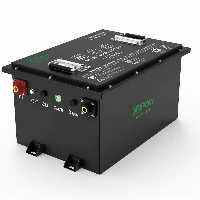
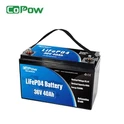
The 12V 100Ah LiFePO4 battery is often hailed as the "Golden Capacity" of the off-grid world-but what can it actually power in your real-world setup?
Have you ever found yourself beneath a vast canopy of stars, only to have your car fridge cut out because your power source failed? Or perhaps, on a crisp morning, you wanted a fresh cup of coffee but found your aging lead-acid battery couldn't handle the startup load?
While this "energy cube" offers the perfect equilibrium between portability and performance, understanding its true limits is key. From charging smartphones to running microwaves, and from long-haul RV trips to remote cabins, this article will perform a deep-dive into every watt-hour of the 12V 100Ah lithium battery. Read on to discover exactly what you can run and learn how to manage your power like a pro.

What is a 12V 100Ah Battery?
A 12V 100Ah battery is an energy storage device with a nominal voltage of 12 volts and a rated capacity of 100 ampere-hours. You can think of it as an "electric water tank," where 12V represents the pressure of the water (voltage) and 100Ah represents the total volume of the tank. In terms of technical specifications, 100Ah means that under ideal conditions, if a device drawing 1 amp of current is connected, the battery can provide power for 100 hours, similarly, if the device draws 10 amps, it will last for 10 hours.
The total energy of this battery is typically calculated using the power formula:

(watt-hours), which is equivalent to 1.2 kWh (kilowatt-hours) of electricity.
Breaking Down the Core Parameters
- 12V (Voltage): This is the battery's nominal voltage. 12V is currently the most common standard, suitable for most car accessories, inverters, and small appliances. You can think of it as the water pressure in a pipe.
- 100Ah (Ampere-hours): This is the unit of the battery's capacity. It means that if you discharge at a current of 1 Ampere (A), it can theoretically run for 100 hours. You can think of it as the volume of a bucket (how much water it can hold).
How Much Power Does a 12V 100Ah LiFePO4 Battery Actually Provide?
While the theoretical storage of this battery is 1.2 kWh, the "effective power" it actually delivers depends on several key factors. Compared to Lead-Acid batteries, LiFePO4 is far more efficient at releasing energy.
1. Theoretical vs. Usable Capacity
The physical calculation for energy is:

(Note: The nominal voltage of LiFePO4 is typically 12.8V, slightly higher than the standard 12V.)
- Depth of Discharge (DoD): While Lead-Acid batteries should only be used to 50%, LiFePO4 can safely discharge 80% to 95% of its capacity without damage.
- Actual Usable Power: if you are using a LiFePO4 battery, you can expect to get roughly 1.0kWh to 1.15kWh of usable energy.
2. Output Power (What can it run?)
This depends on the battery's built-in Battery Management System. Even with a 100Ah capacity, the battery might "trip" or shut down if you try to power a high-wattage appliance.
- This means you can stably run appliances under 1200W (e.g., rice cookers, TVs, low-power hair dryers).
- If you attempt to run a 2000W air conditioner, the BMS will cut the power to protect the cells.
Summary
A 12V 100Ah LiFePO4 battery practically provides about 1.1 kWh of electricity. Its main advantage isn't just the raw capacity, but its ability to provide stable, "constant voltage" power throughout almost the entire discharge cycle.

What Devices Can a 12V 100Ah LiFePO4 Battery Power?
As we already know, a 12V 100Ah LiFePO4 battery stores about 1.1 kWh of energy and can reliably power appliances rated at up to 1200 watts. To give you a clearer picture of what it can actually run, we've grouped common electrical devices into three typical use cases.
Comprehensive Runtime Table for a 12V 100Ah Battery
| Category | Device | Avg. Power (W) | Estimated Runtime / Cycles |
| 1. Digital & Comm. | Smartphone Charging | 10W | 100 - 110 Charges |
| Tablet (iPad) | 30W | 30 - 35 Charges | |
| Wi-Fi Router | 15W | 75 Hours | |
| Starlink Satellite | 60W | 15 - 18 Hours | |
| Laptop (Work Mode) | 60W | 18 - 20 Hours | |
| 2. RV & Camping | LED Light Strips | 10W | 110 Hours |
| 12V Compressor Fridge | 50W | 2 - 3 Days (Cycling) | |
| Portable Projector | 100W | 10 - 11 Hours | |
| Bluetooth Speaker | 40W | 25 Hours | |
| Electric Blanket (Single) | 60W | 18 Hours | |
| 3. Kitchen & Cooking | Portable Coffee Maker | 600W | 1.8 Hours |
| Mini Rice Cooker (3L) | 400W | 2.5 Hours | |
| Microwave (High Setting) | 1000W | 1 Hour | |
| Slow Cooker (Crock-Pot) | 200W | 5.5 Hours | |
| Blender / Juicer | 300W | 3.5 Hours | |
| 4. Home Backup / Medical | CPAP Machine | 40W | 3 - 4 Nights |
| Household Floor Fan | 50W | 22 Hours | |
| 43" LED TV | 80W | 12 - 14 Hours | |
| Security Cameras (CCTV) | 20W | 55 Hours | |
| Aquarium Oxygen Pump | 15W | 70+ Hours | |
| 5. Gardening & Tools | Submersible Water Pump | 300W | 3.5 Hours |
| Power Tool Charging | 80W | 14 Hours | |
| Car Buffer / Polisher | 150W | 7 Hours | |
| Portable Power Washer | 150W | 7 Hours | |
| 6. Beauty & Care | Hair Dryer (Low/Med) | 800W | 1.2 Hours |
| Curling Iron / Straightener | 80W | 14 Hours | |
| Electric Shaver/Toothbrush | 5W | 200+ Charges | |
| 7. Extreme / Emergency | Drone Battery Charging | 80W | 12 - 14 Batteries |
| Tire Inflator (Air Pump) | 120W | 8 Hours | |
| Ham Radio (TX/RX) | 50W | 22 Hours |
⚠️ Critical Limits: What Devices CANNOT be Powered?
Most 12V 100Ah LiFePO4 batteries are equipped with a 100A Battery Management System, limiting the continuous output to roughly 1,280W. Do NOT attempt to run:
- Central AC / Large Window Units: The startup "surge" current will trip the BMS instantly.
- High-Wattage Kettles (1800W+): This exceeds the discharge limit of a single battery.
- Tankless Water Heaters: These usually require 3000W+, necessitating multiple batteries in parallel or a 48V system.
Core Recommendations
If you find that 1.2 kWh of energy is not enough, or if you want to power high-wattage appliances above 2000W (such as a full-sized air conditioner), you generally have two options:
- Connect in Parallel to Increase Capacity: For example, connecting two batteries in parallel creates a 200Ah system, doubling your available energy.
- Upgrade to a 24V or 48V System: Directly increasing the system voltage improves overall efficiency and allows you to handle much higher power loads more safely and effectively.

Can a 12V 100Ah LiFePO4 Battery Run a Refrigerator or Freezer?
Running a fridge or freezer with a 12V 100Ah LiFePO4 battery is a solid choice and a very common setup. This battery stores about 1280Wh of energy. If you are using a 12V DC portable fridge, which usually pulls between 40 and 60 watts, it becomes even more efficient because the compressor cycles on and off. Since it only averages about 15 to 25 watts of actual consumption, the battery can easily keep it running for 2 to 3 days on a single charge.
If you want to run a full-sized 220V home refrigerator, things get a bit more technical. You will need an inverter to convert the power, and even though these fridges average around 100 watts during normal operation, they have a massive power spike when the compressor kicks in. To handle that initial surge, you will need a pure sine wave inverter rated for at least 1500 watts. Keep in mind that the inverter itself uses a bit of power just to stay on, which eats into your capacity and typically leaves you with about 10 to 15 hours of runtime for a home fridge.

Can a 12V 100Ah LiFePO4 Battery Power RV, Marine, or Off-Grid Systems?
The answer is a resounding yes. The 12V 100Ah LiFePO4 battery is currently the most popular core energy storage unit for RVs, Marine, and small-scale Off-Grid systems. Its lightweight design, long lifespan, and high discharge efficiency make it the premier choice for replacing traditional Lead-Acid batteries.
Here is how it performs across different systems:
1. RV Systems
In an RV, this battery usually serves as the "House Battery." It easily powers LED lights, water pumps, vent fans, and mobile device charging. For the compressor-style fridges that RVers care about most, a 100Ah capacity can support 2 to 3 days of continuous operation. If you need to use a coffee maker, microwave, or hair dryer, this battery can provide short bursts of high-power output as long as you have an inverter of 1500W or higher.
2. Marine Systems
For boats, the primary advantages of LiFePO4 are its light weight (about half that of Lead-Acid) and corrosion resistance. It is frequently used to power Trolling Motors; 100Ah provides enough energy for a small to medium-sized fishing boat to cruise smoothly for several hours. Additionally, it provides extremely stable voltage for sonars, GPS systems, and navigation lights, avoiding the equipment glitches that often occur with Lead-Acid batteries as their voltage drops.
3. Off-Grid Systems
In remote cabins or tiny homes, a 100Ah battery often sits at the heart of a solar setup. Paired with 200W-300W solar panels, it stores sunlight during the day to power lights, routers, laptops, and even satellite internet (like Starlink) at night. It is the ideal entry-level capacity for building a small, low-maintenance off-grid system.
Why is it so suitable for these systems?
- High Space Efficiency: LiFePO4 can be discharged nearly 100%, whereas Lead-Acid is limited to 50%. This means one 100Ah Lithium battery provides the same usable energy as two Lead-Acid batteries of the same rating, saving massive amounts of space.
- Stable Voltage: The discharge curve is very flat. Even at 10% remaining capacity, the voltage stays above 12V, ensuring sensitive electronics continue to function correctly.
- Extreme Cycle Life: With daily charge and discharge, it can last over 10 years, vastly outperforming batteries.
System Setup Recommendations
- Monitor Your Power: It is highly recommended to install a Battery Monitor (Shunt). Because Lithium voltage is so stable, a standard voltmeter cannot accurately tell you how much "fuel" is left in the tank.
- Scalability: If 100Ah isn't enough, these systems are easily upgraded by connecting batteries in Parallel (to increase capacity) or Series (to step up to 24V/48V systems).

What Affects How Much a 12V 100Ah LiFePO4 Battery Can Power?
1. Depth of Discharge (DoD)
Depth of Discharge is one of the biggest advantages of lithium batteries compared to lead-acid batteries.
- LiFePO4 Advantage: A LiFePO4 battery can be safely discharged to 80%–95% of its total capacity without causing damage.
- Practical Impact: Although the battery is rated at 100Ah, the BMS usually reserves a small portion of capacity to protect the cells and extend lifespan (typically 3,000–5,000 cycles).
In real-world use, you can expect to reliably access about 85Ah to 90Ah.
2. BMS (Battery Management System) Output Limits
The Battery Management System acts as the "brain" of the battery and sets a hard limit on how much current the battery can deliver.
- Continuous Discharge Current: Most 12V 100Ah LiFePO4 batteries are equipped with a 100A BMS.
- Power Calculation: 12V × 100A = 1200W
- Practical Impact: Even if the battery is fully charged, plugging in a 2000W electric kettle will trigger over-current protection.
The BMS will immediately cut off the output to prevent damage to the cells.
3. Inverter Conversion Efficiency
To power household AC appliances (110V or 220V), an inverter is required.
- Energy Loss: Inverters generate heat during DC-to-AC conversion, with typical efficiency ranging from 85% to 92%.
- Practical Impact: If an appliance consumes 100W, the battery may actually supply around 115W to compensate for inverter losses.
This efficiency loss directly reduces total runtime.
4. Ambient Temperature
The chemical performance of lithium batteries is highly influenced by temperature.
- Cold Conditions: Below 0°C (32°F), internal resistance increases and usable capacity may drop by 20% or more.
- Most LiFePO4 batteries also do not allow charging below freezing, unless equipped with a built-in self-heating function.
- High Temperatures: Continuous operation above 45°C (113°F) accelerates battery aging and shortens overall lifespan.
5. Discharge Rate (C-Rate)
Although LiFePO4 batteries are less affected by discharge rate than lead-acid batteries, it still has an impact.
- Low Current Discharge: Powering small loads, such as a 10W LED light, allows you to extract nearly all available energy.
- High Current Discharge: Running high-power appliances like a 1000W microwave causes additional energy loss due to heat (Joule heating), resulting in slightly lower total usable energy compared to slow, steady discharge.
For the most reliable estimation, you can use the following formula:
1280 Wh (theoretical capacity) × 90% (usable depth of discharge) × 88% (inverter efficiency) ≈ 1013 Wh
In other words, for off-grid or camping use, it's best to plan your power consumption as if this battery provides about 1 kWh of usable energy.

12V 100Ah LiFePO4 vs Lead-Acid - Which One Powers More?
| Feature | LiFePO4 (Lithium) | Lead-Acid (AGM/Gel) | Winner |
| Usable Capacity (DoD) | 80% - 100% (~90Ah usable) | 50% (~50Ah usable) | LiFePO4 |
| Usable Energy (Wh) | ~1,150 Wh | ~600 Wh | LiFePO4 |
| Voltage Curve | Flat & Stable (stays ~12.8V) | Sloping (drops as it discharges) | LiFePO4 |
| Weight | Light (~10-12 kg) | Heavy (~25-30 kg) | LiFePO4 |
| Cycle Life | 3,000 - 5,000+ Cycles | 300 - 500 Cycles | LiFePO4 |
| Efficiency | >95% (minimal energy waste) | ~80% - 85% (significant heat loss) | LiFePO4 |
| High Current Performance | Minimal capacity loss | Significant capacity loss | LiFePO4 |
| Upfront Cost | Higher | Lower | Lead-Acid |
What Is the Typical Internal Resistance of a LiFePO4 12V 100Ah Battery?
When checking the performance and health of a lithium iron phosphate battery, internal resistance is the one key metric you can't ignore. For a standard 12V 100Ah battery pack, you first need to clarify one thing before judging whether the resistance is high or low: are you measuring the resistance of an individual cell or the entire battery system including all the wiring and circuitry? The expected values for these two are completely different.
1. Typical Resistance Ranges
- Individual Cell: A single 3.2V 100Ah cell usually has a DC internal resistance (DCR) between 0.3mΩ and 0.5mΩ.
- Battery Pack (The 12V Unit): Because a 12V 100Ah pack consists of four cells in series plus a BMS (Battery Management System), wiring, and terminals, the total resistance at the terminals is typically between 10mΩ and 50mΩ.
2. Factors That Influence Internal Resistance
Internal resistance is not a static number; it fluctuates based on several variables:
- The BMS: This is often the largest source of resistance in a 12V pack. The MOSFETs used for circuit protection and the internal traces add significant milliohms to the total.
- State of Charge (SOC): Resistance is generally stable between 20% and 80% SOC but rises sharply when the battery is nearly depleted.
- Temperature: As temperature drops, the electrolyte becomes more viscous, and ion mobility decreases, causing resistance to spike. At sub-zero temperatures, resistance can be several times higher than at room temperature.
- State of Health (SOH): As a battery ages and undergoes more cycles, chemical degradation occurs, leading to a gradual increase in resistance. When resistance reaches double its original value, the battery is usually considered near the end of its useful life.
3. How Is It Measured?
There are two primary ways to determine these values:
- AC Internal Resistance (AC-IR): Measured using a 1kHz AC signal. This is what most handheld battery testers (like the YR1035) use. It provides a quick snapshot of the electrochemical state but is usually lower than real-world resistance.
- DC Internal Resistance (DC-IR): Calculated by measuring the voltage drop under a specific current load:

This method is more accurate for predicting how much the battery will heat up during actual use.
Pro Tips for Evaluation
If you are testing your own 12V 100Ah battery:
- < 20mΩ: Excellent condition; high-quality BMS and solid connections.
- 20mΩ – 50mΩ: Normal/Healthy range for most solar or deep-cycle applications.
- > 100mΩ: Indicates aging, loose internal connections, or a low-spec BMS. You will likely notice significant voltage "sag" and heat under high loads.
Why the CoPow 12V 100Ah LiFePO4 Battery Stands Out?
The CoPow 12V 100Ah LiFePO4 battery stands out primarily due to its perfect balance of cell quality, BMS protection, and overall cost-effectiveness.
1. Grade A Cells
This is the cornerstone of CoPow's stability and performance.
- High Energy Density: Compared to inferior or refurbished cells, Grade A cells offer higher energy storage density and extremely low self-discharge rates.
- Cycle Life: They typically provide 2,000 to 6,000 cycles. Even after 10 years of use, the battery can maintain more than 80% of its original health.
2. Powerful BMS Protection System
The BMS acts as the "safety brain" of the lithium battery. CoPow's BMS usually includes:
- Over-current & Short-circuit Protection: It precisely limits the continuous output to 100A, protecting the cells from being damaged by instantaneous high currents.
- High/Low Temperature Cut-off: This is a critical feature often missing in budget batteries. It automatically cuts off power during extreme cold (when charging is unsafe) or extreme heat (during discharge overload) to prevent fire or damage.
- Auto-Balancing: It ensures that the voltage across the four internal cells remains consistent, preventing any single cell from overcharging or over-discharging.
3. Exceptional Lightweight Design & Portability
- Weight: This 100Ah battery weighs only about 10–11 kg.
- Comparison: A 100Ah Lead-Acid battery weighs 25–30 kg. For RV and marine users, this saves a significant amount of weight and improves fuel efficiency.
4. Excellent Low-Temperature Performance (Specific Models)
Some of CoPow's advanced models are equipped with self-heating technology.
- Working Logic: When charging in low-temperature environments, the BMS first uses the input current to power the internal heating film. Once the cells reach a safe temperature (above 5°C), charging begins. This completely solves the pain point of lithium batteries being unable to charge in winter.
5. Cost-Effectiveness
Compared to high-end brands like Battle Born, CoPow batteries provide similar performance specifications at 1/2 or even 1/3 of the price. It offers a reliable and affordable lithium upgrade solution for the average camping enthusiast.
Final Thoughts - Embark on Your Journey to Energy Independence
A 12V 100Ah LiFePO4 battery is more than just an accessory in your RV or off-grid system, it is the confidence you need to explore the unknown. As we have seen, this "Golden Capacity" battery provides nearly double the usable power while shedding 60% of the weight of traditional options. It means that on your next adventure, your coffee will stay hot, your fridge will stay cold, and the tranquility under the stars will no longer be interrupted by battery anxiety.
By mastering the planning of your 1.1kWh energy reserve and the 1200W power limit, you have leveled up from a casual user to a power expert. If you are tired of the bulk and unpredictability of lead-acid batteries, upgrading to a 12V 100Ah lithium battery is your smartest move toward energy independence. Start planning your power list today, and let every watt-hour fuel a freer, longer-lasting journey.
FAQ
How Many Watts Does a 12V 100Ah Battery Provide?
A 12V 100Ah battery provides a total energy capacity of 1,200 watt-hours (Wh), calculated as:
12V × 100Ah = 1,200Wh
This means it can theoretically power:
- A 1,200-watt device for 1 hour, or
- A 120-watt device for 10 hours
Actual runtime may vary depending on battery type, depth of discharge, efficiency, and real-world conditions.
What Is the Continuous Discharge Current of a 12V 100Ah LiFePO4 Battery?
The continuous discharge current of a 12V 100Ah LiFePO4 battery is typically determined by its internal BMS specifications, with most standard models supporting a 100A continuous discharge (a 1C rate, or approximately 1,280 watts), though high-performance versions may reach 150A or 200A while budget models might be limited to 50A.
How Many kWh Is a 100Ah Lithium Battery?
The energy capacity (kWh) of a 100Ah lithium-ion battery depends on its voltage, because: kWh = voltage (V) × capacity (Ah) ÷ 1000. For example, a common 12V 100Ah battery has a capacity of approximately 1.2 kWh; a 24V 100Ah battery has a capacity of approximately 2.4 kWh; and a 48V 100Ah battery has a capacity of approximately 4.8 kWh.
How Long Will a 100Ah Battery Run an 800W Appliance?
Taking a common 12V 100Ah battery as an example, its total energy capacity is approximately 1.2 kWh, which theoretically provides about 1.5 hours of runtime. Taking into account inverter efficiency and actual energy losses, the actual runtime is approximately 1.2 to 1.4 hours.
What Can a 100Ah Solar Battery Power?
A typical 12V 100Ah battery has a capacity of approximately 1.2 kWh and can power a range of low- to medium-power devices, such as lights, fans, laptops, routers, televisions, and car refrigerators, providing power for anywhere from a few hours to over ten hours.
For systems operating at higher voltages (such as 24V or 48V), the total energy capacity is greater for the same 100Ah rating, enabling them to meet higher-power or longer-duration power demands, such as those of small appliances or emergency power systems.
Can a 100Ah Battery Run a Fridge?
Yes, a 100Ah battery can power a refrigerator, but how long it will run depends on the voltage and the refrigerator's power consumption. A 12V, 100Ah battery has a capacity of approximately 1.2 kWh. If the refrigerator's average power consumption is between 50 and 100 watts (with the compressor running intermittently), the battery can keep the refrigerator running for 8 to 20 hours.