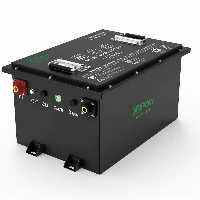
A LiFePO4 Battery Management System, as the name suggests, is auxiliary equipment specifically designed to monitor and manage the charging and discharging of LiFePO4 batteries. It is typically embedded directly inside the battery pack. Many people in the industry also refer to it as a protection board.
Why is a BMS Necessary?
LiFePO4 batteries are composed of many small cells, and each cell may have slight variations. If one cell is overcharged or overdischarged, that particular cell could become damaged. In severe cases, this can lead to reduced battery capacity without you even realizing it.
One of the advanced functions of a BMS is to monitor the condition of these cells. A high-quality BMS can even actively intervene to keep each cell balanced.
By now, you should understand the importance of this system. To help everyone gain a better understanding, this article will provide a comprehensive introduction. Please continue reading.

What Is a LiFePO4 Battery Management System?
A Lithium Iron Phosphate battery management system, abbreviated as LFP BMS, is an intelligent control system installed inside a LiFePO4 battery pack. You can think of it as the battery's "brain + bodyguard + command center."
If we compare a battery pack to an army, each individual cell is like a soldier, and the BMS is the commander. Without it, the battery can still operate, but there is no guarantee what problems may arise in the future. And once a problem occurs, there is no accurate way to trace the cause - you can only make guesses, like a headless fly trying to find direction.
Inside a LiFePO4 battery pack, multiple cells are connected in series or in parallel. For example, a typical 48V golf cart battery uses a 16S configuration, meaning it consists of 16 pieces of 3.2V LiFePO4 cells connected in series.
Here comes the key issue: with so many cells working together, no manufacturer can guarantee that every single cell has exactly the same voltage, internal resistance, capacity, or temperature tolerance. Even cells produced by CATL (Contemporary Amperex Technology Co., Limited) from the same production batch will still have slight differences.
If a LiFePO4 battery management system is not used to optimize and regulate these cells, you may experience situations where the battery suddenly drains much faster than expected during use. This usually happens because one of the internal cells has degraded or failed. For users who require long operating hours or who frequently charge the battery overnight, this situation tends to occur more often.

how does lifepo4 bms work?
A LiFePO4 battery pack is composed of multiple cells connected in series and parallel. In real-world applications, inevitable differences exist among cells in terms of capacity, internal resistance, and thermal behavior. Some cells tend to heat up more quickly under high load, while others may lag behind during charge and discharge processes.
The core role of the Battery Management System is to continuously and accurately monitor the operating status of each individual cell-including voltage, current, and temperature-and to intervene before abnormal conditions escalate, preventing risks such as overcharge, over-discharge, and overheating. At the same time, the BMS actively reduces cell-to-cell inconsistency through balancing mechanisms, equalizing voltage differences across the pack.
Through this level of fine-grained control, the BMS significantly enhances the safety margin, operational stability, and usable capacity of the battery system, while effectively reducing system-level failure risks and extending the overall service life of the LiFePO4 battery pack.
Types of LiFePO4 Battery Management Systems
rv energy storage battery management system
Features: User experience-focused. Supports battery level monitoring via mobile app, equipped with low-temperature charging cut-off function to protect batteries from damage caused by charging below 0℃.
Golf Cart battery management system
Features: Explosive power-focused. Withstands high instantaneous current during climbing, and its hardware is reinforced to cope with severe jolts during operation.
Electric Forklift battery management system
Features: Productivity-focused. Supports high-current fast charging, communicates with forklift controllers via industrial-grade CAN protocol to ensure stable 24/7 heavy-duty operation.
Residential Energy Storage battery management system
Features: Compatibility-focused. Fully compatible with mainstream solar inverters, supports parallel connection of multiple battery packs for capacity expansion, and manages long-term charge-discharge cycles.
Industrial & Commercial ESS battery management system
Features: System scale-focused. Typically high-voltage systems (e.g. 750V+), adopt three-tier architecture (slave control, master control, central control) and integrate sophisticated temperature control and safety redundancy.
Trolling Motor battery management system
Features: Designed for sustained high-current discharge and waterproof protection. It supports long-duration, high-power output and typically offers IP67 or higher resistance against moisture ingress and salt-spray corrosion.
Overview of LiFePO4 Battery BMS Types and Their Key Features
| Application Scenario | Core Focus | Essential Features |
|---|---|---|
| RV (Recreational Vehicle) | User Interaction & Climate Adaptability | Bluetooth Monitoring / Low-Temperature Protection |
| Golf Cart | Power Demand & Load Fluctuation | High Peak Discharge Current / Vibration Resistance |
| Forklift | Industrial Efficiency | Fast Charging Capability / CAN Communication |
| Residential Energy Storage | Scalability & Compatibility | Inverter Protocol Matching / Parallel Support |
| Industrial Energy Storage | Safety & System Scale | High-Voltage Management / Multi-Level Protection Coordination |
| Marine (Onboard Power Systems) | Corrosion Resistance & Reliability | Waterproof Design / Anti-Corrosion Protection |
| Trolling Motor Batteries | Continuous Thrust & Runtime Accuracy | Stable Continuous Discharge / Accurate SOC Estimation |
Benefits of a LiFePO4 Battery Management System
The main advantage of a LiFePO4 Battery Management System is that it transforms the battery from a simple "raw power source" into an intelligent, safe, and highly efficient energy system.
1. Ultimate Safety Protection (Core Advantage)
The BMS acts as both the first and last line of defense for the battery.
- Prevents Thermal Runaway: Monitors each cell's voltage and cuts off charging immediately if overcharge occurs.
- Short-Circuit & Overcurrent Protection: Responds within microseconds to sudden current spikes, preventing battery damage or fire.
- Low-Temperature Charging Management: Automatically blocks charging below 0°C to prevent lithium dendrite formation and protect the battery.
2. Significantly Extends Battery Life
LiFePO4 batteries are rated for 2,000–6,000 charge cycles, but this depends on careful management by the BMS.
- Eliminates the "Weakest Link Effect": The battery pack's capacity is limited by its weakest cell. The BMS balances energy among cells, ensuring all cells work in sync and preventing individual cells from overloading and failing prematurely.
- Prevents Deep Discharge: Once a battery reaches 0V, it is often irreparable. The BMS cuts off output when about 5–10% of capacity remains, preserving a "lifesaving" reserve.
3. Improves Energy Utilization
- Accurate State of Charge (SOC): LiFePO4 batteries have a very flat voltage curve-voltage may differ by only 0.1V between 90% and 20% remaining. Ordinary voltmeters cannot accurately measure charge, but the BMS uses a coulomb-counting algorithm to track current in and out, providing precise percentage-based battery levels, just like a smartphone.
- Power Optimization (SOP): An intelligent BMS can determine the maximum power output the inverter or motor can safely draw based on the battery's current temperature and health, delivering peak performance without damaging the battery.
4. Intelligent Management and Maintenance
Real-Time Monitoring: Modern BMS often feature Bluetooth or communication interfaces (CAN/RS485), allowing you to view via a mobile app:
- The voltage of each battery string.
- Real-time charging and discharging current.
- Number of cycles completed and overall battery health (SOH).
Simplified Maintenance: If a single cell fails within the battery pack, the BMS issues an alert and pinpoints the problem, eliminating the need for users to disassemble the pack for manual inspection.


LiFePO4 BMS Response Speed: How Quickly Should It React to Faults?
The response speed of a LiFePO4 BMS determines whether it can successfully protect the battery before a fault causes permanent damage or even a fire.
1. Instant Protection (Microsecond Level)
This is the fastest response level of a BMS and is mainly designed for short-circuit protection.
- Ideal response time: 100–500 microseconds (µs).
- Why it must be this fast: During a short circuit, current can surge to several thousand amperes almost instantly. If the BMS fails to disconnect the circuit within 1 millisecond, the battery's internal chemical materials can rapidly overheat and expand, while the BMS switching components themselves may be destroyed by extreme temperatures.
- Note: Many low-end BMS units have insufficient short-circuit response speed, which can result in the protection board being burnt out. Copow's intelligent battery management system can react within 100–300 microseconds, cutting off the current first and staying one step ahead of the danger.
2. Medium-Speed Protection (Millisecond-Level)
This level mainly targets secondary overcurrent protection.
- Ideal response time: 100–200 milliseconds (ms)
- Application scenario: When a high-power motor or inverter starts up, the current may temporarily surge to 2–3 times the rated value. The BMS must quickly determine whether this is a normal startup transient or a serious electrical overload.
Tiered protection strategy:
- Primary overcurrent (software-based): Allows short-term overloads for several seconds (e.g., up to 10 seconds), suitable for normal motor startup conditions.
- Secondary overcurrent (hardware-based): If the current rises to a dangerously high level, the BMS bypasses software logic and disconnects the circuit directly through hardware protection.
Copow's advanced Battery Management System can make this decision within 100–150 milliseconds, effectively preventing further damage.
3. Normal Protection (Second-Level Response)
This level mainly addresses voltage-related issues (overcharge / over-discharge) and temperature faults.
Ideal response time: 1–2 seconds.
Why it doesn't need to be extremely fast:
- Voltage protection: Battery voltage rises or falls relatively slowly. To avoid false triggers-such as brief voltage drops or spikes caused by load fluctuations-the BMS typically applies a confirmation delay of around 2 seconds. Only after verifying that the voltage truly exceeds the limit will it take action, preventing unnecessary disconnection.
- Temperature protection: Among all fault factors, temperature changes the slowest. In most cases, a sampling interval of 2–5 seconds is sufficient.
Tip: If you have specific requirements for the response speed of a battery management system's normal protection functions, you can consult the professionals at Copow Battery. They can provide high-end, customized solutions tailored to your needs.
related article: BMS Response Time Explained: Faster Isn't Always Better
Cell Balancing in LiFePO4 BMS: Passive vs. Active Explained
LiFePO4 battery packs require cell balancing because, due to manufacturing variations, each cell within the pack has slightly different internal resistance and capacity.
During charging, the cell whose voltage rises the fastest will trigger the BMS overvoltage protection, causing the entire battery pack to stop charging-even though the other cells are not yet fully charged.
Passive Balancing
This is the most common and cost-effective solution, widely used in most standard BMS designs.
- Principle: When a cell's voltage reaches a preset threshold (usually between 3.40 V and 3.60 V) and is higher than the other cells, the BMS connects a parallel resistor.
- Energy path: The excess energy is converted into heat through the resistor, slowing down the voltage rise of that cell and giving the lower-voltage cells time to catch up.
- Balancing current: Very small, typically ranging from 30 mA to 150 mA.
| Advantages | Disadvantages |
|---|---|
| Extremely low cost: simple circuit and inexpensive. | Low efficiency: energy is directly wasted as heat. |
| Compact size: easy to integrate into small BMS boards. | Slow speed: for large-capacity batteries (e.g., 280 Ah), a balancing current of a few hundred milliamps is almost ineffective. |
| High stability: simple structure with low failure rate. | Significant heat generation: the BMS module becomes noticeably hot during balancing. |
Active Balancing
This is a more advanced solution, usually added as a standalone module or integrated into high-end BMS systems (such as Copow BMS).
- Principle: Using inductors, capacitors, or transformers as energy storage media, energy is extracted from higher-voltage cells and transferred to the lowest-voltage cells.
- Energy path: Energy is redistributed between cells, with almost no waste.
- Balancing current: Relatively large, typically ranging from 0.5 A to 10 A, with 1 A and 2 A being the most common.
| Advantages | Disadvantages |
|---|---|
| High efficiency: energy is used effectively with minimal heat generation. | Expensive: complex circuitry leads to a much higher cost than passive balancing. |
| Fast: can quickly correct voltage differences in large-capacity battery packs. | Electromagnetic interference: frequent energy transfers may cause slight electronic interference. |
| Continuous balancing: many active balancers work during charging, discharging, and idle states. | Complexity: more electronic components mean a higher potential failure rate. |
Internal Benchmark Data (2024): In our latest durability tests, Copow BMS demonstrated a significant advantage in maintaining pack health. By optimizing the balancing algorithms, we reduced cell voltage imbalance by 40% compared to generic hardware-only protection boards, effectively extending the usable lifespan of the battery pack.
⭐On Copow's lifepo4 batteries assembly line, we rely not only on BMS balancing, but also pre-sort cells using high-precision equipment to perform static and dynamic capacity matching before assembly. This significantly reduces the subsequent workload on the BMS.
⭐Building a 200Ah+ system? Let us recommend the best Active Balancing configuration for your project.

Which one should you choose?
- If you are using new cells under 100Ah: A standard BMS with built-in passive balancing (such as Copow) is usually sufficient. As long as the cells are of high quality, the tiny balancing current is enough to maintain alignment.
- If you are using large 200Ah – 300Ah cells: It is strongly recommended to choose a BMS with 1A – 2A active balancing, or add a separate standalone active balancer. Otherwise, if a voltage gap occurs, passive balancing might take days or even weeks to correct it.
- If you are using "Grade B" or used/recycled cells: Active balancing is a must. Because these cells have poor consistency, they require high-current adjustments frequently to prevent the BMS from tripping and shutting down the entire battery pack.


LiFePO4 BMS Communication & Monitoring: CAN, RS485, Bluetooth, and Smart Functions
Copow's Smart BMS is more than just a protection board-it acts as the "brain" of the battery system. Through various communication protocols, the BMS can "communicate" with inverters, computers, or smartphones, enabling remote monitoring and precise management.
Physical Interfaces
Bluetooth - Your Mobile Remote
- Applicable scenarios: Personal DIY projects, RVs, small-scale energy storage.
- Features: No wiring required; data can be accessed directly through a mobile app (such as Copow Battery's app).
- Functions: View real-time individual cell voltage, current, temperature, and remaining capacity, and adjust protection parameters directly from your phone.
CAN Bus - The "Gold Standard" for Inverter Communication
- Applicable scenarios: Home energy storage, electric vehicles.
- Features: Industrial-grade anti-interference capability, fast transmission speed, and extremely stable data.
- Functions: This is the most advanced protocol. The BMS communicates the battery status to the inverter via CAN. The inverter then automatically adjusts the charging current based on the battery's real-time needs.
RS485 - The "Workhorse" for Parallel and Industrial Monitoring
- Applicable scenarios: Multiple battery packs in parallel, connection to PC, industrial automation.
- Features: Suitable for long-distance transmission. Copow's RS485 can reach up to 1200 meters and supports daisy-chaining multiple devices.
- Functions: In server rack-style battery systems, multiple battery groups communicate via RS485 to ensure consistent voltage across all groups.
⭐Tips:Copow Smart BMS is pre-configured to communicate seamlessly with major inverter brands like Victron, Pylontech, Growatt, and Deye.
Core Smart Functions
Compared to hardware BMS, a Smart BMS offers several advanced features:
- Coulomb Counting (SOC Tracking): Traditional BMS estimate battery charge based on voltage, which is often inaccurate. A Copow Smart BMS uses a built-in shunt to measure every milliamp of current flowing in and out, providing a precise percentage of remaining charge.
⭐"Have you ever experienced this? On a golf cart, a single press of the accelerator can cause the battery level to drop instantly from 80% to 20%, and then jump back up once you release the pedal. This happens because many low-cost golf cart batteries estimate the state of charge based solely on voltage."
⭐No need to worry. Copow lithium battery packs use an intelligent BMS with a built-in shunt, and through a coulomb counting algorithm, provide a smartphone-like, accurate percentage display on your dashboard.
- Low-Temperature Self-Heating Control: LiFePO4 batteries cannot be charged below 0°C. The Copow BMS detects low temperatures and first directs current to an external heating element for the cells. Once the battery warms up, charging begins.
Programmable Logic Settings:
- Balancing trigger point: Customize the voltage at which balancing starts, e.g., 3.4 V or 3.5 V.
- Charge/discharge strategy: For example, automatically cut off the load at 20% SOC to protect battery life.
- Data Logging & Life Analysis (SOH): Records battery cycle count, historical maximum/minimum voltage, and temperature for accurate health monitoring.
| Interface | Common Use | Connected To | Advantages |
|---|---|---|---|
| Bluetooth | Daily debugging, mobile monitoring | Mobile app | Convenient, no wiring required |
| CAN | Energy storage system communication | Solar inverter | Real-time synchronization, smarter protection |
| RS485 | Battery pack parallel connection | PC or other battery packs | Stable, suitable for multi-device networking |
| UART/RS232 | Firmware upgrade, short-distance debugging | PC / display module | Low cost, widely compatible |

Selection Recommendations
- For DIY Enthusiasts: A BMS with built-in Bluetooth is essential. Without it, you won't be able to intuitively monitor the real-time voltage differentials (cell balance) of each individual cell.
- For Home Energy Storage: You must ensure the BMS is equipped with CAN or RS485 interfaces and that the communication protocol matches your inverter. Otherwise, the inverter will be forced to operate in "Voltage Mode," which significantly reduces both system efficiency and battery lifespan.
- For Remote Monitoring: You can opt for an expansion with 4G or Wi-Fi modules. This allows you to monitor the battery status via the cloud, even when you are away from home.
Alternatively, you can contact Copow Battery. As a professional LiFePO4 battery manufacturer, they can not only customize the physical appearance of the battery but also research, test, and produce BMS functions tailored specifically to your practical requirements.

Temperature Protection and Thermal Management in LiFePO4 BMS
In LiFePO4 battery management, temperature protection and thermal management are the BMS's most critical safety defenses. Unlike lead-acid batteries, LiFePO4 cells are extremely sensitive to temperature, and improper charging in low-temperature environments can cause irreversible damage.
1. Low-Temperature Protection (Critical "0°C Rule")
LiFePO4 batteries can discharge in cold environments (down to -20°C) but must never be charged below 0°C.
- Risk (Lithium Plating): Charging below freezing prevents lithium ions from entering the anode properly. Instead, metallic lithium accumulates on the anode surface, permanently reducing battery capacity and potentially growing dendrites that pierce the separator, causing internal short circuits.
- BMS Intervention: Copow's Smart BMS uses temperature sensors (thermistors) to monitor cell temperature. When it approaches 0°C, the BMS immediately cuts off the charging circuit, but usually keeps the discharge path active, ensuring your loads (e.g., lights or heaters) continue to operate.
⭐Need a battery that works in -20°C? Ask about our self-heating LiFePO4 solutions.
2. High-Temperature Protection
Although LiFePO4 batteries are more stable than lithium-ion batteries (such as NMC), extreme high temperatures can still drastically shorten their lifespan.
- Charging high-temperature protection: Usually set between 45°C and 55°C. The combination of chemical heat generated during charging and ambient heat can accelerate electrolyte decomposition.
- Discharging high-temperature protection: Usually set between 60°C and 65°C. If the battery reaches this temperature during discharge, the BMS will forcibly disconnect the system to prevent thermal runaway or fire.
Worried about unique climate conditions in your area? No problem! You can contact Copow to customize a battery protection system tailored specifically to your needs. Feel free to submit your requirements.
3. Active Thermal Management Strategy
A basic BMS only provides simple "power-cut protection," whereas advanced systems (such as those for RV energy storage, power stations, or Copow custom solutions) feature active management capabilities.
| Function | Working Principle | Purpose |
|---|---|---|
| Self-Heating | The BMS directs incoming charging current to the heating film between cells | Preheats the cells above 5°C before charging, solving the issue of charging in cold conditions |
| Cooling Control | The BMS monitors temperature rises and triggers relays to activate cooling fans or water pumps | Forces cooling during high-current discharge or fast charging to prevent overheating |
| Thermal Derating | The BMS does not cut power directly but instructs the inverter to reduce output (e.g., current drops from 100A to 20A) | Gradually cools the battery without interrupting power supply, ensuring continuous operation |
4. Purchasing Recommendations
- For users in cold regions: Always choose a BMS with low-temperature charging protection. If the budget allows, it is best to select a battery pack with a self-heating function; otherwise, your solar system may fail to store energy on winter mornings due to frozen batteries.
- For installations in confined spaces: If the battery is installed in a small enclosure, ensure the BMS has at least two temperature sensors-one monitoring the cells and another monitoring the BMS's MOSFETs (power transistors)-to prevent overheating and potential damage to the BMS.
Common LiFePO4 BMS Failures and How Copow Battery Prevent Them?
Although LiFePO4 batteries are electrochemically very stable, the BMS, as a complex electronic component, can occasionally fail under environmental stress or improper design.
1. MOSFET Failure (Short-Circuit or "Stuck-On")
MOSFETs (metal-oxide-semiconductor field-effect transistors) act as electronic switches, responsible for cutting off current in the event of a fault.
Failure behavior: High current surges or poor heat dissipation can cause the MOSFET to "stick" or burn out. If a MOSFET fails in the closed state, the battery loses overcharge protection.
Copow's preventive measures:
- Over-spec design: Industrial-grade MOSFETs with ratings far above the battery's nominal current are used (for example, a 150 A system is equipped with 300 A-rated components).
- Efficient heat dissipation: Integrated thick aluminum heat sinks and high thermal conductivity thermal paste ensure that the switching components remain cool under continuous heavy loads.
2. Inaccurate State of Charge (SOC) Readings
- Symptoms: Conventional BMS often calculate battery charge based solely on voltage. Because LiFePO4 batteries have a very flat voltage curve, voltage alone is insufficient to determine the remaining capacity. This can result in sudden shutdowns even when the display shows 20% remaining.
- Copow's Prevention: High-Precision Coulomb Counting – Copow uses shunt-based active current monitoring (coulomb counting) to measure the actual energy flowing in and out, keeping SOC accuracy within ±1%–3%.
3. Communication Interruption (CAN/RS485/Bluetooth)
Failure behavior: In professional solar systems, if the BMS stops communicating with the inverter, the inverter may halt charging or incorrectly switch to an unsafe lead-acid charging mode.
Copow's preventive measures:
- Isolated communication ports: Copow's BMS designs electrical isolation on communication lines. This prevents "ground loops" or electromagnetic interference (EMI) from the inverter from causing the BMS processor to crash.
- Dual watchdog timers: The internal software includes a watchdog mechanism. If it detects that a communication module has frozen, the system automatically restarts the communication function, ensuring the connection remains online at all times.
4. Balancing Failure (Excessive Cell Voltage Difference)
Failure behavior: Small passive balancing currents (e.g., 30 mA) cannot handle large-capacity cells. Over time, cell consistency deteriorates, significantly reducing the usable capacity of the battery pack.
Copow's preventive measures:
- Customizable balancing logic: Copow supports fine-tuning of the balancing trigger thresholds.
- Active balancing solution: For large-capacity models above 200 Ah, Copow can integrate high-current active balancers of 1 A–2 A, maintaining cell consistency even under intensive usage.
⭐Why Choose Copow Battery?⭐
| Feature | Standard Off-the-Shelf BMS (Generic) | Copow Custom BMS Solution |
|---|---|---|
| Testing Standard | Sampling inspection only | 100% full-load factory testing (EOL) |
| Protection Mechanism | Basic (Voltage / Current / Temperature) | Redundant protection (Hardware + Software) |
| Customizable Parameters | Fixed, cannot be modified | Custom firmware, compatible with specific inverter brands |
| Reliability | Consumer-grade components | Industrial / Marine-grade high-standard components |
⭐Copow's Manufacturing Advantages⭐
As a professional manufacturer, Copow does more than simply buy a BMS and install it in a case. They perform deep customization:
- R&D: Develops dedicated BMS logic for specific application scenarios, such as high-vibration environments or extremely cold regions.
- Testing: Each battery undergoes rigorous aging tests, pushing the BMS to its thermal limits before leaving the factory to verify reliability.
- Production Control: Strictly manages assembly processes, such as attaching temperature sensors directly to the cell surface to ensure the fastest response times.

Conclusion
The Battery Management System (BMS) is an indispensable core component of any LiFePO4 battery pack. It not only dictates the battery's safety under extreme conditions-such as achieving microsecond-level short-circuit response-but also directly impacts service life and energy efficiency through precise Coulomb-counting energy tracking and intelligent balancing technology.
While generic BMS units on the market are cost-effective, they often fall short in areas of redundant protection and deep customization. As demonstrated by Copow Battery, true professional-grade solutions stem from rigorous control over hardware specifications (such as over-spec MOSFET designs) and continuous optimization of software algorithms.
Whether you are a DIY enthusiast or an enterprise user, choosing a BMS solution backed by R&D expertise and comprehensive testing is the most responsible investment for your energy assets.
We welcome you to discuss your customization plans or specific requirements with us. We are committed to providing you with the most professional and suitable customized Battery Management System solutions.
Frequently Asked Questions
Does a LiFePO4 Battery Need a Special BMS?
A: Absolutely. Due to the unique chemical properties and voltage thresholds (3.65V max) of LiFePO4, a standard lithium-ion BMS will not provide accurate protection, leading to potential safety risks.
What is the difference between a 3S and 4S BMS?
A: A 3S BMS manages 3 cells in series (9.6V total), whereas a 4S BMS is for 12.8V systems. Choosing the correct 'S' rating is crucial for the BMS to monitor individual cell voltages accurately.
Do LiFePO4 Batteries Come with a Built-In BMS?
Common off-the-shelf lithium iron phosphate batteries-such as 12-volt modular units designed to directly replace traditional lead-acid batteries-come from the factory with a built-in battery management system.
However, the situation is different for bulk prismatic cells used for manual assembly or large industrial energy storage. These cells are purely energy carriers and do not include any internal protection circuitry. Therefore, when using them, you must select and install an external BMS based on the specific number of cells in series and the current requirements.