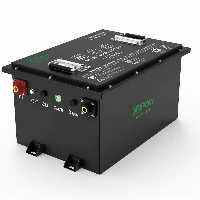
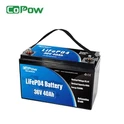
LiFePO4 battery (lithium iron phosphate battery) is currently one of the most widely used battery technologies in forklifts, energy storage systems, and electric vehicles.
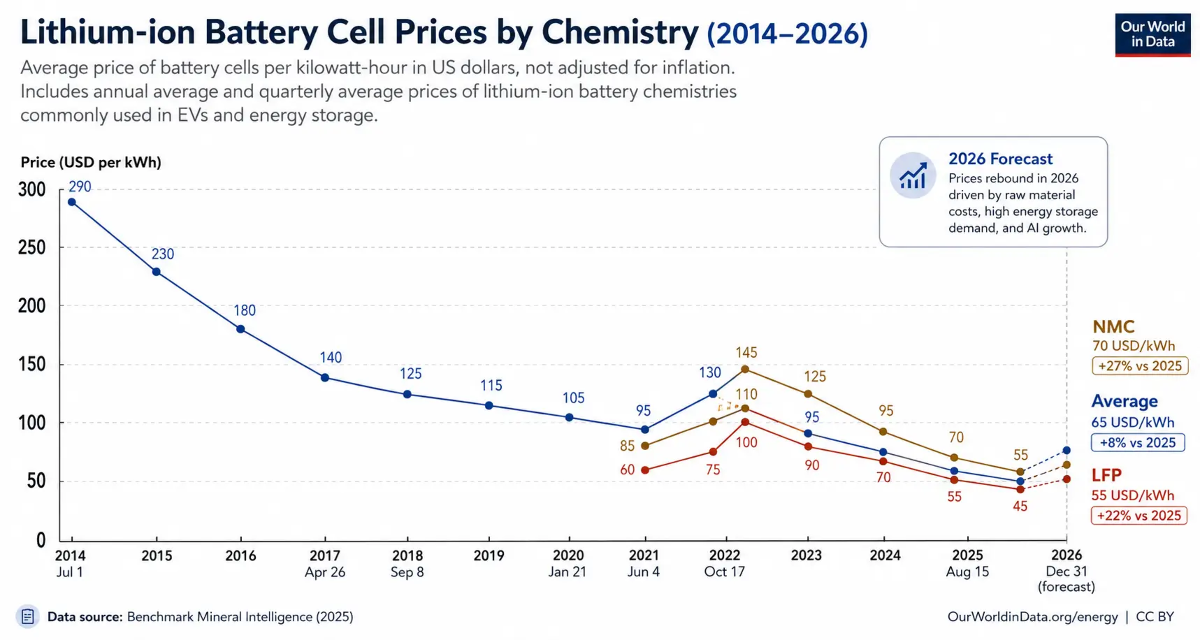
In the first half of 2026, prices for lithium iron phosphate batteries rebounded, sparking public discontent. So, what factors led to this price increase? Let's take a closer look.
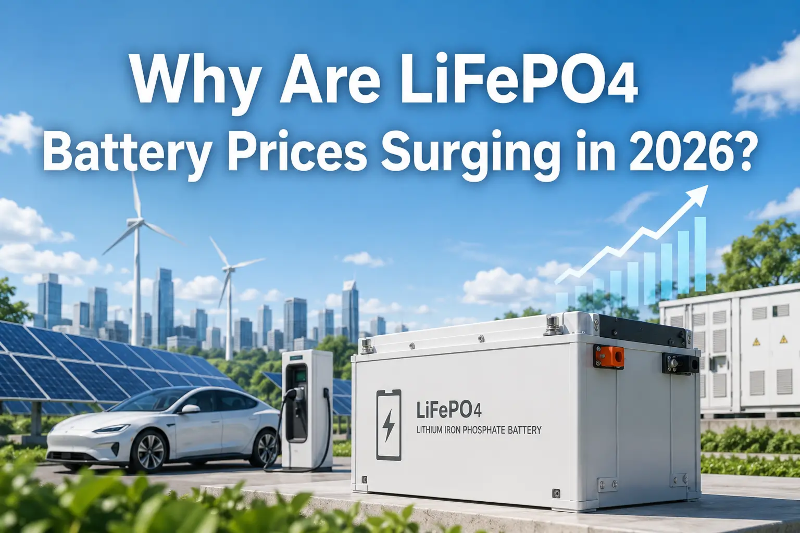
Why do so many people feel that the price of lithium iron phosphate batteries rose so suddenly in 2026?
Between 2024 and 2025, the price of lithium iron phosphate batteries continued to decline. At that time, we could purchase a high-quality, fully-featured lithium-ion golf cart for just $1,499, whereas now a similar model costs $1,999. We had originally planned to upgrade from lead-acid batteries to lithium-ion batteries this year, but this sudden price fluctuation caught us off guard.
Let's analyze the reasons.
In fact, this price reversal was not a coincidence; there had been early signs.
The gradually intensifying price war served as a trigger, while factors such as rising raw material prices, surging demand in the energy storage market, the expansion of AI computing centers, logistics and transportation costs, exchange rate fluctuations, and changes in national policies acted as catalysts.
Prior to 2026, price competition in the LiFePo4 battery industry was extremely fierce. To secure orders and reduce inventory pressure, battery cell prices from brands such as CATL, BYD, EVE Energy, and Gotion High-Tech dropped repeatedly.
For example, profit margins for standard LFP energy storage systems are shrinking. Some LFP battery manufacturers are even willing to ship at a loss to maintain production capacity. Consequently, battery prices continue to hit new lows.
However, this situation will eventually rebound in the future. A simple economic law explains why: when the supply side suffers prolonged losses while demand continues to grow, price increases are almost inevitable.
Cited article:
Global battery markets are growing strongly – and so are the supply risks
Chinese battery maker CATL reports faster profit growth in second quarter
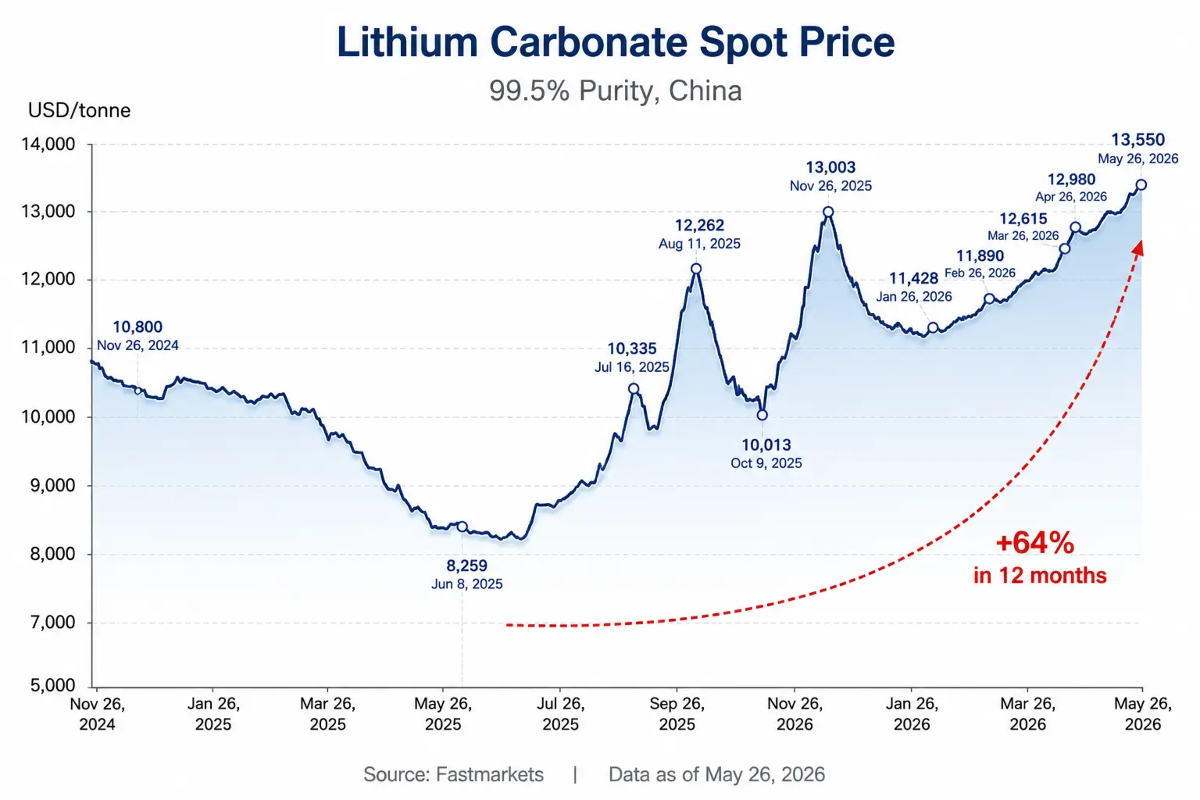
Why are lithium carbonate (raw material) prices rising again?
We have seen in some articles that the reasons for the rise in lithium carbonate raw material prices include the closure of lithium mines, Zimbabwe's export restrictions on lithium ore, and the depletion of global lithium carbonate inventories.
However, the assertion that inventories have been "depleted" is clearly inaccurate. If inventories had truly been depleted, the price increase for lithium iron phosphate batteries would have been far greater than 10% to 30%.
Based on a comprehensive review of news reports and authoritative commentary, we believe the primary reasons for the rise in lithium carbonate raw material prices are:
Rising Demand
The widespread adoption of new energy vehicles, increased demand for energy storage systems, and the expansion of AI data centers have led to demand exceeding supply. Large-scale energy storage power stations, commercial and industrial energy storage, residential energy storage, and AI data center energy storage are all consuming large quantities of lithium iron phosphate battery cells-not to mention the vast number of electric vehicles.
Price Wars
Previous intense price wars have led to production cuts or delays in lithium mining, salt lake extraction, and smelting capacity.
Market Speculation
In the futures market, traders, seeing lithium carbonate prices rise, are not rushing to sell but are waiting for prices to reach a certain level before doing so.
Meanwhile, downstream companies, concerned about continued future price increases for lithium carbonate, are making large advance purchases, further tightening supply.
Reuters noted that lithium carbonate prices on the Guangzhou Futures Exchange rose by approximately 130% from their low point, while Fastmarkets spot prices increased by about 108%.
Cited article:
Lithium surges in China after local authorities announce plan to revoke mining licences
Energy storage boom strengthens demand outlook for beaten-down lithium
Shortages of energy storage battery cells are affecting the entire LFP supply chain
The shortage of battery cells and rising prices will undoubtedly affect all battery products that use lithium iron phosphate technology. This will impact sectors ranging from energy storage systems, forklift batteries, and golf cart batteries to marine batteries.
The specific impacts can be summarized as follows:
High-quality LFP battery cells will be prioritized for major energy storage customers
Orders for large-scale energy storage projects are massive; a single commercial and industrial energy storage project often ranges from several MWh to even hundreds of MWh.
For cell manufacturers, these are high-value orders that rank at the top of their customer hierarchy.
As a result, cell manufacturers prioritize serving these major customers and allocate their highest-quality cells to them first, leading to a shortage of high-quality cells for downstream lithium iron phosphate battery manufacturers.
Energy storage systems consume large quantities of lithium iron phosphate material
The energy storage market has almost entirely adopted the LFP technology route, which means that any growth in energy storage demand will drive the entire upstream supply chain.
Not only lithium carbonate, but also resources such as separators, copper foil, and aluminum foil will become scarce, leading to higher costs for batteries used in golf carts, RVs, marine vessels, and forklifts.
Battery cell manufacturers will reallocate their production capacity
Previously, the production breakdown at many battery cell manufacturers was as follows: 70% for power battery cells, 20% for energy storage battery cells, and 10% for other types of battery cells.
However, with the surge in energy storage orders in 2026, some battery cell manufacturers will prioritize the production of energy storage battery cells, which will affect the production cycles of certain specialized battery cell types.
Whereas products were previously available for immediate shipment, delivery times will now be extended.
Energy storage customers are more inclined to lock in production capacity
Large-scale energy storage customers often sign long-term agreements with lithium iron phosphate cell manufacturers to secure annual production capacity in advance and reserve portions of production lines.
This reduces risk for cell manufacturers, thereby decreasing the supply of freely available spot goods on the market.
This explains why, even though some reports clearly indicate industry-wide overcapacity, procurement personnel still find it difficult to source products when making actual purchases.
Energy storage places very high demands on high-quality battery cells
Energy storage projects place particular emphasis on the cycle life, consistency, and safety of battery cells-in short, exceptional quality.
However, industrial batteries, marine batteries, and golf cart batteries also require these cells, leading to a shortage of high-quality lithium iron phosphate cells.
The boom in energy storage will transform the pricing dynamics of the entire industry
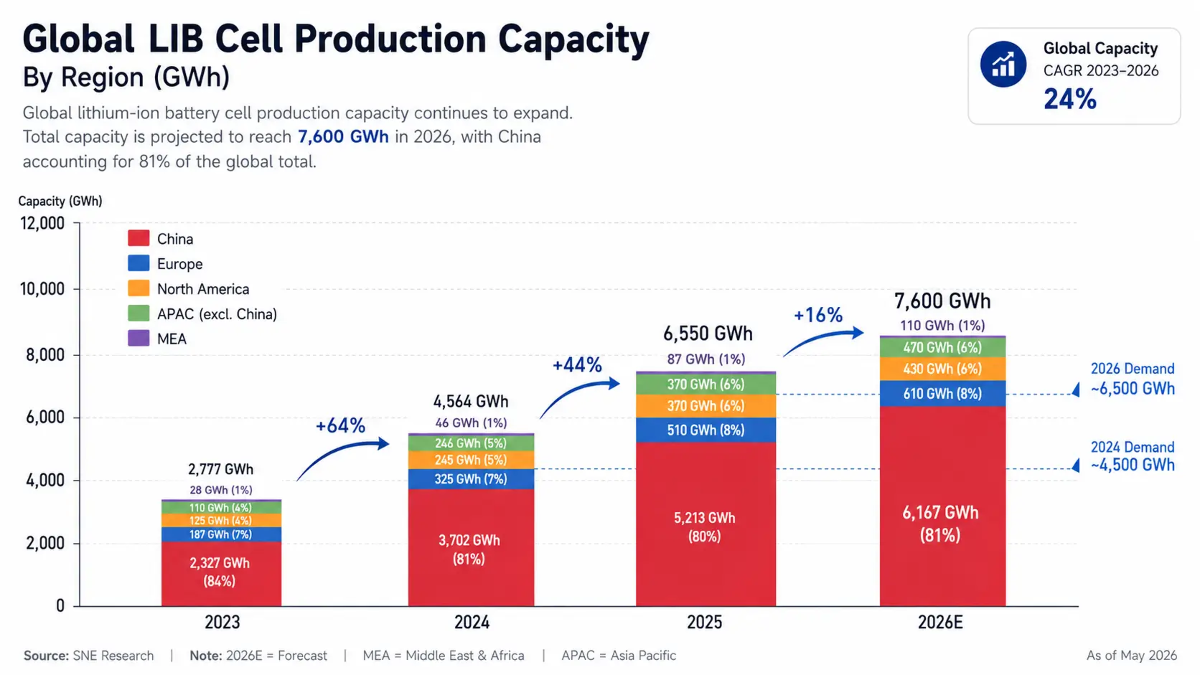
Over the past few years, the lithium-ion battery industry has been mired in a price war. Many battery manufacturers have continuously lowered their prices, but with the surge in demand for energy storage systems, they have found that market capacity has expanded and orders have increased.
As a result, the entire industry chain has begun to raise its prices, reflecting the principle that "rarity drives up value."
Many battery cell manufacturers are no longer willing to lose money to capture market share
The prolonged price war has left major lithium iron phosphate battery manufacturers exhausted.
Many companies have realized that relying solely on price competition is not sustainable and could drag the entire industry into a vicious cycle.
Between 2024 and 2025, massive capital poured into the lithium-ion battery supply chain. From lithium mines and materials to battery cells and packs, nearly every company was expanding its production capacity. At the time, many companies anticipated that future demand would continue to grow; however, the market did not show signs of a surge in demand until 2026, and plans could not keep up with the changes.
How should the accumulated inventory be handled? The only option was to lower prices to sell it off.
However, the market environment in 2026 was vastly different from previous years. Demand for energy storage began to grow rapidly, and the expansion of AI data centers and the steady growth of the new energy vehicle market brought in more orders.
Today, the operational logic of many cell manufacturers is this: rather than losing money to capture market share, it is better to reduce low-price orders and reserve resources for more valuable customers.
Cited article: China warns of battery industry overcapacity risks
How is the expansion of AI computing centers affecting the price of lithium iron phosphate batteries?
It has been over three years since ChatGPT was launched on November 30, 2022. From ChatGPT's initial dominance to the current landscape featuring Gemini, X AI, Claude, Perplexity, DeepSeek, and others.
Not only that, but these AI systems are becoming increasingly sophisticated in the areas of conversation, images, and video, with numerous model variants available in each domain.
Even as we speak, AI developers are still racking their brains to optimize their models.
In 2023, the AI industry's annual electricity consumption was approximately 460 TWh, and by 2026, this figure had risen to nearly 1,050 TWh.
So, how exactly does AI consume so much electricity? Let's take a closer look:
Expansion of AI Computing Centers
From late 2025 through 2026, the rapid expansion of AI computing centers has begun to directly impact the entire LiFePo4 industry chain, even becoming one of the key drivers behind rising LFP battery prices.
For example, OpenAI's Stargate project is currently one of the most high-profile AI infrastructure projects in the world.
Located in Abilene, Texas, the Stargate supercomputing center has a power capacity of approximately 1.2 GW (1,200 MW), making it one of the world's largest AI data centers. In the future, this data center is expected to reach the 10 GW level.
Setting aside the 10 GW for now, what does 1.2 GW actually mean?
This is equivalent to the total electricity consumption of a large nuclear power plant, a medium-sized city, and nearly 1 million households.
What's even more shocking is that this represents only the electricity demand of the AI infrastructure.
A 1.2 GW / 4.8 GWh battery energy storage project would require approximately 4.8 million 314 Ah lithium iron phosphate cells, weighing roughly 22,000 metric tons.

AI Data Centers Consume Massive Amounts of Electricity
Whether AI developers are training large models or users are asking AI questions and having it generate content, both processes consume vast amounts of electricity.
Every time you ask an AI a question, thousands of GPUs, high-speed networks, memory clusters, and cooling systems are working in tandem behind the scenes.
Every time you ask ChatGPT a question, it consumes between 0.3Wh and 3Wh of electricity to answer you-enough to power an LED light bulb for a few minutes. And that's just for asking a question; generating images or videos consumes even more power.
On the other hand, the GPUs used to train AI consume an enormous amount of power. A single NVIDIA H100 AI GPU already draws about 1,000W of power, not to mention the state-of-the-art H200.
An AI data center contains tens of thousands of such GPUs.

How does the steady growth in demand for new energy vehicles affect the price of lithium iron phosphate batteries?
New energy vehicles represent the second-largest application area for lithium iron phosphate batteries, following energy storage systems.
In China, the penetration rate of electric vehicles has reached over 70%, and they are a common sight on the streets. With a large number of electric vehicles priced between 100,000 and 200,000 RMB, an increasing number of models are adopting lithium iron phosphate battery technology across the board, including brands such as BYD, Xpeng, Li Auto, Leapmotor, Geely, and GAC. The demand for battery cells in new energy vehicles is staggering.
A typical 48V golf cart battery requires only about 5 kWh of capacity, while a trailer motor battery requires only about 2 kWh. However, a standard new energy vehicle typically requires a battery pack ranging from 50 kWh to 80 kWh, and high-end models may even require battery packs exceeding 100 kWh.
The amount of lithium iron phosphate battery cells consumed by a single new energy vehicle may be equivalent to dozens of golf cart batteries, hundreds of trailer motor batteries, or even an entire home energy storage system.

How will changes in China's export policies affect the price of lithium iron phosphate batteries?
Starting in late 2024, China will gradually reduce export tax rebates for lithium-ion batteries. By 2026, the export tax rebate rate for lithium-ion battery products will be gradually reduced from 9% to 6%, with plans to completely eliminate the export tax rebate policy by 2027.
This means that previously, for a $1,000 order of LiFePo4 batteries, Chinese companies could receive a portion of the tax rebate as profit. Now, however, this profit margin is set to be completely eliminated.
Previously, some LFP battery manufacturers were willing to ship products at a loss because the export tax rebate served as a safety net. But now that this benefit is about to disappear, many manufacturers will struggle to stay in business, production will begin to decline, and battery prices will start to rise.
Recommended Reading: China to scrap export tax rebates for photovoltaic and battery products
How do the tariff barriers imposed by the U.S. government affect the price of lithium iron phosphate batteries?
Chinese lithium-ion battery products have been added to the U.S. list of goods subject to additional tariffs, as part of a comprehensive set of systemic restrictions centered on supply chains, local manufacturing, raw material sourcing, and geopolitics.
It is believed that U.S. consumers have already felt the full brunt of these high import costs.
As early as 2024, the Office of the U.S. Trade Representative announced that it would raise tariffs on lithium-ion batteries for Chinese electric vehicles from 7.5% to 25%.
By 2026, U.S. tariff policies targeting Chinese lithium-ion batteries-particularly LFP batteries-had entered a highly aggressive phase.
According to the latest 2026 policies and industry estimates, the combined tariff on energy storage-grade LFP battery cells exported from China to the U.S. has reached approximately 64.9%, with tariffs on certain products theoretically set to rise further to 82.4% after 2026.
Recommended Reading: A New Phase for the U.S. Battery Industry
Rising Costs of Logistics and Hazardous Materials Transportation
In recent years, global regulations governing the transport of lithium batteries have become increasingly stringent, particularly in areas such as sea and air freight, ports in Europe and the United States, dangerous goods warehousing, and cross-border customs clearance.
There is widespread concern that lithium batteries could cause fires, as several fire incidents have occurred in recent years-such as the 2022 fire on the cargo ship "Felicity Ace," which resulted in the vessel's sinking.
Effective January 1, 2026, the International Air Transport Association (IATA) will officially tighten SOC restrictions for the air transport of lithium batteries.
Previously, many of these regulations were merely recommendations, but starting in 2026, they have become mandatory requirements.
In addition, maritime regulations have undergone significant changes in 2026, with IMDG Code Amendment 42-24 now officially in effect. This regulation reclassifies UN classifications, strengthens the review mechanisms for various documents, places greater emphasis on the origin of batteries, and introduces new classifications for sodium-ion batteries.
In summary, customs authorities must thoroughly investigate the specific details of transported goods to determine if there are any safety hazards; once identified, immediate refusal of carriage or seizure of goods is highly likely.
Shipping companies are also very strict, requiring that lithium batteries be accompanied by essential documents such as UN38.3 certification, MSDS, and cell specifications; otherwise, they will be refused.
All signs indicate that shipping requirements are becoming increasingly stringent, and shipping costs will rise accordingly, which will undoubtedly increase the procurement costs of lithium iron phosphate batteries.
Recommended Reading:
How to Ship Lithium Battery Products from China in 2026 Under IMDG Code Amendment 42-24
New IATA regulations for the air transport of lithium batteries
Transport of Lithium Metal, Lithium Ion and Sodium Ion Batteries
When can we expect prices for lithium iron phosphate batteries to rebound?
Given the current market conditions in 2026, the outlook may not be as optimistic as it was in 2024.
In the future, prices for lithium iron phosphate batteries will continue to fluctuate and may experience periodic corrections. However, it is unlikely that prices will return to the low levels seen in 2024.
The surge in demand for energy storage systems is not a short-term phenomenon but a trend that will continue over the next few years.
Many large-scale energy storage projects worldwide were launched between 2024 and 2025, with the peak construction period expected to occur between 2026 and 2028 (for example, Strata Clean Energy's White Tank project in Arizona). This suggests that the true peak in demand for energy storage cells has not yet fully arrived.
Taking into account various practical factors and future trends, we preliminarily estimate that price reductions may occur between the second half of 2027 and 2028, though the magnitude of the decline is unlikely to be significant.
How is CoPow responding to this price increase?
As a Chinese manufacturer of lithium iron phosphate batteries, CoPow fully understands our customers' concerns regarding this price increase.
To protect our customers' interests to the greatest extent possible, CoPow will not raise prices indiscriminately. Instead, we will mitigate the impact of this round of price fluctuations on our customers by optimizing our supply chain, maintaining long-term partnerships, improving inventory management, and driving product upgrades.
Specific measures include:
Strengthening Long-Term Partnerships with Leading Battery Cell Manufacturers
CoPow has maintained close cooperative relationships with major battery cell manufacturers such as CATL, BYD, and EVE Energy, fostering mutual support and securing priority access to high-quality battery cells.
Absorbs Part of the Rising Costs
CoPow is currently absorbing as much of the rising costs as possible rather than passing the full burden onto customers.
CoPow prioritizes maintaining long-term partnerships with customers over pursuing short-term profits.
The company will offset some of the pressure caused by rising battery prices by optimizing PACK structures, improving automated production efficiency, and refining BMS and logistics solutions.
In sectors such as golf cart lithium batteries, forklift lithium batteries, marine lithium batteries, and energy storage systems, CoPow now places greater emphasis on system value-specifically customization and integration.
Deep Customization
Although CoPow also manufactures standardized lithium iron phosphate batteries, our strength lies in our ability to deeply customize them.
Customers can customize more intelligent battery management systems and various communication protocols, as well as choose IP67, IP68, or even higher protection ratings-we offer a comprehensive range of customization options.
In short, CoPow is committed to enhancing product value and achieving a win-win outcome with our customers.
Finally, rising prices aren't all bad. They can reshape the market, weed out unreliable suppliers of lithium iron phosphate batteries, put an end to endless price wars, and refocus everyone's attention on improving product quality. And the reason CoPow remains unbeatable is precisely because of its exceptional product quality.
If you're interested in purchasing lithium iron phosphate batteries, CoPow offers transparent, cost-effective solutions. We welcome you to contact us.
Final thoughts: The LiFePO4 battery market is expected to remain volatile throughout 2026–2028.