If you are looking for globally recognized LiFePO4 battery manufacturers-whether industry-leading multinational giants or reliable partners with deep expertise in specific regions-this list provides a valuable reference.
We have selected top 10 LFP manufacturers that excel in customized services. The list includes pioneers who set industry technology standards as well as trusted regional experts. Through the following sections, you can learn about their backgrounds, technical strengths, and the tailored power solutions they can offer for your projects.

Top LiFePO4 battery brands: market share in 2026
As of 2026, the global LiFePO4 battery market remains highly concentrated among a small number of major suppliers, particularly in the electric vehicle, energy storage system, and industrial application sectors.
Although there is currently no single authoritative body in the market that publishes rankings fully covering the individual market shares of LiFePO4 brands (similar to the overall lithium-ion battery market, where SNE Research primarily tracks EV battery market data), we can combine data from multiple market research sources to identify relatively clear trends and market share distributions.
| Rank | Brand | 2026 Market Share (Approx.) | Core Business / Strengths |
|---|---|---|---|
| 1 | CATL (Contemporary Amperex Technology Co., Ltd.) | ~40%–46% | World's largest lithium battery manufacturer; leading in LFP scale; supplies Tesla, BMW, and other global OEMs |
| 2 | BYD (Build Your Dreams) | ~17%–18% | Blade battery with notable safety advantages; deep vertical integration |
| 3 | CALB (China Aviation Lithium Battery) | ~6% | Rapid growth in ESS and industrial applications |
| 4 | Gotion High-Tech | ~6% | Fast expansion; strategic OEM support including VW |
| 5 | EVE Energy | ~5% | Large-format LFP cells; used in ESS & large-scale energy storage |
| 6 | Others (e.g., Hithium, Great Power, Narada, etc.) | ~15%–25% | Regional suppliers and small-to-medium OEM battery brands |

* Please note that the brands listed above are primarily LiFePO4 cell manufacturers. Their products are typically supplied as OEM battery cells for use in electric vehicles, energy storage systems, and various industrial applications, rather than being sold directly as finished battery packs. If you are looking to purchase ready-to-use LiFePO4 batteries, it is also important to consider battery manufacturers with in-house battery pack design, manufacturing, and customization capabilities.
Top LiFePO4 Battery Pack Manufacturers (In No Particular Order)
| Brand | Core Positioning |
Established Year |
|---|---|---|
| CoPow | Intelligent safety driven custom LiFePO4 solutions | 2011 |
| CATL | Global market leader with maximum scale and stability | 2011 |
| SVOLT | Automotive-grade power and energy storage battery manufacturer | 2018 |
| BYD | Vertically integrated manufacturer focused on safety | 1995 |
| EVE Energy | High volume supplier with strong cost performance | 2001 |
| Gotion | Volkswagen backed Tier One battery supplier | 2006 |
| CALB | Large scale Tier One supplier with flexible pricing | 2007 |
|
Sunwoda |
Comprehensive Supplier of Consumer and Power Batteries | 1997 |
| Hithium | A lithium-ion battery manufacturer specializing in energy storage | 2019 |
| REPT Battero | High capacity cell innovation driven manufacturer | 2017 |
*Next, we will introduce each major brand and provide detailed information on key aspects you care about, including procurement costs, supply chain stability, certifications, delivery capabilities, customization options, after-sales service, and large-scale production capacity.
CoPow - Professional LiFePO4 battery manufacturer in China

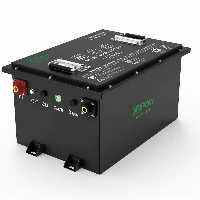
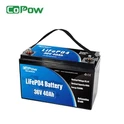
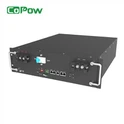
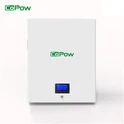
Founded in 2011 and headquartered in Pingshan, Shenzhen, China, CoPow is a company specializing in the research, development, production, and sales of LiFePO4 batteries, with its own battery manufacturing facility.
Our batteries are widely used in the power and energy storage sectors, covering residential, commercial, and industrial applications. It's safe to say that wherever lithium iron phosphate batteries are needed, we can provide a solution.
Among these, electric golf carts, electric forklifts, boats, solar energy storage systems, residential energy storage systems, commercial energy storage systems, industrial energy storage systems, floor scrubbers, and floor sweepers are our key focus areas.
Of course, we also have many customers who purchase our LiFePO4 batteries for use in CCTV systems, robots, mountain bikes, trucks, and vehicle starting applications. Please let us know your specific application, and we will provide you with a comprehensive LiFePO4 battery solution tailored to your needs.
Furthermore, as a Chinese LiFePO4 battery manufacturer, we also offer OEM and ODM customization services. From battery cells, battery management systems, continuous discharge current, peak discharge performance, various communication protocols, smart features, internal and external battery design, protection ratings, and LCD displays, to wiring harness connectors and screws-all components can be selected and customized according to your needs, with transparent pricing.
We will work with you to confirm every detail. Feel free to share your ideas with us-we'll help bring them to life. From the moment you initiate your inquiry, a dedicated customer service manager will assist you until the battery products are delivered to you. Long after that, you're welcome to provide feedback on your user experience or report any issues you encounter at any time.
Contact Information
Email: admin@huanduytech.com
Phone: +86-755-89998295
Office Address: Cheng Tou Xin Times Building, No. 2009 Pingshan Avenue, Pingshan Street, Shenzhen, Guangdong, China
CATL

Contemporary Amperex Technology Co., Ltd. (CATL) is a Chinese manufacturer of power batteries and energy storage batteries. Founded in 2011, the company is headquartered in Ningde, Fujian Province, China.
The company's products include energy storage systems, lithium iron phosphate battery cells and modules, and battery packs for new energy vehicles.
The energy storage systems market is highly competitive, yet it is also a market full of opportunities and profits; as a result, both well-known brands and smaller manufacturers are eager to secure a share of the market.
If you have a generous budget and your energy storage project is very large, CATL is virtually an unavoidable supplier.
More often, however, buyers are small and medium-sized enterprises that procure CATL's highest-quality battery cells for their own use, subject to certain conditions.
It is important to note that purchasing battery cells from CATL is not simply a matter of having the funds; you must prove that you are a battery pack manufacturer or an energy storage system integrator, as CATL does not support the resale of battery cells. Additionally, you must specify the application scenario to demonstrate the potential for long-term cooperation and profitability.
More importantly, you must possess a certain level of production capacity for lithium iron phosphate battery packs and meet minimum purchase volume requirements. In the past, CATL would only supply cells to you if your project reached the GWh scale, and you were required to provide an annual procurement plan.
However, the threshold has now been lowered. If certain conditions are met, you can purchase small batches of energy storage cells in specifications such as 100Ah, 280Ah, and 314Ah.
CATL requires buyers to have the production capacity for LFP battery packs because it does not want its brand reputation to be tarnished by substandard products.
In other words, manufacturers that are able to secure a supply of high-quality lithium iron phosphate cells from CATL are trustworthy, as they have already earned the endorsement of a major brand. CoPow is one such manufacturer.
SVOLT Energy

Founded in 2018 and headquartered in Jintan District, Changzhou City, Jiangsu Province, China, SVOLT Energy was formerly the power battery division of Great Wall Motor. It later became an independent entity, focusing on the research, development, and manufacturing of battery cells, modules, battery packs, and energy storage products.
For buyers, SVOLT Energy primarily offers LFP battery cells, battery modules, power battery packs for new energy vehicles, and energy storage systems.
Among these, power batteries for new energy vehicles are its core business, followed by energy storage batteries. Its customers primarily include new energy vehicle manufacturers, commercial vehicle manufacturers, logistics companies, energy storage system integrators, and photovoltaic companies.
When production capacity allows and orders are sufficient, the company can also supply standard purchasers with prismatic aluminum-cased LFP cells, including models such as LFP 106Ah, LFP 184Ah, LFP 196Ah, LFP 230Ah, and LFP 325Ah. The company primarily sells high-capacity energy storage cells.
In addition, the company is capable of supplying short-knife cells for new energy vehicles, which is one of its unique strengths.
BYD

Founded in 1995 and headquartered in Shenzhen, China, BYD was initially established by its founder, Wang Chuanfu, not to manufacture automobiles, but to develop rechargeable batteries.
In its early years, the company primarily produced consumer electronics batteries, such as nickel-cadmium and nickel-metal hydride batteries, serving supply chain companies in the mobile phone and electronics industries. With the development of the lithium-ion battery and new energy vehicle industries, BYD gradually shifted its core technology toward the field of power batteries.
In the battery sector, BYD primarily sells batteries for new energy vehicles, electric commercial vehicles, energy storage systems, and industrial batteries, while also supplying a small volume of lithium iron phosphate battery cells to the market.
It is important to note that BYD's lithium iron phosphate battery packs are rarely available on the open market; the battery packs it produces are primarily used to support BYD's automotive business and those of select other automakers.
Additionally, battery packs are typically pre-installed in energy storage systems or electric forklifts before being sold. This means that consumers are purchasing not just a battery, but an entire electric vehicle, electric forklift, or energy storage system.
For general buyers, procurement primarily involves BYD's battery cells, which mainly include prismatic aluminum-cased LFP cells, blade cells, and high-capacity LFP energy storage cells. The procurement terms are similar to those of CATL, and general battery assembly factory may not be able to purchase them.
EVE

Established in 2001 and headquartered in Huizhou, Guangdong, China, EVE Energy is one of China's leading lithium-ion battery manufacturers.
In its early years, the company primarily focused on the consumer lithium-ion battery business, with products including small lithium-ion batteries, cylindrical batteries, and primary lithium batteries.
With the development of the new energy vehicle and energy storage markets, EVE Energy has gradually expanded its business scope and has now established a comprehensive product portfolio covering consumer batteries, power batteries, and energy storage batteries.
EVE Energy's battery-related business primarily involves the sale of energy storage systems and battery cells.
In the energy storage sector, EVE Energy provides commercial and industrial energy storage systems, grid-scale energy storage systems, data center backup power solutions, and energy storage systems for telecommunications equipment, all utilizing LiFePO4 battery technology.
In terms of battery cells, EVE Energy primarily offers LFP prismatic aluminum-cased cells for industrial and energy storage applications. Typical models include the LF105, LF280K, LF304, and the high-capacity MB series. Among these, the LF105 (3.2V, 105Ah, LFP) is the most popular cell model and can be assembled into 12V, 24V, and 48V batteries. The resulting battery packs are widely used in golf carts, RVs, marine applications, and backup power systems for telecommunications.
The LF280K (3.2V, 280Ah, LFP) is widely used in battery energy storage systems, with these cells finding greater application in industrial sectors. Additionally, as a manufacturer specializing in cell production, EVE Energy also offers ternary lithium cells.
Finally, it is worth noting that EVE Energy's battery cells offer the best value for money among all suppliers; therefore, CoPow also sources high-quality LFP battery cells from EVE Energy to reduce costs for its customers.
Gotion High-Tech

Gotion High-Tech is a major Chinese manufacturer of power batteries and energy storage batteries that primarily uses LFP battery technology. Founded in 2006, the company is headquartered in Hefei, Anhui Province, China. Its business scope covers LFP materials, battery cells, battery packs, battery management systems, and energy storage systems.
For most buyers, Gotion primarily serves new energy vehicle and commercial vehicle manufacturers (Gotion's largest market), energy storage system companies (an area where Gotion has experienced rapid growth in recent years), and LiFePO4 battery pack manufacturers such as CoPow.
If you wish to assemble your own lithium iron phosphate battery packs, Gotion can provide you with lithium iron phosphate prismatic aluminum-cased cells, including the IFP27175200A, IFP53148117, and IFP54173205. These five cell models all have a nominal voltage of 3.2V, with capacities ranging from 100Ah to 340Ah; most of them are designed for energy storage systems.
Among them, the Gotion IFP81175200 (300Ah) is one of the models commonly used by LiFePO4 battery pack manufacturers. This cell has an energy capacity of 960 Wh and a cycle life exceeding 6,000 cycles, making it suitable for 48V/51.2V forklift batteries, AGV batteries, commercial and industrial energy storage cabinets, and energy storage containers. These batteries are composed of 16 cells connected in series; for example: 3.2 V × 16 = 51.2 V.
In addition, other cell models frequently procured by manufacturers include the Gotion IFP72175207 (314Ah), Gotion IFP81175200A (340Ah), and Gotion IFP27175200A (105Ah).
In terms of pricing, the direct purchase price for these cells ranges from approximately $7 to $60. If you choose to purchase through a distributor, the price will be about $5 higher.
CALB

CALB was founded in 2007 and is headquartered in Changzhou, Jiangsu Province, China. Along with EVE Energy, it belongs to the second tier of China's leading battery companies. Its main products include power batteries for new energy vehicles, energy storage systems for industrial and commercial applications, and battery cells.
For general buyers, CALB offers high-capacity LFP and ternary battery cells. Among these, CALB's 314Ah LFP cell, 280Ah LFP cell, and 230Ah LFP cell are the three models most favored by buyers and are highly popular in the energy storage market. Cell prices range from $17 to $76 per cell; while slightly higher in price, the quality is indeed excellent.
CALB originated within the aerospace industry and possesses unique R&D expertise in battery safety and service life. Its transition from aerospace-grade and military-grade to civilian-grade products does not represent a downgrade but rather an adaptation to market trends.
After all, the explosive growth of the new energy vehicle industry has created a much larger market for power batteries and energy storage batteries. Strategic business leaders will choose to shift from the small-scale, high-barrier specialty battery market to pursue corporate growth.
We can understand their strategic approach this way: an airplane, a satellite, or a piece of aerospace equipment may require only tens or even hundreds of kilograms of batteries, whereas a single new energy vehicle requires tens to hundreds of kilograms of batteries. Furthermore, with millions of new energy vehicles produced globally each year, the scale and profit potential are on an entirely different level.
Sunwoda

Founded in 1997 and headquartered in Shenzhen, China, Sunwoda is a comprehensive lithium-ion battery manufacturer. Although its market position in the power battery sector is slightly behind that of leading companies such as CATL, BYD, EVE, and CALB, Sunwoda still has the capabilities to make it onto this list.
The company initially focused on producing lithium-ion batteries for consumer electronics, such as those used in cell phones, power tools, and smart devices. With the growth of the new energy vehicle and energy storage markets, Sunwoda has stepped up to the plate, joining this fierce market competition and thriving in the process.
The company primarily sells consumer lithium-ion batteries (including those for cell phones, laptops, tablets, smartwatches, and other products), power batteries for new energy vehicles, energy storage systems (including residential, commercial, and industrial applications), certain industrial batteries (such as AGV batteries and robot batteries), as well as prismatic LFP and ternary lithium battery cells for new energy vehicles, energy storage systems, and industrial equipment.
However, their battery cells are not sourced by as many lithium iron phosphate battery pack manufacturers as those from EVE and CALB. If you are looking to purchase, please carefully inquire about the relevant specifications.
Overall, Sunwoda continues to focus primarily on sales of batteries for new energy vehicles and energy storage systems.
So, why has Sunwoda been able to join the ranks of leading companies?
Because the company has long specialized in the consumer electronics battery sector, possesses large-scale manufacturing capabilities, has a strong base of automotive clients, and has capitalized on opportunities in the energy storage market, thereby accumulating extensive resources in the lithium-ion battery industry.
Hithium

If you're looking for a high-quality yet affordable lithium iron phosphate energy storage system, HiTHIUM's energy storage systems are an excellent choice. HiTHIUM specializes in the research, development, and production of energy storage batteries and systems.
In 2025, HiTHIUM ranked second in energy storage battery shipments, trailing only CATL. Founded in 2019, HiTHIUM's ability to achieve such significant results in such a short period of time is a testament to its outstanding performance across the board.
So, what exactly are their strengths? The answer lies in their energy storage systems and battery cells.
In terms of energy storage systems, large-scale commercial and industrial (C&I) storage and utility-scale storage are highly favored by customers.
Examples include the Block 261kWh C&I Energy Storage Cabinet, the Block 418kWh Energy Storage Cabinet, the Power 6.25MWh Energy Storage System (a flagship product), and the HeroEE Home Energy Storage System.
Among these, the Power 6.25 MWh Energy Storage System is a grid-scale energy storage container with a capacity of 6.25 MWh. Composed of 587 Ah LFP cells and housed in a 20-foot container, it is suitable for photovoltaic power plants, wind power storage, grid peak shaving, and large-scale standalone energy storage plants.
Its advantage lies in the large capacity of its battery cells, which eliminates the need to install a large number of cells. This reduces the number of BMS nodes and connection points, thereby lowering the probability of failure and reducing installation costs.
In addition, what customers appreciate most is the system's ability to store energy for extended periods. The energy storage system can store energy not only for 2 hours but also for 8 hours or even longer. Hithium's ∞Power 6.9 MWh 8h model is specifically designed for the long-duration energy storage market.
In terms of battery cells, Hithium primarily supplies ultra-high-capacity LFP cells specifically designed for large-scale energy storage. Among these, some of the most representative flagship cells include the Hithium 314Ah LFP cell, the Hithium 587Ah LFP cell, the Hithium 1175Ah LFP cell, and the classic Hithium 280Ah LFP cell. The cycle life of these cells ranges from a minimum of 7,000 cycles to a maximum of 11,000 cycles.
Furthermore, Hithium's cell prices are quite competitive. Currently, the market price for Hithium's 314Ah LFP energy storage cells ranges from approximately $0.045 to $0.05 per Wh, equivalent to about $48 per cell.
Overall, Hithium is a new energy storage system manufacturer worth keeping an eye on.
REPT Battero

REPT BATTERO is another Chinese LiFePO4 battery manufacturer. Its market positioning is similar to that of Hithium, but its business scope is broader, covering energy storage cells, power batteries, and batteries for industrial applications.
Founded in 2017, the company is part of Qing Shan Holding Group's new energy strategy. Leveraging Qing Shan's strengths in nickel and lithium resources and its supply chain, REPT has successfully entered the lithium-ion battery industry.
Currently, REPT has joined the global top tier of energy storage cell manufacturers. According to public information, REPT's energy storage cell shipments are projected to rank among the top five globally by 2025, and the company has also demonstrated strong performance in the residential energy storage cell sector.
REPT's main products include LFP power and energy storage cells, residential and commercial/industrial energy storage systems, and industrial power batteries (including for forklifts, AGVs, construction machinery, heavy-duty trucks, and marine vessels). REPT's strength lies in its affiliation with Qingshan Group, which provides access to abundant resources.
Qingshan Holdings is a major global nickel resource company and a key player in the new energy materials industry. With Qingshan's backing, REPT can secure greater support in raw material supply, cost control, and global supply chain management.
Second, by adopting the Wending technology roadmap, REPT focuses primarily on cell space utilization, internal resistance, cycle life, and safety. For example, its 314Ah/320Ah cells offer higher capacity while featuring a more compact system footprint and lower internal resistance.
Their energy storage systems are primarily targeted at grid operators, renewable energy power plant developers, industrial and commercial enterprises, energy storage system integrators, and residential energy storage brands. Typical projects include the Waratah Super Battery in Australia, the Fort Stockton project in Texas, and the Calistoga project in California.
If you are looking to purchase battery cells, you can choose from the following popular models: 314Ah LFP cells, 314Pro cells, 280Ah LFP cells, 392Ah LFP cells, and 587Ah/588Ah LFP cells. Prices range from $35 to $120, and these are primarily energy storage cells.
Key Factors to Consider When Choosing a LiFePO4 Battery Manufacturer
To help you find the right lithium iron phosphate battery manufacturer, we've compiled some guidelines to help you avoid unscrupulous suppliers.
1. Factory Capabilities and Production Capacity
When selecting a lithium iron phosphate battery manufacturer, the first step is to evaluate its production capacity, including factory size, production equipment, number of production lines, and quality management system.
A qualified lithium iron phosphate battery manufacturer should meet the following criteria: ownership of its own production facility, a mature battery pack production line, a comprehensive production management system, and extensive project experience.
In particular, distributors importing lithium iron phosphate batteries from China often have concerns about manufacturers suddenly disappearing. Therefore, a legitimate manufacturer should have a track record of at least five years in operation and not be a shell company.

2. Cell Quality and Supply Chain
In the lithium iron phosphate battery industry, resources are crucial. REPT Battero, Hithium, and Gotion-all of which we mentioned earlier-have built their businesses on the strength of their robust backgrounds.
Of course, for smaller brands like CoPow, we take a "small but refined" approach. Although our resources are not as substantial as those of top-tier brands, we have established deep partnerships with companies such as CATL, BYD, and EVE Energy, enabling us to secure high-quality battery cell resources immediately and gain priority access to the latest R&D products.
In addition to battery cells, our BMS and component resources also come from well-known suppliers, with whom we have signed long-term cooperation agreements, ensuring greater reliability in terms of both quality and cost.

3. Battery R&D Capabilities and Customization Capabilities
How can you determine whether the company you're dealing with is merely an assembly plant, or a professional lithium iron phosphate battery manufacturer with independent R&D capabilities, project experience, and unique insights into customization?
You can evaluate their R&D team, actual project experience, customer reviews, the customization options they offer, and the level of customization available. Additionally, consider whether they can customize components such as the battery management system, LCD display, and application backend. You should only choose a manufacturer that has truly integrated the entire assembly and customization process.
Just imagine how many problems would arise if a manufacturer simply assembled various components into a lithium iron phosphate battery pack. Quality issues aside, even compatibility would be difficult to guarantee.
CoPow is precisely such a manufacturer-one with its own battery R&D team and extensive customization experience. We'll start by working with you to finalize the prototype, ensuring full transparency on all details and respecting your input.

4. Quality Control and Testing Processes
Small workshops may not have such complex and rigorous factory inspection processes. They may only conduct basic capacity and voltage tests, while advanced tests that affect your user experience-such as incoming inspection of battery cells, cell capacity sorting and pairing, voltage and internal resistance testing, laser welding inspection, BMS protection function testing, charge-discharge testing, and aging testing-may not be performed.
This means that while the product you receive may appear to be in good working order, various issues may arise over time, such as battery life falling short of specifications, short cell lifespan, frequent BMS protection triggers, sudden power loss, or the inability to charge. We have received numerous reports of similar issues from customers.
Testing is one thing, but CoPow will send you the test results directly in document form, including videos, images, and other materials. You are also welcome to visit our factory and conduct the tests alongside me.

5. Certifications and International Market Experience
How can you import lithium iron phosphate batteries from China without the proper certifications? Moreover, certification is just the foundation; the key lies in whether we hold other specific certifications and whether we can help customers import their products smoothly.
Typically, the certifications we need to provide include: UN38.3, MSDS, CE, IEC 62619, UL 1973, RoHS, FCC, and others. These certifications not only demonstrate that the products meet safety standards-facilitating transportation, customs clearance, and market sales for customers-but also reflect the maturity of the manufacturer's product standards and service systems.
CoPow holds all of these certifications, and we can assist you throughout the entire import process, providing the necessary support. Additionally, if you have specific certification requirements, we can help you address them as appropriate. We welcome you to submit your requests.

6. Industry Application Experience
Why do we prefer to buy batteries from well-known brands? Because many people have already purchased them, and others have tested them for you, proving that they work, are reliable, and are worth the investment. Therefore, we make every effort to find manufacturers with proven real-world application cases. No amount of marketing can compare to user reviews.
Suppliers with practical application experience better understand your needs and pain points. For example, CoPow knows which controller is best suited for your golf cart and understands how to ensure the battery works seamlessly with the motor, giving you greater peace of mind.
When it comes to forklift batteries, we know how to ensure smooth communication between the battery and your vehicle. For marine batteries, we know how to effectively prevent moisture and minimize water accumulation.

7. After-Sales Service and Technical Support
How to handle issues that arise after purchase is a common concern among international customers.
Most manufacturers offer a warranty for a certain period and provide necessary technical support. Even if Chinese lithium iron phosphate battery manufacturers cannot be on-site in person, they can help you resolve issues through remote connections or local distributors.
If you encounter a particularly difficult problem, some manufacturers will even visit your site in person to work with you to resolve it.
For example, CoPow visits customers at their locations in person every year to understand their user experience and any issues they have encountered.


What Can Be Customized in a CoPow LiFePO4 Battery Pack?
Are you looking for OEM or ODM services, or would you like to design your own high-performance lithium iron phosphate battery? Take a look at what we can offer you.
| Customization Item | What Can Be Customized | Typical Applications |
|---|---|---|
| Battery Voltage | 12V, 24V, 36V, 48V, 72V, 80V or other voltage systems | Golf carts, forklifts, marine, RV, ESS |
| Battery Capacity | Custom capacity from small to large energy requirements | Backup power, industrial equipment, energy storage |
| Battery Size & Structure | Custom dimensions, housing design, mounting holes, brackets, and installation position | OEM equipment integration |
| Battery Cell Selection | Selection of suitable LiFePO4 cells based on performance, cost, and application requirements | Industrial batteries, ESS, vehicles |
| BMS Functions | Current rating, protection settings, SOC calculation, sleep/wake function, and safety logic customization | Forklifts, golf carts, marine, ESS |
| Communication Protocol | CAN, RS485, Bluetooth, Modbus, and other communication options | Smart vehicles and energy systems |
| Display & Monitoring | LCD screen, SOC display, Bluetooth APP, remote monitoring, GPS tracking | Fleet management, smart battery systems |
| Thermal Management | Heating system, temperature sensors, cooling design, and low-temperature protection | Cold climate and outdoor applications |
| Battery Housing | Plastic, steel, aluminum alloy, waterproof enclosure, and protection design | Marine, industrial, outdoor applications |
| Connectors & Terminals | M8 terminals, Anderson connectors, custom cables, and wiring solutions | Plug-and-play battery replacement |
| Software & Firmware | BMS parameter adjustment, charging/discharging logic, communication settings | OEM and special applications |
| Certifications & Documentation | UN38.3, MSDS, CE, IEC62619, UL, RoHS, and other required documents | Global markets and commercial projects |
Not only that, but if you have any ideas, please feel free to share them with us-we'll provide you with a comprehensive solution.

What Is CoPow's Manufacturing Scale and Production Capacity?
We are fully committed to the R&D, production, and sales of lithium iron phosphate batteries! Our factory covers an area of 32,000 square meters and employs over 400 people. The facility is equipped with five automated battery pack production lines and four automated packaging lines, ensuring a fast and efficient production process.
Our annual production capacity reaches 2 GWh, which means we can produce up to 50,000 sets of lithium iron phosphate battery packs per month-a level that most factories simply cannot match.


The CoPow Team
We have a professional R&D and design team specializing in lithium iron phosphate batteries, as well as a customer service team with expertise in battery technology.
In addition, we have several other teams that work closely together to ensure that every issue is resolved efficiently and promptly. From the moment you submit an inquiry through to after-sales service, our team will provide ongoing support to ensure you receive a high-quality service experience.

Conclusion
A lithium iron phosphate battery manufacturer is a company that has its own factory, R&D team, production processes, manufacturing experience, and a set of necessary qualifications.
This article introduces 10 LiFePO4 battery manufacturers worth considering and trusting. Whether you are looking for a partner for energy storage systems, automotive batteries, golf carts, boats, RVs, solar power generation, or industrial equipment (such as forklifts, lifting equipment, aerial work platforms, mining equipment, floor scrubbers, sweepers, robots, and AGVs) that utilize LiFePO4 technology, you will find the answers you need in this article.
Finally, please allow us to introduce ourselves once again. CoPow is a professional manufacturer of lithium iron phosphate batteries.
We can provide you with high-quality batteries at competitive prices and offer flexible customization services for most application areas covered by lithium iron phosphate technology.
If you are interested in our products, please feel free to contact us at any time. Our service team will respond to your message within 24 hours.
FAQ
Which LifePo4 Battery Suppliers in North America Offer Both Design Services and Large-Scale Manufacturing?
In North America, suppliers capable of providing both prototyping and mass production of lithium iron phosphate batteries include Ion Frontier, headquartered in Reno, Nevada; ULTION Technologies; and Our Next Energy, based in Michigan.
Which LiFePO4 Manufacturers Are Best for Volume Purchase and Long-Term Supply Stability?
If you are focused on large-scale procurement capabilities and long-term supply stability, the most notable global manufacturers of lithium iron phosphate batteries currently include CATL, BYD, EVE Energy, Gotion High-Tech, CALB, SVOLT Energy, and REPT Battero.
These companies possess large-scale automated production facilities, mature supply chain systems, and extensive experience serving global OEMs and energy storage projects, enabling them to consistently ensure stable production capacity and product quality.
Among LFP Battery Manufacturers, Which Offers the Most Reliable and Cost-Effective ESS Solution, and Why?
When considering product reliability, project experience, system maturity, and overall cost together, CATL, BYD, and Hithium currently possess the strongest overall competitiveness in the energy storage sector.
Among them, CATL is the most widely adopted in large-scale energy storage projects worldwide, demonstrating outstanding technical maturity and long-term stability.
BYD, leveraging its vertical integration capabilities from battery cells to complete systems, holds advantages in safety and system consistency; meanwhile, Hithium, which focuses exclusively on the energy storage market, has demonstrated strong competitiveness in cost control and the development of battery cells specifically designed for energy storage.
What Are the Best Industrial LiFePO4 Battery Cells for Large-Scale Energy Storage Projects?
In large-scale energy storage projects, the industry generally agrees that the best industrial-grade lithium iron phosphate (LFP) battery cells for long-term, stable operation are primarily supplied by CATL, BYD, EVE Energy, and Gotion High-Tech. These suppliers-Gotion High-Tech, CALB, and REPT Battero-offer high-capacity industrial LFP cells.
These cells demonstrate stable and mature performance in terms of energy density, cycle life, safety, and thermal management, and they are backed by global mass production capabilities and well-established supply chains. Suitable for large-scale energy storage systems such as grid-side storage, commercial and industrial (C&I) storage, and large-scale microgrids, these cells are currently the most widely used industrial-grade LFP cells on the market.
Which Company Has the Most Impressive Portfolio of Completed LFP-Based ESS Projects?
Among the large-scale lithium iron phosphate energy storage system projects that have been completed, CATL stands out as the most impressive, with the widest global adoption and the most extensive track record. Not only does it operate a large number of grid-side and large-scale energy storage installations in China, but it also has numerous commercial-scale projects in many countries overseas.
How Do the Top LFP Manufacturers Compare in Terms of Cycle Life and Total Cost of Ownership?
In terms of cycle life and total cost of ownership, mainstream lithium iron phosphate battery manufacturers all perform well, though their areas of focus differ slightly.
Overall, battery cells from industry leaders such as CATL and BYD are more mature in terms of cycle life, high- and low-temperature resistance, and consistency. They can effectively reduce system replacement costs, thereby achieving a lower total cost of ownership.
Meanwhile, cells from major manufacturers like EVE, Gotion, and CALB belong to the second tier; they offer better value for money and stronger control over material costs, making them competitive in terms of total cost of ownership as well.