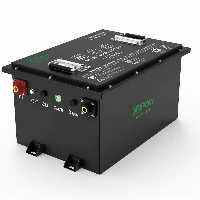
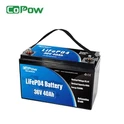
Here, we can tell you with certainty: In 2026, selling lithium-ion batteries for golf carts will still be a profitable business.
We have analyzed relevant data released by major market research firms and, in conjunction with the recent market performance of lithium-ion golf cart battery manufacturers, have identified 8 key factors driving the market's continued growth:

1. The trend toward upgrading from lead-acid to lithium-ion batteries continues to accelerate.
Is the major trend of "switching from lead-acid to lithium-ion batteries" in golf carts still ongoing? This is a question on the minds of many distributors.
Lithium-ion batteries began entering the golf cart battery market as early as 2015. By 2020, as cell prices fell and Chinese cell manufacturers such as CATL, BYD, and EVE began supplying at scale, lithium-ion golf cart batteries entered a phase of rapid growth, with an increasing number of dealers and retrofitters promoting them.
It wasn't until 2023 that the market began adopting lithium-ion batteries on a large scale.
Now that we're in 2026, what is the current situation? The answer is: the trend of replacing lead-acid batteries with lithium-ion ones has not only continued but is actually growing.
According to data from multiple market research firms, the golf cart battery market will continue to grow in the coming years.
For example, Lucintel's Golf Cart Lithium Battery Market Report predicts that the global golf cart lithium-ion battery market will maintain growth from 2025 to 2031, driven primarily by the widespread adoption of electric vehicles, increased investment in golf courses, and user demand for high-efficiency, low-maintenance batteries.
Meanwhile, Research and Markets, citing data from TechSci Research, notes that the global golf cart battery market is projected to grow from approximately $2.23 billion in 2025 to approximately $3.49 billion in 2031, at a compound annual growth rate (CAGR) of about 7.75%. One of the key drivers of this market growth is the trend toward electrification and the replacement of lead-acid batteries with lithium-ion batteries.
By 2026, the lithium-ion golf cart battery market had entered a more mature phase.
Early market opportunities stemmed from educating users about lithium-ion batteries, whereas current opportunities primarily lie in helping the large installed base of lead-acid golf carts complete the transition to lithium-ion technology.
Globally, there remains a large number of golf carts that have been using lead-acid batteries for many years and will face battery replacement needs in the coming years. Thanks to their longer service life, higher usable capacity, faster charging speeds, and lower maintenance costs, lithium-ion batteries have become the preferred choice for an increasing number of users when upgrading.


2. Golf carts are evolving from purely recreational vehicles to multi-purpose transportation options.
In the past, golf carts were primarily used for transportation on golf courses, but in recent years, their applications have continued to expand, gradually evolving from vehicles used solely for leisure and recreation into multipurpose low-speed vehicles.
According to Battery Council International (BCI), golf carts are now widely used in retirement communities, resorts, industrial parks, commercial facilities, and other settings requiring short-distance transportation, and are no longer limited to golf courses.
At the same time, traditional golf cart manufacturers such as Club Car, E-Z-GO, and Yamaha are expanding their product lines, extending their offerings from golf carts to personal mobility vehicles, utility vehicles, and commercial vehicles.
This indicates that golf carts are evolving from recreational equipment into more practical everyday mobility solutions, and the requirements for golf cart batteries have increased accordingly.

3. Lithium-ion golf cart batteries offer higher profit margins (greater product value-added).
For many dealers looking to enter the golf cart battery market, market size and demand growth are only secondary considerations; what matters most is whether the product can generate sufficient profit margins.
Market competition is shifting from price competition to value competition.
Compared to lead-acid batteries, lithium-ion golf cart batteries have evolved from ordinary consumable parts into high-value-added upgrade products.
In the past, the golf cart battery market was long dominated by lead-acid batteries, resulting in severe product homogenization.
When making a purchase, users often focused primarily on price, leading to a race to the bottom among dealers and squeezing profit margins.
The key to selling lithium-ion batteries lies in providing users with a better driving experience and greater value, including a longer service life, higher effective capacity, faster charging speeds, lower maintenance costs, and an intelligent Battery Management System. These advantages enable lithium-ion batteries to command higher prices.
Upgrading to lithium-ion batteries can create more opportunities for value-added sales.
Upgrading to lithium-ion batteries involves a complete retrofit and system integration.
Dealers can offer a range of services, including lithium-ion batteries, dedicated chargers, battery mounts, displays, Bluetooth monitoring, GPS tracking, and customized installation solutions, all of which provide dealers with additional sources of revenue.

4. The maturity of China's lithium-ion battery supply chain has reduced procurement costs.
Why does China's lithium-ion battery supply chain have such a significant impact on the golf cart battery market? There is a clear logical chain behind this.
As one of the world's largest lithium-ion battery manufacturing hubs, China has developed a highly mature lithium-ion battery supply chain that encompasses multiple stages, including cathode materials, anode materials, electrolytes, separators, battery cells, battery management systems, structural components, and complete battery pack manufacturing.
The more mature the industry chain, the more pronounced the economies of scale, and the lower the manufacturing costs. China's lithium-ion battery industry chain has brought these benefits to the global market, enabling consumers worldwide to purchase high-quality lithium-ion golf cart batteries at lower prices.
In particular, overseas distributors can source products with comparable or even higher specifications at lower procurement costs, thereby securing greater profit margins. These profits do not stem from the products themselves but from the cost advantages of the supply chain.
In recent years, as prices for Chinese LFP battery cells have continued to decline and supply chain efficiency has steadily improved, the price advantage of Chinese-made lithium-ion golf cart batteries in the international market has become increasingly evident.
For example, the retail prices of well-known brands such as ECO Battery, Allied, and Bolt Energy on the U.S. market currently range from $2,200 to $3,400. In contrast, many Chinese brands-such as CoPow-that use top-tier battery cells from manufacturers like CATL, BYD, and EVE typically have export prices that are only half or even less than those of these well-known brands.
With the same procurement budget, dealers can purchase approximately two sets of Chinese-brand products or opt for models with higher specifications and greater capacity, thereby achieving higher sales profits and stronger market competitiveness.
Of course, this does not mean that all Chinese brands offer the same level of quality. The truly worthwhile choices are professional lithium golf cart battery manufacturers that possess mature R&D capabilities, strict quality management systems, and comprehensive after-sales service systems.

5. User demand for high-performance electric driving experiences continues to rise.
Today, consumers' expectations for electric golf carts are no longer limited to simply being able to drive them.
As more and more brands enter the market, consumers have more choices and are beginning to pay closer attention to product quality, range, user experience, and the level of vehicle intelligence.
Although this competition has made the market more intense, it presents greater opportunities for truly capable dealers, as the market has gradually shifted from price competition to competition based on products and solutions. High-quality, deeply customized lithium-ion golf cart batteries are becoming increasingly popular among consumers.
For buyers, there are now more factors to consider when purchasing a lithium-ion battery system than ever before.
In addition to capacity and price, they must also consider how to select cell brands, whether the series-parallel configuration is appropriate, whether the internal resistance consistency is sufficiently high, whether the continuous discharge current and peak discharge capacity can meet the vehicle's requirements, whether low-temperature charging protection is comprehensive, whether the positions and dimensions of the positive and negative terminals are compatible with the original vehicle's structure, and whether the Battery Management System supports CAN communication, Bluetooth monitoring, and State of Charge display, as well as whether it can communicate properly with the control systems of models such as Club Car, EZGO, and Yamaha.

These increasing demands essentially indicate that the market is becoming more mature, and consumers are willing to pay higher prices for better products.
From a business perspective, this actually enhances the added value of lithium-ion golf carts.
In the past, many products could only compete on price. Now, however, dealers can create more value for customers through higher-quality products, more comprehensive configurations, and more professional customization solutions, thereby securing higher profit margins.
Of course, dealers do not need to become battery technology experts themselves.
An increasing number of overseas dealers are choosing to partner with lithium-ion golf cart battery manufacturers that possess R&D and customization capabilities.
They entrust tasks such as cell selection, structural design, battery management system development, CAN protocol adaptation, product certification, and the development of comprehensive solutions to professional teams, while focusing on marketing and customer conversion. In fact, this is also a key reason why many customers choose CoPow.
In addition to offering standardized products, we can provide in-depth customization solutions tailored to different vehicle models, control systems, and application scenarios, helping dealers more quickly meet the ever-evolving needs of end users and gain a stronger competitive edge in an increasingly competitive market.

What Challenges Should You Consider Before Selling Lithium Golf Cart Batteries?
If you are planning to sell lithium-ion battery-powered golf carts, you need to fully understand the following seven practical challenges before entering this market:
High Initial Investment Costs
Lithium-ion batteries cost more than 50% as much as lead-acid batteries, which is to be expected given their superior performance. However, in recent years, lithium-ion battery prices haven't necessarily been as high as one might imagine. If you're willing to compromise slightly on the quality of the battery cells and components, it's possible to get a battery for as low as $800.
For dealers and distributors, buying in bulk is more cost-effective, and if the market performs well, there won't be significant inventory pressure.
Especially if you choose a supplier like CoPow, which offers exceptional value for money, you won't have any trouble selling the batteries.
We've established deep, long-term partnerships with multiple dealers spanning as long as seven years. We enjoy high customer repeat purchase rates and can freely customize the appearance, features, and dimensions of our products to suit market preferences.
Vehicle Compatibility Requirements
Not all golf carts are compatible with a direct replacement of their lithium-ion batteries.
Before sale, it is necessary to confirm compatibility issues such as the vehicle's voltage platform, charger, controller, DC-DC converter, wiring harness connectors, and whether CAN communication is required.
If compatibility is not clearly confirmed, it may not only affect the vehicle's normal operation but also lead to after-sales service disputes.
A customer once reported to us that he had previously used a 36V lead-acid battery but later switched to a 48V lithium-ion battery from another brand, only to find that the vehicle would not operate normally.
This is not surprising, because when a vehicle is upgraded from 36V to 48V, not only does the battery voltage change, but the existing electrical system must also be upgraded accordingly.
Without a DC-DC voltage converter (Voltage Reducer) to convert 48V DC to 12V DC, 12V electrical components on the vehicle-such as lights, horns, and instrument panels-will not function properly and may even be damaged.
The CoPow Golf Cart Lithium Battery Conversion Kit has already addressed these compatibility issues.
Whether you're performing a voltage-equivalent upgrade (e.g., 36V to 36V or 48V to 48V) or a cross-voltage upgrade (e.g., 36V to 48V or 48V to 72V), we can provide you with a comprehensive solution, including lithium-ion batteries, battery chargers, DC-DC voltage converters, installation harnesses, and other related accessories.
Varying Quality Among Suppliers
A customer once complained to us that he had purchased more than 100 lithium-ion batteries for golf carts from a manufacturer.
After selling them to consumers, they all reported: "The quality of these batteries is terrible. They constantly have all sorts of problems-either they won't charge or they suddenly shut down. We'll never consider this brand again."
As a result, this customer's store went out of business, and he was unable to contact the supplier. In the end, the promises made by that salesperson turned out to be nothing but lies. It's truly disheartening that he prioritized his personal sales targets over the customer's experience.
We deeply sympathize with this customer's ordeal and hope that major manufacturers will show more sincerity and less deception.
Stricter Transportation and Regulatory Requirements
Lithium batteries are classified as hazardous materials and must comply with transportation requirements such as UN38.3 and MSDS during export. In addition, different countries and regions may require product certifications such as UL and CE.

After-Sales Service Capabilities Determine Long-Term Competitiveness
Lithium-ion batteries for golf carts are technical products. Customers may require professional technical support during installation, commissioning, battery management system configuration, fault diagnosis, and the warranty process.
If a supplier cannot provide timely after-sales service, a stable supply of spare parts, and a comprehensive warranty policy, dealers will face greater after-sales service pressure, which will also impact brand reputation and customer repeat purchase rates.
By choosing CoPow, you'll receive 5 to 10 years of after-sales service coverage. During this period, you can contact us at any time if you have any issues. Additionally, we'll assign you a dedicated account manager and R&D engineer to provide one-on-one professional guidance.
Conclusion
Overall, the sales of lithium batteries for golf cart in 2026 still hold growth potential and profit margins, but competition has gradually shifted from the price-based competition of the past to a comprehensive competition centered on products, technology, and services.
For dealers, the opportunity lies in providing customers with comprehensive upgrade solutions-and this is impossible without the support of an excellent lithium-ion golf cart battery manufacturer. Not only can they help you enhance consumer brand recognition, but they can also generate more profit and value for you, helping you maintain business success for many years to come.
Please feel free to contact us so we can work together to achieve greatness and create a win-win situation!