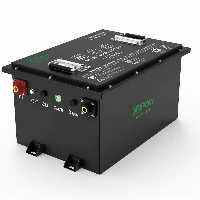
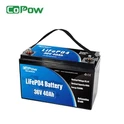
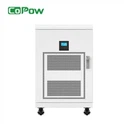
Lithium-ion batteries-particularly LiFePO4 batteries with self-heating capabilities-can be used in cold storage forklifts and serve as a superior alternative to lead-acid batteries in many cold chain logistics applications.
Lithium-ion batteries optimized for low temperatures not only function properly in cold storage environments but also offer higher efficiency, lower maintenance costs, and a longer service life compared to lead-acid batteries. We will explain the specific reasons in detail below, so please continue reading.

What Challenges Do Forklift Batteries Face In Cold Storage Environments?
For a long time, forklift batteries have faced issues such as reduced runtime, condensation penetration, charging difficulties, and the need for multiple spare batteries in cold environments-problems inherent to the batteries themselves. In addition, refrigerated goods require faster turnaround times.
Forklifts need to quickly move goods out of cold storage. Under such time-sensitive conditions, frequent battery recharging or battery malfunctions can cause delays, leading to food spoilage or melting-something that is simply unacceptable in cold-chain logistics.
Just imagine the losses that would result if goods spoiled before they were even fully removed from the warehouse!
Why Are Lithium-Ion Forklifts Being Considered For Cold Storage Applications?
The problem must be solved by the one who created it. Let's first take a look at what makes lithium-ion batteries so exceptional that they can replace lead-acid batteries and become the new choice for cold storage forklifts.
It maintains stable power output even in low-temperature environments.
The temperature in cold storage facilities used to store food and goods is typically below 0°C, sometimes as low as -18°C or -30°C, and standard batteries struggle to withstand such conditions.
For example, the lead-acid batteries we used in the past would experience a significant drop in performance in such extremely cold environments; both their capacity and power would be greatly reduced, severely impacting handling efficiency.
Furthermore, certain fresh foods-such as dairy products, fresh meat, and fresh fish-must be stored at temperatures between 2 and 8 degrees Celsius, while others, like ice cream, must be stored at temperatures below -18 degrees Celsius. Under these conditions, forklifts powered by lead-acid batteries struggle to handle the workload.
Lithium-ion batteries, on the other hand, perform much better because their normal operating temperature range is between -20°C and 60°C, which perfectly covers the temperature range required to preserve these goods. This means that whether in low-temperature or normal-temperature environments, the capacity and power output of lithium-ion batteries remain essentially unchanged.
Reducing the Number of Spare Batteries
In many cases, you need to purchase two lead-acid batteries, keeping the extra one as a spare. This is especially important if you need to work multiple shifts.
We know that the performance of lead-acid batteries drops significantly in cold storage environments, so you may need to replace and rotate them frequently.
In such a demanding material-handling environment, spending a significant amount of time removing and installing batteries is a major hassle.
The advantage of lithium-ion batteries is their long runtime, which can meet your daily operational needs without the need for frequent recharging during the workday, and they do not need to be removed for charging. However, if you are switching from lead-acid batteries to lithium-ion batteries, you will need to reinstall the charging stations.
Prevent condensation issues caused by temperature differences between the inside and outside of the cold storage facility.
Condensation issues should not be overlooked; although the seals on lead-acid batteries have been optimized, frequent entry and exit from the cold storage facility can still lead to problems.
Your forklift may undergo multiple cycles from low temperatures to room temperature every day.
If the seals are not properly secured, moisture can seep in through gaps, causing internal electronic components-such as communication systems, sensors, and other precision parts-to come into contact with water and become damaged. Furthermore, external metal parts, such as battery terminals, may rust.
Condensation issues are also unavoidable for lithium-ion batteries-after all, this is a law of physics-but preventive measures can be taken. Lithium-ion batteries feature a fully sealed enclosure design with protection ratings ranging from IP65 to IP67. These protective measures not only effectively block moisture but also enhance the battery's resistance to shock and impact.
Allows for normal charging without damaging the battery
Although lead-acid batteries can be charged at low temperatures, charging efficiency decreases significantly, and charging at inappropriate temperatures can lead to severe sulfation issues. This not only reduces battery capacity but may also cause further permanent capacity loss due to charging at low temperatures.
Furthermore, lithium-ion forklift batteries without self-heating capabilities are not suitable for charging below 0°C; otherwise, lithium precipitation may occur, resulting in a permanent decrease in battery capacity.
Therefore, major manufacturers of lithium-ion forklift batteries incorporate built-in preheating modules to ensure the batteries return to room temperature before charging.

How Do Thermal Management Systems Improve Lithium Forklift Battery Performance In Cold Storage?
The thermal management system-specifically the preheating function-is ingenious in that it addresses the issues of reduced battery performance and limited charging capacity in low-temperature environments.
First, it maintains stable power output, preventing problems such as reduced battery capacity and insufficient power caused by excessively low temperatures.
There is a logical relationship between low temperatures and battery performance: when the ambient temperature drops below 0°C, the rate of internal chemical reactions in the battery slows, the internal resistance of the battery cells increases, and the output voltage decreases, leading to issues such as insufficient power, reduced lifting speed, and shorter operating time.
The preheating function reduces heat loss through insulating materials and uses active heating methods-such as heating films and heating plates-to maintain cell temperatures within an appropriate operating range. This enables the battery to deliver a continuous and stable current, ensuring the forklift's operational efficiency.
Second, it resolves the difficulty of charging in low-temperature conditions.
Specifically, the Battery Management System monitors cell temperature in real time. When excessively low temperatures are detected, the system prioritizes the use of power from the charger to activate the heating function, raising the cell temperature to a safe charging level before initiating normal charging. This prevents damage to the battery caused by charging at low temperatures and supports charging operations in cold storage facilities.
How Should Lithium Forklift Batteries Be Charged In Freezer And Cold Storage Areas?
Currently, many users are still using batteries that do not have a preheating function. Despite this, these batteries can still be charged; however, users must preheat them themselves, which is somewhat more troublesome. Next, let's take a look at what precautions to take when charging forklift batteries in cold environments.
1. Use lithium-ion batteries with a self-heating function and charge them directly inside the cold storage facility.
If the forklift's lithium-ion battery is equipped with a low-temperature heating system, it can be charged directly by connecting a charger in the cold storage environment.
During charging, the Battery Management System first detects the cell temperature. If the temperature is below the safe charging range, the system automatically activates the PTC heater or heating film to warm the cells to a temperature suitable for charging, after which the charging process begins.
This way, the forklift does not need to be driven out of the cold storage facility, nor does it need to wait for condensation to dry before charging.
2. Take Advantage of Opportunities to Recharge
Don't wait until the battery is completely drained to recharge it; instead, top it off during brief downtime, as lithium-ion batteries support frequent, low-current charging and, unlike lead-acid batteries, their lifespan isn't affected by shallow charging and discharging. This reduces downtime and improves the forklift's utilization rate.
3. For lithium-ion batteries without a heating function, allow the battery to return to room temperature before charging.
Never charge a lithium-ion battery directly in an environment where the temperature is below 0°C. The correct procedure is to move the forklift to an area at room temperature, wait until the battery temperature returns to the normal charging range, and confirm that there is no condensation on the battery surface before connecting the charger.
4. Avoid frequently driving the forklift in and out of the cold storage facility.
If you must charge the forklift in an external charging room, do not charge it immediately after it has just been brought out of a cold storage facility at -30°C, because when equipment exposed to low temperatures is brought into a warm, humid environment, condensation is likely to form on its surface, and this moisture can seep into the battery casing.
It is recommended that you allow the forklift and battery to acclimate to the ambient temperature first and wait for the condensation to dissipate before charging.
What Should You Consider When Choosing A Lithium Forklift Battery For Cold Storage?
Many people may not be familiar with how to choose the right lithium-ion forklift battery for a cold storage facility. Don't worry-we've listed all the key factors you need to consider right here. By taking these factors into account, we're confident you'll become a procurement expert and be able to purchase high-quality products at affordable prices.
1. Select a heating solution based on the cold storage temperature.
Whether you need to add a thermal management system depends on your specific needs. We provide the following reference ranges:
- 0°C to -10°C refrigerated environment: You do not need to add a self-heating system, but you should confirm the low-temperature charging range with the manufacturer.
- 10°C to -20°C frozen environment: We recommend using lithium-ion batteries with a heating function.
- For cryogenic environments ranging from 20°C to -30°C: You must select lithium-ion batteries specifically designed for cold storage and equipped with an active thermal management system; otherwise, safe charging will not be possible.
2. Battery Protection Rating
For cold storage applications, we recommend selecting forklift batteries with an IP54 protection rating or higher. Among these, IP65 is a widely used protection rating that not only provides water resistance but also effectively protects against dust and vibration.
3. Is the BMS (Battery Management System) Easy to Use?
The battery management system is a major selling point for lithium-ion forklift batteries. A BMS designed for cold storage forklifts should be able to monitor the voltage, temperature, current, and SOC of each battery cell in real time, and automatically adjust the battery's operating strategy based on environmental conditions.
If the BMS detects that a battery cell's temperature is too low, it will activate the heating system; if the temperature is unsuitable for charging, the BMS will limit the charging current to prevent lithium-ion precipitation caused by charging at low temperatures, thereby extending battery life.
Conclusion
We've already addressed the question of whether lithium-ion forklift batteries can be used in cold storage facilities. In addition, we've delved into the challenges forklift batteries face in low-temperature environments, explained why a preheating function is necessary to ensure proper charging in such conditions, and highlighted key considerations when selecting a battery model.
We hope this has provided you with a deeper understanding of the topic. Of course, replacing a forklift's lithium-ion battery is a systematic process, and there may be some details we haven't covered.
If you have further questions or are planning to customize a battery specifically for your forklift, please feel free to contact us.
CoPow is a professional manufacturer of lithium-ion forklift batteries, and our products are currently used by more than 40 warehouse operators worldwide. In particular, our customized lithium-ion forklift battery solutions are highly favored by our customers.