Have you ever worked with a solar battery supplier whose products constantly run into issues-whether it's inverter incompatibility or unsupported communication protocols?
When problems arise, getting after-sales support turns into a frustrating experience. Instead of solutions, you're met with delays, blame-shifting, and endless back-and-forth-costing you both time and money.
Finding a supplier that offers competitive pricing, reliable quality, and responsive support isn't easy. But don't worry-we've put together this guide to help you quickly identify the right solar battery manufacturer for your needs.

Solar Battery Manufacturers Overview (Ranking in no particular order)
| Brand | Founded | Technology Type | Customization |
|---|---|---|---|
| CoPow | 2010 | LiFePO₄ (LFP) System Integration | High (Flexible & project-based) |
| Tesla | 2003 | LFP / NMC Integrated Systems | Low (Standardized) |
| BYD | 1995 | LFP (Blade Battery) | Medium (Modular) |
| Enphase Energy | 2006 | LFP + Microinverter Ecosystem | Low |
| SolarEdge | 2006 | LFP + Optimizer/Inverter System | Low |
| LG Energy Solution | 2020 | NMC (Ternary Lithium) | Low |
| Panasonic | 1918 | NMC (Lithium-ion) | Low–Medium |
| Sonnen | 2010 | LiFePO₄ Integrated System | Low |
| Generac | 1959 | LFP Integrated System | Low–Medium |
| Huawei | 1987 | LFP + Smart Energy System | Low |
CoPow Battery

Founded in 2010 in Shenzhen, China, CoPow is a manufacturer specializing in various types of lithium iron phosphate batteries.
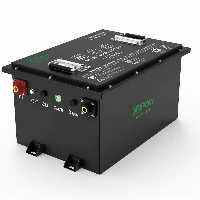
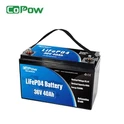
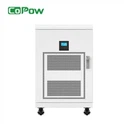
In the solar battery sector, its standout products include the 20kW Solar Battery, 48V 100Ah Solar Battery, 48V 200Ah Lithium-Ion Battery, and 100kW/215kWh Energy Storage System, with applications spanning residential, commercial, and industrial sectors.
You might ask: why would anyone choose these solar energy storage batteries, which seem no different from those of other brands? Especially since CoPow isn't a well-known name.
This is because CoPow effectively controls the overall cost of energy storage projects while providing practical, customized solar battery solutions, delivering high-quality, affordable products to customers.
Many customers, particularly those from the Middle East and certain regions of Europe, have noted that while there are many well-known solar energy storage systems available on the market, they are extremely expensive-and even more so when customized.
Additionally, major brands often require high minimum order quantities, which far exceed their actual needs.
This is especially true when it comes to after-sales service: if a product malfunctions, customers often face long wait times, and the issue may not even be resolved.
The operator of a mountain resort hotel in Switzerland noted that the installation environment for their project was highly unique: not only are winter temperatures low, but installation space is also extremely limited.
Furthermore, the system needed to be compatible with an existing hybrid inverter system, whereas many major brands' standardized solar battery systems often fail to adapt to local conditions. Consequently, they required solar energy storage batteries that could be customized to work with their existing inverters and on-site environment.
CoPow's account manager not only analyzed the project requirements with him via video call but also, a week later, dispatched an engineer to accompany the account manager on a site visit to the project location in Switzerland.
Ultimately, CoPow developed a customized solar energy storage system tailored to his needs, featuring low-temperature heating capabilities, compatibility with the existing inverter's communication protocol, and a design with a high protection rating.

Therefore, by choosing CoPow solar batteries, you'll get:
- High-quality lithium iron phosphate cells with a lifespan of over 8 years
- Dedicated account managers and project engineers
- Lower costs for solar energy storage projects.
- Customize a solar energy storage system that truly fits your needs
- Solar cell systems compatible with various inverters, reducing project retrofitting complexity
- Lower minimum order quantities
- More flexible partnership models
- Comprehensive technical support and after-sales service
Tesla

Most people associate Tesla with electric cars, but the company is also a major player in renewable energy and one of the world's leading providers of solar energy storage solutions.
Tesla's flagship energy storage products include the Powerwall and Megapack. The Megapack, in particular, has become a cornerstone in utility-scale energy storage projects worldwide. Its systems are widely adopted in grid-level applications, and Tesla is often a preferred partner for large-scale and national energy projects due to its proven reliability and integration capabilities.
Enphase Energy

Enphase Energy is a U.S.-based renewable energy company and a recognized leader in the distributed solar market.
Unlike companies such as Tesla, Enphase does not focus on battery manufacturing as its primary business. Instead, it specializes in microinverter technology and integrated energy management systems, with batteries forming part of its broader energy ecosystem.
From a technological standpoint, Enphase is widely regarded as a pioneer in the microinverter segment. Traditional PV systems typically rely on central or string inverters, whereas Enphase adopts a module-level architecture by installing a microinverter on each individual solar panel.
This approach ensures that the performance of one panel does not impact the entire system, significantly improving overall reliability and energy yield.
This technology has been widely adopted in North America and Europe, particularly in the residential rooftop solar market.
Enphase operates a global manufacturing and supply chain network, with production and assembly distributed across multiple regions. While its products are known for reliability and advanced technology, strong market demand can sometimes result in longer lead times-similar to those seen with Tesla.
For projects that require large-scale commercial or industrial energy storage, or highly customized battery solutions, it may be necessary to evaluate alternative suppliers that specialize in those segments.
LG Energy Solution

LG Energy Solution is one of the world's leading battery manufacturers, headquartered in South Korea and formerly part of LG Chem's battery division. Unlike most system integrators, LG Energy Solution is positioned primarily as an upstream cell supplier, with a technology focus on high–energy-density ternary lithium-ion batteries. This fundamentally sets it apart from manufacturers specializing in LiFePO4 solutions-a distinction buyers should clearly understand.
In the solar energy storage sector, LG previously introduced its RESU (Residential Energy Storage Unit) series, targeting the residential market. At its peak, the product gained strong traction in Europe and North America, thanks to its compact form factor, refined design, and flexible installation options.
However, from a technical standpoint, ternary lithium systems prioritize energy density and space efficiency. Compared with today's mainstream LiFePO4 solutions, they generally offer less advantage in terms of safety, cycle life, and overall cost structure. As the market continues to shift toward safety and long-term reliability, LG's storage products are no longer as competitive as they once were.
Overall, LG Energy Solution has well-established battery manufacturing capabilities and can supply solar storage products. That said, its solutions are better suited for niche applications where size and weight are critical constraints.
For project-based customers requiring large-scale deployment, high safety standards, long lifespan, and deep customization, these products are often not the best fit. In addition, as a global brand, its service model tends to be more standardized, making it less flexible than system integrators when it comes to tailored solutions. Therefore, careful evaluation based on specific project requirements is strongly recommended when considering LG as a partner.
BYD

BYD is one of the most influential new energy companies in China and worldwide, and one of the few players to achieve full vertical integration across the entire value chain-from battery cell manufacturing to vehicle production and energy storage system integration. In many ways, its business model is comparable to Tesla.
Beyond being a battery manufacturer, BYD also acts as a solar energy system integrator, demonstrating strong vertical integration across the new energy ecosystem. As a leading force in LFP technology, BYD's Blade Battery stands out as a benchmark innovation, particularly in terms of safety and structural design, and has gained broad recognition across the industry.
In addition to electric vehicles, BYD has a strong presence in the energy storage sector. Its B-Box series, for example, is widely deployed worldwide, supporting both residential and commercial & industrial (C&I) applications. The system is designed with a modular architecture, allowing flexible capacity expansion and configuration based on specific project needs.
Overall, BYD's energy storage solutions are particularly well-suited for medium to large-scale projects. Compared with European and American brands, BYD offers a clear advantage in cost efficiency. At the same time, compared with many smaller manufacturers, it benefits from a more mature supply chain and extensive real-world project experience, ensuring greater reliability.
If your budget allows and you are looking for a partner with strong overall capabilities and proven track records, BYD is certainly a compelling choice.
Sonnen

sonnen is a German energy storage company founded in 2010 and widely regarded as one of the leading brands in the European residential energy storage market. The company has since been acquired by Shell.
Unlike suppliers that focus solely on individual battery products, sonnen positions itself as a provider of complete solar energy storage solutions. Its systems are built on LiFePO4 chemistry and integrate batteries, inverters, and energy management systems into a fully unified platform. Its flagship product, the sonnenBatterie, can be directly connected to residential solar installations, enabling seamless management of energy generation, storage, and consumption.
sonnen initially focused on the residential storage segment and has spent years refining its expertise in this field. However, what truly differentiates the company is its "energy community" concept-more specifically, its Virtual Power Plant (VPP) model. By connecting a large number of households equipped with sonnenBatterie systems to a cloud-based platform, sonnen can centrally manage these distributed energy assets, effectively turning users from passive consumers into active participants in the energy network. Within this ecosystem, users can share surplus electricity, support grid balancing, and even generate additional income.
From an end-user perspective, sonnen's solutions are highly regarded for their reliability and system integration. However, for procurement professionals, the evaluation criteria go far beyond product performance. On one hand, sonnen's systems are positioned at a relatively high price point, with pricing in the European market often comparable to Tesla's energy storage solutions. On the other hand, its product ecosystem is primarily designed for residential and distributed solar applications. For large-scale energy storage projects or applications that require extensive customization, sonnen may not be the most suitable option.
Generac

Generac Holdings is a U.S.-based energy equipment company with strong brand recognition across North America. The company originally built its reputation in the residential backup generator market and has effectively become synonymous with emergency power for many American households.
As the global energy landscape shifts toward cleaner solutions, Generac has expanded into the solar energy storage sector, aiming to extend its role from emergency backup to everyday energy management.
From a business model standpoint, Generac operates more like a system integrator, similar to Enphase Energy. Its competitive advantage lies not in manufacturing battery cells, but in integrating power generation, energy storage, and consumption into a unified energy solution.
Its flagship product, the PWRcell solar energy storage system, works seamlessly with its proprietary inverters, electrical control systems, and generator products to create a multi-energy ecosystem. This capability for multi-energy integration is a key differentiator compared to other energy storage providers.
Overall, Generac remains heavily focused on the North American market, particularly in residential energy storage. For U.S.-based buyers, it is undoubtedly a brand worth prioritizing.
One distinctive aspect of Generac is how it carries over its core philosophy from the backup power sector-reliability when it matters most-into its solar storage solutions. In system design, the company prioritizes ensuring power availability during extreme weather conditions and natural disasters.
Panasonic

Panasonic is a diversified electronics and energy company headquartered in Japan, with long-standing expertise in the global battery industry. As one of the early entrants into the lithium-ion battery sector, Panasonic has built strong capabilities in materials science, cell design, and manufacturing, and maintains a significant presence in the high-end market.
In the solar energy storage sector, Panasonic has introduced its EverVolt series, primarily targeting residential applications. In line with broader industry trends, the company adopts a system-integrated approach, with its energy storage solutions built on ternary lithium battery technology.
From a product positioning standpoint, Panasonic's strategy differs from Tesla's focus on utility-scale storage and does not center around a microinverter ecosystem like Enphase Energy. Instead, it leverages its strengths in cell manufacturing, combined with solid system integration capabilities, to deliver stable and reliable home energy storage solutions. In other words, while Panasonic possesses both cell manufacturing and system integration expertise, its overall strategy prioritizes stability over aggressive innovation.
As a typical Japanese brand, Panasonic is known for its rigorous engineering standards and reliable product quality, with a strong reputation for consistency and durability. While its brand presence in the global solar storage market may not rival that of Tesla or BYD, its "Made in Japan" reputation continues to carry significant weight.
Overall, for buyers in Japan-or those who place a high premium on product reliability-Panasonic remains a brand well worth considering.
SolarEdge

SolarEdge Technologies is a renewable energy company headquartered in Israel, with a strong presence in the global distributed solar market. It is often compared to Enphase Energy, as both companies focus on module-level optimization, though their technical approaches differ significantly.
SolarEdge's architecture is built around its inverter technology and power optimizers.
Instead of using microinverters, it places power optimizers at each (or groups of) PV modules to enable module-level monitoring and control, while a centralized inverter performs DC–AC conversion. This approach preserves the efficiency and cost advantages of centralized inverters while mitigating mismatch and shading losses common in traditional PV systems.
Despite their different designs, SolarEdge and Enphase ultimately address the same core challenge: maintaining system-level consistency and reliability. Under this architecture, a single module's underperformance has minimal impact on overall system output, improving both energy yield and operational stability.
At the product level, SolarEdge offers its own residential battery, designed to integrate with its Energy Hub inverter as part of a unified home energy system. Its business model is therefore centered not on standalone battery sales, but on delivering a tightly integrated solar-plus-storage solution built around its core technology platform.
In practice, companies like SolarEdge typically do not provide standalone battery customization, as their offerings are designed as complete systems. Projects that require tailored battery specifications often need to work with suppliers that specialize in system integration and custom battery solutions.
From a market positioning standpoint, SolarEdge remains focused on distributed solar and residential storage.
As competition in this segment continues to intensify, it represents a viable alternative to leading brands such as Enphase Energy, BYD, or Sonnen-particularly for buyers who place a high priority on inverter performance and system architecture.
Huawei

Huawei's approach to the new energy sector differs significantly from that of traditional battery manufacturers. Rather than originating from battery production, the company has expanded into photovoltaic and energy storage solutions by leveraging its expertise in telecommunications and power electronics. This background positions Huawei as a distinctive player in the solar storage industry, operating primarily as a provider of integrated energy solutions centered on inverters, digital platforms, and system control.
Huawei's competitive advantage is rooted in its strength in power electronics and digitalization. In the photovoltaic segment, it promotes smart string inverters and utilizes its FusionSolar platform to unify the management of generation, storage, and consumption, enabling coordinated system-level operation.
From a technological standpoint, Huawei-similar to SolarEdge Technologies and Enphase Energy-places strong emphasis on system-level control. However, it distinguishes itself through deeper capabilities in digital management and intelligent dispatch, driven by its long-standing foundation in the telecommunications sector.
At the product level, Huawei entered the energy storage market in 2020 with the launch of its LUNA series. Its portfolio spans both residential and commercial & industrial applications. A key feature of its systems is their advanced intelligence, enabling dynamic optimization of charge and discharge strategies based on weather forecasts, electricity pricing, and load profiles. In certain scenarios, these systems can even support functions comparable to virtual power plant (VPP) operations.
Globally, Huawei has participated in numerous large-scale solar and energy storage projects, with particularly strong deployment across the Middle East, Europe, and the Asia-Pacific region.
Overall, while Huawei is not a traditional battery manufacturer, it has established a strong position in the solar energy storage market by combining its expertise in power electronics and digital technology with China's mature battery supply chain.
Why choose CoPow as your solar battery project partner?
Next, we present our assessment of CoPow and whether it is a worthwhile investment for your needs.
Does CoPow offer complete ESS solutions?
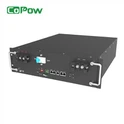
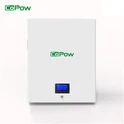
CoPow offers not only standalone batteries but also a wide range of energy storage system configurations, including wall-mounted, stacked, rack-mounted, and commercial & industrial (C&I) cabinets. These solutions are designed to support diverse applications, from residential and C&I energy storage to off-grid systems.
Technologically, its products are built on LiFePO4 chemistry, ensuring a strong balance of safety, durability, and cycle life. Each system is equipped with an integrated Battery Management System and supports modular expansion, allowing capacity to be scaled according to project requirements.
In addition, the system can be monitored in real time via a dedicated app, providing visibility into key parameters such as voltage, current, and state of charge. This enables more efficient, data-driven energy management.

Which communication protocols and inverters are compatible with CoPow solar batteries?
CoPow's solar battery systems offer strong flexibility in communication protocols. In addition to supporting standard interfaces such as CAN and RS485 (Modbus), they can be customized to meet specific project requirements, including RS232, Bluetooth, Wi-Fi, and compatibility with protocols used by brands such as Pylon and Growatt.
In terms of inverter compatibility, CoPow adopts an open system integration approach, allowing its battery solutions to integrate seamlessly with a wide range of leading inverter brands, including Deye, Growatt, Victron Energy, GoodWe, and SMA Solar Technology.

Do CoPow solar batteries support app monitoring, remote diagnostics, and data interfaces?
CoPow's solar battery system supports a range of intelligent features. Through its app, Bluetooth, and cloud platform, users can monitor system performance in real time, including key parameters such as state of charge, voltage, and current, enabling clear and data-driven visibility.
For operations and maintenance, the system offers remote diagnostics. By leveraging the BMS and cloud platform to continuously track operating data, it can proactively identify potential issues, enhancing overall system safety and reliability.
What is the monthly production capacity of CoPow's in-house battery factory?
CoPow's automated production lines currently deliver a stable output of around 10 MWh per month, with the capacity to scale in line with demand. At full utilization, the company's annual production capacity is estimated at approximately 2 GWh.

How reliable is CoPow's long-term delivery capability?
CoPow demonstrates strong reliability in long-term delivery, supported by a well-established production management system and a stable supply chain. Its manufacturing processes follow standardized SOPs and are backed by comprehensive quality control, ensuring consistency and stability across production batches. The company's experience across projects in more than 40 countries further underscores the maturity of its delivery capabilities.
On the supply chain side, CoPow works with leading cell manufacturers such as CATL, EVE Energy, and BYD. Combined with its in-house battery pack production and testing capabilities, this enables a model built on stable upstream sourcing and integrated system development-supporting consistent and reliable long-term supply.
What compliance certifications does CoPow hold?
In terms of market access and safety, the company's products meet key international standards, including CE (European market access), UL (North American safety certification), and IEC (e.g., IEC 62619 for battery safety). They also comply with UN38.3 transport regulations and are supported by Material Safety Data Sheets (MSDS), ensuring safe handling and compliance across global logistics and deployment.
The company maintains a comprehensive quality management framework, with certifications such as ISO 9001 and IATF 16949, reflecting a mature and standardized approach to quality control.
In addition, its products meet FCC and EMC requirements for electromagnetic compatibility and are certified under international schemes such as TÜV-CB, further supporting acceptance across diverse global markets.

What kind of after-sales support does CoPow provide to customers?
CoPow typically provides a warranty of 5–10 years, with repair or replacement available for products that experience performance issues under normal operating conditions. Its dedicated after-sales team supports multiple communication channels (e.g., email and video), with response times generally within 24 hours and issue resolution targeted within 48 hours.
From a technical support perspective, CoPow offers installation guidance, troubleshooting, and remote diagnostics. On-site support and training can also be arranged when required. In addition, the company maintains spare parts inventory and in-house repair capabilities, enabling rapid component replacement and minimizing system downtime.
Conclusion
Now that we've covered the key aspects of solar battery manufacturers, have you identified any preferred options?
Brands like Tesla and BYD are particularly strong in large-scale projects and global deployments, while Enphase Energy and SolarEdge excel in system design and energy management. Traditional battery manufacturers such as LG Energy Solution and Panasonic, on the other hand, are more focused on battery cell technology and standardized products.
If your project is centered around standardized residential energy storage systems and brand recognition is important, integrated solution providers may be a better fit.
However, if your project involves customization-such as specific battery dimensions, voltage requirements, communication protocol compatibility, or unique application environments-system integrators are often better equipped to handle real-world project demands.
In this context, CoPow is a partner worth considering. With LFP technology at its core, the company leverages cells from leading manufacturers and focuses on battery pack design, system integration, and reliable delivery. This allows CoPow to provide flexible, customized solutions while maintaining strong safety and stability standards.
This approach can help reduce communication costs and minimize implementation risks during project execution.
Ultimately, there's no single "best" manufacturer-only the one that best fits your project. A comprehensive evaluation of technical compatibility, cost structure, and long-term service capability is essential to making the right decision.