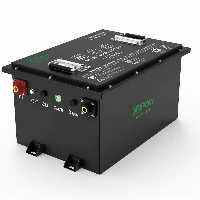
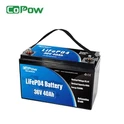
There are two possible reasons why a golf cart battery won't charge: one is that it won't charge shortly after purchase; the other is that it suddenly stops charging after being used for a while.
If it's the second scenario, it's highly likely that the battery has aged and needs to be replaced. If it's the first scenario, it's certainly frustrating, as it means you've purchased a defective product.
Please stay calm-this doesn't always mean the battery is defective. Sometimes, low voltage or the battery management system's protections simply prevent charging. A quick fix may solve this.
With an understanding of the possible causes, we will now examine each in detail to help you resolve the issue effectively.

Common Causes Of Golf Cart Charging Problems
Based on our past experience, when a golf cart fails to charge, the issue may lie with the power supply, the charger, the battery, or the control system. Sometimes, it is caused by a combination of these factors. Below, we will explain each of these in turn.
Charger or External Power Supply Issues
The outlet may have no power, a circuit breaker may have tripped, or the internal fuse in the charger may have blown, or the charger itself may be worn out or damaged. In these cases, the golf cart may show no response or stall shortly after starting.
Another common issue is poor contact in the charging cable, plug, or port-such as worn connectors, bent pins, or damaged internal wiring-preventing proper current flow to the battery.
Issues with the battery itself
If the battery is aging or damaged, or if it has become deeply discharged (below 20% or even 0%) due to prolonged storage, the battery voltage may be too low for the charger to detect, causing the charging system to stop working. This is a relatively common battery issue.
Damage to a single cell, cell imbalance, or increased internal resistance can prevent the golf cart battery from charging properly or even stop charging altogether.
Issues with electrical protection and control systems
These issues include blown fuses, damaged relays, and malfunctions in the on-board controller (OBC) or battery management system (BMS).
When these protection mechanisms are triggered or malfunction, they cut off power-even if the battery appears normal and hasn't been used much-preventing proper charging.
This is particularly common in lithium-ion golf carts, where the battery management system may trigger protection too frequently if protection thresholds are set too high.
Operating Environment and Usage Habits
If you rarely use your golf cart or frequently let the battery fully discharge, these habits can accelerate battery degradation. Over-discharging damages the battery's internal chemistry, degrades active materials, and increases internal resistance. In severe cases, it may lead to irreversible voltage loss (deep discharge).
Ambient temperature plays a key role. In low temperatures, the electrolyte becomes more viscous, slowing ion movement and making current flow more difficult-resulting in reduced charging efficiency or even charging failure.
Both lead-acid and lithium-ion batteries can experience similar charging issues in golf cart applications.
After reviewing the main causes, you may still have questions or encounter unique situations. In such cases, feel free to contact us-we're happy to provide professional guidance.

How To Fix A Golf Cart That Won't Charge?
About 70% of charging issues can be self-diagnosed and resolved. For the remaining cases, professional assistance is recommended to prevent further complications.
If you're on your own, you can try the following steps first:
First, check whether the outlet and charger are receiving power. Try plugging the charger into different outlets to see if the indicator light turns on; if not, the charger may be faulty and require replacement.
If the charger works, check battery connections for loose, oxidized, or corroded terminals. Make sure the terminals are intact and conducting electricity.
If the terminals are fine, check the battery voltage. Chargers may not detect batteries with very low voltage, often caused by deep discharge during long periods of inactivity.
If the voltage is normal, check the fuse, circuit breaker, and charging port. A blown fuse or loose/burnt connector can prevent charging and is usually easy to identify during inspection.
If no issues are found after these checks, the problem may lie in more complex systems such as the onboard controller or BMS. Professional assistance is recommended to avoid improper repairs.

How To Tell If Your Golf Cart Battery Is Bad?
If you suspect your golf cart battery is failing, you're likely right-and this section will help you confirm it.
As a professional manufacturer of golf cart batteries, we can confidently tell you that if your battery exhibits any of the following symptoms, it is indeed faulty:
The battery life has gotten shorter.
When driving a golf cart, you can clearly see that the battery level on the dashboard drops much faster than before. Previously, you could play several rounds of golf, but now the battery might be nearly depleted before you've even finished a single round.
Strictly speaking, this isn't a malfunction, but rather a natural decline in the battery's lifespan, resulting in a significant reduction in its capacity.
Lack of power.
A healthy battery gives strong acceleration. If your cart feels sluggish when starting or climbing, your battery may have aged or failed.
If, after some time, you find that the cart still feels sluggish even at maximum speed, and it lacks power when starting or climbing hills, then your battery may have aged-or, in other words, it may be dead.
Charging time has increased.
A lead-acid golf cart battery takes approximately 8 hours to charge, while a lithium-ion battery takes only 2–3 hours.
If you notice that charging takes longer and longer, or that the battery cannot be fully charged, this usually indicates that the internal resistance of the battery has increased, signaling that it is nearing the end of its service life.
Watch for swelling, leaking, or heavy terminal corrosion.
If you notice swelling, leaks, corrosion, or a strong odor, the battery is likely damaged and unsafe-especially for lead-acid types. Replace it immediately.
Measuring Data.
Using a multimeter to measure voltage is the most common method. For example, a fully charged 12V battery should have a voltage of around 12.7V. If the voltage is significantly lower than this value-or even drops below 12V-the battery may be faulty.
For a more accurate assessment, check the battery voltage while driving; a significant drop during acceleration indicates internal degradation.
A normal voltage reading does not guarantee good battery health; the ability to deliver stable power is a more critical indicator.
Power issues.
The vehicle's performance is inconsistent-sometimes it feels powerful, and other times it feels weak. This is usually not because the entire battery pack has failed, but because one of the individual batteries is malfunctioning, causing instability in the entire pack.
Damage to golf cart batteries is primarily due to natural aging, though human-caused damage cannot be ruled out. Whether the damage is natural or human-caused, it is related to the issues mentioned above.

Lead-Acid vs Lithium: Which One Solves Charging Issues Better?
The maintenance requirements for lead-acid and lithium-ion golf cart batteries are in completely different leagues; consequently, the difficulty of repairing them when they fail to charge also varies.
With lithium-ion batteries, charging issues can be resolved at their root cause more easily than with lead-acid batteries, rather than merely being mitigated.
Charging problems with lead-acid batteries are generally caused by structural defects, which you are likely familiar with: if a battery remains in a deeply discharged state for an extended period or is not fully charged in a timely manner, sulfation occurs. The plates become coated with lead sulfate, making it increasingly difficult to charge the battery and even causing the charger to fail to recognize the battery.
In contrast, lithium-ion golf cart batteries, such as those using LiFePO4, feature a superior design, primarily in two aspects: active BMS management and a more stable chemical system.
The built-in battery management system controls charging voltage, current, and temperature. If any abnormalities occur, the system immediately activates protective measures to prevent battery damage. LiFePO4 batteries do not undergo sulfation and have no memory effect. Even after prolonged periods of disuse, they do not become completely unusable like lead-acid batteries.
When Should You Replace Your Golf Cart Battery?
If your golf cart exhibits any of the following symptoms, it's time to replace the battery, as we've previously explained.
- Significantly reduced range: The range on a full charge has dropped by half or more.
- Poor performance: Slow acceleration, lack of power when climbing hills.
- Charging issues: Takes a long time to charge, doesn't charge fully, or won't charge at all.
- Abnormal voltage: The voltage of a single battery cell is noticeably low.
- Physical damage: The battery is swollen, leaking, or corroded.
Many people ask, "Can I just replace the one bad battery?" We do not recommend this, as the internal resistance of new and old batteries differs, and mixing them can damage the entire battery pack. The correct approach is to replace all old batteries with new ones.
How To Prevent Golf Cart Charging Problems?
Golf carts don't suddenly stop charging; more often than not, this is due to poor usage habits and a lack of maintenance.
Always Use the Correct Charger
Many problems actually stem from issues that were present from the very beginning.
The charger must be fully compatible with the battery system, including voltage, battery type, and charging curve. This is especially true for lithium-ion batteries, which require a dedicated charger.
If you use a lead-acid charger to charge a lithium-ion battery, the battery will not charge fully; in severe cases, it can even damage the expensive battery cells.
Avoid Deep Discharges
We have received feedback from many customers stating that batteries they previously purchased elsewhere failed quickly, and they were unsure if the issue was due to poor battery quality. After investigating, we found that in many cases, the problem was caused by improper use.
For golf cart batteries, frequent discharging down to 0% will cause them to fail quickly. Neither lithium-ion nor lead-acid batteries can withstand such intensive use.
Here's a helpful tip: Follow the "20/80" charging rule-charge the battery when the charge level drops below 20%, and stop charging once it reaches 80% or 90%.
Important reminder: Even if you use your cart infrequently and store it in a warehouse, you should still check the battery charge level occasionally to prevent natural discharge below 20%. Lithium batteries generally need to be checked about once every two months.
Keep Battery Voltage Within a Healthy Range
We have also encountered many customers who reported that the voltage of their golf cart batteries showed 0. As we mentioned earlier, this is caused by the battery discharging to 0% due to a lack of timely recharging during long-term storage, which is a common reason why batteries fail to charge.
Another possible cause is a damaged cell, which can cause the voltage of the entire battery pack to drop.
Therefore, it is best to regularly test the voltage of your golf cart battery with a multimeter, especially for lead-acid golf cart batteries made up of 6V or 12V batteries connected in series. If you discover a damaged battery, replace it immediately.
In fact, we recommend upgrading from lead-acid batteries to lithium-ion batteries.
Maintain Clean and Secure Connections
Poor connections are also an issue that requires attention. For lead-acid batteries, you should inspect the terminals once a month to check for signs of acid corrosion and ensure the connectors are secure. After confirming that the terminals are in good condition, you should also inspect the cables for any issues.
Follow the proper charging sequence.
When charging a golf cart battery, connect the battery first, then plug in the power source; after charging is complete, disconnect the power source first, then disconnect the battery from the power source to avoid damaging the battery management system.
Keep the Charger in Good Condition
A worn-out or faulty charger can directly damage the entire battery pack. Therefore, it's best to take a few minutes to check its output voltage, inspect the cables for any damage caused by rodents, and clean out any dust around the ventilation openings.
Temperature Control
The impact of ambient temperature is well-known, but the following point is worth noting.
If you live in a cold climate and frequently use batteries, you may want to consider having a BMS customized by a golf cart battery supplier like CoPow, equipped with a self-heating module, to ensure a better user experience.
Choosing the Right Battery Type (Solving the Problem at Its Root)
Whether it's a lithium-ion battery or a lead-acid battery, both can experience charging issues. However, lithium-ion batteries are easier to handle than lead-acid batteries.

Conclusion
As we wrap up, it's clear that the most likely reason a golf cart battery won't charge is prolonged inactivity without timely recharging, causing the battery to discharge to 0%-a condition commonly referred to as "over-discharge." At this point, the voltage is too low for the charger to detect, preventing it from functioning properly.
There are many reasons a battery may fail to charge. We have conducted a comprehensive analysis. If you still have issues, contact us anytime. We will have a senior golf cart battery R&D engineer provide guidance.
Frequently Asked Questions
Why won't my golf cart charger fully charge the battery?
Reasons why a battery may not charge fully include battery aging or capacity degradation, charger output abnormalities, poor connections, or low battery voltage.
How can I tell if the problem is with the charger or the golf cart battery?
You can test this by measuring the battery voltage or using a known-good charger. If the battery charges, the original charger is faulty; if it does not charge, the problem is most likely with the battery.
Does cold weather affect the performance of a golf cart charger?
Low temperatures can reduce a battery's ability to accept a charge, resulting in slower charging or even an inability to charge at all. However, the actual impact is primarily on the battery itself, rather than the charger.