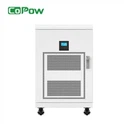
Amid the accelerating global energy transition, solar systems have become one of the core energy solutions for both residential and commercial users. Among them, the 20kW solar system stands out with its exceptional versatility - it can fully meet the daily electricity needs of large households while also being suitable for small commercial premises and distributed photovoltaic projects.
As a reliable 20kW Solar System Manufacturer in China, CoPow has established a reputation as a trustworthy supplier in the global market, leveraging advanced technology, extensive export experience, and strict quality control.
This article focuses on CoPow, a well-known Chinese manufacturer, analyzing its core competitiveness from dimensions such as product performance, environmental adaptability, after-sales service, and international certifications. It aims to provide professional and practical reference guidance for potential buyers worldwide.

2026 Leading China 20 kW Solar System Producers for Home and Commercial Use
CoPow Energy Storage System

Company Profile
CoPow, a premium energy storage brand under the nationally recognized high-tech enterprise Huanduy, leverages over a decade of expertise in LiFePO4 battery R&D and production, backed by 40+ patents. Its core R&D team comes from industry leaders like CATL, BYD, and OptimumNano, with an average of 20 years' experience in energy storage and power batteries.
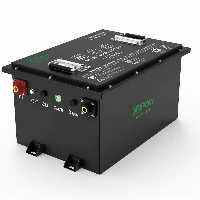
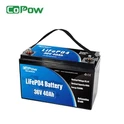
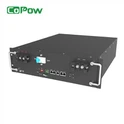
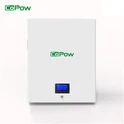
CoPow offers wall-mounted, stackable, and rack-mounted energy storage systems ranging from 5 kWh to 100 kWh, suitable for residential backup, off-grid cabins, and commercial distributed power plants. Products feature LiFePO4 cells with 4,000+ cycle life, IP67 protection, and intelligent BMS. Multiple interfaces (CAN, RS232, RS485, Wi-Fi) enable real-time monitoring and flexible operation modes including self-consumption, peak-valley arbitrage, and battery-priority.
All CoPow products undergo rigorous quality testing, carry traceable labels, and meet CE, IEC, UN38.8, and UL certifications. Deployed in over 40 countries, CoPow provides 24/7 technical support and a five-year warranty, delivering safe, smart, and reliable energy storage solutions worldwide.
Core 20kw energy storage system Products
5 kW Solar Backup Battery
Available in two models - 48100 (100 Ah) and 48200 (200 Ah).
Rated IP54 for dust and water resistance, it supports both solar and grid charging.
Designed for home emergency backup, this system can easily power essential appliances such as refrigerators and televisions.
10 kWh Home Energy Storage System
Offered in 10.4 kWh, 15.6 kWh, and 20.8 kWh capacity options.
Equipped with a three-level BMS protection system and supports up to 15 units in parallel.
With an IP40 protection rating, it is ideal for daily home energy storage and peak-valley electricity management.
15.36 kWh Solar Energy Storage Lithium Battery
Features a 300 Ah capacity, an LCD touch screen, and Bluetooth monitoring.
Supports automatic switching between on-grid and off-grid modes, and can discharge in temperatures as low as –10 °C.
Perfect for residential and small commercial energy storage applications.
20 kW Solar Energy Storage System
As a 20kW solar system for small business Europe, it delivers 21.5 kWh total capacity (powered by two parallel 420 Ah battery packs) and supports 230V/50Hz EU grid standards, ideal for commercial warehouses and retail stores.
Built with dual MPPT channels and three operation modes - Self-Use, Peak-Valley Optimization, and Battery Priority.
Operates reliably in temperatures down to –20 °C, making it a top choice for 20kW solar storage for off-grid cabin Australia and large households with high energy demand.

10 kW Solar Energy Storage Battery
Comes with a 200 Ah capacity and IP54 protection rating, offering six layers of safety protection, including overcharge and undervoltage safeguards.
Supports up to 16 units in parallel, stores solar power for nighttime or outage use, and provides a service life of up to 10 years.
10 kWh Home Solar Backup Battery
Includes four model options - HDY48100, HDY51100, HDY48200, and HDY51200.
Built with a 16S1P series-parallel design and compatible with multiple inverter brands.
Ideal for home solar backup and everyday energy supply needs.
Efficiency and Degradation
As a 20kW solar battery system for large home Germany, CoPow's products deliver outstanding efficiency and low degradation, meeting the high energy demands of German households. Each model is built with A+ grade LiFePO₄ (LFP) battery cells, renowned for their high energy conversion efficiency and long-lasting stability.
Equipped with an intelligent BMS (Battery Management System), CoPow systems precisely monitor and regulate the charging and discharging processes, minimizing energy loss. They support both solar PV and grid charging, while certain models-such as the 20 kW solar storage system-feature dual MPPT controllers, enabling more efficient solar energy utilization under varying conditions.
When paired with compatible inverters, the systems maintain stable output efficiency, meeting the power demands of residential and small commercial applications.
In terms of degradation, all CoPow batteries boast a cycle life of ≥4000 cycles under 25 °C ambient temperature and 80% depth of discharge (DOD). Even after extensive cycling, the batteries retain over 85% of their original capacity, offering a service life exceeding 10 years. The batteries exhibit no memory effect, ensuring that regular charging and discharging will not accelerate capacity loss. Moreover, they remain stable in temperatures as low as –20 °C, with slow degradation rates that help significantly reduce long-term operating costs.
Component Quality and Materials of CoPow 20kW Solar Energy Storage System
1. Core Energy Storage Cells: Automotive-Grade Branded Cells for a Safe Foundation
The system is equipped with Grade A+ lithium iron phosphate (LFP) cells, specifically selected from top 10 Chinese cell brands such as CATL and EVE. These cells meet automotive-grade standards, featuring high consistency and thermal stability.
For instance, CATL energy storage cells can withstand temperatures exceeding 150°C without ignition, while EVE cells achieve an initial efficiency of over 94%, supporting the system's long-term stable operation with an extended cycle life. Each cell is marked with a unique QR code, enabling full-lifecycle traceability to ensure quality control from the source.
2. Battery Management System (BMS): Self-Developed Intelligent Chip for Precise Regulation
It is fitted with a self-developed three-level intelligent BMS. Using industrial-grade control chips and high-precision sensors, the BMS real-time monitors cell voltage, temperature, and charge-discharge status.
It prevents cell imbalance through active balancing technology and provides multiple protections against overcharging, over-discharging, and short circuits. Acting as the "AI brain" of the battery, this system reduces energy loss and extends the overall service life of components.
3. PV and Inverter Components: High-Efficiency Adaptation with Excellent Weather Resistance
PV Side: The compatible PV modules use 3.2mm low-iron tempered textured glass (light transmittance > 91%), 0.78mm UV-resistant EVA film, and TPT (fluoroplastic) backsheets. They are paired with high-strength aluminum alloy frames, capable of withstanding 5400Pa snow loads and 2400Pa wind pressure. The junction box has an IP65 protection rating, making it suitable for complex outdoor environments.
Inverter: Designed with dual MPPT channels, the inverter's internal circuit uses high-voltage-resistant capacitors and high-efficiency IGBT power modules. It supports a wide input voltage range (125~550V) and achieves stable heat dissipation through natural cooling, with an IP40 protection rating. It meets the power conversion needs of residential and small commercial scenarios.
4. Structural and Connecting Components: Durable Materials for Multi-Scenario Installation
Battery Cabinet: Made of high-strength cold-rolled steel plates with an anti-corrosion coating on the surface. It has dimensions of 580×350×1800mm and weighs 260kg, balancing structural stability and installation flexibility, supporting both stacked and wall-mounted installation.
Connecting Materials: Flame-retardant PV-specific cables and MC4 waterproof connectors are used, offering weather resistance and insulation. The internal copper busbars are made of high-conductivity electrolytic copper, reducing transmission loss and ensuring safety during high-current charge-discharge processes.
Inverter / Energy Storage / System Protection
1. Inverter: High Efficiency · Flexible Compatibility
The system features a dual MPPT (Maximum Power Point Tracking) design that supports a wide voltage input range of 125–550V, allowing for more precise solar energy capture and improved photovoltaic conversion efficiency.
It delivers a rated AC output power of 5kW, with switchable AC 230V (EU) / 240V (US) voltage and 50/60Hz frequency, perfectly matching the 20kW grid-tie solar system US 240V requirements. The pure sine wave output ensures clean and stable power, preventing potential damage to sensitive home appliances such as refrigerators and computers.
With an IP40 protection rating, the inverter uses natural air cooling, eliminating the need for additional fans-reducing noise, lowering failure risk, and ensuring reliable operation in both indoor and semi-outdoor environments.
2. Energy Storage: High Capacity · Long Lifespan
The system provides a total energy capacity of 21.5kWh, consisting of two 420Ah, 51.2V LiFePO₄ (LFP) batteries connected in parallel. The battery cells are sourced from A+ grade manufacturers such as CATL and EVE, ensuring high energy density, safety, and no memory effect.
It supports dual charging modes (solar PV and grid), with a constant charging current of 100A and a peak current of 110A (for 3 seconds), achieving excellent charging efficiency. The constant discharge current of 100A enables simultaneous operation of high-power appliances such as air conditioners and washing machines.
The system is compatible with both off-grid and on-grid applications and can automatically switch to off-grid mode during power outages, ensuring uninterrupted operation of essential household loads.
3. System Protection: Multi-Layer Defense · Smart Monitoring
Battery Protection:
Equipped with a three-level intelligent BMS (Battery Management System), the system continuously monitors cell voltage and temperature, offering five-fold protection against overcharge, over-discharge, short circuit, over-temperature, and overcurrent. Its active balancing technology prevents cell imbalance, extending battery lifespan.
Circuit Protection:
The inverter integrates overvoltage, undervoltage, overload, and anti-islanding protection, preventing electrical hazards and ensuring grid safety and system stability.
Environmental Adaptability:
The batteries operate reliably within a –20°C to 60°C temperature range, maintaining stable performance even in extreme climates. The cabinet is built with anti-corrosion cold-rolled steel, providing resistance to dust and humidity, enhancing system durability and long-term safety.
Price Structure and Cost Breakdown of Copow 20 kW Solar Power System
Core Energy Storage Batteries: As the component with the highest cost share, it accounts for approximately 45%-65% of the total cost. It adopts Grade A+ lithium iron phosphate (LFP) cells from brands such as CATL and EVE.
Its cost is affected by factors like cathode materials, energy density, and manufacturing processes, and the consistency and stability of the cells directly determine the cost investment in this part.
Inverter (Power Conversion System): Accounting for 10%-20% of the total cost, it serves as the "energy conversion core" of the system. The CoPow 20kW system is equipped with a dual-MPPT channel inverter, which contains key components such as IGBT power modules and high-voltage-resistant capacitors.
Its conversion efficiency, protection level, and adapted communication protocols all affect the cost, and it needs to support grid-connected/off-grid dual-mode switching to meet multi-scenario requirements.
Battery Management System (BMS): Taking up 5%-10% of the total cost, it acts as the "intelligent core" for the safe operation of the system. It adopts a self-developed three-level management system, equipped with industrial-grade control chips and high-precision sensors, supporting active balancing, multi-dimensional status monitoring, and fault diagnosis functions.
The complexity of software and hardware integration is directly related to the cost level.
PV Modules and Supporting Structural Components: PV modules account for about 25%-40% of the total cost, using weather-resistant materials such as low-iron tempered glass and UV-resistant film, with power and efficiency being the main cost-influencing factors.
Supporting structural components like brackets and cabinets account for 5%-10% of the total cost, made of high-strength cold-rolled steel plates with anti-corrosion treatment, and need to balance load-bearing capacity and installation flexibility.
Auxiliary Materials and Connection Systems: Including PV-specific flame-retardant cables, MC4 waterproof connectors, high-conductivity copper bars, etc., they account for 3%-8% of the total cost.
These components need to meet requirements for weather resistance, insulation, and low transmission loss, and their material specifications affect the specific investment-contact us for a CoPow 20kW solar system price quote tailored to your project.
System Integration and Engineering Services: Classified as "soft costs", they account for 10%-30% of the total cost.
Covering links such as system design, installation and commissioning, project management, transportation and logistics, the cost fluctuates due to factors like installation difficulty (e.g., roof type, wiring complexity), regional labor costs, and certification testing requirements.
Safety and Protection Systems: Accounting for 5%-10% of the total cost, they include fire detection equipment, fire extinguishing agent devices, insulation monitoring, and lightning protection components.
As the industry's requirements for safety increase, the cost share of this part shows an upward trend, and it needs to comply with international safety certification standards.
Certification Standards
International Safety & Performance
The 20kW solar system CE certified EU by CoPow meets LVD and EMC directives, ensuring seamless grid connection and compliance in European markets. To ensure electrical safety and electromagnetic compatibility within the EU.
The inverters comply with IEC 62109-1 (Safety of PV Inverters), covering insulation and overcurrent protection, while the batteries meet IEC 62619 (Safety of Stationary Li-ion Batteries), ensuring thermal stability and long-term reliability.
Battery & Chemical Safety
The core LiFePO₄ batteries are certified under UN38.3, verifying safe transportation under vibration, shock, and temperature extremes. Each model includes an MSDS outlining material composition and safety handling.
Selected models also hold UL 1973 certification, ensuring additional protection against overcharge and short-circuit conditions.
Grid Compliance & Power Quality
The systems meet GB/T 18487.1-2015 and GB/T 20234 standards and are CQC certified, ensuring waveform distortion ≤3% and reliable anti-islanding protection.
Inverters also carry ETL certification, complying with U.S. and Canadian electrical safety standards, and support wide voltage/frequency ranges for global grid adaptability.
Production & Management Systems
CoPow's manufacturing facilities are certified to ISO 9001 and ISO 14001, guaranteeing consistent quality and environmental compliance.
Cabinet components meet EN 13501-6 under the EU CPR Regulation, providing enhanced fire resistance and installation safety.
Warranty and After-Sales Service
The CoPow 20kW solar energy storage system is backed by a comprehensive "long-term protection, rapid response, and full lifecycle support" service framework, ensuring reliable performance and peace of mind throughout the system's use.
Warranty Policy
As a 20kW solar storage 5-year warranty supplier, CoPow covers core components (battery, inverter) for 5 years, with 3-year coverage for auxiliary parts.
During the warranty period, any failures caused by product quality issues will be repaired or replaced free of charge.
However, damages resulting from human error, force majeure events (such as lightning or flooding), or improper operation are excluded from warranty coverage.
Installation & Technical Support
During installation and commissioning, CoPow offers 20kW solar system overseas installation support, including detailed manuals, remote guidance, and on-site tuning by local teams. Ensuring that all parameters are properly calibrated and performance targets are fully met.
Operation & Maintenance
After installation, CoPow performs quarterly system inspections and continuously records operational data.
A 24/7 technical support and emergency response service is available, guaranteeing:
User contact within 30 minutes
On-site response within 4 hours (depending on location)
CoPow's technical team also provides data-driven performance optimization suggestions to help users maintain high operational efficiency over time.
Remote Monitoring & Software Updates
The system supports remote monitoring and cloud-based data services, allowing users to track real-time system status, receive periodic performance reports, and benefit from remote software upgrades to ensure optimal system operation.
Spare Parts & Service Assurance
CoPow maintains a dedicated spare parts inventory and prioritizes the use of original or certified components to guarantee maintenance quality and efficiency.
With its global service network and localized support teams, CoPow provides users with reliable, efficient, and long-term system assurance.
Contact Information
Email: admin@huanduytech.com
Phone: +86-755-89998295
Office Address: Chengtouxin Times Building, No. 2009 Pingshan Avenue, Pingshan Street, Shenzhen, Guangdong, China
Factory Address: Wandajie Industrial Park, No. 1-12, Jinlong Avenue, Pingshan District, Shenzhen, Guangdong, China
Website: https://www.copowbattery.com/
Key Factors When Choosing an 20kw solar system manufacturer Manufacturer
Certification and Compliance: Choose manufacturers whose products are certified to international or national standards such as IEC 61215 and IEC 61730, ensuring safety and performance reliability.
Module Efficiency: For a 20kW solar system, prioritize high-efficiency panels (19%–22%) to maximize energy generation and reduce installation space.
Low Degradation: Select panels with a first-year degradation rate under 2% and annual degradation below 0.55%, ensuring long-term stable output.
Brand Reputation and Experience
Market Reputation: Review industry reports, customer feedback, and professional forums. Trusted brands typically offer more reliable quality and service.
Project Experience: Check for similar 20kW project references. Experienced manufacturers are better equipped to handle system design, installation, and operation challenges.
Price and Value
Reasonable Pricing: Compare quotes from different suppliers but avoid the lowest price at the expense of key performance.
Total Cost: Consider long-term costs, including maintenance and replacement, not just initial investment. The best products balance price and performance over their lifespan.
After-Sales Support
Warranty Policy: Standard product warranties range from 12–15 years, with 25-year performance guarantees. Longer warranties reflect confidence in product quality.
Service Network: Choose manufacturers with responsive local service and maintenance support to ensure smooth system operation.
Technical Strength and Innovation
R&D Investment: Manufacturers with strong R&D capabilities can deliver more efficient and reliable products.
Advanced Technology: Favor suppliers adopting cutting-edge technologies such as N-type solar cells, which enhance efficiency and longevity.
Corporate Stability
Financial Health: Work with financially sound manufacturers that can ensure continuous production, R&D, and after-sales support-minimizing the risk of losing service over time.
Is Copow 20kW Solar System Expandable Capacity for Future Needs?
The CoPow 20kWh solar battery supports capacity expansion and future upgrades, making it ideal for users with growing energy demands.
Modular Stackable Design
The system adopts a modular, stackable structure - much like building blocks - allowing users to easily increase capacity by adding additional battery modules. Depending on the model, up to 16 units can be connected in parallel, significantly boosting total energy storage.
Parallel Connection Support
Multiple 20kWh batteries can be connected in parallel while maintaining the same voltage. This configuration increases overall capacity in direct proportion to the number of connected units, enabling seamless scalability without compromising system performance or safety.
Can Copow 20 kW Solar System with Battery Storage Perform Reliably in Harsh Environments like High Heat, Humidity, Snow, and Salt Fog?
1. High-Temperature Resistance
Efficient Heat Dissipation Design: Key components of the system, such as inverters, are equipped with high-performance cooling devices, including fans or water-cooling systems. These effectively reduce operating temperatures in high-temperature environments, preventing performance degradation or damage and ensuring stable power generation.
Heat-Resistant Materials: PV modules and related components are made of high-quality heat-resistant materials. These materials maintain excellent stability under high temperatures, withstand prolonged exposure to sunlight without significant aging or damage, and ensure the system's long-term reliable operation in hot climates.
2. High-Humidity Resistance
Sealed Waterproofing: Key components, including PV modules and inverters, are rigorously sealed and waterproofed using measures such as sealants and moisture-resistant films. This prevents moisture ingress, reducing the risk of short circuits or leakage, and enhances the system's adaptability to high-humidity environments.
Corrosion-Resistant Materials: Components are selected for superior corrosion resistance. For example, mounting structures use galvanized steel or stainless steel, ensuring durability even under high-humidity conditions.
3. Snow Load Resistance
Strong Mechanical Load Capacity: Copow system PV modules and mounting structures are designed to withstand substantial snow loads. Some module models can endure snow pressure of 5400 Pa or more, maintaining structural integrity under snow accumulation and ensuring continuous power generation.
Snow Accumulation Prevention Design: The system can be designed with optimal tilt angles and sufficient ground clearance to minimize snow buildup on module surfaces. Robust mounting structures support both snow and wind loads, further enhancing reliability in snowy environments.
4. Salt Spray Resistance
Anti-Corrosion Coating: PV module surfaces are treated with anti-corrosion coatings that effectively block salt spray. These coatings are chemically stable and prevent chloride ions from penetrating the metal oxide and protective layers, reducing corrosion rates and extending service life.
Salt-Resistant Materials: Key components are made of materials resistant to salt spray, ensuring stable operation in coastal or other salt-prone areas. Some components have passed international authoritative tests, demonstrating strong resistance to salt spray and ammonia corrosion, preventing performance degradation or failures during long-term operation.
How reliable are Chinese 20 kW system manufacturers for export?
1. Excellent Product Quality
Chinese manufacturers have made significant advances in solar technology. Some use advanced monocrystalline cells and multi-busbar technology, reducing current loss and boosting efficiency-20 kW systems can achieve over 22% efficiency.
Strict quality control is applied throughout production, with some using full-process AI inspection to keep defect rates below 0.01%. Products typically meet TÜV, CE, IEC, and ISO standards.
2. Strong Environmental Adaptability
High Temperature: Key components like inverters have efficient cooling, and PV modules use heat-resistant materials to maintain stable performance.
High Humidity & Salt Spray: Components are sealed and corrosion-resistant, with galvanized or stainless steel frames and anti-corrosion coatings on modules.
Snow Load: Modules and mounts can withstand snow pressures of 5400 Pa or more, ensuring structural integrity and consistent power generation.
3. Comprehensive After-Sales Service
Most manufacturers offer long warranties-10–25 years for modules and 5–10 years for inverters. Professional support teams respond within 24 hours and can provide on-site assistance within 48 hours, with remote troubleshooting also available.
4. Rich Export Experience
Products are exported to over 100 countries. Manufacturers understand international regulations and can offer customized solutions. High customer satisfaction (over 95%) and repeat purchase rates (over 30%) reflect strong trust in their quality and service.
conclusion
Overall, Chinese 20kW solar system manufacturers demonstrate outstanding technical strength, product quality, and international market experience.
Their products feature high-efficiency batteries, intelligent energy management systems, and excellent environmental resilience, complemented by comprehensive after-sales support, ensuring stable and reliable operation under various challenging conditions.
For users seeking cost-effective and durable solar solutions, these Chinese manufacturers offer systems that not only meet current energy demands but also provide excellent scalability and long-term reliability, making them a highly trustworthy choice.
FAQ
How much electricity does a 20kW solar system produce per day?
A 20kW solar system typically generates 70–100 kWh daily, depending on location, sunlight hours, panel orientation, and weather. High-sunlight regions (e.g., Southeast Asia, Australia, southern U.S.) reach the upper end. Adding battery storage lets you store excess daytime energy for nighttime use, boosting efficiency.
Is a 20kW solar system enough for a large home or small business?
Yes. It suits large homes, villas, farms, workshops, retail stores, and small offices-covering AC, refrigerators, pumps, lighting, and even EV charging. Businesses with heavy equipment may need extra battery capacity for stable power during peak loads or nighttime.
How much does a 20kW solar system cost and what affects the price?
Total cost varies based on solar panel type (mono, bifacial, high-efficiency), battery capacity/chemistry, inverter brand/configuration, mounting structure/installation difficulty, and system type (on-grid, off-grid, hybrid).
related: