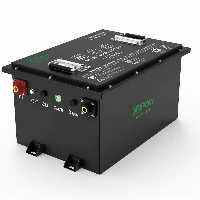
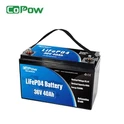
The shortened lifespan of golf cart batteries is due to multiple factors. The five most common causes include: over-discharging, improper charging methods, extreme temperatures (too high or too low), lack of maintenance, and battery aging or quality issues.
If you frequently experience a noticeable decrease in battery range, increasingly longer charging times, or even sudden battery failure, you can troubleshoot by checking these areas.

Over-discharging is the leading cause of premature battery failure.
Improper use is one of the main reasons for the rapid shortening of golf cart battery life, and over-discharging occurs when the battery is frequently discharged below 20% capacity.
For most batteries, frequently discharging them to near-empty levels causes irreversible damage to their internal structure.
Take lead-acid batteries as an example: deep discharge can cause sulfation, leading to a decline in battery capacity. Although lithium-ion batteries are more durable, we still recommend charging when the remaining charge reaches 20%, because even lithium-ion batteries cannot withstand high-intensity discharge. At best, this triggers the BMS's over-discharge protection; at worst, it causes cell damage.
More importantly, poor charging habits can significantly reduce a battery's cycle life. A lithium-ion battery that could originally last 8 years might start experiencing issues after just 6 years. Therefore, you should charge the battery promptly when the charge level drops below 20% and stop charging once it reaches 90%.
Improper charging is quietly damaging your battery.
Improper charging is one of the major causes of battery damage. Many users fail to follow charging guidelines, leading to the battery gradually being depleted without their knowledge.
Common issues include using incompatible chargers, prolonged overcharging or undercharging, and frequent shallow charging (disconnecting before the battery is fully charged). For example, using a lead-acid battery charger on a lithium-ion battery can directly damage the battery due to mismatched charging curves.
Furthermore, leaving a battery partially charged or failing to recharge it promptly over an extended period can lead to a decline in battery performance, particularly in lead-acid batteries. If left uncharged for a long time, lead-acid batteries are prone to sulfation, which can reduce capacity and even render the battery irreparable.
Therefore, users are advised to use dedicated chargers and follow the principle of "charging promptly and fully before use" to effectively extend battery life.
Temperature also affects battery life.
Temperature has a significant impact on battery performance and lifespan. Both high and low temperatures can cause varying degrees of damage to the battery.
In high-temperature environments, the rate of chemical reactions inside the battery accelerates, speeding up the aging process and causing the battery capacity to decline more rapidly; in some cases, this can even lead to swelling. In low-temperature environments, the battery's activity decreases and its output capacity drops. While this does not immediately damage the battery, it affects the user experience and, over the long term, indirectly impacts the battery's lifespan.
Furthermore, frequent temperature fluctuations place stress on the battery's structure and accelerate the fatigue of internal materials.
Therefore, batteries will last longer when used and stored in a relatively stable, moderate-temperature environment.
Lack of maintenance is a major cause of damage to lead-acid batteries.
For lead-acid batteries, routine maintenance is a key factor in their lifespan; neglecting basic maintenance can lead to a gradual decline in battery performance.
Common maintenance issues include: failure to regularly top off distilled water, corroded or loose terminals, and prolonged disuse. During use, lead-acid batteries consume electrolyte. If the electrolyte is not replenished promptly, the internal plates may become exposed, leading to battery damage.
Additionally, if battery terminals become oxidized or loose, it increases the battery's internal resistance, thereby affecting charging and discharging efficiency, and may even cause the battery to overheat or lose capacity.
In contrast, lithium-ion batteries require minimal maintenance, but it is still best to follow the "20-80" rule.
Poor battery quality or natural aging can also lead to a decline in performance.
The quality and age of the battery itself are also key factors affecting its lifespan. High-quality batteries typically have a more stable internal structure and a longer cycle life, while low-quality batteries may fail quickly.
In addition, batteries gradually age. No matter how properly they are used, the chemicals in the battery gradually degrade over charge-discharge cycles, eventually reaching the end of their service life.
Lithium-ion batteries can withstand over 3,000 charge cycles, whereas lead-acid batteries can only handle 1,000 to 3,000 cycles. Therefore, even with proper maintenance, runtime may decline as the battery ages.
How to Prevent Rapid Battery Damage in Golf Carts?
To extend battery life, start by optimizing your daily usage habits:
First, avoid completely draining the battery whenever possible; it's best to keep the charge level between 20% and 80%.
Second, use a charger that matches the battery type, follow the correct charging procedure, and avoid overcharging or undercharging.
Regarding usage conditions, avoid prolonged use in extremely hot or cold environments, and do not leave the battery unused for extended periods. Just as the human body needs to be "exercised" from time to time, a battery needs to be "exercised" from time to time.
For users of lead-acid batteries, you should also regularly check the electrolyte level and keep the terminals clean and secure. These seemingly simple habits can actually significantly extend battery life.
Lithium-Ion Batteries vs. Lead-Acid Batteries: Which Lasts Longer?
In golf cart applications, lithium-ion batteries and lead-acid batteries differ significantly in terms of lifespan and maintenance.
| Comparison Item | Lead-Acid Battery | Lithium Battery (LiFePO4) |
|---|---|---|
| Cycle Life | 200–500 cycles | 3000–5000 cycles |
| Service Life | 2–5 years | 8–10 years |
| Maintenance Requirement | High | Low |
| Energy Density | Relatively low | Higher |
| Charging Efficiency | Slower | Faster |
Overall, lithium-ion batteries offer advantages in lifespan, efficiency, and maintenance costs, but their initial cost is relatively high; lead-acid batteries, on the other hand, are less expensive but require more frequent maintenance and careful handling.
Summary: Most battery issues can actually be avoided.
Rapid battery degradation in golf carts rarely occurs suddenly; rather, it results from a combination of long-term usage habits and environmental factors.
By avoiding deep discharges, following proper charging procedures, controlling the operating temperature, performing routine maintenance, and selecting the appropriate battery type, most battery issues can be effectively prevented.
If you'd like to learn more about battery lifespan, please refer to our guide on "How Long Do 48V Lithium-Ion Golf Cart Batteries Last?"