Against the backdrop of rapid advancements in new energy and energy storage technologies, deep-cycle batteries-as the core power source for various applications-are attracting increasing attention from users and procurement decision-makers. From traditional lead-acid batteries to lithium-ion battery technologies represented by lithium iron phosphate, the market is undergoing significant technological upgrades and product iterations, which has also given rise to many new brands with distinct positioning and advantages.
This article will conduct a comparative analysis of several representative brands in the deep-cycle battery sector, covering key dimensions such as their founding dates, product advantages, technological approaches, and application scenarios.
| Brand | Year Founded | Advantages |
|---|---|---|
| CoPow Battery | 2010 | Focuses primarily on deep-cycle lithium batteries Cells sourced from CATL, BYD, and EVE; supports deep customization (voltage, capacity, BMS, structure); applications cover a wide range of scenarios. |
| Trojan Battery Company | 1925 | A leading manufacturer of traditional deep-cycle lead-acid batteries, featuring mature technology, high stability, and strong consistency. |
| Battle Born Batteries | 2010 | Specializes in LiFePO4, featuring plug-and-play solutions suitable for RVs, camping, and other off-grid applications. |
| Renogy | 2010 | Offers integrated "battery + PV + inverter" solutions with strong system integration capabilities. |
| VMAXTANKS | 1991 | AGM deep-cycle batteries with stable performance, suitable for marine and energy storage applications. |
| Optima Batteries | 1970s | Features an AGM spiral structure. Offers strong shock resistance and is suitable for both starting and deep-cycle applications. |
| Lifeline Batteries | 1980 | High-end AGM deep-cycle batteries, focused on marine and RV sectors, with high reliability. |
| Universal Power Group | 1968 | Offers a wide range of battery products, with a focus on distribution channels and integration, providing extensive product coverage. |
| Interstate Batteries | 1952 | A strong channel distribution brand with robust local service and high availability. |
| U.S. Battery Mfg. | Founded in 1926 | A long-established manufacturer of deep-cycle lead-acid batteries, specializing in traditional technology with stable battery performance. |
CoPow Battery
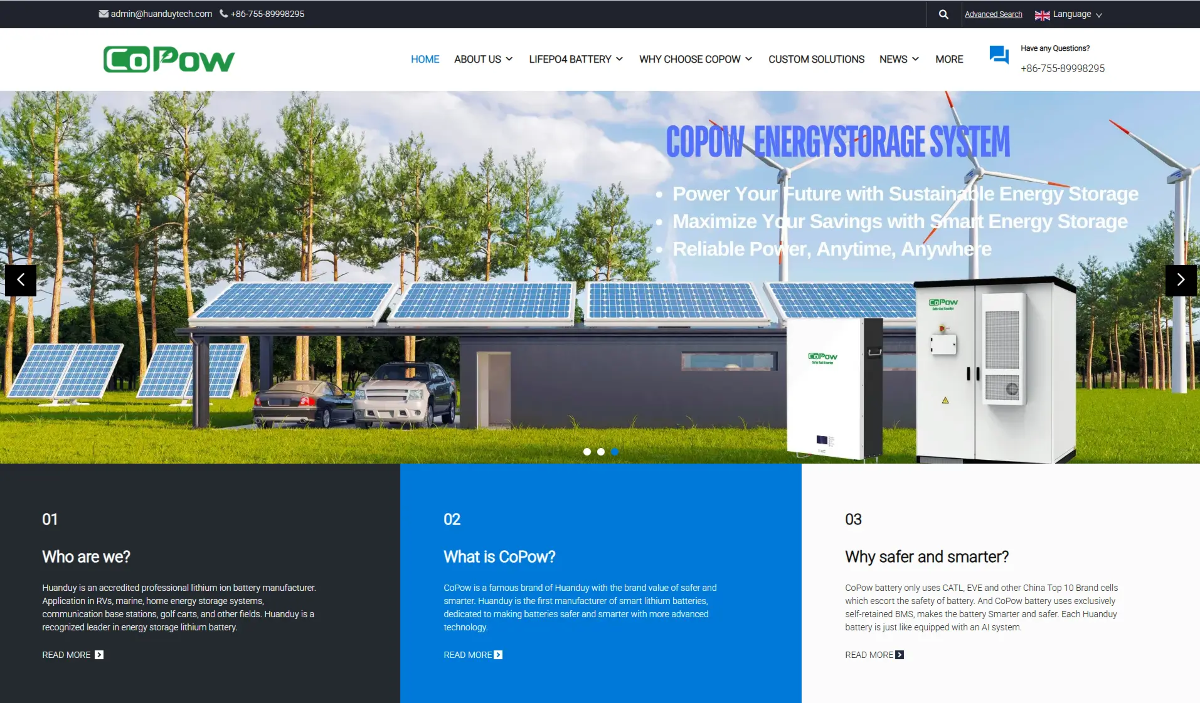
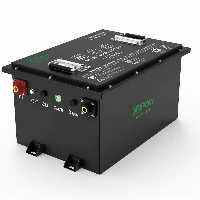
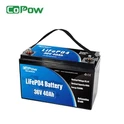
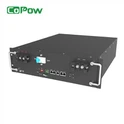
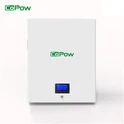
Founded in 2010, CoPow is a deep-cycle lithium-ion battery manufacturer based in Shenzhen, China, specializing in the production of lithium iron phosphate batteries with exceptionally high cycle life.
Each deep-cycle lithium-ion battery pack utilizes high-quality Grade A cells from renowned manufacturers such as CATL, BYD, EVE Energy, and Guoxuan High-Tech, with a cycle life ranging from 2,000 to 6,000 cycles.
These batteries are primarily used in golf carts, RVs, forklifts, marine vessels, and battery energy storage systems. They can also serve as backup batteries and are customizable for various application areas.
For the marine sector, the company has designed a series of IP67-rated, waterproof, and rugged marine lithium-ion batteries specifically for the humid, salt-fog-prone environments at sea. More importantly, these batteries deliver a cold-start current of up to 1,200A, ensuring engines start reliably even at temperatures below 0°C.
For forklifts, they offer flexible options ranging from 24V to 80V. Whether you use small or large forklifts, there are corresponding battery models available. These batteries are also equipped with a smart battery management system, allowing managers to view battery performance data-including voltage, current, and capacity-directly from the system backend, enabling them to troubleshoot anomalies one by one and take preventive measures in advance. Of course, if you find the lithium batteries too lightweight, they can also customize metal counterweights for you to balance the forklift.
Golf carts are their specialty. From 36V to 72V lithium-ion golf cart batteries, each battery conversion kit is designed for mainstream golf cart brands (such as EZGO, Club Car, Yamaha, Evolution, etc.) and can be installed directly into the battery compartment.
In the RV sector, users' power needs are more complex. Some users may only need a single 12V 100Ah deep-cycle lithium battery to meet their requirements, while others may require higher capacities, such as 300Ah. In such cases, it is difficult for users to find such high-capacity batteries on the market, but CoPow can provide customization services.
Overall, CoPow's greatest strength lies in its ability to provide high-quality customized solutions tailored to customer needs, including communication protocols, dimensions, casings, voltage, capacity, and even BMS protection mechanisms and thresholds-meeting your requirements from the inside out.
Especially in cold regions, CoPow also equips users with self-heating modules to ensure the battery functions normally even at sub-zero temperatures.
Our assessment of CoPow is that it is a deep-cycle lithium-ion battery manufacturer offering exceptional value for money and high-end customization capabilities, making it worthy of inclusion on your shortlist of suppliers.
Trojan Battery Company
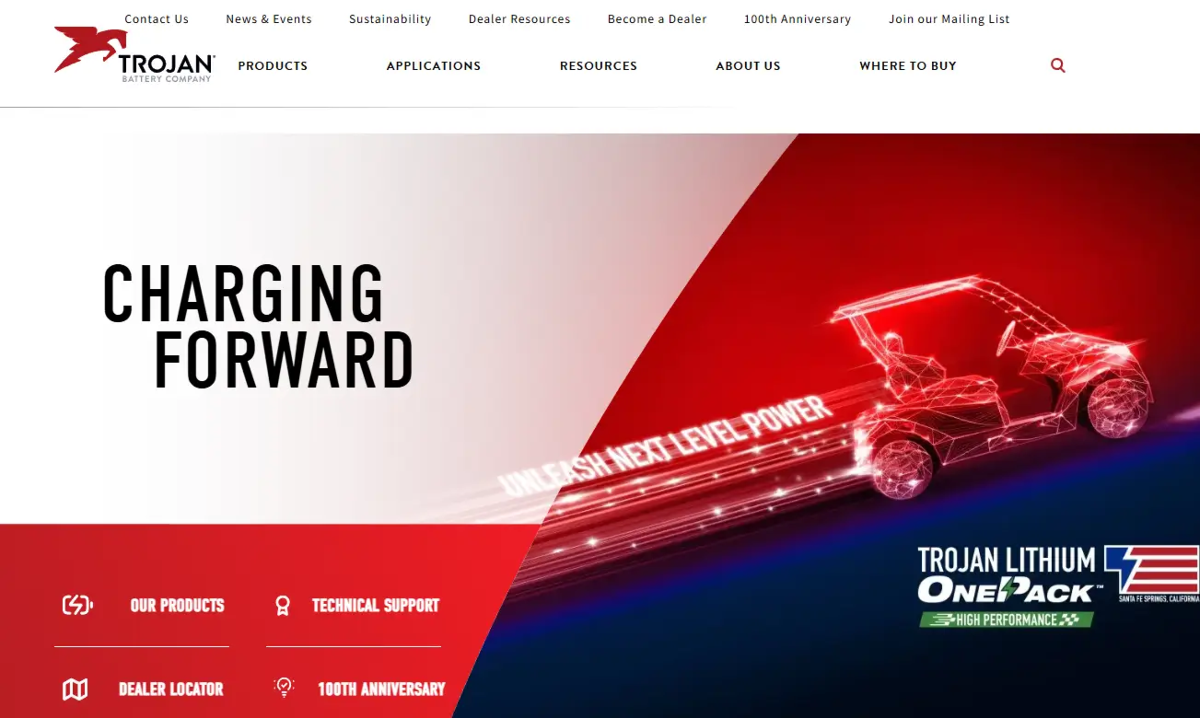
Trojan Battery Company is a leading manufacturer in the deep-cycle battery sector. If you are a procurement professional with a sufficient budget, it should be a top contender for your consideration.
Founded in 1925 and headquartered in California, the company initially began by manufacturing automotive batteries.
The company adopted deep-cycle technology early on and participated in the development of the world's first deep-cycle battery for golf carts in the 1950s, establishing its leading position in the golf cart and electric mobility scooter segments. However, its core product remains the deep-cycle lead-acid battery.
From a procurement perspective, Trojan's greatest strength lies not in price, but in the stability, maturity, and proven reliability of its products. Its product line is comprehensive, covering traditional lead-acid batteries, AGM batteries, and lithium-ion batteries, with voltage ranges from 2V to 48V. These products are suitable for a wide range of applications, including golf carts, lift platforms, cleaning equipment, marine vessels, RVs, and energy storage systems.
What truly allows it to maintain a firm foothold in the B2B market is its technical expertise and consistency: it operates multiple manufacturing plants and dedicated R&D centers in the United States and has long been involved in setting industry standards, such as BCI and IEC testing specifications. This means that its products not only boast excellent specifications but also deliver consistent performance across different batches and projects-a factor that is particularly important for bulk procurement.
However, it's important to note that Trojan is not a budget-friendly option. According to market feedback, it is often perceived as a high-priced yet reliable brand, making it more suitable for projects with high stability requirements and defined lifecycle needs-such as golf cart fleets, rental equipment, and commercial cleaning equipment. For projects where price sensitivity is a major factor, many buyers will consider alternative brands.
Battle Born Batteries
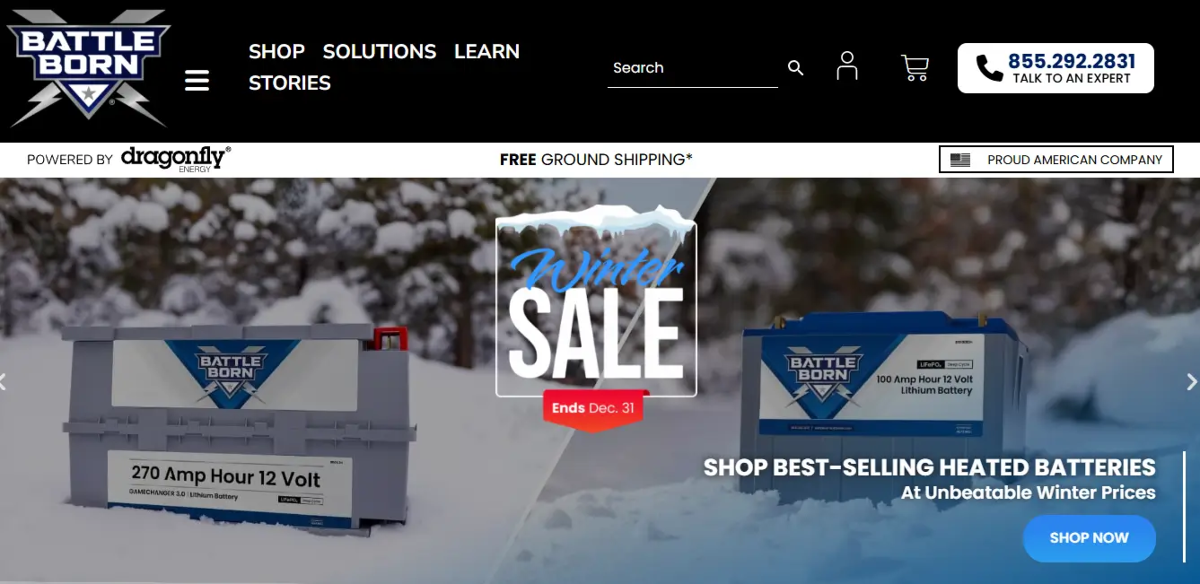
Battle Born is essentially a brand specializing in deep-cycle LiFePO4 batteries, headquartered in Nevada, USA. You can think of it this way: rather than producing a full range of battery products, it-much like CoPow-is betting on the trend of lithium-ion batteries replacing lead-acid batteries, and it does so with a very focused approach.
Its core product lineup revolves almost entirely around 12V, 24V, and 48V LiFePO4 batteries, with typical capacities including 100Ah and 270Ah. Its target applications are also clearly defined, encompassing recreational vehicles (RVs), marine applications, off-grid energy storage, camping, and overlanding.
From a procurement perspective, Battle Born's defining feature is not industrial-grade products, but rather user-experience-oriented engineered solutions. For example, its key selling points include:
It utilizes the safer and more stable LiFePO4 chemistry and features a built-in battery management system; in terms of performance, it significantly outperforms traditional lead-acid batteries-for instance, it is lighter, charges faster, has a cycle life of 3,000–5,000 cycles, and a service life of over 10 years; it supports 100% depth of discharge, whereas lead-acid batteries are limited to 50%.
But what truly made it a hit in the market wasn't just the specs-it was the low barrier to entry. Many products are designed as "drop-in replacements," meaning they can directly replace existing lead-acid batteries without requiring complex system modifications.
This is particularly user-friendly for end-users, especially DIY enthusiasts and RV owners in Europe and the U.S., and explains why the brand has spread so rapidly within YouTube, Van Life, and Off-Grid communities.
However, it is important to note that Battle Born is essentially a brand geared toward the consumer (To C) and prosumer markets, rather than a traditional large-scale industrial OEM supplier.
Renogy
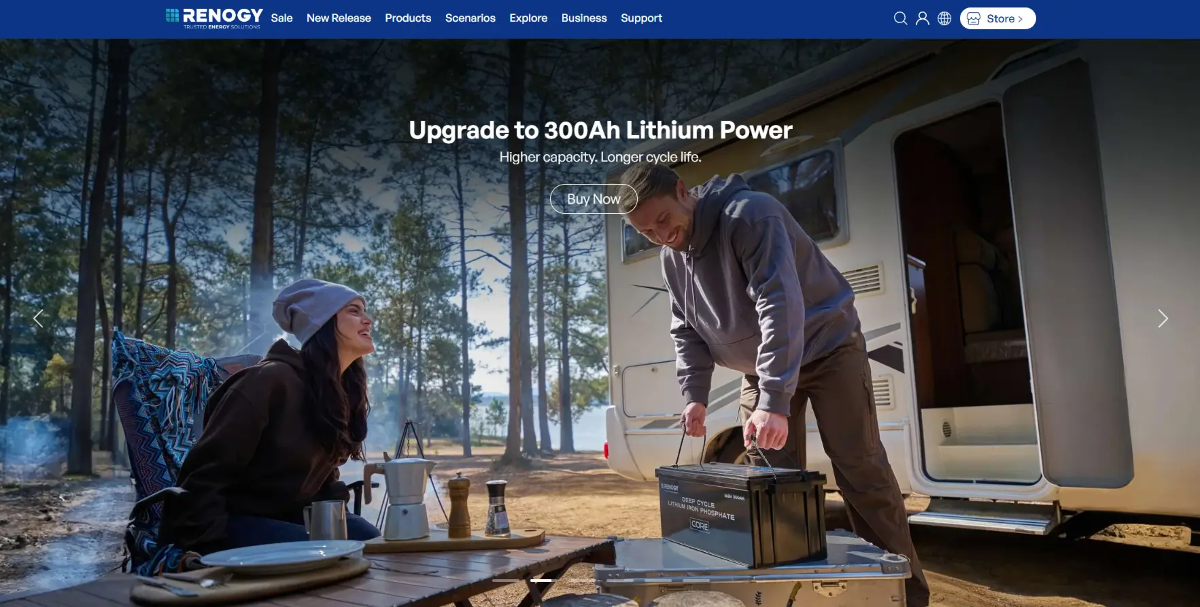
Renogy is a highly active provider of battery and system solutions in the solar energy storage and outdoor power systems sectors. Unlike traditional deep-cycle battery manufacturers, which focus solely on batteries, Renogy integrates batteries, solar panels, controllers, inverters, and other components into a comprehensive off-grid and mobile power system, creating a cohesive ecosystem.
The brand enjoys high recognition in the outdoor, RV, camping, and solar energy storage markets in Europe and the United States. Its product line ranges from traditional deep-cycle lead-acid (AGM/GEL) batteries to lithium-ion batteries, offering a variety of capacity and voltage options tailored to different application scenarios.
When it comes to deep-cycle batteries, Renogy's products can be divided into two categories: the first is traditional sealed lead-acid deep-cycle batteries (AGM/GEL), which are designed to meet basic energy storage needs. These products offer advantages such as a sealed design, low maintenance, and high chemical stability, making them suitable for scenarios where budgets are limited but stable discharge is required.
The second category consists of LiFePO4 deep-cycle batteries. Compared to lead-acid batteries, this lithium-ion technology offers significant advantages in terms of weight, cycle life, and efficiency. Additionally, many models feature smart capabilities, such as Bluetooth monitoring or low-temperature self-heating designs, which better meet the demands of solar power systems or mobile power systems.
From a procurement and product selection perspective, Renogy's strengths lie in its extensive product lineup and ease of system integration.
If your project involves solar energy storage, RV/marine power systems, or portable camping power stations, choosing Renogy batteries will make it easier to pair them with other components-such as solar controllers and inverters-thereby reducing the effort required for compatibility testing. Additionally, the brand holds a significant market share in Europe and the United States.
VMAXTANKS / VMAX USA
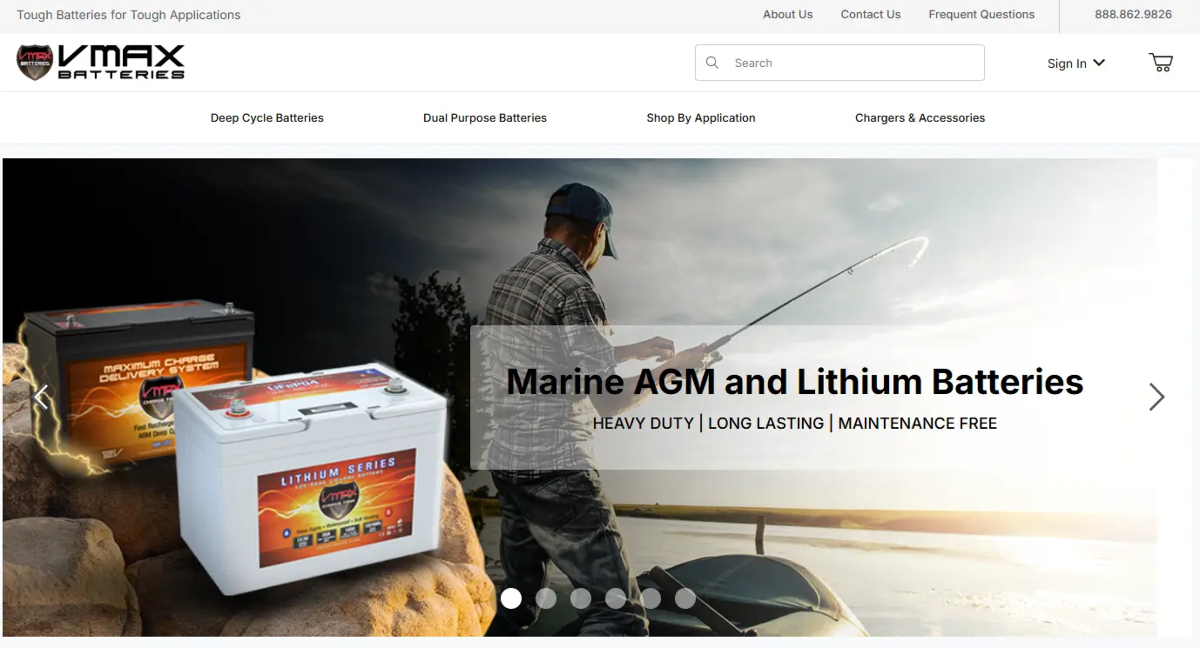
VMAXTANKS (also commonly referred to as VMAX USA) was founded in 1991 and is a deep-cycle battery brand and manufacturer headquartered in Michigan, USA.
The brand is renowned in the North American market for its high-performance AGM deep-cycle batteries and lithium iron phosphate batteries. Its products are positioned as heavy-duty solutions capable of providing reliable power under harsh conditions and are widely used in solar energy storage, RVs, marine applications, industrial equipment, off-road/outdoor activities, electric utility vehicles, medical equipment, and wheelchairs/mobility scooters.
In terms of product design, VMAX TANKS' AGM deep-cycle batteries utilize proprietary military-grade alloys and absorbed glass mat (AGM) technology. This construction enables the batteries to deliver outstanding performance during deep discharge, frequent cycling, and high-current output.
Based on actual user feedback and community discussions, VMAX deep-cycle AGM batteries are often praised by real users as reliable workhorse power sources.
For example, in marine, camping, and solar system applications, it provides stable power over extended periods; some users also note that it truly excels at deep-cycle applications, such as in fishing boats or small RV systems. However, there are also discussions within the community reminding users to pay attention to the specific battery model and ensure it is clearly labeled as a deep-cycle battery, as different AGM battery models are designed for different purposes.
From a procurement perspective, VMAXTANKS positions itself as a supplier of mid-to-high-end deep-cycle batteries that prioritize reliability and offer broad applicability.
Its products are available in the North American market and are backed by a local support network, which is an advantage for cross-border or global procurement. VMAXTANKS' AGM series is better suited for projects requiring low-maintenance batteries with strong environmental adaptability, such as outdoor solar and marine applications. The LiFePO4 series, on the other hand, is suitable for energy storage systems requiring long service life and lightweight design.
It is important to note that the warranty period for VMAXTANKS' AGM deep-cycle batteries is relatively short; for example, AGM batteries come with a 12-month warranty, while LiFePO4 batteries offer up to 7 years. Therefore, when making a purchase, it is essential to evaluate whether the product aligns with the project's lifecycle and maintenance plan.
Optima Batteries
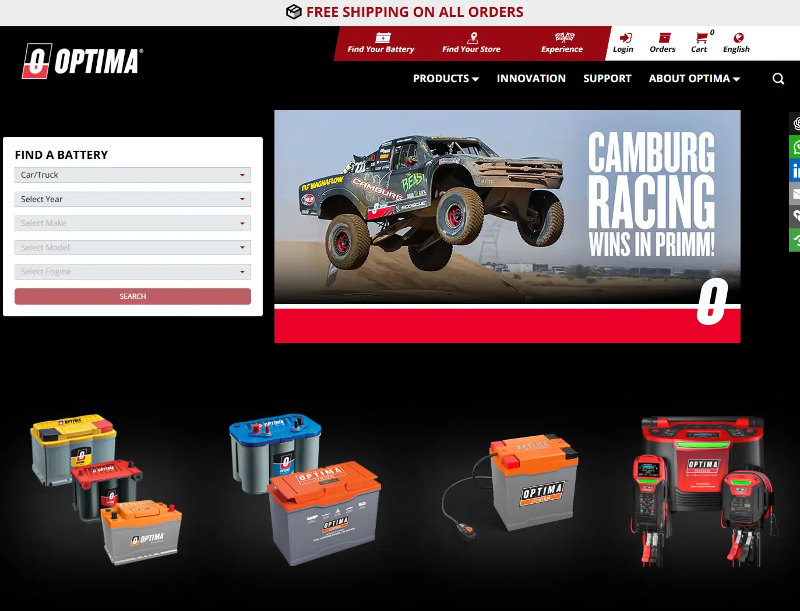
Optima Batteries is not merely a traditional supplier specializing in deep-cycle batteries, but rather a battery brand focused on the automotive and recreational power markets.
Its main products utilize absorbed glass mat (AGM) technology. Through a unique spiral-wound structure, they offer superior shock resistance, lower self-discharge rates, higher cycle life, and more stable power output.
This design has led to Optima being widely adopted by end-users in many scenarios that require both starting power and deep-cycle capabilities; it can be said to be a brand specializing in dual-purpose lead-acid batteries.
Lifeline Batteries
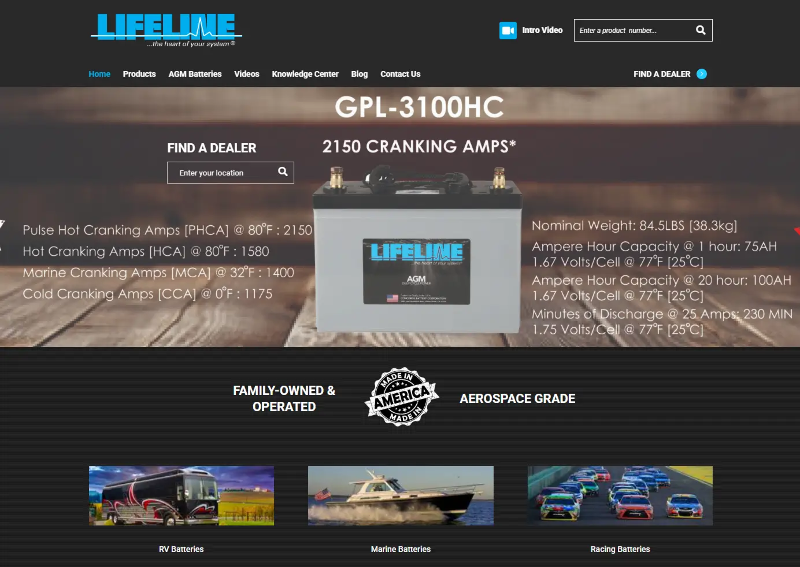
Lifeline Batteries is a highly reputable American brand in the deep-cycle AGM battery sector. Founded and manufactured by Concorde Battery Corporation, it is a manufacturer that specializes exclusively in high-end deep-cycle lead-acid batteries.
Unlike some brands with very broad product lines, Lifeline's core strength lies in its focus on high-performance AGM deep-cycle batteries, particularly in the marine and RV sectors, where it excels.
Given its brand history and positioning, Lifeline's AGM deep-cycle batteries were originally designed for demanding power applications such as marine and RV environments. These products are commonly used in scenarios requiring extended periods of off-grid power, such as boats, full-time cruising RVs, and camping equipment.
Lifeline was an early pioneer in introducing the industry's first AGM L16-sized battery, which has long been regarded as the benchmark for high-quality AGM deep-cycle batteries. It is worth noting that Lifeline is also actively rolling out deep-cycle lithium iron phosphate batteries.
Universal Power Group
Universal Power Group (UPG) is a brand with a long history, yet its positioning and perception in the battery market are somewhat complex, particularly in the deep-cycle battery sector.
The brand does indeed offer a range of sealed lead-acid, gel, and deep-cycle battery products, which are widely used in UPS systems, solar energy storage, RVs/boats, and backup power applications. However, its actual performance and positioning within the supply chain and the market differ from other brands that specialize in deep-cycle batteries.
According to official records, Universal Power Group traces its history back to 1968. The company began as a distributor of electronic components and gradually evolved into a provider of customized energy storage solutions. Its product line includes sealed lead-acid batteries, lithium iron phosphate batteries, and customized lithium-ion batteries, among others. The company emphasizes "reliability and performance" and claims to provide power solutions for both everyday and demanding applications.
In terms of products, UPG offers a variety of AGM/sealed lead-acid deep-cycle batteries, such as the common 12V 100Ah SLA AGM model. These batteries are designed to be maintenance-free and leak-proof, suitable for applications such as solar power and backup power, and comply with relevant transportation and safety standards. Some sources claim that these batteries feature a true deep-cycle design, can be installed in any orientation, and are suitable for typical deep-discharge scenarios.
However, within real-user communities, there are also some negative reviews regarding Universal Power Group. Some users report that it is difficult to find genuine UPG batteries on the market, and that what is often seen are other brands or OEM products. Some discussions suggest that for certain applications, such as backup pumps or small solar systems, standard SLA/AGM batteries are sufficient, and there is no need to pursue high-end brands.
Other comments point out a gap between battery quality and brand recognition, suggesting that more reliable or higher-performance alternatives should be considered.
This reflects a practical reality: the "Universal Power Group" brand is frequently used by various suppliers and channels in the market, and products may sometimes be OEM or private-label items. Consequently, the brand's reputation and trustworthiness are somewhat weaker compared to manufacturers specializing in deep-cycle batteries (such as Trojan and CoPow).
In other words, it functions more as a general-purpose battery supplier rather than a specialized manufacturer strictly focused on deep-cycle battery engineering with extensive validation data and case studies to support its products.
Interstate Batteries
Interstate Batteries is a battery brand centered around its channel and distribution network.
Founded in 1952 and headquartered in Texas, it is a leading battery distributor in North America. Interstate Batteries sells a wide variety of batteries through its extensive dealer network. However, not all of these batteries are manufactured in-house; instead, the company outsources production to manufacturers such as Clarios and Exide, then sells them under its own brand.
This is a crucial point, as it directly determines that the brand's procurement logic is fundamentally different from that of manufacturer-driven brands like Trojan and Lifeline.
However, from a procurement perspective, its core advantage lies not in technology, but in two more practical aspects.
- First, Interstate maintains an extensive distribution network across North America, with many local stores offering direct pickup. This makes it highly convenient for local projects, after-sales service, or technical support-something many Chinese deep-cycle battery manufacturers cannot match.
- Second, its product range is extensive and highly standardized. Interstate offers numerous deep-cycle battery models (SRM, GC2, EFB, etc.), covering nearly all common application scenarios. Users do not need to customize; they can simply select a model and use it, which is very user-friendly for small and medium-sized projects or distributors.
However, it also faces some practical challenges: one is that product consistency depends on the supply chain, as many products come from different manufacturers, and actual performance may vary between batches and models-this requires special attention in large-scale projects; another is that many products are actually dual-purpose rather than pure deep-cycle batteries.
For example, its SRM series essentially consists of batteries designed for both starting and deep-cycle use, rather than featuring a structural design truly optimized for deep cycling like CoPow's.
This has sparked discussion within the user community, with some professional users noting: "Many of Interstate's so-called deep-cycle batteries are actually closer to hybrid batteries."
U.S. Battery Mfg. Co.
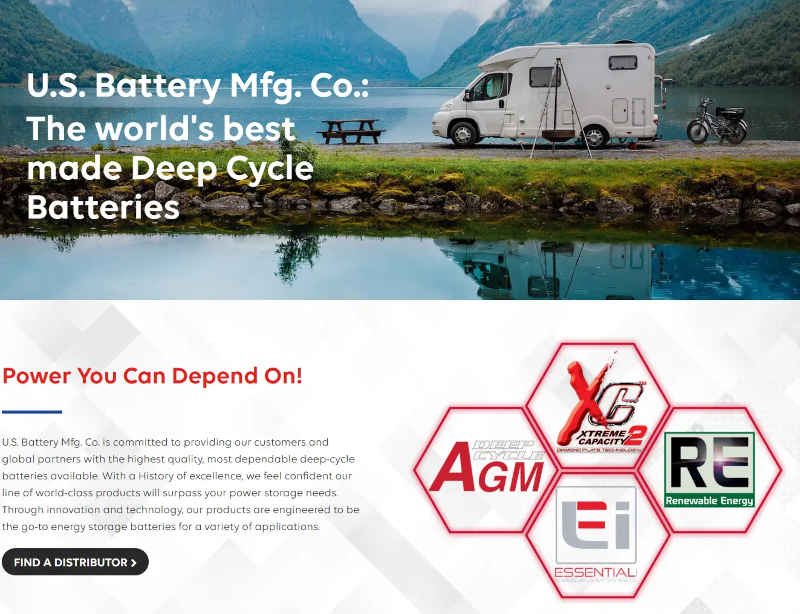
The U.S. Battery Mfg. Co. brand is often underestimated because it does little marketing. However, within the deep-cycle battery industry, it is a quintessential, long-established manufacturer. Founded in 1926 and headquartered in California, the company has a history spanning nearly a century. From its inception, it has focused exclusively on deep-cycle lead-acid batteries, setting it apart from many brands that have since pivoted or diversified.
In terms of its product lineup, U.S. Battery's core offerings remain flooded deep-cycle batteries, such as standard models like the GC2 and L16, which are widely used in golf carts, lifting equipment, cleaning equipment, and solar energy storage applications.
U.S. Battery's lead-acid batteries incorporate proprietary technologies such as the XC2™ formula and Diamond Plate Technology®, designed to enable batteries to reach full capacity faster, deliver more total energy over their entire lifecycle, and extend cycle life.
Additionally, U.S. Battery offers an AGM product line and has begun expanding into LiFePO4 in recent years, such as the ESSENTIAL Li series, which features a BMS, CAN communication, and IP67 protection-clearly signaling a shift toward equipment integration and industrial applications.
What is CoPow's production capacity and scale?
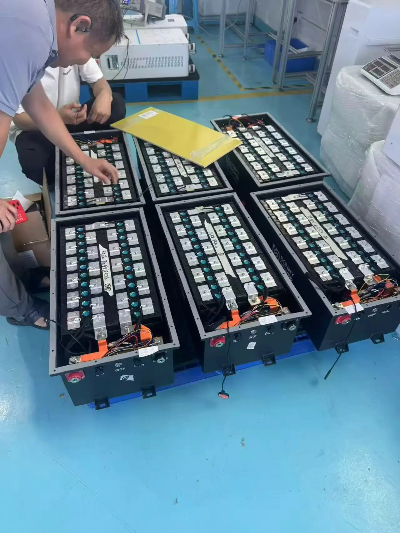
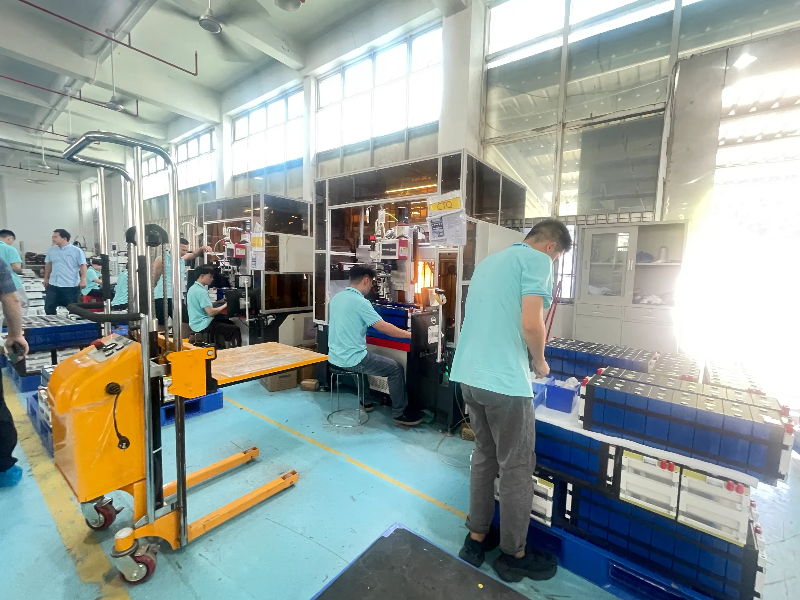
CoPow operates its own production facility in Pingshan, Shenzhen, covering an area of approximately 32,000 square meters. The facility is equipped with five battery pack assembly lines and four automated packaging lines, and employs approximately 200 people.
Under standardized production conditions, its monthly production capacity can reach approximately 50,000 battery units.
When measured using the GWh-level capacity standard more commonly used in the battery industry, CoPow's total annual production capacity ranges from approximately 2 GWh to 10 GWh (figures may vary depending on product lines and calculation methods).
What types of deep-cycle batteries does CoPow offer?
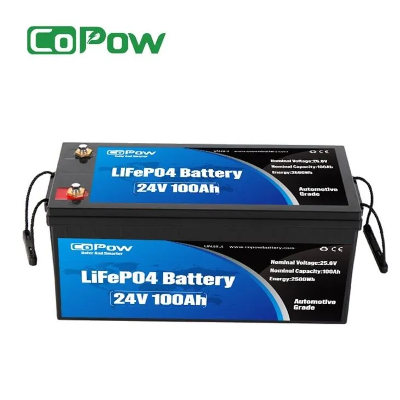
CoPow does not manufacture traditional lead-acid batteries; instead, it specializes in deep-cycle LiFePO4 batteries. Overall, CoPow's deep-cycle battery lineup can be understood as a single technological framework tailored for diverse application scenarios.
First is the most fundamental category-general-purpose LiFePO4 batteries on a standard voltage platform, including various specifications such as 12V, 24V, 36V, and 48V. Building on this foundation, CoPow has further optimized its products for different application scenarios. Its battery products are primarily used in RVs, boats, golf carts, solar energy storage, forklifts, and ground cleaning equipment.
What authoritative certifications does CoPow hold?
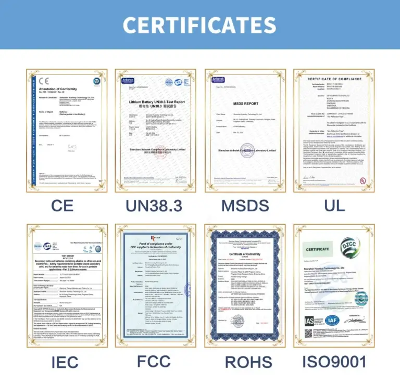
CoPow maintains a comprehensive certification system covering manufacturing (ISO), product safety (UL/CE/IEC/CB), and global shipping (UN 38.3), enabling it to meet compliance requirements in North America, Europe, and global markets.
First, CoPow has obtained ISO quality management system certification, which is the most fundamental quality certification and focuses primarily on factory management, production processes, and quality control systems.
Next are the core product safety and performance certifications. CoPow's battery products have obtained CE (EU compliance certification), UL (U.S. safety certification), IEC 62619 (safety standard for energy storage/industrial lithium-ion batteries), TÜV-CB (International Electrotechnical Commission certification), FCC/EMC (electromagnetic compatibility certification), and other certifications, granting them access to major global markets.
Finally, there are transportation and hazardous materials certifications-often overlooked by many buyers but actually critical-including UN38.3 (lithium battery transportation safety certification) and MSDS (Material Safety Data Sheets).
In terms of deep-cycle batteries, what customization capabilities does CoPow offer?
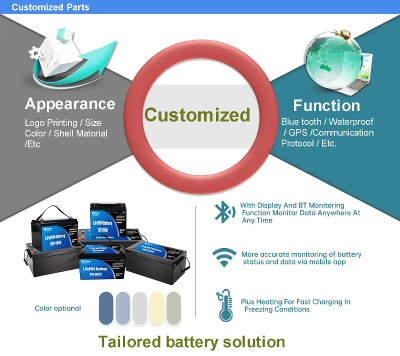
Unlike typical stock suppliers who can only offer a few fixed models, CoPow possesses mature capabilities in customized design and engineering support, enabling it to adjust key battery parameters and physical structures according to customers' specific application requirements.
CoPow can design suitable battery solutions based on customers' ideas, including adjustments across multiple dimensions such as capacity, rated voltage, dimensions, and form factor.
In terms of specific product lines, CoPow's deep-cycle series covers common voltage specifications such as 12V, 24V, and 48V.
Building on this, CoPow also supports customization of battery voltage, capacity, dimensions, mounting configurations, and system integration methods. For example, specific vessels, RVs, or industrial equipment may require battery packs of specific shapes to be installed within limited spaces.
CoPow can adjust battery dimensions and connection methods to meet the needs of different customers. Additionally, for diverse operating environments such as marine salt fog and high vibration, CoPow offers custom designs including enhanced enclosure protection ratings, reinforced internal structures, and expanded smart battery management system functionality.
CoPow's customization extends beyond the batteries themselves to include additional features such as Bluetooth monitoring, heating functions, specialized terminals/interfaces, and adjustments to cable length and color, ensuring the products better align with the technical and maintenance requirements of system integrators in real-world applications.
What is CoPow's R&D capability like?
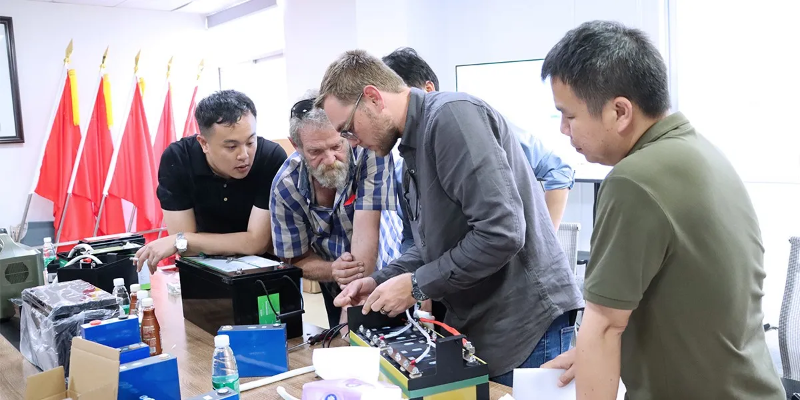
CoPow holds more than 40 core patents in China and abroad, covering various aspects such as lithium-ion battery materials, design, and manufacturing processes, and has participated in the formulation of approximately 15 domestic and international battery product standards.
The company has also established its own laboratories and testing centers to validate technologies related to safety, reliability, and performance optimization. These facilities enable the company to conduct scientific experiments and data analysis for new product development and the improvement of existing products, rather than relying solely on experience for design.
What is CoPow's supply chain like?
CoPow's supply chain system is structured to be controllable at the upstream level, self-developed at the midstream level, and integrated at the downstream level; it is not a trading company that simply relies on contract manufacturing or piecemeal procurement.
When it comes to upstream raw materials and core components, CoPow insists on using Grade A new battery cells from leading cell manufacturers, such as CATL and EVE. These cells represent top-tier industry resources, ensuring a stable supply and quality assurance at the most critical stage of the supply chain.
At the same time, CoPow does not simply procure cells for assembly; instead, it performs system-level integration, including battery module design, structural component matching, and battery management system development. This transforms CoPow's supply chain relationships from mere procurement into a partnership based on technical collaboration.
In the midstream manufacturing phase, CoPow possesses its own production and assembly capabilities. Combined with standardized production processes and quality control systems, the company can manage the entire process-from cell intake to module assembly and pack testing-reducing reliance on external contract manufacturers. This provides greater control over delivery schedules, quality consistency, and batch stability.
In terms of supply chain management and delivery, CoPow possesses the capability to ship products to global markets. Its supply chain system must simultaneously manage raw material procurement, production scheduling, inventory management, and international logistics compliance.
Consequently, CoPow's supply chain is not only production-oriented but must also be export-oriented. This explains why its products are able to serve customers in numerous countries and regions worldwide.
What is CoPow's warranty policy?
CoPow offers a 5- to 10-year warranty on its deep-cycle lithium iron phosphate batteries and maintains open communication with customers in a responsible manner.
What kind of after-sales service and technical support does CoPow provide?
CoPow provides fast, comprehensive, and long-term after-sales service, offering technical support not only during the product design, customization, and delivery phases, but also providing ongoing online support and technical assistance after customers begin using the products.
For example, when users encounter issues related to installation, commissioning, or operation, CoPow offers 24/7 online technical support and free technical consultations to help customers quickly resolve specific problems encountered during use. Additionally, during the pre-sales phase, CoPow provides professional advice and optimization solutions based on the customer's equipment specifications and application scenarios.

conclusion
The deep-cycle battery market is currently undergoing a critical transition from traditional lead-acid technology to lithium-ion technology, represented by LiFePO4. There are significant differences among various brands in terms of technological approaches, product positioning, and application focus.
Traditional manufacturers such as Trojan and U.S. Battery have long-standing expertise in stability and maturity, while brands like Battle Born and Renogy place greater emphasis on user experience and system integration, targeting end-user applications. Brands such as VMAXTANKS and Lifeline maintain strong professional advantages in specific niche markets.
Among these brands, CoPow Battery exemplifies a typical "customization + lithium-ion" development path. Not only does it specialize in LiFePO4 deep-cycle batteries, but through high-quality cells, flexible structural design, and a comprehensive BMS system, it has achieved deep customization across multiple dimensions, including capacity, size, interfaces, and functionality. Its production capacity, supply chain management, certification systems, and global delivery capabilities are also supported by a relatively comprehensive infrastructure.
If you'd like to join the trend of "switching from lead to lithium," please contact CoPow-their customer service team will respond to you within 24 hours.