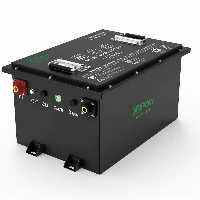
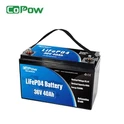
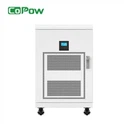
Under normal usage conditions, the physical lifespan of a standard 48V lithium-ion battery for golf carts can reach 8–10 years, or even longer, depending on usage habits and maintenance practices.
The lithium batteries referred to here are lithium iron phosphate batteries. Generally, LiFePO4 batteries have a charge-discharge cycle life of 3,000–5,000 cycles, while high-quality batteries can reach 4,000–6,000 cycles or more, such as golf cart lithium batteries using CATL's Grade A LiFePO4 cells.
Additionally, a fully charged 48V golf cart lithium-ion battery typically provides a range of approximately 25 to 50 miles. The exact range depends on several factors, including battery capacity, the weight of passengers and cargo, road conditions, driving speed, the power consumption of onboard electrical devices, and ambient temperature.
In the following sections, we'll take a closer look at battery lifespan, cycle life, and real-world range. We'll also explain why the same battery may last significantly longer for some users than for others. Keep reading.

What Is the Lifespan of a 48V Golf Cart Battery?
As we already know, with proper use, lithium-ion batteries in golf carts can last 8 to 10 years.
However, golf carts use more than just lithium-ion batteries; they also utilize other types of batteries, including flooded lead-acid batteries, AGM lead-acid batteries, gel lead-acid batteries, and NMC batteries. These batteries have different physical lifespans, so let's take a closer look:
| Battery Type | Typical Cycle Life | Estimated Service Life | Depth Of Discharge (DoD) |
|---|---|---|---|
| Flooded Lead-Acid (FLA) | 200–500 Cycles | 2–3 Years | ~50% |
| AGM Lead-Acid | 400–800 Cycles | 3–5 Years | ~50–60% |
| Gel Lead-Acid | 500–1,000 Cycles | 4–6 Years | ~60% |
| Standard Lithium-Ion (NMC) | 1,000–2,000 Cycles | 5–7 Years | ~80–90% |
| LiFePO4 Lithium Battery | 3,000–5,000+ Cycles | 7–8+ Years | ~90–100% |
| CoPow 48V 105Ah LiFePO4 Golf Cart Battery | 4,000–6,000+ Cycles | 8–10+ Years | ~95–100% |
Although lead-acid batteries are rated to last 2–3 years, users often find that the batteries begin to develop various problems-some of them quite serious-before they've even been in use for two years.
On golf cart forums such as "Buggies Gone Wild," discussions about lead-acid battery capacity degradation, voltage drop, and reduced runtime are very common. Many users report that as the battery ages, the driving range becomes increasingly shorter; whereas it used to last a full day, now the speed drops significantly after just one or two miles.

how long do 48V golf cart batteries last on one charge?
Generally speaking, a fully charged 48V golf cart battery can typically travel 15–60 miles. This range is quite broad and not particularly useful as a reference. You'll need to narrow down your search further.
If you're using a standard lead-acid battery, a single full charge will typically allow you to travel 15–30 miles under ideal conditions.
However, if you use a LiFePO4 battery, such as the CoPow 48V 105Ah lithium-ion golf cart battery, a single full charge can provide a range of 20–45 miles. With two passengers on board, the range is 30–45 miles; with four passengers, it is 20–35 miles; and when fully loaded, it is 20–30 miles. These figures are based on actual testing.
Actual operating conditions are highly complex; factors such as terrain, driving speed, temperature, oversized tires, windshields, roofs, and onboard equipment (such as headlights and audio systems) can all affect the range of a golf cart battery to some extent. Therefore, the data provided here is for reference only.
When selecting a battery, it is recommended to choose a model with a slightly higher capacity rather than one that merely meets basic requirements.
Let's see what everyone has to say:
Lead-Acid Battery Case Study
A user named "Pat5000" from the golf cart forum "Buggies Gone Wild" shared his real-world test data. He drives a 2013 Yamaha electric golf cart equipped with six 8V Trojan T-875 lead-acid batteries. Additionally, the vehicle was fitted with a flip-up seat with armrests, a pop-up windshield, a 48V-to-12V step-down converter, halogen headlights, and LED taillights.
During the test, he recorded data using a GPS and a Fluke 87 digital multimeter. Wind speeds were approximately 10 mph that day, and the test route consisted of flat roads.
The test results showed that after traveling about 15 miles, the battery pack still retained approximately 80% of its remaining charge. After the vehicle had been stationary for 1 hour, the measured battery pack voltage was 49.65V.
Although the user did not wait 12 to 24 hours to obtain more accurate open-circuit voltage data, this example still demonstrates that a well-maintained 48V Trojan T-875 battery pack can provide a range of over 15 miles under ideal road conditions.
Lithium-Ion Battery Case Studies
Tom47, a user on the Cartaholics golf cart forum, reported that his Club Car golf cart was equipped with a set of Eco Battery 48V 72Ah lithium iron phosphate batteries, paired with a 400A controller and an Admiral A-2 motor.
On paved roads with no significant inclines, the vehicle can travel approximately 35 miles from 100% battery charge to 20% SOC, and if driven further, it can travel about 40 miles.
Golf cart batteries vary in range depending on their type and brand. We can only provide you with a rough reference table, which we hope will be helpful:
| Battery Type | Capacity | Typical Driving Range |
|---|---|---|
| Flooded Lead-Acid | 50Ah | 8–15 miles |
| Flooded Lead-Acid | 65Ah | 10–18 miles |
| Flooded Lead-Acid | 100Ah | 15–22 miles |
| Flooded Lead-Acid | 150Ah | 20–30 miles |
| Flooded Lead-Acid | 170Ah | 25–35 miles |
| AGM | 50Ah | 10–16 miles |
| AGM | 65Ah | 12–20 miles |
| AGM | 100Ah | 18–28 miles |
| AGM | 150Ah | 25–38 miles |
| LiFePO4 Lithium | 50Ah | 15–25 miles |
| LiFePO4 Lithium | 65Ah | 20–35 miles |
| LiFePO4 Lithium | 100Ah | 30–50 miles |
| LiFePO4 Lithium | 105Ah | 35–55 miles |
| LiFePO4 Lithium | 150Ah | 45–70 miles |
| LiFePO4 Lithium | 160Ah | 50–80 miles |
| LiFePO4 Lithium | 200Ah | 70–100 miles |
* These figures are based on estimates for 48V golf cart batteries from major brands and are provided for reference only.
Below is a reference table showing the typical range of different CoPow golf cart battery models. These figures are based on real-world test data and are provided for reference.
* Please note that 51.2V here refers to 48V, and 38.4V refers to 36V.

Are Lithium Golf Cart Batteries Worth the Investment?
Opinions on this matter vary, so let's see what those who have already tried it have to say:
Golf Cart Conversion Expert
A user with extensive experience in lithium-ion battery conversions stated that he has completed the conversion from lead-acid to lithium-ion batteries on approximately 20 golf carts.
Based on his experience, he believes lithium-ion batteries are a worthwhile investment for users who use their carts frequently, live in hilly areas, or require longer range. This is because lithium-ion batteries are lighter, offer more stable performance, charge faster, and require no maintenance.
Another golf cart technician with over 20 lithium-ion battery conversion projects under his belt noted that for frequent users, lithium-ion batteries outperform lead-acid batteries in nearly every aspect, including range, acceleration, charging speed, and long-term maintenance costs.
Average Users of 72V Lithium-Ion Golf Carts
Not all users believe lithium-ion batteries are necessarily cost-effective. One user of a 72V lithium-ion golf cart noted that while lithium-ion batteries are lighter and come with longer warranties, the higher initial cost means it will take about six years to recoup the investment. Therefore, for users who don't use their carts frequently, lead-acid batteries remain an attractive option.
Typical Users of Golf Carts Converted from Lead-Acid to Lithium-Ion Batteries
A user who completed a Big Battery 48V 96Ah lithium-ion battery conversion reported that the total weight of the battery pack after the upgrade was approximately 32 kilograms, representing a reduction of about 136 kilograms compared to the original lead-acid battery pack-a weight reduction of roughly 80%.
As you can see, lithium-ion golf cart batteries are often a worthwhile investment, while lead-acid batteries remain an economical and practical choice.
Key Factors That Affect the Lifespan of a 48V Lithium Golf Cart Battery
If you want your 48V lithium golf cart battery to last longer and perform reliably, it's important to follow a few key practices: charge it properly, manage operating temperatures, develop good usage habits, and prepare it correctly for long-term storage.
Otherwise, even the best battery won't last long. Like anything else, it needs proper care to perform at its best.
Charging Habits
To extend battery life, avoid overcharging and deep discharging.
It's also important to use a charger specifically designed for lithium batteries. For lithium iron phosphate batteries, extra care should be taken when charging in cold conditions.
Charging below 0°C (32°F) is not recommended, and the battery should be warmed beforehand.
If you're using a CoPow lithium iron phosphate battery, its built-in heating function can automatically warm the battery before charging, making it more convenient to use in cold environments.

Operating Temperature
Charging temperature should be kept within an appropriate range, typically 32°F–113°F (0°C–45°C).
High temperatures accelerate lithium battery degradation, while low temperatures reduce available capacity and, in extreme cases, may cause permanent damage.
Even durable LiFePO4 batteries should not be heavily used in extremely cold conditions.
Usage Frequency
This doesn't mean you need to constantly worry about the battery while driving. There's no need to stress-just enjoy your ride.
However, if you plan to leave the battery unused for an extended period, keep in mind that, like most electronic devices, it's best not to let it sit idle for too long. Occasional use helps maintain battery health.
For lithium golf cart batteries, it's recommended to keep the state of charge between 20% and 80%. Frequently operating below 20% or above 80% may shorten the battery's lifespan.
Installation and Connection
Installing a newly purchased 48V lithium golf cart battery is a specialized task and should not be done casually. If you lack the necessary expertise, it's recommended to consult a professional or contact CoPow's battery R&D team at admin@huanduytech.com. Responses are typically provided within two business days.
It's especially important not to mix batteries of different ages, brands, or types, including new and old units. Doing so can lead to performance issues and may damage the newer batteries.
Most 48V lithium golf cart batteries from manufacturers such as CoPow are equipped with a BMS. This system continuously monitors voltage, current, and temperature, and helps prevent overcharging, over-discharging, and short circuits, thereby improving safety and extending service life.
Therefore, ensuring that the BMS is functioning properly during installation and operation is essential. It is a critical component for maintaining battery safety and overall performance.
Storage Method
If you plan to be away for an extended period and won't be using your batteries, make sure to store them properly beforehand. For lithium batteries, charge them to around 50–60%, then disconnect the power source. Store them in a cool, dry place.
This helps prevent over-discharge during storage, as batteries naturally lose charge over time, and also protects them from moisture.
Preventing Physical and External Damage
When handling batteries, avoid impacts and never drop them. Handle them with care, as they are precision devices.
Additionally, keep batteries away from water, especially in humid conditions, and take appropriate measures to prevent moisture exposure.
Tips for Extending the Life of Lithium-Ion Batteries
Although lithium-ion batteries already have an exceptionally long service life, we can further extend their lifespan through special methods.
- Real-time Monitoring: Regularly check the backend of the remote monitoring system to ensure that key parameters-such as open circuit (OC), remaining capacity, total voltage, current, power, and battery cycle count-are within normal ranges.
- Follow the 20% to 80% charging rule for lithium-ion batteries: Start charging when the battery level drops below 20%, and stop charging when it approaches 80%. This is a simple yet effective method for extending the service life of lithium-ion batteries.
- Use a Dedicated Charger: When charging a 48V lithium-ion golf cart battery, use a LiFePO4 charger-preferably the original manufacturer's charger.
- Prepare for Long-Term Storage and Check Battery Level Regularly: If you plan to store the golf cart for several months, charge the battery to approximately 50% before storage to prevent over-discharge. If possible, check the battery charge level every 2–3 weeks; if it falls below 20%, recharge it promptly.
- Pay attention to the battery's operating temperature: For example, CoPow lithium-ion golf cart batteries operate normally within a temperature range of -20°C to 60°C; avoid exceeding this range whenever possible.
- Avoid using high-power devices: Never use devices that exceed the voltage range of the golf cart battery.
- Perform a full charge-discharge calibration regularly: Lithium iron phosphate batteries have a very stable discharge curve, but SOC drift may occur after prolonged use, requiring calibration of the charge level display.
- Inspect battery terminals regularly: Although lithium batteries are not subject to electrolyte corrosion like lead-acid batteries, they may still rust due to moisture. Therefore, it is recommended that you inspect the battery terminals regularly.
- Exercise extra caution when charging in cold environments: For lithium-ion golf carts not equipped with self-heating accessories, do not charge them indiscriminately. Ensure the battery temperature returns to room temperature before charging.
- Choose high-quality battery cells: By planning ahead, high-quality battery cells eliminate the need for constant worry about battery lifespan. For example, the A+ grade lithium iron phosphate cells used by CoPow have a service life of 8–10 years.
- Equip with a responsive battery management system: Lithium-ion batteries are typically equipped with a battery management system, but if the system fails to respond promptly when issues arise, it is useless.
48V Lithium vs. 48V Lead-Acid in Golf Carts
While lifespan is certainly one of the key differences between lithium-ion and lead-acid batteries, it's important to remember that factors such as range, weight, and charging time are also important considerations.
1. Safety
- Lithium-ion Batteries: Utilizing stable lithium iron phosphate material, a highly integrated smart battery management system, a robust internal and external structure, high-quality cables, a remote monitoring system, and active and passive balancing functions, these components collectively form a highly safe lithium iron phosphate battery for golf carts.
- Lead-acid Batteries: Composed of a large number of lead plates and electrolyte, these materials pose certain health risks to humans and can also corrode the battery itself.
2. Maintenance Requirements
- Lithium-ion Battery: With a lithium-ion battery, you no longer need to perform frequent water top-ups or clean corroded terminals, but you may need to learn how to effectively use the battery management system and remote monitoring platform.
- Lead-Acid Batteries: You need to periodically top up the electrolyte and clean corroded battery terminals.
3. Weight
- Lithium-Ion Batteries: Lithium-ion batteries are lighter than lead-acid batteries, typically by 30% to 50%. For example, the CoPow 48V 100Ah lithium-ion golf cart battery weighs only 43.5 kg.
- Lead-acid batteries: For a comparable 48V 100Ah golf cart battery, lead-acid batteries are much heavier, weighing approximately 80–120 kg.
4. Charging Time
- Lithium-ion batteries: It takes only 1–3 hours to charge from 0% to 100% capacity.
- Lead-acid battery: Charging takes about 8 hours, requiring an overnight charge, which is a very long process.
5. Range
- Lithium-ion battery: A 48V lithium iron phosphate golf cart battery can travel 40–50 miles on a single full charge without sudden drops in power, and its capacity remains relatively stable, especially in winter.
- Lead-acid batteries: A fully charged 48V lead-acid golf cart battery typically only provides a range of 15–20 miles. It also has a critical weakness regarding range: when the charge drops below 50%, power drops sharply, shifting from a strong acceleration to a feeling of weakness-an experience many of you have likely encountered. Additionally, lead-acid batteries suffer from significant capacity loss in winter. At normal temperatures, their actual capacity is 70%, but in winter, it drops to 60% or even lower.
6. Cost
- Lithium-ion batteries: They are much more expensive than lead-acid batteries, but in the long run, the higher upfront cost can save on maintenance and replacement costs later on.
- Lead-acid batteries: They are cheaper, but their lifespan is extremely short-typically only 2–3 years or even less-resulting in replacement and maintenance costs far exceeding the initial purchase price.
There are many ways to compare lead-acid and lithium-ion batteries, but the six points above are the most critical.

How Many Charge Cycles Can a 48V LiFePO4 Golf Cart Battery Withstand?
We already know that a 48V lithium golf cart battery can deliver 3,000–5,000 charge cycles. However, what many people may not realize is that, with proper maintenance, high-quality batteries can achieve over 6,000 cycles.
The Relationship Between Cycle Life and Depth of Discharge (DoD)
| Depth of Discharge (DoD) | Estimated Cycle Life | Equivalent Service Life (Daily Use) |
|---|---|---|
| 100% (Full Discharge) | 2,000–3,500 cycles | ≈ 5–8 years |
| 80% (Recommended) | 3,000–5,000 cycles | ≈ 8–12 years |
| 50% (Shallow Discharge) | 6,000–10,000 cycles | Over 15 years |
conclusion
Switching to a 48V LiFePO4 golf cart battery is one of the most effective upgrades when moving from lead-acid to lithium. With significantly longer cycle life, improved range, and minimal maintenance, it offers a more reliable and cost-efficient solution for long-term use. With proper care, these batteries can deliver up to 10 years of dependable performance.
If you're considering an upgrade, choosing the right supplier is just as important as choosing the right battery. CoPow has supported over 50 international customers in transitioning to lithium golf cart batteries, offering reliable products and flexible customization options to meet different application needs.
In addition, our global service network ensures timely support whenever and wherever it's needed. Feel free to contact us for more information.