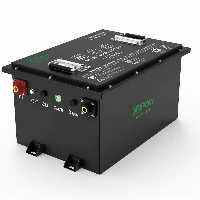
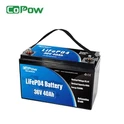
First, we need to understand the main types of golf cart batteries: lead-acid batteries and lithium-ion batteries. Next, we'll explain the charging times for each of these battery types.
Charging Time for Lithium-Ion Golf Cart Batteries
The lithium-ion batteries referred to here are lithium iron phosphate (LiFePO₄) batteries; it would be more accurate to call them "lithium iron phosphate golf cart batteries." It takes approximately 3–5 hours to fully charge one from 0% to 100%. Once fully charged, the cart can travel 40–60 miles (approximately 65–100 kilometers), which is sufficient for 5–8 rounds of 18-hole golf.
Lead-Acid Golf Cart Battery Charging Time
As for lead-acid golf cart batteries-whether flooded, AGM, or gel-the charging time is similar, taking approximately 6–8 hours. This is based on the battery having a remaining charge of approximately 30%. If the battery is fully discharged, it may take 10–14 hours to return to a fully charged state.
You can also calculate the charging time yourself using the following formula: Charging time ≈ Battery capacity (Ah) ÷ Charger current (A) × 1.1–1.3 (efficiency factor)
For example, for a 48V, 105Ah lithium-ion battery using a 25A charger, the charging time is approximately 105Ah ÷ 25A × 1.2 ≈ 5 hours; therefore, the actual charging time is between 4 and 5 hours.
The above covers the charging times for the two main types of golf cart batteries. If you'd like to learn more about the charging times for 36V, 48V, and 72V golf cart batteries, please continue reading below.

How Long Does It Take to Fully Charge a 48V Golf Cart Battery by Capacity and Type?
Under normal circumstances, a 48V lithium-ion golf cart battery takes 3–6 hours to charge, while a 48V lead-acid golf cart battery takes 8–12 hours.
Of course, batteries across different voltage platforms are available in a variety of capacities, such as 65Ah, 100Ah, and even 200Ah. Battery capacity also affects charging time; please refer to the table below for details:
48V Golf Cart Battery Charging Time: Lithium vs Lead-Acid
| Battery Type | Battery Capacity | 15A Charger | 25A Charger | 40A Charger |
|---|---|---|---|---|
| Lithium (LiFePO₄) | 48V 50Ah | 4–5 hours | 2.5–3 hours | 1.5–2 hours |
| Lithium (LiFePO₄) | 48V 65Ah | 5–6 hours | 3–4 hours | 2–3 hours |
| Lithium (LiFePO₄) | 48V 100Ah | 7–8 hours | 4–5 hours | Around 3 hours |
| Lithium (LiFePO₄) | 48V 105Ah | 7–8 hours | 4–5 hours | Around 3 hours |
| Lithium (LiFePO₄) | 48V 150Ah | 10–12 hours | 6–7 hours | 4–5 hours |
| Lithium (LiFePO₄) | 48V 200Ah | 13–15 hours | 8–10 hours | 5–6 hours |
| Lead-Acid | 48V 150Ah | 11–13 hours | 8–10 hours | 6–8 hours |
| Lead-Acid | 48V 170Ah | 12–14 hours | 9–11 hours | 7–9 hours |
| Lead-Acid | 48V 200Ah | 13–16 hours | 10–12 hours | 8–10 hours |
| Lead-Acid | 48V 225Ah | 15–18 hours | 11–14 hours | 9–11 hours |

How Long Does It Take to Fully Charge a 36V Golf Cart Battery by Capacity and Type?
36V golf cart batteries are primarily used in older models of electric golf carts. Although an increasing number of new golf cart models now use 48V systems, 36V models still account for a significant share of the existing market, particularly in the U.S. used car market, the private modification market, and at some golf courses. For example, the E-Z-GO TXT Electric 36V, Club Car DS Electric 36V, and Yamaha G1 Electric have charging times roughly as follows:
36V LiFePO4 golf cart batteries: 3–5 hours
36V lead-acid golf cart batteries: 8–12 hours to fully charge from a low charge state
36V Golf Cart Battery Charging Time by Capacity and Battery Type
| Battery Capacity | Lead-Acid Battery (15A Charger) | Lead-Acid Battery (25A Charger) | LiFePO₄ Lithium Battery (15A Charger) | LiFePO₄ Lithium Battery (25A Charger) | LiFePO₄ Lithium Battery (40A Charger) |
|---|---|---|---|---|---|
| 36V 50Ah | 6–8 hours | 4–6 hours | 4–5 hours | 2.5–3 hours | 1.5–2 hours |
| 36V 60Ah | 7–9 hours | 5–6 hours | 4.5–5 hours | Around 3 hours | Around 2 hours |
| 36V 80Ah | 9–11 hours | 6–8 hours | Around 6 hours | 3.5–4 hours | 2–3 hours |
| 36V 100Ah | 10–12 hours | 7–9 hours | Around 7 hours | 4–5 hours | Around 3 hours |
| 36V 120Ah | 12–14 hours | 8–10 hours | Around 8 hours | 5–6 hours | 3–4 hours |
| 36V 150Ah | 14–16 hours | 10–12 hours | Around 10 hours | 6–7 hours | 4–5 hours |

How Long Does It Take to Fully Charge a 72V Golf Cart Battery by Capacity and Type?
72V golf cart batteries are typically compatible with models such as the Club Car Precedent (72V Conversion), E-Z-GO TXT (72V Conversion), Yamaha Drive/G29 (72V Conversion), and ICON i40/i60/i80 (72V models), with a charging time of approximately 4–8 hours.
72V lithium golf cart batteries: Take 4–8 hours to fully charge.
72V lead-acid golf cart batteries: Take 10–16 hours.
72V Golf Cart Battery Charging Time by Capacity and Battery Type
| Battery Capacity | Lead-Acid Battery (25A Charger) | Lead-Acid Battery (40A Charger) | LiFePO₄ Lithium Battery (25A Charger) | LiFePO₄ Lithium Battery (40A Charger) | LiFePO₄ Lithium Battery (60A Charger) |
|---|---|---|---|---|---|
| 72V 100Ah | 10–12 hours | 8–10 hours | 5–6 hours | 3.5–4.5 hours | 2.5–3 hours |
| 72V 120Ah | 12–14 hours | 9–11 hours | 6–7 hours | 4–5 hours | Around 3 hours |
| 72V 150Ah | 14–16 hours | 11–13 hours | 7–8 hours | 5–6 hours | 3.5–4 hours |
| 72V 200Ah | 18–22 hours | 14–16 hours | Around 10 hours | 6–8 hours | 4–5 hours |
| 72V 230Ah | 20–24 hours | 16–18 hours | 11–12 hours | 7–9 hours | 5–6 hours |

How Long Does It Take to Fully Charge Different Club Car Golf Cart Models?
Based on golf cart brands, the battery charging times for Club Car golf carts are approximately as follows:
| Club Car Model | Battery Voltage | Common Battery Capacity | Lead-Acid Battery Charging Time | LiFePO₄ Lithium Battery Charging Time |
|---|---|---|---|---|
| Club Car DS (1976–2014) | 36V / 48V | 36V 80–150Ah / 48V 100–150Ah | 8–12 hours | 3–5 hours |
| Club Car Precedent (2004–Present) | 48V | 100Ah / 105Ah / 150Ah / 200Ah | 10–22 hours (depending on capacity) | 3–10 hours (depending on capacity) |
| Club Car Onward | 48V | 100Ah / 105Ah / 150Ah / 200Ah | 10–22 hours (depending on capacity) | 3–10 hours (depending on capacity) |
| Club Car Tempo | 48V | 100Ah / 105Ah / 150Ah / 200Ah | 10–22 hours (depending on capacity) | 3–10 hours (depending on capacity) |
| Club Car Villager | 36V / 48V | 36V 80–150Ah / 48V 100–150Ah | 8–16 hours | 3–8 hours |
| Club Car Carryall / Utility Models | 36V / 48V / 72V | 100Ah / 150Ah / 200Ah / 230Ah | 10–22+ hours | 4–12 hours |
1. Club Car Charging Tips
- Charge after every use: Whether using lead-acid or lithium batteries, Club Car officially recommends plugging in the charger immediately after use, even if the cart was only driven for 10 minutes.
- Monitor indicator lights: E.R.I.C. Charger: During charging, the green light usually flashes; when it turns solid green, the battery is fully charged.
- Dashboard alerts: If the yellow battery icon at the bottom of the dashboard is solid, the battery level is below 20%; if it's flashing, the level is below 10%.
- Maintain lead-acid batteries: For flooded (water-based) batteries, distilled water should be added only after charging is complete (unless extremely low) to prevent acid overflow during charging.
- Automatic shut-off: Club Car chargers have an automatic power-off function, so overcharging is not a concern.
2. Common Troubleshooting
If charging takes more than 14 hours without stopping, or the charger keeps showing an error (red light), it usually indicates:
- One or more bad cells in the battery pack.
- Loose or corroded connection cables.
- The charger cannot detect sufficient starting voltage.
related article: Charging Lithium Battery With Lead Acid Charger: The Risks

How Long Does It Take to Fully Charge Different EZGO Golf Cart Models?
There are quite a few users of EZGO electric golf carts. To help everyone better understand the charging times for different models, we've put together this summary:
EZGO Golf Cart Charging Time by Model, Capacity and Battery Type
| EZGO Model | Common Voltage | Battery Type | Common Capacity | Charger Specification | Full Charging Time |
|---|---|---|---|---|---|
| EZGO TXT (1996–2013) | 36V | Lead-Acid Battery | 80–120Ah | 15–25A | 8–12 hours |
| EZGO TXT (1996–2013) | 36V | LiFePO₄ Lithium Battery | 80–100Ah | 25–40A | 3–5 hours |
| EZGO TXT 48V Version | 48V | Lead-Acid Battery | 100–150Ah | 15–25A | 8–12 hours |
| EZGO TXT 48V Version | 48V | LiFePO₄ Lithium Battery | 100–150Ah | 25–40A | 3–5 hours |
| EZGO RXV (2008–Present) | 48V | Lead-Acid Battery | 100–150Ah | 15–25A | 8–10 hours |
| EZGO RXV (2008–Present) | 48V | LiFePO₄ Lithium Battery | 100–200Ah | 25–40A | 3–6 hours |
| EZGO Express S2/S4/S6 | 48V | Lead-Acid Battery | 120–150Ah | 15–25A | 10–12 hours |
| EZGO Express S2/S4/S6 | 48V | LiFePO₄ Lithium Battery | 100–200Ah | 25–40A | 4–6 hours |
| EZGO Valor | 48V | Lead-Acid Battery | 100–150Ah | 15–25A | 8–10 hours |
| EZGO Valor | 48V | LiFePO₄ Lithium Battery | 100–150Ah | 25–40A | 3–5 hours |
| EZGO ELiTE Lithium Models | 56V | LiFePO₄ Lithium Battery | 60–105Ah | 20–40A | 3–5 hours |
| EZGO Utility / Hauler Models | 48V / 72V | LiFePO₄ Lithium Battery | 150–230Ah | 40–60A | 5–8 hours |

How Golf Cart Charger Types Impact Charging Times?
The charging time of a golf cart depends not only on the battery itself but also on the type and performance of the charger.
Lead-acid batteries typically use a three-stage charger and take 8–12 hours to fully charge. Lithium batteries, paired with a dedicated CC‑CV charger and BMS, can be fully charged in 3–6 hours, and fast charging can reach 80% in 1–2 hours.
Smart temperature-controlled chargers can reduce low-temperature charging delays by 15%–30%. Using a manual or incompatible charger can not only slow down charging but also damage the battery.
Charging Time by Charger Type
Flooded / AGM Lead-Acid Three-Stage Charger
- Charging Time: 8–12 hours (0–100%)
- Reason: Charges in stages - constant current → constant voltage (absorption, 3–8 hours) → float. Lead-acid batteries have low acceptance (≤0.2C), high current may cause gassing or thermal runaway, and temperature compensation is needed to prevent overcharging.
- Typical Use: Overnight charging for home or low-frequency use.
LiFePO4 Dedicated CC‑CV Charger
- Charging Time: 3–6 hours (0–100%); fast charge 1–2 hours to 80%
- Reason: Low internal resistance, high acceptance rate (0.3C–1C), BMS precisely controls voltage/cutoff, no long float stage; high current (20–25A) can reduce full charge to about 4 hours.
- Typical Use: Commercial fleets, midday quick recharge, high-frequency usage.
Smart Temperature-Controlled Charger
- Charging Time: 15%–30% faster than standard chargers
- Reason: Dynamically adjusts voltage/current based on ambient temperature, slows charging at low temperatures (<0°C) to prevent lithium plating, limits current at high temperatures (>40°C) to prevent thermal runaway; compatible with lead-acid and lithium batteries.
- Typical Use: Outdoor conditions with large temperature variations, winter or summer usage.
Manual / Non-Smart Charger
- Charging Time: 10–15 hours or longer
- Reason: No automatic stage switching or cutoff, requires manual monitoring, prone to overcharge or undercharge, and aging batteries take even longer.
- Typical Use: Older models; not recommended for daily use.
| Charger Type | 0–100% Charging Time | 80% Fast Charging Time | Core Advantages | Suitable Scenarios |
|---|---|---|---|---|
| Lead-Acid Three-Stage | 8–12h | N/A | Mature, low maintenance | Home use / overnight charging |
| LiFePO4 Dedicated | 3–6h | 1–2h | Fast charging, long lifespan | Commercial fleets / quick recharge |
| Smart Temperature-Controlled | 15%–30% faster than standard | Depends on current | Adaptive to temperature | Outdoor / large temperature variation |
| Manual / Non-Smart | 10–15h+ | N/A | Low cost | Older vehicles / emergency use |
Key Factors That Influence Golf Cart Battery Charging Time
To understand the charging time of a golf cart battery, you should also pay attention to the following factors.
Output Current
Higher current charges faster for the same capacity. Example: 48V 100Ah lead-acid battery charges in ~10 hours at 10A, ~4 hours at 25A. Safe ranges: lead-acid ≤0.2C, lithium ≤1C.
Battery-Chemistry Matching
Lead-acid uses three-stage charger, lithium uses CC‑CV + BMS. Mismatched chargers may trigger overvoltage protection or thermal runaway, slowing or interrupting charging.
Ambient Temperature
Below 0°C or above 40°C reduces efficiency by 15%–40%; lead-acid is more sensitive to cold, lithium BMS slows charging to protect the battery.
Depth of Discharge (DoD)
Deeply discharged lead-acid batteries (>80%) take much longer to charge; lithium batteries charge fastest between 20%–80%, with shallow discharge being more efficient.
Tips for Faster and More Efficient Golf Cart Battery Charging
To charge a golf cart battery faster and more efficiently, it is essential to use a smart charger that matches the battery type, control the depth of discharge and charging temperature, keep the battery and wiring resistance low, and then follow targeted charging and maintenance practices based on the battery's chemical characteristics.
Charger Matching and Selection
- For lead-acid batteries (flooded/AGM), use a three-stage charger (constant current → constant voltage → float charge). The cutoff voltage for a 48V system is approximately 57.6V; never use a lithium battery charger.
- For lithium batteries (LiFePO4), use a dedicated CC-CV charger with BMS. The cutoff voltage for a 48V system is around 54.6V, supporting 0.3C–1C fast charging with an efficiency rate of 90%–95%.
- Prioritize intelligent chargers with temperature compensation and cell balancing functions, which can reduce low-temperature charging delays by 15%–30%.
Depth of Discharge and Charging Timing
- Lead-acid batteries: Avoid deep discharge (DoD > 80%). Charge the battery on the same day after use and allow the charger to complete the full cycle until float charge mode to prevent plate sulfation.
- Lithium batteries: Charge most efficiently in the 20%–80% SoC range; there is no need to charge to 100% every time. Fast charging is still feasible after deep discharge, but long-term shallow charging and discharging are better for battery lifespan.
- For lead-acid batteries, charge promptly when the voltage per cell drops below 12.4V; otherwise, automatic chargers may fail to initiate charging.
Ambient Temperature and Safety Precautions
- Optimal charging temperature range: 10–30°C. Temperatures below 0°C or above 40°C will reduce charging efficiency by 15%–40%. The BMS of lithium batteries will actively reduce charging speed for protection.
- Charge lead-acid batteries in a well-ventilated area to prevent hydrogen accumulation. Do not charge lithium batteries at temperatures below -10°C unless the charger has a low-temperature heating function.
- Allow the battery to cool down for 30 minutes after charging before use to avoid high-current discharge in a heated state.
Battery and Connection Maintenance
- Clean battery terminals and tighten connections to minimize contact resistance. For flooded lead-acid batteries, check and add distilled water regularly (only after charging), ensuring the liquid level is slightly below the separator ring.
- Do not store lead-acid batteries in a partially charged state overnight, as this can lead to sulfation. For long-term storage of lithium batteries, maintain a 40%–60% SoC.
- Conduct regular capacity and internal resistance tests. Replace aging or inconsistently performing battery cells in a timely manner to prevent them from slowing down the charging speed of the entire battery pack.
Charging Procedures and Habits
- Lead-acid batteries: Follow the connection sequence of "connect to the cart first → then connect to AC power". Charge until the charger automatically stops or switches to float charge mode; do not interrupt the charging process midway.
- Lithium batteries: Charge to 100% to complete cell balancing when long-distance use is required; for daily top-ups, charging to 80% is sufficient to balance speed and cycle life.
- Avoid mixing chargers or using high-power fast chargers for prolonged full charging, as this can cause overcharging and thermal runaway.
Safe Charging with Automatic Shut-Off Golf Cart Chargers
Automatic shut-off golf cart chargers can cut off power when the battery is fully charged or if an abnormal condition occurs, providing both safety and convenience.
These chargers use a microprocessor along with voltage, current, and temperature sensors to manage charging, typically following a three-stage or CC‑CV charging method. When the battery is nearly full, they reduce the current or switch to a low-power mode to prevent lead-acid batteries from boiling and lithium batteries from overheating.
They also feature reverse-polarity, overvoltage, overcurrent, and high-temperature protection, and some include a maximum charging time, ensuring safety even if the plug is left connected. As long as the voltage matches, the polarity is correct, and charging is done in a ventilated environment, users can enjoy "plug-and-forget" convenience, extend battery life, and reduce fire risks.
Routine Maintenance Tips to Maximize Golf Cart Battery Charge Efficiency
To maintain efficient charging of a golf cart battery, it is important not only to use a suitable smart charger for the battery type but also to develop proper charging habits.
Regularly clean and inspect the battery, control the usage and storage environment, and apply specific watering, balancing, or storage practices according to the battery type.
Standardize Charging Habits
- Charge the battery promptly after each use. Avoid deep discharge for lead-acid batteries (keep remaining capacity above 20%), and maintain lithium batteries within the 20%–80% state of charge.
- Use a three-stage smart charger for lead-acid batteries and perform equalization charging once a month; use a dedicated CC-CV charger for lithium batteries without the need for additional equalization.
- Disconnect the power supply only after the battery is fully charged. Do not interrupt the charging cycle midway to avoid leaving the battery in a "partially charged" state.
Maintain Terminals and Connections
- Clean the terminals once a month: use a baking soda solution to remove corrosion from lead-acid battery terminals, wipe lithium battery terminals with isopropyl alcohol, and apply protective grease after drying.
- Check if all wiring connections are tight; replace aged or damaged cables to ensure secure connections and minimize contact resistance.
- Follow the sequence of "negative terminal first, then positive terminal" when disconnecting, and "positive terminal first, then negative terminal" when reconnecting to prevent short circuits.
Check Battery Status Regularly
- For flooded lead-acid batteries, check the electrolyte level monthly and add distilled water to cover the plates by approximately 6mm after charging. Do not use tap water.
- Use a multimeter to measure voltage on a regular basis. Charge lead-acid batteries immediately if the voltage per cell drops below 12.4V, and keep the voltage deviation of lithium battery cells within 1%.
- Inspect the battery casing. If bulging, leakage, or abnormal odor is detected, stop using the battery immediately and arrange for maintenance.
Control Operating and Storage Environments
- Maintain the charging and storage temperature between 10–30°C, and avoid extreme environments below 0°C or above 40°C.
- Choose a well-ventilated area for charging. Keep lead-acid batteries away from ignition sources to prevent hydrogen accumulation.
- Reduce frequent high-current discharge and avoid leaving the battery idle without charging for long periods to prevent performance degradation.
Maintain Batteries in Long-term Storage
- Fully charge lead-acid batteries before storage, and recharge them every 1–2 months to maintain a 50%–70% charge level.
- Charge lithium batteries to 40%–60% before storage, and recharge them every 2–3 months. Avoid storing them in a fully charged or completely discharged state.
- Disconnect the negative terminal during storage, place the battery in a dry and cool location, and avoid direct contact with concrete floors.
Practical Knowledge
Golf Cart Battery Cycles and How Partial Charging Affects Them
The lifespan of a golf cart battery and the effects of partial charging vary depending on the battery type.
In simple terms:
- Lead-acid batteries require deep-cycle charging (0–100%), and frequent partial charging can accelerate battery wear. Therefore, they should be fully charged at least once a week and regularly balanced.
- Lithium batteries have no memory effect, and shallow charging and discharging (20–80%) can extend their lifespan (2000–5000 cycles) while reducing lithium plating and thermal stress. However, they should not be stored fully charged or below 20% for long periods.
General principle: Avoid deep discharge (below 20%) and use a smart charger matched to the battery type to balance charging efficiency and battery lifespan.
Checking Golf Cart Battery Voltage Before You Charge
Testing Prerequisites: Disconnect the battery and let it rest for 4–12 hours; ambient temperature should be 21–27°C; use a DC digital multimeter (range ≥200V)
| Battery Type | System Voltage | Cell Voltage (Full) | Charge Needed | Replace / Repair | Cell Voltage Difference | Action |
|---|---|---|---|---|---|---|
| Flooded Lead-Acid / AGM | 36V | 6.3–6.4V | ≤6.0V | ≤5.7V | >0.3V | Low-current pre-charge → Equalize → Replace if persists |
| Flooded Lead-Acid / AGM | 48V | 8.4–8.5V | ≤8.0V | ≤7.7V | >0.3V | Same as above |
| Flooded Lead-Acid / AGM | 48V | 12.6–12.8V | ≤12.4V | ≤12.0V | >0.3V | Same as above |
| LiFePO4 | 36V | 3.3–3.4V | ≤3.2V | ≤2.8V | >0.02V | Check BMS → Replace if low → Avoid forced charge |
| LiFePO4 | 48V | 3.3–3.4V | ≤3.2V | ≤2.8V | >0.02V | Same as above |
How Charger Amps Affect Your Golf Cart Battery?
The charging speed and lifespan of a golf cart battery are also affected by the charger's output current.
- High-current charging can fill the battery quickly but increases heat. If the current exceeds the recommended rate, it can accelerate battery wear or trigger protection, potentially reducing capacity by over 30%.
- Low-current charging generates less heat and extends battery life, but takes much longer. Trickle chargers are suitable only for maintenance and cannot fully charge the battery.
- The best practice is to choose a charger with a current matched to the battery capacity and use a smart charger with temperature compensation and multi-stage control (constant current / absorption / float). This approach balances charging speed with battery longevity.
conclusion
By now, you should have a good understanding of the charging times for various golf cart batteries. We've covered this topic from multiple angles, including battery types, capacity, and even golf cart brands. Overall, lithium-ion batteries definitely charge much faster than lead-acid batteries.
However, the charging time for lithium-ion batteries isn't as simple as just 3 hours-it still depends on the battery's capacity. The higher the capacity, the longer it takes to charge.
If you still have questions about the charging times for golf cart batteries, please feel free to contact us directly. CoPow is an experienced golf cart battery manufacturer with extensive hands-on service experience, capable of effectively resolving the various complex issues our customers encounter.
FAQ
Can You Charge 48V Golf Cart Batteries with a 12V Charger?
You should not use a 12V charger to charge a 48V golf cart battery pack as a whole. This is because the voltage provided by a 12V charger is significantly insufficient to charge the battery pack properly; it may even result in charging failure or cause the batteries to remain undercharged for extended periods.
Only when the battery pack consists of multiple 12V batteries that are physically isolated from one another can each 12V battery be charged individually.
However, this charging method is relatively complex and can easily lead to voltage imbalances among the batteries.
If you would like to learn more, please read this article: Can You Use 3 12V Batteries In A 36V Golf Cart?