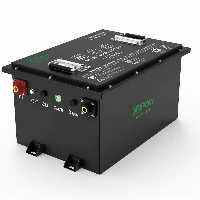
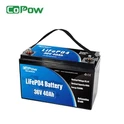
This article takes a close look at the top five 48V golf cart lithium batteries on the market in 2026, covering major brands like Copow, LiTime, DC HOUSE, Vatrer, and Trojan. We will walk you through the real-world performance of each battery, their ideal use cases, and detailed buying tips to help you see their strengths and weaknesses at a glance.
Beyond product reviews, we have included a practical guide to help you spot and avoid common buying pitfalls, ensuring you choose a reliable, hassle-free power solution that fits your specific needs.
Copow 48v 105ah LiFePO4 Golf Cart Battery
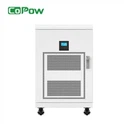
The CoPow 48V 105Ah LiFePO4 golf cart battery is a high-quality power solution that combines strong performance with long-lasting durability. With a large 5376Wh capacity and a smart BMS protection system, it charges faster and operates more safely. Its lightweight design makes installation easier while delivering stronger power and longer driving range.
Compared with lead-acid batteries, it is safer, more eco-friendly, and far more efficient, providing stable performance in all weather conditions. With a lifespan of over 10 years, it is the ideal upgrade for any golf cart.

| Dimension | Summary |
|---|---|
| Advantages |
|
| Disadvantages | Higher upfront cost, careful handling required during transport, may need evaluation for extreme high-power applications |
| Why Choose It |
As a professional manufacturer of lithium iron phosphate golf cart batteries, Copow offers factory-direct supply, providing various discounts with no middleman markup, maximizing cost savings. In terms of quality, Copow uses brand-new A+ grade cells from EVE, CATL, and BYD, ensuring stable and reliable battery performance. The company's products have obtained multiple authoritative international certifications, including ISO, TUV-CB, CE, and UN38.3, facing virtually no market entry barriers. |
| Best Suited For | Golf cart users, electric vehicle owners replacing lead-acid batteries, users seeking high performance, safety, and eco-friendliness in light electric vehicles, and scenarios requiring long lifespan and high reliability |
LiTime 48V 100Ah Lithium Golf Cart Battery
This LiTime 48V 100Ah Bluetooth Lithium Battery is specially designed for golf carts and street-legal electric vehicles, offering both lightweight convenience and high performance. It features EV-grade A LiFePO4 cells and weighs only 82 lbs, yet delivers the equivalent energy of eight 6V lead-acid batteries, providing a range of 40–47 miles.
Equipped with Bluetooth 5.0, the battery status, voltage, and power can be monitored in real time through the LiTime app. Its low-temperature protection automatically stops charging and discharging in cold conditions, effectively extending battery life. Supporting fast charging and solar charging, it can also be expanded in parallel at will, with a maximum output power of 5000W, enabling faster acceleration and more agile handling for your golf cart.

| Dimension | Details |
|---|---|
| Advantages | High-performance A+ LiFePO4 cells, 40–47 miles range; weighs only 82 lbs; Bluetooth app for real-time monitoring; low-temperature protection and multiple safety features; max output 5000W, supports fast and solar charging. |
| Disadvantages | Higher cost than lead-acid batteries; may require adjustment for some vehicle installations; Bluetooth monitoring is not fully real-time. |
| Why Choose | Strong performance, lightweight, long lifespan; compatible with various golf carts and low-speed electric vehicles; eco-friendly and energy-efficient; smart monitoring for easy use. |
| Best For | Golf carts, street-legal low-speed EVs, home energy storage, or outdoor devices; users seeking improved range, power, and handling. |
DC HOUSE 48V 100Ah LiFePO4 Battery
The DC HOUSE Smart 48V 100Ah LiFePO4 Battery is suitable for 48V devices such as golf carts, lawn mowers, and RVs. It features A-grade cells with a cycle life of over 4,000 times, which is eight times longer than lead-acid batteries, and operates stably in a wide temperature range from -20°C to 55°C.
Weighing only 37.6 kg, it includes a one-touch power-off function for easy installation. The built-in 200A BMS provides comprehensive protection and requires minimal maintenance. With both Bluetooth and LCD monitoring, you can check the battery level and cell status in real time. Backed by a 3-year warranty and currently on promotion for $639.99, it is a cost-effective choice for a power upgrade.

| Dimension | Key Points |
|---|---|
| Advantages | A-grade cells with 4000+ cycles, wide temperature range (-20~55°C discharge), lightweight (37.6 kg), 200A BMS protection, Bluetooth + LCD monitoring, one-touch power-off, 3-year warranty. |
| Disadvantages | Bluetooth and LCD cannot run simultaneously, low-temperature limits (<0°C charge, <-20°C discharge), higher upfront cost than lead-acid, requires dedicated charger. |
| Reasons to Choose | Long lifespan and low maintenance, easy installation, smart BMS and dual monitoring, versatile applications (golf carts, RVs, off-grid systems), warranty and limited-time discount. |
| Best Suited For | Golf carts (Yamaha, Club Car, EZ GO), RVs, marine thrusters, lawn mowers, off-grid solar/storage, commercial/home 48V power setups. |
Vatrer 48V 105Ah Lithium Golf Cart Battery
The Vatrer 48V 105Ah lithium golf cart battery is a premium plug-and-play upgrade, compatible with major models like Club Car and Yamaha. Boasting 5.376kWh capacity and 200A continuous discharge (600A peak for 3s), it delivers up to 50 miles of range and tackles steep hills effortlessly.
Weighing just 102.3 lbs (50% lighter than lead-acid batteries), it's easy to install, featuring IP67 waterproofing and 200A intelligent BMS for multi-layer protection, with a wide operating temperature range of -4°F to 131°F. With 4,000+ charge cycles (10-year lifespan), 5-hour fast charging, and real-time monitoring via LCD and app, it's a durable, high-efficiency green power solution for both individual users and fleets.

| Dimension | Key Points |
|---|---|
| Advantages | 5.376kWh, 200A (600A peak), 50-mile range; 4000+ cycles (~10 years); 102.3 lbs, IP67, smart BMS; 5h fast charge, LCD + app monitoring |
| Disadvantages | Higher upfront cost; Needs dedicated charger; Performance drops in extreme cold; Recycling less mature |
| Why Choose It | Plug-and-play for Club Car/Yamaha; Long-term cost saving; Strong power & range; Multi-layer protection |
| Best Suited For | Individual users; Fleet managers; Low-speed EVs/utility carts; Cold or rainy regions |
Trojan TR GC2-48-G 48V Lithium Golf Battery
The Trojan TR GC2-48-G 48V 30Ah lithium golf cart battery is a high-performance LiFePO4 solution engineered specifically for golf carts and low-speed utility vehicles. Boasting a standard BCI GC2 form factor, it directly replaces four lead-acid batteries-delivering 30-45 miles of range with two units in parallel (or 45-60 miles with three) and outperforming comparable GC2 lithium batteries by 15%.
Offering fast charging (full charge in just 4 hours, far quicker than the 8-10 hours required for lead-acid alternatives), this battery is completely maintenance-free: no acid, corrosion, or charging fumes, ensuring hassle-free operation. Equipped with an intelligent BMS for overcurrent, overheating, and short-circuit protection, it meets global safety certifications including UL, SAE, and CE. With a 4,000-cycle lifespan (at 70% DOD) and an 8-year warranty, its durability far exceeds lead-acid batteries. Weighing only 16.8kg, it features easy installation and significantly enhances vehicle efficiency and cost-effectiveness.

| Dimension | Details |
|---|---|
| Advantages | Longer range (2 batteries 30–45 mi, 3 batteries 45–60 mi). Fast charge <4h. Maintenance-free, up to 12 months storage. ~4000 cycles, 8-year warranty. Safe: LiFePO4 + smart BMS, UL/CE certified. Easy install: 37 lbs, BCI GC2 size, replaces 4 lead-acid. |
| Disadvantages | Higher cost (3–4x lead-acid). Parallel only, match 48V system. Limited low-temp charging (<0℃). Vehicle electronics compatibility needed. |
| Why Choose | Lower lifecycle cost. ~15% more range, fast charging. Safe and certified. Trusted brand, 8-year warranty, optional CAN Bus/status lights. |
| Best Suited For | 48V golf carts, LSVs, UTVs. Fleets needing long range/frequent use. Users wanting low maintenance, high efficiency. -20℃ to 60℃ operation (note low-temp limits). |
Understanding Your Driving Conditions Before Choosing a 48V Lithium Golf Cart Battery
Before selecting a 48V lithium golf cart battery, understanding your driving conditions is critical to matching battery performance, ensuring range and extending service life.
Key driving factors include terrain type, ambient temperature, driving distance, load capacity and driving habits. Align these considerations with battery specifications such as capacity, discharge performance, protection rating and Battery Management System integration to ensure the battery delivers optimal power output, consistent range and long-term durability that fully adapts to your real-world usage scenarios.
1. Road and Terrain Types: Precisely Match Power and Discharge Capability
- Flat Grassland/Flat Terrain Scenarios: Focus on range performance and battery lightweight design. A medium-capacity battery (100-120Ah) is sufficient. A lightweight battery pack (around 43kg, for example) can reduce vehicle driving resistance and further improve energy efficiency.
- Hilly/Multi-slope Roads: The core requirement is high discharge current and sufficient torque. It is recommended to choose a battery with a continuous discharge current of no less than 200A that supports short-term high-current output to avoid voltage drop and insufficient power when climbing slopes. In addition, it is advisable to reserve 30% of the battery capacity to offset the additional energy consumption of 50%-80% caused by slopes.
- Rough/Complex Road Conditions: Prioritize batteries with a protection level of IP66 or higher, which have excellent anti-drop, dustproof, and waterproof performance. At the same time, rely on the BMS intelligent management system to ensure cell balance and usage safety of the battery in bumpy environments.
2. Ambient Temperature: Ensure Low-Temperature Adaptability and Battery Life
- Normal Temperature Environment (0℃-35℃): A standard 48V lithium iron phosphate battery can meet the requirements. When selecting, focus on cycle life and prioritize products with more than 3500 cycles to balance range performance and long-term usage costs.
- Low-Temperature Environment (≤-4℃): Choose batteries with a self-heating module or specially designed for low temperatures. Their discharge temperature range should cover around -20℃ to avoid significant range reduction at low temperatures (in extreme low-temperature environments, the range may drop to 50% of the theoretical value).
- High-Temperature Environment (≥45℃): The key is to rely on the thermal management function of the BMS to ensure the battery does not experience overcharging or overheating at high temperatures. At the same time, avoid charging the battery immediately after long-term exposure to sunlight during high-temperature periods.
3. Driving Distance and Load Capacity: Determine the Core Battery Capacity
Short-Distance Use (Single Trip ≤30km): A 100-120Ah battery can meet the needs. If it is only for daily commuting or short-distance golf course use, there is no need to blindly pursue large capacity; balancing cost and portability is more important.
Long-Distance Use (Single Trip ≥50km): Prioritize high-capacity batteries of 120Ah or more, or products with energy storage ≥5.12kWh, to ensure a single charge can cover the entire trip and avoid power outages midway.
Heavy-Load Scenarios (e.g., 4-seater golf carts, carrying equipment or passengers): Tests have shown that for every additional 50kg of load, the range decreases by approximately 8%. In such cases, a larger capacity battery (e.g., 150Ah or more) is required. At the same time, pay attention to the continuous discharge stability of the battery to avoid sharp increases in energy consumption due to heavy loads.
4. Driving Habits: Adapt to Battery Charging Efficiency and Discharge Characteristics
- Frequent Rapid Acceleration and Sudden Braking: Such driving habits will increase power consumption by an additional 20%-30%. It is necessary to choose a battery with fast charging speed (fully charged within 3 hours) and a stable discharge curve to reduce the impact of power fluctuations on the range.
- Long-Term Continuous Driving: Prioritize batteries that support 0.2C-0.3C slow charging and match them with a dedicated charger (e.g., a 48V100Ah battery is compatible with a 20-30A charger). Slow charging can effectively extend the battery cycle life and avoid damage to the battery life caused by fast charging.
- Intermittent Use or Long-Term Parking: Choose a battery with BMS balancing function. If parked for a long time (more than 1 month), maintain 30%-50% of the battery power and control the storage temperature between 0℃-35℃ to prevent permanent capacity loss of the battery.
5. Charging Conditions: Match Compatible Chargers and Usage Scenarios
- Use with Fixed Charging Points: Match with original chargers that are compatible with the battery voltage (error ±2%), and prioritize products with temperature compensation function. Such chargers can automatically adjust the charging voltage according to the battery temperature to better protect the battery.
- No Fixed Charging Points: Choose batteries that support fast charging or are compatible with solar charging, and match them with chargers with MPPT controllers to improve charging flexibility and cope with outdoor scenarios without power supply.
- Multi-Vehicle Fleet Use: Prioritize modular, plug-and-play batteries and unify charging standards. At the same time, use the BMS Bluetooth monitoring function to track the remaining power and health status of multiple batteries in real time for easy management.
What Lithium Battery Size Do You Really Need for a 48V Golf Cart in 2026?
In 2026, the selection of best 48V lithium batteries for golf carts mainly depends on the battery compartment size and actual usage requirements. The standard configuration is a 48V (nominal 51.2V) LiFePO4 battery with a capacity of 100–105Ah, dimensions of approximately 460–480 × 300–334 × 230–247mm, and a weight of 27–50kg, suitable for most everyday use. For longer range or heavier load applications, higher-capacity versions of 125–160Ah are available, with correspondingly larger size and weight.
I. Core Selection Logic
- Capacity Priority: A 48V 100–105Ah (≈5.1–5.4 kWh) battery suits standard 18-hole courses, delivering 30–50 km of full-load range for daily use. For commercial high-frequency operations or mountainous/heavy-load conditions, opt for 125–160Ah (6.4–8.2 kWh) to achieve 50–70 km of range.
- Space Compatibility: Measure the battery compartment's length × width × height and mounting holes first to ensure seamless, modification-free installation.
- Weight & Safety: LiFePO4 batteries offer superior safety. A 100–105Ah unit weighs 27–50 kg, 40–60% lighter than lead-acid alternatives, enhancing cart maneuverability and energy efficiency.
- BMS & Charging: Prioritize batteries with a built-in Battery Management System to protect against overcharging, over-discharging, overcurrent, and short circuits. Ensure peak discharge current ≥200A and use a 48V dedicated charger (≈58.4V).
II. Mainstream Specifications & Dimensions (2026)
| Capacity | Nominal Voltage | Energy | Typical Dimensions (L×W×H, mm) | Weight (kg) | Application Scenarios |
|---|---|---|---|---|---|
| 100Ah | 51.2V | 5.12 kWh | 480 × 300 × 240 | 40–50 | Standard courses, 2–4-seater carts, flat terrain |
| 105Ah | 51.2V | 5.38 kWh | 460 × 328–334 × 244–247 | 27–46.5 | Universal fit for most OEM battery compartments |
| 125Ah | 51.2V | 6.40 kWh | 500–510 × 330–380 × 230–250 | 50–60 | Commercial operations, hilly/long-distance use |
| 160Ah | 51.52V | 8.24 kWh | 781 × 332 × 280 | 65–75 | Heavy loads, extended range, multi-shift operations |
III. Recommendations by Usage Scenario
- Personal Leisure (18 Holes/Day): Choose a 48V 100–105Ah LiFePO4 battery (dimensions: 460–480×300–334×230–247 mm) for 30–50 km of range. Offers optimal cost-performance.
- Commercial Operations (Multi-Shift/Heavy Load): Select 48V 125–160Ah batteries to support fast charging and high-frequency cycling. Delivers 50–70 km of range, reducing charging frequency and adapting to 8–12 hours of continuous use.
- Modified Carts/Mountainous Terrain/Long Distance: Prioritize 160Ah+ batteries with peak discharge current ≥300A. Pair with reinforced mounting brackets to handle steep slopes and heavy loads.
IV. Key Considerations
- Dimension Verification: Measure the internal clearance of the battery compartment (including ≥50 mm of heat dissipation space) to avoid modification needs or safety hazards from ill-fitting batteries.
- Connector & Communication: Confirm terminal type (busbar/bolt), polarity, and BMS communication protocol (e.g., CAN/Bluetooth) for compatibility with the original cart.
- Charging Adaptation: Use a 48V dedicated charger (≈58.4V) to prevent battery damage from overvoltage or improper fast charging.
- Warranty & After-Sales: Choose reputable brands. LiFePO4 batteries typically come with a 5-year or 5,000-cycle warranty for long-term reliability.
V. Quick Decision-Making Steps
- Determine range requirements (30 km → 100–105Ah; 50 km → 125Ah; 70 km → 160Ah).
- Measure battery compartment dimensions to filter compatible specifications.
- Select a LiFePO4 battery and verify BMS functionality and peak discharge capacity.
- Confirm weight and mounting method to ensure safety and maneuverability.
Metal Case vs. Plastic Case: Which Is Safer for 48V Golf Cart lithium Batteries?
The safety features and suitable applications of 48V golf cart lithium batteries depend on their casing material. Metal casings (such as stainless steel or aluminum alloy) are stronger, can withstand impacts and high temperatures, help with heat dissipation, and reduce electromagnetic interference, making them ideal for off-road, heavy-load, or high-temperature environments.
In contrast, plastic casings (such as flame-retardant PC+ABS or modified PP) are naturally insulating, resistant to corrosion, and less prone to deformation or short circuits, making them more suitable for standard golf courses, humid conditions, or cost-sensitive scenarios.
1. Physical Protection & Impact Resistance
- Metal: High strength with excellent impact and extrusion resistance, suitable for off-roading or frequent collision scenarios.
- Plastic: Good toughness, less likely to deform and squeeze battery cells, but prone to cracking under heavy loads or severe impacts.
2. Electrical Safety & Insulation
- Metal: Conductive, requiring comprehensive insulation design (e.g., coatings, liners) to avoid short circuits from terminal contact with the enclosure.
- Plastic: Inherently insulating, reducing short circuit and electric shock risks, especially in humid or vibrating environments.
3. Fire Resistance & Thermal Management
- Metal: High-temperature resistant and flame-retardant, with fast heat conduction that facilitates heat dissipation and delays thermal runaway.
- Plastic: Requires V-0 grade flame-retardant materials (e.g., PC+ABS), which may soften or deform under high temperatures.
4. Corrosion Resistance & Environmental Adaptability
- Metal: Susceptible to rust (except stainless steel or coated variants), requiring protection in humid, acid, or alkaline environments.
- Plastic: Resistant to acids, alkalis, moisture, and UV radiation, suitable for outdoor or coastal high-humidity environments.
5. Comprehensive Safety & Cost
- Metal: Excellent long-term durability but higher cost and weight, requiring coordination with BMS and insulation.
- Plastic: Lightweight, cost-effective, and insulating, but limited strength dependent on material grade and design.
Compatibility Issues to Watch Before Buying a 48V Lithium-Ion Golf Cart Battery?
When purchasing a 48V golf cart lithium battery, it is important to pay special attention to compatibility, focusing on four key aspects: whether the voltage matches the cart's electrical system, whether the battery's physical size fits the installation space, whether it works with the existing charger, and whether the Battery Management System is compatible.
Lithium batteries, especially lithium iron phosphate types, differ significantly from lead-acid batteries in voltage and discharge characteristics. If these parameters are not properly matched, it can cause damage to the motor or controller, prevent the battery from functioning correctly, and even pose safety risks.
Therefore, it is essential to ensure that the battery is fully compatible with all components of the golf cart before purchase.
1. Voltage & Electrical System Compatibility
- Select a 16-cell LiFePO4 configuration (nominal 51.2V, full charge 58.4V) to avoid exceeding the voltage tolerance threshold of the controller/motor.
- Older PWM controllers may require reprogramming; verify they support an input range of 44-58V, and upgrade solenoid valves to 48V coils if necessary.
- Never mix lithium-ion and lead-acid batteries-conflicting charging curves will trigger BMS malfunctions.
2. Physical Installation Compatibility
- Measure the battery tray dimensions (length × width × height). Lithium-ion batteries are 50-70% lighter and more compact than lead-acid batteries; older models may require shims or adapters for secure mounting.
- Terminal types and mounting holes must match the original vehicle to ensure firm wiring and prevent poor contact due to vibration.
- Modular batteries solve irregular space installation issues, adapting to tray specifications of different brands (e.g., Club Car, EZ-GO).
3. Charger Compatibility Requirements
- Use only dedicated CC-CV chargers for lithium-ion batteries, with voltage matching the BMS (58.4V charging voltage for 48V LiFePO4 batteries).
- Never use lead-acid battery chargers-their float charging phase will overcharge lithium-ion batteries, triggering BMS protection or damaging cells.
- Prioritize smart chargers with balancing functions to avoid uneven charging that shortens battery life.
4. BMS & System Adaptation
- Confirm the BMS's continuous discharge current (100A-300A) meets the demands of heavy-load scenarios (e.g., uphill climbing) and that the low-voltage cutoff threshold matches the controller.
- For modern models, check if the BMS supports CAN bus communication; for older models, select standalone BMS with reserved alarm output interfaces.
- Never bypass BMS protection functions, as this significantly increases the risk of thermal runaway.
5. Wiring & Accessory Upgrades
- Lithium-ion batteries have low internal resistance and high discharge current-upgrade the original 6AWG wires to 2-4AWG thick wires to reduce heat generation and voltage drop.
- Replace connectors with high current-rated models (e.g., XT200, 90A-100A) to prevent terminal ablation.
- Controllers without soft-start functionality require adding pre-charge resistors to protect MOSFETs from inrush current damage.
Which Golf Cart 48V Lithium Pack Should You Avoid in 2026?
When purchasing a 48V golf cart lithium battery pack in 2026, you need to be especially cautious of batteries with potential safety hazards and quality issues. These include products without 3C certification, batteries with unknown cell sources (such as recycled or second-hand cells), missing or low-quality BMS, mismatched physical or electrical specifications, insufficient protection ratings, and those lacking reliable after-sales support.
Using such batteries can lead to overcharging or overdischarging, cell imbalance, thermal runaway, or improper installation, while also causing inflated range claims, shortened lifespan, and even damage to the controller or motor. Extra caution should be taken with low-priced "three-no" batteries and non-specialized conversions from lead-acid to lithium, as these products carry the highest risks.
Lack of 3C certification and incomplete qualifications
Since 2024, lithium batteries are required to have mandatory 3C certification. Products without certification, proper nameplates or production dates, or test reports may have design flaws and safety hazards, as well as high regulatory risks.
Low-quality or missing BMS / insufficient protection
Batteries without a BMS, or with a BMS lacking balancing, overcurrent, overvoltage, or overtemperature protection-or with no temperature sensor or only single-cell protection-are prone to cell imbalance, swelling from overcharge, thermal runaway, and even fire.
Unknown cell sources and overstated capacity
Batteries using recycled, second-hand, or refurbished cells, or manually welded packs with exaggerated capacity or discharge ratings, have short cycle life and poor consistency, with a greatly increased risk of failure under heavy load or fast charging.
Poor electrical and physical compatibility
Non-16-series lithium iron phosphate batteries (nominal 51.2V, full charge 58.4V) can exceed the voltage tolerance of the controller or motor; mismatched terminals, mounting holes, or dimensions may cause loose wiring and short circuits due to vibration.
Low protection level and structural defects
Batteries with IP ratings below IP65, weak casings, or lacking flame-retardant or explosion-proof design are susceptible to water ingress, short circuits, or mechanical damage in outdoor, humid, or vibrating environments, creating safety hazards.
Charger mismatch and lack of after-sales support
Using no dedicated CC‑CV charger (58.4V) or replacing it with a lead-acid charger can cause overcharging; products without clear warranties or technical support make it difficult to seek recourse in case of failure.
Conclusion
When purchasing a best 48V golf cart lithium battery in 2026, selecting the right battery is crucial, and you need to consider performance, safety, compatibility, and durability comprehensively. The article highlights high-quality brands such as Copow, LiTime, DC HOUSE, Vatrer, and Trojan, whose lithium batteries offer long range, fast charging, lightweight design, and intelligent protection. However, there are also lower-quality batteries on the market that pose safety risks, have shorter lifespans, or may be incompatible with your golf cart.
Therefore, when buying, you should choose a battery based on your driving environment, usage requirements, capacity needs, casing material, and compatibility. Prioritize batteries with certified high-quality cells, reliable Battery Management Systems, and comprehensive after-sales support. This approach ensures safety, reliability, and enhances your golf cart's performance, range, and long-term value.
Faq
What Continuous Output Can a Good 48V Lithium Battery Deliver?
A quality 48V LiFePO4 battery for golf carts typically provides 100–200A continuous discharge (≈4.8–9.6kW at 48V), with peak bursts of 300–600A for 3–35s to handle hills and acceleration. Look for a BMS-rated continuous current matching your cart's motor/controller (e.g., 200A BMS for 4–6kW motors).
Are Amazon "Budget" 48V Lithium Batteries Reliable in 2026?
Mixed. Some budget models (≈$600–$900 for 100Ah) use decent LiFePO4 cells with basic BMS and 3–5 year warranties, but many cut corners on cell quality, BMS, and protection. Check for CE/FCC/UN38.3, verified cycle life (≥3000 cycles @ 80% DOD), and transparent BMS specs; avoid no-name brands with vague claims.
Which 48V Lithium Battery Kits Are the Easiest to Install for Beginners?
Drop-in replacement kits (e.g., Allied Lithium, RELiON InSight, Invicta) are simplest-they fit existing lead-acid bays, include pre-wired cables, and require no modifications. Look for:
- Direct physical fit (no cutting/drilling)
- Plug-and-play wiring with fuses/breakers
- Clear manuals and customer support
- Compatibility with your cart's voltage (48V) and charger (lithium-specific, 58.4V float)
Most can be installed in 30–60 minutes with basic tools.
Do You Really Need a 100/105Ah Battery? Why 50Ah Isn't Enough for Golf Carts?
- 50Ah: Good for 15–30 miles/3–4 hours of light use on flat terrain; insufficient for hilly courses, 4+ passengers, or 36-hole rounds (≈40+ miles).
- 100/105Ah: Delivers 30–50 miles/6–8 hours, handles hills/acceleration, and supports deep discharges without degradation-ideal for regular golfers or heavy use.If you often play 36 holes, carry passengers, or drive on hills, 100/105Ah is worth the upgrade.
How to Match the Right Lithium Battery to Your Golf Cart Type (EZGO, Club Car, Yamaha)
- Voltage & Capacity: All 48V carts need a 48V (51.2V nominal) LiFePO4 battery; choose 50Ah for light use, 100Ah+ for heavy use.
Physical Fit:
- EZGO TXT/RXV: Drop-in kits (e.g., Allied) replace 6×8V or 4×12V lead-acid setups.
- Club Car DS/Precedent: Ensure the battery fits the frame; some models need adapter brackets.
- Yamaha Drive2/G29: Look for Yamaha-specific mounting and BMS to prevent voltage sag on hills.
- Motor/Controller Compatibility: Match battery continuous discharge (e.g., 150–200A) to your motor's max current (4–6kW motors need 100–150A continuous).
- Charger: Use a lithium-specific 48V charger (58.4V float, CC/CV mode); avoid lead-acid chargers.
related article