Many users open the battery compartment only to find 4, 6, 8, or even more batteries inside, but they don't know why the number varies or whether their golf cart uses a 36V, 48V, or 72V system.
Many others have recently purchased a used golf cart and are unsure whether the batteries have been replaced or if different brands of batteries have been mixed.
Still others, when preparing to upgrade from lead-acid batteries to LiFePO4 lithium batteries, have this question: Lead-acid systems consist of multiple 6V, 8V, or 12V batteries connected in series, whereas lithium batteries only require a single complete 48V or 72V battery pack.
This article provides a comprehensive analysis of the configuration logic for golf cart batteries, covering common configurations for different voltage systems, the characteristics of various battery types, the relationship between battery capacity and range, and the key factors that influence the number of batteries required.
In addition, we will explore why an increasing number of users are opting for lithium-ion battery solutions and explain how to select the most suitable battery configuration based on individual usage scenarios.

how many batteries are in a golf cart?
The most common older-model golf carts typically use a 36V system, which usually consists of six 6V batteries connected in series, since 6 × 6V equals exactly 36V.
Many older models from brands such as EZGO and Yamaha widely adopted this design.
The 36V system has a lower overall cost and a simpler structure, but its power and hill-climbing capability are relatively limited, making it more suitable for flat terrain or standard golf courses.
Today, most mainstream golf carts on the market have been upgraded to 48V systems.
48V is considered the standard configuration for golf carts because it offers better acceleration, higher efficiency, and more consistent range.
There are three common configurations for 48V systems: the most classic is six 8V batteries, since 6 × 8V = 48V.
This configuration is very common in models like Club Car. Another common configuration uses eight 6V batteries.
Although it uses more batteries, the higher capacity of 6V deep-cycle batteries means this configuration often offers longer range, making it more suitable for scenarios requiring frequent use.
Some models use four 12V batteries to form a 48V system, since 4 × 12V = 48V. This configuration uses the fewest batteries, making installation simpler and maintenance more convenient, but it has lower capacity, and overall range performance is not as good as the 6V or 8V configurations.
Higher-performance 72V golf carts are relatively rare and are typically used for modifications or off-road applications.
72V systems generally use 12 6V batteries, 9 8V batteries, or 6 12V batteries; the higher the system voltage, the more powerful the golf cart.
In recent years, as LiFePO4 lithium iron phosphate batteries have become increasingly popular, the issue of battery count in golf carts is changing.
Lead-acid systems require multiple batteries connected in series, whereas lithium-ion golf carts often require only a single lithium-ion battery pack.
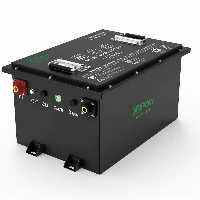
For example, a 48V 100Ah LiFePO4 battery pack can directly replace the original six 8V lead-acid batteries.
General Reference Table for the Number of Batteries in Golf Carts:
| Golf Cart System Voltage | Battery Type | Capacity Range | Common Battery Configuration |
|---|---|---|---|
| 36V | Flooded Lead-Acid | 180Ah – 225Ah | 6 × 6V |
| 36V | AGM | 180Ah – 220Ah | 6 × 6V |
| 36V | LiFePO4 | 60Ah – 105Ah | 1 × 36V Lithium Pack |
| 48V | Flooded Lead-Acid | 150Ah – 225Ah | 6 × 8V / 8 × 6V |
| 48V | AGM | 150Ah – 210Ah | 6 × 8V / 4 × 12V |
| 48V | LiFePO4 | 60Ah – 160Ah | 1 × 48V Lithium Pack |
| 72V | Flooded Lead-Acid | 120Ah – 180Ah | 12 × 6V / 6 × 12V |
| 72V | AGM | 120Ah – 180Ah | 6 × 12V |
| 72V | LiFePO4 | 100Ah – 200Ah | 1 × 72V Lithium Pack |

how many batteries does a club car golf cart take?
The most common battery systems for Club Car golf carts are 36V and 48V; 72V systems are less common. The main battery types are lead-acid, AGM, and lithium-ion.
Lead-acid batteries require multiple individual cells to be used in combination, whereas lithium-ion batteries come as a single battery pack. The number of batteries required for different models of Club Car golf carts is shown in the table below:
Comprehensive Club Car Golf Cart Battery Configuration Table
| Club Car Model | Vehicle Series / Type | System Voltage | Battery Type | Battery Configuration | Number of Batteries | Single Battery Voltage | Capacity Range |
|---|---|---|---|---|---|---|---|
| Club Car DS (Early Models) | Classic Fleet Golf Cart | 36V | Flooded Lead-Acid | 6 × 6V | 6 Batteries | 6V | 180Ah–225Ah |
| Club Car DS (Later Models) | Updated DS Platform | 48V | Lead-Acid / AGM | 6 × 8V | 6 Batteries | 8V | 150Ah–170Ah |
| Club Car DS Lithium Conversion | Lithium Upgrade Version | 48V | LiFePO4 Lithium | Single Lithium Pack | 1 Battery Pack | Full 48V Pack | 105Ah–210Ah |
| Club Car Precedent | Mainstream Golf Cart | 48V | Lead-Acid / AGM | 6 × 8V | 6 Batteries | 8V | 150Ah–170Ah |
| Club Car Precedent (Compact Setup) | Space-Saving Version | 48V | AGM / Lithium Ready | 4 × 12V | 4 Batteries | 12V | 100Ah–150Ah |
| Club Car Precedent i3 | Premium Electric Version | 48V | Lead-Acid / Lithium | 6 × 8V or Lithium Pack | 6 Batteries or 1 Pack | 8V / Full Pack | 105Ah–170Ah |
| Club Car Tempo | Fleet / Golf Course Model | 48V | Lead-Acid / AGM | 6 × 8V | 6 Batteries | 8V | 150Ah–170Ah |
| Club Car Tempo (Optional Setup) | Compact Configuration | 48V | AGM | 4 × 12V | 4 Batteries | 12V | 100Ah–150Ah |
| Club Car Tempo Lithium-Ion | OEM Lithium Version | 48V | Lithium-Ion | Single Lithium Pack | 1 Battery Pack | Full 48V Pack | 105Ah–160Ah |
| Club Car Onward | Residential / Personal Use | 48V | Lead-Acid / AGM | 6 × 8V | 6 Batteries | 8V | 150Ah–170Ah |
| Club Car Onward Lithium | OEM Lithium Version | 48V | LiFePO4 Lithium | Single Lithium Pack | 1 Battery Pack | Full 48V Pack | 105Ah–210Ah |
| Club Car Villager 4 | 4-Passenger Transport Cart | 48V | Lead-Acid / Lithium | 6 × 8V or Lithium Pack | 6 Batteries or 1 Pack | 8V / Full Pack | 150Ah–210Ah |
| Club Car Villager 6 | 6-Passenger Transport Cart | 48V | AGM / Lithium | 6 × 8V | 6 Batteries | 8V | 170Ah–210Ah |
| Club Car Villager 8 | Commercial Shuttle Vehicle | 48V | Lithium Preferred | Full Lithium Pack | 1 Battery Pack | Full 48V Pack | 160Ah–210Ah |
| Club Car Carryall 100 | Compact Utility Vehicle | 48V | Lead-Acid / AGM | 6 × 8V | 6 Batteries | 8V | 150Ah–170Ah |
| Club Car Carryall 300 | Industrial Utility Vehicle | 48V | AGM / Lithium | 6 × 8V | 6 Batteries | 8V | 170Ah–210Ah |
| Club Car Carryall 500 | Heavy-Duty Utility Vehicle | 48V | AGM / Lithium | 6 × 8V or Lithium Pack | 6 Batteries or 1 Pack | 8V / Full Pack | 170Ah–315Ah |
| Club Car Carryall 700 | High Payload Utility Vehicle | 48V | High-Capacity Lithium | Full Lithium Pack | 1 Battery Pack | Full 48V Pack | 210Ah–315Ah |
| Club Car Transporter | Commercial Shuttle Cart | 48V | AGM / Lithium | 6 × 8V | 6 Batteries | 8V | 170Ah–210Ah |
| Club Car CRU | Street-Legal Urban Vehicle | 48V | Lithium-Ion | Single Lithium Pack | 1 Battery Pack | Full 48V Pack | 105Ah–160Ah |
| Club Car Urban LSV | Low-Speed Vehicle | 48V | Lithium Battery | Full Lithium Pack | 1 Battery Pack | Full 48V Pack | 105Ah–210Ah |
| Club Car XRT 800 | Off-Road Utility Vehicle | 48V | Lead-Acid / AGM | 6 × 8V | 6 Batteries | 8V | 170Ah–210Ah |
| Club Car XRT 1550 | Heavy-Duty Off-Road Vehicle | 48V | Lithium Upgrade Available | 6 × 8V or Lithium | 6 Batteries or 1 Pack | 8V / Full Pack | 210Ah–315Ah |
| Club Car Concierge Series | Hospitality / Resort Cart | 48V | Lithium Preferred | Full Lithium Pack | 1 Battery Pack | Full 48V Pack | 160Ah–210Ah |
| Modified High-Performance Club Car | Custom Performance Cart | 72V | Lithium / Lead-Acid | 6 × 12V or Full Lithium Pack | 6 Batteries or 1 Pack | 12V / Full Pack | 105Ah–315Ah |

how many batteries does a EZGO golf cart take?
The EZGO brand has a long history, and over the years, the company has released numerous models of golf carts, though many people may not be familiar with them.
If you want to upgrade from a lead-acid battery to a lithium-ion battery, you first need to identify the model of your EZGO golf cart and check its voltage and the number of batteries required.
Here is the number of batteries required for different models of EZGO golf carts:
EZGO Golf Cart Battery Configuration Comparison Table
| EZGO Model | Series / Generation | System Voltage | Battery Type | Single Battery Voltage | Number of Batteries Required | Capacity Range | Configuration |
|---|---|---|---|---|---|---|---|
| TXT 36V | Older Classic Models | 36V | Flooded Lead-Acid | 6V | 6 Batteries | 180Ah–225Ah | 6 × 6V in Series |
| TXT Freedom 36V | Older Models | 36V | AGM / Lead-Acid | 6V | 6 Batteries | 170Ah–225Ah | 6 × 6V |
| TXT 48V | Mainstream Classic Model | 48V | Lead-Acid / AGM / LiFePO4 | 8V or 12V | 6 × 8V or 4 × 12V | 100Ah–170Ah | 6 × 8V or 4 × 12V |
| TXT Elite Lithium | New Lithium Version | 48V | LiFePO4 Lithium | Full 48V Pack | 1 Battery Pack | 56Ah–105Ah | Single Lithium Pack |
| RXV 48V | Premium Mainstream Model | 48V | Lead-Acid / AGM | 8V | 6 Batteries | 150Ah–170Ah | 6 × 8V |
| RXV Elite Lithium | OEM Lithium Version | 48V | LiFePO4 Lithium | Full 48V Pack | 1 Battery Pack | 56Ah–105Ah | Single Lithium System |
| RXV Freedom | Golf / Commercial Use | 48V | Lead-Acid / AGM / Lithium | 8V | 6 Batteries | 150Ah–170Ah | 6 × 8V |
| Freedom RXV ELiTE | High-End Lithium Version | 48V | Samsung SDI Lithium | Full 48V Pack | 1 Battery Pack | 56Ah–105Ah | Single Lithium System |
| Freedom TXT | Residential / Recreation | 48V | Lead-Acid / AGM | 8V | 6 Batteries | 150Ah–170Ah | 6 × 8V |
| Express S2 | New Multi-Passenger Model | 48V | Lead-Acid / Lithium | 8V or Full Pack | 6 Batteries or 1 Pack | 105Ah–170Ah | 6 × 8V or Lithium Pack |
| Express S4 | 4-Passenger Model | 48V | LiFePO4 / AGM | 8V or Full Pack | 6 Batteries or 1 Pack | 105Ah–160Ah | 6 × 8V or Lithium |
| Express S6 | 6-Passenger Model | 48V | Lithium Preferred | Full 48V Pack | 1 Battery Pack | 105Ah–210Ah | Single Lithium System |
| Valor | Entry-Level Model | 48V | Lead-Acid / AGM | 8V | 6 Batteries | 150Ah | 6 × 8V |
| Liberty | Premium Luxury Model | 51.2V / 56V | Lithium Battery | Full Lithium Pack | 1 Battery Pack | 105Ah–160Ah | Single Lithium System |
| Terrain 250 | Utility / Off-Road Vehicle | 48V | Lead-Acid / LiFePO4 | 8V | 6 Batteries or 1 Pack | 150Ah–210Ah | 6 × 8V or Lithium |
| Terrain 500 | Industrial / Commercial Use | 48V | AGM / Lithium | 8V | 6 Batteries | 170Ah–210Ah | 6 × 8V |
| Terrain 1000 | Heavy-Duty Utility Vehicle | 48V | High-Capacity Lithium | Full 48V Pack | 1 Battery Pack | 160Ah–315Ah | Large Lithium System |
| Shuttle 2+2 | 4-Passenger Shuttle | 48V | Lead-Acid / LiFePO4 | 8V | 6 Batteries | 150Ah–210Ah | 6 × 8V |
| Shuttle 4 / 6 | Commercial Shuttle Vehicle | 48V | Lithium Preferred | Full 48V Pack | 1 Battery Pack | 160Ah–210Ah | Single Lithium System |
| 2Five | Street-Legal LSV | 48V | Lithium-Ion | Full 48V Pack | 1 Battery Pack | 110Ah–160Ah | Single Lithium System |
| EZGO Model | Vehicle Type | System Voltage | Battery Type | Single Battery Voltage | Number of Batteries Required | Capacity Range | Configuration |
|---|---|---|---|---|---|---|---|
| Express S4 72V | 4-Passenger Golf Cart | 72V | Deep Cycle Lead-Acid | 12V | 6 Batteries | 150Ah–170Ah | 6 × 12V in Series |
| Express S6 72V | 6-Passenger Golf Cart | 72V | Lead-Acid / Lithium | 12V or Full Lithium Pack | 6 Batteries or 1 Pack | 170Ah–210Ah | 6 × 12V or Lithium Pack |
| Express L4 72V | Lifted Utility Cart | 72V | Deep Cycle Lead-Acid / AGM | 12V | 6 Batteries | 150Ah–170Ah | 6 × 12V |
| Express L6 72V | Lifted 6-Seater Cart | 72V | Lead-Acid / Lithium | 12V | 6 Batteries | 170Ah–225Ah | 6 × 12V |
| Freedom RXV 72V (Limited Models) | High-Performance Golf Cart | 72V | AGM / Lithium | 12V or Full Pack | 6 Batteries or 1 Pack | 150Ah–210Ah | 6 × 12V or Lithium |
| Terrain 72V Utility Models | Commercial Utility Vehicle | 72V | AGM / LiFePO4 | 12V | 6 Batteries | 170Ah–225Ah | 6 × 12V |
| Shuttle 72V Series | Commercial Shuttle Cart | 72V | Lithium Preferred | Full 72V Pack | 1 Battery Pack | 160Ah–210Ah | Single Lithium System |
| Custom 72V EZGO Builds | Modified / Aftermarket Carts | 72V | LiFePO4 Lithium | Full 72V Pack | 1 Battery Pack | 105Ah–315Ah | Single Lithium System |
| 72V Off-Road EZGO Builds | Off-Road / Hunting Cart | 72V | High-Discharge Lithium | Full 72V Pack | 1 Battery Pack | 160Ah–315Ah | High-Power Lithium System |
| 72V Lifted EZGO Conversions | Lifted Performance Cart | 72V | Lithium Battery | Full 72V Pack | 1 Battery Pack | 105Ah–210Ah | Lithium Upgrade System |

what size battery for golf cart?
It's hard to say. What capacity and size do you actually need? Everyone's situation is different. But what we can confirm is that 36V is entry-level, 48V is mainstream, and 72V offers powerful performance.
With that in mind, let's consider what battery capacity would be most suitable.
Taking lithium-ion batteries as an example, here are the recommended applications for golf cart batteries of different capacities and sizes, for your reference:
Recommended Golf Cart Battery Sizes & Capacities Comparison Table
| Golf Cart System Voltage | Lithium Battery Capacity | Approx. Physical Size L×W×H | Range Per Charge | Recommended Motor Power | Best For | Main Advantages | User Type |
|---|---|---|---|---|---|---|---|
| 36V | 50Ah | 380×300×220 mm | 15–20 km / 9–12 miles | Low-power motor | Very short-distance driving | Lowest cost, lightweight | Small private communities |
| 36V | 80Ah | 450×320×240 mm | 25–35 km / 15–22 miles | Standard motor | Daily neighborhood use | Better runtime | Casual users |
| 36V | 100Ah | 520×330×250 mm | 35–45 km / 22–28 miles | Standard motor | Medium-distance driving | Balanced cost/performance | Household golf cart owners |
| 36V | 150Ah | 650×380×280 mm | 50–65 km / 31–40 miles | Higher-load applications | Long runtime demand | Extended range | Resorts, rental fleets |
| 48V | 50Ah | 400×320×220 mm | 20–30 km / 12–18 miles | Standard 48V motor | Lightweight carts | Compact size | Budget lithium upgrades |
| 48V | 65Ah | 450×330×240 mm | 30–40 km / 18–25 miles | Standard motor | Light daily driving | Entry-level mainstream option | Residential communities |
| 48V | 80Ah | 500×330×250 mm | 40–55 km / 25–34 miles | Standard motor | Daily golf course use | Good cost/range balance | Consumer users |
| 48V | 100Ah | 520×330×250 mm | 55–80 km / 34–50 miles | High-performance motor | Mainstream premium setup | Best overall balance | Most popular lithium upgrade |
| 48V | 105Ah | 530×340×260 mm | 60–90 km / 37–56 miles | High-performance motor | Long golf course operation | Stable output | Commercial golf cart fleets |
| 48V | 150Ah | 650×400×280 mm | 90–120 km / 56–75 miles | Modified/high-power motor | Heavy-duty operation | Longer runtime | Hotels, resorts |
| 48V | 200Ah | 750×450×300 mm | 120–160 km / 75–100 miles | High-power controllers | Extreme long-range demand | Maximum endurance | Multi-shift commercial use |
| 72V | 50Ah | 500×330×250 mm | 25–40 km / 15–25 miles | High-speed motor | Performance carts | Faster acceleration | Modified carts |
| 72V | 80Ah | 620×380×270 mm | 50–70 km / 31–43 miles | Powerful motor system | High-speed driving | Strong torque output | Off-road/lifted carts |
| 72V | 100Ah | 700×400×270 mm | 70–100 km / 43–62 miles | High-power controller + motor | Heavy-duty terrain | Excellent power delivery | Hunting/utility carts |
| 72V | 150Ah | 850×480×300 mm | 100–140 km / 62–87 miles | Commercial-grade motor | Extreme commercial operation | High continuous output | Industrial transport |
| 72V | 200Ah | 950×520×320 mm | 140–200 km / 87–124 miles | Very high-power systems | Ultra-heavy-duty usage | Maximum performance/runtime | Customized fleets |
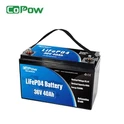
Take the CoPow golf cart lithium-ion battery as an example:

Why Golf Carts Rely on Multiple Batteries for Power?
Golf carts typically use multiple batteries connected in series to achieve the required system voltage of 36V, 48V, or 72V. Using several deep-cycle batteries provides longer operating time and better lifespan, while also offering advantages in cost, maintenance, and overall weight distribution.
Meet High Voltage Requirements of Motors
Motors require 36V/48V/72V for efficient operation, and a single 12V battery cannot provide sufficient voltage. Multiple batteries connected in series precisely match the system voltage (e.g., 6×6V=36V, 6×8V=48V, 4×12V=48V).
Extend Driving Range and Cycle Life
Series-connected deep-cycle batteries (mainly 6V/8V) deliver larger total capacity and deeper discharge capability, adapting to long hours of low-speed driving and frequent start-stops. 6V batteries feature thicker plates, offering longer cycle life than equivalent 12V batteries, which is ideal for golf course operating conditions.
Cost-Effective and Easy to Maintain
Multiple small-capacity batteries are more accessible and cost-effective to replace than a single ultra-large-capacity battery. Faulty batteries can be inspected and replaced individually. The mature lead-acid battery system ensures controllable costs, making it the mainstream choice.
Optimize Weight Distribution and Installation
Distributed placement of multiple batteries balances the vehicle's center of gravity, improving stability on uneven golf course surfaces. Their smaller individual size facilitates installation and maintenance within limited battery compartments.
Adapt to Battery Technology Characteristics
Lead-acid batteries have low energy density, requiring combination to reach the required capacity and voltage. While lithium-ion batteries can be integrated into 1–2 modules, they essentially rely on multiple cells connected in series to meet system voltage and discharge rate requirements.
Types of Batteries Used in Golf Carts
Golf cart batteries are mainly divided into lead-acid (flooded, AGM, gel) and lithium iron phosphate types. Flooded lead-acid batteries are low-cost and stable, AGM and gel batteries are sealed and maintenance-free, while lithium batteries offer high energy density, long lifespan, and light weight, making them a preferred upgrade. Choosing the right battery depends on your budget, maintenance needs, and usage intensity.
LiFePO4 golf cart battery
Offers high energy density and lightweight design (40–60% lighter than lead-acid batteries), with a cycle life of 3,000–5,000 cycles and an overall lifespan exceeding 10 years. Maintenance-free and fast-charging, it requires a higher initial investment and is well-suited for high-frequency use and long-term operations.
Flooded Lead-Acid golf cart battery (FLA)
Traditional and cost-effective, mostly 6V or 8V deep-cycle batteries that require regular water refilling and terminal cleaning. With a lifespan of approximately 5–7 years, they are suitable for low-usage frequency or budget-constrained scenarios.
AGM Sealed Lead-Acid golf cart battery
Features absorbed glass mat separators and a sealed design, offering maintenance-free operation, shock resistance, leakproof performance, and stable voltage. Boasting a lifespan of about 6–8 years, they are ideal for frequent start-stop operations or mountainous golf courses, with a higher cost than FLA batteries.
Gel Lead-Acid golf cart battery
Utilizes gelled electrolyte, delivering excellent high and low temperature resistance as well as low self-discharge rate, making it suitable for extreme weather conditions. It has a slightly lower capacity than FLA batteries and a higher price point, primarily used in special operating environments.
How 36V and 48V Golf Cart Batteries Are Usually Configured?
The 36V and 48V golf cart batteries achieve the required voltage by connecting multiple smaller batteries in series. The specific configurations are as follows.
36V Standard Configuration
The mainstream setup is 6 series-connected 6V deep-cycle lead-acid batteries (6×6V=36V), with a full charge voltage of approximately 38.2V. Featuring mature structure and low cost, it is ideal for older models and low-frequency use, with a maximum speed of around 12–15 mph.
48V Mainstream Configurations
6×8V: Common in modern models, offering fewer cells and easier maintenance.
8×6V: Higher capacity and redundancy, suitable for heavy loads and long driving ranges.
4×12V: Compact installation, mostly used in certain commercial models.The full charge voltage is about 51.2V, with torque and energy efficiency superior to 36V systems, and a maximum speed of 20–25 mph.
Lithium-Ion upgrade
Lithium iron phosphate batteries use 3.2V cells in series: approximately 12 cells for 36V and 15 cells for 48V. Usually, 1–2 integrated battery packs can replace multiple lead-acid batteries, reducing weight by 40–60% with longer service life but higher initial investment.
Key Notes
Cells must be of the same model and voltage for series connection-mixing different voltages is strictly prohibited. Changing the system voltage requires matching the controller and charger to avoid component damage.
Recommended Reading: How Many Batteries In A 48v Golf Cart?
How Many Batteries Are Used in a 72V Golf Cart?
The number of batteries in a 72V golf cart depends on the voltage of each individual battery and how they are connected. Common lead-acid configurations include 6×12V, 9×8V, or 12×6V, connected in series to reach 72V. Lithium batteries usually use a single integrated 72V pack or six 12V batteries in series, both achieving the 72V system voltage.
72v Lead-Acid Configurations
- 6×12V: The most common setup, featuring easy installation and maintenance, suitable for most 72V golf cart models.
- 9×8V: Higher capacity redundancy, ideal for heavy loads and long driving ranges.
- 12×6V: A traditional structure requiring more installation space, mostly used in older or custom-built carts.All are deep-cycle batteries with a full charge voltage of approximately 82–84V and a service life of 5–8 years, requiring regular maintenance.
72v Lithium-Ion Configurations
- Single integrated 72V pack: Encapsulated with cells in series and parallel, offering easy installation, maintenance-free operation, and a 40–60% weight reduction compared to lead-acid batteries. It boasts a cycle life of 3,000–5,000 cycles and an overall service life exceeding 10 years.
- 6×12V in series: Compatible with existing lead-acid battery compartments for easy replacement, with performance similar to integrated packs.The full charge voltage is approximately 86–88V , with a higher initial cost than lead-acid alternatives.
Why a Higher Amp-Hour Golf Cart Battery Might Reduce the Number of Batteries?
Batteries with higher ampere-hour (Ah) ratings can reduce the number of batteries needed in a golf cart. The system voltage is determined by batteries connected in series, while the total capacity depends on the Ah of each battery and the number of parallel connections.
If each battery has a higher capacity, there is no need to increase the number of parallel groups, and using high-voltage, high-Ah batteries can even reduce the number of series connections, lowering the total number of batteries.
Lithium batteries, due to their high energy density, can combine the function of multiple lead-acid batteries into a single high-Ah module, meeting both voltage and capacity requirements while reducing the total number of batteries.
Factors That Affect How Many Batteries You Need
In addition to the battery type, the number of batteries required for a golf cart also depends on the system voltage, the voltage of each individual battery, the total capacity needed, installation space and weight limits, as well as the operating conditions and configuration of the vehicle.
System Voltage and Cell Voltage
- System voltage (36V/48V/72V) fixes the number of series-connected batteries: e.g., 36V requires 6×6V, 48V requires 6×8V or 4×12V, and 72V requires 6×12V or 9×8V.
- Higher cell voltage reduces the number of series connections: 12V cells are more effective at minimizing quantity compared to 6V/8V cells.
Battery Type and Energy Density
- Lead-acid batteries: Low energy density requires multiple series/parallel connections; 48V systems commonly use 6×8V or 8×6V setups.
- Lithium-ion batteries (LiFePO4/NMC): High energy density enables single integrated packs; a 48V lithium pack replaces 6–8 lead-acid batteries, significantly reducing quantity.
Total Capacity and Range Requirements
- Total capacity = Single cell Ah × Number of series cells × Number of parallel groups; high-Ah cells reduce the need for parallel connections, lowering total battery count.
- Hilly terrain, heavy loads, or long-range needs demand higher capacity, which may require increasing cell Ah or parallel groups rather than series connections.
Installation Space and Weight Constraints
- Battery compartment size and load-bearing capacity limit the number of installable batteries; high-Ah or integrated packs must fit within available space.
- Lithium-ion batteries are 40–60% lighter than lead-acid alternatives, facilitating single-pack installation, while multiple lead-acid batteries are prone to exceeding weight limits.
Operating Conditions and Vehicle Configuration
- Terrain, passenger count, load weight, and start-stop frequency affect current and capacity demands; high-load scenarios may require additional parallel groups but not series connections.
- The rated voltage and current of the motor/controller restrict battery voltage and quantity to avoid mismatches and component damage.
How to Calculating the Right Battery Capacity for Your Golf Cart?
The basic method for calculating a golf cart's battery capacity is to first determine the vehicle's base energy consumption, then add a buffer based on operating conditions such as terrain, load, and temperature, and finally select a suitable battery capacity to match the system voltage and installation requirements.
The base energy consumption can be calculated by multiplying the average current by the operating time or by multiplying the distance traveled by the energy consumption per unit distance. The buffer is usually 10%–30%.
Base Capacity Calculation (Two Common Methods)
- Current-Time Method: Ah = Average Current (A) × Operating Time (h); e.g., 20A × 4h = 80Ah.
- Mileage-Energy Consumption Method: Ah = Daily Mileage (km) × Unit Energy Consumption (Wh/km) ÷ System Voltage (V); e.g., 15km × 25Wh/km ÷ 48V ≈ 7.8Ah.
Scenario Adjustment (Add Buffer)
- Terrain: +10%–15% for hilly/steep terrain; no adjustment for flat terrain.
- Load: +10%–20% for full load/heavy duty; +5%–10% for light load.
- Temperature: +15%–30% for low temperatures (<0℃); +10%–20% for room temperature.
- Accessories: +5%–15% for air conditioning, lights, or other electrical accessories.
Battery Type Adjustment (Depth of Discharge, DoD)
- Lead-Acid Batteries: DoD ≤ 50%, so Required Capacity = Adjusted Ah ÷ 0.5; e.g., 80Ah ÷ 0.5 = 160Ah.
- Lithium-Ion Batteries (LiFePO₄): DoD ≤ 80%–90%, so Required Capacity = Adjusted Ah ÷ 0.8; e.g., 80Ah ÷ 0.8 = 100Ah.
System & Installation Validation
- Voltage Matching: 36V/48V/72V requires corresponding series connections (e.g., 48V = 4×12V or 6×8V).
- Space/Weight Constraints: High-Ah or integrated packs must fit the battery compartment; lithium-ion batteries are 40%–60% lighter than lead-acid alternatives.
- Standard Capacities: Common options include 100Ah, 120Ah, and 150Ah-round up to the nearest standard capacity based on calculations.
Ensuring Safety: Key Considerations for Your Golf Cart BMS
The core function of a golf cart's Battery Management System is to monitor battery status in real time, balance individual cells, set multiple safety limits, and adapt to complex environments, thereby preventing overcharge, overdischarge, short circuits, and overheating.
The BMS must be strictly matched to the battery type, such as lithium iron phosphate or lead-acid, and used in conjunction with proper operation and maintenance procedures to ensure the battery operates safely and reliably under conditions like frequent starts and stops, temperature fluctuations, and high humidity on the golf course.
Core Boundary Protection Functions
- Voltage Protection: Strictly controls individual cell voltage and rapidly cuts off power in case of overcharging or over-discharging, preventing electrolyte decomposition or thermal runaway.
- Current and Short-Circuit Protection: Sets overcurrent thresholds to handle high currents from start-stops or uphill climbs; disconnects power within 2 milliseconds during short circuits, with integrated waterproof and leakage-proof design.
- Temperature Protection: Monitors batteries within a wide temperature range of -20℃~60℃, automatically limiting current at high temperatures and preheating before startup in low temperatures to avoid battery damage from low-temperature charging.
Cell Balancing and Consistency Management
- Active Balancing: Dynamically adjusts the voltage of each cell during charging and discharging, controlling deviations within 10mV to slow down capacity degradation.
- Regular Calibration: Perform a full charge-discharge cycle weekly; check cell voltage differences monthly. If the deviation exceeds 0.2V, conduct timely balancing to prevent a single cell from compromising the overall performance of the pack.
Matching and Compatibility
- Battery Type Adaptation: BMS voltage thresholds vary by battery type (e.g., LiFePO₄ vs. NMC). Mixing different types is prohibited to avoid false protection triggers or safety hazards.
- Charger Compatibility: Use OEM-certified CC-CV mode chargers with voltage accuracy controlled within ±0.5%. Floating charging function is strictly forbidden.
- System Synergy: The BMS must match the current requirements of the motor and controller to ensure stable discharge during heavy loads or uphill climbs.
Environmental Adaptation and Physical Protection
- Harsh Environment Resistance: Circuit boards undergo moisture-proof and waterproof treatment, with interfaces equipped with waterproof connectors, suitable for high-humidity environments or scenarios with irrigation water stains.
- Physical Protection: Avoid squeezing or colliding the BMS; ensure reliable connection of temperature sensors, and do not bypass or block them.
Maintenance and Monitoring Specifications
- Daily Monitoring: Check State of Charge and State of Health (SOH) via APP or dashboard, and pay attention to fault alarm information.
- Regular Maintenance: Clean battery terminals and apply insulating grease monthly; conduct capacity tests quarterly and professional diagnostics annually. Maintain 30%~50% charge during idle periods.
- Fault Handling: When the BMS triggers protection, first disconnect the load and charger, then let it stand for 15 minutes to reset. If the issue persists, contact professional personnel for inspection and repair-do not disassemble without authorization.
Conclusion
The number of batteries a golf cart needs depends on the system voltage, the voltage of each battery, the battery capacity, and the type of battery. Series connections determine the total voltage, while capacity and usage determine whether parallel connections or high-capacity batteries are needed.
Choosing the right golf cart battery type, performing regular maintenance, and using a reliable Battery Management System ensures safety and prevents damage. Lithium golf cart batteries have high capacity and long lifespan, which can reduce the number of batteries needed, while lead-acid batteries are inexpensive, mature, and still widely used.
By understanding these factors, golf cart owners can select the optimal golf cart battery configuration, extend driving range, simplify maintenance, and ensure long-term safe and stable operation of the vehicle.
FAQ
how many lithium batteries for golf cart?
For golf cart conversions, usually only a single integrated high-capacity lithium battery pack is needed to replace the original heavy lead-acid battery bank made up of 6 or 8 batteries.
This all-in-one design includes a built-in Battery Management System, which not only provides more stable voltage output but also reduces the overall vehicle weight by approximately 100–150 kg, significantly improving the cart's acceleration performance and driving range.
what size battery for golf cart?
For golf carts, the most commonly chosen battery is the GC2 standard-sized battery. These batteries typically come in 6V, 8V, and 12V specifications, all of which are deep cycle batteries designed for long-lasting power.
When installing, you need to first confirm the total voltage system of your cart and then decide how many individual batteries to purchase, which are connected in series for use.
What Is the Typical Capacity of a 12V Lead-Acid Golf Cart Battery?
Typical capacities for 12V lead-acid golf cart batteries range from 80Ah to 150Ah, depending on the battery's size and intended use. Among these, the more common deep-cycle models have a capacity of approximately 100Ah, offering reliable range and sustained discharge capability.
What Is the Typical Capacity of a 48V Deep Cycle Battery for Solar, RV, and Golf Cart Applications?
48V deep-cycle batteries used in solar energy storage, RVs, and golf carts typically have capacities ranging from 50Ah to 200Ah, with the 100Ah model being the most common.
Smaller capacities are suitable for light-duty applications or short-range scenarios, while capacities ranging from 150Ah to 200Ah are better suited for long-duration operation, heavy-duty applications, or energy storage systems.