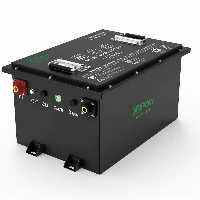
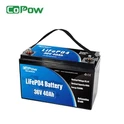
The service life of a golf cart battery has two meanings: one refers to the distance it can travel on a single charge; the other refers to the total lifespan of the battery pack.
This article will provide precise answers based on major platforms and websites. Please continue reading.

What is the lifespan of a golf cart battery?
The service life of standard lead-acid batteries ranges from 2 to 5 years, regardless of whether they are starter or deep-cycle types.
Take a 48V deep-cycle lead-acid golf cart battery as an example: its cycle count is only 300–700 cycles, corresponding to a service life of 3–5 years.
The service life of the higher-grade AGM lead-acid battery is 4–7 years.
Next is the most mainstream battery type currently on the market-lithium-ion golf cart batteries, which use lithium iron phosphate (LiFePO4) technology to achieve a longer service life. Consequently, they offer the highest number of charge-discharge cycles, ranging from 2,000 to 6,000, with a corresponding physical service life of 8 to 12 years.
The service life of a golf cart battery largely depends on the type and quality of the battery cells. For example, CoPow golf cart batteries utilize products from high-end LiFePO4 cell suppliers such as CATL, BYD, and EVE Energy. These batteries not only feature A+ grade quality from major brands but also offer over 6,000 charge-discharge cycles.
When it comes to the lifespan of golf cart batteries, we have one more tip: Have you heard of the "80/20 rule"? This is an optimized charging and discharging method for lithium-ion batteries, and you can find it in your phone's settings.
This means you should charge the battery promptly when the remaining charge reaches 20%, and stop charging when it reaches 80%. This effectively extends the lifespan of lithium-ion batteries.
However, if you're using a lithium-ion battery in a golf cart-which typically uses lithium iron phosphate cells-you can follow the 20/90 rule. This allows you to discharge the battery down to 90% capacity, providing 10% more actual usable power than standard lithium-ion batteries without affecting the battery's lifespan.
Golf Cart Battery Lifespan Comparison
| Battery Type | Cycle Life (Cycles) | Service Life (Years) | Key Features |
|---|---|---|---|
| Flooded Lead-Acid | 300–700 | 2–5 Years | Low cost, requires regular maintenance (watering) |
| Deep-Cycle Lead-Acid | 300–700 | 3–5 Years | Designed for continuous discharge, but degrades faster |
| AGM Lead-Acid | 500–800 | 4–7 Years | Maintenance-free, more stable performance |
| LiFePO4 (Lithium-Ion) | 2,000–6,000 | 8–12 Years | Long lifespan, lightweight, high efficiency |
| Premium LiFePO4 (CATL / BYD / EVE) | 6,000+ | 10–15 Years | A+ grade cells, ultra-long cycle life, top-tier stability |
Recommended Charging Practices
| Rule | Description |
|---|---|
| 20/80 Rule | Charge when battery reaches 20%, stop at 80% to maximize lifespan |
| 20/90 Rule (LiFePO4) | Charge up to 90% for more usable capacity without harming lifespan |
How far can a golf cart travel on a single charge?
Another factor in determining how long a golf cart battery lasts is how far it can travel on a full charge-in other words, its range. A very general and standard answer is that a golf cart can travel 15–60 miles (approximately 24–96 kilometers) on a single full charge.
This range covers both lead-acid and lithium-ion batteries and is a fairly rough estimate. In reality, a battery's range is influenced by many factors, including battery type, battery capacity, vehicle weight, road conditions, driving habits, tires, temperature, and the vehicle's condition. Therefore, this range is for reference only.
Next, let's take a closer look at the specifics.
Lead-acid batteries
An EZGO electric golf cart powered by a lead-acid battery can travel approximately 15 to 25 miles on a single charge; under ideal conditions, it can reach a maximum of nearly 30 miles.
After reviewing numerous online review videos and combining them with actual test data from many bloggers, we arrived at an average: the range of most lead-acid golf carts is approximately 20 miles.
Many owners have reported a common issue with lead-acid golf carts: the vehicle is relatively heavy, and when the battery charge drops below 50%, there is a noticeable loss of power-as if the cart is losing momentum, especially when climbing hills.
A customer from Minnesota once told us that his lead-acid battery drained quickly in cold weather, with a range of less than 20 miles.
This is because lead-acid battery capacity decreases in winter, and the longer the battery is used, the more capacity it loses. Although they are designed to last 2–3 years, in practice, many people need to replace their batteries after about 1.5 years.
Lithium-Ion Batteries
The range of a lithium-ion golf cart is undoubtedly much greater than that of a lead-acid battery. A fully charged lithium-ion golf cart can travel 25 to 45 miles-and that's just the standard model. If you use a battery like the CoPow 48V 105Ah lithium iron phosphate golf cart battery, you can even travel 50 miles or more.
Lithium-ion batteries are lighter than lead-acid batteries and do not suffer from power loss toward the end of the charge. Even with only 10% battery life remaining, they can still climb hills with ease. For golf enthusiasts, playing 18 holes is no problem, and they can even complete 36 holes.
The rated range published by golf cart battery manufacturers is typically determined through testing under ideal conditions. When it comes to actual range, we recommend estimating it at 80% to 85% of the rated range to provide a more accurate figure. It never hurts to err on the side of caution.
Recommended Reading: How Long Does It Take To Charge Golf Cart Batteries?

What Are the Key Factors That Affect Golf Cart Battery Life?
There's plenty of information online explaining why golf cart battery life drops sharply.
However, rather than sticking to theory and armchair discussions, we prefer to illustrate the point using real-world examples. We shouldn't sacrifice our driving experience just to extend battery life; having fun is what matters most.
Battery Types
The battery technology used in golf cart batteries determines their maximum service life.
Generally speaking, lithium-ion batteries have a longer lifespan than AGM (Absorbed Glass Mat) batteries, and AGM batteries last longer than standard lead-acid batteries.
Another factor to consider is battery capacity. Battery capacity not only determines driving range but is also closely related to service life.
Batteries with higher capacity experience shallower charge and discharge cycles, meaning they are less likely to discharge below 20% and suffer from deep discharge, thereby minimizing the impact on the battery's internal chemical reactions.

Depth of Discharge (DOD)
Simply put, depth of discharge is the extent to which a battery is discharged. As mentioned earlier, it is best to keep the battery charge level between 20% and 80% or 90% when using it.
Why 90% instead of 80%? It's impossible to constantly monitor the remaining charge of a golf cart battery. 90% is a relatively broad warning threshold, as is 10%.
Please note that the 10% to 90% range applies to lithium iron phosphate (LFP) golf cart batteries; this is the broadest recommended range. It's best not to go above or below this range.

Usage Intensity and Load Capacity
Whether it's a battery or an electrical appliance, poor usage habits will accelerate wear and tear.
This doesn't mean you should use it less or avoid using it altogether to extend its lifespan-there's no need to treat the battery like a precious treasure. As we've emphasized many times, feel free to use it to your heart's content without any reservations.
Our goal is to maximize your driving experience and enjoyment-something that CoPow's lithium-ion batteries for golf carts are designed to deliver. Just use them with confidence; leave the rest to us!
On the other hand, load capacity is also a significant factor. If you'd like to learn more, feel free to read our article "What Size Battery Do You Need For A 48V Golf Cart?"

Terrain and Road Conditions
We've noticed online that many sellers tout the power and range of their golf cart batteries, but these figures are based on ideal conditions and do not reflect real-world performance.
For example, a lithium-ion golf cart advertised as having a 35-mile range on a single charge may achieve that range on flat terrain, but its range may drop to 30 miles or even less on hilly terrain or grassy areas.
This is why we recommend purchasing high-capacity batteries and avoiding low-capacity or just-enough-capacity batteries.

Charging Habits
Never use the wrong charger; always use the correct one for the battery type. Never use a lead-acid battery charger to charge a lithium-ion battery-this is the most common mistake people make.
Setting aside charging duration and methods for now, you must first ensure that your LiFePO4 battery is connected to a charger designed for LiFePO4 batteries, as each battery type requires its own compatible charger.
Leave the rest to the battery management system, which automatically cuts off power once the battery is fully charged and provides low-battery alerts.
Recommended Reading: Charging Lithium Battery With Lead Acid Charger: The Risks

Ambient Temperature
Whether it's lead-acid or lithium-ion batteries, current battery technology has not yet fully overcome the adverse effects of extreme temperatures.
High temperatures can cause battery degradation, while low temperatures can reduce battery capacity, thereby significantly reducing runtime; however, lithium-ion batteries may be less affected.
I have personally experienced this: during spring, summer, and fall, the battery retains a significant charge; however, once winter arrives, the battery drains very quickly-especially when it suddenly drops from 80% to 40%, which causes me great anxiety.
I can only hope it doesn't lose any more charge so that I can safely drive the car home. This is a typical and real-life example of a lead-acid battery.

Have You Ever Maintained Your Battery?
Although we mentioned earlier that golf cart batteries can be used without much concern, you still need to maintain them regularly to ensure a consistently smooth driving experience.
Lead-acid batteries require topping up the electrolyte and cleaning corroded terminals; while lithium batteries do not require this, it's still a good idea to check the parameters in your mobile app for any abnormalities.
Especially during long-term storage, check the battery's remaining charge monthly. If the charge is below 20%, recharge it to 60%–70%; avoid fully charging it in one go.

Natural Battery Degradation
Even if you leave it unused, it will naturally degrade over time-this is a basic law of physics.
Signs of battery degradation include reduced runtime, slower charging speeds, and diminished power output.
These issues may be caused by other factors, but if your battery has been in use for more than two years, they are likely due to natural aging, and it's time to replace it with a new one.
We recommend upgrading from a lead-acid battery to a lithium-ion battery, as lithium-ion batteries not only resolve the issues mentioned above but also provide a better driving experience-even better than when you first bought your golf cart.

What's the Difference Between Golf Cart Battery Percentage and Estimated Driving Range?
The core difference between a golf cart's battery percentage and its estimated driving range is that the former is a "static indicator" based on the current state of energy, while the latter is a "dynamic prediction" based on multiple variables.
Simply put, the battery percentage (State of Charge, or SOC) is like the fuel gauge in a gas tank; it tells you how much chemical energy is left in the battery by measuring voltage or current flow.
For example, if you see 50%, it means half of the battery's capacity is available. However, the estimated driving range is far more complex. It depends not only on the remaining percentage but also on your driving habits, the vehicle's load, the terrain's steepness, tire pressure, and even the battery's State of Health (SOH).
For instance, 50% power might allow you to drive 15 kilometers on a flat paved road, but that same amount of energy might only cover 8 kilometers if you are constantly climbing hills or driving on thick grass.
Therefore, while the percentage is generally accurate, the driving range is merely a reference value that fluctuates with every press of the accelerator. As a battery ages, you may find that even if the display shows 100%, the actual distance you can travel is significantly shorter than when the vehicle was new. This is because the battery's total capacity has degraded, yet the percentage only represents a "proportion of the current total capacity."
Common Misconceptions About Golf Cart Battery Life
1. Misconception: You should run the battery until it's empty before recharging
The Truth: This rule applied to old Nickel-Cadmium (NiCd) batteries, but it is harmful to the Deep Cycle Lead-Acid or Lithium batteries used in golf carts.
- Lead-Acid batteries hate "deep discharging." If you constantly let the charge drop below 20%, you accelerate sulfation on the plates, which kills the battery.
- Advice: Get into the habit of "opportunity charging." It is much healthier to keep the charge above 50% whenever possible.
2. Misconception: "Maintenance-Free" means no maintenance at all
The Truth: "Maintenance-free" usually just means you don't have to add water, but the hardware still needs to be monitored.
- Even with AGM or Lithium batteries, you must regularly check for terminal corrosion and loose connections.
- If the terminals are covered in white powder (acid corrosion), it creates resistance, causing the battery to overheat during use and charging, which shortens its lifespan.
3. Misconception: As long as the cart starts, the battery is healthy
The Truth: Starting power is not the same as capacity.
- Golf cart batteries are "deep cycle," meaning their value lies in their ability to provide sustained power over time.
- A dying battery might perform fine for the first 5 minutes, but then experience a massive voltage drop. If your cart struggles on hills or has significantly lost its range, the battery is likely near the end of its life, even if it still "turns on."
4. Misconception: When adding water, the fuller the better
The Truth: This is a dangerous and messy mistake.
-
Timing: Add water only after the charging cycle is complete (unless the plates are dry/exposed). Electrolytes expand during charging; if you fill them to the top beforehand, the acid can overflow and corrode your cart's frame.
- Water Type: Use Distilled Water only. Tap water contains minerals that attach to the lead plates, causing permanent damage.
5. Misconception: Disconnecting the battery is enough for long-term storage
The Truth: Batteries suffer from "self-discharge."
- A lead-acid battery will lose about 5%–10% of its charge every month, even if it isn't connected to anything.
- Advice: If storing your cart for the winter, you should give it a "refresh charge" every 30 days or use a smart charger with a "maintenance/float mode."
How to Extend the Life of Your Golf Cart Batteries?
1. Charging Techniques: Frequent Over Deep
- Don't wait for it to die: The ideal time to recharge lead-acid batteries is when they are at about 50% capacity. Frequent "deep discharging" (letting them drop below 20%) damages the internal structure.
- Charge promptly: It is best to recharge your cart the same day you use it. Leaving a battery in a discharged state causes "sulfation," which permanently reduces its ability to hold a charge.
- Complete the cycle: Use a matching smart charger. While most modern chargers have an automatic shut-off, it is still good practice to ensure the cycle completes fully before disconnecting.
2. Fluid Maintenance (Lead-Acid Only)
- Distilled water only: Never use tap or mineral water. The minerals act like "poison" to the lead plates and will ruin the battery.
- Fill AFTER charging: Unless the plates are completely exposed, always add water after the battery is fully charged. Electrolyte levels rise during charging; if you fill them beforehand, the acid may overflow and corrode the cart's frame.
- Maintain the right level: The fluid should be about 1/8 to 1/4 inch (approx. 0.5 cm) above the plates, but below the bottom of the fill well.
3. Keep the Battery Bank Clean
- Prevent corrosion: Check the terminals for white or blue-green powder (acid corrosion). This buildup increases resistance, causing the battery to overheat or even melt the connectors.
- Cleaning method: Use a baking soda and water solution (1 tablespoon baking soda to 1 cup water) to neutralize the acid. Scrub with an old toothbrush, rinse with clean water, and dry thoroughly.
- Protective coating: Once clean and dry, apply a battery terminal protector spray or a thin layer of petroleum jelly (Vaseline) to prevent future oxidation.
4. Storage Habits
- Winter storage: If the cart won't be used for several months, store it in a cool, dry place. Manually charge it every 30 days, or keep it connected to a smart charger with a "maintenance" or "float" mode.
- Avoid extreme heat: High temperatures are actually more damaging to batteries than cold. Try to park your cart in the shade during the summer.
5. Driving Habits
-
Smooth acceleration: Stomping on the pedal creates a massive, instantaneous current draw, which acts like an "electric shock" to the battery plates.
- Reduce load: Avoid overloading the cart or prolonged steep hill climbing, as the excessive heat from high discharge rates shortens battery life.
Signs Your Golf Cart Battery Is Near the End of Its Life
1. Significantly Reduced Range
This is the most obvious sign. If you used to be able to play two full rounds (36 holes) on a single charge, but now you feel the power fading by the 12th or 15th hole, the battery's capacity has severely degraded.
2. Sluggish Acceleration and Struggling on Inclines
Even if the meter shows a "full charge," you might find the cart accelerates very slowly or struggles significantly going uphill.
- The Reason: The battery's internal resistance has increased, meaning it can no longer provide the high burst of current (discharge rate) needed for torque.
3. Abnormal Charging Times
- Charging too fast: The charger turns off much sooner than usual, but the cart dies almost immediately. This usually means the plates are heavily sulfated, leaving very little active material to hold energy.
- Charging never ends: The charger runs for 16+ hours without stopping, or the batteries get extremely hot. This often indicates a shorted cell, preventing the pack from reaching the required voltage to signal the charger to stop.
4. Physical Deformities
Regularly lift the seat to inspect the batteries for:
Bulging/Bloating: If the sides of the battery casing are swollen or warped, it's a sign of internal pressure buildup due to overheating or overcharging. This is a dangerous signal.
Leaking or Excessive Corrosion: Constant acid leaks or a persistent buildup of white/green powder around the terminals that returns shortly after cleaning.
5. Murky Electrolyte (Lead-Acid Only)
When you add water, the electrolyte should be clear. If the liquid looks cloudy, gray, or brown, it means the lead paste on the plates is shedding and settling at the bottom. This is a sign of a "dying" battery.
6. Abnormal Resting Voltage
If you have a multimeter, you can run a simple test:
Fully charge the batteries and let them sit for 12 hours. For a 12V battery, if the reading is below 12.4V, or if one battery in a set reads significantly lower than the others, that specific battery is failing.
What to Do With Old Golf Cart Batteries?
1. The Core Exchange - The Most Cost-Effective Way
This is the most common and recommended method. When you buy new batteries, retailers usually charge a "Core Charge" (typically $15 to $30 per battery).
- The Process: You give your old batteries to the seller, and they waive or refund the core charge.
- The Benefit: You avoid paying extra fees, and the retailer takes responsibility for professional recycling.
2. Sell Them to a Local Scrap Metal Yard
If you are upgrading to lithium batteries and don't need a "trade-in," you can sell your old lead-acid batteries to a scrap yard.
- The Process: Lead-acid batteries have high scrap value. Yards will pay you cash based on the weight or per unit.
- The Benefit: You turn waste into a bit of extra cash.
3. Contact Professional Recycling Centers
If there are no retailers nearby, look for facilities that specialize in hazardous waste disposal.
- How to find them: Search for "Battery Recycling Near Me" or check with local municipal waste management.
- Note: Lithium battery recycling is entirely different from lead-acid. Never mix them; lithium batteries must go to a facility specifically equipped to handle them.
4. Attempting "Reconditioning" (Use Caution)
If your batteries are just underperforming due to minor sulfation from long-term storage, there are "reconditioning" chemicals or smart chargers with "Desulfation" modes.
- The Risk: This only delays the inevitable and cannot bring a truly "dead" battery back to life. If the battery is physically damaged (bloated or cracked), skip this and recycle it immediately.
Why Copow LiFePO4 Golf Cart Batteries Balance Lifespan and Cost?
When choosing a golf cart battery, Copow lithium iron phosphate batteries strike a strong balance between lifespan and upfront cost because they don't focus solely on the sticker price. Instead, Copow optimizes from the ground up, focusing on battery architecture and long-term total cost of ownership.
While many buyers are used to comparing only the initial purchase cost, the real advantage of Copow batteries is that they transform what used to be a consumable product, like lead-acid batteries, into a long-term asset. By leveraging the exceptionally durable chemistry of lithium iron phosphate, these batteries deliver a service life that extends well beyond that of traditional options. When the cost is spread across daily use, the actual expense is significantly lower than the cost of repeatedly replacing conventional batteries.
1. Exceptionally Long Cycle Life (Lower Annualized Cost)
Although Copow lithium batteries have a higher upfront price than lead-acid batteries, their lifespan is 5–10 times longer.
- Data comparison: lead-acid batteries typically deliver 300–500 cycles, while Copow LiFePO4 batteries typically deliver 3,500–6,000+ cycles.
- Logic: Even if a Copow battery costs twice as much initially, it can last up to 10 years. This means you avoid replacing batteries every 2–3 years, effectively saving the cost of two to three additional sets of lead-acid batteries over time.
2. Grade A Cells and an Advanced BMS
Copow uses high-quality Grade A lithium-iron phosphate cells, which are essential for balancing performance and cost.
- Precision protection: The built-in intelligent BMS prevents overcharging, over-discharging, overheating, and short circuits.
- Reduced degradation: A well-designed BMS ensures proper cell balancing. If one cell fails, the entire battery pack can be compromised. Copow's precise management minimizes the risk of premature failure, protecting the user's initial investment.
3. "Zero Maintenance" Cuts Hidden Costs
Lead-acid batteries require regular watering, corrosion cleanup, and replacement of damaged cables.
- Cost savings: Copow lithium batteries are fully sealed and require no maintenance.
- Efficiency gains: They typically weigh about one-third as much as lead-acid batteries. A lighter cart reduces tire wear and motor load, while also lowering overall energy consumption.
4. High Discharge Efficiency and "Usable Capacity"
-
Deep-discharge capability: Lead-acid batteries can usually use only about 50% of their rated capacity without damage. Copow lithium batteries support 100% depth of discharge (DOD) without compromising lifespan.
- Cost balance: This allows you to choose a lithium battery with a smaller rated capacity (and lower price) while still achieving real-world range comparable to a much larger lead-acid battery.
5. Fast Charging and Low Self-Discharge
- Charging efficiency: Copow lithium batteries charge 3–5 times faster than lead-acid batteries, with efficiency close to 100% (compared to about 85% for lead-acid), reducing long-term electricity costs.
- Worry-free storage: Extremely low self-discharge means that even if a golf cart is stored for months during the off-season, the battery won't be ruined by deep discharge.

Conclusion
Ultimately, whether you choose the budget-friendly traditional lead-acid battery or the high-performance Copow LiFePO4 battery, the decision comes down to balancing cost with the overall experience.
If you are looking for the lowest initial price and don't mind spending a little time each month watering and applying rust-prevention treatments, lead-acid batteries remain a reliable option.
However, if you want to eliminate maintenance hassles entirely, while gaining a lighter cart, faster charging, and a lifespan that can span a decade, upgrading to a lithium system is clearly the smarter long-term investment.
Think of the battery as the heart of your golf cart. Proper charging habits, a dry storage environment, and regular cleaning are the best ways to care for that heart. We hope this guide helps you avoid common maintenance pitfalls, keeping your cart powered up and ready for the course, season after season.