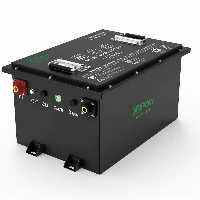
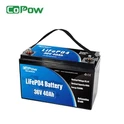
The lifespan of lithium-ion batteries dictates the "shelf life" of modern devices. Yet, myths about battery longevity persist: Should we focus on calendar life or cycle count? Why do batteries experience a "cliff-like" drop in power after prolonged use?
From the inherent differences between various battery types to how scientific habits can extend your device's life by five years, this article provides the most concise and practical comprehensive guide to maximizing lithium-ion battery longevity.

Is Lithium Battery Lifespan Measured in Years or in Charge Cycles?
The lifespan of a lithium-ion battery is the result of the combined effects of "charge-discharge cycle count" and "calendar life," but technically, the "cycle count" serves as the core metric.
From a physical perspective, Charge Cycles more accurately reflect the battery's actual degradation. Every time a battery completes a 100% charge-discharge cycle (meaning a cumulative usage of 100% capacity, not necessarily in a single session), irreversible loss occurs within its internal chemically active materials. For instance, a battery rated for 500 cycles might reach the end of its life in just one year under frequent use, whereas a light user might take three years to exhaust these cycles.
However, Calendar Life cannot be overlooked, as lithium-ion batteries undergo "natural aging." Even if left completely unused, side reactions within the electrolyte and electrode materials occur over time, leading to capacity fade. Typically, even if the cycle limit has not been reached, a battery's performance will significantly degrade compared to its factory state after 3 to 5 years of storage due to chemical deterioration.
Therefore, in practical applications, manufacturers usually adopt a dual standard: cycle count determines how much you have "used" the battery, while calendar life determines how long it has "lived." For high-frequency devices (such as smartphones), cycle count is the primary indicator; for low-frequency devices (such as emergency energy storage systems), calendar life is the more critical reference.
Differences in Lifespan Among Different Types of Lithium Batteries
Although they are all lithium-ion batteries, due to differences in their internal chemical compositions and structures, the number of charge-discharge cycles they can withstand varies significantly.
Currently, the common types of batteries available on the market each have their own distinct characteristics regarding lifespan performance.
1. Lithium Iron Phosphate (LFP)
Lifespan: 2,000 - 5,000+ cycles | 10 - 15 years
The most durable mainstream battery. Its highly stable chemical structure allows it to remain functional for over a decade, even with heavy daily use, making it the standard for energy storage and electric buses.

2. Nickel Manganese Cobalt (NMC/NCA)
Lifespan: 800 - 2,000 cycles | 5 - 10 years
The balanced performer. While it offers fewer cycles than LFP, its high energy density provides enough longevity to power passenger EVs for roughly 8 years of efficient service.
3. Lithium Cobalt Oxide (LCO)
Lifespan: 300 - 700 cycles | 2 - 4 years
Commonly found in smartphones and laptops. Longevity is sacrificed for thinness, and users typically notice a significant drop in capacity after just 2 years due to rapid chemical aging.
4. Lithium Titanate (LTO)
Lifespan: 10,000 - 25,000+ cycles | 20+ years
The "marathon runner" of batteries. It experiences almost zero chemical degradation, lasting over 20 years even in extreme environments. It is primarily used in rail transit and heavy industrial applications.
5. Lithium Manganese Oxide (LMO)
Lifespan: 300 - 1,000 cycles | 3 - 6 years
A cost-effective option with poor high-temperature stability. Capacity fades steadily over time, making it common in e-bikes and entry-level power tools.
What Does the Lithium Battery Degradation Curve Look Like?
In reality, the degradation of a lithium-ion battery's lifespan is not linear; when plotted on a graph, it resembles a fluctuating polyline rather than a straight line. This pattern reflects the series of complex physical and chemical changes the battery undergoes internally as it transitions from its initial peak performance to gradual aging.
Three Stages of Lithium Battery Degradation
- Initial Drop (SEI Formation) A slight, rapid capacity loss occurs during the first few dozen cycles as the SEI layer forms on the electrodes, consuming a small amount of lithium ions for long-term protection.
- Stable Degradation (Linear Phase) The longest and most predictable stage. Capacity fades at a constant, slow rate, typically sliding from 100% down to 80%.
- Rapid Fade (The "Knee" Point) Once capacity hits around 70% - 80%, a "knee" appears in the curve. Internal resistance spikes, causing the capacity to plummet sharply toward the End of Life (EOL).

What Affects the Lifespan of a Lithium Battery?
The lifespan of a lithium-ion battery is highly variable; it behaves more like a consumable item, where your daily usage habits directly determine how long it will last. Although we often refer to a fixed usage limit, the actual lifespan is typically determined by the combined effect of four key factors.
1. Depth of Discharge (DoD)
Avoid running the Battery to 0%.
Discharging a lithium battery to 0% puts significant stress on its internal structure. Research shows that keeping the battery between 20% and 80% can extend its lifespan by 2–3 times compared to repeatedly cycling between 0% and 100%.
2. Operating Temperature
Heat Is the "Number One Killer."
Lithium batteries perform best between 15°C and 35°C.
- High Temperatures: Prolonged exposure above 45°C accelerates chemical degradation and shortens battery life.
- Low Temperatures: Charging below 0°C can cause lithium plating (metallic lithium buildup), which leads to permanent and irreversible damage.
3. Charging Voltage and C-Rate
Fast Charging Comes at a Cost.
- Voltage: Keeping a battery at 100% for extended periods (for example, leaving it plugged in constantly) subjects the active materials to high-voltage stress.
- Current: Frequent ultra-fast charging generates excessive heat and may cause microscopic fractures in the electrode materials, accelerating long-term degradation.
4. State of Charge During Storage
How You Store It Matters.
If a battery will remain unused for an extended period, it should be stored neither full nor empty. The ideal storage range is 40%–60% in a cool environment.
- Storing at 100% increases internal stress.
- Storing at 0% risks deep discharge, a condition from which the battery may never recover.
How To Extend the Life of Your Lithium Batteries?
In fact, the core logic to extending the lifespan of a lithium-ion battery is to minimize the physical and chemical stress it endures. By mastering a few scientifically proven techniques, you can effectively slow down the aging process in daily use.
1. Follow the "Partial Discharge" Rule
Keep power between 20% and 80%. Avoid letting the battery drop below 20%, and don't feel pressured to hit 100% every time. This "mid-range" habit reduces stress on the electrodes and can more than double your battery's lifespan.
2. Avoid Temperature Extremes
Keep it cool. Heat is a battery's worst enemy-never leave devices in a hot car or charge them in direct sunlight. Similarly, never charge at sub-zero (0°C) temperatures, as this causes irreversible internal plating.
3. Minimize Fast Charging
Slow charge whenever possible. While convenient, ultra-fast charging generates excessive heat and high current that speed up aging. Use a standard charger for overnight charging to give the battery a "rest."
4. Use "Half-Charge" for Storage
Store at 50% for long-term idle. If you aren't using a device for weeks or months, leave it at roughly 50% charge in a cool, dry place. Storing it at 0% or 100% for long periods will lead to rapid degradation.
5. Remove Cases While Charging
Let it breathe. Some thick protective cases trap heat during the charging process. If your device feels hot while plugged in, remove the case to help dissipate heat and protect the battery's chemistry.
When Should You Replace a Lithium Battery?
The most scientific criterion for determining whether a lithium-ion battery needs replacement is when its maximum capacity degrades to below 80% of its initial capacity. In professional terminology, this threshold is known as the "End of Life" (EOL). Once this tipping point is crossed, the battery's internal resistance increases sharply, and the rate of power consumption plummets.
In daily use, if you notice a significant reduction in device runtime (for example, lasting only half a day instead of a full day) or if the device shuts down abnormally while still showing 20% remaining charge, this typically indicates unstable battery voltage. More severe scenarios include abnormal device overheating or battery swelling (which can cause the screen or casing to deform).
If any physical deformation occurs, you must immediately stop using the device and replace the battery for safety reasons to prevent risks of fire or explosion.
Has the 2026 Technology Upgrade Extended Lithium Battery Lifespan?
2026 indeed marks a pivotal turning point for lithium-ion battery technology, with the deployment of numerous new innovations making batteries significantly more durable. Semi-solid-state batteries are now being mass-produced in new models from major automakers, boasting over 6,000 charge-discharge cycles; this means they can last more than 15 years even with daily driving.
Companies like Samsung have also achieved breakthroughs in addressing lithium dendrite issues, utilizing novel materials to make previously fragile lithium-metal batteries highly stable.
Furthermore, current Battery Management Systems are far more intelligent than before. When paired with advanced liquid cooling systems that maintain temperature variations within a minimal range, the rate of battery degradation has been reduced by nearly half compared to three years ago.
Although all-single-crystal electrode technology capable of enduring 8 million kilometers is still in the laboratory stage, the technologies available in 2026 have genuinely alleviated concerns that batteries will fail before the vehicles they power.
Conclusion
Understanding lithium-ion battery lifespan is not a matter of luck, but rather a science of balance. Although different battery types have inherent lifespans due to their distinct chemical compositions-for instance, Lithium Iron Phosphate (LFP) is known for durability, while Nickel-Cobalt-Manganese (NCM) prioritizes energy performance-it is ultimately our daily habits that determine how long they last.
By maintaining the charge level between 20% and 80%, avoiding high-temperature environments, and leveraging the smarter Battery Management Systems available in 2026, you can ensure the battery's actual performance approaches or even exceeds its theoretical lifespan. In essence, the rate of battery degradation depends entirely on how well you care for it; with proper usage, it can provide stable and reliable power support for an extended period.
FAQ
What Is the Life Expectancy of an AAA Lithium Battery?
The lifespan of AAA lithium batteries depends on their type. For disposable lithium batteries (such as lithium iron disulfide batteries), the shelf life can reach 10 to 15 years under normal storage conditions. For rechargeable lithium batteries (such as lithium-ion or lithium-polymer), the cycle life typically ranges from 300 to 1,000 cycles, corresponding to an average service life of about 2 to 5 years.
Is Lithium-Ion Battery Degradation Linear with Cycles?
The capacity fade of lithium-ion batteries does not follow a linear trend with cycle count, but instead shows a nonlinear pattern-slow degradation in the early stages, relative stability in the middle stages, and accelerated decline in the later stages. During the initial cycles, capacity loss is minimal, after which the battery enters a more stable degradation phase. However, as cycling continues, side reactions-such as SEI layer growth, lithium loss, and electrode structural degradation-gradually accumulate, causing the rate of capacity fade to increase over time.
As a result, battery life cannot be accurately estimated using a fixed capacity loss per cycle. In addition, factors such as temperature, charge and discharge rates, and depth of discharge (DoD) also play a significant role in shaping the degradation curve.
Can a Lithium Battery Last 20 Years?
Under certain conditions, lithium-ion batteries can last up to nearly 20 years; however, this typically applies only to high-quality LiFePO4 batteries operating under ideal conditions. In real-world applications, most lithium-ion batteries have a service life of around 5 to 10 years.
Achieving a lifespan of 15 to 20 years generally requires use in energy storage applications with low cycling and shallow depth of discharge, along with strict system management and control.