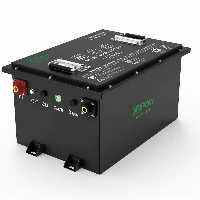
We do not recommend using a 12V charger to charge a 24V lithium battery. If you forcibly use a 12V charger on a 24V battery, you will not only cause capacity degradation in the 24V LiFePO4 battery but may also frequently trigger the protection mechanisms of the Battery Management System.
It is best to use a dedicated LiFePO4 charger designed specifically for 24V lithium batteries. If no such charger is available, there are two alternative methods you can consider.
Key points of this article:
- Explain the limitations and risks of charging a 24V battery with a 12V charger.
- Introduce two unconventional charging methods.
- Guide on how to purchase a suitable charger for your needs.
- Highlight the benefits of choosing CoPow batteries, which come with compatible chargers.
- Provide tips on how to properly protect and maintain LiFePO4 batteries.

Understanding the Difference Between 12V and 24V Systems
The core difference between 12V and 24V systems lies in the voltage. You can imagine voltage as water pressure in a pipe: 12V is like a low-pressure pipe, while 24V is like a high-pressure pipe. A high-pressure pipe can deliver the same amount of water faster and farther, and the pipe is less likely to overheat.
Therefore, 12V systems have lower voltage and are generally used for low-power applications, such as small RVs, small off-grid systems, or fishing boats.
In contrast, 24V systems have higher voltage and can drive higher-power equipment, such as forklifts, yachts, large RVs, or large off-grid systems.
You can think of a 24V system as an upgraded version of a 12V system. It achieves higher voltage through series connections, which improves power transmission efficiency.
For example, if you want to run an air conditioner in your RV, a single 12V battery may not provide enough power. In this case, you could:
Connect two 12V 100Ah battery packs in parallel to expand the capacity to 200Ah. This provides more usable energy.
Why a 12V Charger Won't Charge a 24V Battery?
The output voltage of a 12 V charger is too low to reach the voltage required by a 24 V battery pack. LiFePO4 cells need about 3.6–3.65 V per cell during the absorption phase, so an 8-cell 24 V battery pack requires roughly 29 V. A 12 V charger can only reach a maximum of 14.6 V, meaning the battery will never fully charge. The cells cannot balance properly, which causes the BMS to record an incomplete charge. It may then trigger power-off protection.
Insufficient Charging Voltage
A 12V charger typically outputs a maximum of around 14.6V, whereas a 24V battery pack requires approximately 29V to reach full charge.
Cell Requirements
A 24V battery pack is usually composed of 8 cells connected in series, each rated at 3.6V. During the absorption phase, each cell requires approximately 3.6–3.65V.
Cell Imbalance and BMS Response
The Battery Management System continuously monitors the voltage of each individual cell. If a cell fails to reach its full charge voltage, cell imbalance may occur. The BMS will record this state of insufficient charge. If the voltage remains low for an extended period, it may trigger protection mechanisms. It will cut off the power.

Risks of Mismatched Charging
Please note that we are using LiFePO4 batteries here. Therefore, when discussing the hazards caused by a mismatched charger, the main risks include cell imbalance, capacity loss, frequent triggering of BMS protection, and heat accumulation. Among these, capacity loss is particularly significant.
Battery Cannot Reach Full Charge
The output voltage of a 12V charger is insufficient to meet the charging needs of a 24V battery pack. The maximum output of a 12V charger is only 14.6V, which can provide only half of the required voltage.
A 24V LiFePO4 battery pack consists of 8 series-connected individual cells. Each cell requires 3.6 to 3.65V during the absorption phase, for a total of approximately 29V.
Capacity Loss
When a battery cannot be fully charged, the Battery Management System is unable to perform balancing charge. This means that some cells may remain in a low state of charge for a long time.
This low-charge condition is commonly called over-discharge. Over time, it gradually decreases the battery's physical capacity.
System Interruption Triggered by BMS Protection
When you use a 12 V charger to charge a 24 V battery, you might experience a sudden power cutoff. This happens because you have triggered the BMS protection mechanism. The BMS detects that the battery has not been fully charged for an extended period and interprets it as a charging malfunction. To prevent damage to your battery, it actively cuts off the power.
Heat Accumulation
A simple example is that when cell imbalance occurs, a certain cell bears more current. Since the cell no longer has sufficient capacity to accommodate the additional current, this excess current is dissipated as heat. This causes the entire battery pack to heat up.
What to Do If You Only Have a 12V Charger? - Two methods
Life always has its surprises. Suppose one day you forget your charger, or are forced to use a 12V charger. You can try the following unconventional methods.
Series-charging two 12 V batteries
To be honest, the chances of needing this method are even lower than the chances of forgetting to bring your charger.
However, if one day you really forget to bring a 24V battery charger and you happen to have a 12V charger with you, you could try separating a 24V lithium battery pack that is formed by connecting two 12V batteries in series. After disconnecting the series connection, you can use the 12V charger to charge each 12V battery individually.
As an emergency workaround for unusual situations, the charging speed will not be very fast. In addition, after you reconnect the batteries in series, it may lead to capacity imbalance within the battery pack. Frequent disconnection and reconnection of the battery pack can also wear out the terminals and cables. Please consider this method carefully.
Using a DC-DC step-up converter with your 12 V lithium battery charger
If you do not want to disassemble the 24V lithium battery pack, you can try another method. Add a DC-DC boost converter between the charger and the battery. A DC-DC boost converter is an electronic device that can increase a lower DC voltage to a higher voltage.
The basic steps are as follows:
- Connect the 12V LiFePO4 charger to the input of the DC-DC boost converter.
- Adjust the converter's output voltage.
- Set the output voltage to around 29V, which is the absorption voltage for a 24V LiFePO4 battery.
- Then connect the converter's output to the 24V battery pack.
Before using this method, we will temporarily ignore the fact that you may need to purchase a converter. The first thing you should focus on is compatibility. You must confirm that the converter matches the voltage and current requirements of the 24V battery.
Choosing the Right Lithium Battery Charger for 24V Packs
The following are the charging precautions for LiFePO4 batteries:
- Charging Voltage Matching: A 24V LiFePO4 battery pack requires a charging voltage between 29V and 29.4V. Regardless of the specific specifications, you must always check their charging voltage range carefully.
- Charging Current Matching: The output current of the charger should not be too low or too high. It is recommended to be 10%–20% of the battery's capacity.
- Charger Must Have a LiFePO4 Mode: The so-called LiFePO4 battery charging mode actually refers to the CC-CV (Constant Current - Constant Voltage) charging curve.
Why CoPow's 24V Lithium Battery Stands Out?
This is because CoPow's 24V lithium battery comes with a built-in smart charger, so you don't need to spend extra money to purchase one. As a professional LiFePO4 battery manufacturer, CoPow equips its lithium batteries with a specialized charger that offers the following features:
Precise Voltage Matching: The charger's output voltage is strictly matched to the charging requirements of the 24V battery pack.
Intelligent Current Regulation: Automatically adjusts the charging current based on the battery's capacity and condition.
Multi-Stage Charging Modes: Supports multiple charging stages, including constant current, constant voltage, and trickle charging.
Overcharge/Overcurrent Protection: Automatically stops charging if abnormal voltage or current is detected.
Temperature Monitoring: Built-in temperature sensors continuously monitor charging temperature.
Battery Balancing Function: Balances the voltage of individual cells during charging.
Indicator and Alarm System: Displays charging status via LED lights or a screen and provides alerts in case of anomalies.
Short-Circuit and Reverse-Polarity Protection: Prevents damage to the charger or battery due to incorrect wiring or short circuits.
High Compatibility: Optimized for LiFePO4 battery characteristics and suitable for 24V battery packs of various capacities without additional adjustments.
The Best Companion for Protecting LiFePO4 Batteries – Smart Battery Management System
As you can see, we mention LiFePO4 batteries multiple times throughout the article. In fact, most 24V lithium batteries today are 24V LiFePO4 batteries. If you are using this type of battery, you can directly monitor its status through your phone-especially when you're charging it using unconventional methods. You can see the battery's voltage and current in real time. If something seems off, you can cut off the power directly from the system instead of waiting for the battery to fail.
More importantly, by reviewing historical data, you can trace how your battery got damaged. With the support of a battery management system, you not only gain a safety net but also the ability to accurately pinpoint problems when they occur. No more guessing blindly or wandering aimlessly.

Conclusion
So far, we have addressed whether a 12V battery charger can be used on a 24V battery. Conversely, you might wonder: can a 24V battery charger be used on a 12V battery? The answer is definitely no. Using a higher-voltage charger to charge a lower-voltage battery is even more dangerous and could potentially cause a fire in severe cases.
In short, always use the original charger whenever possible. Although there are indeed some alternative methods to charge the battery, it is best to avoid using them whenever possible.