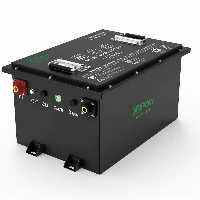
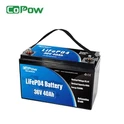
"Lost in the sea of battery options and worried about hidden safety risks or the sting of frequent replacement costs? In the ultimate showdown of LiFePO4 vs. Lithium-Ion, the winner depends entirely on your specific needs.
Should you prioritize the high energy density that makes smartphones and laptops so sleek, or opt for the rock-solid stability of Lithium Iron Phosphate Battery-a technology that thrives in extreme heat without catching fire and lasts for thousands of cycles?
To help you stop the guesswork, we've conducted a head-to-head comparison of charging speeds, durability, and total cost of ownership. Read on to discover which battery truly deserves your investment."

What Is a Lithium-Ion Battery?
Lithium-ion batteries are a widely used type of rechargeable battery that store and release energy through the movement of lithium ions between the positive and negative electrodes.
These batteries offer high energy density and long lifespan, making them popular in smartphones, laptops, electric vehicles, and energy storage systems. However, they also have some drawbacks, such as higher manufacturing costs, reduced performance in low temperatures, and safety risks if overcharged or damaged.
Key Points:
- Working Principle: Lithium ions move between the positive and negative electrodes while electrons flow through an external circuit to store and release energy.
- Main Components: Positive electrode (e.g., lithium cobalt oxide, LiFePO4), negative electrode (e.g., graphite), separator, and electrolyte.
- Advantages: High energy density, long cycle life, low self-discharge, no memory effect.
- Applications: Portable electronics (smartphones, laptops), electric vehicles, energy storage systems.
- Drawbacks: High manufacturing cost, reduced performance in cold environments, potential safety risks if overcharged or damaged, requiring a battery management system.
What Is a LiFePO4 Battery?
LiFePO4 batteries, also known as lithium iron phosphate batteries, are a type of lithium-ion battery known for high safety and long lifespan. They store and release energy through the reversible insertion and extraction of lithium ions between the positive and negative electrodes, with a LiFePO4 positive electrode and a graphite negative electrode, along with a separator and electrolyte.
These batteries are highly stable, resistant to overheating or overcharging, have a long cycle life, and are environmentally friendly, making them widely used in electric vehicles, grid energy storage, electric buses, backup power for communication stations, and various power tools.
Key Points:
Working Principle: Lithium ions move reversibly between the LiFePO4 positive electrode and the graphite negative electrode during charging and discharging.
Main Components: Positive electrode (LiFePO4), negative electrode (graphite), separator, electrolyte.
Advantages: High safety (resistant to fire under high temperature or overcharge), long cycle life (typically over 2,000 cycles), environmentally friendly, low self-discharge rate (about 2% per month).
Drawbacks: Poor performance at low temperatures, lower energy density (around 150–200 Wh/kg), limited electronic conductivity and lithium-ion diffusion rate.
Performance Improvements: Technologies such as carbon coating and nanostructuring are used to enhance performance.
Applications: Electric vehicles, grid energy storage systems, electric buses, backup power for communication stations, various power tools.

LiFePO4 vs Lithium-Ion Battery: What Are the Key Differences?
Lifepo4 and Lithium-ion batteries have similarities, supporting rechargeable, but they also have differences. You can make an in-depth comparison from the following seven aspects to make clear the difference between the two.
1. Chemical composition.
- LiFePO4 battery is a type of lithium-ion battery with a LiFePO4 cathode and a carbon anode. The nominal voltage of a single cell is about 3.2V, and the charging cut-off voltage is around 3.6–3.65V. Because it is made mainly of lithium, iron, and phosphate ions, it is safer, lighter in structure, and more stable in power output compared to other conventional batteries.
- Lithium-ion batteries usually use composite cathode materials such as cobalt, nickel, or manganese, with a lithium-based anode. Their main advantages are higher energy density and better working efficiency, but safety is slightly lower.
2. Safety.
- LiFePO4 batteries are considered safer due to their different chemical properties. They usually come with a built-in Battery Management System that helps prevent issues such as overheating, overcharging, over-discharging, or short circuits, reducing the risk of failure.
- Conventional lithium-ion batteries are generally safe under normal use, but if they are damaged or improperly handled, they can easily overheat and even cause fires.
3. Energy density.
Under the same volume or weight, the battery energy density determines the stored energy value. Compared with lithium-ion batteries, lithium iron phosphate is superior to lithium-ion batteries for its reliable safety, excellent performance, and longer service life. Lithium-ion batteries may have higher energy density than LiFePO4 batteries, so they widely used in consumer electronics.
Nevertheless, LiFePO4 batteries are also very suitable for specific applications, such as backup power supplies, energy storage systems, and electric vehicles, safety and life are more important.
Compared with lithium-ion batteries, LiFePO4 batteries have a longer service life and even last for more than 10 years, while lithium-ion batteries usually have a service life of 2-3 years. It is due to the chemicals and structural materials of the two types of batteries.
In addition, the service life is also affected by the use mode, charge and discharge habits, and other factors, but in general, LiFePO4 batteries are more durable than lithium-ion batteries.
4. Battery weight.
Compared with lead-acid batteries, LiFePO4 battery is much more lightweight, But lithium-ion battery is more lightweight than LiFePO4 battery because of energy density.
In fact, the exact weight will depend on the size and capacity of each battery. If you are looking for the lightest option, the lithium-ion battery may be your choice.
However, if you are willing to sacrifice a little weight for higher safety performance and longer service life, LiFePO4 batteries may be your better choice.
related article
How Much Does A Golf Cart Battery Weigh?
5. Operating temperature.
- Wide Temperature Adaptability: The operating temperature range of LiFePO4 batteries is -20~60°C (-4~140°F), which is wider than that of lithium-ion batteries (0~45°C / 32~113°F). They can operate normally in colder or hotter environments, with power output and battery pack performance unaffected.
- Stable and Reliable Applications: LiFePO4 batteries are unaffected by extreme conditions, and the battery pack will not be damaged. Their stability and reliability make them highly suitable for power applications such as solar energy systems, electric golf carts, cars, and marine vessels.
6. Voltage.
- Longer Service Life: LiFePO4 batteries have unique chemical properties, releasing energy more slowly and steadily, which results in a longer service life.
- Lithium-Ion Battery Characteristics: Lithium-ion batteries have higher voltage and faster discharge rates, which leads to a shorter service life.
Comparison Table: LiFePO₄ Battery vs Lithium-Ion Battery
| Feature | LiFePO₄ Battery (Lithium Iron Phosphate) | Lithium-Ion Battery |
|---|---|---|
| Chemical Composition | LiFePO4 cathode + carbon anode; safer, lighter, stable power output | Composite cathodes (cobalt, nickel, manganese) + lithium anode; higher energy density, slightly lower safety |
| Safety | Very safe; often comes with built-in BMS to prevent overheating, overcharge, over-discharge, short circuits | Generally safe; can overheat or catch fire if damaged or mishandled |
| Energy Density | Lower than lithium-ion; excels in safety, durability, and long life | Higher energy density; widely used in electronics |
| Service Life | Very long; can exceed 10 years | Shorter; typically 2–3 years |
| Battery Weight | Lightweight, heavier than lithium-ion | Lighter than LiFePO₄ due to higher energy density |
| Operating Temperature | -20°C to 60°C (-4°F to 140°F); works well in extreme temperatures | 0°C to 45°C (32°F to 113°F); narrower temperature range |
| Voltage & Discharge | Stable voltage, energy released steadily; longer lifespan | Higher voltage, faster discharge; shorter lifespan |
Charging Differences Between LiFePO4 and Lithium-Ion Batteries
Although LiFePO4 technically belongs to the lithium-ion battery family, in the golf cart industry, they are usually treated as two distinct products for comparison.
| Feature | LiFePO4 (Lithium Iron Phosphate) | Lithium-Ion (NMC) |
|---|---|---|
| Full Charge Voltage (per cell) | ~3.65V | ~4.2V |
| Nominal Voltage (per cell) | 3.2V - 3.3V | 3.6V - 3.7V |
| Charging to 100% | Strongly recommended. Helps BMS balance charge. | Not recommended. Keeping at 100% long-term accelerates aging. |
| Low-Temperature Charging | Strictly prohibited below 0°C (unless heated film is used). | Slightly better performance, but still risky in extreme cold. |
| Charging Speed | Fast (typically 2–5 hours) | Very fast (typically 1–3 hours) |
| Cycle Life | 3000–5000+ cycles |
800–1500 cycles |
Charging Characteristics of LiFePO4
This is currently the most mainstream lithium battery solution for golf carts, mainly because of its exceptional stability.
- Better overcharge tolerance: Its chemical bonds (P–O bonds) are very strong, so even if the battery remains at high voltage after being fully charged, the likelihood of thermal runaway (fire) is extremely low.
- Requires regular full charging: LiFePO4 batteries have a very flat voltage curve, making it difficult for the Battery Management System to accurately determine the remaining state of charge (SoC) from voltage alone. Therefore, it is recommended to fully charge the battery at least once a week to allow the BMS to calibrate the SoC and balance the individual cells.
- Charger compatibility: A dedicated LiFePO4 charger must be used. Its cutoff voltage is lower than other lithium chemistries, and using an NMC charger by mistake may damage the battery or trigger BMS protection due to overvoltage.
Charging Characteristics of Lithium-Ion (NMC)
Commonly found in high-performance golf carts or some premium brands.
- High energy density: For the same volume, NMC batteries can travel farther and result in a lighter vehicle.
- Avoid "full saturation": The optimal state for lithium-ion batteries is between 20% and 80% SoC. If you do not plan to use the vehicle immediately, it is recommended not to keep it fully charged at 100%.
- Thermal risk management: NMC batteries are more sensitive to high temperatures. During charging, if ventilation is poor or ambient temperature is too high, the BMS will force a reduction in charging speed to prevent fire hazards.
Common "No-Go's"
Regardless of the type of lithium battery, the following precautions must be observed when using them in golf carts:
- Never use a lead-acid charger: Lead-acid chargers often have a "desulfation" mode. This high-voltage pulse can instantly damage the lithium battery's BMS.
- Never charge in freezing conditions: Charging below 0°C (32°F) can cause lithium plating (lithium dendrites) on the anode, leading to internal short circuits. If charging in a cold warehouse during winter, make sure the battery has a self-heating function.
LiFePO4 VS AGM Battery: How Do Their Usable Capacities Compare?
LiFePO4 batteries can use almost their full rated capacity, and their capacity does not decrease significantly even in low-temperature environments.
Moreover, they maintain their capacity well after repeated charge and discharge cycles. In contrast, AGM batteries, to protect their lifespan, are generally only discharged to about half, so their actual usable capacity is much lower than that of LiFePO4 batteries. Additionally, their capacity drops significantly in low temperatures, and long-term use results in more noticeable capacity loss.
Usable Capacity
- LiFePO4 Batteries: Equipped with a Battery Management System and stable chemical structure, they can handle 80%-100% depth of discharge. For example, a 100Ah LiFePO4 battery can reliably deliver 80-100Ah of usable capacity, fully utilizing its rated capacity, with minimal impact on battery life from deep discharges.
- AGM Batteries: To extend lifespan, the recommended depth of discharge is usually only 50%-60%. A 100Ah AGM battery therefore has only 50-60Ah of safe usable capacity. Exceeding 80% discharge can reduce its cycle life by over 50%, making it difficult to fully utilize the rated capacity.
Capacity Performance in Different Temperature Environments
- LiFePO4 Batteries: Excellent capacity retention at low temperatures; even at -20°C, a 100Ah battery can output around 80Ah. With built-in heating, it can operate normally even at -30°C, ensuring stable capacity output.
- AGM Batteries: Highly affected by low temperatures. Below 0°C, the electrolyte thickens and ion migration slows, reducing capacity by 30%-40%. At -20°C, capacity drops to around 50% of rated, and charging is very slow, further limiting usable capacity.
Capacity Retention During Cycles
- LiFePO4 Batteries: Long cycle life, achieving 2000-5000 cycles at 80% depth of discharge. Even after 2000 cycles, over 80% of capacity remains. For a 100Ah battery, total usable energy over its lifetime can reach 280,000Ah, with slow capacity decay.
- AGM Batteries: Shorter cycle life, only 300-500 cycles at 50% depth of discharge. Long-term deep discharges reduce cycles further, and natural annual capacity loss is around 20%, causing significant reduction in usable capacity over time.
Indirect Impact of Charging Efficiency on Usable Capacity
- LiFePO4 Batteries: High charging efficiency of 95%-99%, minimal energy loss, quickly converted to usable capacity. A 100Ah battery with a suitable charger can be fully charged in 2-3 hours, ideal for high-frequency charge/discharge scenarios.
- AGM Batteries: Charging efficiency only 80%-85%, with considerable energy loss. A 100Ah AGM battery requires 7-8 hours to fully charge, resulting in wasted energy and further reducing actual usable capacity.
| Feature | LiFePO₄ Battery | AGM Battery |
|---|---|---|
| Usable Capacity | Can use 80%-100% of rated capacity; minimal impact from deep discharges (e.g., 100Ah battery delivers 80-100Ah) | Recommended depth of discharge 50%-60%; 100Ah battery delivers only 50-60Ah safely; deep discharge shortens lifespan |
| Low-Temperature Performance | Excellent retention; at -20°C, 100Ah battery outputs ~80Ah; with heating, can operate at -30°C | Capacity drops 30%-40% below 0°C; at -20°C, only ~50% capacity; charging very slow |
| Cycle Life / Capacity Retention | 2,000–5,000 cycles at 80% DoD; over 80% capacity remains after 2,000 cycles | 300–500 cycles at 50% DoD; long-term deep discharge accelerates capacity loss; ~20% annual loss |
| Charging Efficiency | 95%-99%; minimal energy loss; 100Ah fully charged in 2-3 hours | 80%-85%; significant energy loss; 100Ah requires 7-8 hours to fully charge |
| Lifetime Usable Energy | High; e.g., 100Ah battery total usable energy ~280,000Ah | Low; limited by shallow DoD and faster degradation |
lifepo4 vs lithium ion: How to Choose?
Compared with a lithium-ion battery, the LiFePO4 battery has a longer service life, comprehensive economic benefits in the long run, is not easy to catch fire, higher safety, and is environment-friendly. In the long run, LiFePO4 batteries will become a safer, more reliable, and more stable energy storage option.
On the other hand, lithium-ion batteries are light in weight and are usually an ideal choice for consumer electronics. However, due to its short service life and less safety than LiFePO4 batteries, there are few applications in solar energy storage systems.
1. Safety Performance
- LiFePO4 batteries are extremely stable and have a very low risk of thermal runaway or fire, making them a safer option for home energy storage and off-grid systems.
- Lithium-ion batteries are more prone to overheating, so they require stricter protection systems.
2. Cycle Life
- LiFePO4 batteries can generally reach 3,000–6,000 cycles, and some premium brands even higher.
- Lithium-ion batteries usually last 500–1,000 cycles, showing faster capacity decay.
3. Energy Density
- Lithium-ion batteries have higher energy density and are lighter, making them suitable for portable devices or applications requiring compact size.
- LiFePO4 batteries are heavier but provide more usable capacity and longer lifespan.
4. Application Scenarios
- LiFePO4 is ideal for solar storage systems, RVs, golf carts, and off-grid applications.
- Lithium-ion is more common in mobile phones, laptops, drones, and lightweight electronics.
How Should You Consider Price and Value When Choosing a LiFePO4 Battery?
When choosing a LiFePO4 battery, you shouldn't focus only on the upfront purchase price. Instead, you need to look at its overall value.
First, the battery price is influenced by factors such as raw material costs, production scale, and manufacturing efficiency, and different brands or supply chains can lead to price differences.
Second, the real value of a LiFePO4 battery lies in its long cycle life, higher safety, and more stable supply, which makes it more cost-effective over long-term use compared with other battery types.
In addition, your usage scenario (long-term or short-term), the ownership period, and the battery's resale value are also part of the total cost that should not be ignored.
Initial Price
The purchase price of LiFePO4 batteries varies depending on the technical specifications, but overall they offer better cost-effectiveness compared to lithium-ion batteries. Their cost advantage mainly comes from abundant and inexpensive raw materials (iron, phosphate, lithium) and lower manufacturing costs due to large-scale production.
Service Life
LiFePO4 batteries have a long cycle life and can be reliably used for over 10 years. A long lifespan means that frequent battery replacements are unnecessary, significantly reducing maintenance and replacement costs over time.
Safety
LiFePO4 batteries have stable chemical properties and are less prone to fire or explosion. This stability is a key value for applications with high safety requirements, such as electric vehicles and energy storage systems.
Application Suitability
For devices that require high-frequency charging and discharging or long-term use, LiFePO4 batteries show superior durability and reliability. In contrast, for short-term use or portable devices, their advantages may be less noticeable compared to high-energy-density lithium batteries.
Long-Term Cost and Value
In the long run, LiFePO4 batteries have lower total costs and higher cost-effectiveness. Even if the initial investment is slightly higher, the savings and protection provided by their long lifespan and safety make their overall value far exceed a short-term price-focused solution.
Conclusion
When choosing a battery, you shouldn't focus solely on price or a single performance metric; instead, you need to consider safety, lifespan, energy density, application scenarios, and long-term costs comprehensively.
LiFePO4 (lithium iron phosphate) batteries, although heavier and with lower energy density than lithium-ion batteries, offer higher safety and longer lifespan, making them suitable for long-term applications such as solar energy storage, golf carts, and off-grid systems.
Lithium-ion batteries, on the other hand, are lighter and have higher energy density, making them ideal for portable devices like smartphones and laptops, but they have shorter lifespans and slightly lower safety, making them less suitable for long-term high-load use.
In summary, if you value long-term stability and cost-effectiveness, LiFePO4 batteries are the better choice-this is the core point of the "LiFePO4 vs Lithium Ion" comparison.
Want to learn more about LiFePO4 batteries? Feel free to contact Copow, and we will provide you with professional and up-to-date information!
Frequently Asked Questions
Is a Lithium Ion Battery the Same as a Lithium Iron Battery?
No. Lithium-ion is a broad category of batteries, while LiFePO4 is a specific type of lithium-ion battery with higher safety and longer life but slightly lower energy density.
What are the disadvantages of LiFePO4 batteries?
LiFePO4 batteries are heavier, have lower energy density than other lithium-ion types, and perform less efficiently in very cold environments.
Can You Use a LiFePO4 Charger for a Lithium-Ion Battery
No. LiFePO4 chargers are designed for the specific voltage and charging curve of LiFePO4 batteries. Using them on other lithium-ion batteries may damage the battery or reduce its lifespan.
Which is better Li-ion or LiFePO4 power stations?
It depends on your needs. LiFePO4 power stations are safer, longer-lasting, and better for frequent use. Li-ion stations are lighter and more compact, good for portability.
Can I replace Li-ion with LiFePO4?
Sometimes yes, but you must check voltage, size, and battery management system compatibility. Direct replacement isn't always possible without adjustments.
What is the life expectancy of LiFePO4 batteries?
Typically 2,000–5,000 charge cycles, which can translate to 10–15 years of use depending on usage habits.
Can I leave my LiFePO4 battery on the charger?
Yes. LiFePO4 batteries have built-in safety features and can be left on a compatible charger without overcharging, but it's best to follow the manufacturer's instructions.
Can LiFePO4 catch fire?
It's very unlikely. LiFePO4 batteries are highly stable and resistant to thermal runaway, punctures, or overcharging. Fire risk is much lower than other lithium-ion batteries.