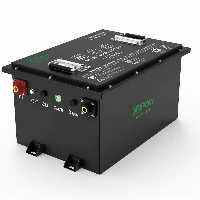
In 2025, the Weight Of A Golf Cart Battery (including per-unit golf cart battery weight and Golf Cart Battery System Weight depends primarily on its type, voltage (36V/48V), and capacity, with significant variations across models like EZ-GO or Yamaha. Many buyers wonder how much a 48V Golf Cart Battery weighs specifically.
Lead-acid batteries typically weigh between 22.7 and 36 kilograms per unit: 6V models around 26-31kg, 8V models 27-45kg, and 12V models 25-39kg. Among these, AGM batteries are slightly lighter than standard lead-acid types due to their sealed design, weighing approximately 25-32kg each.
Lithium batteries (mainly lithium iron phosphate) are much lighter, thanks to their high energy density, ranging from just 9 to 45kg per unit-50% to 70% lighter than lead-acid batteries of the same specification. For example, a 48V 105Ah lithium battery weighs about 43.2kg.
In practical use, most golf carts adopt 36V or 48V systems, requiring multiple batteries connected in series. A 36V lead-acid system has a total weight of roughly 163-218kg, while a 48V lithium battery system only weighs 32-91kg. Overall, the higher the battery capacity and the more batteries connected in series, the greater the total weight of the system.
Would You Like To Learn More About Golf Cart Battery Weights, including system weight, brand differences, and impact on performance? Please Read On.

Golf Cart Battery Weight Differences: Lead-Acid vs Lithium
Weight of a Single Battery
Lead-acid golf cart batteries are generally heavy, with a Per Unit Golf Cart Battery Weight of 22.7–36 kg. For example, a 6V 200Ah model matches the Golf Cart Battery Weight for EZ-GO standard.
Among them, conventional flooded lead-acid batteries have a dense structure, so each unit can weigh 27–36 kg. Sealed AGM lead-acid batteries are maintenance-free and slightly lighter thanks to their sealed design, but still range from 25–32 kg per unit. For example, a 6V 200Ah AGM lead-acid battery weighs 65 pounds.
Lithium batteries, mainly lithium iron phosphate as the mainstream type, are much lighter due to their high energy density. A single lithium battery only weighs 9–45 kg, which is 50%–70% lighter than a lead-acid battery of the same specification. For instance, a 6V 200Ah lithium battery weighs just 22 pounds. A 48V 100Ah LiFePO4 battery weighs approximately 48 kg, while a lead-acid battery of the same capacity will be significantly heavier.
Total Weight of the Battery System
Most golf carts adopt 36V or 48V power supply systems, which require multiple golf cart batteries connected in series-making the gap in Golf Cart Battery System Weight between the two types more pronounced at the system level.
A 36V lead-acid battery system is usually composed of six 6V batteries, with a total weight of about 163–218 kg. A 48V lead-acid battery system can even weigh around 272 kg.
In contrast, lithium battery systems are much lighter. A 48V lithium battery system typically has a total weight of only 32–91 kg. Some golf courses have found during battery upgrades that a 48V 100Ah lithium battery pack (weighing approximately 54 kg) can replace six 8V lead-acid batteries with a total weight of about 272 kg, achieving a remarkable weight reduction effect.
Derivative Impacts of Weight Differences
The weight of lead-acid batteries increases the overall load of the golf cart. This not only accelerates tire wear and brake deterioration but also reduces the vehicle's climbing efficiency and driving range.
The lightweight advantage of lithium batteries can reduce the overall weight of the golf cart by 30%–40%. This not only significantly improves the vehicle's maneuverability on hilly terrain but also lowers rolling resistance during driving, extending the driving range by 15%–20%. For example, a 4-seat golf cart equipped with lead-acid batteries weighs approximately 408–454 kg. After switching to lithium batteries, the weight can be reduced to 272–318 kg, making driving lighter and faster.

Per Unit vs System Golf Cart Battery Weight:Key Considerations
Core Reasons for Weight Differences
The fundamental cause of the weight gap lies in the significant differences in materials and energy density. Lead-acid batteries feature thick lead plates as core components, paired with sulfuric acid electrolyte.
This structure results in an energy density of only 30–70 Wh/kg, with most of the weight allocated to non-energy-storing structural materials. In contrast, lithium batteries use lightweight aluminum foil, copper foil, and other materials as electrode carriers, with compact cell structures. Their energy density reaches 150–300 Wh/kg, 3 to 6 times that of lead-acid batteries.
This means lithium batteries require fewer materials to store the same amount of electricity, leading to a substantial weight reduction.
Intuitive Weight Comparison: Single Lithium Battery Pack vs. Multiple Lead-Acid Battery Packs
Due to the low energy density of lead-acid batteries, equipment often requires multiple batteries connected in series to achieve the specified operating voltage. Lithium batteries, however, can meet the voltage and capacity needs of most devices with a single pack, resulting in a striking weight difference. Below are comparisons across common application scenarios:
Golf Carts: For a 48V golf cart power system, lead-acid batteries require either 8 units of 6V batteries (total weight: ~218–309 kg) or 6 units of 8V batteries (total weight: ~136–191 kg). A single 48V lithium battery pack, by contrast, weighs only 31.8–54.4 kg and can directly replace multiple lead-acid battery combinations, delivering significant weight savings.
Electric Bicycles/Low-Speed Vehicles: Taking the common 48V 20Ah specification as an example, a combination of lead-acid batteries weighs ~25–30 kg, requiring two people to carry. A single lithium battery pack of the same specification weighs only 5–8 kg, easily portable by one person. For instance, a 48V 24Ah lithium battery pack weighs just 7.8 kg but can support a vehicle range of 85 km.
Industrial and Energy Storage Applications: Commonly used industrial lead-acid batteries (models 4D, 6D, 8D) weigh 45–68 kg per unit. In high-power scenarios such as marine vessels and backup power supplies, multiple units combined can exceed 300 kg in total weight. The 8D model alone weighs over 68 kg, imposing strict load-bearing requirements on installation structures.
Derivative Impacts of Weight Differences
This weight gap not only affects transportation and installation but also triggers chain reactions in equipment operation, maintenance, and other aspects:
Equipment Wear and Maintenance Costs: The heavyweight of multiple lead-acid batteries increases equipment load. For devices like golf carts and electric forklifts, this accelerates tire wear and motor damage. Frequent handling also easily causes battery case damage and leakage, increasing maintenance frequency. Lithium battery packs, being lightweight, significantly reduce wear on equipment components, and their maintenance-free nature further lowers long-term maintenance costs.
Transportation and Installation Efficiency: Multiple lead-acid batteries are not only heavy but also require additional brackets for fixation. They occupy more space during transportation and demand multi-person collaboration for installation, which is time-consuming and labor-intensive. Single lithium battery packs are compact and lightweight, eliminating the need for complex brackets. They can be installed by one person and reduce logistics costs during transportation.
Equipment Performance: The weight of multiple lead-acid batteries impairs operational efficiency. For example, golf carts may experience reduced range and weak climbing power due to heavy loads. The lightweight advantage of lithium battery packs enhances equipment acceleration performance.
how much does a 48 volt golf cart weigh?
A typical 48-volt (48V) electric golf cart usually has a total weight ranging from 800 to 1,100 pounds (approximately 360 to 500 kilograms).
1. Battery Weight (The Biggest Contributing Factor)
- Lead-Acid Battery Pack: A 48V system typically consists of six 8V batteries or four 12V batteries. The complete lead-acid battery pack weighs approximately 330–450 pounds (150–200 kg).
- Lithium Battery Pack: When converted to lithium, the weight is significantly reduced. A full lithium battery pack usually weighs only 100–150 pounds (45–70 kg), reducing the vehicle's total weight by approximately 200–300 pounds from this upgrade alone.
2. Vehicle Body and Accessories Weight
Chassis and Motor: The curb weight without batteries is typically around 500–700 pounds (230–320 kg).
Passenger Capacity:
- 2-Seater: Approximately 800–1,000 pounds
- 4-Seater: Approximately 1,000–1,200 pounds
- 6-Seater: Can reach 1,400 pounds or more
| Model / Configuration | Weight (lbs) | Weight (kg) |
|---|---|---|
| Standard 2-Seater (Lead-Acid Battery) | ~950 lbs | ~430 kg |
| Standard 2-Seater (Lithium Battery) | ~700 lbs | ~320 kg |
| Lifted / Modified Model (4-Seater) | 1,100+ lbs | 500+ kg |
EZGO Golf Cart Weight with Batteries: What You Need to Know
The weight of an EZGO golf cart typically ranges from 700 to 1,100 pounds (approximately 318–499 kg).
| EZGO Model | Battery Type | Total Weight (lbs) | Total Weight (kg) |
|---|---|---|---|
| RXV (2-Seater) | Lead-Acid | 935–1,010 lbs | ~424–458 kg |
| RXV (2-Seater) | Lithium (ELiTE) | 646–692 lbs | ~293–314 kg |
| TXT (2-Seater) | Lead-Acid | 935–970 lbs | ~424–440 kg |
| TXT (2-Seater) | Lithium (ELiTE) | 638 lbs | ~290 kg |
| Liberty (4-Seater) | Lithium (ELiTE) | 960 lbs | ~435 kg |
| Express S6 (6-Seater) | Lithium (ELiTE) | 1,100 lbs | ~499 kg |
How Much Does a 6V Golf Cart Battery Weigh?
| Battery Type | Avg. Weight (kg) | Avg. Weight (lbs) | Total Weight for 36V System (6 batteries) | Core Characteristics |
| Flooded Lead-Acid | 26 - 32 kg | 58 - 70 lbs | ~170 kg (375 lbs) | Low cost, but extremely heavy; requires regular water maintenance. |
| AGM (Sealed) | 28 - 34 kg | 62 - 75 lbs | ~186 kg (410 lbs) | Maintenance-free and leak-proof, but the heaviest option available. |
| Lithium(LFP) | 9 - 13 kg | 20 - 30 lbs | ~66 kg (145 lbs) | Lightest, longest lifespan; significantly improves speed and range. |
How Much Does an 8V Golf Cart Battery Weigh?
| Battery Type | Average Weight (lbs) | Average Weight (kg) | Common Models/Brands |
| Standard Flooded Lead-Acid (FLA) | 60 - 65 lbs | 27 - 29 kg | Trojan T-875, US Battery 8VGC |
| High-Capacity Lead-Acid | 67 - 73 lbs | 30 - 33 kg | Trojan T-890 |
| Sealed AGM / Gel Battery | 62 - 70 lbs | 28 - 32 kg | Fullriver DC160-8 |
| Lithium | 22 - 33 lbs | 10 - 15 kg | Copow LifePo4 Cell |
How Golf Cart Battery Weight Impacts Range, Performance & Handling?
Heavy-duty batteries commonly used in electric golf carts have a significant negative impact on the vehicle's range and handling. In terms of range, the additional weight of these batteries greatly increases rolling resistance during operation, forcing the motor to consume more electrical energy.
With the same battery capacity, the driving range is 15%-20% shorter than that of models equipped with lithium batteries. Furthermore, lead-acid batteries (the primary type of heavy-duty battery here) tend to experience sudden voltage drops under load, and their charging efficiency is only 80%-85%- far lower than the 95% of lithium batteries-further exacerbating range degradation.
For handling, the excessive battery weight disrupts the front-rear weight balance of the vehicle, resulting in delayed steering response and insufficient stability during sharp turns. It also impairs acceleration performance, extends braking distances, and accelerates wear on tires, brake pads, and suspension systems. Over long-term use, the vehicle's handling precision will gradually decline.
Golf Cart Battery Dimensions And Weight:Upgrade Compatibility
Golf Cart Battery Dimensions and Weight are equally critical for upgrades. A battery that is too heavy may exceed the Golf Cart Battery Weight Limit of the tray, while one that is too light may not fit the existing brackets.
Additionally, a 2–3 cm cooling gap should be reserved to avoid affecting heat dissipation. For weight, upgrading from lead-acid to lithium batteries can reduce weight by 40%–60%, lowering the vehicle's load and improving range and handling. However, it is crucial to maintain the front-rear weight balance to prevent insufficient traction or tail-swing.
Overly heavy batteries will increase wear on post-modification components and may exceed the vehicle's axle weight limits.
How Golf Cart Battery Weight Affects Wiring & Controller Upgrades?
Heavier lead-acid batteries require thicker wiring (4-2 AWG gauge is recommended) to handle high currents and prevent overheating. Additionally, the installation method of multiple battery combinations may necessitate extended and reinforced wiring to avoid poor contact caused by vibration. In contrast, lithium batteries, which reduce weight by 40%-60%, allow for simplified wiring layouts, but their low internal resistance characteristics require optimized wiring heat dissipation.
For controller upgrades, the high load from heavy batteries is prone to causing controller overload, so a higher power rating must be selected for compatibility. While the lightweight nature of lithium batteries reduces the load pressure on the controller, it is essential to ensure the controller matches the battery's BMS in terms of voltage and discharge current.
Furthermore, controller parameters need to be adjusted according to changes in battery weight to avoid inconsistent power output resulting from altered weight balance (e.g., reduced rear weight).
Plastic Vs. Metal Cases: Balancing Golf Cart Battery Weight & Safety
Battery packs with plastic enclosures are typically 20%-30% lighter than those with metal cases, helping to reduce overall vehicle weight and improve energy efficiency. When choosing plastic, flame-retardant ABS or PC materials should be used, combined with a sealed design to achieve IP65 dust and water resistance, while built-in reinforcement ribs enhance impact resistance.
Metal cases, although slightly heavier, offer excellent thermal conductivity, which helps reduce the risk of thermal runaway. They also provide high mechanical strength and strong resistance to compression and collision. To avoid adding unnecessary weight to the vehicle, structural optimization is necessary.
Regardless of the enclosure type, it should be matched to the battery chemistry: lead-acid batteries pair well with plastic cases to maximize weight-saving benefits, while lithium batteries are better suited to metal cases for BMS temperature monitoring and heat dissipation. Proper installation and mounting methods ensure balanced weight distribution, optimizing both safety and vehicle handling stability.
Golf Cart Battery Weight By Brand(Trojan/Eco Battery/Copow)
Trojan's lead-acid golf cart batteries weigh between 28 kg and 52 kg. In comparison, Copow's 48V 105Ah lithium golf cart battery weighs only 43.2 kg, making it an ideal fit for EZ-GO upgrades.
Allied mainly offers lead-acid batteries as well, with a single unit's weight concentrated between 27 and 45 kg, similar to Trojan's. Eco Battery, Bolt, and
Copow focuses on lithium batteries, which are significantly lighter; every single unit or pack weighs 9–54 kg. Among them, 48V lithium battery packs mostly range from 30–50 kg, far lighter than the 136–272 kg of lead-acid battery combinations of the same specification.
Risks Of Overly Light Lithium Golf Cart Battery Weight
Overly light lithium batteries for golf carts can disrupt the vehicle's original weight balance, causing a shift in the center of gravity. This may lead to insufficient traction, fishtailing, or even tipping when driving on slopes or making sharp turns. Uneven tire wear can also be accelerated.
The lightweight design often comes with reduced capacity or structural compromises, which can result in unstable discharge currents and increase the risk of overheating in the motor or controller. If a light battery is not paired with a properly matched BMS, it is also prone to overcharge and over-discharge issues, shortening its lifespan. Low-quality lightweight products may additionally have poor impact resistance and higher thermal runaway risks, posing significant safety concerns.
Installing 48V Golf Cart Battery: Weight Distribution & Space
When fitting a 48V golf cart battery, ensure weight distribution and space align with the vehicle's design; exceeding the golf cart battery weight limit could stress the axles.
Space considerations: Lead-acid battery packs typically need to fit under the seat or in a rear dedicated battery compartment. The tray should fit precisely with a 2–3 cm cooling gap and be secured with brackets to prevent movement.
Lithium battery packs are smaller and can be more flexibly installed under the seat, in the rear, or in a front auxiliary compartment. Although they require no complex mounting, sufficient space must still be reserved for heat dissipation to ensure safety and longevity.
Weight distribution: Lead-acid battery packs generally follow a 40% front / 60% rear ratio, concentrated under the seat or in the rear to ensure traction and avoid underloading the front wheels.
Lithium battery packs should be installed based on the original vehicle's weight balance, preferably in the rear to maintain the center of gravity. If installed in the front, additional rear ballast is needed to ensure the vehicle's weight is evenly distributed across the frame, preventing localized overload and maintaining steering stability.
Choosing The Right Golf Cart Battery: Balance Weight, Power & Lifespan
If you prioritize lightweight golf cart battery weight and long lifespan, lithium golf cart batteries are the preferred choice. They are 40%–70% lighter than lead-acid batteries, reducing vehicle load, improving handling, and extending range.
Their stable discharge voltage and high-power variants can meet demanding situations such as hill climbing, though the initial cost is higher.
If your budget is limited or the vehicle is used infrequently, lead-acid batteries offer better cost-effectiveness. Although heavier and prone to voltage drops under high loads, they can satisfy basic power requirements, with the caveat that frequent replacements may increase long-term costs.
For high-usage scenarios, lithium batteries are recommended to balance longevity and low maintenance. For occasional use or flat terrain, lead-acid batteries can be a practical compromise between weight and cost.
HHow Golf Cart Battery Weight Affects Daily Use & Maintenance?
Heavy lead-acid batteries are difficult to handle and replace, often requiring multiple people. Their substantial weight increases the vehicle's load during daily use, accelerating tire and brake wear. Maintenance is also cumbersome, requiring monthly water refills, terminal cleaning, and manual battery balancing, which cumulatively consumes a significant amount of time.
In contrast, lightweight lithium batteries can be easily handled by a single person, improving vehicle mobility and reducing turf compaction. During daily use, lithium batteries provide a more stable range and require no water refills or terminal cleaning. Their built-in BMS system automatically balances the cells and prevents overcharging or overdischarging, greatly reducing maintenance workload and long-term costs.
Real-World Experience: Perceived vs Actual Golf Cart Battery Weight
Each lead-acid golf cart battery weighs 27–52 kg, making a full 48V golf cart battery system weigh 163–272 kg. Many users compare this to the lithium golf cart battery weight per kWh when assessing cost-effectiveness.
Handling or replacing them usually requires multiple people, giving a tangible sense of "bulk and effort." During daily driving, the vehicle's heaviness is noticeable, and it starts to feel sluggish, and climbing hills requires more effort.
In comparison, lithium batteries weigh 30–54 kg per pack and can be easily lifted and carried by a single person. When driving, users notice more responsive acceleration and lighter steering. Even though the actual weight may still exceed 30 kg, the improved maneuverability from their lighter design creates a perception of "lightness and ease of use" that far exceeds the mere numerical difference in weight.
conclusion
According to How Much Does A 48V Golf Cart Battery Weigh and Golf Cart Battery Weight Chart references, the weight of a golf cart battery affects performance, handling, and installation. Lithium golf cart battery weight provides a lighter option, while lead-acid golf cart battery weight is ideal for cost-sensitive buyers.
Selecting the right golf cart battery requires balancing Golf Cart Battery Weight, power, cost, and lifespan. Consult our brand and model-specific guides to ensure correct weight and dimensions compatibility.
FAQ
How does the weight of a golf cart battery affect performance and handling?
Heavier lead-acid batteries boost rolling resistance, cut climbing efficiency, and hinder steering/braking. Lighter lithium batteries improve acceleration, range, and maneuverability, especially on hills.
What's the per-unit weight difference between lead-acid and lithium golf cart batteries?
Lead-acid batteries weigh 22.7–36 kg each; lithium ones are 9–45 kg. Lithium packs replace multiple lead-acid units, slashing system weight by 40%–70% and easing installation/maintenance.
How do golf cart battery dimensions and weight impact upgrades?
Upgrades need matching weight and dimensions to preserve vehicle balance. Overly heavy batteries strain axles; too-light ones hurt traction. Proper spacing and weight distribution are key for safety, heat dissipation, and performance.
What Is the Typical Weight and Capacity of a 48V Lead-Acid Golf Cart Battery System?
The capacity of a 48V lead-acid golf cart battery system typically ranges from 100Ah to 225Ah, and the weight of the entire battery pack generally ranges from 250 to 600 kilograms (approximately 550 to 1,300 pounds), depending on the battery configuration (6V, 8V, or 12V), model, and capacity.
related