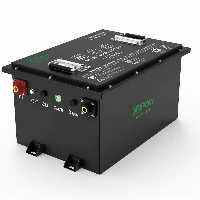
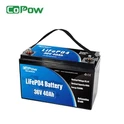
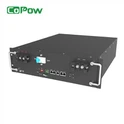
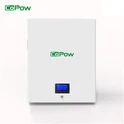
A 24V 100Ah LiFePO4 battery can power most low- to medium-power 24V DC devices and, via an inverter, can also supply power to certain 110V/220V AC appliances, such as RV refrigerators, marine refrigerators, CPAP machines, laptops, lighting systems, televisions, communication equipment, small water pumps, and microwaves used for short periods.
In practical use, it is important to consider not only the battery's total capacity but also the power consumption of the connected devices, as well as the battery's continuous discharge current and maximum discharge current.
For example, a 30W CPAP machine can run for about 70–80 hours, a 60W RV or marine refrigerator for approximately 35–40 hours, and a 100W TV or media player for about 20–25 hours. A 1,000W microwave oven can theoretically run for about 2 hours. Additionally, you must verify that the inverter's power rating and the battery management system's discharge capacity meet your needs.

How Much Energy Does a 24V 100Ah LiFePO4 Battery Store?
A 24V, 100Ah LiFePO4 battery stores approximately 2,400 Wh to 2,560 Wh (i.e., 2.4–2.56 kWh) of energy, depending on the battery's rated voltage.
You can perform a simple calculation using the following formula:
Battery energy (Wh) = Voltage (V) × Capacity (Ah)
For example, for a standard 24V system, the theoretical capacity is approximately 24V × 100Ah = 2,400 Wh. Since lithium iron phosphate batteries typically have a nominal voltage of 25.6V (8 LiFePO4 cells in series), their actual energy storage capacity is approximately 2,560 Wh.
What Can a 24V 100Ah LiFePO4 Battery Run?
The 24V 100Ah battery is a widely used battery and the second most popular choice after the 12V 100Ah battery. It has a very broad range of applications, working well with everything from small LED lights to large 24V tugboat motors. In addition, there is a wide variety of capacities available, including not only 100Ah but also 200Ah and even larger capacities.
RV
24V 100Ah LiFePO4 batteries are widely used in the RV industry. They provide stable and efficient power to onboard appliances such as refrigerators, lighting, fans, TVs, routers, laptops, and small water pumps.
Compared to 12V 100Ah batteries, they have lower load losses, allowing more electrical energy to reach the appliances and preventing energy from being wasted as heat.
For example, a 60W RV refrigerator can theoretically run for 40 hours. When powered by a 24V 100Ah battery, it can run for 35–40 hours; when powering a combination of a 100W LED lighting system, a TV, and a media player, it can run for 20–25 hours.

Small Boats
Here, "small boats" primarily refers to vessels between 3 and 7 meters in length that are mainly used for recreation, fishing, and short cruises, with power requirements concentrated on the propulsion motor and electronic equipment. Examples include the Lowe Stinger 195C Bass Boat, Zodiac Cadet 270 Aero, Tracker Topper 1236, and Duffy Sun Cruiser Electric Boat.
In the marine sector, 24V 100Ah batteries serve two purposes: one is as a starter battery, and the other is as a deep-cycle battery used to power onboard electrical equipment, such as navigation devices, fish finders, GPS units, radios, LED lights, audio systems, and small refrigerators.
It is worth noting that 24V 100Ah batteries are also widely used in trolling motors; they are a popular entry-level choice and can typically power a trolling motor for 4–8 hours, with the exact duration depending on the speed at which the boat is operated.

Small Off-Grid Systems
Do you live in a field station, a monitoring station, or a hunting cabin? For users living off the grid, 24V batteries are undoubtedly a better choice if you can overcome the limitations of 12V loads. If your budget allows, we're confident you'll choose this option as well.
It can meet your off-grid living needs, allowing you to escape the hustle and bustle of the city while ensuring basic living necessities-such as indoor lighting, communication devices, surveillance equipment, and various home appliances-all function properly.

Electronic and Office Equipment
Many people may ask: Can a 24V, 100Ah battery directly power some low-power devices?
The answer is yes, but it depends on the device's input voltage.
If a device supports a 24V DC input-such as the RVs, small boats, lighting systems, and water pumps we mentioned earlier-it can be connected directly to the battery for power.
However, for standard household appliances, an inverter is required to convert the battery's 24V DC output to AC power before they can be used properly. This is because household appliances typically operate on 110V or 220V AC power. If forced to operate on DC power, the appliances may fail to start; even if they do start, the internal electronic components may burn out, rendering them unusable.
Packaging Machinery
You may not be very familiar with packaging machinery. In fact, 24V 100Ah lithium-ion batteries can be used in automated packaging equipment, and are particularly suitable for packaging machinery that requires mobile or independent power supply, such as automatic stretch wrappers, mobile packaging robots, case sealers, labeling equipment, and logistics packaging workstations.
For example, mobile pallet stretch wrapping robots use a 24V battery system to power their motors and control systems, providing continuous power to the packaging equipment for several hours.

Floor Scrubbers
The walk-behind and ride-on floor scrubbers we see in shopping malls, airports, hotels, factories, and warehouses all use 24V battery systems to power their motors-for example, professional floor scrubbers such as the Tennant T300 and Nilfisk SC351.
Sweepers
Since floor scrubbers can be powered by 24V batteries, so can sweepers. The drive motor, main brush motor, side brush motor, and vacuum blower in a sweeper place certain demands on the battery's continuous discharge capacity and cycle life, and a 24V 100Ah LiFePO4 battery can provide a stable voltage output for these components.
Examples include professional sweepers such as the Tennant S16 and the Nilfisk SW 250.
Robots and AGVs
24V batteries can be used in warehouse AGVs, AMR (autonomous mobile robots), inspection robots, delivery robots, and industrial material-handling robots, primarily to power motors, sensors, control systems, and communication modules.
These devices also require batteries that offer a higher number of charge-discharge cycles, more stable discharge performance, shorter charging times, and easier maintenance.
Vending Machines
Vending machines in this context include outdoor vending machines, mobile coffee carts, unmanned retail kiosks, and temporary event vending equipment.
24V 100Ah LiFePO4 batteries are used to power the control systems, displays, payment modules, lighting systems, communication modules, and refrigeration systems of vending machines, such as those manufactured by the Wittern Group.
Small MEWP / Lifting Equipment
Some small electric lifting devices, such as scissor lifts, mobile elevating work platforms, and service lifts, also use 24V battery systems to power hydraulic pumps, motors, and control systems.
Examples include the JLG ES1330LZ Electric Scissor Lift and the Genie GS-1930 Electric Scissor Lift.
Communication Equipment and Outdoor Surveillance Systems
24V batteries can also serve as backup power sources to supply power to 5G base station auxiliary power systems, wireless communication stations, solar-powered camera systems, and remote monitoring equipment.
These devices have three requirements for batteries: the ability to support long-term standby, maintenance-free operation, and the ability to switch to backup power promptly during a power outage to prevent system failure at critical moments.
Agricultural Equipment
Although this is a relatively niche application area, 24V batteries are indeed used in automatic irrigation systems, small agricultural robots, electric sprayers, mobile feeders, and smart livestock farming equipment.
On some remote farms, where there is no stable power grid, 24V 100Ah batteries can be paired with solar panels to power water pumps, sensors, and control systems, ensuring the normal growth of crops.
What Size Inverter Do You Need for a 24V 100Ah Battery?
For a 24V 100Ah LiFePO4 battery, we recommend a 24V pure sine wave inverter with a power rating of approximately 1500W to 2000W, as this power range allows you to fully utilize the battery's capacity without subjecting it to prolonged overload conditions.
However, special attention must be paid to the startup power requirements of the equipment. For example, appliances such as refrigerators, compressors, water pumps, and motors generate instantaneous surge currents when starting up; therefore, the inverter must have sufficient peak power.
For example, a 2000W inverter should ideally be capable of delivering an instantaneous peak power of around 4000W to meet the high current demands during startup.
In addition, you should select an inverter based on the total power of your equipment. If you are using a 500W refrigerator, a 100W TV, and 50W lighting equipment simultaneously, the total continuous load is approximately 650W; in this case, a 1500W inverter is sufficient to meet the demand.
However, if you need to run a 1000W microwave or appliances with even higher power ratings, you should choose a 2000W-class inverter and ensure that the battery's BMS can provide sufficient current.
Why Choose a 24V 100Ah LiFePO4 Battery Instead of Lead Acid?
It's now 2026, and you're probably already very familiar with a special member of the lithium-ion battery family-the lithium iron phosphate battery. If you can't quite recall its advantages, let's take a moment to review them here:
Higher Usable Capacity
Anyone who has used a lead-acid battery knows that if you want to make it last as long as possible, you need to keep the depth of discharge between 50% and 70%. You can only use about 70% of the battery's total capacity; otherwise, the battery's capacity will decline rapidly.
In contrast, LiFePO4 batteries can be discharged to a slightly higher depth-up to about 90%-which not only does not affect battery life but actually extends it. Furthermore, the two battery types differ in terms of capacity degradation during winter.
Longer Cycle Life
Conventional lead-acid batteries typically have a cycle life of only 300–500 cycles and may fail after 2–4 years of use. In contrast, LiFePO4 batteries, such as those from CoPow, can withstand 4,000–6,000 charge-discharge cycles and have a service life of 8–10 years.
Lighter Weight and Smaller Size
A set of 24V 100Ah lead-acid batteries may require multiple cells connected in series, resulting in a total weight of several dozen kilograms or more. In contrast, a 24V 100Ah LiFePO4 battery can provide a higher effective capacity while weighing less.
More Stable Output Voltage
The voltage of lead-acid batteries drops continuously during discharge, whereas that of lithium iron phosphate batteries does not.
Lithium iron phosphate batteries have a smoother discharge curve and maintain a stable voltage output throughout the discharge process. As a result, electric motors won't have to reduce power prematurely due to rapid voltage drops, and electronic devices can operate more reliably, so users no longer need to worry.
Faster Charging Speed
Lithium-ion batteries naturally charge faster than lead-acid batteries. Batteries that used to take 8 hours to fully charge can now be fully charged in about 3 hours.
The built-in BMS provides multiple layers of protection
Lead-acid batteries do not have a smart management system, whereas lithium-ion batteries not only have one but also offer a wide range of features.
Imagine you're camping in the wilderness and casually check your phone to view the battery's various parameters and status-you'll never have to guess about the battery's operating condition again, and you can take preventive measures in advance. These are the benefits provided by the built-in battery management system in lithium-ion batteries.
The battery management system used by CoPow is not only technically mature but can also be tailored to your specific needs, making it even more practical.
Conclusion
Through this article, we believe you now have a comprehensive understanding of the applications for 24V 100Ah LiFePO4 batteries and the types of devices they can power.
In fact, 24V batteries have a very wide range of applications and are not limited to any specific field. If you have a need, you can certainly customize a 24V battery tailored to your specific scenario.
Of course, this requires the assistance of a professional 24V battery manufacturer. If you'd like to learn more, please feel free to contact us at any time-our team will respond to your message within 24 hours. Best regards!
Frequently Asked Questions About 24V 100Ah LiFePO4 Batteries
Can a 24V 100Ah battery power a refrigerator?
Yes, a 24V 100Ah lithium iron phosphate battery is perfectly capable of powering a refrigerator; this is a very common application in RVs, boats, and off-grid energy storage systems.
If you connect a refrigerator with a power consumption of approximately 40W, the theoretical runtime would be about 2,400 Wh ÷ 40W = 60 hours. However, in practical use, you need to account for efficiency losses in the inverter, so the actual runtime may be reduced by about 10% to 15%.