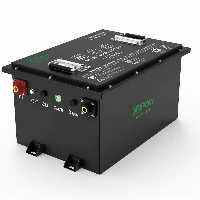
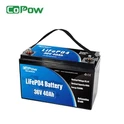
lithium golf cart batteries have officially shed their "luxury" label to become the standard for every golfer and cart owner seeking peak performance and efficiency. If you're still stuck in the "lead-acid era"-tending to water levels, enduring acid corrosion, or struggling with power fade as soon as your charge hits 50%-this article will open the door to a whole new world of power.

Core Advantages: Why Make the Switch?
Q1: What is the biggest difference between lithium and lead-acid batteries?
The biggest difference between lithium and lead-acid batteries can be summarized in one word: Efficiency.
- Lifespan: Lithium lasts 10 years (3,000+ cycles); Lead-Acid lasts 2-3 years (500 cycles). You'll replace Lead-Acid 3 times before your first Lithium dies.
- Performance: Lithium gives 100% power until the battery is empty. Lead-Acid slows down and struggles on hills as soon as the charge drops.
- Maintenance: Lithium is "Set it and Forget it." No watering, no acid cleaning, and 300 lbs lighter, which means less wear on your cart.
Lead-acid is cheaper at the checkout counter today, but Lithium is significantly cheaper-and much less of a headache-over the life of the cart.
Q2: Can lithium batteries actually make my golf cart faster and more powerful?
Yes, absolutely. While a battery doesn't change your motor's "top speed" limit, it significantly improves how your cart feels and performs.
- Massive Weight Loss: You instantly shed 300+ lbs. It's like kicking two passengers out of your cart, leading to faster acceleration and better handling.
- Constant Power: Unlike lead-acid, which slows down as it drains, lithium stays at 100% strength until the battery is empty. No more struggling on hills at 50% charge.
- Steady Voltage: Lithium maintains a higher voltage under load, giving your motor the "punch" it needs for steep inclines or thick grass.
Lithium improves acceleration and torque (climbing power). If you want to increase your maximum top speed (e.g., from 15mph to 25mph), you would still need to adjust your motor controller or gear ratio.
Charging & Range: How and How Long?
Q3: How long does it take to fully charge a lithium battery?
3x Faster. While lead-acid batteries take 8–10 hours to charge, lithium batteries typically reach 100% in just 2–3 hours.
- Fast Charging: Lithium accepts a high-current charge all the way to 100%, whereas lead-acid slows to a crawl (trickle charge) for the final 20%.
- "Opportunity Charging": You can plug in your lithium cart for 30 minutes during lunch to gain extra range. Unlike lead-acid, this does not damage the battery.
- High Efficiency: Lithium is 99% efficient during charging, meaning less electricity is wasted as heat.
Your actual charge time depends on your charger's amperage (Amps). For a 100Ah battery, a 15A charger takes ~6.5 hours, while a 30A charger finishes in about 3 hours.
Q4: Can I use my old lead-acid battery charger?
No, absolutely not. While it might "work" once or twice, it's a massive risk to your investment for three reasons:
- Wrong Voltage: Lead-acid chargers use a "desulfation" stage with high-voltage spikes. This can fry your lithium battery's BMS (Battery Management System).
- Overcharging Risk: Lead-acid chargers never truly turn off; they "trickle charge" forever. Lithium batteries need the charger to completely shut off once full to prevent damage.
- Safety Protocols: A dedicated lithium charger "talks" to your battery to prevent overheating. Your old charger is "dumb" and won't stop if something goes wrong.
You are investing $1,000+ in a high-tech battery; don't ruin it with a $100 old charger. Most lithium conversion kits include a matching smart charger for a reason.
Q5: Can I charge lithium batteries anytime, or do I have to run them down first?
Charge them anytime. You do NOT need to run them down first. In fact, lithium batteries actually prefer "partial" charging over deep discharging.
- No "Memory Effect": Unlike older batteries, lithium doesn't lose capacity if you don't drain it. You can plug it in at 20%, 50%, or 80% without any harm.
- Better for Lifespan: "Shallow cycles" (recharging before you hit 0%) actually extends the life of your battery.
- Convenience: Feel free to "opportunity charge" for 30 minutes during lunch to top off your range.
While you can charge anytime, never charge a lithium battery in freezing temperatures (below 32°F / 0°C) unless it has a built-in heating system. Charging a "frozen" battery can cause permanent internal damage.
Safety & Technology: Is it Safe?
Q6: What is a BMS (Battery Management System)?
The BMS (Battery Management System) is the "brain" of your lithium battery. It acts as a built-in computer that keeps everything safe and efficient.
- The Guard: It instantly shuts down the battery if it detects overheating, overcharging, or short circuits to prevent damage or fire.
- The Balancer: It ensures every individual cell inside the battery stays at the same charge level, which maximizes your total lifespan.
- The Accountant: Unlike lead-acid "guess-meters," a BMS tracks every amp to give you a highly accurate fuel gauge (percentage).
If your golf cart suddenly stops for no reason, it's usually not a "dead" battery. It's the BMS triggering a safety shutdown (like a blown fuse) because it detected an issue like an amp spike or low voltage.
Q7: How do lithium batteries perform in extreme weather?
Great in heat, but watch the cold. Lithium batteries (LiFePO4) are tougher than lead-acid, but they have one specific "weak spot" in winter.
- Summer (Heat): Excellent performance. Unlike lead-acid, lithium doesn't "fade" or lose power on 100°F days. It stays strong until the BMS safety cutoff (around 140°F).
- Winter (Cold): You may see a 10–20% drop in range in freezing weather because the chemistry slows down.
- The #1 Rule: Never charge a lithium battery below 32°F (0°C). Charging a "frozen" battery causes permanent damage.
- The Fix: Use a heated garage or buy a battery with a built-in heater.
- Winter Storage: Lithium is the winner here. It only loses 2–3% charge per month, so it won't be dead when spring arrives.
If you live in a cold climate, always look for a battery labeled "Cold Weather" or "Self-Heating." It saves you the headache of waiting for the battery to warm up before you can charge it.
Installation & Maintenance: Beginner Friendly?
Q8: Do lithium batteries need water like lead-acid ones?
Zero maintenance. You will never need a watering can again.
- No Watering: Lithium batteries are sealed units. Unlike lead-acid, there is no liquid to check and no distilled water to add.
- No Corrosion: They don't "off-gas" or leak acid, so you won't find that white, crusty battery acid buildup on your terminals or cart frame.
- Set It and Forget It: You don't need to perform "equalization charges" or scrub terminals with baking soda. Just plug it in and drive.
You save hours of messy maintenance every year. The only thing you should do is occasionally check that the terminal bolts stay tight.
Q9: Are "Drop-in Ready" lithium batteries easy to install?
Yes, it's a "plug and play" upgrade. Most "Drop-in Ready" lithium batteries are designed to fit your existing golf cart perfectly.
- Size Match: They use standard GC2 dimensions, so they slide right into your current battery trays.
- 70% Lighter: You can lift them with one hand. No more back-breaking labor or needing a hoist to swap batteries.
- Simple Wiring: You usually just connect "positive to positive" and "negative to negative" using your existing cables. No complex rewiring is required.
- Self-Contained: The BMS (Brain) is already inside, so there is no extra equipment to install.
If you can use a wrench, you can install these. Just remember: Loose bolts are the #1 cause of failure, so make sure every connection is tight!
Economics: Is it Worth the Investment?
Q10: Lithium is so expensive-is it actually cost-effective?
Yes. Higher upfront cost, but much cheaper over time. * 3-for-1 Life: One lithium battery lasts 10+ years. In that same time, you would buy three sets of lead-acid batteries.
- Zero Upkeep: No money spent on distilled water, anti-corrosion sprays, or ruined garage floors from acid leaks.
- Efficiency: Lithium is 95% efficient during charging. Lead-acid wastes 20% of your electricity as heat.
- Resale Value: A cart with lithium batteries sells for a $1,000+ premium on the used market.
Most owners "break even" (save enough to cover the price difference) by year 3 or 4. Every year after that is pure profit.
2026 Tech Frontier: Lithium 2.0 Era
Q11: Do all LiFePO4 golf cart batteries have Bluetooth Apps now?
Not all, but it is now the "gold standard." In 2026, most reputable brands include Bluetooth, while only budget/older models skip it.
The Benefit: Since you can't "see" inside a lithium battery, the App acts as your digital fuel gauge.
Real-Time Data: You can see your exact battery percentage, voltage, and temperature on your phone.
Troubleshooting: If the cart stops, the App tells you why (e.g., "Over-current" or "Low Voltage") so you aren't left guessing on the trail.
The Alternative: If there is no Bluetooth, the battery usually comes with a wired LCD screen for your dashboard.
Don't skip this feature. For a small price difference, the ability to "health check" your battery via phone is worth it for the next 10 years.
Q12: I heard about "Semi-Solid State" batteries-are they better?
es, it's the "next generation," but it might be overkill. Semi-solid state is the 2026 upgrade to standard lithium (LiFePO4).
- Maximum Safety: Instead of liquid, the inside is like a "thick jelly." Even if punctured, it is almost impossible to catch fire.
- More Range: It packs more power into the same size. You get 20–30% more mileage without adding weight.
- 15-Year Life: It is chemically more stable than standard lithium, potentially lasting 5 years longer.
- The Catch: It is currently much more expensive.
Standard LiFePO4 is already amazing for 90% of golf cart owners. Only go Semi-Solid if you have a massive budget and want the absolute "Ferrari" of batteries.
Q13: 48V or 72V? What is the current mainstream choice?
48V remains the gold standard for most, but 72V is the new favorite for power-hungry users.
- 48V (Mainstream): Best for 90% of users. It is compatible with almost all existing carts, cheaper to buy, and plenty powerful for neighborhood cruising or golf.
- 72V (Performance): The "beast" mode. Best for very steep hills, high-speed driving (30+ mph), and extreme efficiency.
- The Warning: You cannot put a 72V battery in a 48V cart without replacing the motor and controller, or you will fry the electronics.
Stick with 48V for a simple, cost-effective upgrade. Choose 72V only if you are building a high-performance custom cart or live in a very hilly area.
Environmental Adaptability: All-Weather Challenges
Q14: Will charging in winter damage my Lithium golf cart battery?
Yes, charging below freezing can permanently ruin a lithium battery. * The Danger: In freezing cold, charging causes "Lithium Plating"-metallic crystals form inside that can short-circuit the battery.
- Driving vs. Charging: You can safely drive in the cold, but you must be careful when plugging it in.
- The 2026 Solution: Most modern batteries now have Internal Heating. They use the charger's power to warm themselves up before they start taking a charge.
- Storage Tip: If storing for winter, keep the battery at 50%–80% charge and turn off the main switch.
If your battery does not have internal heating, only charge it in a heated garage or wait for the warmest part of the day.
Q15: Can a solar roof charge my lithium battery directly?
No, you cannot connect them directly, but it works perfectly with a "middleman."
You should never wire solar panels directly to a lithium battery-doing so will damage the cells. In 2026, this setup is very common and reliable as long as you use the right equipment:
- The Solution: You must use an MPPT Solar Charge Controller between the roof and the battery to steady the voltage.
- The Benefit: A solar roof can add 3–6 miles of range per day just by sitting in the sun. It's perfect for "topping off" while you play.
- The 2026 Edge: Many new batteries are now "Solar-Ready," featuring dedicated plug-and-play ports for solar kits.
Solar is a great "range extender," but don't skip the controller. It's the difference between a free charge and a dead battery.
Policy & Compliance: New Regulations
Q16: What is a "Battery Passport"?
It is a "digital ID card" for your battery, tracking its entire life from the lithium mine to the recycling center.
In 2026, the Battery Passport has become a mandatory or mainstream standard for lithium batteries in the North American and European markets.
- Health Tracking: It shows exactly how many charge cycles it has used and its current health (SOH).
- Resale Value: When you sell your cart, the Passport proves your battery isn't "worn out," allowing you to ask for a higher price.
- Proof of Origin: It tracks where the lithium was mined and if it was built sustainably.
In 2026, prioritize brands that offer a Battery Passport. It proves the product is legitimate, and having a transparent "medical record" for your battery will significantly increase your cart's resale value.
Q17: How do I dispose of a dead lithium battery? Is recycling mandatory?
Never throw them in a regular trash can! Not only is it an environmental hazard, but they can cause fires in garbage trucks.
- The Danger: Even a "dead" battery can explode or catch fire if crushed in a garbage truck.
- The Law: In 2026, recycling is mandatory in most regions. Tossing it in a landfill can lead to heavy fines.
- The "Core" System: Most sellers use a "Core Charge"-you get money back (or a discount) only if you return your old battery.
- How to do it: Contact your battery dealer or use the "Recycle" button in your Battery Passport app to find the nearest drop-off point.
Check your "Battery Passport." It usually contains a one-click button to request a recycling pickup. Some recyclers may even pay you a small "scrap value" for the raw materials inside!
Shopping Tips: Avoiding Scams
Q18: Why do some batteries cost $500 while others cost $2,000?
It's the difference between a "cheap power bank" and a "Tesla battery." The price gap comes down to range, safety tech, and included accessories.
- $500 (Entry Level): Low capacity (30Ah–50Ah). It's just a bare battery-you'll likely spend more on a charger and cables later. Good for short, flat trips only.
- $2,000 (Premium Kit): High capacity (105Ah+). It's usually an all-in-one bundle including a fast charger, mounting gear, and a 10-year warranty.
- The "Brain": Cheap batteries have basic safety; expensive ones have Smart BMS with Bluetooth, apps, and internal heaters for winter.
- Quality: Premium batteries use Grade A cells (safer/longer life), while cheap ones often use "Grade B" or refurbished cells.
If you just need a cheap fix for a "beater" cart, go budget. But if you want zero range anxiety, winter reliability, and high resale value, the $2,000 integrated kit is the smarter 2026 investment.
Q19: Can my golf cart battery power my phone or camping gear?
Absolutely. Your golf cart is essentially a giant "Power Bank" on wheels, but you need a "translator" (converter/inverter) to use it.
- For Phones (USB): You need a Voltage Reducer (48V to 5V). Many 2026 batteries now have these built-in.
- For Camping Gear: To run a fridge or coffee maker, you need an Inverter to turn battery power into a standard wall plug (110V/220V).
- Massive Capacity: A 100Ah lithium battery can charge a phone 100+ times or run a mini-fridge for 2–3 days.
- Don't Get Stranded: Modern Smart BMS will stop powering your gear before the battery is too low to drive home.
If you are a frequent camper, look for an Integrated Inverter Kit. It installs a standard household outlet right on your dashboard, turning your cart into a mobile power station.
Q20: What is the typical warranty period?
In 2026, the standard warranty for a quality lithium golf cart battery is between 5 and 10 years.
This is significantly longer than old lead-acid batteries (which usually only had 1 year), justifying the higher upfront cost.
The 2026 Norm: Most premium brands offer a 5-year full replacement plus a 5-year prorated warranty.
What's Covered: Manufacturing defects, BMS (brain) failure, and if the battery capacity drops below 70%–80%.
What Voids It: Opening the case, physical damage from crashes, or leaving it at 0% charge for months (battery "starvation").
Digital Proof: In 2026, your Battery Passport tracks usage data, making warranty claims instant and paperless.
Most warranties are now digital. Manufacturers use Battery Passport data to verify how the battery was treated. If you followed the rules, claims are processed almost instantly.
Conclusion:Start Your Lithium-Powered Lifestyle
The widespread adoption of lithium golf cart batteries marks the official end of the era of "battery babysitting." This is more than just a hardware swap; it is a total upgrade in personal freedom. You are no longer bound by heavy lead plates, corrosive acid, or the agonizingly slow wait of a ten-hour charge.