Some owners have noticed that their golf carts can easily cover the entire course right after installing new batteries; however, after a few years of use, the range has dropped significantly.
Some users have also found that after upgrading to lithium-ion batteries, their range nearly doubled-even though they were still using the same 36V system.
At the same time, factors such as terrain, the number of passengers, tire size, and driving habits can all have a significant impact on range.
This article provides a comprehensive analysis of the actual range performance of 36V golf cart batteries, covering differences between various battery configurations, a real-world range comparison between lead-acid and LiFePO4 lithium batteries, and key factors affecting range, to help you fully understand the actual range capabilities of 36V golf carts.

Understanding the 36-Volt Golf Cart Battery System
A 36-volt golf cart system usually comprises six 6-volt or three 12-volt batteries connected in series to combine their voltages and deliver stable power to the motor.
Although it provides slightly less acceleration and load capacity than a 48-volt system, the proven technology and cost-effectiveness of this option make it a reliable choice for flat terrain and daily commuting.

How Many Batteries Are In A 36 Volt Golf Cart?
For 36V golf carts, the most common battery configuration is six 6V batteries.
This is because golf carts use a series connection for the batteries, which adds the voltages together. When six 6V batteries are connected in series, they form a 36V system (6 × 6V = 36V). This is the classic battery configuration for many older EZGO and Club Car models, as well as some Yamaha 36V models.
Please note that 36V golf carts are not limited to using six batteries; any configuration that results in a total voltage of 36V is acceptable.
For example, 6 x 6V batteries equal 36V, 3 x 12V batteries equal 36V, and a complete set of 36V lithium-ion batteries also equals 36V.
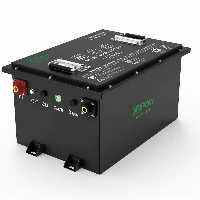
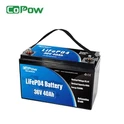
Nowadays, many owners are upgrading their lead-acid battery systems to a single 36V lithium iron phosphate battery pack, as this significantly reduces the hassle of installation.
Previously, 36V golf carts widely used six 6V deep-cycle lead-acid batteries because 6V deep-cycle batteries have higher capacity and can provide longer-lasting discharge performance.
If three 12V batteries are used, although they can also form a 36V system, the capacity of these 12V batteries is relatively low. While the golf cart can still run, its range will not be very high, and its hill-climbing ability will also be relatively weak.
The 36V golf carts available on the market can generally be categorized into the following configurations:
6 x 6V lead-acid batteries, 3 x 12V deep-cycle batteries, 3 x 12V AGM batteries, a single 36V lithium-ion battery pack, and 3 x 12V lithium-ion batteries connected in series.
Recommended Reading:
How Many Batteries In A 48v Golf Cart?
How Many Batteries Does A Golf Cart Take?
How Long Do 36 Volt Golf Cart Batteries Last On One Charge?
The most common battery pack consists of six 6V deep-cycle lead-acid batteries. For typical use on a standard golf course with relatively flat terrain and light loads, a single charge can provide a range of 15 to 25 miles and allow for continuous operation for up to 2 to 4 hours.
However, if your golf cart frequently needs to climb hills, carries multiple passengers, is equipped with large off-road tires, or is often driven on grass, mud, or other high-resistance surfaces, the range may be reduced accordingly.
Some older lead-acid batteries that have been in use for many years may experience a loss of power before reaching even 10 miles.
Owners of older EZGO and Club Car models may be familiar with this issue. If you're using a lithium-ion battery, the situation is entirely different. A set of 36V 100Ah LiFePO4 golf cart batteries can provide a range of approximately 20 to 40 miles.
Next, let's discuss how temperature and battery aging affect range.
In cold weather, the rate of chemical reactions inside the battery slows down, resulting in a 10% to 30% reduction in range. This is particularly true for lead-acid batteries, which are significantly more affected by low temperatures. While high temperatures may allow the battery to perform normally in the short term, they accelerate battery aging over the long term.
Battery aging leads to a decline in capacity. A battery that once provided a 20-mile range may now only be able to cover 60% to 70% of that distance.
Recommended Reading:
How Long Do Golf Cart Batteries Last?
Types of 36 Volt Golf Cart Batteries
Currently, 36-volt golf cart batteries fall into two main categories: lead-acid and lithium. Although deep-cycle lead-acid batteries have long dominated the market due to their low upfront cost and proven technology, they suffer from being bulky, demanding maintenance and having a relatively short lifespan.
In contrast, lithium iron phosphate batteries are the preferred choice for modern upgrades. Although they are more expensive, they offer significant advantages, including being lighter, charging faster, requiring no maintenance and having a cycle life several times longer than lead-acid options.
These lithium batteries also typically feature an integrated battery management system that precisely controls power output and protects the circuit.
Why Upgrading to Lithium Batteries Is Worth It?
Upgrading your 36-volt golf cart to a lithium battery system is a smart long-term investment. Although lithium batteries are more expensive initially than lead-acid ones, they provide a significantly better driving experience and greatly reduce the need for maintenance and future expenses.
You get what you pay for, so switching to lithium is a decision you won't regret.
Consistent, Long-Lasting Performance
In a 36-volt system, consistent and long-lasting performance ensures your golf cart maintains steady acceleration and climbing power from the first to the eighteenth hole.
High-quality batteries, especially lithium ones, provide excellent voltage stability, which solves the problem of noticeable speed drops that occur when lead-acid batteries lose charge. This consistency improves the driving experience and effectively protects the motor from damage caused by voltage fluctuations.
Say Goodbye to Range Anxiety
The key to eliminating range anxiety lies in improving the energy density and usable capacity of your golf cart battery system. While lead-acid batteries typically allow only a 50% safe discharge, lithium iron phosphate batteries support a full discharge. This means that, with the same specifications, you can nearly double your actual driving range.
Ultra-Fast Charging
Rapid charging technology has completely transformed the experience of charging golf carts. While lead-acid batteries often take 8 to 12 hours to fully charge, lithium systems can go from empty to full in just 2 to 3 hours thanks to their low internal resistance.
This leap in efficiency is due to the excellent chemical stability of lithium iron phosphate batteries, which allows for more efficient energy conversion and reduces heat generation during high-current charging.
The widespread availability of fast charging now allows for opportunistic top-ups, enabling owners to significantly increase their range with a short charge during a lunch break or between rounds, thus eliminating the need for long overnight waits.
When paired with intelligent fast chargers featuring multiple safety protections, your 36-volt cart can operate at high frequency around the clock. With no more lengthy wait times, you can focus more on the game and less on being stuck at the charging station.
Longer Lifespan
Deep-cycle lead-acid batteries typically last for only 300 to 500 charge cycles, meaning they require full replacement every two to three years. By contrast, lithium iron phosphate batteries can endure 3,000 to 5,000 cycles and can therefore last over eight years, even with frequent use.
This dramatic improvement is due to the superior chemical stability of lithium, which prevents common issues associated with lead-acid batteries, such as plate sulfation and acid stratification.
Even after thousands of charge-discharge cycles, lithium batteries retain over 80% of their original capacity. In contrast, ageing lead-acid batteries suffer sudden, steep drops in power.
Maintenance-Free
Unlike lead-acid batteries, which require regular water refills and cleaning of acid crystals and are prone to premature failure due to minor neglect, lithium iron phosphate batteries feature a fully sealed design with no flowing liquids.
This eliminates the need for the tedious tasks of adding water and preventing corrosion.
The "charge and go" convenience not only saves significant labour, but also removes the risk of performance degradation caused by improper maintenance. Since no corrosive acid mist is produced, the battery compartment stays dry in the long term, which effectively extends the lifespan of the cart's chassis hardware.
For owners, this maintenance-free experience means no more handling of chemicals or complex fluid level checks, and more time to enjoy the course.
Lightweight Design
Lead-acid battery packs typically weigh over 150 kilograms, which puts a strain on performance and accelerates chassis wear. By contrast, lithium battery packs of the same capacity weigh only around a third as much.
This significant reduction in weight translates directly into more responsive acceleration, shorter braking distances and greater climbing power.
The lighter body improves speed and gently protects the course turf by minimising tyre ruts. Furthermore, the reduced total weight lowers energy consumption per kilometre, effectively extending the actual driving range.

Rugged Internal and External Design
In a 36-volt system, a robust internal and external structure is essential for handling the challenging conditions encountered on a golf course.
The internal design features advanced shock resistance and a compact cell arrangement that can withstand severe bumps on rough terrain and prevent circuit failure due to loosening or breakage.
Integrated with an intelligent battery management system, it provides robust protection against overcharging and overheating. The exterior is made of a high-strength, corrosion-resistant, impact-proof shell that provides excellent protection against water and dust.
This robust exterior not only protects against erosion from mud and moisture, but also safeguards critical components during physical collisions.
Smart Battery Management
The intelligent battery management system continuously monitors the voltage, current and temperature of each cell.
Through microsecond-level automatic balancing, it eliminates safety hazards such as overcharging, overdischarging and short circuits at source, while ensuring consistent charge levels across all cells to maximise the pack's usable capacity.
Owners can view the battery's precise percentage and health status directly via Bluetooth or an LCD screen, moving beyond vague voltage estimates.

Perfectly Compatible
This lithium battery solution is designed to fit the physical space and electrical specifications of standard golf carts perfectly, with dimensions that typically match those of the original lead-acid battery box.
Thanks to its drop-in replacement design, owners can install the battery securely without having to cut or weld the chassis. Electrically, it offers true plug-and-play compatibility.
Standard terminals connect seamlessly with the existing 36-volt motor and controller, preserving the original driving experience while eliminating the risk of electronic failures caused by voltage mismatches or connector conflicts.

Abundant Accessories Available
A wide range of accessories offers users comprehensive customisation and upgrade options.
To match the high performance of lithium batteries, the market provides high-current cables, waterproof solenoids and custom mounting brackets to ensure secure installation and excellent conductivity, even under heavy loads.
Smart expansion accessories are essential for enhancing the user experience.
For example, you can easily add precise digital state-of-charge meters or Bluetooth monitoring modules to track cell status in real time. When paired with efficient voltage converters, these systems can also reliably power onboard electronics such as speakers and headlights.

Multiple Customization Choices
Thanks to the diverse customisation options, owners can now tailor the perfect power solution based on their playing frequency, course terrain and load requirements.
You are no longer limited to a single specification, but can choose from various capacity configurations to suit your needs. Whether you need an ultra-lightweight module for an 18-hole round or a high-performance setup capable of delivering sustained high current for steep hills, you can find the perfect match for your needs.
This customisation also extends to spatial layout and functional expansion. For example, you can opt for split battery packs to fit irregular compartments, or choose an integrated power box to simplify installation.
Furthermore, you can select corrosion-resistant shells in different colours, integrated LED displays or smart interfaces with specific communication protocols to make your cart your own.
Excellent Value for Money
True cost-effectiveness lies in the total cost of ownership over the battery's entire lifespan. Although lithium batteries have a slightly higher initial cost, they last ten times longer than traditional lead-acid batteries.
This means you can avoid the significant expense of replacing lead-acid batteries three or four times over the next decade. This 'one-time investment, ten years of worry-free operation' model can significantly reduce your annual power costs.
The value proposition is further enhanced by improved operational efficiency: superior charging efficiency reduces electricity bills, and the zero-maintenance design eliminates the labour and material costs associated with adding water and removing rust.
Conclusion
Overall, the range of a 36V golf cart depends not only on the 36V rating, but also on key factors such as battery type, capacity, vehicle load, driving conditions, and battery degradation.
Lead-acid batteries have a lower initial cost, but as usage time increases, their range gradually decreases, charging speeds slow down, and maintenance becomes more cumbersome.
In contrast, LiFePO4 batteries, with their higher energy density, longer cycle life, faster charging speeds, and virtually maintenance-free operation, are gradually becoming the upgrade of choice for an increasing number of golf cart users.
Whether you own an older EZGO, Club Car, or Yamaha 36V model, understanding the factors that affect actual range will help you choose the battery solution that best suits your needs.
If you're looking for longer range, more consistent power delivery, and lower long-term operating costs, upgrading to a high-quality 36V LiFePO4 lithium-ion battery for your golf cart is often a worthwhile long-term investment.
FAQs of 36 Volt Battery Golf Cart
1. What is the best battery for a 36V golf cart?
The widely recognised best choice for 36-volt golf carts is the lithium iron phosphate battery pack. These batteries offer a lifespan of up to ten years, a weight reduction of about 70%, and complete freedom from maintenance tasks, and comprehensively outperform lead-acid batteries in terms of lifespan, weight, and maintenance.
2. Can you put lithium batteries in a 36V golf cart?
Yes, you can definitely install lithium batteries in a 36-volt golf cart. By replacing the original lead-acid batteries directly, you can instantly reduce the vehicle's weight by around 70%, enjoy faster acceleration and a longer range, and benefit from up to ten years of hassle-free, maintenance-free operation.
3. How long do 36V golf cart batteries last?
Even with careful maintenance, lead-acid batteries typically last only 3 to 5 years, whereas upgraded lithium iron phosphate batteries can reliably serve for more than a decade without any daily upkeep and have over 3,500 charge cycles.
4. How long does it take to fully charge a 36V golf cart?
Lead-acid batteries usually take between 8 and 12 hours to charge fully. In contrast, lithium systems with fast-charging technology can reach full capacity in just 2 to 4 hours, and they support charging on the go without reducing battery life.
5. How Much Do 36 Volt Golf Cart Batteries Cost?
The cost of replacing a full set of 36-volt golf cart batteries usually ranges from $600 to $2,500, depending on the option chosen. Lead-acid batteries usually cost between $600 and $900, whereas high-performance lithium batteries range in price from $1,000 to $2,500.
6. Signs Your 36V Golf Cart Battery Needs Replacement
If your 36-volt golf cart suddenly experiences a drop in range, reduced climbing power, frequent charging requirements or visible signs of damage such as swelling, leaks or severe corrosion, it usually indicates that the battery pack is nearing the end of its life and requires replacement.