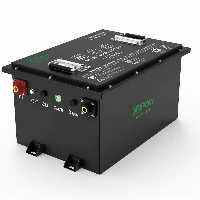
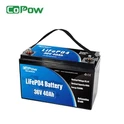
Picking a golf cart battery manufacturer in Japan is about much more than just ticking off a box on a supplier list; it's about finding a "safety net" for your fleet or personal ride.
With technology moving so fast, everything from the latest LiFePO4 cells and smart management systems to international certifications and custom OEM services determines whether you'll be saving money and stress or dealing with headaches down the road.
In this article, we'll cut through the marketing noise to show you what really matters when vetting a manufacturer. We'll also introduce you to the eight heavy hitters leading the industry in Japan and take a quick look at the major shifts defining the market as we head into 2025.

Key Factors to Consider When Choosing a Japan Golf Cart Battery Manufacturer
Core Performance
Focus on battery range, long cycle life, and adaptability to extreme environments-critical for Japan's hilly and compact golf courses.
Technological R&D Capabilities
Evaluate the Japanese golf cart battery supplier's technological investment in solid-state battery R&D, proprietary intelligent BMS systems, and long-term technical accumulation.
Qualifications and Compliance Certifications
Verify if the manufacturer holds ISO 9001 quality management system certification, as well as international safety and environmental certifications such as UL, ROHS, and UN38.3. Meeting these standards not only ensures stable product quality but also satisfies circulation and usage requirements for export-grade golf cart batteries in both domestic and overseas markets.
Customization and Adaptability
Adapting to Japan's diverse range of golf cart models is crucial for custom golf cart batteries. For example, Yamaha enables speed customization through applications, while manufacturers like Copow offer OEM/ODM services-adjusting battery size, voltage, capacity, or optimizing the intelligent BMS according to specific models, catering to fleet operations and personal vehicle needs.
After-Sales and Warranty System
The after-sales system is also a key consideration for wholesale golf cart battery buyers. It is necessary to confirm the warranty period (3-5 years for premium LiFePO₄ batteries) and check the completeness of the global after-sales network.
Brand Reputation and Cooperation Track Record
Prioritize Japanese golf cart battery brands with stable fleet cooperation cases, positive customer reviews, and a long-standing good reputation in the global market.
Yamaha
| Key Information | |
|---|---|
| Company Overview | Founded in 1887, headquartered in Hamamatsu, Shizuoka, Japan. Businesses include musical instruments, audio equipment, industrial machinery parts, golf products, and resorts. FY2025 revenue: ¥462.1 billion; ~18,900 employees; 61 subsidiaries. |
| Manufacturing Facilities | Domestic factories: Kakegawa, Toyooka, Tenryu; Overseas factories: USA, Thailand. Ensures global supply for golf carts and other products. |
| Output Capability | Musical instruments hold leading global market share. Golf carts produced since 1975, cumulative output over 1 million units. Standardized production and global layout support large-scale orders. |
| Flagship Products | Musical instruments: pianos, wind instruments, digital instruments; Audio: C-5000 preamps, GT-5000 turntables, PM series mixers; Golf: yg292 first-gen golf carts and new models with route memory features, paired with long-cycle-life golf cart batteries optimized for Japanese courses. |
| Quality & Safety Standards | Unified group quality policy; Quality Strategy Committee oversees operations. 77.4% of global facilities certified; seven business lines ISO9001 certified, one IATF16949 certified. Regular audits ensure product quality. |
| Professional Background | 130+ years of technical experience, started with instrument repair. Advanced digital signal processing in audio, promoting digital mixers. Golf carts feature autonomous driving and silent motors; expertise spans multiple business lines. |
| Customer & Market Coverage | Global market, FY2025 overseas revenue 76.9%. Customers: general consumers, music schools, performance organizations, golf courses. High demand for golf carts in Japan and North America, expanding to Europe, Australia, and Asia. |
Copow

| Details | |
|---|---|
| Company Overview | Renowned brand of Shenzhen Huandu Technology, adhering to the "Safer & Smarter" philosophy. With 16 years in the lithium battery industry, focuses on R&D, production, and sales of energy storage lithium batteries, aiming to enhance battery safety and intelligence through advanced technology. |
| Production Facilities | Owns dedicated lithium battery laboratory equipped with advanced devices. Established a comprehensive production management system, with standard operating procedures for each product and full-process supervision to ensure quality. |
| Production Capacity | Industry-leading delivery capabilities, able to meet global orders of varying scales. Efficiently handles small-batch custom orders and large-scale stable supply. |
| Flagship Products | RV lithium batteries, marine lithium batteries, solar energy storage lithium batteries, golf cart lithium batteries, with multiple voltage and capacity specifications. Some home energy storage system models reach 10.4 kWh. |
| Quality & Safety Standards | Uses high-quality cells from CATL and EVE Energy, paired with proprietary BMS to prevent short circuits, overcharge, and overdischarge. Products support QR code traceability for safety assurance. |
| Professional Background | Core R&D team members from leading companies like CATL and BYD, with over 20 years of average experience. Possess advanced technology in energy storage lithium batteries and hold key patents. |
| Customers & Market Coverage | Products sold to over 40 countries and regions, applied in RVs, marine, home energy storage, and communication base stations. Provided over 500 customized solutions. |
| OEM/ODM Services | Offers fully customized lithium battery solutions from consultation to production and after-sales, fulfilling diverse energy application needs. |
| Contact Information | mail: admin@huanduytech.com Phone: +86-755-89998295 Office Address: Chengtouxin Times Building, No. 2009 Pingshan Avenue, Pingshan Street, Shenzhen, Guangdong, China Factory Address: Wandajie Industrial Park, No. 1-12, Jinlong Avenue, Pingshan District, Shenzhen, Guangdong, China Website: https://www.copowbattery.com/ |
GS Yuasa
| Details | |
|---|---|
| Company Overview | Founded in 1895 and formed in 2004 through the merger of two major battery companies, headquartered in Kyoto, Japan. The world's second-largest battery company, committed to "Creating the Future of Energy," focusing on battery and power system R&D and manufacturing. |
| Production Facilities | Production bases located in Kyoto and Hyogo (Japan), Suzhou and Taizhou (China), Thailand, and Vietnam. Equipped with advanced production equipment and modern testing labs, with standardized production management systems. |
| Production Capacity | 5 GWh produced in 2023, projected 23–25 GWh in 2024, and expected to reach 150 GWh by 2028. Supports large-scale stable supply and diverse demand response. |
| Flagship Products | Golf cart rechargeable batteries (6V/8V/12V), forklift batteries (JIS & DIN models), automotive & hybrid vehicle batteries, and energy storage batteries. |
| Quality & Safety Standards | Certified with ISO9001, ISO14000, ISO45001; products hold UL, MIL, ROHS certifications; comply with JIS, DIN, IEC standards. Quality inspection is digitally managed. |
| Professional Background | Over a century of industry experience. Technology applied in aerospace, deep-sea, and transportation. Expertise in high-energy-density batteries and BMS, developing solid-state batteries, holding multiple core patents. |
| Customers & Market Coverage | Global presence with 65 subsidiaries and 33 affiliates. Serves Honda, Nissan, Subaru, Toyota, and other automakers. Forklift batteries hold 58% market share in Japan and fit multiple Japanese equipment models. |
Panasonic
| Details | |
|---|---|
| Company Overview | Founded in 1918 in Osaka, Japan by Konosuke Matsushita. Business covers home appliances, automotive batteries, industrial equipment, and avionics. Over 500 affiliated companies worldwide, approximately 230,000 employees, committed to "Creating a Better Life and a Better World." |
| Production Facilities | Manufacturing bases in Japan, Wuxi, Suzhou, Dalian (China), Nevada (USA), Hungary, and Czech Republic (Europe). Equipped with modern automated production lines and professional labs, with clear division of production by product category. |
| Production Capacity | Nevada 4680 battery factory maintains >95% utilization, planned 2028 capacity 100 GWh; Zhuhai motor factory expected to exceed 1.2 million units/year by 2027. Overall capacity supports large-scale stable supply and customized production. |
| Flagship Products | High-end appliances: ALPHA G5 four-drum all-in-one washer-dryer; Automotive batteries: 21700 & 4680 models; Cameras: Lumix series; Aviation: in-flight entertainment systems. 4680 batteries offer high energy density, suitable for premium EVs. |
| Quality & Safety Standards | Certified with ISO9001, ISO14001, ISO45001; also holds IATF16949 and ISO27001. Fully digitalized production and testing processes, meeting quality and safety requirements of major global markets. |
| Professional Background | Over 100 years of industry experience. Expertise in battery energy density improvement and smart appliance integration. Investing in solid-state battery R&D, holding multiple patents, collaborating with universities and research institutes to drive cross-domain innovation. |
| Customers & Market Coverage | Operations in ~130 countries and regions. Clients include Tesla, Toyota, Boeing, Airbus, Lawson, etc. Automotive batteries ranked top 3 globally, home appliances ranked top 5 worldwide, compatible with multiple Japanese devices and scenarios. |
FDK Corporation
| Details | |
|---|---|
| Company Overview | Founded in 1950, started with dry battery production and sales. Headquartered in Minato, Tokyo. FY2024 consolidated sales reached ¥63.171 billion, with 2,405 employees. Focuses on various batteries and electronic components, serving industrial equipment, automotive electronics, and other applications. |
| Production Facilities | Kusai Factory in Shizuoka, Japan, has a full-scale solid-state battery production line. Five domestic factories in total. Six overseas factories located in Thailand, China, Indonesia, and Sri Lanka; the Sri Lanka factory includes cleanrooms of different grades for precision electronic component production. |
| Production Capacity | Kusai Factory's full-load solid-state battery monthly output reaches 300,000 units. Established mass production systems for high-capacity cylindrical lithium batteries. Overall capacity can stably meet large-scale supply needs for automotive, communication, and other industries. |
| Flagship Products | Core products include NiMH batteries and Li-ion batteries. Features CR17500EX high-power cylindrical primary lithium battery with 17% higher capacity than previous generation. Mass production of oxide solid electrolyte solid-state batteries, with specialized variants for golf carts, featuring IoT-enabled remote monitoring for Japanese golf course fleets. |
| Quality & Safety Standards | ISO9001 certified, with products holding CE, ROHS, UN38.3 certifications. Production uses micron-level processing systems; factories strictly control processes to ensure stable and safe use in various scenarios. |
| Professional Background | Over 70 years of battery R&D and manufacturing experience. Pioneered NiMH battery commercialization. Early achievement in mass production of solid-state batteries; developed new high-capacity cylindrical lithium batteries; expertise in oxide solid electrolyte technologies. |
| Customers & Market Coverage | Clients include leading Japanese automotive and electronics companies. Products exported to the Americas, Europe, and Southeast Asia. Sri Lanka factory products regularly supply Japan, Americas, China, and Europe. |
Furukawa Battery
| Details | |
|---|---|
| Company Overview | Established in 1950 after separating from Furukawa Electric, headquartered in Yokohama, Kanagawa, Japan. As of March 2025, paid-in capital is ¥1.64 billion, with 2,439 employees. Focuses on lead-acid batteries, alkaline batteries, and power supply systems R&D, manufacturing, and sales. |
| Production Facilities | Domestic factories include Imaichi, Iwaki, and FB factories, with additional branches in Tokyo and Osaka. Overseas production bases located in Indonesia and Thailand; Thailand also hosts a trading company handling local business. |
| Production Capacity | Imaichi Factory completed integration of automotive lead-acid battery production equipment and started mass production. Overall capacity can stably meet large-scale supply demands across automotive, rail, and aerospace sectors, accommodating diverse product orders. |
| Flagship Products | Core products include automotive and motorcycle lead-acid batteries, as well as alkaline batteries for spacecraft and trains. Also produces DC power systems, uninterruptible power supplies, magnesium-air batteries, battery testers, and molded plastic products. |
| Quality & Safety Standards | Received the Deming Quality Award in 1952. Full-process production follows strict quality control. Products comply with international battery manufacturing standards, suitable for high-safety scenarios like spacecraft and trains. |
| Professional Background | Roots trace back to 1914 with lead-acid battery production, over a century of industry experience. After separation, continued to advance in battery technology, pioneering statistical quality control in production. Expertise spans multiple battery types and power supply systems. |
| Customers & Market Coverage | Clients include Japanese automotive, rail, and electronics companies. Products distributed via overseas factories and trading companies, covering Southeast Asia and multiple countries globally in transportation, communication, and energy sectors. |
LiTime
| Category | Details |
|---|---|
| Company Overview | Formerly Amperes Times, headquartered in Shenzhen, China. Specialized in LiFePO₄ batteries with 16 years of industry experience. Operates over 40 overseas warehouses in key global markets, providing high-quality lithium battery solutions. |
| Production Facilities | Production base in Longgang, Shenzhen, at Jingquan Hua Technology Industrial Park. Equipped with 50+ fully automated systems and nearly 25,000 m² of modern production space. Established end-to-end standardized production processes. |
| Production Capacity | Annual capacity of 2.5 GWh. Optimized processes achieve up to 80% annual growth. Added 1.8 million units in annual output, efficiently handling bulk orders and urgent supply needs. |
| Flagship Products | Core products are LiFePO₄ golf cart batteries. Flagship 12V165Ah Bluetooth battery suitable for marine thrusters and outdoor devices; H190 model designed for installation under RV seats. |
| Quality & Safety Standards | ISO9001 and ISO14001 certified. Compliant with UL, IEC, UN38.3 standards. Six-stage quality inspection in production; first-pass yield rate of 99.5%, with each product fully tested before shipment. |
| Professional Background | 16 years of LiFePO₄ battery R&D and manufacturing experience. High-end laboratory capable of extreme environment testing. Custom BMS development supports multiple communication protocols, adaptable to diverse device power needs. |
| Customers & Market Coverage | Clients include outdoor equipment manufacturers and agricultural tech companies. Business spans the USA, Canada, Germany, Australia, Japan, UK, etc. Warehouse in Japan ensures fast local delivery. |
Yuasa Battery
| Category | Details |
|---|---|
| Company Overview | Originated in 1915, merged with a Japanese battery company in 2004 to form GS Yuasa Corporation, headquartered in Kyoto. A global leading battery manufacturer focusing on various batteries and energy storage solutions, holding a leading market share in the global lead-acid battery sector. |
| Production Facilities | Domestic: Takatsuki Factory, Nagadano Factory in Kyoto, Japan. Overseas: factories in Thailand, Indonesia, USA, UK. China: production bases in Tianjin and Shunde, Guangdong, handling localized production of various battery types. |
| Production Capacity | Shunde Factory: annual design capacity 2.25 million kVAh; Guangdong Factory: ~1.5 million kVAh. Australian Factory: upgraded to over 1.3 million batteries annually. Overall capacity can stably meet large-scale supply demands across multiple industries worldwide. |
| Flagship Products | Core products are valve-regulated lead-acid batteries (VRLA), including NP, NPL, and UXL series. NPL series for energy storage and UPS, UXL series for high-capacity industrial applications. Also produces automotive and motorcycle power batteries. |
| Quality & Safety Standards | Follows customer-trusted production principles. ISO9001 quality management and ISO14001 environmental management certified. Equipped with safety vent plugs, uses special lead-calcium alloy to control self-discharge, strict raw material selection, and full-process quality control. |
| Professional Background | Over a century of battery R&D and production history. Early supplier for domestic electric buses and pioneer of dry-charging batteries. Developed ultra-thin separator technology for high-performance batteries, expertise spans lead-acid and various energy storage batteries. |
| Customers & Market Coverage | Clients include automotive and motorcycle manufacturers, telecom companies, power utilities, data centers, etc. Products serve domestic Japanese market and export to Europe, America, Australia, Southeast Asia. Some China-produced products are re-exported to Japan. |
Trends in Japan's Golf Cart Battery Market in 2025
1. The core trends focus on technological upgrading, environmental protection-driven development, and personalized demand. Lithium iron phosphate golf cart batteries are gradually replacing traditional lead-acid batteries to become the mainstream choice in Japan's market, thanks to their advantages of light weight, 2000+ long cycle life, and fast charging-perfect for Japan's hilly courses. They are well-suited to Japan's hilly and compact golf course environments as well as low-maintenance requirements.
2. Battery technology is iterating toward intelligence and efficiency. Optimized intelligent BMS enhance thermal stability and service life, while the integration of IoT and AI enables remote monitoring and fault prediction for smart golf cart batteries in Japan. R&D investment in new technologies such as solid-state batteries is increased to further improve energy density and safety.
3. Personalized demand continues to grow for custom golf cart batteries in Japan. Manufacturers need to provide services such as size, voltage, and capacity adjustments, as well as charging mode customization for Japan's diverse golf cart models, driving a surge in OEM/ODM golf cart battery orders.
4. Japan's stringent environmental and safety regulations are driving the market toward low-pollution transformation. Enterprises are focusing on R&D of environmentally friendly golf cart batteries to meet ISO 9001, UL, ROHS, and UN38.3 certification standards for export-grade and domestic sales.
5. Market competition has extended to after-sales and supply chains. Manufacturers are improving warranty systems, maintenance networks, and stable supply channels to meet wholesale golf cart battery buyers' needs for direct OEM procurement, enhancing cost-effectiveness.
Conclusion
In 2025, Japanese Golf Cart Battery Manufacturers are driving rapid market evolution, propelled by LiFePO₄/solid-state battery technological innovation, stricter environmental standards, and increasing demand for OEM/ODM customized solutions. Leading brands such as Yamaha, Copow, GS Yuasa, and Panasonic excel at integrating high-quality golf cart batteries, advanced R&D, and comprehensive after-sales support for global fleets and personal users.
Whether your priority is long cycle life, an intelligent BMS, or tailored configurations, understanding each manufacturer's core strengths equips buyers to make well-informed decisions and source reliable, high-performance batteries that align with diverse application requirements.
Frequently Asked Questions
Should I choose LiFePO4 batteries or traditional lead-acid batteries for golf courses in Japan?
Prioritize LiFePO4 batteries, especially for Japan's hilly and high-usage scenarios. They offer over 2000 cycles of long lifespan, lightweight design, and fast charging capabilities with a warranty period of 3 to 5 years. They also have low maintenance requirements and meet environmental compliance standards. Traditional lead-acid batteries are more budget-friendly but have a shorter lifespan of only 2 to 3 years, lower energy density, heavier weight, and environmental disposal challenges, making them suitable for low-frequency use with limited budgets.
What key certifications should I verify when purchasing golf cart batteries from Japan to ensure global compliance?
Core certifications include ISO 9001 for quality management systems, UL for safety standards, ROHS for environmental regulations, and UN38.3 for transportation safety. These certifications are critical for ensuring stable product quality and meeting circulation requirements in both the Japanese domestic market and overseas markets. They are particularly essential for export-grade battery purchases, and leading brands mentioned in the article such as GS Yuasa and Panasonic have obtained all the above core certifications.
How can I extend the service life of golf cart batteries and reduce maintenance costs?
The key lies in standardized usage and proper maintenance: first, use the original charger and continue trickle charging for 30 to 60 minutes after the green light turns on to avoid leaving the battery in a long-term undercharged state;
second, adjust charging time according to seasons-6 to 8 hours in summer and 8 to 10 hours in winter-to prevent overcharging or insufficient charging;
third, avoid charging or storing the battery in extreme temperature environments and choose a cool, dry location; fourth, regularly check the battery status, use products equipped with intelligent BMS for fault early warning and remote monitoring, and troubleshoot issues promptly.
related
Top 10 Golf Cart Battery Manufacturers in China (2025)
Best Budget Replacement Golf Cart Batteries: Save Money Without Sacrificing Quality