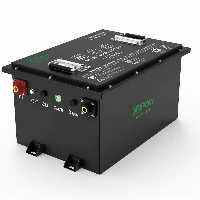
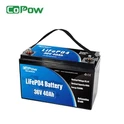
Are you looking for a Chinese golf cart battery manufacturer that offers great value for the money? While golf cart batteries produced by Chinese manufacturers are generally high-quality and affordable, this isn't true of all manufacturers.
That's why we've objectively and impartially selected five manufacturers that offer exceptional value. Each manufacturer has its own unique strengths and market positioning. Whether you're looking to purchase high-quality golf cart batteries or need custom batteries, you'll find the right manufacturer in this article. Let's take a closer look!

Copow - Professional Golf Cart Lithium Battery Manufacturer

First, allow us to introduce our brand-CoPow. Founded in 2011 and headquartered in Pingshan, Shenzhen, China, CoPow is a LiFePo4 battery manufacturer. Lithium golf cart battery are one of our primary areas of research, development, and manufacturing. We have accumulated eight years of experience in this field; our golf cart battery products are now quite mature, and we are able to provide customized golf cart battery solutions.
Currently, our products are sold worldwide-from North America, Europe, the Middle East, South Asia, and Southeast Asia to South America-with our products available on every continent.
Reasons to Choose CoPow:
We may be unknown, but we're everywhere.
Many people may not recognize us, but you've likely used our products. We offer OEM and ODM services, and our ODM customization services are particularly popular with customers.
The competitively priced lithium golf cart batteries we develop for major distributors are widely popular in the market. This is because we offer more affordable battery products that rival top-tier brands, a wide range of accessories and parts, reliable after-sales service, and a professional R&D team specializing in golf cart batteries.
More importantly, we have virtually no brand premium, so every dollar of your budget goes directly toward the product.
Professional Customization Provider
Our customization services extend beyond the battery itself. Components such as BMS, LCD displays, chargers, battery cells, communication protocols, remote on/off functions, heating systems, charging ports, discharge terminals, wiring harnesses, enclosures, mounting brackets, anti-theft systems, labels, and packaging can all be customized to meet your specific needs.
Authentic and Traceable Case Studies
CoPow is committed to building market trust through real-world project experience and does not fabricate false case studies. Every golf cart lithium-ion battery application project is backed by corresponding delivery records and project documentation; we can provide relevant case study information and user feedback upon customer request.
To date, CoPow has provided high-performance lithium-ion battery solutions to a diverse range of global clients, including golf cart dealers, importers, battery brands, vehicle modification companies, golf course operators, rental fleets, tourist resorts, hotel groups, and golf cart parts suppliers. Through long-term partnerships, we have accumulated extensive experience in vehicle model adaptation, system upgrades, and bulk supply.
Price Advantage
Leveraging China's world-leading lithium-ion battery supply chain, we have established a mature and comprehensive supply system covering everything from the procurement of high-quality battery cells, battery pack manufacturing, and BMS R&D to final product testing.
China boasts the world's most comprehensive lithium-ion battery support ecosystem. Whether it's battery cells, connectors, wiring harnesses, displays, structural components, or other customized parts, we can quickly identify suppliers for collaborative development. This not only shortens product development cycles but also reduces procurement, customization, and import costs. As a result, we are able to provide global customers with more competitive lithium-ion battery solutions while ensuring quality.
Factory Scale
CoPow operates a modern 32,000-square-meter production facility and has established a comprehensive lithium-ion battery manufacturing system.
The company operates five battery pack production lines and four automated packaging lines, with a maximum monthly production capacity of 50,000 battery sets and an annual capacity of 2 GWh. This robust production capacity not only ensures stable delivery of large-volume orders but also supports long-term OEM/ODM partnerships with global distributors and brand clients.
R&D Capabilities
CoPow's R&D team brings together a group of technical experts with many years of experience in the lithium-ion battery industry. Some team members have previously participated in the development of R&D and manufacturing systems at major lithium-ion battery companies and possess extensive experience in battery materials, cell applications, battery management system development, and battery system integration.
Contact Information
Email: admin@huanduytech.com
Official Website: www.copowbattery.com
Phone: +86-755-89998295
Office Address: Chengtouxin Times Building, No. 2009 Pingshan Avenue, Pingshan Street, Shenzhen, Guangdong, China
CATL

Founded in 2011 and located in Ningde, Fujian, China, CATL is a manufacturer of battery cells for golf carts. While they do not sell battery packs directly to consumers, if you wish to establish your own brand, you can explore partnering with them or purchasing high-quality battery cells through their distributors.
CATL offers the following battery cells for golf carts: CATL 3.2V 100Ah LFP prismatic aluminum-cased cells, CATL 3.2V 105Ah LFP cells, CATL 3.2V 125Ah LFP cells, CATL 3.2V 230Ah LFP cells, and CATL 3.2V 280Ah LFP cells (280K series).
Among these, the 3.2V 105Ah LFP battery cells and the 3.2V 100Ah LFP battery cells are the most widely used models by Chinese golf cart battery manufacturers (such as CoPow) and are also the two battery cell types with the highest market demand. In addition to lithium iron phosphate (LFP) battery cells, CATL also offers ternary lithium battery cells.
BYD Battery

BYD primarily supplies original equipment batteries for sightseeing vehicles. For general assemblers, BYD mainly provides high-quality LFP battery cells and power battery technology, which are then further developed by downstream pack manufacturers or vehicle manufacturers.
For the golf cart battery market, BYD offers a variety of LFP prismatic aluminum-cased cells, including 3.2V 100Ah, 3.2V 105Ah, 3.2V 130Ah, and 3.2V 135Ah models. These cells feature high energy density and cycle life, but may be slightly more expensive.
Taking BYD's 3.2V 100Ah LFP cell as an example, the unit price ranges from $40 to $60. To assemble a 51.2V 100Ah golf cart battery, 16 100Ah cells are required, bringing the total cost to $640–$960.
When accessories and services such as the battery management system, casing, copper busbars, and wiring harnesses are added, the final assembly cost may reach $800–$1,100.
Eve Energy

Founded in 2001 and headquartered in Huizhou, Guangdong, EVE Energy's business scope covers lithium-ion batteries, energy storage, electric vehicle power batteries, and industrial applications. Its product line includes prismatic LFP cells and battery systems.
In addition, EVE Energy is a manufacturer of golf cart battery cells and a supplier offering excellent value for money, providing high-quality lithium iron phosphate cells to specialized golf cart lithium-ion battery manufacturers. Its product lineup includes: EVE LF100LA, EVE LF105, EVE LF125, EVE LF173, and EVE LF230.
According to specifications published by EVE, the LF105 is a 3.2V 105Ah prismatic LFP cell with a continuous charge/discharge rate of 1C/1C, a cycle life exceeding 4,000 cycles, and a price of approximately $30 to $40 per cell. For bulk purchases-such as orders of 100 to 2,000 cells-the unit price is approximately $28 to $32 per cell.
Gotion High - tech

Gotion High-Tech was founded in 2006 and is headquartered in Hefei, Anhui Province, China. The company successfully went public in 2015.
Its development path is similar to that of CATL and EVE: it initially began in the power battery sector and subsequently expanded into four major areas-power batteries for new energy vehicles, energy storage systems, industrial power batteries, and battery materials.
The well-known Volkswagen Group made a strategic investment in Gotion High-Tech, becoming a key partner and bringing extensive technical expertise to the company.
Currently, Gotion's energy storage systems enjoy a high international reputation. In the golf cart battery sector, Gotion primarily supplies battery cells, providing high-quality LFP cells to numerous manufacturers. Its product lineup includes: Gotion IFP27175200A, Gotion 3.2V 105Ah LFP, Gotion 3.2V 100Ah LFP, Gotion 3.2V 125Ah LFP, Gotion 3.2V 200Ah LFP, and Gotion 3.2V 230Ah LFP, among others. 3.2V 105Ah LFP, 3.2V 100Ah LFP, 3.2V 125Ah LFP, 3.2V 200Ah LFP, 3.2V 230Ah LFP, etc.
The prices of these battery cells are comparable to those of EVE, and they also position value for money as their main selling point. Taking the Gotion 3.2V 105Ah LFP battery cell as an example, the market price is approximately $40 to $60 per cell, though the exact price varies depending on the distribution channel.
What Are The Advantages And Disadvantages Of Importing Golf Cart Batteries From Chinese Manufacturers?
That's right-everything has two sides. We won't just tell you the pros; we'll give you all the information so you can weigh your options and make a more informed decision.
Advantages
1. More Competitive Pricing
China has a comprehensive lithium-ion battery supply chain that covers lithium-ion battery materials, cell production, battery management system development, battery assembly (PACK), and the manufacture of automated production equipment.
This has created a significant industrial cluster effect, effectively reducing production costs. In addition, importing golf cart batteries directly from Chinese factories eliminates intermediaries, further lowering costs.
2. A Mature Lithium-Ion Battery Supply Chain
China currently boasts the world's most comprehensive lithium-ion battery industry chain, which includes numerous large-scale cell manufacturers and battery assembly companies. This mature supply chain offers advantages such as a stable supply of battery cells, faster development cycles, greater flexibility in customization, stronger production capacity, and more manageable costs.
3. Stronger OEM and ODM Customization Capabilities
Compared to many overseas suppliers, Chinese golf cart battery manufacturers have stronger OEM and ODM capabilities.
Customers can not only purchase standard models but also customize them according to their specific market needs, including battery capacity, casing dimensions, mounting structures, BMS functions, CAN/RS485/Bluetooth communication capabilities, LCD displays, logos, packaging, and charger specifications-truly delivering a one-stop service.
4. Faster Product Innovation
Competition in China's lithium-ion battery industry is fierce, and manufacturers are constantly introducing new technologies and features to meet diverse market demands.
Currently, lithium-ion batteries for golf carts are no longer merely a replacement for lead-acid batteries; they are evolving toward smarter functionality. For example, GPS positioning, remote on/off control, more practical low-temperature heating systems, and fleet management systems have already been integrated into these products. In the future, even more new features are expected to emerge.
5. Strong Production Capacity and More Stable Supply
Specialized lithium-ion golf cart manufacturers like CoPow own their own factories and companies-they are not merely trading firms. We are able to fulfill sample, small-batch, and large-volume orders simultaneously, which translates to shorter production cycles, faster scaling of orders, and easier establishment of long-term supply relationships.
Disadvantages
1. Varying Quality Among Suppliers
While China does have a number of excellent golf cart battery manufacturers, there are also some suppliers who are simply in it for the sales. To cut costs, some low-quality suppliers may use substandard battery cells, simplified battery management systems, and low-cost components, and their testing procedures may not be sufficiently standardized.
2. Communication Costs
Unlike retail batteries available on the market, bulk purchases of golf cart batteries often require extensive technical coordination and verification. You may need to confirm details such as voltage, capacity, battery dimensions, BMS protection parameters, charger specifications, communication protocols, discharge current parameters, accessories (including even M8 screws), and materials with the manufacturer to ensure that the batteries you receive meet your expectations.
As a professional supplier of golf cart batteries, CoPow can directly inform you of what you need, how to proceed, and potential issues that may arise, and we have a well-established order processing workflow.
In contrast, manufacturers whose primary goal is to sell golf cart batteries may not provide detailed information or may even conceal many critical details, leaving you with no recourse for complaints. Therefore, you need to carefully evaluate your options.
3. Shipping Times and Import Processes Are More Complex
Compared to purchasing from local suppliers, importing golf cart batteries from China involves more logistical and customs clearance considerations.
You'll need to factor in shipping times, import procedures, tariff policies, battery shipping regulations, and hazardous materials shipping requirements.
Fortunately, CoPow has already secured the necessary certifications for you and can provide a range of professional import process support to ensure the batteries arrive safely.
4. Can After-Sales Support Be Truly Guaranteed?
"If there's a problem with the battery, how will the Chinese supplier provide support?" This is a common concern among many buyers. You need to confirm with the manufacturer in advance whether they offer remote technical support. If a component is damaged, can a replacement be shipped from China? How long is the warranty period, and are the terms restrictive?
CoPow has entered into long-term partnership agreements with numerous distributors, offering a 5- to 10-year product warranty. During this period, we provide timely, one-on-one remote assistance to customers who encounter any issues. If a product component malfunctions-such as a BMS data cable-we will provide a free replacement, as we maintain a comprehensive inventory of spare parts.
What Is The Biggest Advantage Of CoPow Golf Cart Batteries?
We believe that our greatest strengths lie in customization, pricing, service, and production and R&D.

How Is The Quality Of CoPow Golf Cart Batteries?
Our golf cart lithium-ion batteries use brand-new, high-quality lithium iron phosphate cells from suppliers such as CATL, BYD, and EVE Energy. They operate normally within a temperature range of -20°C to 60°C, have a charge-discharge cycle life exceeding 6,000 cycles, and offer a service life of 8 to 10 years.
In terms of smart features, we not only provide a practical battery management system but also have the capability to develop new functions based on the existing BMS, and we have already prepared the necessary accessories for you.

How Is The Price Of CoPow Golf Cart Batteries?
We are not a retailer, so we do not list product prices on our official website. Specific wholesale prices depend on cost factors such as the battery cell brand you choose, the battery's features, and accessories. Please feel free to contact us at any time for more information.
Who Are CoPow Golf Cart Batteries Serving?
CoPow golf cart batteries are primarily aimed at buyers worldwide who require high-performance lithium-ion battery solutions, including golf cart dealers, battery brands, modification companies, golf course operators, rental companies, and repair service providers. Of course, if you are a general consumer in need of high-end, custom-made golf cart batteries, we can also provide you with our services.
What Accessories Are Available for CoPow Golf Cart Batteries?
| Accessory / Feature | Free or Optional |
|---|---|
| Basic wiring harness, cables, terminals, and mounting accessories | Free |
| Standard BMS protection functions (overcharge, over-discharge, over-current, short circuit, temperature protection, cell balancing) | Free |
| Product documents (specifications, user manual, basic certification documents) | Free |
| LCD display (SOC meter, voltage, current, battery status) | Optional |
| Bluetooth APP monitoring | Optional |
| CAN communication | Optional |
| RS485 communication | Optional |
| GPS tracking function | Optional |
| Low-temperature heating system | Optional |
| Remote power switch / remote control function | Optional |
| Customized housing, logo, and packaging | Optional (MOQ may apply) |
For more information about accessories, please contact us.

What Is the Warranty Service Like for CoPow Golf Cart Batteries?
CoPow offers a comprehensive warranty service system for golf cart batteries, helping customers minimize operational risks. The warranty coverage extends beyond quality issues with the product itself to include technical support, fault analysis, and after-sales service solutions.
| Warranty Service | Details |
|---|---|
| Standard Warranty Period | 5-10year warranty for CoPow golf cart batteries |
| Warranty Coverage | Covers manufacturing defects, battery performance issues, and product quality problems under normal usage conditions |
| Product Replacement Support | If a confirmed quality issue occurs during the warranty period, CoPow provides repair, replacement, or other suitable solutions based on the specific situation |
| Technical Support | Provides installation guidance, parameter settings, troubleshooting, and battery system analysis support |
| Remote Diagnosis | CoPow's engineering team can analyze battery issues through BMS data, Bluetooth APP information, and communication data |
| Customized Warranty Plans | Flexible warranty solutions are available for distributors, brand owners, and long-term strategic partners |
| Technical Documentation Support | Provides product specifications, user manuals, certification documents, and other technical materials to support sales and after-sales service |
What Happens If a CoPow Golf Cart Battery Has Problems During Use?
If a golf cart battery exhibits abnormal behavior during use, CoPow will dispatch a team of technical experts to diagnose the problem and provide an appropriate solution based on the specific circumstances.
First, customers can contact CoPow's after-sales service team and provide the necessary information, such as:
- Battery Model and Serial Number
- Operating Environment and Application Scenarios
- Description of the Malfunction
- Screenshots of BMS Data or the Bluetooth App
- Charge/Discharge Logs
The CoPow engineering team will use this information to make a preliminary assessment and analyze potential causes of the issue, including:
- Battery usage patterns
- Charger compatibility issues
- BMS protection trigger
- Abnormal cell status
- Wiring or installation issues
- Impact of ambient temperature
If the battery supports Bluetooth, CAN, or RS485 communication, engineers can also perform further diagnostics using BMS data, including:
- Individual cell voltage
- Battery temperature
- Charge and discharge current
- SOC status
- Protection logs
After identifying the root cause of the issue, CoPow will provide an appropriate solution:
| Problem Situation | CoPow Solution |
|---|---|
| Incorrect installation or usage issue | Provide technical guidance and usage recommendations |
| BMS parameter or communication issue | Provide remote troubleshooting and parameter adjustment support |
| Battery performance abnormality | Analyze battery data and provide repair suggestions |
| Component failure under warranty | Provide replacement parts or repair solutions |
| Confirmed product quality issue | Provide replacement or warranty service according to warranty terms |
To minimize these issues as much as possible, CoPow continuously optimizes its product design and production testing processes to reduce the likelihood of battery problems during actual use.
For example, before leaving the factory, batteries undergo a variety of rigorous tests, including cell consistency testing, BMS functionality testing, charge-discharge testing, safety protection testing, and aging testing.
Overall, when addressing issues with golf cart batteries, CoPow adheres to the core principles of "rapid response, accurate diagnosis, and effective solutions." Whether providing technical guidance, conducting remote troubleshooting, or performing repairs or replacements under warranty, CoPow helps customers restore normal battery operation as quickly as possible.

What Certifications Are Available for CoPow Golf Cart Batteries?
To meet the needs of customers in different countries and regions, CoPow provides certification and documentation support for CE, UN 38.3, MSDS, RoHS, and IEC 62619, among others.

Conclusion
The Chinese golf cart battery manufacturing industry is a mixed bag. This article introduces five trustworthy manufacturers that offer excellent value for money. Whether you need battery cells, standardized golf cart batteries, or custom golf cart batteries, you'll find the right manufacturer here.
You might ask, why haven't we mentioned our direct competitors? That's because we can't make recommendations lightly-we only introduce manufacturers that are well-known and trustworthy. We are very familiar with the battery cells and batteries from these manufacturers-including our own, CoPow-and they all have genuine customer reviews.
The market ultimately determines the quality of a product, and CoPow has already proven itself. Whether you're looking for standard golf cart batteries that offer exceptional value for money or want to customize lithium-ion golf cart batteries to build your own brand, feel free to contact us at any time. Our customer service team will respond to your inquiry within 24 hours.