If you suddenly smell a sharp, rotten egg odor while playing golf or driving your cart, don't dismiss it as just an unpleasant smell. This is actually a danger signal from your golf cart battery. The sulfur-like odor indicates that your lead-acid battery may be in a state of thermal runaway, and if not addressed immediately, it could catch fire or even explode at any moment.
To address this safety hazard, it's important to understand the underlying cause-whether it's due to overcharging or an internal short circuit triggering a chemical reaction-and to know the correct emergency procedures.
Of course, a more permanent solution is to consider upgrading your power system by replacing the old lead-acid batteries with lithium batteries. This not only eliminates harmful gas emissions at the source but also makes using your golf cart safer and more worry-free in the long run.
Now, let's take a closer look at what causes this gas and how to deal with it!

What Causes a Rotten Egg Smell in Your Golf Cart?
If you notice a sharp, pungent rotten egg smell near your golf cart, you should take it seriously. This odor is usually a clear warning sign that something is wrong with a lead-acid battery. The smell comes from hydrogen sulfide gas, which is released when the battery's electrolyte starts to boil and vaporize due to excessive heat.
In most cases, this happens because the battery is aging, has an internal short circuit, or has lost too much electrolyte and begun to dry out. A faulty charger can also be the cause-if it fails to stop charging and continues to overcharge the battery, it can easily produce this kind of odor. In battery maintenance, this condition is known as thermal runaway. It can permanently damage the battery and, more importantly, create a serious risk of fire or even explosion.
Additionally, poor maintenance can contribute to the problem. Severely corroded terminals or loose connections can cause high resistance, leading to localized overheating and unusual smells. If you ever detect this odor, the safest action is to immediately disconnect the power and ventilate the area. Do not continue charging the battery. You should check whether the battery feels hot to the touch or shows signs of swelling. For long-term safety and reliability, this may be a good opportunity to switch to a more stable lifePo4 golf cart battery, or at least have the charging system inspected and repaired as soon as possible.

Lead-Acid Battery Overcharging: The Most Common Reason
Why Does Overcharging Cause This Smell?
During a normal charging cycle, lead-acid batteries produce small amounts of hydrogen and oxygen. However, when overcharging occurs, the intense electrolytic reaction breaks down the electrolyte (a mixture of water and sulfuric acid) too rapidly. This process generates an excess of hydrogen gas and hydrogen sulfide. Hydrogen sulfide is the source of that distinct sulfurous odor; it is not only unpleasant but also toxic and highly flammable.
Main Causes of Overcharging
- Charger Malfunction: The automatic sensor in the charger fails to detect when the battery is full, failing to switch to "float" mode or shut off, which forces a continuous high current into the cells.
- Internal Short Circuit: If one cell within the battery pack is shorted or damaged, the charger perceives the overall voltage as too low. To compensate, it pushes more power, causing the remaining healthy cells to overcharge.
- Incompatible Charger: Using a charger with a voltage output higher than the battery pack's rating (e.g., using a 48V charger on a 36V system).
- High Ambient Temperatures: Charging in extreme heat changes the internal resistance of the battery, making it more susceptible to overcharging and thermal runaway.
Warning Signs to Watch For
Beyond the rotten egg smell, overcharging is often accompanied by:
- Excessive Heat: The battery casing feels hot to the touch (it should normally be only slightly warm).
- Bubbling Sounds: Hearing a loud "hissing" or "gurgling" sound as the electrolyte boils.
- Casing Deformation: The battery side walls begin to bulge or bloat due to internal pressure.
- Low Electrolyte Levels: You find yourself frequently adding water, indicating that the water is being rapidly lost through electrolysis.
Can LifePo4 Golf Cart Batteries Cause a Rotten Egg Smell?
LiFePO4 batteries essentially cannot cause a rotten egg smell, whether they are operating normally or failing. That classic sulfurous stench is unique to lead-acid batteries, caused by the breakdown of liquid sulfuric acid into hydrogen sulfide gas. Since LiFePO4 chemistry does not contain sulfuric acid, it is physically impossible for them to produce that specific odor.
If you smell rotten eggs in a cart equipped with LiFePO4 batteries, it is likely that an old lead-acid "accessory" battery (used for lights or a radio) is failing, or another component like rubber or wire insulation is overheating nearby.
When a LiFePO4 battery experiences a severe malfunction, such as a cell leak or thermal runaway, the scent it emits is typically sweet, medicinal, or similar to nail polish remover (acetone). This is because these batteries use organic carbonate-based electrolytes. If internal pressure forces the safety vents to open, these organic compounds vaporize, creating a sweet but toxic chemical odor. While LiFePO4 is famous for being significantly more stable and less prone to fire than other lithium chemistries, any sweet chemical smell still indicates a serious internal failure.
Furthermore, LiFePO4 batteries are equipped with a Battery Management System that is designed to automatically cut off power during overcharging or overheating, which makes the chance of the battery "gassing" or smelling very low compared to lead-acid types. If you detect an odor in a LiFePO4-powered cart, you should inspect the electrical system for loose connections, oxidized terminals, or burnt electronic components (like capacitors) in the controller.
Is It Dangerous to Drive Your Golf Cart When You Smell Rotten Eggs?
Continuing to drive a golf cart after smelling a rotten egg odor is extremely dangerous and irresponsible. This smell is a sign of hydrogen sulfide gas, which indicates that your lead-acid battery is in a severe state of thermal runaway. Inside the golf cart battery, the electrolyte is boiling under high temperatures and releasing highly explosive hydrogen gas.
While driving, the battery pack continues to discharge and generate even more heat, which can cause the battery casing to rupture under excessive internal pressure, potentially leading to a violent fire or explosion. Splashed sulfuric acid can cause serious chemical burns to the human body.
Beyond the risk of explosion, the gas you are smelling-hydrogen sulfide-is itself toxic. Even in open areas such as a golf course, inhaling concentrated amounts of this gas can cause dizziness, nausea, or respiratory irritation. If it accumulates in enclosed spaces like a garage, high concentrations can become life-threatening.
Moreover, this odor is often the final warning before a battery fails completely. Forcing the cart to continue operating can result in extreme voltage instability, which may damage expensive components such as the controller or motor, leading to significantly higher repair costs.
If you ever detect this smell, you should pull over immediately, shut off the power, and move all passengers away from the cart. Do not attempt to inspect battery terminals or perform any action that could create an electrical spark, as even a small spark is enough to ignite hydrogen gas trapped beneath the seat.
The safest approach is to park the cart outdoors in a well-ventilated area and allow the golf cart battery to cool completely before having it handled by a qualified professional.
To ensure your personal safety and prevent total equipment failure, be sure to follow these steps immediately:
1. Stop Driving and Cut Power Immediately
- Pull Over: Find a flat, open area and stop the cart immediately.
- Turn Off the Key: Quickly turn the ignition to the "OFF" position and remove the key.
- Avoid Switching Gears: Do not toggle the Forward/Reverse (FNR) switch. Electrical switches can produce a tiny spark when flipped, which is enough to ignite the hydrogen gas trapped under the seat.
2. Evacuate and Ventilate
- Distance Yourself: Ensure all passengers exit the cart and maintain a safety distance of at least 5–10 meters.
- Lift the Seat (With Caution): If it is safe to do so and there is no risk of creating a spark, slightly prop open the seat to help the toxic gases escape. However, if the battery is smoking or making a loud hissing sound, do not approach it; stay away.
- No Open Flames: Absolutely do not smoke, use a lighter, or operate any tools that could create a spark in the vicinity.
3. Disconnect the Charger (If Charging)
- Unplug from the Wall First: If the cart is charging in a garage, do not pull the charging plug out of the cart itself first. Unplug the charger from the wall outlet or flip the circuit breaker. This prevents a spark from occurring at the battery connection, which could trigger an explosion.
- Clear the Air: Open all garage doors and windows to vent the toxic fumes outside using natural airflow.
4. Allow for Natural Cooling
- Do Not Touch or Add Water: Before the battery has completely cooled (which usually takes several hours), do not attempt to add distilled water or touch the hot battery casing.
- Observe from a Distance: Check for visible signs of bulging, deformation, or leaking fluid once the situation has stabilized.
⚠️ Core Rule: Never attempt to repair a battery while it is "boiling." When you smell that odor, the battery is undergoing an extremely unstable chemical reaction. Any attempt to remove cables or move the battery could trigger an explosion.
How to Fix and Prevent Rotten Egg Smells in the Future?
To completely eliminate the rotten egg smell from your golf cart, the key lies in regular battery maintenance and routine checks of the charging system. If you detect this odor, it usually indicates that the battery has already suffered irreversible damage. At this point, the focus is no longer on simple cleaning or minor repairs; it is best to replace the damaged golf cart battery or adjust the entire power system.
For older lead-acid batteries, you should frequently check the electrolyte level, ensure that the terminals are free from corrosion, and confirm that the charger can properly stop charging when required.
1. How to Deal with an Existing Odor (Repair Steps)
- Replace the damaged golf cart battery: Batteries that emit a rotten egg smell usually have severe internal short circuits or sulfated plates. After the battery has completely cooled down, use a multimeter to measure the voltage of each cell. If any cell shows a significantly lower voltage than the others (for example, in a 36V system, a single 6V cell reads below 4V), it must be replaced with a new lithium golf cart battery. We also recommend replacing batteries in a complete set, as mixing old and new batteries can quickly cause the new battery to be "dragged down" by the older ones.
- Clean acid corrosion: The odor is often accompanied by acid mist or spillage. Clean the battery surface, terminals, and battery tray with a baking soda and water solution to neutralize the acid. Make sure the terminals are polished bright and securely fastened to reduce contact resistance and prevent overheating.
- Top up distilled water: If the battery is not completely dead, check the electrolyte level. If the water level is below the plates, add distilled water only (never tap or mineral water) above the plates, but do not overfill to avoid overflow during charging.
2. How to Prevent Future Odors (Prevention Guide)
- Use a smart charger: Make sure your charger has automatic shutoff and maintenance (float) mode features. Older manual chargers are a major cause of overcharging and odors. If your charger does not stop charging automatically when full, repair or replace it immediately.
- Establish a regular water-top-up routine: Check electrolyte levels once a month. Keeping the plates fully submerged prevents localized overheating. Remember: always top up after charging (unless the plates are already exposed) to leave room for thermal expansion.
- Charge in a ventilated area: Always lift the seat while charging and charge in a well-ventilated environment. This prevents heat buildup and excessive gas concentration.
- Avoid deep discharges: Try not to completely drain the battery before recharging. Recharge when the battery reaches about 20–30% remaining capacity. This significantly extends lead-acid battery life and reduces internal chemical stress.
- Clean the terminals: Check battery terminals every quarter. Loose screws or corroded connections create extra resistance, causing localized high temperatures in the battery.
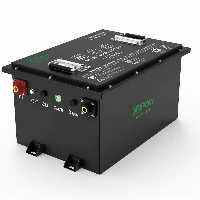
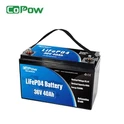
💡 Ultimate Solution: If you're tired of the maintenance burden and potential odors of lead-acid batteries, consider upgrading to Copow LiFePO4 golf cart batteries. Their batteries feature a fully sealed design, require no water topping, and do not produce hydrogen sulfide gas, effectively eliminating the rotten egg smell at its source.
When a Rotten Egg Smell Means You Need a New Golf Cart Battery?
While a rotten egg smell isn't always a death sentence for your entire battery bank, it is usually the battery's "final ultimatum." Here are the specific signs that the smell means it's time to invest in a replacement:
1. Visible Physical Deformation
If you notice the battery sidewalls are bulging, swollen, or severely warped, the internal pressure has reached a point where it has compromised the structural integrity. This damage is irreversible. Even if the smell dissipates after cooling, the internal components are compromised, posing a constant risk of short-circuiting or leaking.
2. Inability to Hold a Charge (Dead Cell)
After the battery has completely cooled and attempted a charge, test it with a multimeter. If one battery reads significantly below its rated voltage (e.g., a 6V battery reading 4V or less) and quickly becomes hot or odorous during charging, it has an internal short circuit (Short Cell). While you could technically replace just that one unit, if the set is over 3 years old, the others are likely close to failing as well.
3. Frequent Water Loss Combined with Odor
If you find yourself frequently adding distilled water (e.g., every week) and the sulfur smell persists during every charge, the internal plates are likely heavily sulfated or shedding. At this stage, the battery can no longer store energy efficiently; instead, it converts that electrical energy into heat and chemical gas. Continuing to use it is inefficient and dangerous.
4. Reaching the End of Service Life
Most lead-acid batteries have a lifespan of 3 to 5 years. If your batteries are over 4 years old and start emitting that "rotten egg" scent, it is a natural sign of advanced aging. The active material on the plates has been exhausted, and any attempt at repair will only be a temporary fix. A full replacement is the only reliable solution.
💡 Expert Tip: If only one battery is failing and the rest of the set is relatively new (less than 1 year old), you can replace just the single unit. However, if the entire pack is old, mixing new and old batteries will cause the new one to degrade rapidly due to voltage imbalances, leading to a waste of money.
A Smarter Upgrade: Copow Lithium Golf Cart Batteries for Odor-Free Operation
In fact, replacing your old battery with a Copow lithium iron phosphate battery isn't just about eliminating that unpleasant rotten egg smell-it also takes the overall performance of your golf cart to the next level. Lithium iron phosphate has a very stable chemical composition, so even with overcharging or prolonged use, it won't overheat or emit gases like a lead-acid battery, ensuring safety at its core.
In addition, this type of battery is much lighter than lead-acid batteries, making your cart feel more responsive and powerful on inclines. Its lifespan is several times longer, with many more charge-discharge cycles, and it requires virtually no water maintenance. Once you switch to it, you'll notice that not only is the odor gone, but your range and overall driving experience are significantly improved compared to before.
Why Choose Copow Lithium Batteries for Odor-Free Operation?
- Completely Sealed Chemistry: Unlike lead-acid batteries, Copow lithium batteries do not contain sulfuric acid and do not produce hydrogen or hydrogen sulfide gas during operation. This means you will never deal with that nauseating rotten egg smell again, whether charging or under heavy load.
- Intelligent BMS Protection: Every Copow battery features an advanced Battery Management System. It automatically monitors voltage and temperature, instantly cutting off power if it detects abnormalities like overcharging or overheating. This physically prevents the "thermal runaway" that causes smells in older battery types.
- Zero-Maintenance Design: You can say goodbye to checking water levels or carrying around bottles of distilled water. Copow batteries are true "plug-and-play" systems-no leaks, no mess, and no corrosion on your cart's frame.
Beyond Being Odor-Free: The Copow Advantage
- Extreme Weight Reduction: Lithium batteries typically weigh only 1/3 of their lead-acid equivalents. This significantly lightens your cart, improving handling, increasing speed, and reducing wear and tear on the golf course turf.
- Extended Lifespan: While lead-acid batteries usually last for 300–500 cycles, Copow LiFePO4 batteries offer 2000-6000 cycles. This means you likely won't need to replace your batteries again for the next 8+ years.
- Fast Charging & Constant Power: Lithium batteries charge much faster and maintain consistent power output. Unlike lead-acid batteries, which get "sluggish" as the voltage drops, Copow batteries provide full hill-climbing power until the very end of the charge.
Copow has specially designed 36V, 48V, and 72V lithium battery packs for mainstream golf carts on the market. The biggest advantage of these batteries is that they can be directly installed into the existing battery compartment. This means you don't need to modify the cart's structure-simply remove the old lead-acid batteries and install the Copow lithium golf cart batteries, and you're ready to go.
The design takes into account the installation space of different models, ensuring that the batteries are securely mounted inside the cart. This saves a lot of hassle when upgrading your power system, making it ideal for owners who want to quickly enhance their vehicle's performance.
FAQ
Why Does a Lead-Acid Battery Smell Like Rotten Eggs (Hydrogen Sulfide)?
A rotten egg-like odor in lead-acid batteries is primarily caused by hydrogen sulfide gas generated due to abnormal charging or internal faults. This typically occurs during overcharging, battery aging, electrolyte imbalance, or internal damage.
When the charging voltage or current is too high, the sulfuric acid in the electrolyte undergoes a decomposition reaction. In addition to producing normal hydrogen and oxygen, this reaction may also generate hydrogen sulfide under localized reducing conditions.
If a battery remains in a state of chronic undercharging or severe sulfation, the chemical reactions on the plates become abnormal, making it easier for hydrogen sulfide to be released. Furthermore, internal short circuits, contamination by impurities, or failure of the battery seal can also exacerbate this problem.
Is the Rotten Egg Smell from a Battery Dangerous?
This rotten egg smell is dangerous because it comes from hydrogen sulfide, a toxic gas. Even at low concentrations, hydrogen sulfide can irritate the eyes and respiratory tract, causing symptoms such as dizziness and nausea. In high-concentration environments, hydrogen sulfide can even lead to poisoning or suffocation.
Why Does My Forklift Battery Smell Like Rotten Eggs?
The rotten egg smell coming from a forklift battery is caused by the production of hydrogen sulfide gas during the charging process. This indicates that the battery is in an abnormal condition. Possible causes include overcharging, high voltage leading to electrolyte decomposition, battery aging, severe sulfation of the plates, or internal damage. If ventilation is poor, this odor will become more pronounced and may be accompanied by hydrogen buildup, posing a safety hazard.