Are you planning to upgrade your golf cart from lead-acid batteries to lithium-ion batteries, or are you struggling with the installation of new lithium-ion batteries? This article will provide you with a comprehensive and detailed guide to the installation process.
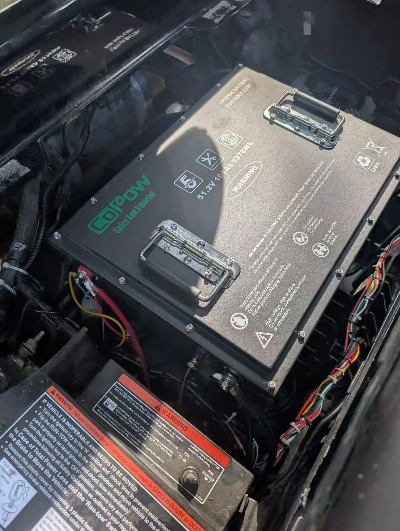
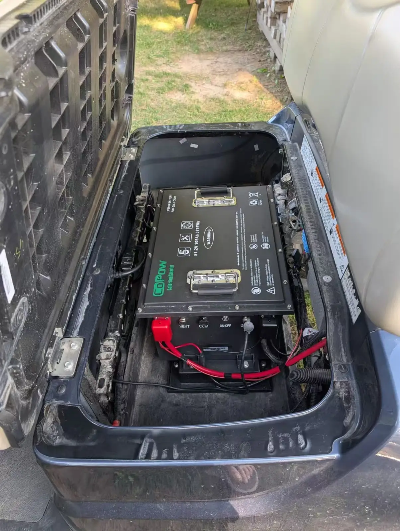
how to convert golf cart to lithium battery: Step-by-Step Guide
If you choose to do the installation yourself, you'll need to have a lithium-ion battery pack, a compatible charger, fuses, circuit breakers, wrenches, screwdrivers, and the instruction manual on hand. Other items, such as cables, connectors, and mounting brackets, are already included in the golf cart battery upgrade kit you purchased.
If you are a professional, you will also need to prepare heat-shrink tubing, crimping tools, a drill, and a battery terminal puller. Of course, you may also want to have gloves, safety goggles, or a fire extinguisher on hand.
Remove the old battery
First, we need to disconnect the power supply to the golf cart. Then, remove the old lead-acid batteries one by one, disconnecting the negative terminal first and then the positive terminal. Finally, clean the battery compartment.
It is important to note that old batteries are typically connected in series, so they must be removed in the correct order to avoid short circuits.
Install a lithium-ion battery
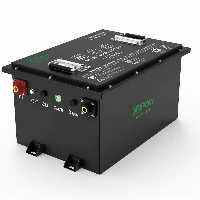
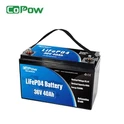
Before explaining how to install a lithium-ion battery, please note that we are installing a complete lithium-ion battery pack here, not multiple lithium-ion batteries connected in series or parallel. If you require a series or parallel configuration, you may need to contact a custom golf cart battery manufacturer like CoPow to design a battery system tailored to your needs.
Now, let's begin with the installation process for a one-piece lithium-ion battery pack.
- First, we have removed the old battery. Next, you need to confirm that the tray is securely fastened. If the tray surface is uneven, shims should be added.
- Then, we will securely place the lithium battery pack into the battery compartment, positioning it as close to the center as possible.
- Finally, you may need to use tools to secure the battery pack, such as battery clamps, brackets, or metal straps, to prevent the battery from shifting during sudden braking.
Install safety devices
This is a step that many people tend to overlook. To maintain a stable current, we also need to install a circuit breaker or fuse at the battery's positive output terminal.
A typical connection setup looks like this:
- Battery positive terminal → Circuit breaker/fuse → Main power supply → Controller
- Battery negative terminal → Direct circuit
Connect the cable + Verify polarity
This is the step where problems are most likely to occur. We must ensure that the positive terminal is connected to the positive terminal and the negative terminal to the negative terminal. Never reverse the connections, or the controller will be damaged.
Before beginning, put on insulated gloves and use a multimeter to verify the polarity.
First, turn on the multimeter and switch it to the DCV (Direct Current Voltage) setting, then test the battery's output terminals. If the meter displays a positive value, such as 48V, this indicates that the red probe is connected to the positive terminal and the wiring is correct; otherwise, the wiring is incorrect.
Next, we'll begin wiring: first connect the positive terminal (+), attaching the red wire to the controller's positive input terminal; then connect the negative terminal (−), attaching the black wire to the controller's negative input terminal.
After wiring is complete, check for incorrect connections, exposed metal at the connection points, and loose connections.
Install a charger designed specifically for lithium-ion batteries
In this step, the first thing we need to do is verify that the charger is fully compatible.
There are three key points to check:
First, the voltage must match. For example, a 48V lithium-ion system requires a 58.4V charger.
Second, the battery type must be the same. If you are using a lithium iron phosphate golf cart battery, you need to use an LFP charger.
Confirm that the connectors are compatible. Common charging connectors include Anderson plugs, circular aviation connectors, and GX connectors.
During actual operation, you must first insert the charger plug into the battery's charging port before connecting it to the mains power supply.
While the battery is charging, monitor whether the indicator lights are functioning normally, whether the fan is running, and whether the battery is overheating. If any abnormalities occur, please contact your account manager; do not attempt to resolve the issue on your own.
Verify that the BMS is functioning properly
This is not about testing the BMS itself, but rather determining whether it is functioning properly based on its behavior.
You can observe its performance through charge and discharge tests.
First, perform a charge test. You need to discharge the battery to between 30% and 50% capacity, then connect a charger to begin charging. Observe whether the battery charges normally, whether there are any sudden power interruptions during charging, and whether charging stops automatically once the battery is fully charged. If all these aspects function normally, then the BMS is working properly.
Next is the discharge test. You need to drive the golf cart until the battery level drops to a low level and observe whether the current output remains stable.
If the power cuts off automatically, the threshold setting for the BMS's overcurrent protection mechanism may be incorrect.
In summary, conduct targeted tests based on the BMS's functions to determine whether it meets the manufacturer's specifications.
Power-On Test + Test Run
Many people can't wait to take their golf cart for a test drive after installation, but as a responsible golf cart battery manufacturer, we recommend that you wait 10–20 seconds after turning on the power switch before pressing the accelerator.
Pay attention for any "crackling" sparks, a burning smell, or an alarm sound. If none of these occur, the upgrade was successful.
If you don't mind taking the extra step, you can also test the battery's low-speed startup and acceleration performance. If the power suddenly cuts out, it may be due to loose connections or the Battery Management System triggering its current-limiting mechanism.
Finally, after your first test drive, it's best to touch the battery casing with your hand to check its temperature.
Why Upgrade Your Golf Cart to Lithium Batteries?
These days, people are switching from lead-acid batteries to lithium-ion batteries. What exactly makes lithium-ion batteries so good? What benefits do they offer? Although they are much more expensive than lead-acid batteries, are they really worth the cost? What advantages do they provide? I'm sure many of you have pondered these questions to some extent.
As a professional manufacturer of lithium-ion batteries for golf carts, we provide you with comprehensive and accurate answers.
Lighter weight
Lithium-ion batteries weigh only one-third to one-quarter as much as lead-acid batteries. A standard 48V lead-acid battery pack can weigh over 150 kilograms, while a lithium-ion battery pack with the same capacity typically weighs only around 40 kilograms.
In addition to being lighter, lithium-ion batteries are also more compact, providing golf carts with more storage space and allowing for a more balanced center of gravity.
Furthermore, since golf courses feature numerous slopes, a lighter vehicle body reduces the load on the electric motor and results in superior torque performance.
As many of you have likely experienced, heavy lead-acid batteries leave deep ruts on meticulously maintained turf, whereas lithium-ion batteries mitigate this issue and help preserve the turf's smoothness.
More stable voltage output
When using lead-acid batteries, you may notice that the vehicle seems to lack power when climbing hills or accelerating. This is because performance begins to decline once the battery charge drops below 50%.
Lithium-ion golf carts, however, never experience this issue; they continue to perform exceptionally well even when the battery charge is down to just 10%.
Fast Charging vs. Opportunity Charging
As we all know, it takes an average of 8 to 10 hours to fully charge a standard lead-acid battery, whereas a lithium-ion battery can be fully charged in just 2 to 3 hours.
It's worth noting that lithium-ion batteries have no memory effect, which means they can be charged to a high capacity in the time it takes to eat lunch. For commercial golf courses, patrol vehicles, or rental vehicles that require frequent use, this is a solution that improves operational efficiency.
Longer service life
Whenever the topic of golf cart battery lifespan comes up, we naturally think of return on investment, because lithium-ion batteries (especially lithium iron phosphate golf cart batteries) have a cycle life of over 3,500–5,000 cycles, meaning the battery can last 5–8 years.
High-quality LiFePO4 batteries can even achieve over 6,000 charge-discharge cycles. For example, CoPow's 48V golf cart batteries have a cycle life of 2,000–6,000 cycles and a service life of 7–10 years.
Such a long service life means we do not need to replace the battery every 2–3 years, as is the case with lead-acid batteries; the cumulative cost of replacing lead-acid batteries would far exceed the cost of purchasing a brand-new lithium-ion battery pack.
Battery Life and Range
After switching to lithium-ion batteries, the improved range of golf carts has impressed users. This is not merely an increase in physical capacity but a qualitative leap in energy efficiency, resulting in a reasonable usable capacity.
As we mentioned earlier, lead-acid batteries experience performance degradation when the charge level drops below 50%, and over time, this can shorten their lifespan. This means we need to start conserving power once the charge level reaches 50%. In contrast, lithium-ion batteries support deep discharge down to 80–100%, allowing you to comfortably use 80–90% of the battery's capacity.
As for exactly how long and how far they can go, let's take the CoPow golf cart battery as an example. Please see the chart below:

Lower maintenance costs and a more hassle-free user experience
In the day-to-day operation of golf carts, the low maintenance costs and hassle-free experience offered by lithium-ion batteries are their greatest hidden benefits.
On the one hand, there is no longer a need to top up the battery with water or clean it-only occasional simple inspections are required; on the other hand, lithium-ion batteries do not emit harmful gases, causing neither corrosion nor health risks.
Frankly speaking, having a lead-acid battery located under the seat can indeed make one feel unsafe.
Lithium iron phosphate batteries, however, are equipped with a smart battery management system, allowing you to either actively monitor the battery status or let the system handle it automatically-making the process both convenient and simple.

How to Choose the Right Lithium Battery for Your Golf Cart?
Choosing the right lithium golf cart battery isn't difficult - you just need to find a balance among the key factors listed below.
Determine the Voltage First
The lithium battery voltage must match the original vehicle (common options: 36V/48V, rare 72V). Mismatched voltage will cause the motor, controller, and charger to malfunction. For most standard golf carts, 48V is the most suitable choice.
Confirm the Capacity (Ah)
Select capacity based on your desired driving range, with a 30%–50% redundancy to avoid running out of power.
Flat terrain with 2 passengers: 48V 100–120Ah is usually sufficient.
Frequent uphill driving / 4 passengers / modified carts: 150–200Ah is recommended.Lithium batteries have a Depth of Discharge (DoD) of over 90%, delivering significantly longer actual range than lead-acid batteries.
Choose the Battery Chemistry
Opt for Lithium Iron Phosphate for its safety, stability, and long lifespan (8–10 years). Avoid Nickel Manganese Cobalt (NMC) batteries for passenger-carrying carts due to higher safety risks.
Ensure a Reliable BMS
A BMS is essential for lithium battery safety. It must provide protection against overcharging, over-discharging, short circuits, overcurrent, and overheating, as well as cell balancing. Compatibility with the original vehicle's communication system is preferred. Never purchase batteries without a BMS or incomplete protection functions.
Check Dimensions & Weight
Measure the battery compartment's length, width, and height to ensure the new battery fits and can be securely installed. Lithium batteries are 50%–70% lighter than lead-acid equivalents-pay attention to changes in vehicle center of gravity and suspension compatibility.
Verify Charging Compatibility
Use a charger specifically designed for lithium batteries; do not reuse lead-acid chargers. Ensure the plug, charging port, and communication protocols match the original vehicle to prevent charging failures or battery damage.
Proper Installation & Protection
Maintain ventilation space during installation, ensure secure and insulated wiring, and install fuses or circuit breakers. Follow the manufacturer's installation guidelines strictly-professional installation is recommended.
Prioritize Brand & Warranty
Choose reputable, well-reviewed brands offering a warranty of at least 5 years or 2,000 charge cycles. Request specifications sheets, test reports, and after-sales support. Avoid unbranded, ultra-low-cost batteries.
Budget & Cost Considerations
Lithium batteries have a higher initial cost but lower long-term expenses. Allocate budget based on voltage, capacity, battery chemistry, and BMS quality-never compromise safety or lifespan for a lower price.
Common Golf Cart Lithium Battery Conversion Issues
When converting a golf cart to lithium batteries, common issues include mismatched voltage or charger, conflicts between the BMS and controller, insufficient wiring or protection, unstable battery installation or poor cooling, abnormal performance or regenerative braking, and incompatible accessories or improper maintenance.
If these problems are not addressed properly, they can create safety hazards, damage components, or result in subpar vehicle performance.
1. Voltage & Charger Compatibility
Common issues: Even if the nominal voltage matches, alarms, failure to charge, or battery damage may occur. A 48V lithium battery can peak at 58.4V, higher than a lead-acid 51V, which may stress older components.
Solution: Use a lithium-specific charger (constant voltage + current with balancing); old controllers or dashboards can be adjusted or recalibrated; upgrade high-voltage components if necessary.
2. BMS & Controller Conflicts
Common issues: BMS misreads battery level, inaccurate charge display, or regenerative braking malfunctions.
Solution: Choose a BMS that supports communication with the original vehicle; calibrate the controller's low-voltage cutoff and charging curve; upgrade the BMS if needed to handle high current or high-speed modules.
3. Wiring & Protection Insufficiency
Common issues: Cables overheat, voltage drops significantly, fire risk; old wiring (e.g., 8AWG) and 150A busbars cannot handle lithium high current.
Solution: Main cables ≥6AWG (high current ≥4AWG); busbars ≥300A; install T-type 20kA fuses (within 15cm of the battery) and a circuit breaker.
4. Battery Installation & Cooling
Common issues: Loose mounting, short-circuiting, or overheating/swelling; lithium is 50%–70% lighter, causing a shift in the center of gravity.
Solution: Use custom brackets + anti-vibration pads; leave ≥5cm for airflow; keep the compartment ventilated and dry; avoid metal contact with the battery casing.
5. Power & Regenerative Braking Issues
Common issues: Motor overheating, weak acceleration, regenerative braking failure; lithium's high current may exceed the old motor or controller limits.
Solution: Upgrade the motor or controller; calibrate regenerative braking parameters; run continuously for 10–20 minutes and ensure terminal/cell temperature ≤60°C.
6. Accessories & Daily Maintenance
Common issues: Lights or radio may be damaged, range underperforms; long-term low charge or deep discharge accelerates battery aging.
Solution: Add voltage reduction for old accessories; keep battery ≥50% charged; perform a full charge/discharge cycle monthly; avoid using lead-acid chargers.
7. Safety & Lifespan Risks
Common issues: Overcharge, over-discharge, short circuit, or thermal runaway; lacking BMS or incomplete protection is dangerous.
Solution: Choose LiFePO4 batteries with full protection; avoid using NMC (ternary) lithium; regularly check BMS status and cell balancing.
Cost Considerations for Lithium Golf Cart Battery Conversion
Core Cost Breakdown (Example: Common 48V Configuration)
| Item | Cost Range (USD) | Description |
|---|---|---|
| Lithium Battery Pack | 1,200–3,500 | 48V 50–105Ah LiFePO4; NMC is 15–20% more expensive but offers higher energy density |
| Dedicated Charger | 150–600 | Must support CC‑CV + balancing and match communication protocol; lead-acid chargers cannot be used |
| BMS & Protection | 100–500 | Includes Bluetooth / self-heating / thermal management; some already integrated into the battery pack |
| Installation & Adaptation | 200–500 | Removing old battery, wiring, mounting, controller calibration; DIY can save costs |
| Wiring / Protection Components | 50–300 | Main cables ≥6AWG (high current ≥4AWG); T-type 20kA fuses within ≤15cm of the battery |
| Brackets / Anti-vibration | 50–150 | Designed for lightweight lithium batteries; prevents loosening and short-circuits |
| Controller / Dashboard | 0–1,200 | Older carts may require voltage-tolerant upgrades or low-voltage cutoff calibration |
Key Factors Affecting Cost
Voltage and Capacity
- Voltage: The most common is 48V, costing around $1,200–3,500. A 72V system adds about $800–1,200.
- Capacity: Higher capacity costs more. Every extra 10Ah adds roughly $100–200. More capacity also means longer range.
Battery Type and Brand
- Type: LiFePO4 is safe, long-lasting, and cost-effective. NMC batteries have higher energy density but are 15–20% more expensive.
- Brand: Big brands offer 8–10 years warranty, small brands only 3–5 years. This can cause a price difference of $300–800.
Installation and Adaptation
- Older carts (over 5 years) may require upgraded controllers or dashboards, adding $500–1,200.
- Professional installation costs $200–500; DIY saves money but requires tools, skills, and comes with risks.
Bulk Purchase and Subsidies
- Fleet or bulk purchases can reduce the unit price by 10–20%.
- Some regions offer subsidies of 10–30%, depending on local policies.
How to Convert a Yamaha 48V Golf Cart to Lithium Batteries?
The simplest way to convert a Yamaha 48V golf cart to lithium is to remove the old lead-acid batteries, install a 48V integrated lithium battery pack, and replace the charger with a lithium-compatible charger.
Detailed Conversion Steps
- Safety Preparation: Wear protective gear and turn off the ignition.
- Remove Old Batteries: Disconnect the negative terminals first, then the positive, and remove the heavy lead-acid batteries. Thoroughly clean the battery tray.
- Install New Battery: Place the 48V lithium battery pack into the tray. Since lithium batteries are lighter and more compact, you may need mounting brackets or spacers to secure the battery properly.
- Wiring Connections: Connect the main positive and negative cables of the golf cart to the lithium battery. If using multiple small lithium cells in parallel, make sure to connect positive to positive and negative to negative.
- Replace the Charger: A dedicated 48V lithium charger must be used. The original lead-acid charger can damage the lithium battery.
- Install the Display: Lithium batteries typically come with an LCD meter or a Bluetooth app to accurately monitor State of Charge.
Why Convert?
- Weight Reduction: The golf cart becomes 100–150 kg lighter, improving acceleration and hill-climbing power.
- Maintenance-Free: No need to add water or clean acid corrosion.
- Longer Lifespan: Lithium batteries last 5–10 times longer than lead-acid batteries, typically over 8 years.
Choosing the Right 48V Golf Cart Lithium Battery Conversion Kit
Capacity Selection (Ah)
Around 100Ah: The most popular choice, offering a range of approximately 50–65 km, sufficient for most golf courses or daily community use.
150Ah and above: Suitable for heavy loads (more passengers), steep terrain, or long single-trip distances.
Battery Type (LiFePO4)
Always choose Lithium Iron Phosphate batteries. They are safer, have a longer lifespan (typically 3,000–5,000 cycles), and are more heat-resistant than standard lithium-ion batteries.
Kit Completeness (Bundle)
A high-quality kit should include: a dedicated lithium charger, Battery Management System, SOC display, and installation brackets/wiring compatible with the original battery tray.
Installation Compatibility
- Single Pack: Easy to install, saves space, and is currently the mainstream trend.
- Modular/Drop-in Batteries: Multiple 12V or 48V cells connected in parallel, suitable for users who don't want to modify the original battery tray dimensions.
Brand and Warranty
Prioritize reputable brands (e.g., Copow) and ensure at least a 5–8 year warranty.
Discharge Rate
Ensure the battery's continuous discharge current matches your golf cart controller (typically recommended ≥100A continuous, ≥300A peak) to prevent power drops during hill climbing or acceleration.
conclusion
Upgrading your old lead-acid batteries to lithium is the best way to enhance your golf cart's performance, reliability, and ease of use.
Lithium Iron Phosphate golf cart batteries offer longer range, faster charging, and lighter weight, while significantly reducing daily maintenance-making your driving experience smoother and worry-free.
With the right model, proper installation, and careful BMS management, you can enjoy a safer, more eco-friendly, and cost-efficient golf cart experience for the long term.
Choose copow battery and give your golf cart a new lease on life!
Faq
Compatibility Check: Will My Golf Cart Work with Lithium?
Most modern golf carts (48V, compatible with lead-acid) work with lithium batteries if voltage matches and BMS is properly configured.
Should You DIY or Hire a Professional for the Lithium Upgrade?
Hire a professional for safety and compliance unless you have deep electrical/li-ion expertise.
Do You Need a 12V Voltage Reducer?
Yes, if your cart has 12V accessories (lights, radios) that require stable low-voltage power.
Optional Upgrades During Lithium Conversion
Consider upgrading to a lithium-compatible charger, battery monitor, or heavy-duty wiring for optimal performance.
Do You Need to Keep or Bypass the Existing Motor Controller?
Keep it if it's 48V-compatible; bypass or replace only if it's lead-acid-specific (e.g., voltage-sensing issues).