When selecting a lithium battery management system, understanding the technical differences between active and passive balancing is fundamental to optimizing battery performance.
Although lithium battery packs are manufactured with closely matched parameters, individual cells can develop voltage inconsistencies during operation due to variations in manufacturing or ambient temperature. Because the overall capacity of a battery pack is limited by the weakest cell, such imbalance can reduce usable energy and shorten the pack's service life.
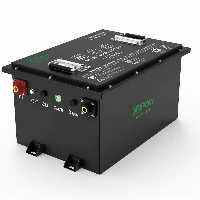
To address this issue, Copow LiFePO4 batteries feature a BMS that employs two distinct balancing methods: passive balancing, which dissipates excess energy from higher-voltage cells as heat through resistors, and active balancing, which transfers energy from higher-voltage cells to lower-voltage cells using energy storage components.
This article analyzes the differences between these two approaches in terms of energy efficiency, thermal management, and application cost, helping you make the right choice based on battery capacity and usage scenario.
What Is Battery Cell Balancing and Why It Matters in Lithium Systems?
Lithium battery packs are usually made up of multiple individual cells connected in series (for example, a Tesla battery pack contains thousands of cells). Although these cells may look identical when they leave the factory, small differences in manufacturing processes, ambient temperature, and aging cause them to behave differently during charging and discharging.
Battery balancing is the process of using electronic circuits to regulate the voltage or state of charge of each individual cell within a battery pack, eliminating these differences and ensuring consistent performance across the entire pack.
Why Does It Matter? (The "Bucket Effect")
The performance of a lithium battery system is dictated by its weakest cell. Without balancing, the following issues occur:
- Limited Charging (Underfilled): During charging, if one cell reaches its capacity first, the system must stop charging the entire pack to prevent overcharging and potential explosion. This leaves other cells only partially charged (e.g., at 80%), reducing the total usable capacity.
- Limited Discharging (Incomplete Usage): During discharge, if one cell runs out of power first, the system must cut power to protect that cell from damage. This means you are forced to stop even if the other cells still have energy left.
- Shortened Lifespan: Cells that are constantly "over-pushed" or "drained" age much faster, creating a vicious cycle that eventually ruins the entire battery pack.
- Safety Hazards: Severe imbalance can lead to overvoltage or undervoltage in individual cells, which may trigger thermal runaway (fire).
Common Balancing Methods
Battery balancing is mainly divided into passive balancing, which dissipates excess energy as heat through resistors, and active balancing, which transfers energy from higher-charge cells to lower-charge cells using energy storage components.

Active vs Passive Balancing: Key Differences Explained
In a lithium battery management system, passive balancing and active balancing are two different voltage regulation strategies.
The core difference between them lies in how excess energy is handled: passive balancing converts the energy of higher-voltage cells into heat through resistors to achieve voltage alignment, whereas active balancing uses energy storage components to transfer energy from higher-voltage cells to lower-voltage cells, enabling internal energy circulation.
1. Comparison of Working Principles
- Passive Balancing (Dissipative): This is like pouring out the excess water from the bottles that are too full. It uses a switching circuit connected to a resistor. The excess energy from cells with higher voltage is converted into heat and dissipated until their level matches the rest of the cells.
- Active Balancing (Redistributive): This is like pouring the excess water from a full bottle into an emptier one. It utilizes capacitors, inductors, or transformers as "storage containers" to transfer charge from high-voltage cells to low-voltage cells, redistributing the energy throughout the pack.
2. Key Differences at a Glance
| Feature | Passive Balancing | Active Balancing |
| Energy Handling | Dissipative (converted to heat) | Redistributive (transferred between cells) |
| Efficiency | Low (excess energy is wasted) | High (approx. 85% - 95% energy recovery) |
| Heat Generation | High (resistors generate significant heat) | Minimal (mainly switching losses) |
| Balancing Current | Small (typically < 100mA) | Large (can reach 1A - 10A or more) |
| Complexity | Simple, compact circuitry | Complex, requires more components |
| Cost | Low (integrated into most BMS chips) | High (usually requires a separate module) |
| Best For | Consumer electronics, small e-bikes | Large ESS, high-performance EVs, DIY/Old packs |
3. Why Isn't Active Balancing Used Everywhere?
If active balancing is faster and saves energy, why do most BMS units still use passive balancing?
- Cost-Effectiveness: Passive balancing is extremely cheap. For most new battery packs where cell consistency is high, the tiny current of passive balancing is sufficient for daily maintenance.
- Reliability: The "more parts, more problems" rule applies here. Active balancing circuits are complex, leading to a higher potential failure rate compared to simple, durable resistors.
- Size/Footprint: Active balancing modules are often bulky and not suitable for smartphones, laptops, or lightweight battery packs.
4. When is Active Balancing the "Game Changer"?
Active balancing has a clear advantage in two specific scenarios:
- Large Capacity Cells: For a massive 280Ah cell, a 100mA passive balance might take weeks to correct a 1% deviation. An active balancer can do it in hours.
- Aging/Refurbished Batteries: As cells age, their capacities diverge. Active balancing can work during discharge, transferring power from "strong" cells to "weak" ones, significantly extending the actual driving range or runtime of an older pack.

Practical Engineering Challenges of Battery Balancing in Real Applications
In engineering practice, implementing battery balancing is far more complex than basic charging and discharging logic. Engineers need to address real-world challenges such as fluctuations in ambient temperature, dynamic current surges, and the lifespan of electronic components.
To ensure system stability, balancing strategies must adapt to varying workloads while optimizing the trade-off between circuit efficiency and heat dissipation. This complexity means that balancing logic must not only manage individual voltage values but also take into account battery aging curves and the long-term reliability of the hardware.
1. Accurate Timing of Balancing (The SoC Detection Problem)
Determining which cell is "high" in charge is extremely difficult under dynamic operating conditions.
- Static vs. Dynamic Interference: Batteries experience voltage drops due to internal resistance (IR) during charge and discharge. If voltage is measured while a vehicle is accelerating or climbing a slope (high-current discharge), a cell with slightly higher internal resistance may show a sudden voltage drop, even though its actual charge is not low.
- Voltage Plateau Challenge: Lithium Iron Phosphate batteries have an extremely flat voltage curve. Between roughly 20% and 80% state of charge, voltage barely changes-sometimes only a few millivolts. Under these conditions, standard BMS sensor accuracy (typically ±10 mV) struggles to determine whether a cell is truly unbalanced.
- Engineering Strategy: In most practical systems, balancing is performed only at the end of the charging cycle, when the voltage curve starts to rise sharply.

2. Thermal Management and Heat Dissipation Challenges
Heat management is a major concern for passive balancing systems.
- Localized Overheating: Passive balancing dissipates excess energy as heat via resistors. When multiple cells are balanced simultaneously, the resistor array on the BMS board can generate significant heat. Poor thermal design may raise the BMS temperature, potentially triggering over-temperature protection or accelerating the aging of nearby cells, creating reverse imbalance.
- Energy Density vs. Space: In weight-sensitive devices like drones, there is little room for large heatsinks, which limits the maximum allowable balancing current.
3. Electromagnetic Interference (EMI/EMC Issues)
EMI is especially prominent in active balancing systems.
- High-Frequency Switching Noise: Active balancing involves DC-DC conversion or high-frequency capacitor switching (typically hundreds of kHz to MHz). This generates significant electromagnetic interference, affecting the precision of BMS sampling chips, causing voltage readings to fluctuate, and potentially leading to incorrect balancing decisions.
- Design Complexity: Engineers must rely on advanced PCB layouts, shielding, and filtering circuits to isolate noise from measurement signals.
4. Trade-offs: Cost, Size, and Reliability
- Component Count: Active balancing requires a large number of inductors, transformers, or MOSFETs. In a 100-cell energy storage system, if each cell requires active balancing, the component count multiplies, significantly reducing the mean time between failures (MTBF).
- Quiescent Current (Self-Consumption): The balancing circuit itself consumes power. Poor design may drain healthy cells during long-term storage, causing "deep discharge" damage.
5. Cell Consistency Evolution (Dynamic Aging)
- Dual Imbalance in Capacity and Resistance: As batteries age, some cells lose capacity while others experience increased internal resistance.
- Engineering Trap: If balancing is based solely on voltage, the system may equalize Cell A during charging. However, during discharge, Cell A may fall behind fastest due to its lower capacity. The system ends up constantly moving energy back and forth without addressing the underlying capacity difference-a phenomenon known as "balancing oscillation."
"Best Practices" for Copow LiFePO4 Battery Balancing
At Copow, we generally adopt the following compromise approach:
- High-Precision Sampling: Use analog front-end (AFE) chips with 1 mV-level precision-or even higher-for accurate voltage measurement.
- Hybrid Strategy: Passive balancing serves as the default solution for low-current, long-term maintenance; for aging systems or ultra-large-capacity packs, active balancing is added as a supplement.
- Algorithmic Simulation: Employ Extended Kalman Filter (EKF) or neural network algorithms, combined with current integration (coulomb counting), to estimate SoC rather than relying solely on voltage measurements.
What core battery management challenges does the active balancing technology in Copow lithium iron phosphate batteries solve?
Copow active balancing technology for LiFePO4 batteries provides a solution to cell consistency issues in large-capacity battery packs during long-term operation.
This technology reduces voltage deviations between cells through an internal energy transfer mechanism. In applications involving frequent charge–discharge cycles and deep cycling, it helps prevent premature cutoff of individual cells, thereby minimizing capacity loss, increasing the actual usable energy of the battery pack, and extending its service life.

1. Completely Eliminate the "Weakest Link" Effect to Maximize Usable Capacity
- Challenge: In battery packs, overall capacity is limited by the "weakest" cell. During charging, once one cell reaches full capacity, the entire pack must stop; during discharge, once one cell is empty, the whole pack must cut off.
- Copow's Solution: Unlike conventional passive balancing that dissipates energy as heat through resistors, Copow's active balancing transfers energy from "strong" cells to "weaker" cells. This means that during discharge, well-charged cells continuously "support" weaker cells, allowing the entire pack to extract every last bit of energy. Official data shows that this BMS can reduce cell imbalance by approximately 40%.
-
2. Addressing the "Voltage Plateau" Challenge of LiFePO4 Cells
- Challenge: LiFePO4 batteries have extremely flat voltage curves (voltage barely changes between 20% and 80% SoC), making it difficult for conventional BMS systems to detect cell imbalance.
- Copow's Solution: Copow's BMS integrates higher-precision sampling chips and sophisticated control logic. Active balancing operates not only at the end of charging but also continuously during idle and discharge states (typically triggered when the voltage difference exceeds 0.1 V). This 24/7 monitoring mechanism compensates for the difficulty in detecting imbalance due to the flat voltage characteristics of LFP cells.
3. Resolving the Conflict Between High-Current Balancing and Heat Dissipation
- Challenge: For large-capacity batteries (e.g., over 200 Ah), passive balancing currents (usually only 50–100 mA) are far too slow to correct multi-ampere imbalances. Meanwhile, resistor-based dissipation generates significant heat, often triggering BMS over-temperature alarms.
- Copow's Solution: For large-capacity models above 200 Ah, Copow integrates active balancing modules capable of 1–2 A. Because the process transfers energy rather than dissipates it, heat generation is minimal. Even under intense charge–discharge conditions, the system can quickly equalize cell differences.
4. Extending Service Life During Long-Term Use
- Challenge: As batteries age, cells degrade at different rates. Differences in internal resistance and capacity amplify over time, causing significant performance decline after 2–3 years.
- Copow's Solution: Active balancing continuously redistributes energy, reducing fatigue damage to individual cells caused by repeated overcharge or overdischarge. This "preventive maintenance" helps slow the degradation of cell consistency, maintaining the battery pack's effective cycle life stably between 3,000 and 5,000 cycles.
| Core Challenge | Passive Balancing (Common) | Copow Active Balancing |
| Energy Loss | Wastes excess energy as heat | Energy transfer, nearly zero waste |
| Balancing Current | Tiny (30–100mA), low efficiency | Large (1A–2A), high efficiency |
| Trigger Timing | Only at the end of charging | Charge, Discharge, and Standby |
| Target Scale | Best for small batteries (<100Ah) | Specialized for large systems (200Ah+) |
Which Balancing Method is Right for Your Application?
The choice of balancing method depends on cost, space, performance, and application scenario.
For consumer electronics, electric bicycles, or small-scale energy storage systems with capacities below 100 Ah, passive balancing is the more practical solution. Its simple structure and low cost make it suitable, and although it generates heat loss, the impact is minimal in battery packs with relatively good cell consistency.
For auxiliary batteries in RVs, high-performance golf carts, and off-grid solar energy storage systems with capacities above 200 Ah, active balancing offers clear advantages. This approach supports current transfer from 1 A to 5 A, allowing weaker cells to be regulated during discharge while avoiding localized temperature rise. This is especially important for high-current scenarios such as golf carts climbing hills or accelerating, as it effectively improves range and extends battery pack life.
In summary, passive balancing is suitable for lightweight and low-budget applications, whereas active balancing should be prioritized for high-intensity, large-capacity systems requiring long service life.
Say Goodbye to the "Weakest Link" and Unlock Every Bit of Power in Your Lithium Battery
Don't let artificial voltage differences cut your journey short. Upgrade to a Copow LiFePO4 battery pack with active balancing technology to boost range and extend lifespan up to 6,000 cycles, ensuring every investment delivers maximum value.
👉 [ Request Details on Copow Active Balancing LiFePO4 Batteries ]
FAQ
What Is the Typical Passive Balancing Current in a 12V LiFePO4 BMS?
The typical passive balancing current in a 12V LiFePO4 BMS is usually very small, typically ranging from 30mA to 100mA (0.03A to 0.1A), as it works by dissipating excess energy from higher-voltage cells as heat through resistors and is only effective for fine-tuning during the final stages of charging.
When Is Active Balancing Used in Battery Systems?
Active balancing is suitable for high-capacity battery systems with multiple strings that demand high performance and long service life, such as energy storage systems, electric vehicles, high-voltage battery packs, and industrial equipment requiring long-term stable operation.
This is because, in these applications, variations among individual battery cells accumulate over time as the number of charge-discharge cycles increases, making it difficult to effectively manage these variations through passive balancing alone.
What Is the Typical Balancing Current in a 12V LiFePO4 BMS?
In a BMS for a 12V (4-cell) LiFePO4 battery, the typical balancing current ranges from 30 to 100 milliamps, depending on the BMS design and cost.
Some high-end or industrial-grade BMS units may reach 100–300 mA, while systems employing active balancing schemes can go even higher (reaching amperes). However, in common 12V battery applications, most products still primarily use balancing currents in the tens of milliamperes.